Tolkien’s Darkest Unknown Horrors - Middle Earth Lore DOCUMENTARY
Wizards and Warriors
0:11 J.R.R.
0:11 Tolkien's legendarium is a vast tapestry of myth, history, and moral philosophy,
0:16 where monsters often embody deeper themes of corruption,
0:20 ancient evil, and the unknown.
0:22 While creatures like dragons and trolls
0:24 are well-explained within the cosmology of Middle-earth,
0:27 all beings deriving from Morgoth's corruptions,
0:30 certain entities remain “unexplained.” These “unexplained monsters”
0:33 such as the Watcher in the Water, the Nameless Things,
0:37 and Old Man Willow defy easy categorization,
0:40 existing on the fringes of Tolkien's structured world.
0:44 They evoke a sense of cosmic-love craftian horror,
0:47 hinting at primordial forces predating
0:49 the Valar and Eru Ilúvatar's ordered creation.
0:52 In this video, we will explore what is known about these primordial entities,
0:57 delving into the lore that Tolkien wrote into the edges
1:00 of his pages to enrich the depth and mystique of his world.
1:04 The Watcher in the Water On January 13 of T.A 3019,
1:09 the Fellowship sidestepped a dark pool of stagnant
1:12 water to approach the Doors of Durin.
1:14 The Sirannon river had once flowed through this valley,
1:17 so something had dammed or diverted it.
1:19 As Gandalf tried to recall the password to open the door,
1:23 Boromir threw a rock into the pool in his frustration, rousing a creature.
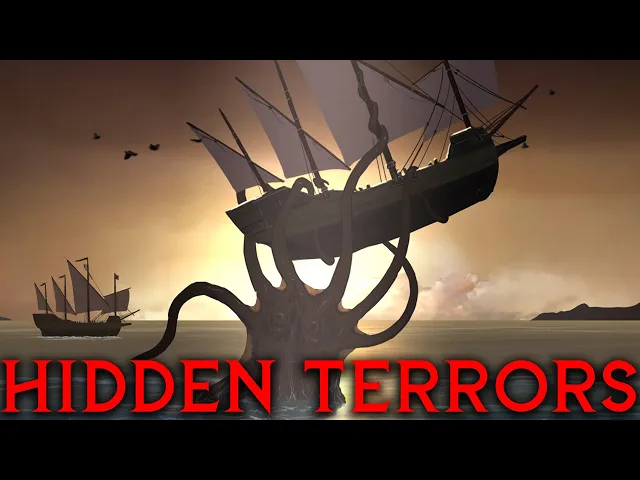
1:27 “Out of the water, a long sinuous tentacle had crawled.
1:31 It was pale green, luminous, and wet.
1:33 Its fingered end had hold of Frodo’s foot and was dragging him into the water.
1:38 Twenty of them moved with one intention.
1:41 Its strength was horrible.
1:42 Its stench was hideous.” Sam was the fastest to act,
1:46 hacking at the limb to free Frodo
1:48 as twenty additional tentacles burst from the lake,
1:51 accompanied by a horrid stench.
1:53 As the Fellowship fled into Moria, the tentacles groped along the shore,
1:57 seized the doors, and, with brutal force, slammed them shut.
2:01 “I felt that something horrible was near
2:03 from the moment my foot touched the water,” Frodo said.
2:06 Was it one creature or many?” “I do not know,' answered Gandalf,
2:10 'but the arms were all guided by one purpose.
2:13 Something has crept, or has been driven out of dark waters under the mountains.
2:18 There are older and fouler things than Orcs in the deep places of the world.”
2:24 He did not speak aloud his thought that whatever it was that dwelt in the lake,
2:28 it had seized on Frodo first among all the Company.
2:32 As the Fellowship traversed Moria,
2:34 they came across the tomb of Balin and the book of Mazarbul.
2:37 Within the last pages of the book,
2:39 Gandalf read of the plight of Balin’s company,
2:42 which attempted to recolonize Khazad-dûm thirty years prior.
2:46 Initially, the Dwarves had been successful,
2:48 but Balin was killed by an Orc archer,
2:50 allowing the foe to recapture the East-Gate,
2:53 First Hall and Second Hall after a fierce battle.
2:56 The Dwarves tried to escape the onslaught, and it was said of those fleeing
2:59 for the westgate that “Óins party went five days ago,
3:02 but only four returned: the pool is up to the wall at Westgate:
3:07 the watcher in the water took Óin- we cannot
3:10 get out.” It seems that, prior to the orc assault,
3:13 it was the Dwarves who dammed the Sirranon outside the Westgate.
3:17 Over time, the dam created a lake that rose
3:20 to the doors themselves and receded somewhat by T.A.
3:24 3018.
3:24 We are never given a full description of the creature
3:27 or creatures that gave rise to the twenty tentacles.
3:29 During The Hobbit, when Bilbo is venturing into Gollum’s cave,
3:33 we are given a possible description:
3:35 “So it is a pool or a lake, and not an underground river,” he thought.
3:39 Still, he did not dare to wade out into the darkness.
3:42 He could not swim, and he thought, too, of nasty slimy things,
3:46 with big bulging blind eyes, wriggling in the water.
3:50 There are strange things living in the pools
3:52 and lakes in the hearts of mountains:
3:54 fish whose fathers swam in, goodness only knows how many years ago,
3:58 and never swam out again, while their eyes grew bigger and bigger and bigger
4:02 from trying to see in the blackness; also,
4:05 there are other things more slimy than fish.” It
4:08 could be that these slimy fish creatures were the Watcher,
4:11 but there is no definitive description beyond the tentacles themselves.
4:15 The tentacles are described as long,
4:17 sinuous, pale-green, luminous with fingered ends.
4:20 They are certainly formidable,
4:22 as they uprooted trees and toppled the West Gate with ease.
4:26 Moreover, Balin’s company ostensibly chose to face an entire Orc army over them.
4:31 Additionally, the tentacles seemed to target the Ring-bearer,
4:34 not Boromir, who threw the stone, nor Bill the Pony, who was
4:39 closer by, suggesting perhaps an insidious intelligence.
4:41 Gandalf surmised that the monster might be very old,
4:44 driven up from the dark waters under the mountain.
4:48 Perhaps it was the awakening of Durin’s Bane that drove the monster up.
4:53 So what is the origin of this monster?
4:55 It could be that the Watcher was
4:56 a primordial aquatic creature corrupted by Morgoth.
5:00 J.E.A Tyler in The Complete Tolkien Companion suggested
5:04 the Watcher was actually one of Morgoth’s ambiguous cold-drakes.
5:08 However, it seems far more likely the Watcher was a by-product of Morgoth,
5:12 rather than a being directly designed by him,
5:15 as Morgoth greatly feared the Sea, which was the domain of Ulmo.
5:19 Unlike most of the Valar who dwelt in Valinor,
5:21 Ulmo dwelt in the seas and watched over the Children closely.
5:25 Because of this, Morgoth was unable to subdue or control water,
5:29 never building ships or waging war by sea,
5:32 and even his servants shunned the water.
5:35 Verlyn Flieger's Splintered Light interprets the Watcher as an embodiment
5:39 of "unlight,” a concept Tolkien explored in The Silmarillion,
5:43 where darkness is not mere absence but an active, malevolent force.
5:47 Flieger argues that the Watcher's habitat in the polluted waters
5:50 near Moria symbolizes the corruption seeping from Morgoth's ancient wars,
5:54 perhaps a remnant of Utumno's horrors.
5:57 Unlike Balrogs or dragons, which are explicitly Morgoth's servants,
6:02 the Watcher seems independent, possibly predating the Ainur's arrival.
6:06 Matthew Dickerson and Jonathan Evans' book, titled Ents, Elves, and Eriador,
6:11 views the Watcher as a perversion of nature,
6:14 its polluted pool a result of industrial dwarven mining.
6:17 They link it to Tolkien's environmentalism, as expressed in Letter 155,
6:22 where he laments the despoiling of landscapes.
6:26 Many Tolkien fans theorize that the Watcher is a fallen Maiar,
6:29 but scholars such as Douglas A.
6:31 Anderson dismiss this for lack of evidence,
6:35 emphasizing Tolkien's intentional vagueness.
6:37 Tom Shippey, in The Road to Middle-earth,
6:39 compares the Watcher to the Kraken of Norse legend,
6:42 suggesting Tolkien drew from Old English sources like Beowulf,
6:45 where monsters lurk in watery abysses.
6:48 Shippey noted the Watcher's tentacles evoke
6:51 the "grasping" motif in Anglo-Saxon poetry,
6:54 representing uncontrollable natural forces that threaten heroic quests.
6:59 This aligns with Tolkien's letter to Milton Waldman,
7:01 in which he describes Middle-earth as a world
7:04 where ancient evils persist in forgotten corners, not fully subdued by the gods.
7:09 Michael Drout, in J.R.R.
7:11 Tolkien Encyclopedia,
7:12 connects the Watcher to Babylonian chaos-monsters like Tiamat,
7:16 primordial sea-beasts slain by gods,
7:18 a motif Tolkien subverts by leaving it undefeated.
7:22 Drout argues this underscores themes of enduring evil,
7:25 as per Tolkien's essay "On Fairy-Stories,"
7:29 where sub-creation mirrors an imperfect world.
7:32 In terms of narrative function, the Watcher serves as a threshold guardian,
7:36 testing the Fellowship's resolve before entering Moria's deeper perils.
7:40 John Rateliff's The History of The Hobbit draws
7:43 analogies to similar guardians in Tolkien's earlier works,
7:46 like the "water-demons" in drafts of The Hobbit.
7:49 Rateliff suggests that revisions to the Moria sequence,
7:52 by emphasizing the Watcher's mystery,
7:55 heighten tension and reflect Tolkien's evolving style toward ambiguity.
7:59 The Nameless Things Even more obscure than
8:00 the Watcher in the Water and possibly even related,
8:03 were beings Gandalf referred to when describing
8:06 his battle with the Balrog to Aragorn,
8:09 Legolas and Gimli, “We fought far under the living earth,
8:12 where time is not counted.
8:13 Ever he clutched me, and ever I hewed him,
8:16 till at last he fled into dark tunnels.
8:18 They were not made by Durin’s folk, Gimli son of Glóin.
8:22 Far, far below the deepest delving of the Dwarves,
8:25 the world is gnawed by nameless things.
8:28 Even Sauron knows them not.
8:29 They are older than he.
8:31 Now I have walked there, but I will bring no report to darken the light of day.
8:37 In that despair, my enemy was my only hope,
8:39 and I pursued him, clutching at his heel.
8:41 Thus, he brought me back at last to the secret ways of Khazad-dûm:
8:45 too well he knew them all.
8:47 Ever up now we went, until we came to the Endless Stair.”
8:52 The only possible description of these Nameless
8:54 Things comes from the same passage
8:56 from The Hobbit about Bilbo’s venture into Gollum’s cave.
8:59 “also there are other things more slimy than fish.
9:02 Even in the tunnels and caves the goblins have made for themselves,
9:06 there are other things living unbeknownst to them that have
9:09 sneaked in from outside to lie up in the dark.
9:12 Some of these caves, too,
9:13 go back in their beginnings to ages before the goblins,
9:16 who only widened them and joined them up with passages,
9:20 and the original owners are still there in odd corners,
9:23 slinking and nosing about.” Based on these two passages,
9:27 we know these creatures were capable of creating tunnels large
9:30 enough for Balrogs to navigate and were older than Sauron,
9:33 predating the physical arrival of some Maiar to Arda.
9:37 Similar to the Watcher, they could be primordial creatures or beings
9:41 corrupted directly or indirectly by Morgoth,
9:44 though we are given no indication that they are evil.
9:47 Tolkien scholar Tom Shippey interprets them
9:50 as manifestations of the existential void,
9:52 drawing from Tolkien's experiences in World War I trenches.
9:56 As John Garth details in Tolkien and the Great War,
10:00 the Nameless Things symbolize the senseless, subterranean horrors of war,
10:04 echoing the "No Man's Land" where unnamed terrors lurk.
10:07 Shippey, in Author of the Century, links them to Old Norse concepts of Niflheim,
10:13 the misty underworld,
10:14 suggesting Tolkien infused philological depth to evoke pre-Christian dread.
10:18 Flieger's A Question of Time explores their temporal anomaly:
10:23 beings older than Sauron imply existence before the world's shaping.
10:28 Flieger argues that this challenges Eru's monopoly on creation,
10:32 perhaps representing chaotic residues from the Ainulindalë's discordant music.
10:36 In The Silmarillion, similar unnamed evils are hinted at, but Flieger sees
10:41 the Nameless Things as deliberate gaps in the cosmology,
10:45 underscoring Tolkien's Catholic view of incomplete human knowledge.
10:48 Dimitra Fimi examines cultural influences,
10:51 comparing them to Aboriginal Dreamtime entities or Lovecraft's Elder Gods,
10:56 though Tolkien disavowed direct inspiration.
10:58 Despite this, Fimi, in Celtic Myth in Contemporary Children's Fantasy,
11:03 notes parallels with Welsh Annwn creatures,
11:05 underworld beings whose names are avoided to avoid summoning them.
11:09 Todd Jensen suggests that The Nameless Things may have
11:12 been inspired by the dragon Nidhog of Norse mythology,
11:16 who gnawed at the roots of Yggdrasil.
11:18 Narrative-wise, the Nameless Things heighten Gandalf's resurrection arc,
11:22 as analyzed by Janet Brennan Croft in War and the Works of J.R.R.
11:27 Tolkien.
11:28 Croft views their presence as a descent into hell, akin to Christ's Harrowing,
11:32 with the creatures as demonic remnants too ancient for Sauron's command.
11:37 Old Man Willow During the Fellowship of the Ring,
11:38 the first hostile character the Hobbits faced
11:40 after leaving the Shire was Old Man Willow.
11:43 The Hobbits are forced to cut through the Old Forest.
11:46 As they did so, Merry observed that “the forest
11:49 is queer and the trees do not like strangers.
11:52 They watch you.
11:53 Occasionally, the most unfriendly ones may drop a branch,
11:56 or stick a root out, or grasp at you with a long trailer.
11:59 I have only once or twice been in here after dark, and then only near the hedge.
12:04 I thought all the trees were whispering to each other,
12:06 and the branches swayed and groped without any wind.
12:09 They do say the trees do actually move,
12:12 and can surround strangers and hem them in.
12:14 In fact, long ago, they attacked the Hedge:
12:17 they came and planted themselves right by it, and leaned over it.
12:20 But the hobbits came and cut down hundreds of trees,
12:23 and made a great bonfire in the Forest,
12:25 and burned all the ground in a long strip east of the Hedge.
12:29 After that, the trees gave up the attack, but they became very unfriendly.”
12:34 As the Hobbits travelled through the Old Forest,
12:36 Old Man Willow cast a sleeping spell on them,
12:39 before trapping Pippin and Merry in the cracks
12:41 of its trunk and tipping Frodo into a stream.
12:44 Sam managed to stay awake and saved Frodo.
12:47 Afterwards, the two burned dry leaves,
12:49 grass and bark to scare the tree before it squeezed Pippin and Merry to death.
12:54 All of them were saved by Tom Bombadil, who put the tree to sleep.
12:58 Tom would go on to explain that “the hearts of trees and their thoughts,
13:02 which were often dark and strange,
13:04 and filled with a hatred of things that go free upon the earth,
13:07 gnawing, biting, breaking, hacking, burning: destroyers and usurpers.
13:11 It was not called the Old Forest without reason,
13:15 for it was indeed ancient, a survivor of vast forgotten woods;
13:19 and in it there lived yet, ageing no quicker than the hills,
13:23 the fathers of the fathers of trees, remembering times when they were lords.
13:27 The countless years had filled them
13:29 with pride and rooted wisdom, and with malice.
13:32 But none were more dangerous than the Great Willow:
13:35 his heart was rotten, but his strength was green; and he was cunning,
13:39 and a master of winds,
13:40 and his song and thought ran through the woods on both sides of the river.
13:44 His grey thirsty spirit drew power out of the earth
13:47 and spread like fine root-threads in the ground,
13:50 and invisible twig-fingers in the air,
13:52 till it had under its dominion nearly all the trees
13:55 of the Forest from the Hedge to the Downs”.
13:57 Prior to writing Lord of the Rings,
13:59 Tolkien had developed Old Man Willow as a predatory
14:03 tree in his 1934 poem The Adventures of Tom Bombadil.
14:06 Flieger notes that in this draft and in the 1943
14:10 "Manuscript B,” Tolkien links "a tree and a spirit,
14:14 a 'non-incarnate mind which is imprisoned in an individual
14:17 tree.” It seems evident that Old Man Willow’s
14:20 malice derives from the time of Gorhendad Oldbuck’s colonization
14:23 of the land between Brandywine and the Old Forest,
14:26 when the Hobbits of Buckland felled the forest to make their new homes
14:30 and build “the hedge,” a large wall separating their country from the woodland.
14:35 As Merry explained, when the trees grew too close to the hedge,
14:38 the Hobbits cut down the nearest ones and formed a clearing using a bonfire,
14:42 causing them to become more hostile.
14:45 It seems much less likely that Morgoth or Sauron played any role
14:49 in imprisoning a spirit within a tree to form Old Man Willow,
14:52 and more plausible that the creature was an Ent or a Huorn,
14:56 bitter over the destruction of its Old Forest.
14:59 Tom Shippey analyzes Old Man Willow as a folkloric holdover,
15:02 akin to the Green Man or Scandinavian tree-spirits, in The Road to Middle-earth.
15:07 Shippey argues it represents nature's indifference to humanity.
15:11 Flieger views Old Man Willow as a symbol of "entangled
15:15 time,” its ancient grudge against
15:17 two-legged creatures stemming from prehistoric deforestation,
15:19 per Green Suns and Faërie.
15:21 Fimi compares Old Man Willow to the sacred oaks of druidic lore in Tolkien,
15:27 Race, and Cultural History.
15:29 Fimi posits Tolkien subverted romanticized nature,
15:32 making Old Man Willow a critique of anthropocentrism.
15:36 Narratively, Old Man Willow serves as a pivotal early antagonist,
15:40 bridging the pastoral innocence of the Shire
15:42 with the darker perils of the wider world.
15:45 As the hobbits' first major encounter with hostility beyond their homeland,
15:48 it underscores themes of nature's latent
15:51 dangers and the consequences of environmental disregard.
15:53 Jane Chance, in The Lord of the Rings: The Mythology of Power,
15:58 notes how Old Man Willow's hypnosis mirrors the Ring's allure,
16:02 challenging the hobbits' innocence and forcing them to confront external evils.
16:06 Conclusion Tolkien's unexplained monsters– the Watcher, Nameless Things,
16:10 and Old Man Willow– serve as vital counterpoints to his more defined lore,
16:15 embodying the inscrutable aspects of existence that defy categorization.
16:19 They highlight themes of ancient chaos, environmental retribution,
16:23 and the boundaries of knowledge, enriching Middle-earth's depth.
16:26 Scholars universally praise how these entities draw from diverse mythologies,
16:32 infusing Tolkien's Catholic worldview with pagan mystery.
16:36 As Shippey and Flieger emphasize,
16:38 their ambiguity invites ongoing interpretation,
16:40 ensuring the legendarium's timeless appeal.
16:43 Ultimately, these monsters remind us that true wonder lies in the unknown,
16:48 urging us to respect the world's hidden perils.
16:51 More videos on the mysteries of Middle-earth are on the way,
16:54 so make sure you are subscribed and have pressed the bell button to see them.
16:58 Please consider liking, commenting, and sharing- it helps immensely.
17:01 Our videos would be impossible without
17:03 our kind patrons and YouTube channel members,
17:05 whose ranks you can join via the links in the description to know our schedule,
17:09 get early access to our videos, access our Discord, and much more.
17:13 This is the Wizards and Warriors channel, and we will catch you on the next one.