We Finally Know More About Humanity’s First Civilization
Kurzgesagt – In a Nutshell
0:00 You probably think you know human history but you don’t.
0:04 What we know is only a fraction of the story.
0:07 Much of the rest is invisible to us, like dark matter.
0:11 We can’t see it, only the effects of its presence.
0:15 Invisible like the wind, silently shaking trees and leaves.
0:21 Almost every trace of the most important chapter
0:23 in our history has vanished and will forever stay hidden,
0:26 we only see the world that emerged from it.
0:29 The age when our ancestors underwent a fundamental transformation,
0:33 began cultivating the earth, built settlements and created civilization.
0:38 We have no writing from this period, no words or eyewitness accounts.
0:43 We don’t know their names, how their world felt, sounded or tasted.
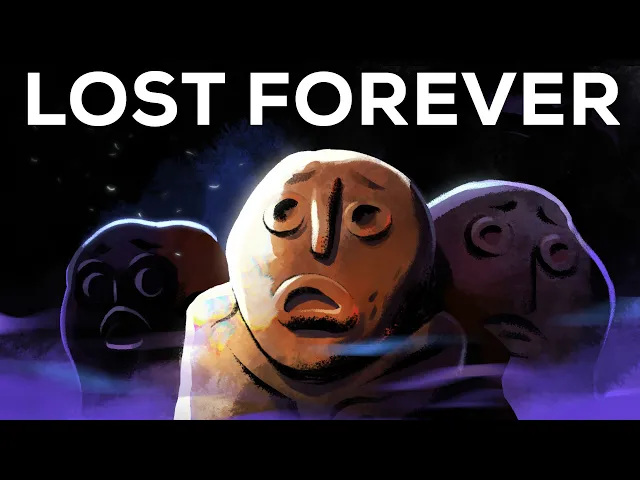
0:49 Only traces in stone, bone, and clay remain.
0:54 But recently with new techniques for DNA sequencing,
0:58 dating ancient detritus, mathematical models,
1:00 aerial and lidar archaeology we are getting a faint idea
1:04 of what this world might have looked and felt like.
1:08 Let’s use these newest insights,
1:11 educated speculation and our imagination to visit
1:14 the dark matter of our history, the time before a single word was written down.
1:20 First we need to change how we think about our past– it is
1:24 sort of madness that we all are pretending to live in the year 2026.
1:28 It awkwardly splits our history into a before
1:31 and after at a rather random point in the grand
1:34 scheme of things– 2026 years ago humanity was
1:37 very much deep in the middle of things.
1:41 And this makes it harder to think about our past properly.
1:45 The year Zero should be where civilization began, 12,000 years ago.
1:50 This is the start of the Holocene,
1:52 our current geological period and the end of the last ice age–
1:56 when Earth's climate turned from cold and erratic to warm and stable.
2:01 The human era begins here, enabling our ancestors to lay the foundation
2:05 for what it means to be human today.
2:08 If we just add 10,000 years to our calendar,
2:11 suddenly our perspective feels incredibly different:
2:14 You fellow human, are living in the year 12,026.
2:19 You look back on over 12,000 years of history.
2:24 And while the people living back then may seem impossibly
2:28 distant they were exactly the same as we are today.
2:31 Modern humans, experiencing the same emotions, wants and dreams.
2:37 This is why every year we create
2:40 our Human Era Calendar that celebrates all of humanity.
2:43 But more on that at the end of the video.
2:45 Ok now that the stage is set,
2:48 let’s dive into the dark matter of history, to where it all began,
2:53 the beginning of civilization… The Year Zero of Human
2:57 History In the hills of southern Anatolia and northern Syria,
3:02 the first truly connected human cultural world emerges.
3:06 This is Karahan Tepe, one of the first villages known to us.
3:11 Today is the first day of our timeline, day 1 of the year 0.
3:16 12,026 years ago from you watching this.
3:20 Hundreds of people have come together from tribes around
3:23 the region for the greatest gathering in history so far,
3:26 an epic event for everyone involved.
3:30 They are celebrating the first great construction of humanity,
3:34 7000 years before the pyramids.
3:37 How would they have felt if they had known what it would lead to eventually?
3:41 With tools of stone and wood they begin to carve shapes into bedrock,
3:46 T shaped columns multiple meters high, decorated with strange animals.
3:51 Naked humans proudly presenting their fertility, figurines of birds or beasts.
3:57 We don’t know how exactly they did
3:59 this or why– is the first religion being born here?
4:03 What are the names of the long lost, forgotten gods they are trying to please?
4:08 Or are they just following a human desire to express their inner worlds?
4:13 All we know for sure is that this is a project of epic scale
4:16 for the stone age and the beginning of a new era for the whole planet.
4:20 Never before did so many humans collaborate on something so hard!
4:25 A brutal effort like this requires a lot of energy and a new kind
4:29 of organisation and specialization that has never
4:32 existed before– while some carve bedrock all day,
4:36 others gather grain, bake bread,
4:37 brew beer or hunt antelopes– to feed the builders of the new world.
4:43 An avalanche of amazing progress is set
4:46 in motion that will only gain speed from here.
4:50 Over millennia humans have learned that if
4:52 you put the tasty parts in the ground,
4:54 they come back again next year, larger, richer.
4:58 Now, with the climate finally stable,
5:00 communities start to cultivate them in earnest
5:02 rather than simply gathering from the wild.
5:05 Opening up the ground, ripping out plants they don’t desire,
5:08 sowing the food of today to have more in a distant tomorrow.
5:14 The roots of agriculture are here– with permanent settlements,
5:17 community, ritual, belief all growing around it.
5:21 At night they come together in what must feel like cathedrals,
5:24 to drink beer, dance and sing,
5:26 love each other, squabble and chant vows to unknown gods,
5:30 whose names we’ll never know.
5:32 This is why we think this is the true first millenium of our history.
5:37 Among the people of Taş Tepeler, a name that we have given them– a completely
5:41 new way of life has emerged and is slowly spreading.
5:45 More villages are emerging, from which more epic constructions are started,
5:49 like Göbekli Tepe, the largest we have found so far.
5:53 Slowly but steadily farming turns from a seasonal
5:56 activity into a lifestyle, and as it does,
5:59 more food means more people, new specialists,
6:02 longer trade networks, the first craftsmen, artists, and overseers.
6:07 From Bread to Living On Dead Ancestors 10,000 years
6:11 ago the third millenium of the Human Era begins.
6:15 Perhaps 5 to 10 million of us inhabit our world.
6:19 Progress was not a straight line.
6:22 Different communities experimented with different ways of living,
6:25 and some paths succeeded while others disappeared.
6:29 Exchange networks, already old, grow busier.
6:32 Tools, beads, seashells— and above all obsidian,
6:36 the jet-black volcanic glass that flakes
6:38 into razor edges– travel hundreds of kilometers.
6:42 You could call it the black gold of the Stone Age:
6:45 it ties distant villages into a single web of contact.
6:50 The permanent villages grow larger and more elaborate.
6:53 We don’t know exactly why so many
6:55 people clustered together- more hands for the harvest,
6:58 kinships, festivals and prayers to forgotten gods, trade, safety in numbers.
7:03 But the largest communities humans have ever formed emerge around this time.
7:08 Let’s travel west, to Çatal höyük,
7:11 a metropolis of hundreds of people around 8500 years ago..
7:15 The village has a unique architecture and way of life.
7:19 There are no streets or alleys, only houses hugging each other closely,
7:23 accessible only by wooden ladders and bridges and holes in their roofs.
7:27 Surrounded by farmland and feral goats
7:29 and sheep– the first animals raised for food.
7:33 The insides were beautifully decorated, paintings of animals adorn rooms,
7:38 plastered bull skulls are set into walls, painted in striking red ochre.
7:42 And figurines of animals and of naked females– maybe they were goddesses,
7:47 maybe our ancestors just admired the female form
7:49 as many of us do today, we don’t know.
7:53 Life in these houses feels eerily similar to our life today.
7:58 Families ate meals of bread and nuts, ate cheese and drank beer.
8:02 Complained about a noisy neighbour or admired
8:04 a strong lad who beat back a leopard!
8:07 And they honored their dead in a, well,
8:09 fascinating way– if a loved one died they buried them in their homes,
8:14 deep below the floor boards.
8:16 After a few years their bodies were
8:19 exhumed and their heads removed– decorated and painted.
8:23 Each one did it in their own unique way,
8:25 some sculpting faces with plaster, others using colorful stones.
8:30 Why do all of this?
8:32 Maybe to keep your family and their memory alive,
8:35 to have them to tell great stories of the mystic world beyond theirs.
8:39 Whatever the reason was, the living and the dead remained close.
8:45 From Gathering Grain To War and Domination
8:48 In the fourth millenium of the human era, farmers began spreading in different
8:52 directions from Southwest Asia -carrying plants,
8:54 animals, technologies and new ways of life with them.
8:59 Across Europe and Asia, they encountered communities who had lived by hunting,
9:03 fishing and gathering for thousands of years.
9:06 Different groups met, traded materials,
9:08 shared technologies and sometimes competed for the same landscapes.
9:12 In some regions, hunter-gatherers and farmers
9:15 lived alongside one another for centuries.
9:17 In others, farming gradually became the dominant way of life.
9:21 Different farming tribes established themselves but the relationships
9:25 between them were not always peaceful.
9:27 We have found skeletons bearing wounds from arrows,
9:30 clubs and other weapons– and grim mass graves: bodies tipped in together,
9:35 some with arrowheads still lodged in the bone,
9:38 some filled with men struck down from behind, others with whole families.
9:43 We don’t know how violent the transition to farming was or how common
9:47 it really was– but violence was part of the dark matter of history.
9:52 As communities grew larger and more permanent, new challenges emerged.
9:56 Food had to be stored, resources managed and social tensions resolved.
10:01 Villages and towns had to permanently protect themselves.
10:05 It is incredible to think how many wild stories
10:08 we are missing from that time– the first epic siege,
10:12 one culture attacking another, defenses along the perimeters,, heroic victories,
10:18 devastating defeats– on a much smaller scale still– but more personal,
10:23 more intense for the people who lived through
10:26 it.– But there was more to their lives than
10:28 war- How the people of this time truly
10:30 felt and what they believed in, how they argued,
10:33 made peace, feasted, played with their children and mourned their lovers.
10:38 Almost none of it survives.
10:40 Around 8000 years ago,
10:42 farming communities had spread across much of Southwest Asia and into Europe.
10:47 New forms of life seemed to be flourishing.
10:50 But history rarely moves in a straight line.
10:53 The Dark Matter Apocalypse Around the year 3800
10:58 of the human era a sudden catastrophe happened in North America.
11:02 The receding glaciers of the last ice age had
11:04 created one of the largest lakes in Earth’s history,
11:07 larger than the Caspian Sea today.
11:10 It was held back by super massive ice sheets, which formed a gigantic dam.
11:15 A dam of ice in a warming world.
11:18 Oh well.
11:20 Surprising noone, the dam melted and suddenly failed–
11:24 the whole lake suddenly drained into the ocean– global
11:27 sea levels rose by 1-2 meters and the great
11:30 conveyor belt that carried warm water northwards slowed down.
11:34 Across the North Atlantic and Europe, and into the Near East,
11:37 the climate turned colder and drier– in some regions by several degrees.
11:42 Rain patterns shifted, summers grew longer and harsher,
11:46 and a drought lasting well over a century parched the land.
11:50 This was bad.
11:52 Humans had spent the last few thousand years learning to depend
11:56 on predictable rainfall to grow crops and suddenly this was over.
12:00 For some communities this turned into an existential crisis.
12:05 But people were resilient and adapted, finding new ways to sustain themselves.
12:10 Some leaned harder on their animals, some turned to sea for food,
12:14 others shifted their settlements from plains to neighbouring mountains.
12:18 Or they… just left, looking for a completely new home.
12:23 We know that during this time all over the world migration
12:26 towards rivers and lakes sped up– bringing agriculture and technology with them.
12:32 Some of the most consequential journeys led into the Nile Valley,
12:35 where farming villages took root and slowly laid the ground
12:38 for the rich civilization that would one day rise there.
12:41 And in Mesopotamia, something remarkable began– over the generations
12:46 communities started to bend the rivers to their will:
12:49 digging canals, steering water onto their fields, storing the grain it produced.
12:55 It was one of the great leaps in human organisation— and over
12:58 the long run it would make them the richest people of their age,
13:02 their surpluses feeding a population boom that, much later,
13:05 would give rise to the first true city states.
13:09 It must have been such a time
13:12 of drama and suffering but also hope and persistence.
13:16 After a century or two the climate stabilized and the droughts ended,
13:20 humanity found itself once again in a new position.
13:24 Agricultural societies had mastered their first proper test.
13:27 And now they would make their next big jump forward.
13:32 The End of the Dark Matter Era Around the year 5000 of the human era,
13:37 7000 years ago, the speed of progress changes
13:40 and so does the pace of our story now.
13:43 A steady food supply allows populations to grow,
13:46 some villages expand to impressive sizes.
13:49 By around 6,000 years ago, in what is now Ukraine,
13:53 people of Trypillia culture built true mega-settlements– places like Talianky,
13:58 vast concentric rings of houses, home to thousands of people farming wheat,
14:03 barley and peas, and keeping animals.
14:05 As these centers of humanity grow and become more and more common,
14:09 trade between them explodes.
14:11 With materials and goods,
14:13 ideas are being exchanged and progress picks up pace again:
14:16 copper, the plow, the wheel.
14:18 We are now traveling to Uruk in the year 6800.
14:23 One of the first real cities in the history of the world.
14:27 It houses tens of thousands, has monumental temples and genuine urban life.
14:32 A village can live from memory,
14:34 a city can't– so a new social class emerges: Administrators.
14:40 They count the grain, distribute resources,
14:42 collect taxes that enable the expansion of their cities.
14:46 To manage all that they invent the first accounting system.
14:49 Marks on clay balls and tablets counting
14:52 barley or sheep– slowly transforming into actual writing.
14:56 It is here that the dark matter period of history ends:
15:00 With a note scratched into wet clay– the first name in history.
15:05 Kushim.
15:06 A signature on a tablet recording barley for beer, handed over at a temple.
15:12 It is not much– we don’t know anything else about Kushim,
15:15 how he was feeling when he received the beer– if he
15:18 had any of it that day– or what it tasted like.
15:21 What his life was like in the first City to ever grace our planet.
15:25 We finally have a name,
15:26 which stands for all the forgotten ones in the dark matter of history.
15:30 All the lives, experiences and accomplishments which
15:34 paved the way for our civilization today.
15:41 That's why the Human Era calendar is our most cherished project every year.
15:46 It starts counting not 2,000 but 12,000 years ago,
15:49 at the dawn of human civilization.
15:52 We want to include all of humanity– and remind you
15:55 that your story is part of the human era as well.
15:58 Our 12,027 Calendar just dropped– and this year we honor the dark
16:04 tales and legends that helped us make sense of the world before science.
16:09 Each month takes you on a journey
16:12 through forgotten worlds and human imagination.
16:14 It’s not just a year's worth of kurzgesagt art for your home– it’s
16:18 a declaration of human expression and creativity
16:21 in a time of meaningless AI slop.
16:24 That's also why our Calendar comes with a postcard
16:27 that features one of six concept sketches from our illustrators.
16:31 Pair the Calendar with our Human Era Calendar
16:33 Artbook to collect every calendar illustration we’ve ever made.
16:37 Or bundle it with our new Space Video Artbook.
16:40 Both artbooks are jam-packed with behind-the-scenes sketches,
16:44 stories, and fun facts from the kurzgesagt team.
16:47 Your purchase funds our independent science channel,
16:50 gives our artists and researchers the time good work requires,
16:54 helps us release new, free,
16:56 educational videos for everyone and spark curiosity for science.
17:01 Treat yourself or gift the 12,027 Human Era Calendar
17:06 to someone you want to inspire through the whole year.
17:10 Support art about humans, by humans, for humans.