Brawls for Survival (Full Episode) | Animal Fight Night Compilation | Nat Geo Animals
Nat Geo Animals
0:01 (trumpeting) (growling) All over the world,
0:06 species clash in nature's savage battle of survival.
0:12 In open plains, under blue seas,
0:17 and on the Arctic ice, all are locked in deadly conflict.
0:25 Animals fight tooth and claw to win food...
0:30 territory...
0:32 and rights to the bloodline.
0:35 From the highlands of America to the wilds of Africa...
0:41 there are no rules.
0:46 This is Animal Fight Night.
0:55 Lions are apex predators.
0:58 (growl) But even on a good day, only one out of three hunts work.
1:06 (zebra braying) That means sometimes they have
1:10 to go after the biggest game of all...
1:15 the Cape buffalo.
1:18 And that can mean more prey than they bargained for.
1:22 (buffalo bellowing) Today,
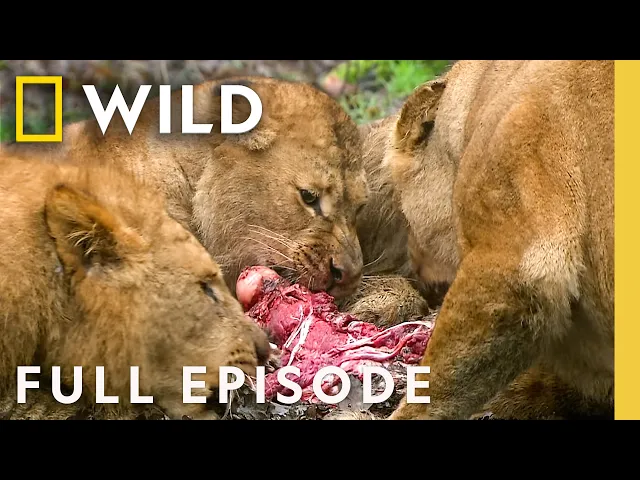
1:28 a hungry pride has taken down a juvenile buffalo calf,
1:33 leading to a tense stand-off.
1:41 The buffalo is six times the weight of any of the lionesses, but for now,
1:47 all they can do is retreat while the lions gorge on the kill.
1:52 This young calf won't go far among so many hungry mouths.
2:02 But it's enough time for the buffalo to get organized.
2:09 They want revenge...
2:12 and have fearsome weapons.
2:17 Horns 4 feet from tip to tip— longer than a samurai sword.
2:23 These horns take 4 1/2 years to develop— plenty of time for stabbing practice.
2:32 The herd is seeing red.
2:35 There will be blood.
2:40 Lions and Cape buffalo have been at each other's throats for thousands of years.
2:48 And it's often a toss-up...
2:51 as to who will come out alive.
2:57 And today, all bets are off.
3:01 The buffalo mob forms a menacing wall of spikes.
3:06 Like a slow, unstoppable tsunami, the buffalo wall advances.
3:17 The hunters are becoming the hunted.
3:24 The buffalo in the front line of attack are the best fighters,
3:27 horns in tip-top fighting condition.
3:32 With up to 1,000 in the herd,
3:35 the overwhelming numbers could spell a bloody revenge.
3:39 A male makes a hasty exit.
3:42 He may have the experience to know what's coming.
3:47 Sheer numbers scatter the remaining females...
3:52 except one.
3:54 (bellowing) The bold lioness takes refuge.
3:58 It's a bad call.
4:01 The buffalo surround the rock.
4:06 It's a siege.
4:10 The lone lioness has little chance of escape without help.
4:14 But her pride has made for the hills.
4:19 Time is on the side of the herd, but they don't wait.
4:23 A second wave comes in using a pincer movement.
4:30 The bold lioness narrowly misses certain disembowelment.
4:40 She tries again, but runs into thorns.
4:51 Third time lucky.
4:56 She loses her lunch, but keeps her life.
5:03 But not every big game hunter has luck on their side.
5:08 The polar bear is the largest land predator on the planet.
5:15 But this big guy is headed on a hunt that is about to land him in hot water.
5:21 Polar bears can swim up to 400 miles in search of food.
5:26 And the ice floes provide a well-stocked kitchen.
5:32 But in the summer, as the ice retreats, so does his prey.
5:37 (growling) Polar bears face the threat of starvation.
5:44 This hunter may not have eaten for months.
5:48 He's in a desperate struggle for survival.
5:53 But his powerful sense of smell can pick up odors from 20 miles away.
6:00 And a familiar stench is in the air.
6:06 Walrus.
6:09 They make a supersize meal.
6:13 They can grow close to 12 feet in length,
6:17 and they have a delicious layer of blubber up to 10 inches thick.
6:24 He smells the arrival of new pups.
6:28 And our starving bear can't resist a pup-sicle.
6:35 An excellent swimmer, he takes the direct route to sneak up on the banquet.
6:45 The hunter keeps a low profile on the surface and is invisible beneath it.
6:56 A walrus's eyesight is poor.
6:59 They don't see him...
7:01 until he's on them...
7:02 setting off a stampede.
7:07 He has to attack quickly but choose carefully.
7:14 With ivory tusks up to 3 feet long, walruses make deadly adversaries.
7:21 They can kill and eat seals over 400 pounds.
7:27 Then he finds the perfect target— a pup, tender and juicy.
7:39 But its heavyweight mom uses her 1,600-pound body as a barrier.
7:46 And she takes the full impact of his bite.
7:50 Unlike most bears, polar bears only eat meat.
7:55 Their chewing carnassials are smaller than a grizzly's.
8:00 But their meat-piercing canines are just as large.
8:04 They easily tear through seal flesh to get
8:07 to the calorie-rich layer of blubber beneath.
8:12 But even canines unleashing 370 pounds of force can't prize this mom away,
8:20 and she fires in an ivory stab.
8:28 The panic spreads.
8:31 The colony breaks ranks.
8:38 This is his last chance to pick off stragglers heading for the water.
8:45 The desperate hunter has one last shot at survival.
8:52 The bear's 2-inch canines dig deep.
8:59 But he can't hold on.
9:03 They tussle, tooth and tusk.
9:07 The walrus has weight advantage and breaks free...
9:12 to safety.
9:19 The fight for food comes at a heavy price.
9:22 Stab wounds leave the wanderer lame.
9:27 But today, this bear won't go hungry.
9:33 A walrus pup died, crushed in the frenzied stampede for safety.
9:40 The crippled predator settles for scavenged scraps.
9:45 And deep tusk wounds mean this could be his last supper.
9:54 In nature, there is no time out.
9:59 So you should never let your guard down.
10:05 A baboon kid leaves his mom to go play...
10:10 and ends up in a deadly game of tag.
10:13 (screeching) Throughout the wilds of southern Africa,
10:24 the chacma baboon is a high-profile primate.
10:29 He's the largest monkey on the planet and lives
10:32 on the savanna in troops of up to 200.
10:37 The males rule the roost.
10:41 They are nearly 70% larger than the females.
10:44 (screeching) And their piercing 2-inch canines are as long as a lion's.
10:50 Dominant males want to assert their mating rights.
10:55 But there's a problem.
10:58 Only childless females are open to advances.
11:04 And they'll breed just once every two years.
11:12 So mating opportunities can be in short supply.
11:19 Like most little monkeys, chacma young are playful and inquisitive.
11:26 While their moms are busy grooming with friends,
11:29 their kids may get carried away with their games.
11:35 A dominant male's high status is precarious.
11:40 He needs a childless female to mate with before he's toppled.
11:45 This male has a youngster in his sights.
11:49 Killing Junior would create a vacancy.
11:52 And he's waiting for his chance.
11:57 Chacma require water every day, so they always hole up near a source.
12:03 And like most youngsters, chacma kids find the local pools irresistible.
12:10 Their curiosity takes them far into the waters, and Junior tags along.
12:19 But he's playing right into the hands of the child killer.
12:24 Aggressive males claim the lives of up to 30% of chacma young.
12:30 They're a main cause of death and may
12:33 even eat the victims in front of their mothers.
12:37 This dominant male is on a mission to murder.
12:41 He springs the trap.
12:43 The infants try to return to their moms.
12:47 But the child killer isn't about to miss his chance.
12:55 He cuts off Junior's escape route.
12:57 (screeching) It's a deadly game of tag.
13:07 If he grabs Junior, it's over.
13:13 Out of nowhere, Mom charges in.
13:17 Chacma can reach speeds of nearly 30 miles per hour.
13:22 And her momentum sends him flying.
13:25 But it's a total mismatch, a suicide mission to save her infant.
13:31 (screeching) The child killer tries to finish it...
13:40 with a clean bite to the back of the neck.
13:44 It could sever her spinal cord.
13:45 (screeching) Junior makes a break for it.
13:49 (screeching) To win him a clean getaway, Mom launches herself at the attacker.
13:56 She's belly-up, but she won't give up.
14:00 This monkey means business.
14:04 The would-be child killer loses his chance...
14:08 and his nerve.
14:10 This mom's not giving way.
14:12 But the attacker flees...
14:14 in search of a softer target.
14:17 Her child lives to play another day.
14:21 And he won't be so quick to leave his mother's side in the future.
14:28 Many battle hard to survive.
14:31 (screeching) But what if you encountered a prey that refused to die?
14:40 In the savanna, a high-speed chase is underway.
14:46 An impala races at 30 miles an hour.
14:50 He's a sprinter.
14:53 Hot on his tracks, a pack of African wild dogs, the ultimate endurance athletes.
15:05 One of the most successful predators on the savanna,
15:09 the dogs kill in four out of five hunts.
15:12 (growling and barking) Known as a hypercarnivore,
15:18 the majority of their diet is meat.
15:22 Mostly impala.
15:25 When they're hungry,
15:27 they'll tail prey for over an hour at speeds of almost 40 miles an hour.
15:34 What keeps the impala going is fear and adrenaline.
15:44 Even so, the impala can't outlast the desperate pack.
15:54 One pack member gets ahead of the rest.
16:03 (whining) (bleating) Pound for pound,
16:11 the wild dog has one of the strongest bites of any African carnivore.
16:18 But he's not about the instant kill.
16:22 He'll eat first...
16:25 kill later.
16:30 The impala's wound is already fatal.
16:36 But its incredible survival response kicks in.
16:43 This prey won't go down without a fight.
16:54 The wild dog may have tried to eat the impala alive,
16:59 but despite its guts hanging out— a mortal injury— the impala fights on...
17:06 thanks to an amazing physiological response.
17:12 Inside the impala's brain, the pituitary gland pumps out endorphins.
17:18 These act as a natural painkiller.
17:22 At the same time, excess glucose releases into the bloodstream...
17:30 giving the impala a vital energy boost.
17:37 Energized and numbed, this impala won't call it quits.
17:44 Face to face, it's a test of wills.
17:49 To feed again, the ravenous canine must risk a lethal stab from impala horns.
18:00 But despite his fighting spirit, the impala can't survive,
18:06 and the pack arrives to secure its kill.
18:10 One impala loses the battle.
18:15 But that same fighting spirit is key to the survival of the species.
18:29 A brave heart wins big fights.
18:33 But some battles need brains, too.
18:39 Cuttlefish win the prize for one
18:41 of the most alien creatures on Animal Fight Night.
18:46 Masters of illusion,
18:48 they have an amazing ability to change color, shape, and texture.
18:55 Covered with over 20 million pigment cells,
18:59 they give off a light show in spectacular high definition.
19:05 They dazzle their prey, then suck them up with lightning speed.
19:13 And in the breeding season,
19:15 the Australian giant cuttlefish relies on these skills to find a mate.
19:22 They only get one shot during their entire lifetime to pass on their genes.
19:28 Males outnumber females ten to one,
19:31 so the odds of mating are stacked against them.
19:38 Adult males can be over 3 feet long.
19:43 Females around half the size.
19:47 The males try to outdo each other by sparking up zebra-style body patterns.
19:58 This large 22-pound male is guarding access to a rock,
20:03 where a lady cuttlefish is playing hard-to-get.
20:07 He wants her all for himself.
20:14 Then, a wannabe love rival gets too close for comfort.
20:21 In a move called "the shovel," our hero thrusts his eight arms close together,
20:27 forming a pointed spear shape, and then lunges at his rival.
20:32 It's a clear message to shove off.
20:36 But the other guy's also desperate to get the girl.
20:41 The two love rivals lock on.
20:45 It's a full-on wrestling match.
20:48 Both contenders twist in a smuggling grip.
20:51 The goal— drag the other guy close enough to deploy their secret
20:56 lacerating weapon— a sharp and lethal beak that's just over 2 inches long,
21:01 hidden at the base of their arms.
21:04 They use it to attack and dismember prey, or against other suitors.
21:10 Our hero savages the love rival.
21:16 Success!
21:18 The rival ejects an inky smokescreen and makes a speedy exit.
21:27 But our hero hasn't covered all of his bases.
21:33 A smaller male pulls of a cunning trick.
21:36 He might not have the muscle, but he's still a master of disguise.
21:41 Time to get creative.
21:44 He shrinks by pulling in his longer arms
21:47 and adopts a mottled color to look like a female.
21:52 It works like a charm.
21:55 Unnoticed, he cruises right past the macho
21:58 males to the lady hiding underneath the rock.
22:01 Even though he's smaller than the others, she accepts his advances.
22:06 Once he's fertilizes her, he drops the disguise and looks like a male again.
22:14 Our hero may have won the fight, but he never got to meet the girl.
22:23 But what if our Romeo gets to meet his Juliet?
22:28 Will it be love at first sight?
22:31 In Chile, Juliet sits at the top of these trees, waiting for her Romeo.
22:37 Trekking up...Romeo.
22:40 He's a Darwin beetle on the brink of extinction as the world heats up.
22:45 Bigger than a baseball, male Darwins can be 3.5 inches long.
22:53 Jaws make up almost half their length and are used
22:59 to attract the ladies and dispatch the competition, King Kong style.
23:17 Romeo heads to Juliet.
23:24 But his path is blocked by another Darwin beetle...
23:32 on the same mission.
23:35 It's time for a duel.
23:40 The rules of engagement— use jaws to reach
23:44 over a rival's head and hook under his wings.
23:48 Then lift and throw your enemy off the tree.
23:52 No problem for an insect who can lift 120 times his own body weight.
23:58 Romeo tries pulling the suitor off the tree, but the rival holds tight.
24:04 These fights can end in death,
24:08 as one beetle rips the head from the other's torso.
24:14 Romeo pries his opponent from the tree...
24:19 and throws him 80 feet to the ground.
24:27 With one of the hardest exoskeletons of all insects,
24:31 the fall is more annoying than fatal.
24:36 For Romeo, the path of true love is littered with challengers.
24:44 Romeo wins again.
24:49 And again.
24:52 And again.
24:59 Finally, he finds his Juliet.
25:03 After climbing 80 feet and battling many suitors,
25:06 he's ready for his reward and to do his part in keeping his kind alive.
25:13 But she's not so keen.
25:15 He gives chase...
25:19 finally using his jaws to catch her.
25:23 He continues his bloodline.
25:30 His babies will be born and eat wood found on the forest floor.
25:35 So to save his partner the time of climbing down, he gives her a helping hand.
25:42 What a guy.
25:45 Hopefully there'll be many more high-wire Darwin beetles to come.
25:59 On the open African plain, a vast herd of wildebeest is
26:04 a mobile pantry for the continent's larger predators.
26:11 But at up to 600 pounds and equipped with two wickedly curved horns...
26:17 they're normally off-limits for cheetahs.
26:22 These lightweight felines lack the power of the bigger cats.
26:28 They hunt by chasing and tripping their prey...
26:41 ...and kill their victims with a throttle hold to the neck.
26:49 Smaller prey provide an easier kill.
26:53 (bleating) This family group has other ideas.
26:59 A single mom with three growing boys to feed, they're after dinner for four.
27:04 (lowing) Wildebeest operate a safety-in-numbers policy,
27:11 with the center of the herd being safest.
27:16 But this careless adolescent wanders onto
27:20 the fringes and into the cheetahs' sights.
27:27 A bold brother takes up the challenge.
27:32 But the wildebeest's too big and sure-footed for a trip attack.
27:37 This bro needs back-up.
27:48 Four to one loads the odds in favor of the cats.
27:55 For their size, cheetahs have a more powerful bite than lions or leopards.
28:01 Teeth sink into the back of the neck...
28:06 and the family divides forces.
28:09 (yipping) (bellowing) Two target the rear legs...
28:14 and two hang on from the front.
28:21 He's down.
28:23 If the family holds firm, he's finished.
28:28 But a bro backs off to avoid those horns, which changes the odds.
28:41 Mom tries to take care of business.
28:46 But exhausted, she loosens her throttle hold.
28:56 They focus attack on the back legs.
28:59 It's a tactical error.
29:01 The freed-up horns thrash, inches from tearing open the mom.
29:10 The adolescent bucks his way to freedom.
29:15 These over-ambitious cats are dog tired.
29:24 Protection from big predators brings prey together.
29:29 But friends can turn foe...
29:34 and catastrophe can follow.
29:36 (zebra braying) Herds of antelope and zebra often graze together.
29:47 It's a marriage of convenience.
29:52 More eyes mean a better chance to spot predators.
29:57 (zebra braying) And zebra aren't afraid to use their speed to drive them off.
30:02 (braying) A hartebeest herd rests.
30:15 But zebra are on alert.
30:20 Something spooks them.
30:22 (braying) A female attacks.
30:31 But what they think is a deadly hyena...
30:34 is just a hartebeest calf less than a month old.
30:40 He's about the same color and size.
30:50 (braying) Mom checks her baby is alive, then tries to head off the attack.
31:16 But the zebra won't back down.
31:19 They intimidate, surrounding the hartebeests and calf.
31:26 Once zebra identify a threat, there's no recall code for mistaken identity.
31:37 It's mob mentality.
31:42 A lucky escape for the calf, but he's not out of danger.
31:47 Hartebeest calves stay with their mothers for up to three years.
31:52 (braying) So two-year-old big sister's on hand to protect her brother.
32:09 Mom charges...
32:11 but misses.
32:14 Unable to see his protectors, the calf runs on.
32:19 Bad strategy.
32:22 He's about to face an onslaught more savage than anything that's come before.
32:30 The calf tries to escape the hooves of murderous zebra...
32:34 but fails.
32:42 It's the same strategy zebra use against packs of hyena.
32:47 The calf is down but not out.
32:50 And while the zebra regroup,
32:53 another hartebeest arrives and escorts the calf to safety, against all the odds.
33:01 (braying) Living in a pack does not guarantee that an animal is safe.
33:11 But when animals work alone,
33:13 every single second of the day is fraught with perils.
33:20 The little egret...
33:24 a 2-foot tall heron that hunts in shallow waters.
33:29 Normally, he has nothing to fear.
33:34 But on this Mediterranean island, the river's edge harbors danger.
33:44 A blunt-nosed viper— a 5-foot-long, muscular venomous snake...
33:52 that strikes faster than the blink of an eye.
34:00 Here, this viper's bitten off more than she can chew.
34:08 Her venom kills her usual victims in minutes.
34:15 But the snake's bite hits nothing but feather and bone...
34:21 so her poison hasn't entered the egret's bloodstream.
34:28 The egret's bigger cousins, herons, kill snakes with their sharp bills.
34:35 The egret's beak is long and sharp
34:38 but is unable to pierce the snake's scaly armor.
34:46 So he goes for the eye But it's protected by a hard, clear lens.
34:57 Moving into deeper water may be the egret's only chance of survival...
35:03 if she can drown the snake.
35:14 In a desperate bid to break free of the snake, the egret wades in.
35:20 Except this blunt-nosed viper is a strong swimmer.
35:31 The egret's bite isn't strong enough to force the snake to release.
35:37 And it's the viper's instinct to hold on to birds until they're dead.
35:45 The egret tries his claws.
35:52 But he has no strength in his legs.
36:03 The viper bites again...
36:08 and hits home.
36:17 Her fangs, like two hypodermic needles, pump venom into the egret's bloodstream.
36:25 If she has hit an artery, the egret will die in minutes.
36:31 If it's a smaller capillary, it will take longer.
36:37 Either way, the viper's job is done.
36:42 The egret's too big to eat.
36:48 The egret dies in vain...
36:52 as the venom takes its toll.
36:59 You don't need venom to kill when you're a grizzly.
37:04 You can rely on brute strength.
37:13 It's July...
37:15 grizzly mating season.
37:17 This female's current mate is Caesar.
37:23 With his home range covering almost 500 square miles,
37:28 it took him a long time to track his girl, and he's not going to share her.
37:37 Brutus isn't looking to share.
37:39 (growling)♪♪ Brutus is taller— almost 7 feet— and bulkier— around 800 pounds.
37:54 (growling) Caesar may be smaller, but by extending his neck,
38:03 flattening his ears, and bearing his teeth, he shows dominance.
38:11 By getting his front legs up high, Caesar stops Brutus using his height.
38:19 The hump behind Caesar's neck hides a mass of muscle,
38:23 used to dig his hillside den.
38:27 It gives him the strength of up to five humans.
38:31 (growling) But Brutus is just as strong, and he's got height as an advantage.
38:50 Caesar bites the bigger bear's ear with his 2-inch super-sharp canines.
38:55 It's a bite that can crush a bowling ball...
39:01 and forces Brutus to lose his foothold.
39:10 Kicking out with his 16-inch-long feet, Caesar hits Brutus hard in the windpipe.
39:23 Again, Caesar gets his front legs on top.
39:32 At 5 inches, a grizzly's claws are the longest of any bear.
39:38 Caesar uses his to inflict the killer blow to the face.
39:45 It's enough for Brutus to back down.
39:50 He's escorted off the premises.
39:55 Caesar keeps his girl...
39:57 for now.
40:01 In the animal kingdom, everyone sees the big guns.
40:06 (growling) But the most effective weapon...
40:13 can be a concealed carry.
40:16 (chirping) Red-billed quelea, one of the most destructive birds in the world.
40:31 1.5 billion roam sub-Saharan Africa and devour
40:37 16,000 tons of vegetation every day.
40:44 (chirping) But while Mom and Dad gather food, day-old chicks are defenseless.
40:52 (chirping) Far below...
41:03 a battalion of armored ground crickets.
41:09 Harmless hoppers, they ain't.
41:16 They're also hungry.
41:22 The crickets are heavy-duty assassins.
41:27 A powerful bite turns prey into mincemeat...
41:35 while a tough exoskeleton and thorax spikes shield them from predators.
41:42 And they have an incredible secret weapon.
41:50 They'll devour almost anything.
41:54 Even baby birds.
41:59 (chirping) Hearing organs in the crickets' knees sense the chicks' movements...
42:09 (chirping) ...and lead them to lunch.
42:21 Not so fast.
42:30 (chirping) Mom's beak can pierce insect flesh.
42:37 But he's armor-plated and deals his secret ace.
42:46 Chemical warfare.
42:50 The ground cricket has a gruesome defense strategy.
42:55 It has no blood vessels.
42:58 Instead, its heart pumps its blood freely around the body.
43:04 So when a special seam in its leg joint opens,
43:09 it shoots a high-pressure jet of acrid blood at any target within 2.5 inches.
43:16 This deters predators and can even temporarily blind them.
43:25 Eyes full of blood, Mom can't see.
43:29 (chirping) But she's not done.
43:39 The cricket's tough exoskeleton saves him.
43:43 But the smell of his blood attracts more hungry mouths.
43:51 His own army turns on him.
43:56 These crickets are cannibals.
44:01 In the wild, it's eat or be eaten.
44:06 Captioned by Side Door Media Services