Why Cold Drinks Were Deadly Before 1914
Veritasium
0:00 In the summer of 1841, Florida Doctor John Gorrie faced a dire situation.
0:05 Yellow fever, also known as the black vomit,
0:08 was sweeping through his town, wiping out entire families.
0:12 Patients came to Gorrie's small infirmary,
0:14 jaundiced and burning with fevers up to 40 degrees Celsius.
0:19 To cool his patients down,
0:20 Gorrie couldn't turn to refrigeration because that hadn't been invented yet.
0:25 So, he came up with a radical treatment.
0:27 He suspended pans of ice in his infirmary, allowing the cool,
0:31 dense air to flow down over his patients, providing much-needed relief.
0:35 (patient exhaling) But, this treatment was almost impossible to sustain
0:40 because it required hundreds of kilograms of ice per day,
0:44 and Gorrie had only one way to get it.
0:46 (ice scraping) (train engine whirring) (ice block thudding) He relied on ice
0:51 blocks that were transported thousands
0:53 of kilometers through a now-forgotten ice empire,
0:56 a vast network of ships and ice houses all built and controlled by one man.
1:00 (suspenseful music) Known to the world as the Ice King.
1:04 (upbeat music) Over the previous 35 years,
1:07 he had forged a monopoly that spanned the globe,
1:10 and anyone who wanted ice was at his mercy.
1:13 (upbeat music) Gorrie only got a few deliveries each year,
1:18 and now, by the peak of summer,
1:20 the cost of just a few days' ice for the infirmary
1:23 would've been more expensive than the average yearly wage.
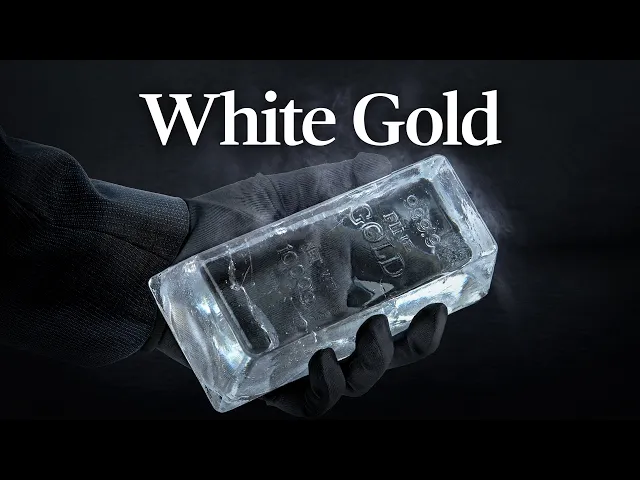
1:26 So, locals began to refer to the ice as white gold.
1:30 As Gorrie's supply ran out, he was forced to watch his patients suffer and die.
1:35 It was in that moment that he decided he would find
1:37 a way to free the world from the grip of the Ice King.
1:43 By the turn of the 19th century,
1:45 most of America's ice came from the northern states,
1:48 where thousands of square kilometers of lakes
1:50 would freeze over for much of the year.
1:53 The hard part was getting all that ice out.
1:57 To get ice out of a lake or river, first of all,
1:59 you had to trust that it was deep enough to support your weight,
2:02 and there's no way to really tell.
2:04 Then, you had to walk out several feet onto this plane of ice,
2:08 take a saw, that's as long as I am tall,
2:11 and then carve the very ice that you're standing
2:14 on and just hope to heaven that it doesn't sink.
2:18 (bright music) Then, you had to kind of float it to shore,
2:23 and a horse would help to kind of pull the ice into the back of a wagon.
2:28 It was frequently common for the harvesters
2:31 and their horses to fall through into the ice, sometimes to their death.
2:35 This dangerous and painstaking process meant that ice remained a rare commodity,
2:39 available mostly to wealthy landowners.
2:42 One of the few who had access
2:43 to it was 22-year-old Boston merchant Frederic Tudor.
2:48 In the winter of 1805, Tudor was thinking back to a tragic
2:52 incident that had happened four years earlier.
2:54 He and his brother came down with a bad fever while visiting the Caribbean.
2:59 Back home, they would've just asked their servants to get some ice.
3:03 But on the islands, ice was unheard of.
3:06 With no way to cool down,
3:08 the brothers cut their trip short and returned to America.
3:11 And while Frederic recovered, his brother did not.
3:15 (pensive music) Today, we know that ice wouldn't have saved his brother's life
3:19 because he likely suffered from a rare case of bone tuberculosis.
3:24 But at the time, Tudor believed that it was the lack
3:26 of ice on the islands that was responsible for his brother's death.
3:30 It was this painful memory that gave him an idea.
3:34 What if he could be the one to bring ice to the Caribbean?
3:37 And, in the process, make his fortune.
3:40 So, Tudor got to work.
3:42 He hired dozens of men to gather ice
3:44 and approached investors to help finance a ship.
3:47 But to the investors, this plan seemed ridiculous.
3:51 Tudor wrote, "People only laugh when I tell them I'm going to carry ice
3:55 to the West Indies," which is understandable
3:58 because the journey would take three weeks,
4:01 sailing through warm seas under the blazing Caribbean sun.
4:04 I mean, can you really transport ice in those conditions for that long?
4:09 Wouldn't it all just melt?
4:11 It turns, out people had figured out ways to make ice last a long time,
4:15 even thousands of years ago.
4:17 As far back as 500 BC,
4:20 in the scorching summers of the Persian Empire, ancient kings,
4:23 like Xerxes, enjoyed refreshing frozen desserts,
4:27 even when the outside temperature climbed as high as 35 degrees Celsius.
4:31 Now, ice in the desert might seem strange,
4:34 but during the winter months, temperatures can drop dramatically.
4:37 So, the Persians filled shallow pools with water, which would freeze overnight,
4:41 and in the morning, they would break up the ice sheets and collect the pieces.
4:45 To make that ice last until the summer, they used three key techniques.
4:51 Let's try simple a experiment.
4:52 I have eight ice cubes spread evenly in one dish here and I have another
4:58 eight ice cubes now stacked together in one mega cube in this dish over here.
5:03 Now, if you leave these two plates to melt for a few hours,
5:06 the stacked ice cubes fare a lot better, and that's because the main way ice
5:11 melts is through heat conduction on its surface.
5:13 So, even though the volume was the same,
5:14 the surface area exposed here is double what we had here.
5:18 The key idea here is that you wanna pack your ice as tightly as possible.
5:22 [Derek] In fact, the best shape to minimize the surface area is a sphere.
5:26 So, if you think about it,
5:28 a snowman is pretty much mathematically optimal to survive as long as possible.
5:34 But, you don't need perfect geometry to make ice last a long time.
5:38 In the winter of 2010, the city of Helsinki dumped all the snow
5:42 plowed from their streets onto this huge pile,
5:45 around 30 meters high and 100 meters wide.
5:48 Almost a year later, that very same pile was still around,
5:52 despite being exposed to one of the country's hottest summers in decades.
5:56 (jaunty music) The main reason it lasted so long is because the ratio
6:01 of surface area to volume actually decreases
6:03 for larger and larger amounts of ice.
6:05 For example, if you double the radius of this snowman,
6:08 then the volume of ice increases by a factor of two cubed or eight,
6:12 but the surface area only increases by a factor of two squared or four.
6:17 This is known as the square cube law,
6:19 which was the second technique used by the Persians.
6:22 And finally, they needed a way to shield the ice from the harsh desert.
6:25 (jaunty music)- Okay, I have another example.
6:28 Two ice cubes, two dishes.
6:30 The only difference, really, is gonna be that I have this fan,
6:32 which is gonna be blowing air onto this ice cube.
6:35 Now, it's not heating any of the air,
6:36 it's just blowing away any air the ice would've chilled for itself.
6:40 And it's introducing more warmer, ambient-temperature air,
6:43 which heats the ice cube better.
6:44 (pensive music) After about an hour of the fan blowing,
6:48 this ice cube is completely gone, whereas this one is only about 40% melted.
6:52 So, obviously, you wanna minimize the amount
6:54 of airflow that you're getting around your ice.
6:57 One way you can do that is by putting the ice in a deeper dish, like a pit,
7:02 because colder air sinks to the bottom,
7:04 so it collects around the ice and lets it stay there for longer.
7:08 And a way you can one-up that is to seal the ice,
7:11 which is exactly what the Persians did.
7:14 [Derek] This is a yakhchal, an ancient Persian ice house.
7:17 It's a massive dome structure with walls up to two meters thick at the base.
7:21 Here, the Persians collected up to 220 tonnes
7:24 of ice and packed it tightly together in a pit.
7:27 This allowed the cold,
7:28 dense air to collect while warm air was funneled up and out of the dome.
7:33 After the winter, the entire structure was sealed up,
7:36 insulating the ice until summer.
7:38 (compelling music) For the next 2,300 years, these techniques barely changed.
7:43 And now, Tudor was ready to bet his fortune on these ancient principles.
7:48 So, he mortgaged land on his family estate to buy a ship,
7:51 and he began modifying it for the long journey to the West Indies.
7:55 He did that by building out a cargo hole
7:58 in a ship that was built similarly to the ice houses.
8:03 The ice was elevated off the ground, so it wasn't sitting in melt water because
8:07 melt water speeds up the melting of ice.
8:09 And the blocks of ice were also packed really tightly.
8:13 Tudor went all in, sinking a full
8:15 $10,000 of mostly borrowed money into the venture,
8:18 which is the equivalent of over a quarter million dollars today.
8:22 He sent his youngest brother and his cousin ahead to the island
8:25 of Martinique to build an ice house ready to receive the cargo.
8:29 On the morning of February 13th, 1806, Tudor departed Boston Harbor,
8:33 carrying with him over 80 metric tonnes of ice, the first shipment of its kind.
8:38 The Boston Gazette ran an article that read, "No joke.
8:41 A vessel has cleared at the Custom House with a cargo of ice.
8:45 We hope this will not prove a slippery
8:49 speculation." After nearly three weeks at sea,
8:51 Tudor's ship arrived, and to his relief,
8:53 around half of the ice had survived the trip.
8:57 But there was a problem.
8:58 His brother and cousin had failed to build an ice house.
9:01 (suspenseful music) So, with no place to store the ice,
9:04 Tudor had to sell it straight off the dock, under the hot sun.
9:07 He sold as quickly as possible, but after two days, he had only made about $50.
9:12 The locals were confused by the strange frozen water,
9:15 and many were shocked when their new product disappeared before their eyes.
9:20 One customer tried to save his precious ice by submerging it in a bath of water,
9:25 only to find it vanishing even faster.
9:28 In the end, all Tudor could do was watch his remaining ice melt away.
9:33 Yet somehow, he was undeterred,
9:35 and over the next four years, he continued to borrow money,
9:38 using every cent to ship ice to new markets,
9:41 like Cuba, Jamaica, Barbados, and Antigua.
9:45 But, business remained difficult.
9:47 Tudor wrote, "I found myself without money and without friends,
9:51 and with only a cargo of ice in a torrid
9:54 zone to depend on for the supply of both." By 1809,
9:58 Tudor owed $40,000 to investors, which is over 1 million bucks today.
10:03 He was hounded by creditors,
10:05 he was forced to hide from sheriffs on his own ships,
10:08 and he was even sent to debtor's prison twice.
10:11 (jail bars clanging) He later described it
10:14 as, "The winter of my discontent," but during that time, he had a revelation.
10:18 The reason demand wasn't picking up was because the people
10:21 of the West Indies didn't know what to do with ice.
10:25 So, all he had to do, he reasoned,
10:27 was make them understand by offering them some refreshing drinks.
10:32 (beverage sloshing)- He convinces the bartenders there to let
10:37 him show them how to make icy cocktails,
10:41 and he gives the ice initially to the bartenders for free.
10:45 So, the bartenders can sell both the icy drink
10:48 and the room temperature drink at the same price,
10:52 just to see what their customers prefer.
10:54 And lo and behold, they prefer the icy drink.
10:57 [Derek] In Tudor's own words,
10:58 "A man who has drank his drinks cold at the same expense for one week can
11:02 never be presented with them warm again."- Tudor
11:05 even showed them how to make ice cream,
11:06 which became an instant hit, especially in Cuba.
11:09 150 years later, during the Cuban Revolution,
11:12 its leader, Fidel Castro, was obsessed with ice cream.
11:15 He was actually known to eat up to 18 scoops after lunchtime,
11:19 which is a bit crazy.
11:20 His sweet tooth was so famous that the CIA
11:23 actually tried to assassinate him with a poisoned milkshake.
11:27 Now, back in Tudor's day, his work was finally paying off.
11:30 The cafe owners in the West Indies started asking him for more and more ice,
11:34 and he realized that he could increase his profits,
11:36 just by refining his methods.
11:38 So, he started using sawdust to insulate
11:40 his ice on the ships because sawdust was
11:43 a phenomenal insulator that you could basically get
11:46 for free from all the sawmills around Boston.
11:48 They were just trying to get rid of it.
11:50 And he also replaced the manual saws at the lakes with horse-drawn plows,
11:55 which made it all the easier to get the ice out.
11:57 Because of that, the price of extracting a tonne of ice
12:00 dropped from around 30 cents all the way down to 10 cents.
12:04 By the 1820s, Tudor was finally turning a profit,
12:07 and the ice trade began to pick up.
12:09 So much so that copycat businesses began to crop up.
12:13 But Tudor wasn't about to let anyone else have a share of the market he created.
12:17 So, to maintain his monopoly, he often undercut his competition until they
12:22 either gave up or went out of business.
12:25 Tudor's ambition didn't end there, and he wrote that, There was "an experiment I
12:29 have been desirous of making for 20 years." In 1833,
12:33 he took on his biggest challenge yet,
12:36 a four-month journey to ship ice halfway across the world to Calcutta, India.
12:40 (suspenseful music) (rain splashing) (thunder rumbling) (waves
12:44 crashing) (wind whooshing) (waves crashing) And despite
12:49 the trip being five times longer than his first one to the Caribbean,
12:53 more than half of the ice survived.
12:55 (compelling music) In India, the ice was a big hit.
12:59 Over the next 20 years, Tudor made around $220,000 in Calcutta alone,
13:05 making it one of his most profitable ventures.
13:08 Over that same period, he rapidly expanded his empire,
13:11 opening roots to Brazil, Singapore, Hong Kong, and even Australia.
13:15 His yearly sales went from less than 10,000 tonnes
13:18 in the 1830s to a record high of 132,000 tonnes in 1856.
13:24 Seeing the wealth and power of his monopoly,
13:26 the world gave Tudor a new name: the Ice King.
13:30 (suspenseful music) (ice cracking) In under 50 years,
13:33 the ice trade had become one of the largest industries in the US,
13:37 and it's second largest export by weight.
13:40 What was once a luxury product became a commodity.
13:43 By the 1860s, devices known as ice
13:45 boxes started popping up in ordinary kitchens.
13:48 Essentially, they were insulated wooden cabinets
13:51 with a compartment for ice at the top,
13:53 which would then cool down the food underneath, keeping it fresh.
13:56 Families across the country soon bought ice daily or weekly,
14:00 with the average New Yorker buying over 600 kilograms a year.
14:05 This surge in demand resulted in a curious new profession.
14:08 The iceman.
14:11 The iceman would go door to door,
14:12 delivering huge blocks of ice up to 45 kilograms.
14:16 And while home delivery was nothing new in the 19th century,
14:19 the iceman was unique,
14:21 in that he needed to go inside your house to make his delivery.
14:24 [Homeowner] Yoo-hoo!
14:25 Iceman!
14:27 All kinds of rumors and jokes and cultural thoughts started to to crop up.
14:33 And if you look at some of the most popular songs at the time,
14:37 "She Fell In Love with the Iceman," or "The Iceman Took My Wife."
14:41 If you look at old Valentine's Day cards that were circulating at this time,
14:45 they all had puns about the iceman.
14:48 The iceman made my wife too hot; he was supposed to deliver ice.
14:52 Like, it was so silly.
14:54 (jaunty music)- Consumption of ice in big cities like New York skyrocketed.
14:58 And by the end of the 19th century,
15:00 ice had grown into a billion-dollar business.
15:03 And while part of the demand was due to home ice boxes,
15:06 the real driving force was several new industries.
15:11 The ice industry also launched the fish industry,
15:14 the meat packing industry, the brewery industry.
15:17 It became like this multi-level industry.
15:21 (train horn honking) When we get to the point where there are railroads,
15:24 then comes the invention of the refrigeration car,
15:27 railroad cars that were insulated with ice
15:30 blocks to carry things that are perishable.
15:33 So, if you think about it, fresh fruits and vegetables that have
15:36 been region-locked now can become national staples.
15:38 So, you have apricots and cherries from California,
15:41 you have strawberries from Florida, they can all go inland.
15:44 Actually, you want to guess the name of a vegetable
15:47 that was really popularized with these chilled cars?
15:50 Chilled vegetable.
15:51 I'm gonna guess lettuce?
15:53 Which one?
15:55 Iceberg.
15:56 It's gotta be iceberg, right?
15:58 [Gregor] Exactly.
15:59 It's like crunchy water.
16:00 It's like ice, iceberg lettuce.
16:02 [Gregor] It is crunchy water,
16:03 but it was actually called iceberg because of the ice that kept it fresh.
16:06 (jaunty music)- This change marked the beginning
16:09 of a new system called the cold chain.
16:11 And for the meat packing industry, it was a huge upgrade.
16:15 Previously, the only way to transport fresh meat was by sending
16:19 rail cars filled with live cattle straight from farms to cities.
16:23 Then, the animals had to be brought into the city and held
16:26 in local stockyards before they were
16:28 prepared by local slaughterhouses and butchers.
16:30 The result was that city centers were filled with dirty, noisy cows.
16:35 And on top of that, since almost half of the animal was inedible,
16:38 shipping was extremely inefficient, pushing up the cost.
16:41 (jaunty music) But, with chilled rail cars, all this changed,
16:45 and the country's supply chain reorganized into three parts.
16:49 First, ranches across the Great Plains funneled
16:51 their cattle to cities in the Midwest.
16:53 Taking on the role of industrial food preparation and distribution,
16:57 these cities built up vast stockyards, slaughterhouses,
17:00 and rail hubs to send the meat onward.
17:02 Chicago emerged as the nation's meat packing capital,
17:05 ballooning in size from just 30,000 people in 1850 to 1.7 million in 1900.
17:12 And at the end of the chain were the large, insatiable cities.
17:16 With the new system in place,
17:17 almost twice as much edible meat could be transported in each rail car,
17:21 eventually dropping the cost in urban areas by 39%.
17:25 As a result, demand soared.
17:27 In New York City alone, beef shipments rose from just 2,400 tonnes
17:31 in 1882 to around 63,000 tons in 1886.
17:35 That's a 25-fold increase in just four years.
17:39 But more importantly, with a national distribution network to rely
17:43 on, these cities no longer needed to prepare meat locally.
17:46 They could finally get rid of all the infrastructure
17:48 and herds of cows in the city center,
17:51 freeing up the land for things like housing, offices, and factories.
17:55 This fundamentally changed their structure and gave
17:58 rise to the modern city of today.
18:00 (suspenseful music) But, while the cold chain was redefining America,
18:04 a new invention was about to overthrow the natural ice industry,
18:09 which brings us back to Dr.
18:11 John Gorrie in the 1840s.
18:12 A few scientists had devised and even built prototype cooling machines,
18:16 but they weren't commercially viable.
18:18 And Gorrie wasn't faring any better.
18:21 He had spent three years struggling to make artificial ice with no success.
18:26 But one night, while experimenting with an air pump to drain a bucket,
18:29 he noticed that if you let the air expand quickly,
18:32 it formed a thin layer of ice on the surface of the water.
18:35 He had just stumbled upon the breakthrough he needed,
18:39 and he set about creating a prototype based on this idea.
18:44 Take a sealed cylinder filled with air and a piston that can move inside it.
18:48 We'll assume there's no friction or heat lost to the environment.
18:51 When the piston pushes down,
18:53 the air is compressed, increasing its pressure and temperature.
18:57 The reason the temperature increases is because as the piston pushes down,
19:01 it moves toward the air molecules.
19:04 So, when a molecule bounces off this moving surface,
19:06 it gains a little bit of speed.
19:08 And since the temperature is proportional to the molecules speed squared,
19:12 well, the air must heat up.
19:15 But, notice that this process is completely reversible.
19:18 If the piston is released,
19:19 the high pressure air pushes the piston back until the pressure equalizes.
19:24 So now, when one of the molecules bounces off the piston,
19:27 it loses a little bit of speed.
19:29 Gorrie knew that if he simply let all of this hot, high-pressure air expand,
19:34 it would return back to roughly its original temperature,
19:38 which wouldn't be very helpful.
19:39 But what if he first cooled the air and then let it expand?
19:44 Well, then, its temperature would drop far lower than the ambient air.
19:48 He started with a similar setup,
19:50 a cylinder and a piston that were powered by a hand crank,
19:53 which he then attached to a large air tank.
19:56 As Gorrie turned the crank, the piston moved down,
19:58 compressing the air and raising its temperature.
20:02 To prevent the air from being sucked out of the large tank,
20:04 Gorrie added a one-way valve at the bottom of the cylinder.
20:08 He also added a similar valve at the top of the piston,
20:10 so that the cylinder could refill with fresh air.
20:13 So, now, with each turn of the crank, more and more air was added to the tank,
20:18 which allowed to increase the pressure to around 10 atmospheres.
20:23 But then, he added one extra step.
20:25 In between the piston and the tank,
20:27 he placed a big bucket of water and he forced the air through a submerged pipe.
20:32 This cooled the air down to around the same temperature as the water.
20:36 The result was that his tank was still filled with high-pressure air,
20:40 but instead of being hot, it was cool.
20:43 So, now, when Gorrie released some of his cool
20:45 air into another cylinder with a piston, the air rapidly expanded.
20:50 This cooled the air down below its
20:51 starting point and dropped it to freezing temperatures.
20:54 Gorrie then placed this entire cylinder inside
20:57 a large tank of water, finally making ice.
21:01 But to avoid the entire tank freezing solid and clogging up his machine,
21:05 he used one final trick.
21:07 Instead of fresh water, he filled the final tank with salt water,
21:11 which freezes below zero degrees Celsius.
21:13 Since the salt water remained liquid,
21:15 he then submerged metal molds of fresh water until they froze into solid blocks,
21:20 essentially creating the world's first ice cube tray.
21:23 For the first time ever, ice could be created anywhere,
21:26 even in the heat of the Florida summer.
21:28 (pensive music)- And when he says to the world like,
21:34 "I've invented ice," the reaction was, "The hell you have.
21:37 (Amy laughing) No man should be creating ice.
21:41 Only God can create ice." And what John Gorrie also didn't realize is
21:45 that in the first public venues in which he announces his ice machine,
21:50 Frederic Tudor has his associates in the audience.
21:53 And Frederic Tudor is a man who does not take lightly to threats to his empire.
21:58 And what bigger threat to the naturalized
22:01 harvesting empire is there than human-made ice?
22:05 [Derek] There was no way the Ice King was giving up his empire without a fight.
22:09 What he ends up doing is he ends up paying editors up and down
22:13 the eastern seaboard at newspapers to publish
22:16 scandalous news articles about John Gorrie.
22:19 So, everywhere from Tallahassee up to New York,
22:21 you see newspapers publishing headlines, like,
22:24 "There's this crank that thinks he can make
22:26 ice as good as God Almighty." And ultimately,
22:29 John Gorrie, he does patent his machine, but he never makes a dime on it.
22:34 Gorrie spent the next few years in financial ruin.
22:37 A decade later, he died alone and penniless, most likely succumbing to malaria.
22:43 There are reports he suffered an extremely high fever in his final days,
22:47 the very symptom he had tried to alleviate for so many years.
22:52 But, Gorrie's invention hadn't been completely ignored.
22:56 Soon, others began work on artificial cooling machines,
22:59 including James Harrison, a Scottish-born engineer Working in Australia.
23:04 Harrison noticed that Gorrie's machine had one big drawback.
23:08 It relied on just two components to move heat:
23:10 a compressor and an expansion engine.
23:13 So, instead of using air to cool his machine, he tried a different approach.
23:18 I have a can of freeze spray here,
23:20 which is a liquid that when I press down on this button,
23:23 comes out and immediately evaporates into a very, very low-temperature gas.
23:28 So, what I'm gonna do is I'm gonna blast it at this cup of water.
23:31 And the process is actually so effective that in essentially under a minute,
23:35 I'm able to get some ice to form in there.
23:38 Okay.
23:39 So, after a layer of water, what you get is...
23:42 (ice clattering) A bunch of ice.
23:45 (ice clattering) Now, the reason this works is because something
23:48 special happens when a substance changes phase.
23:50 So, in order to go from a liquid to a gas, it needs to absorb a lot of energy.
23:55 And pretty much all this energy goes
23:57 into overcoming the force of attraction between molecules,
24:00 so that they can disperse and go into the gas phase.
24:03 Harrison realized he could take advantage of this effect by forcing
24:06 a fluid to continuously evaporate and condense as it's going through a loop.
24:12 A modern version looks something like this.
24:15 [Derek] Start by adding a liquid under high pressure to a loop.
24:19 Passing this liquid through an expansion
24:20 valve quickly drops the pressure and temperature,
24:23 causing some of the liquid to immediately turn into a gas.
24:27 The mixture then passes into an evaporator coil,
24:30 where the remaining liquid continues to boil.
24:32 But, this phase change requires a lot of energy.
24:36 So, the liquid absorbs heat from the environment,
24:38 and this is what creates the cooling effect.
24:40 (ice cracking) The cold gas is then cycled through a compressor,
24:44 raising its temperature, and then it's pushed through a condenser coil.
24:48 Here, the hot gas cools and turns back into a liquid,
24:52 releasing the absorbed heat back into the environment
24:54 before returning to the expansion valve.
24:57 (pensive music) By repeating this cycle over and over again,
25:01 Harrison was reportedly able to manufacture as much
25:04 as 3,000 kilograms of ice per day.
25:06 And his machine was a huge commercial success.
25:11 Meanwhile, public resistance to Godless ice
25:13 and artificial cooling began to fade,
25:16 overshadowed by a growing health crisis linked to natural ice.
25:19 One of the reasons artificial ice was so much
25:22 better is because we make it on our own terms.
25:24 With natural ice, we had to wait until the right season, in the right place,
25:28 and then whatever happened in the water that froze,
25:31 like something died or was rotting in there, you had to work with it.
25:35 By the time we get to the mid-19th century,
25:37 the peak of the Industrial Revolution,
25:40 factories and farms just letting loose their chemicals
25:43 and detritus into the nearby lakes and rivers.
25:45 You put an ice block into your cocktail, you could get cholera.
25:48 There are, like, stories of hospitals treating wounds with ice,
25:52 and then the ice makes you get a disease, and your wound isn't even the problem.
25:58 They're getting cholera, they're getting food poisoning or ice poisoning.
26:02 I mean, they're getting very, very sick.
26:05 It's so funny, when we were first talking about this story,
26:08 I was thinking about this frozen New England ice,
26:12 and I was just imagining like the purest lake water,
26:16 this crystal-clear ice, and, like, just this incredible product, right?
26:21 But now that you mentioned it, like, yeah, it probably is a lot less hygienic.
26:26 And yeah, there's probably germs in there.
26:28 (pensive music)- And so the human-made ice companies were like,
26:33 "Sure, our ice isn't made by God.
26:35 But, natural ice will kill you.
26:37 So, which one do you want?"- [Derek] After the first
26:40 affordable home refrigerator landed in the mass market in 1927,
26:44 it became one of the fastest adopted
26:46 new technologies of the entire 20th century,
26:49 going from less than 1% of homes having one in the 1920s to 85% by 1944.
26:55 This made its take off even faster
26:57 than the motorcar replacing the horse-drawn cart.
27:01 There's this argument of, "Would the world
27:03 really be so different without refrigeration?" Like, sure, food, strawberries,
27:07 iceberg lettuce, but then you think about vaccines, blood donations,
27:11 insulin, that the same cold chain transports those things.
27:14 And then, beyond medicine,
27:15 the same principles that Harrison and Gorrie used for their fridges
27:19 are what allow us to cool things down to almost absolute zero.
27:23 Over the past century,
27:24 so many of the discoveries that we made rely on this principle of refrigeration:
27:29 MRIs, the Large Hadron Collider at CERN, the James Webb Telescope.
27:33 All of that is also refrigeration.
27:35 And my favorite is the PCR story, where Thermus aquaticus was in a fridge
27:39 for 16 years before Kary Mullis discovered it.
27:42 There wouldn't have been that connection to make
27:44 PCR viable in that way without a fridge.
27:47 I think it's easier to focus on the movement
27:50 of macroscopic objects and macroscopic things happening,
27:54 but this is really about controlling motion on the smallest scale,
27:59 controlling thermal motion, which is a pretty remarkable breakthrough.
28:03 I mean, we could heat things up for a long time,
28:05 so you wanna increase the thermal energy of molecules.
28:08 You could do that from the time we had fire.
28:10 But actually, taking those molecules and figuring out how
28:13 to remove their thermal energy and really slow them down,
28:16 that's the refrigeration story.
28:17 And that's really recent.
28:19 But as you point out, like, it has profound effects.
28:27 Gorrie was able to make ice because he
28:29 wasn't afraid to step outside his own profession,
28:32 medicine, and venture into a new field, thermodynamics.
28:35 And while you probably don't need to reinvent the fridge,
28:38 learning a new skill is always handy.
28:41 Here at Veritasium, we create simulations and models
28:44 to test our ideas and illustrate them.
28:46 And along the way, our team has learned to code
28:48 in Python to make sure our animations are as accurate as possible.
28:53 So, if you, like us,
28:54 want to understand coding and strengthen your programming skills,
28:57 a great place to start is today's video sponsor, Brilliant.
29:00 Brilliant have recently added new Python and coding courses,
29:04 starting from the basics and working all the way
29:06 up to complex topics, like how AI works.
29:09 Each of these is designed to break down concepts into smaller pieces,
29:13 train your intuition, and encourage you to explore your own ideas.
29:17 Brilliant helps you build skills in math,
29:19 science, and computer science through step-by-step interactive learning.
29:23 This method is proven to be far more
29:25 effective than just watching lectures or videos alone.
29:28 What I love most is that instead of dumping formulas on you,
29:32 Brilliant guides you to those, "Aha!" moments where everything finally clicks.
29:37 I have changed my phone a fair few times over the past five years,
29:40 but every time I do, I make sure to download the Brilliant app because
29:44 it's such a great way to keep my brain engaged.
29:47 So, if you want free access to Brilliant's courses for a full 30 days,
29:51 go to brilliant.org/veritasium.
29:54 You can scan this QR code or click the link in the description.
29:58 Brilliant also gives our viewers 20% off
30:00 an annual premium subscription for unlimited access.
30:04 So, I wanna thank Brilliant for sponsoring this video,
30:06 and I wanna thank you for watching.