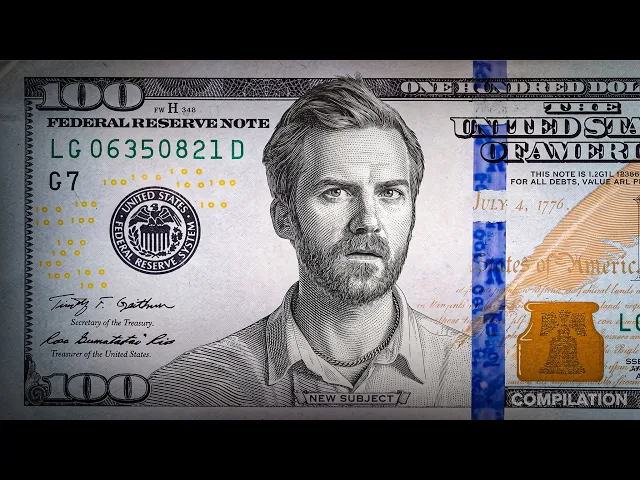
How Money Actually Works
Johnny Harris
0:00 (light mysterious jazz music)- If we took all
0:08 of the gold that has ever been mined in all
0:10 of human history and put it all in one place in a giant cube here in Washington,
0:14 DC., it would look like (air whooshing) (lively string music) this!
0:18 (gold cube slams) (light whimsical music) Oh, this is it?
0:22 (knuckles tapping) I mean, it's pretty big,
0:26 but I kinda thought it was gonna be a lot bigger.
0:29 So, what's all this gold even used for?
0:31 Well, 45% of it is used for, like, decoration and jewelry.
0:36 You got necklaces, you got earrings.
0:38 You've got this giant Buddha that's just solid gold.
0:42 There's an old Egyptian coffin made of pure gold.
0:45 Largest gold coin in the world, it's got a kangaroo on it.
0:48 It's 45% of all the gold.
0:49 You got a small portion of all this stuff that gets used for industry.
0:52 Stuff like the fillings in your teeth or electronic
0:56 components that use the special properties of gold to work.
1:01 But then a huge portion of all this gold
1:03 is just sitting in vaults around the world.
1:06 Mostly in New York and London, in the form of bars gathering dust.
1:11 Governments and investors have been on a gold-buying spree lately.
1:14 I mean, look at the price of gold.
1:16 President Trump is seeking more control of the Federal Reserve.
1:19 Gold prices saw to a record high
1:21 after US President Donald Trump criticized Federal Reserve.
1:25 Russia and China have been buying a lot of gold bars.
1:27 And Florida is trying to make it so that gold can be used as real money again.
1:32 It seems like gold is having a comeback.
1:34 But actually, what I'm learning is that it never went away in the first place.
1:39 [Speaker] Would you look at that.
1:41 (wondrous orchestral music) (ethereal choir music) (light mysterious music) So,
1:51 how did all of this gold get here to Earth?
1:54 Well, a lot of the gold that humans mined came to us on one
1:57 of these: an asteroid loaded up
1:59 with heavy metals that formed from exploding stars.
2:02 (star booming) If you zoom into one of those metals,
2:06 you'll see some really weird-looking atoms.
2:09 The electrons are moving nearly the speed of light.
2:11 This absorbs the blue light and reflects the yellow and red light.
2:16 Look, it's yellow.
2:17 It's shiny like the Sun.
2:19 No other metal does it quite like this.
2:22 (asteroid slamming) These gold deposits sat
2:28 in Earth's crust for billions of years, undiscovered.
2:32 Some rivers dug in, eroding the earth
2:34 and revealing these pieces of shiny stardust.
2:37 It caught the eye of some humans who noticed it was different.
2:40 Found this shiny rock that they dug out of the ground,
2:43 that they could turn into things, that it didn't tarnish.
2:46 [Johnny] It was a dense metal, but it was somehow soft and workable.
2:49 It didn't rust.
2:50 It was incorruptible.
2:52 Was it eternal?
2:54 Gold has chemical properties that have proven to be very interesting
2:58 and useful to many societies across the kind of many centuries.
3:02 And some of those properties have to do with its purity.
3:06 Some of them have to do with its malleability.
3:09 Some of them have to do with its indestructibility.
3:11 And some of it has to do with its aesthetic intrigue.
3:16 From China to the Indies, people independently fell under gold's spell.
3:20 At first, for decoration and celebration of their rulers and their gods.
3:25 Indian healers made medicine with it.
3:27 To the Inca, gold was the sweat of the Sun.
3:30 They covered their temples and adorned their faces with it.
3:33 The Greeks made statues.
3:34 King Solomon plated his temple with it.
3:36 And 6,000 years ago, this guy was buried with a gold bracelet with beads,
3:41 with this scepter, with a sheath.
3:43 Oh, and not for his sword, but for his...
3:47 Yeah, I mean, I guess it was pretty valuable stuff.
3:50 Chinese emperors ingested gold trying to become immortal,
3:53 which, spoiler alert, doesn't work.
3:56 But as humans gathered in larger and larger groups, empires grew.
3:59 They became greedy and hungry for more land.
4:01 The story of gold starts to evolve,
4:03 helping kick off one of the most significant psychological
4:06 inventions humans ever came up with: the invention of money.
4:11 (coins clinking) (ethereal choir music)- It's
4:14 a commonly accepted medium of exchange,
4:16 and many people are willing to accept it.
4:18 In early societies, one of the most common things was cattle.
4:22 (slurping) Yep.
4:23 We're talking about cows.
4:24 We'll get back to gold in just a sec.
4:25 Let's go inside the human brain to see how money evolves.
4:30 So yeah, instead of just trading something I want for something you want,
4:33 humans started settling on commonly useful things that they could carry around,
4:38 and that would be valuable to most people.
4:41 Historically, lots of objects have served as monies.
4:44 So, you got barley, salt.
4:46 [Thomas] Cows were something that many people needed for food.
4:48 They were transportable 'cause they could walk.
4:50 They were pretty easy to maintain 'cause they eat grass.
4:53 This is the most obvious version of money.
4:55 Something that is practical and useful.
4:57 It'll help you survive.
4:58 But they also have drawbacks.
5:00 Cows don't make good money.
5:02 That's a weird sentence I never thought I would say.
5:04 (laughs) But yeah, they spoil.
5:05 They're hard to divide.
5:07 You can't easily bring them to far-away places to do trading.
5:10 So, eventually humans found something better:
5:12 that shiny soft metal pulled from the riverbeds.
5:15 It was easy to shape, to split up.
5:18 So it's easy to carry around; it's easily divisible.
5:21 And it just looks cool.
5:22 (sniffs) And humans love shiny things.
5:24 (slurping) So, that was like a nice added bonus.
5:26 It was rare, but not too rare.
5:28 Like, there was enough of it, but it wasn't, like, everywhere.
5:30 Which, like, that's an important part of this.
5:32 But gold doesn't feed you.
5:34 It doesn't keep you warm.
5:35 It doesn't shelter you.
5:37 Yes, you can make jewelry and, like, a dagger out of it or something.
5:40 But like, it's not that intrinsically useful.
5:42 Unless we introduce a very powerful ingredient to the mix.
5:46 It's a very human ingredient called belief.
5:49 (bright thoughtful music) This guy believes gold is valuable,
5:53 and so does this guy.
5:54 If someone believes that gold is valuable and so does another person,
5:57 that belief turns metal into a system.
6:00 He trades it for wheat.
6:01 "I'll give you gold.
6:03 You give me wheat." You then take that gold and go trade it for salt or fabric.
6:09 Gold becomes valuable not because of what it does,
6:12 but because what we believe it means.
6:15 So, this is a big psychological step for us.
6:17 From cattle, which has utility, to gold,
6:20 which has no utility, but is scarce, durable, divisible, universal.
6:25 And don't forget, nice and shiny.
6:27 And all this is made possible because of collective belief.
6:30 Belief that if I have this metal,
6:32 I will be able to go use it to buy things that help me survive.
6:35 And if everyone believes it, then it works.
6:37 [Lawrence] Gold and silver became the dominant monies throughout the world.
6:41 (lively string music)- So,
6:47 the belief in gold spreads throughout the world a few thousand years ago.
6:50 Not just as a thing that we do to worship the gods,
6:52 but as a means of trade, a currency, a money.
6:55 This also happened with gold's forgotten cousin, silver.
6:59 Poor silver.
7:00 It just didn't get those fast-moving electrons to make it shiny.
7:03 And there's like too much of it, too.
7:04 Anyway, soon gold was being stamped into standardized coins,
7:08 being used as a near-universal form of money all around the world.
7:11 It was magic, but it was also mania.
7:15 (light pensive music) When the Spanish landed
7:18 on the shores of modern-day Mexico in 1519, they met the Aztec civilization,
7:24 and one thing caught their eye: gold, lots of gold.
7:29 Including these gifts that the Aztec king was presenting to the Spaniards.
7:33 Giving it to them for free.
7:35 The Aztecs were using lots of gold, but not as a currency,
7:39 but as decoration, for worship, for armor, for blades.
7:42 It wasn't economic.
7:44 But to the Spanish, gold had become economic, a means of trade.
7:48 It was wealth.
7:49 And here it was in extreme abundance, and they wanted it.
7:53 Or, in the words of one Spanish conqueror.
7:55 "We suffer from a disease of the heart that can only be cured by gold."
8:00 (tense contemplative music) The Spanish ended up massacring
8:04 the Aztecs with their weapons and their diseases.
8:07 (crowd clamoring) They took as much gold as they could find.
8:10 These statues and masks and jewelry and blades.
8:13 Melted them down, shaped them into uniform units of value,
8:17 and stamped them with a seal of authority.
8:20 They spent the next century ripping through the Americas,
8:22 chasing every rumor of golden cities and sacred wealth.
8:26 Places like El Dorado, Cibola.
8:29 Men fevered by greed for this shiny metal stuff,
8:32 fueled by conquest and spoils that built their cathedrals,
8:37 and ended up kicking off a race among the European empires.
8:40 A race for more and more gold.
8:43 Let's not forget what the Spanish found when they came to the New World.
8:47 Gold!
8:48 Mountains of it.
8:49 And then, of course, this leads to a cottage industry of renegade sailors,
8:53 sometimes hired by other empires,
8:55 trying to intercept these ships going to and from the New World,
8:58 with hopes of finding one of these chests full of gold.
9:01 Now, I was disappointed in my reporting when I discovered that (laughs)
9:05 most pirates weren't actually after gold and didn't find a lot of gold.
9:09 They were after more boring stuff like lumber.
9:11 And they didn't really have these X-marks-the-spot type
9:14 maps where they buried their chest of gold.
9:16 (gasps) Look, it's the X.
9:20 X marks the spot!
9:21 That's mostly a myth,
9:21 but it's also kind of a useful example of how gold inspired these, like,
9:27 big grand stories of adventure, of jackpot.
9:30 How it enlivened the imagination and inflamed this greed in people's minds.
9:35 I mean, I get it.
9:36 How sick is the idea of a bunch
9:38 of gold that never rusts buried somewhere in the Caribbean,
9:41 ready to turn a peasant into a count?
9:44 Greetings.
9:45 God, I love "The Count of Monte Cristo" from the early 2000s.
9:48 (slurping) So by the 1800s, this psychological leap is complete.
9:52 There is a near-universal belief in gold as a currency,
9:56 a means for exchange, the universal money.
9:59 Big European empires had already torn across continents in search for it.
10:02 And now, it was the turn of regular people.
10:04 The dreamers, the risk takers, the desperate men who joined the hunt for gold.
10:09 Men with nothing to lose.
10:10 Chasing rumors of riches and doing pretty reckless and extraordinary things,
10:15 all for a shot at striking gold.
10:17 A big group of them in 1849 fled into the Western United States,
10:21 helping build California, becoming the 49ers, all in search for gold.
10:25 These guys are in Canada's Yukon,
10:27 where it is very cold and they're looking for gold.
10:29 I mean, this happened everywhere.
10:30 South Africa, Australia, the Amazon.
10:33 Each place, the same story.
10:35 Men intoxicated by the idea of getting rich off of gold,
10:38 doing whatever it takes to get their hands on the stuff.
10:41 Even forcing others to mine it for them.
10:44 This frenzy of hope, chaos, migration.
10:47 It was gold fever, and it didn't just move markets;
10:50 it moved human beings, entire populations.
10:53 It was, as the writer of this excellent book puts it,
10:57 "a murderous, cruel, intoxicating, brutal adventure that swallowed an entire
11:02 civilization and spatted out as coins." Man,
11:05 I love when rigorous historians write beautiful language.
11:09 Okay, let's dive back into the brain really quick and see what's going on next.
11:13 We're about to take another big psychological leap here.
11:16 The leap from a belief in this soft, shiny metal to a belief in paper.
11:20 (coins clinking) (ethereal choir music)- One of the problems with physical
11:24 gold is that if you wanna trade it in large quantities,
11:27 it's pretty heavy to carry around a lot of gold.
11:29 And what people decided was if they could deposit their gold into a bank,
11:33 it would give them a bank note, which was essentially an IOU.
11:36 One ounce of gold was worth approximately $20.
11:40 So, basically, if you had a $20 bill,
11:42 you could go into a bank and redeem it for one ounce of gold.
11:45 Most individuals, when they got paid,
11:47 they gonna pay envelopes stuffed with bank notes.
11:50 So, that was the everyday medium of exchange.
11:52 As long as you trusted that the bank notes were good,
11:55 you really didn't think about much which bank had issued the notes.
11:59 They all exchanged one-to-one against each
12:01 other and against gold and silver dollars.
12:04 If you wanted gold instead of the bank note,
12:05 you could come in and redeem the bank note, and they would give you gold.
12:10 So, now instead of believing in gold, we are believing in banks.
12:14 Trusting them that if they give us this piece of paper,
12:17 it actually represents the gold that they are holding safe in their vault.
12:20 And that at any moment, if I needed the gold,
12:22 could go to the bank, get the gold.
12:24 That is now a pretty far abstraction from cows.
12:28 Something that feeds us.
12:29 We're now carrying around paper.
12:30 But once again, it follows the same rule that if everyone believes it
12:35 and if the banks don't give us any reason not to believe it,
12:38 then this worthless piece of paper turns into economic power, a currency.
12:43 And in fact, if we can do that, it's really convenient.
12:45 It makes trade way easier.
12:47 Theoretically, everyone thrives here.
12:49 So...
12:50 Oh.
12:50 Yeah, silver.
12:51 Okay, yeah.
12:52 Instead of gold in the vault, a lot of economies had silver in the vault.
12:55 And a lot of economies were trying to have both metals,
12:58 giving them each a specific value and pegging
13:00 that value so that it wouldn't change too much.
13:01 But this becomes a problem.
13:03 It's really hard to have two metals as the foundation of your paper money.
13:07 And then suddenly, if there's a big discovery of silver in Nevada or something,
13:11 there's way more silver.
13:12 So, it throws off the value of silver, but it's pegged to the value of gold.
13:14 And so, all this arbitrage happens.
13:16 This was a huge decades-long debate here in the United States.
13:19 It got really political.
13:20 You've got this guy running for office, mostly on a platform of silver.
13:24 And some people think that the "Wizard of Oz" is
13:26 an entire commentary on this debate between gold and silver.
13:30 And while reporting this story,
13:31 I was multiple times very tempted to go down this rabbit hole.
13:34 (inhales deeply) This is a video about gold, not about silver.
13:38 Sorry, silver.
13:39 So, we'll save that one for another day.
13:41 And indeed, by 1900, gold,
13:43 this shiny metal that humans have been using for thousands of years to do trade,
13:47 endured as the one metal that we would base our entire economy off of.
13:53 At least here in the United States.
13:54 But a lot of countries too.
13:56 We set a firm standard.
13:57 20 bucks gets you one ounce of gold.
14:00 There's a finite number of gold.
14:01 It doesn't fluctuate too much.
14:03 Anyway, this was called the gold standard.
14:05 And the United States and a bunch of other big
14:07 countries were on the gold standard in the early 1900s.
14:10 (tense orchestral music) So it's pretty clear that the economy is,
14:15 like, a big, confusing thing.
14:17 And especially in the last couple of years,
14:20 we have seen a pretty chaotic economy.
14:22 Higher grocery bills, unaffordable housing, confusing insurance costs.
14:26 But here's what's tricky.
14:27 The way that we understand these changes, what's actually happening,
14:32 differs dramatically depending on where we get our information.
14:36 And honestly, that applies to this video.
14:37 I've chosen some explanations of the economy that I
14:41 think are a useful way to understand it,
14:43 but I've chosen the narrative here, and those choices matter.
14:47 That's why I keep coming back to Ground News,
14:50 because it's the one place that helps me separate facts from framing.
14:54 Ground News is an app and website that allows
14:56 me to compare coverage from many different outlets,
14:59 including outlets from different countries, so that I can make up my own
15:03 mind instead of inheriting someone else's narrative.
15:06 Take this example.
15:07 Walmart recently announced it was lowering prices.
15:10 One outlet framed it as the administration successfully pushing down prices.
15:15 But another outlet, just in their framing, argues that the president took credit
15:20 for routine discounts while prices remain historically high.
15:23 This is the same fact, the same underlying announcement,
15:26 but each version gives you a completely different narrative,
15:30 a different impression of what actually happened.
15:32 They try to tell you whether it matters and who should get the credit.
15:36 We must remain vigilant.
15:38 And this is why I'm such a big fan of Ground News,
15:40 because it's exactly how I try to approach my own coverage,
15:44 my own videos, ingesting a lot of different perspectives and making
15:48 sure that what I cover includes a lot of those perspectives.
15:51 This is context that hopefully allows you to come to your own conclusions.
15:57 But my videos still have a framing.
15:59 I'm still a person with bias.
16:01 And Ground News is a tool that I use to make sure I'm checking those biases,
16:06 that I am aware of my framings.
16:09 Ground News was built by a former NASA engineer
16:11 who approached this as a problem to be solved.
16:15 A problem with how we get our information.
16:17 It's one of the few tools that I
16:19 found that actually tries to give you more context,
16:22 instead of less of it, which I think is so important right now.
16:25 So you can get 40% off, a big discount, on Ground News.
16:28 You can get in on their Vantage Plan,
16:29 which gets you in on all these features that you can check out.
16:32 You just gotta go to the link that's in my description.
16:33 It's ground.news/johnnyharris.
16:36 You can also click this lovely QR code.
16:38 I'm grateful to Ground News for existing, for what they do.
16:41 I'm also grateful that they sponsored today's compilation.
16:45 And with that, let's dive back into the wild world of our economy.
16:50 Okay, let's get back to the human brain because we're about
16:52 to go through our third massive leap in the psychology of money.
16:56 Let me warn you, this one's kind of weird.
16:58 And I went to college for this one monetary policy in economics,
17:02 and I'm gonna do my best to explain it, but starts to get a little bit wacky.
17:06 And we're also entering some controversial territory.
17:08 Economists, who are much smarter than I,
17:10 debate this stuff what I'm about to say.
17:12 And they all have different takes, and they have strong feelings about it.
17:14 So, I'm gonna do my best here.
17:15 But like, in the comments, you're gonna see some strong opinions.
17:18 I welcome them.
17:19 Just be nice.
17:20 (ethereal choir music) So, it's early 1900s.
17:25 Banks have gold in their vaults.
17:27 They give you a piece of paper that says
17:29 you're entitled to the gold in the vault.
17:30 But it turns out, human beings are struggling to adopt to the paper thing fully.
17:36 There are a series of financial panics.
17:38 You probably don't wanna get into the causes of the panics.
17:40 The banks had a limit to how many bank notes they could issue.
17:43 So, when people wanted more currency and they couldn't get bank notes,
17:47 they would take gold and silver coins outta the bank vaults.
17:50 And now the banks are losing reserves.
17:52 Now, they have a problem.
17:54 So, here they all are at the same time,
17:55 rushing to the bank to pull their money out all at once.
17:58 (rousing orchestral music) (crowd yelling) This is not good
18:02 for an economy that grows when you give banks money to lend
18:06 out to other people and trust that not everyone's gonna
18:09 try to take it all out at the same time.
18:10 We made a whole video about this.
18:11 How modern finance and credit works and how
18:14 that multiplies the money supply in these weird ways.
18:16 You can check that out.
18:17 But for now, just look at this picture of a bunch
18:20 of people on Wall Street trying to get their gold out.
18:22 And know that this is not good for the economy.
18:25 So, the US government decides that having
18:27 all of these decentralized private banks
18:30 who are giving out paper money is just too prone to these vulnerabilities,
18:35 to everyone going and taking all the money out at the same time.
18:37 So, they decide to make one bank.
18:39 One bank to rule them all, AKA the central bank,
18:43 AKA the Federal Reserve, AKA the Fed.
18:48 We're just gonna call it the Fed from now on.
18:50 Why did the US government decide they
18:53 needed to centralize this around a single bank?
18:57 It's a federal institution that will cope with potential
19:00 panics and shortages of currency and shortages of back reserves.
19:04 The Fed would be the big bank that would be given a bunch
19:06 of power to set the rules for the rest of the banks.
19:10 By issuing more currency when it's desired.
19:13 Now, it was still technically pegged to the gold standard,
19:15 but a huge difference was now,
19:17 you couldn't just go to the bank and exchange your paper for gold.
19:20 And the Fed would be in charge of controlling how
19:22 many of these bank notes were floating around the economy.
19:25 [Thomas] And so, in the United States,
19:26 we have the Federal Reserve that is the monopoly provider of dollars.
19:31 Which, in turn, determines how the economy works,
19:34 how people spend money, how people borrow money.
19:36 And their goal at first was just to make sure that this doesn't happen again.
19:39 (tense thoughtful music) Look at this fancy machine that the Fed has.
19:45 It's not a literal machine.
19:46 This is completely symbolic.
19:48 Don't overinterpret the analogy here.
19:50 So to be clear, we're still on the gold standard at this point.
19:52 It's like 1913 or something.
19:54 Every 20 bucks is pegged to an ounce of gold.
19:56 But now, the Fed has all of these levers to play with.
20:00 These levers that invisibly incentivize people to borrow
20:03 money with the interest rate, to spend money.
20:06 And with their new power,
20:07 the Fed starts fiddling around with all of these levers.
20:10 Hey, look, if you lower the interest rate, more people will borrow money.
20:14 They'll spend money, they'll start businesses, more jobs.
20:17 Many critics have said that they kept
20:19 interest rates below where they should have been.
20:21 They made credit too abundant.
20:23 And so, you had an overinvestment boom in the 1920s
20:27 that, although there were genuine
20:29 investment opportunities due to technological change,
20:32 electrification, the automobile, things like that.
20:34 Wow, look, it's an economic boom.
20:36 It's the roaring '20s.
20:37 The stock market just quadrupled in five years.
20:40 Times are good.
20:41 Thanks in part to the Fed pulling some of these levers.
20:45 Though this, like many assertions I'm about to say, is kinda debated.
20:48 Try not to get sucked down the economic debate rabbit hole here.
20:50 So, things were good in the 1920s.
20:52 Maybe a little too good.
20:54 Uh-oh!
20:55 (lively percussive music)- [Lawrence] The Fed over-amplified
20:58 that boom and raised it to an unsustainable pitch.
21:07 [Johnny] The bubble burst, the good times ended,
21:08 and the US and the rest of the world falls into a Great Depression.
21:13 [Lawrence] The money supply in the early
21:14 years of the Great Depression, starting in 1930,
21:16 there are bank runs that drained a lot of the gold
21:18 out of the banking system into individuals' wallets and under their mattresses.
21:23 Again, we made a whole video about what recessions and depressions are.
21:26 Check that out.
21:27 Okay, but watch what happens here.
21:28 One of the very important levers that the Fed has
21:31 on this symbolic machine is to put more money into the economy.
21:35 And they do this through a bunch of different indirect mechanisms.
21:38 But the result is there's more money to go around,
21:40 and borrowing money is cheaper.
21:42 They can make the interest rate go down.
21:43 So, it's like doesn't cost that much to borrow money.
21:46 During the Great Depression,
21:47 most economists agreed that the Fed should have done this.
21:51 So, why aren't they using this?
21:52 It's the Great Depression.
21:53 People aren't spending money; people are losing their jobs.
21:55 Lower the interest rate; get more money into the economy.
21:57 But look, they can't really do that very much.
22:02 The money supply is fixed to gold.
22:05 If the Fed started to issue more notes, it could reach a point where it was
22:10 constrained by not having enough gold to back them.
22:13 If you lower the interest rate, then people are gonna borrow a bunch of money.
22:17 But then, what if they show up to the bank with all
22:19 that money and demand gold bars in exchange for their paper?
22:23 They might do that.
22:23 Everyone's kinda panicky.
22:24 So, the Fed is envisioning this nightmare
22:26 scenario where all of their gold goes away, and the whole system falls apart.
22:29 So, instead of lowering the interest rate, they hike it up.
22:33 They defend their gold.
22:34 The historians who debate this stuff don't agree on all of this, but they
22:38 do agree that this course of action made the whole thing worse.
22:42 Made the Great Depression last a lot longer.
22:44 10 years of misery.
22:46 And so, the Federal Reserve, instead of saying, "Hey, we made a big mistake.
22:50 We shouldn't have caused this bubble in the economy." They said, "You know what?
22:53 We need even more power to control the money supply." And that's what happened.
22:57 That resulted in the president coming out and saying,
23:00 "Hey, the gold standard really just screwed us over.
23:02 We weren't able to pull all of our levers because
23:05 we were pegged to this obsession with being backed by gold.
23:08 So, let's be done.
23:09 Enough is enough.
23:10 We need flexibility in a crisis." And if
23:12 you wanna go way down the technical rabbit hole, look up the unholy trinity.
23:16 That's a very technical explanation of what's going on here.
23:19 All the sources are in the description as always.
23:21 So it's 1933, and FDR comes out with an executive order saying that Americans
23:26 need to turn in their gold bars in exchange for flimsy dollar bills.
23:32 And the government could now print as much or as little money
23:36 as they wanted to guide the economy's behavior to keep it humming along,
23:40 and hopefully keep prices stable.
23:43 Now, you don't have a finite thing called gold.
23:46 That is, like, there's only so much of it.
23:47 Because now you just have an infinite thing called dollars and a central
23:52 bank that can effectively print as much of it as they want.
23:56 The more they print, the less each is worth.
23:58 So, prices go up; that's inflation.
24:00 Anyway, let's go back into the brain because this is,
24:02 like, the biggest psychological leap of them all.
24:05 Money is still belief, but without the gold standard,
24:09 the belief is in the government,
24:11 in their paper, even if it's not backed by anything.
24:15 It is a belief in the government's ability to run this machine properly.
24:20 This is called fiat money,
24:21 and it's a whole lot different than cows, where we started.
24:25 It started in 1933.
24:26 This is how money was valued in the United States by a decree from above.
24:31 (pulsing electronic-synth music) Now, full disclosure.
24:35 I went to Brigham Young University, studied econ,
24:38 and studied under a school of thought that was very much like pro-Fed.
24:42 The Fed and fiat money is sort of, like, the best thing we got going.
24:45 It makes mistakes sometimes, but, like, it's better than the gold standard.
24:48 I intentionally talked to two economists for this story who were, like,
24:51 a little more skeptical of that take to kind of help balance me out.
24:55 And my hope is that the story I just told
24:57 you about in this moment in time is a fair characterization.
25:00 But if there's any professional economist watching,
25:02 I would love your take on this.
25:04 Like, I would love a good-faith critique or, like,
25:07 an alternative view or whatever.
25:09 Economics is not science; it is psychology.
25:11 And so, we get to debate it endlessly.
25:13 So, gold is out.
25:14 And so, what?
25:15 Are we at the end of the road for this shiny metal,
25:17 this thing that humans have loved forever?
25:20 Not so fast.
25:21 (coin clinking) (ethereal choir music) So 1944, World War II is winding down.
25:27 (groovy jazz music) The US is realizing that, in just a matter of years,
25:32 became the most powerful country in the world
25:34 and defeated the two rising empires, and was now on top of everything.
25:38 So, they get all of their ally countries together, couple dozen countries,
25:42 in a hotel in the mountains of New Hampshire,
25:44 with the goal of designing a new global economic system.
25:47 A set of rules that everyone will play by.
25:53 And the US, of course, takes the lead on what this system will look like.
25:57 They propose that instead of creating some universal global currency,
26:01 as some were proposing,
26:03 the world should instead opt for the US dollar to become the universal,
26:07 globally accepted currency that everyone else's
26:09 currency would be like attached to.
26:11 And the rest of the countries are like, "Um,
26:13 it seems kinda sketchy that we're just trusting
26:15 you and your dollar." And the US says,
26:17 "Okay, but remember, all of our dollars are still backed up with gold.
26:21 Normal citizens can't turn it in for gold.
26:23 But we promise to you, countries,
26:25 that all of your dollars can be turned in for real gold bars, $35 per ounce.
26:30 You can come to us and exchange them for gold whenever you want,
26:33 and we'll promise we'll keep it in the vault.
26:35 Speaking of the vault, look at our vault.
26:37 This is Fort Knox.
26:39 It's in Kentucky.
26:40 This is where we keep our gold,
26:41 and we have a lot of it now because a lot of you all,
26:44 world, gave us your gold in exchange for weapons we made for you during the war.
26:49 So, the dollar is king, and we'll back it up with gold.
26:52 Take it or leave it, guys." And they indeed took it,
26:54 and the dollar became the king of global trade and investing.
26:58 And gold was once again at the center of our concept of money, but not for long.
27:03 Turns out the US couldn't keep its promise to back
27:06 up all of its dollars with gold in its vaults.
27:09 They were printing more money,
27:10 they were giving it out, and the world catches on.
27:13 And some countries get kinda pissed.
27:15 Until finally there were so many dollars that they started to redeem them.
27:18 Germany and France in particular.
27:20 [Johnny] Like, France apparently sends a navy ship in the '60s
27:23 to show up to New York, to be like, "Hey, we're gonna give you our dollars;
27:26 we want our gold."- And the Treasury ran out of gold,
27:29 and we shut the gold window in 1971.
27:32 I directed Secretary Connally to suspend temporarily the convertibility
27:35 of the dollar into gold or other reserve assets.
27:38 And finally, the president at the time, who is President Nixon,
27:41 comes out and is like, "Okay, okay, okay.
27:43 Yes, we don't have the gold anymore.
27:44 You got us.
27:45 But guys, come on, be reasonable.
27:47 We're all used to using the dollar by now.
27:49 The whole global economy is used to this.
27:51 We're America.
27:52 We've proven that we're stable.
27:54 You can trust us.
27:55 I mean, look at our economy and look at our military.
27:58 We are safe and stable.
28:00 Use our currency, invest in our government,
28:02 and you can sell those bonds whenever you want.
28:04 We'll give you dollars, and you can use that to buy,
28:06 like, oil and whatever you want in the global economy.
28:08 We promise we're good." And the world without much choice was like, "Okay,
28:13 fine." (gentle contemplative music) And just when we thought we
28:18 couldn't get any further away from cows, here we are.
28:21 Our concept of money takes one more bonus step to here,
28:25 where so much of the global economy runs on a currency
28:29 that is built off of collective belief in a story,
28:33 in a system, in an S with a line through it.
28:36 In 19 people who sit in a fancy white building in Washington, DC,
28:41 and try to accurately predict the future
28:44 and make decisions to pull proverbial levers
28:47 to ensure that the dollar doesn't lose its value in all of our minds.
28:56 So, have they done a good job?
28:57 Well, a lot of people say yes.
28:59 People from the Fed would say, "Look, we've done a great job.
29:02 You know, the Federal Reserve is better than putting
29:04 this into a private market like we had before the Fed."-
29:07 That being able to create new money in the economy helped
29:10 us recover relatively quickly in the 2008 crash or during COVID.
29:14 But a lot of people say no.
29:15 That the Fed does a terrible job.
29:17 But I think the evidence says that, actually, they have not done very good.
29:19 You know, the Fed basically caused the Great Depression.
29:22 That inflation is out of control and that the people running it
29:25 are never faced with the consequences for not doing a good job.
29:28 Several economists I talk to think that it's a lot of power
29:32 to put in a government agency that isn't incentivized by the free market.
29:36 But most monetary economists, the people who study this stuff,
29:40 like the vast majority, think that, hey, the Fed's not perfect,
29:45 doesn't get it right all the time, but like,
29:47 this is the best version of a modern complex economy, and it generally works.
29:52 What you described as the Fed has made some mistakes,
29:54 but we can't imagine living without it,
29:56 that's probably 90% of the econ profession.
30:00 Or maybe higher.
30:01 (chuckles) But everybody now has grown up in a world where
30:04 it's hard to imagine what things would look like without the Fed.
30:07 And it's especially hard to imagine once you're on a fiat money standard.
30:10 If you're on a fiat money standard,
30:12 somebody has to control the quantity of fiat money.
30:14 And if it's not a central bank, how do you do that?
30:17 I'm actually not gonna have an opinion on this.
30:19 I'm still kind of making up my mind.
30:22 (coins clinking) (ethereal choir music) So,
30:25 let's wind this video down by getting back to the central
30:28 question at the beginning that we started with, which is,
30:30 "Why are people buying gold again?
30:32 Why is this happening?"- The price of gold is near an all-time high.
30:35 Have you seen the price of gold lately?
30:37 [News Reporter] Gold is up more than 13% this year.
30:40 So, since we've gone totally off the gold standard since 1971, and, in fact,
30:44 even before that, people have started holding gold as a hedge against inflation.
30:49 Despite all of these mental leaps and these vast abstractions of economic value,
30:53 here we are turning back to gold.
30:55 First off, foreign governments never got rid of their gold.
30:58 The US still has huge stores of thousands and thousands
31:01 of tons of gold in Fort Knox and other facilities.
31:04 And so do a lot of other countries.
31:06 A lot of countries store their gold in the United States, in New York City,
31:10 in this gold reserve that is buried,
31:12 like, 50 feet into the bedrock of Manhattan.
31:15 And it just sort of sits there,
31:16 gathering dust and being a little reserve, a just-in-case type of thing.
31:20 But a lot of regular people, investors,
31:22 buy gold too whenever they start to feel a little bit
31:25 sketchy about the big psychological bargain they've made with the government.
31:29 This, all of this, is pretty actually kind of squishy.
31:33 It's very mental.
31:34 All of this requires us to believe,
31:36 but over here really requires us to believe and even trust.
31:40 Trust in the US government and an economy.
31:41 And recently that trust has been waning.
31:43 America has rival nations that are trying
31:45 to get the world to stop trusting the dollar.
31:48 They wanna replace it.
31:49 They don't like how much leverage it gives the US.
31:51 The US economy and government have also
31:53 been kind of all over the place recently.
31:55 The stop-and-go and stop-and-go of tariffs from the Trump
31:59 administration for a few months in office, got people really spooked.
32:02 Like, "Can we trust these people
32:04 with our entire sense of value in our currency?"
32:08 And now that Trump is attacking the Fed and threatening to control it,
32:12 people are turning to gold in a bigger and bigger way.
32:15 And at least for now, while I'm recording this, there seems to be
32:19 some trepidation about people believing in the dollar.
32:22 But that's why you see this kind
32:23 of going back in time on the psychological leaps.
32:26 (groovy mid-tempo music)- In the last few months,
32:29 well, since the start of the Trump administration,
32:31 there has been a loss of faith in the dollar vis-a-vis other fiat currencies.
32:35 People are worried inflation may go up either
32:38 because of real shocks like the imposition of tariffs.
32:42 So, people are rushing to other stores
32:44 of value that don't rely on a central government.
32:47 The shiny metal, gold, is one of them.
32:48 But there's another currency that people are opting for, that kind
32:52 of looks a little bit like gold, at least mentally.
32:55 [News Reporter] Bitcoin is essentially the new gold.
32:57 It's becoming really the true digital gold.
32:59 I think a lot of young people are comfortable with digital assets
33:01 and digital currencies and would switch over to Bitcoin or something different.
33:05 Either one of those things would provide a check
33:07 on the Federal Reserve because people would have an alternative,
33:10 and the Fed would know that if they created too much inflation,
33:13 people would switch over.
33:15 Bitcoin and other cryptocurrencies may represent a future path
33:19 for this psychological journey of money that we've seen here.
33:22 But it seems to be too early to tell.
33:24 But it does seem like we are entering a new
33:27 chapter on this journey of our sense of value and currency,
33:30 and trust and belief.
33:33 I'm not sure what it's gonna look like.
33:35 I don't presume to know.
33:36 But as we've seen in this story,
33:38 I think it's a pretty good guess that no matter what happens next,
33:42 no matter what we invent with crypto or whatever,
33:44 that shiny metal, that thing that has fascinated us for thousands of years,
33:49 the thing that can be divided and stored
33:51 and doesn't tarnish and that shines like the Sun?
33:54 Gold, I think, will always remain in the background
33:57 as this thing that we turn to when things feel uncertain.
34:01 One of the things that making all these videos
34:03 has taught me is that facts are vital.
34:06 They're important, but they aren't the fullness of how a story gets made,
34:11 how a story gets told.
34:13 Framing and narrative matter, which is why I keep coming back to Ground News.
34:17 As a viewer of my channel, you can get the same Vantage Plan that I
34:20 use for 40% off if you head to ground.news/johnnyharris.
34:25 All right, let's get back to the next one.
34:27 (bright tinkling music)- This is me if I lived in 1955.
34:33 Here I am in 1975.
34:36 And 1995.
34:38 2015.
34:39 And then today.
34:42 I'm gonna put myself in the shoes of a middle-income earner in all
34:46 of these decades to answer a very important question about the United States.
34:50 Is the average American better off today than they were all these decades ago?
34:55 Does the typical American make more money,
34:57 have a better chance of owning a home?
34:59 It's an important question because this graph shows
35:01 that our economy has grown immensely since the '50s.
35:05 I mean, we've got the largest economic pie on Earth.
35:09 And even when you account for inflation
35:11 and the fact that our population has grown, you still see immense growth.
35:16 I mean, look at this.
35:16 We've added tons of prosperity in this country that, theoretically,
35:20 every person is entitled to some part of, or, as some economists put it,
35:24 has our country produced shared prosperity?
35:28 When I think about how well the economy delivers,
35:30 I think about how well it delivers for the people,
35:33 for the workers, and their families.
35:35 How well are they receiving that prosperity?
35:41 I'm gonna show you how all of this economic
35:43 prosperity we've created has been shared or not shared.
35:47 (gentle contemplative music) And in all of this, I wanna get
35:57 to the bottom of perhaps one of the most important questions in our country,
36:01 which is: is everyone able to move up?
36:04 If they work hard enough or if they get educated,
36:07 can you climb the economic ladder here?
36:09 Are you gonna do better than your parents?
36:11 Can you reach higher levels of income?
36:14 Can you change your relative position?
36:16 The "American dream," we sometimes call it, a quote: "dream of a better,
36:21 richer, happier life for all citizens of every rank." Is that still alive?
36:26 And if not, why?
36:29 I believe that answering these key questions is
36:32 incredibly important for the future of this country,
36:34 which is why we've been deep in all of the data.
36:37 And I'm going to try to lay it
36:38 out as clearly as possible by traveling through time.
36:41 As always, all of the assertions in this video
36:43 are fact-checked and linked in our sources.
36:46 So with that, let's start traveling back in time.
36:49 (gentle mysterious music)- [Jay Gatsby] Can't repeat the past?
36:52 Why, of course, you can.
36:54 Okay, so I'm traveling back towards the 1950s.
36:56 As we move through time, I'm going to be keeping an eye on this main graph.
37:01 This graph is kind of our anchor.
37:03 It will be showing how the economy has grown over time.
37:06 And again, it's adjusted for prices and population growth.
37:10 When this graph goes up,
37:11 it means that there's more economic prosperity to go around.
37:15 We're gonna see how it gets divided up.
37:17 And for each decade, I'm gonna be looking at these four economic indicators.
37:20 Am I making more money?
37:21 Can I afford a house?
37:23 Is this economic growth being shared equally by everyone?
37:27 And how likely am I to be making more than my parents?
37:30 Oh, look, we're arriving to the 1950s.
37:33 (groovy jazz music) So it's the 1950s here in America,
37:38 and I, the middle-income earner,
37:40 have just returned from fighting in the most devastating war of human history.
37:44 But we Americans came out on top, and our economy is booming.
37:48 I work in this car factory.
37:50 It's one of the many factories that was converted from making
37:52 weapons to now making valuable stuff that we're shipping around the world.
37:56 Our country is getting rich.
37:57 I am making an average income.
37:59 So my income right now is $4,400.
38:03 In today's money, that's more like $41,000.
38:06 We're gonna adjust everything for modern dollars.
38:09 In this case, 2023 dollars.
38:10 Prices are higher these days,
38:12 so our money's more valuable to make it all make sense.
38:14 Okay, wait, pause.
38:15 I'm not gonna do that every single time, like, talk about the inflation.
38:18 I'm just gonna say everything from now on in modern dollars.
38:21 It'll allow us to compare a lot easier between the decades.
38:24 Okay, with that, let's get all the magic going again.
38:27 Pretty cool, right?
38:28 Let's meet my family.
38:30 So my wife doesn't work.
38:32 Only 1/3 of women did back then.
38:33 And really, she doesn't need to.
38:35 My factory job supports the whole family.
38:38 And look, I own that home.
38:40 I paid $84,000 for this thing, again in modern dollars.
38:44 That's actually not that much more than my yearly salary.
38:46 This is considered very affordable.
38:48 And a major reason why is because the government
38:50 is helping me pay for a lot of this.
38:52 And they've got the cash to do it.
38:54 I mean, look at the top tax rate for the rich.
38:56 (bright upbeat music) So a booming economy and all this tax
39:00 revenue means that the government is helping build all of these suburban
39:04 homes and is giving us veterans good deals on mortgages
39:07 so that we can get in on the prospering US economy,
39:10 start building wealth by owning a home.
39:13 [Narrator] Our returning serviceman, who was starting his own business,
39:16 would get a financial boost from the government.
39:19 Our money would be advanced to buy property or a home.
39:22 We're coming out of World War II.
39:24 There are absolutely lots of public programs.
39:26 Policymakers today and back then had a lot to do
39:30 with how typical workers and their families were doing.
39:33 Okay, so the economy is booming.
39:34 Let's see how all of this prosperity is being shared.
39:37 And for that, I'm going to show you this amazing graph.
39:40 I love this graph.
39:41 We're gonna see it over the decades, and it tells a very useful story.
39:46 This is my income: the median earner.
39:48 Here's the income of the top earners.
39:50 And this line is the low income in America.
39:53 And down here is, like, years.
39:56 Okay, watch what happens.
39:57 Ready?
39:57 Go.
39:58 (light thoughtful music) (chart clicking) Look at this.
40:02 Look what's happening.
40:03 All three of these income brackets are increasing their income at the same rate.
40:08 We are all getting in on this prosperity.
40:11 We are sharing the spoils of a booming economy.
40:13 Nice.
40:14 In the roughly two, three decades after World War II,
40:17 we saw what I would consider broadly shared prosperity.
40:20 As the economy grew, as workers became more productive,
40:23 workers across the board were actually seeing gains in their living standards.
40:29 This is a great indicator that income equality
40:31 in the United States is good and healthy.
40:33 Okay, last thing for the 1950s, let's check in on the American dream.
40:37 Can I move up the ladder?
40:38 There's a really nice data set for this that says
40:40 that I am nearly 100% likely to earn more than my parents.
40:45 There is upward motion in the economy.
40:47 The American dream is alive, at least for me, which is an important caveat here.
40:52 Women were mostly left out of this economic version of the American dream.
40:55 And so were people who weren't white,
40:57 like Black Americans, 10% of the population.
41:00 Over a million of whom fought in the war, but upon returning,
41:03 were met with these custom maps that were drawn
41:06 to determine where they could and could not buy homes.
41:09 They were largely left out of all of this government help
41:12 that allowed me to get education and buy a home and build wealth.
41:15 But if you're just looking at the numbers,
41:16 the 1950s was a really good time for the median-income earner.
41:20 You could have a family, work in a factory,
41:22 and be loaded with opportunities to move up the economic ladder
41:25 thanks to a booming economy and a bunch of government programs.
41:28 So now let's move forward in time to the 1970s.
41:32 Let's do the Time Warp again♪ (horn
41:35 blaring) (groovy upbeat music)- Welcome to the 1970s.
41:39 A lot has changed.
41:41 The economy is producing a lot more prosperity to go around,
41:44 as you can see by this graph.
41:46 And we'll see how that's all being distributed in a second.
41:48 But first, let's check in on my pay.
41:50 I'm still working in a factory.
41:52 I now earn about $66,000.
41:54 That's an improvement from the '50s.
41:56 Or should I say "we?" Like millions of other women,
41:59 my wife has entered the workforce.
42:01 They still only earn 60% of what men do,
42:03 but look, they're breaking into the workforce.
42:06 Nearly half of all women are gonna be working by the end of the decade.
42:09 Partly as a push for freedom and economic autonomy, but partly as a necessity.
42:14 It's becoming harder for a family to be supported by a single earner.
42:17 The result is that our income is better off than it was in the '50s.
42:21 But things are also kind of expensive right now.
42:23 Inflation is up, partly because there's war
42:25 in the Middle East and they're cutting us off oil.
42:28 So there's long lines at these gas stations, and everything is more expensive.
42:32 Anyway, check out my house.
42:33 I had to pay $230,000 for this house.
42:36 Housing is getting more expensive,
42:38 and the government is raising the interest rate to slow down inflation,
42:41 which is making my monthly payment a little more expensive.
42:44 Home purchasing is becoming a little less accessible to the median,
42:46 but I still have this cool house.
42:48 Okay, let's go back to this super useful graph
42:50 that tells us how the economic spoils are being shared.
42:54 Remember, that's me, the median income earner.
42:56 (lively electronic music) And look, my income continues to grow at the same rate
43:01 as the high-income and low-income earners in our country.
43:04 The growing economy is being shared by these different income groups.
43:08 It's actually pretty impressive how, like,
43:09 tight everything is moving together as the economy grows.
43:13 Oh, and look, they've started collecting data on how
43:15 much more CEOs are making than the typical employee.
43:18 Looks like by the middle of the decade, it's about 26 times more.
43:22 Wait, are CEOs making too much?
43:24 Is that bad?
43:24 What do you think?
43:25 I dunno; let's keep an eye on this chart as time continues,
43:28 and we can assess if we think this is unfair.
43:31 Okay, but what about the American dream?
43:33 How easy it is to make more than your parents?
43:35 Well, if I'm an adult in the 1970s, it means I was born in the 1950s,
43:39 which, according to this data set,
43:40 means I'm 80% likely to earn more than my parents.
43:44 I mean, pretty good.
43:45 The American dream seems to be doing pretty well.
43:47 So, I would say that economic life in the 1970s is
43:51 better for the median earner than it was in the '50s.
43:53 And something that we're not covering here,
43:55 'cause we're looking at the cold hard data,
43:56 is that there's also a revolution happening that's making it more
43:59 equal and more fair for minority groups in the United States.
44:03 So these are good trends.
44:04 Let's see how they continue as we move on to the 1990s.
44:08 [Marty McFly] I guess you guys aren't ready for that yet.
44:11 But your kids are gonna love it.
44:12 (groovy upbeat music)- [Johnny] To the '90s,
44:15 we have to go through the '80s and look at all of this economic growth.
44:20 The president has been very busy slashing taxes,
44:22 getting rid of regulation and social programs,
44:24 and rejiggering the economy to benefit businesses,
44:27 making it harder for workers to, like,
44:29 gather and get leverage over their employers.
44:32 Ronald Reagan, the actor?
44:35 And look, we are arriving to the 1990s.
44:37 What a great decade.
44:43 The big standoff between the United States and the Soviet Union is over,
44:46 and people are stoked.
44:48 We entered the 1990s with this little recession.
44:50 We're getting ready for a big surge of more
44:53 growth thanks to the rise of the internet.
44:55 Remember, I am still playing the role of the middle-income earner, okay?
44:59 So it's not like I was, like, born back in the '50s and I've been growing up.
45:02 I am a young adult who is the middle-income earner.
45:06 How am I doing?
45:07 So I still work at a factory.
45:08 America is still a manufacturing powerhouse here in the '90s,
45:11 though that is literally right about to change.
45:13 I wish I could warn myself.
45:15 My household brings in $76,000 a year,
45:17 which is definitely better than the '50s and '60s,
45:21 but you can kind of see that things are flattening out.
45:24 And in fact, I'm not making that much more than I was in the late '70s.
45:29 Check out my cool '90s house.
45:31 Cost me $273,000.
45:33 That's almost four times our yearly income.
45:35 Way more expensive than in the '50s.
45:37 Housing is getting a little less affordable.
45:39 Okay, the economy's doing well.
45:40 How are we sharing all of this economic prosperity?
45:43 Remember, we started back in the '50s, and we saw how the high-income,
45:47 the low-income, and me, the middle-income,
45:49 we all saw similar growth in our income gains.
45:52 We all got in on economic growth equally.
45:54 That continued through the '70s.
45:56 But wait, look what happens right here.
45:58 (groovy upbeat music) Whoa!
46:03 They're diverging.
46:05 It's around the 1980s when you see the top
46:07 earners start to pull away from the rest of us.
46:09 Their income is going up faster than mine,
46:12 and my income is going up a little faster than the low-income population.
46:15 Okay, that's unsettling.
46:16 I liked it more when they were all kind of, like,
46:18 on top of each other, growing at the same rate.
46:20 We'll keep an eye on this graph,
46:21 but there's a bunch of other graphs starting to come out.
46:24 Another divergence happening on how productive the economy
46:27 is versus how much I get paid.
46:29 They're both going up at the same time.
46:31 I'm more productive, I get paid more, cool.
46:33 But around the same time, the same split happens.
46:36 My pay starts to flatline even as productivity continues to go up.
46:41 So then there's this period that starts around 1979 in the early '80s,
46:45 where we see this pulling apart between economic growth and what
46:51 typical workers and their families receive from that economic growth.
46:56 So, who's getting in on all this extra productivity?
46:59 This growth that's happening in our economy, if not me?
47:02 Well, let's check in on those CEOs.
47:03 So remember back in the '70s, CEOs were making,
47:05 like, 25 times more than the typical worker.
47:08 Kind of seems like a lot.
47:09 Let's see what happens here.
47:10 Oh, my God!
47:11 Look at this.
47:12 Okay, whoa.
47:13 By the end of the '90s, CEOs are making almost 400 times the typical worker.
47:18 And I thought 20 times was a lot.
47:20 Those at the top are receiving much larger shares of that growing economy
47:26 than those at the middle or at the bottom of the wage distribution.
47:29 So that pulling apart, that increasing economic inequality, is apparent,
47:35 no matter how you look at it; that high is going increasingly to the very top.
47:41 Okay, okay.
47:41 But isn't inequality often seen as a byproduct of rapid economic growth?
47:47 Could this be a good thing for our economy?
47:49 Yes, people are getting really rich really fast,
47:51 but it's because they're innovating and making our economy more productive.
47:55 And plus, everything I've shown you is before taxes, guys.
47:58 So, like, the rich pay a lot of taxes.
48:00 Okay, so let's see what happens to the income of the rich people after taxes.
48:04 Here we go.
48:06 Oh, okay.
48:08 Well, um....
48:13 The...
48:14 The taxes didn't do that much.
48:15 (light electronic music) There's something going on here.
48:18 The rich are getting really rich really fast.
48:20 I mean, what these lines all show is that 1980 was kind of this inflection point
48:27 in our economy where the top earners kind
48:29 of started to get in on most of the prosperity.
48:32 And yes, there are economists who argue
48:34 that inequality isn't bad for an economy.
48:36 It actually spurs growth and investment into the economy.
48:40 And eventually, that raises all boats.
48:42 It trickles down.
48:43 And advocates for this way of thinking
48:44 say that we shouldn't focus on inequality, but instead on poverty reduction.
48:48 Okay, poverty reduction, how we doing?
48:51 Poverty plummeted after World War II.
48:54 But you can see that at this time,
48:56 in, like, 1980, when inequality starts to get really bad,
48:59 poverty basically stays the same, goes up for big series of years.
49:04 So this is concerning, and this is my interpretation of the data.
49:09 I'm sure some of you have very different interpretations,
49:12 and I would love to see you down in the comments.
49:14 Anyway, let's check in on the American dream.
49:16 America's all about big risk, big rewards.
49:18 So yeah, inequality's happening, but, like,
49:21 if you can go from rags to riches, maybe that's very American and okay.
49:26 If I was born in the 1970s, I'm now an adult in the 1990s,
49:29 and the data says that 59% of us
49:31 born to the middle income will outearn our parents.
49:35 So that means that 40% of my peers here
49:38 in the middle-income will earn the same or less than their parents,
49:42 even as we are seeing all of this economic growth.
49:46 I mean, you can see this trend here.
49:48 The American dream of being able to move up the ladder is becoming
49:51 less and less a reality for a bigger and bigger portion of the population.
49:57 Okay, so that was a big change from all the trends.
50:00 Let's see what happens next.
50:02 (clicks fingers)- [Doctor Who] People assume that time
50:04 is a strict progression of cause to effect,
50:06 but actually, it's more like a big ball of wibbly, wobbly, timey, wimy stuff.
50:12 Okay, we're moving into the new millennium.
50:13 America's fighting a couple of wars.
50:15 The economy's actually doing pretty well until, whoops, whoa!
50:18 The bankers got a little loosey-goosey for a couple years,
50:21 making obscene amounts of money and crashing the entire world economy.
50:24 But okay, let's move on from the biggest recession of our time.
50:27 We're arriving to the 2010s.
50:30 This is a world that most of us are familiar with.
50:33 Let's see how the median income earner fares.
50:36 I don't work in a factory anymore.
50:38 All of those have dried up and been shipped to Asia.
50:41 So I now work as a middle manager at an insurance company,
50:43 and my household income is $81,000 a year.
50:47 Which is, wait a minute, same as 1997?
50:49 But wait, during this same 13-year period from 1997 to 2010,
50:53 the economy grew by this much.
50:55 I mean, that line's going up;
50:57 the economy's making more stuff, there's more prosperity.
50:59 Even when you adjust for inflation per capita, the economy grew.
51:03 There should be more to go around.
51:05 But my household pay is the same as it was 13 years previous.
51:10 Why?
51:11 Well, we'll see in a second.
51:12 But first, let's talk about my house.
51:14 I always love talking about my house.
51:16 Look at this beauty.
51:17 I can still afford a house.
51:19 In fact, here in, like, post-recession America,
51:23 housing prices are actually pretty low.
51:25 The bubble burst; interest rates had to go down to stimulate the economy.
51:30 And so home purchasing was actually pretty accessible for a few years.
51:34 But don't worry, housing prices will be back on the rise in a second.
51:38 And in fact, they'll start rising faster than my income,
51:41 making housing less and less affordable.
51:44 And homeownership still seems to be available mostly
51:47 for certain groups and not as much for others.
51:50 In fact, that hasn't changed much since the segregation days.
51:54 Meanwhile, I think I know what's gonna happen to this graph.
51:57 Yep, the richer just getting richer faster than my income is going up,
52:01 and my income's kind of stagnating.
52:04 Okay, what about the CEOs?
52:05 Do they pay a price for the big bubble burst?
52:07 Nope.
52:07 They didn't pay.
52:08 I mean, they kind of did up and down, but they're still,
52:10 by the end of the decade, getting paid hundreds of times more than me.
52:14 Maybe they think they are hundreds of times more productive and they deserve it.
52:18 (groovy contemporary jazz music) I mean,
52:21 you get the point on the inequality stuff.
52:22 This is what we've been hearing about for a long time.
52:25 All of these graphs have the same shape:
52:27 this great divergence that happens in the '80s, where the economy is growing,
52:33 but the wages for the average person just kind of flatten while
52:37 the top earners just sort of get in on all of that prosperity.
52:41 Okay, but the American dream.
52:42 You can climb the ladder, right?
52:44 So if you're born in the 1980s, which I was, you're now an adult in the 2010s,
52:49 and it looks like for the median earner,
52:53 the majority of us will earn the same or less than our parents.
52:57 Yeah, this is a problem and probably doesn't seem fair to a lot of people.
53:03 But wait, there's hope.
53:04 [James Rhodes] "Star Trek," "Terminator," "Timecop," "Time
53:05 After Time," "Quantum Leap," "A Wrinkle in Time,"
53:08 "Somewhere in Time."- "Hot Tub Time Machine."-
53:10 "Hot Tub Time Machine."- Okay, I'm back.
53:12 2025, that's when I'm making this video.
53:15 So that's modern-day for me.
53:17 We went through a pandemic.
53:18 The economy kind of got freaked out for a little bit.
53:20 And the median income earner actually started to see
53:23 some gains after years and years of flatlining.
53:27 So you do see some potential movement here, some hope.
53:31 But let's get back to the original question that we started this video with.
53:33 Is the average American better now than they were back in the '50s,
53:39 and over these decades that we talked about?
53:41 In a lot of ways, the answer is yes.
53:44 Especially if you are a woman or not white,
53:47 then the answer is yes, at least in terms of economic opportunity.
53:51 But what we've seen on this journey is that the American economy has
53:55 produced an incredible amount of prosperity
53:57 and growth over these last seven decades.
54:00 And that was shared broadly by all of us for a time.
54:04 But in the last 30, 40 years, the data is very clear that the fruits
54:10 of the economic growth these days have not been broadly shared.
54:14 One group is collecting most of the growth.
54:18 And I didn't even talk about wealth,
54:20 like the stuff you just own and how that makes money.
54:23 We were talking just about income on this.
54:25 Now, this isn't the first time that we've been in this situation.
54:28 The top 10% collected almost half of all the income way back in the early 1900s,
54:34 before World War II.
54:35 But we changed that.
54:37 Look.
54:38 (light thoughtful music) (chart clicking) And the income
54:41 starts to be distributed more equally.
54:43 But this graph tells the same story.
54:45 Look, 1980, boom, here it goes.
54:47 We're back.
54:49 We're back to where we were.
54:52 Now, does this mean that our economy is broken?
54:54 No, actually, our economy is not broken.
54:57 It is working exactly how it was designed to work.
55:00 And this, and this, and this, and this, it's the result of changes to the rules,
55:07 policies that end up determining who gets the money and who doesn't.
55:10 These policies are made by people that we elect,
55:14 and if we don't think that this is fair,
55:16 we have the power to pressure them to design a system that is fair.
55:21 Now, the median income earner doesn't have nearly as much power these days.
55:26 The top income earners and the corporations have really gotten their foot
55:30 in the door for the people who have the power to set the rules.
55:33 So it's harder than ever.
55:34 But this still is a democracy, and if we don't think a system is fair,
55:37 we still have the power to pressure our politicians to change it.
55:41 And it's not actually just about income inequality.
55:44 Yes, that has risen.
55:46 The rich get richer much faster.
55:48 It's also about the American dream,
55:49 this idea of being able to move up if you get educated, if you work hard.
55:55 As inequality has gone up, the American dream has gone down.
56:00 These graphs are built on robust data, and this is the story that it tells.
56:05 The rungs of the economic ladder have gotten wider and wider apart.
56:10 And that American dream, ironically, a term coined by a rich investment banker
56:15 born into a rich family in New York City,
56:18 that dream is looking more and more like a myth.
56:22 (light thoughtful electronic music) This is what a $25
56:28 million-a-year salary looks like versus a$ 25,000-a-year salary.
56:33 About 20% of Americans live on this amount of money or less.
56:37 I wanna show you the lifestyles of people who make
56:39 this much money versus this much money and everything in between.
56:44 The reason I wanna look at these differences is because of this graph;
56:48 it's going up, which is a problem.
56:52 Let's start with $25,000 a year.
56:55 (light thoughtful music) All right, so let's say my name is George.
56:59 I live in Atlanta, Georgia.
57:00 I am single, and I have no kids, and I'm looking for a job.
57:04 After some searching,
57:05 I found this job as a security guard at a TV studio in downtown Atlanta.
57:09 It'll pay me $12.50 an hour,
57:12 which is quite a bit more than the minimum wage of $7.25 an hour.
57:16 Let's assume I work 40 hours a week,
57:19 and I work every week except two that I set aside for holidays,
57:23 sickness, and vacation.
57:24 This means I make $25,000 a year.
57:27 At this level, around 29% of Americans earn as much or less than me.
57:31 So how will I spend it?
57:32 This comes out to be just over $2,000 a month that I have to spend.
57:35 I gotta pay taxes.
57:36 That brings me down to $1,764 to live on this month.
57:41 To calculate this next part for this income and all
57:43 of the incomes we're looking at, I used some data from the US
57:47 Bureau of Labor Statistics that shows that people in this income
57:50 bracket spend about 41% of their pre-tax income on housing.
57:55 I've got about $850 for all my housing expenses.
57:58 That's nearly half my after-tax budget.
58:00 I'll definitely be renting instead of owning a house at this budget.
58:04 A lot of landlords these days require you
58:05 to earn three times more than monthly rent.
58:08 So I'm probably gonna need roommates if I'm gonna get approved for an apartment.
58:11 All right, let's look at Craigslist.
58:13 I really can't afford to live downtown, so I'm gonna look in the outskirts,
58:17 and I found this place right outside the city.
58:20 This is gonna work, and it's within my budget for rent and utilities.
58:24 So how am I gonna get to my job,
58:26 which is in downtown Atlanta, that's 20 minutes away from where I live?
58:30 And like most American cities, there's not great public transportation here,
58:33 so I'm gonna need to have a car.
58:35 Let's just say, in this assumption,
58:37 and it's kind of a big assumption, that I already have a car.
58:40 And let's assume it's this car.
58:41 It's a 2004 Toyota Solara that I got on Facebook Marketplace.
58:45 Lower-income Americans spend more on their income
58:48 for transportation than any other segment of the population.
58:51 The data we'll use says about 15% of pre-tax income is spent on transportation.
58:56 So that's $313 for gas, insurance, parking,
59:00 and saving up for maintenance and repairs.
59:02 We gotta be pretty careful about how much extra driving
59:05 we do and hope that no big maintenance issues arise.
59:08 According to this BLS data, I spend about 15% of my income on food;
59:13 that includes both groceries and eating out.
59:15 That's $313 a month for food.
59:18 A lot of people think that this income
59:20 bracket just goes to McDonald's all the time,
59:22 but the reality is, the average order amount at McDonald's is between $7 and $8.
59:26 So that will not get me through the month.
59:28 That will get me through 13 days' worth of food.
59:30 So I gotta go to the grocery store.
59:32 Unfortunately, in most lower-income areas in this country,
59:34 there aren't a ton of grocery stores,
59:36 and the ones that are available are much less
59:39 likely to carry fresh produce or other nutritious food.
59:41 So I'm gonna see what I can do by stocking up on beans and rice,
59:45 peanut butter and jelly, Wonder Bread, Top Ramen, freezer meals.
59:49 For fresh options, I'll be looking at potatoes and some of the cheaper produce.
59:53 And no eating out, or rarely, occasionally on special occasions, eating out.
59:58 If I do, I'll be looking at the value menu at a fast food restaurant.
1:00:02 I'll be looking for discounts, checking every price in the convenience store.
1:00:06 Okay, but wait, don't I get government assistance for food, like food stamps?
1:00:09 So from my research, I can see that to get government assistance,
1:00:12 I need my savings account to be less than $2,000.
1:00:15 Check.
1:00:16 My income needs to be lower than 19,578, and I make $25,000.
1:00:24 So nope, I don't qualify.
1:00:26 Okay, so we've covered our basic needs of housing, food,
1:00:29 and transportation, but I still have a lot of expenses.
1:00:32 We hear a lot about healthcare being a massive personal cost in the US,
1:00:36 but what does that actually look like?
1:00:38 Georgia's Medicaid website says that I qualify for government help,
1:00:42 but even with that, I will be paying around
1:00:44 10% of my income on health-related expenses like medicine,
1:00:48 doctor visits, getting care that isn't covered by this government insurance.
1:00:52 This is one of the reasons why people in my income
1:00:56 bracket live around seven years less than the richest Americans.
1:01:00 After all these main expenses,
1:01:02 I'm left with a small amount of money for everything else,
1:01:05 and there's a lot more that I need to spend just to live.
1:01:07 Laundry, internet connection, cell phone, conservatively, that adds up to $105,
1:01:13 not taking into account the overcharges and hidden fees.
1:01:16 Like you're starting to see what's happening here.
1:01:18 This doesn't add up.
1:01:19 Entertainment, fitness, and travel just isn't feasible.
1:01:24 I have no emergency savings, no rainy day fund,
1:01:26 and live in stress of an unexpected car repair, a health emergency.
1:01:31 Any of these unexpected charges could be a major setback.
1:01:34 I'm probably gonna have to join the huge number
1:01:36 of Americans that rely on debt to get through the month,
1:01:39 whether that's credit card debt or short-term loans with high interest rates.
1:01:42 Maybe I'll need to move back in with my parents or take on a second job.
1:01:45 Maybe I'll start driving Uber or DoorDash.
1:01:49 But what's clear is that my full-time job,
1:01:52 which pays much more than the minimum wage,
1:01:54 is still not enough to make it through the month.
1:01:57 All right, now let's see what we can do with $40,000 a year.
1:02:00 Now, my name is Simon.
1:02:01 I am the representative of the median American income of a single earner.
1:02:05 I make $40,000 a year as an event coordinator at a country club in Atlanta.
1:02:10 My $40,000 salary gives me just over $3,000 a month.
1:02:14 After federal and state taxes, I'm left with just under $2,700.
1:02:18 (light groovy music) Using that same data set, my budget for housing is $1,133.
1:02:25 I'm kind of filling this one-bedroom house.
1:02:27 Let's say between rent for this house and my utilities,
1:02:30 I'm paying 1,133 for my monthly housing expenses.
1:02:34 The country club is kind of far from my house,
1:02:36 and because there's no public transportation, I'm gonna need a car.
1:02:38 I saved up and purchased this 2011 Subaru Forester on Facebook Marketplace.
1:02:43 I got it for $4,500.
1:02:45 So, like George, I spend about $136 a month just on gas to get to my job.
1:02:50 This leaves me with a little over $400 for everything else.
1:02:54 Guy's gotta eat.
1:02:55 What am I gonna do for food?
1:02:57 According to the BLS data, someone like me spends around $467 a month on food.
1:03:02 I typically spend about $100 a week on groceries
1:03:05 and can use the rest on a dinner out or two.
1:03:07 I've got a Kroger grocery store four minutes away from my house.
1:03:10 And at this point, I'm definitely cognizant of every price on these shelves.
1:03:14 I'm using coupons, trying to get the best deal,
1:03:17 but I have leeway to spend a little bit more
1:03:19 on maybe a decent cut of meat or some fresh produce.
1:03:23 Maybe I buy organic every once in a while.
1:03:25 I can comfortably feed myself if I'm smart about
1:03:28 how I spend and I don't eat out too much.
1:03:31 This income level is right on the threshold
1:03:34 where employers start to sponsor your healthcare plan;
1:03:37 they start to subsidize it.
1:03:38 That's a thing here in America, and luckily my employer does.
1:03:42 But even still, I spend $300 a month on health, medicine,
1:03:46 out-of-pocket doctors, pre-deductible expenses, and now I get to pay for a gym.
1:03:52 I signed up for this low-cost gym for 10 bucks a month.
1:03:54 So after covering these basic needs,
1:03:56 I have $231 left for everything else; all of my other essentials.
1:04:00 Laundry, cell phone, internet brings me down to $126.
1:04:03 I will try to put some of this away for an emergency or a trip,
1:04:07 put it into a savings account with a good interest rate so it'll grow over time.
1:04:11 But to be honest, I'm probably gonna spend this on entertainment.
1:04:14 Like, I want to go out and have fun.
1:04:15 I wanna go to a movie.
1:04:16 I want to subscribe to Hulu and Netflix.
1:04:19 I might buy a book, might go out with some friends.
1:04:21 And after all of that, I end up around zero.
1:04:25 So all in all, I'm doing better than George, but not that much better.
1:04:29 I've got some money left over at the end of the month,
1:04:31 but an emergency expense would still leave me in debt.
1:04:34 All right, let's up this to 100 grand a year and see what our budget looks like.
1:04:38 Okay, now I'm Tim, and I just found this job in sales.
1:04:42 It makes me $100,000 a year.
1:04:44 I'm officially in the six figures.
1:04:46 I make four times more than George
1:04:48 and double the median income that Simon makes.
1:04:51 I'm now near the top 10% of earners in this country.
1:04:54 My salary gives me $8,333 every month; 2,200 of that is gonna go to taxes,
1:05:01 and I'm left with just over six grand.
1:05:04 In this income bracket,
1:05:05 you see that people spend around 30% of their income on housing.
1:05:08 Until recently, this salary would've been more than enough to buy a house,
1:05:12 but these days not so much.
1:05:15 But for the case of our assumption, let's assume that I, Tim,
1:05:18 have been saving for 10 years and I'm finally ready to purchase my first home.
1:05:22 Zillow is telling me that I can afford a house that's around $314,000.
1:05:27 I'm gonna buy this nice one-bedroom townhouse in Atlanta.
1:05:30 It's got these nice wood floors, all of this natural light.
1:05:33 Oh wait, no.
1:05:34 Looks like there's a condo fee,
1:05:36 $426 per month, probably for that fancy workout room.
1:05:39 Okay, we're gonna have to keep looking.
1:05:40 (groovy mid-tempo music) Okay, I found one.
1:05:43 It's a one-bedroom condo.
1:05:45 It's got a fireplace, access to a pool, and a fitness room.
1:05:48 It's in a pretty good location, and it's just under $260,000.
1:05:51 With the condo fee, I'll be paying around $2,700 per month,
1:05:56 which is about 32% of my income for housing.
1:05:58 I get to spend more on housing than George and Simon make in a month.
1:06:02 Oh, and by the way, I will have to cough up $20,000,
1:06:05 which is my whole savings for a 5% down
1:06:08 payment and closing cost to make this house purchase.
1:06:11 Thanks to my good credit, I can qualify for a good car loan
1:06:14 that allows me to buy this beauty, a $50,000 BMW.
1:06:18 It'll cost me $754 a month for five years,
1:06:21 and it will leave me with $579 every month to spend on gas,
1:06:26 repairs, and insurance.
1:06:27 I'm even starting to be able to afford
1:06:29 to bring it to a professional car wash place,
1:06:31 get it detailed every couple months.
1:06:34 I am upper middle class now,
1:06:35 so I only have to pay 11% of my income on food per month just to feed myself.
1:06:41 I get to eat out a lot more lately.
1:06:43 When I'm at the grocery store,
1:06:44 I get to peruse the fresh and nutritious food much more abundantly.
1:06:49 I can buy nice meat and nice produce.
1:06:51 I'm not overly concerned about the prices.
1:06:54 And lately, since meal delivery apps have become more common,
1:06:59 I'm ordering DoorDash like once or twice a week.
1:07:01 I'm starting to be able to use money to save myself time and stress.
1:07:06 My job pays for a lot of my health insurance,
1:07:09 and yet I still pay $500 a month on health,
1:07:12 medicine, and these kind of expensive supplements I've been buying.
1:07:15 I'm able to save money at this point so
1:07:17 that a minor medical emergency isn't a huge deal.
1:07:19 But the doctors I do go to have to be covered by my insurance plan.
1:07:23 I can't go out of network.
1:07:24 It would be too expensive to pay out of pocket.
1:07:26 With all my big expenses covered,
1:07:27 I still have $665 to cover Wi-Fi, unlimited data on my phone.
1:07:33 And since laundry and a gym are in my apartment,
1:07:35 I actually don't need to use much cash for that.
1:07:38 So even after all of these essentials, I have money to save and invest,
1:07:42 and even still, I have cash left over to go out with friends.
1:07:45 Every few months, I'm able to save up enough to go on vacation.
1:07:47 My work pays me even when I'm taking time off,
1:07:50 so I don't need to worry about that.
1:07:52 I do have to strategically choose my travel
1:07:54 locations to make sure that they're affordable.
1:07:56 Because I chose a cheaper place,
1:07:57 I'm able to enjoy drinks and food while I'm there.
1:08:00 When I come home, I do have to save
1:08:02 and scrounge for a couple of months to recuperate, but it's not too stressful.
1:08:07 Not bad, and in fact, much better than the vast majority of Americans.
1:08:11 All right, now let's up this to $1 million
1:08:13 a year and see what our budget starts to look like.
1:08:16 Hi, my name is Noah.
1:08:18 I am a junior managing director at a big private equity fund.
1:08:22 I'm in finance.
1:08:23 I'm looking for a man in finance.
1:08:24 I work 70 hours a week.
1:08:26 I make big deals.
1:08:27 They're very important.
1:08:28 And I am earning $1 million a year.
1:08:31 That is $83,000 a month.
1:08:34 After taxes, it's more like $48,000 a month.
1:08:38 In one month, I'm making double what George makes in an entire year.
1:08:42 In three years, I'll make more than he makes in an entire lifetime.
1:08:46 I've got some serious money to work with here.
1:08:49 Like, I'm officially among the top 1% of income earners in this country.
1:08:52 And I'm very lucky because my income and wealth
1:08:55 are increasing at a faster rate than everyone else's.
1:08:58 And we'll see why in just a second.
1:09:00 Making this much money,
1:09:01 I can get a really nice house by spending 28% of my income,
1:09:05 which means I can afford around a $2.6 million house.
1:09:09 Wow, this one's kinda nice.
1:09:11 This five-bedroom, five-bathroom home in this quiet Atlanta suburb.
1:09:15 Man, it is nice here.
1:09:17 Look at this kitchen.
1:09:18 Oh, and this beautiful yard out here.
1:09:20 I might pick up croquet.
1:09:21 And it even comes with this little friend.
1:09:23 Hey, bud.
1:09:25 I've always wanted my own taxidermy fox.
1:09:27 This house is gonna cost me around $19,000
1:09:30 every month for the mortgage and other expenses,
1:09:33 like house cleaners that come once a week
1:09:35 to clean my entire house and do my laundry.
1:09:38 My yard is maintained by a local landscaping company.
1:09:41 I'm spending 16% of my income on transportation,
1:09:44 which means a little over $13,000 a month on everything, cars and planes.
1:09:49 Instead of owning a car, I lease one in three-year periods so that I
1:09:54 can always be driving the newest, fanciest car.
1:09:55 Like this Rivian, it's gonna cost me about a thousand bucks a month all in.
1:09:59 I can totally afford that.
1:10:00 I'm also taking a lot of taxis lately because I can afford it,
1:10:04 and I can afford a private driver here and there,
1:10:06 though I don't have a full-time private driver.
1:10:08 I can hop on a flight too whenever I want.
1:10:10 And when I fly internationally, I even splurge on business class.
1:10:14 Still pretty expensive,
1:10:15 but I've got all of these airline miles that I've racked up
1:10:18 from all of my work travel that I actually get upgraded for free often.
1:10:21 And now I'm actually pretty hungry, so let's talk about food.
1:10:24 My budget for food has ballooned.
1:10:26 Based on the BLS data,
1:10:27 I could technically afford to spend $8,000 on food every month,
1:10:32 but I'm not sure that's totally common among this income bracket.
1:10:34 There's not a ton of good data on the one-percenters.
1:10:37 So I estimate that somebody in this bracket
1:10:39 is spending more like $3,500 per month on food, which is still a lot.
1:10:43 I'm officially deep in the don't look at food prices,
1:10:46 don't shop for my own groceries,
1:10:48 don't worry about ordering takeout whenever I want kind of rich.
1:10:51 I could pay 20 bucks for a salad.
1:10:52 I can pay $16 for a smoothie.
1:10:54 I could even drop $300 per person on a nice
1:10:58 restaurant and not really be too stressed about it.
1:11:00 Now, I can't afford a private chef yet,
1:11:02 but I have opted for a high-end meal service that delivers dinners to my house.
1:11:07 I have to work a lot.
1:11:08 The difference is that, per hour, my hours are much more financially valuable.
1:11:13 George, Simon, and Tim all had to spend
1:11:15 a lot of their hours cooking and cleaning,
1:11:17 and traveling around, but I can just pay to get a lot of that time back.
1:11:20 I could technically afford to spend $4,000 a month on health, but again,
1:11:24 we estimate that it's a little bit lower, more like $2,500,
1:11:27 which would still mean a totally different healthcare world.
1:11:31 I can go to any doctor; I can pay for a therapist out of pocket.
1:11:34 I can easily afford to see a specialist for any kind of preventative care.
1:11:38 Physical therapy, elective surgeries,
1:11:40 even stuff that isn't uncovered by my very good insurance, I can pay for it.
1:11:45 I can pay out of pocket, and it's not too crazy for me.
1:11:47 And even though I have a gym in my house
1:11:50 because I converted one of the mini rooms into a gym,
1:11:52 I actually pay for another nice gym membership at this luxury spa
1:11:57 and gym so that I can use their hot tub and sauna.
1:11:59 I also get in on their personal trainers, who are really great.
1:12:02 I recently signed up for this fancy doctor's office where I pay a monthly fee,
1:12:06 and I never have to wait more than 10 minutes in the room.
1:12:09 Remember, my time is extremely valuable,
1:12:11 and this is one reason why my life expectancy is way up here.
1:12:14 I'm probably gonna live seven or eight years longer than George.
1:12:17 Laundry, cell phone bills, Wi-Fi, these are all negligible costs for me.
1:12:21 I'm left with at least $10,000.
1:12:24 And it could be way more if I reduced some of these assumptions,
1:12:28 like spending thousands of dollars every month on food for just me.
1:12:31 So what do I do with all this leftover money?
1:12:32 Well, I do have a semi-complicated investment
1:12:35 portfolio that I love to talk about.
1:12:37 My money is in the stock market,
1:12:39 24/7, growing, compounding into more and more wealth.
1:12:43 It allows my wealth to grow much faster
1:12:45 than those who don't have extra money to invest.
1:12:48 I go on vacations, though they do get interrupted by work.
1:12:51 My job is very important.
1:12:52 For international trips, I do sometimes splurge on business class tickets
1:12:56 so I can lay down on the flight.
1:12:57 What's interesting, though, is that even at this crazy income bracket,
1:13:01 people can still blow their money every month,
1:13:04 trying to keep up with their expanding lifestyle.
1:13:06 But let's be clear, they're living unrecognizable lives
1:13:10 to the previous income tiers we've talked about.
1:13:12 So let's see what happens next.
1:13:13 All right, now let's see what happens when we turn this into $25 million a year,
1:13:18 which is an amount of money that some
1:13:20 people in this country actually make every year.
1:13:22 Let's see what their budget looks like.
1:13:24 My name is Robert.
1:13:26 You'll never hear about me because I am
1:13:28 the owner of a highly successful national car wash chain,
1:13:32 or maybe I'm the CEO of Zillow or Chevron,
1:13:36 or maybe I'm a pretty famous celebrity, and I make $25 million a year.
1:13:40 Noah was already in the top 1% of income earners,
1:13:43 but now I am truly in the ranks of the global elite.
1:13:46 And we need to pause and talk about how rich people think about their wealth.
1:13:50 At this point, we have to start to rethink
1:13:52 money because people at this income bracket think less about
1:13:55 their yearly salary and more about the total value
1:13:58 of all of the stuff they own, their net worth.
1:14:01 Most of my pay is in stocks, not cash.
1:14:04 I spend money knowing that I have all
1:14:06 of these assets that I could sell if needed,
1:14:09 even if it doesn't come to me in a paycheck every month,
1:14:12 which is actually really great because I'm not taxed
1:14:14 on this stuff unless I sell it for cash.
1:14:17 And even then, I'm taxed at like 15 to 20%, which means that in a lot of years,
1:14:21 my tax rate will be less than Tim who makes $100,000.
1:14:26 I'm paying less of my income in taxes than he is.
1:14:28 This is very good for my net worth.
1:14:30 So let's see what I can buy.
1:14:31 (groovy upbeat music) Now, given my gargantuan income,
1:14:35 I could technically afford this house.
1:14:39 It has a pool.
1:14:40 It's got this really cool statue and this garden that looks like
1:14:43 it's straight out of "Princess Diaries."- I don't want to be a princess!
1:14:47 But because I'm planning to buy my summer house in Italy this year,
1:14:50 I'm gonna go with something a little bit more modest, like this one.
1:14:55 I really like this house.
1:14:56 The doorknob in the shape of someone's hand,
1:14:58 the animal print details, the golf room.
1:15:01 I love this golf room.
1:15:02 I mean, what can I say?
1:15:04 I'm Robert.
1:15:04 I'm an eccentric boy.
1:15:06 This house has a pool, it's got a gym.
1:15:08 It's got this wooden tub,
1:15:10 which is something I never thought I needed, but I absolutely do.
1:15:14 What you'll start to see with this house
1:15:15 and everything else in this income bracket
1:15:17 is how it allows me to physically isolate
1:15:20 myself from the concerns that most people have.
1:15:22 I don't have to think about crime, homelessness, noise, pollution.
1:15:27 I can live surrounded only by people who are wealthy like me.
1:15:31 Getting around is really easy for me.
1:15:33 I've got a couple of cars.
1:15:34 I rotate driving them every once in a while, except for this one.
1:15:38 This one I don't drive, because it's an antique and I just like to look at it.
1:15:41 Oh, and did I mention I have a full-time driver?
1:15:43 I pay him $51,000 a year.
1:15:46 He whisks me around from important meeting to important meeting.
1:15:49 I'm spending two times what George makes in a year to pay
1:15:53 for this, and it's totally worth it because it saves me time.
1:15:56 When I travel, he drives me right onto
1:15:58 the runway where I jump into a private jet.
1:16:00 Now, I don't own this jet yet, but I do charter private flights,
1:16:04 like when I need to fly from Atlanta to New York,
1:16:06 cost me about $27,000 for this two-hour flight.
1:16:10 I can easily do that.
1:16:11 27 grand feels to me what $43 feels like to Simon.
1:16:16 I'll pay that for a nice private jet.
1:16:18 Now, I don't fly private all the time.
1:16:19 I do fly commercial if I'm going on vacation to Paris.
1:16:23 I'll be flying first class, obviously.
1:16:25 I have a separate security checkpoint, my own lounge,
1:16:28 and when I get on the plane, I get one of those little cabins all to myself.
1:16:32 By the way, this ticket costs me $31,000.
1:16:35 When I get to Paris, I usually book the penthouse in one of my favorite hotels.
1:16:39 I have hotel staff available at any moment.
1:16:42 Do I cook?
1:16:43 No, I do not cook.
1:16:45 I enter grocery stores only when I feel like it would
1:16:47 be fun to feel like a regular person for a moment.
1:16:50 Hey, chef, do you wanna cut this up for her?
1:16:52 And yet, magically, when I open my refrigerator, everything I need is in there.
1:16:57 It's all been fully designed by my nutritionist,
1:16:59 purchased by my house manager, prepared by my personal chef.
1:17:03 And yes, you can see I have a whole staff of people who help me manage my life.
1:17:08 My house manager is really good at just making this all disappear,
1:17:11 like the landscaping gets done,
1:17:13 the pool gets cleaned, and a bunch of other stuff that I don't even know.
1:17:16 I'm sure all of this costs a lot of money,
1:17:18 but honestly, I've never even thought about it.
1:17:20 I've got my friends over,
1:17:21 and our personal chef is putting together a beautiful meal,
1:17:25 and he's even doing the wine pairing tonight,
1:17:28 selected from my collection of quirky
1:17:30 cult wines in my temperature-controlled cellar.
1:17:33 I don't pay attention to prices for food or wine,
1:17:36 except when knowing the price of this bottle,
1:17:39 for example, helps confirm how rare and special it is.
1:17:41 I think we spent $16,000 on this bottle,
1:17:45 or this other one that I splurged on for $150,000.
1:17:49 I go out to restaurants, but it's a little different than the rest of the world.
1:17:53 I have connections that allow me to get
1:17:55 into the private back room of whatever restaurant I want.
1:17:57 Okay, this is insane.
1:17:59 And while these costs are very feasible for someone who makes $25 million,
1:18:04 not everyone who earns this much money lives like this.
1:18:07 In fact, a lot of super rich people are incredibly frugal,
1:18:10 making their high earnings that much more
1:18:12 impactful because they can get rich much faster.
1:18:15 But what we see with Robert is that you actually could spend
1:18:19 this much money on food and housing given your income, and many do.
1:18:24 So in addition to my nutritionist and chef,
1:18:27 I have a personal trainer and health coach who comes
1:18:30 to my house every day and guides me through my workout.
1:18:32 He even travels with me to keep me exercising while I'm on the road.
1:18:35 I have a private doctor who is on call who comes to my house.
1:18:39 I pay her 20 grand a year just to be on call.
1:18:42 She's available, and she'll come do whatever I need,
1:18:45 like a quick steroid shot to my bum knee before I play a game of tennis.
1:18:49 My healthcare is mostly preventative.
1:18:51 I get all the scans and tests and routines
1:18:54 done to ensure that I'm in tip-top shape.
1:18:56 I can afford any surgery or healthcare routine or procedure that I want.
1:19:00 And last year, I fully replaced all of my front teeth with veneers.
1:19:05 It only cost me $28,000.
1:19:07 And remember, $28,000 for me is what it feels like
1:19:12 when Tim spends $112 or what George feels like spending $28.
1:19:17 Not nothing, but not a huge deal.
1:19:20 Even after spending on all of this, I still have lots of money
1:19:24 that my financial manager funnels into sophisticated
1:19:27 investment portfolios that just keep on growing.
1:19:29 Investing can be really fun for me at this point.
1:19:32 I'll just take 30 grand here and there to buy collector's items that I'm into.
1:19:36 A couple weeks ago, I paid $5,000 for this authentic World War II helmet.
1:19:40 This piece of art costs me 50 grand,
1:19:43 but it's a great investment because the artist
1:19:45 is actually gonna be the next big thing, so.
1:19:47 This stuff is fun, but it also contributes to my net
1:19:50 worth because all of this retains and grows in value.
1:19:53 And my clever accountant has recently mentioned that he found a way
1:19:57 to occasionally sell this stuff and get a nice tax break on the profits.
1:20:01 Now listen, I make a meaningful difference in my community with philanthropy.
1:20:05 Like, I'm donating $1/2 million to my family foundation,
1:20:09 which is promoting education in the city.
1:20:11 Funneling money and assets into this foundation allows
1:20:14 me to get some really nice tax breaks, helps me avoid capital gains tax,
1:20:18 and it gives me a buzz of feeling like I'm a generous millionaire.
1:20:22 I even donated a few hundred thousand
1:20:24 dollars to my nephew's private school last year.
1:20:26 They didn't really need the money,
1:20:27 but now they're putting my name at the top of their donor list,
1:20:30 which is, like, really great.
1:20:31 And even after all of this, I've got tons of leftover income.
1:20:34 I'm easily able to cover the mortgage on my secondary property in Lake Como.
1:20:39 It's only $30,000 a month.
1:20:41 And the views here are just chef's kiss.
1:20:44 I mean, look at it.
1:20:44 One of my favorite parts about this level of wealth is how much access I
1:20:48 now have to obscure elite clubs like this one in New York called the Core.
1:20:52 I had to pay 50 grand for an initiation fee and then $17,000 annually.
1:20:57 But it allows me to rub shoulders with really important people.
1:20:59 And yes, there are echelons above me that someday maybe I'll reach,
1:21:04 but I'm still existing on a fully different
1:21:06 plane than most every single person in the world.
1:21:09 Almost every stressor that you can think of, I can pay away.
1:21:12 And the ones that I can't pay away, like heartbreak, grief, and social anxiety,
1:21:17 I won't be able to pay that away at any level of wealth.
1:21:19 I am protected financially from just about
1:21:22 any emergency that could occur in my life.
1:21:24 And so long as I manage my finances responsibly,
1:21:27 I will never experience life below this level of wealth.
1:21:30 The difference between these levels of income it's kind of hard to fathom.
1:21:35 If you're in the $25 million camp,
1:21:37 you make more in one hour than George makes in six months.
1:21:42 In just one eight-hour workday,
1:21:45 you're making more than George makes in four years.
1:21:48 100 years ago, the divide between the rich
1:21:51 and the poor was incredibly stark in this country.
1:21:54 The top 1% would bring home 20% of all of the income.
1:21:58 But then look what happened.
1:21:59 We kinda fixed it.
1:22:01 We taxed the super rich.
1:22:02 The working class organized and rose up, fighting for fair pay.
1:22:06 And by the 1980s, it was more like 10% of the income went to the top 1%.
1:22:11 But watch what happens next.
1:22:13 (soft tense music) We're going back up,
1:22:18 and we're leaving people like George in a trap.
1:22:21 It's not hard to see why someone like George would have lost faith
1:22:25 in our government and our institutions and the concept of an American dream.
1:22:30 The system is not working for George.
1:22:32 Each cost leads to another cost,
1:22:34 creating a poverty trap with no chance of getting out.
1:22:38 Expensive housing far from work means a car.
1:22:40 A car means maintenance and insurance, and fuel,
1:22:43 which means less money for food and healthcare.
1:22:45 He makes too much for government assistance on any of this.
1:22:48 How is George supposed to have the time, the money,
1:22:51 or even the brain space to think about school or improving his skills?
1:22:55 His social mobility is limited.
1:22:57 We often think about America as this land of opportunity.
1:23:01 If you work hard, you can move up.
1:23:03 But the data shows us that that just isn't the case anymore.
1:23:06 For someone like George or for the tens of millions of Americans like him,
1:23:10 the gap is getting wider, and it's getting harder to close.
1:23:13 And that's bad.
1:23:14 Not just bad because it's unfair, but it's bad for our economy.
1:23:18 It's bad for our politics.
1:23:20 And it's bad for the 44 million people
1:23:22 who live in the richest country in the world,
1:23:24 but don't have enough food every day.
1:23:26 The people who only have access to credit via predatory lenders.
1:23:30 People whose lives are rocked when they get a $25
1:23:33 overdraft fee or who can't afford an oil change.
1:23:36 It's time for the people in charge in this country to do what
1:23:40 they did 100 years ago and reverse this curve before it becomes too late.
1:23:44 [Newscaster] Top 1% hold nearly 10 times
1:23:47 more wealth than the bottom 50% combined.
1:23:51 (paper fluttering)- There's people getting rich off this graph.
1:23:54 (soft thoughtful music) What we're looking at here is the number
1:24:02 of Americans that don't make enough money for basic survival.
1:24:06 So, like a family of four, two parents,
1:24:07 two kids, living off of $31,000 a year or less.
1:24:12 That's considered poverty in the United States,
1:24:15 and there's millions of people who live with that kind of income.
1:24:17 The US government spends about $1 trillion every
1:24:20 year helping these people meet their basic needs.
1:24:23 In recent decades, a lot of that money has been flowing through a middleman:
1:24:27 private corporations who are supposed to be
1:24:29 more efficient in administering this money.
1:24:32 So welfare is big business.
1:24:33 And of course, that's the irony of this whole thing:
1:24:34 that there's so much money to be made from poverty.
1:24:44 (pulsing electronic music) (paper rustling)- Now
1:24:50 this is not easy stuff to understand.
1:24:51 We're talking about government welfare programs and bureaucracy.
1:24:55 Sometimes they're intentionally hard to understand,
1:24:56 and these corporations don't really want to be known by anyone.
1:25:01 But if you start to dig, which we've been doing,
1:25:04 and you look deep enough into this, you start
1:25:07 to see what all of this actually looks like, who's actually getting rich,
1:25:11 what the incentives are within this system, where the loopholes are,
1:25:14 and whether or not this is actually
1:25:16 benefiting the people that it's designed to benefit.
1:25:19 So in this video, I'm gonna show you who gets rich off the poor.
1:25:22 And I'm just gonna do a few case studies that demonstrate how this works.
1:25:26 I'll be making a list of examples here,
1:25:28 going from what I see as the least egregious abuse of this system to the most.
1:25:33 I am bracing myself to get sued or intimidated by the companies that I'm calling
1:25:39 out in this video because that's how
1:25:40 a lot of these powerful shadowy companies work.
1:25:43 So as always, every assertion in this video
1:25:45 is rigorously fact-checked and in my sources.
1:25:48 Lawyers, go check that first before you send me your cease and desist order.
1:25:52 Thank you.
1:25:53 And with that, let's look at who gets rich off the poor.
1:25:56 Let's go back to this graph one last time and just zoom back to the 1950s,
1:26:00 where you can see that the poverty rate was double what it is today.
1:26:04 It's like 22%.
1:26:06 This was really bad.
1:26:07 And it led to the president at the time declaring war.
1:26:11 And this administration today, here and now,
1:26:15 declares unconditional war on poverty in America.
1:26:20 We shall not rest until that war is won.
1:26:26 So, "A War on Poverty" by Lyndon B.
1:26:29 Johnson in 1964.
1:26:30 This is what that war looked like.
1:26:33 This big line.
1:26:35 This is social spending as a share of GDP.
1:26:37 You can see this is where he gives this speech, right here, this flat line.
1:26:41 Social spending just skyrockets right after.
1:26:43 The government spends tons of money for this war on poverty.
1:26:47 That money goes towards programs like Medicare and Medicaid, food stamps,
1:26:51 public education, which is why you see this big dip.
1:26:54 22%, all the way down to 12%, 13%.
1:26:58 And for a time, all this spending worked.
1:27:01 Poverty declined 30% in five years.
1:27:03 But eventually, progress slowed.
1:27:05 The government kept spending, and people got tired of it.
1:27:08 The economy wasn't doing well,
1:27:10 and people were tired of subsidizing these welfare programs.
1:27:14 And that's where this guy comes in.
1:27:16 My friends, some years ago,
1:27:18 the federal government declared war on poverty, and poverty won.
1:27:23 This is where things start to get a little bit murky.
1:27:25 So we needed help.
1:27:27 We got it from Anne Kim, who is an expert,
1:27:30 who literally wrote the book on this history and the modern-day poverty economy,
1:27:35 and sat down with us to talk through this history and how it works today.
1:27:40 Remember during the 1980s, we had this...
1:27:42 Well, no, you don't remember the 1980s.
1:27:45 (laughs) Well, during the 1980s, there was really this mythologization,
1:27:51 if that's a word, of the CEO.
1:27:53 At the same time, the government spending was ballooning.
1:27:56 Economic times were not that great.
1:27:59 So Americans were not feeling particularly
1:28:01 generous about funding social services programs.
1:28:04 And so the CEOs were really kind of held up on a pedestal as the ones
1:28:08 who are going to make government just
1:28:10 as efficient as they made their own companies.
1:28:12 [Johnny] So it's the 1980s, Reagan wants to rein in all of this spending.
1:28:16 He's also afraid that Americans are becoming too reliant on the welfare system.
1:28:20 So he kicks off a bunch of changes that, over time,
1:28:23 would lead to "a fundamental shift in delivering income
1:28:27 support to low-income populations."- They wanted to privatize Medicaid,
1:28:32 Medicare, prisons, air traffic control.
1:28:35 This privatization of government spending started under Reagan,
1:28:37 but it continued into the future administrations,
1:28:41 especially under Bill Clinton, who helped expand it.
1:28:44 And the fundamental shift looks like this.
1:28:46 We're gonna be using a graphic like this, not only for right now,
1:28:50 but for the future cases of how this works today.
1:28:53 Taxpayers give money to the government.
1:28:55 The government used to give money to citizens in need directly.
1:28:58 But after these reforms, the money would start to be distributed to the states.
1:29:02 The states would then hire for-profit companies to do the complicated
1:29:07 work of distributing this money to eligible people in need.
1:29:11 They would be responsible for making sure that no one's abusing the system,
1:29:14 determining who's eligible and who's not.
1:29:16 And the thinking here was that the government
1:29:18 is much less efficient than private companies.
1:29:21 And that is true in most cases.
1:29:23 And that if we apply business and the free market and profit motives to welfare,
1:29:29 that the for-profit companies would make this more efficient.
1:29:32 Less government spending, less waste,
1:29:34 and less over-reliance on the welfare system.
1:29:37 And the big part of all of this is that there would be more requirement
1:29:41 for people to be looking for a job
1:29:42 or be working in order to qualify for benefits.
1:29:45 And who would verify that applicants are actually working?
1:29:47 These for-profit companies.
1:29:49 And so this is how our welfare system
1:29:51 works today in a very kind of American way.
1:29:54 It is administered by private companies that you've never heard about,
1:29:57 who are given lots of money from the government
1:29:59 to dole it out to people in need.
1:30:01 So Reagan started this privatization train,
1:30:04 and it was really President Bill Clinton
1:30:06 who not only hopped on board that train,
1:30:09 but got it accelerating to his destination,
1:30:11 which was total privatization of a lot of social services in America.
1:30:17 Okay, so that's the context here.
1:30:19 It's been 45 years since this big
1:30:22 experiment began of privatizing our welfare system.
1:30:26 I've always wondered, like, did this work?
1:30:28 So that's sort of been the curiosity at the heart of this story.
1:30:31 Is government more efficient?
1:30:33 Are we saving money?
1:30:34 Is this helping vulnerable populations in a more efficient way?
1:30:37 The answer is, in some cases, yes.
1:30:40 Like, there have been positive outcomes of outsourcing
1:30:44 to contractors within the welfare system and public spending.
1:30:47 A good example of that is food stamps that used to come in these paper coupons,
1:30:52 but now are delivered electronically on a debit card.
1:30:55 This is more secure; it's more efficient.
1:30:57 It ensures that people use these for food.
1:31:00 There are a lot of instances where
1:31:02 private companies have made government spending more efficient,
1:31:04 but the purpose of this video is to shine a light
1:31:06 on the many instances where private companies have gotten really
1:31:10 rich off of this system in a way that has
1:31:13 not benefited the most vulnerable and needy people in our country:
1:31:16 the poor, the elderly, children in need, the disabled.
1:31:20 So finally, the reason you clicked on this video:
1:31:23 let's draw up this list of who gets rich off the poor.
1:31:26 And for that, I'm gonna need to look at all these papers, so we need more space.
1:31:31 Let's go to the big table.
1:31:32 Okay.
1:31:34 (light groovy music) (Johnny slurping) One last time,
1:31:38 thanks to Ground News for sponsoring today's compilation.
1:31:41 Ground News is where I go first when I'm researching
1:31:43 a story because it's where I can compare narratives and framings
1:31:48 and understand the bias of different stories before I start
1:31:51 making up my mind on the story I'm gonna tell.
1:31:53 Go to ground.news/johnnyharris, get the Vantage Plan for yourself.
1:31:58 And yes, I am in Mark Rober's CrunchLabs headquarters right now,
1:32:02 filming this, because I'm visiting him.
1:32:05 All right.
1:32:05 Thanks for watching.
1:32:06 Okay, so the first one on our list
1:32:09 is slightly adjacent to the privatization of welfare,
1:32:13 but it follows the same incentives and dynamics.
1:32:15 And it has to do with taxes.
1:32:17 One of the ways that the government subsidizes
1:32:19 the lives of lower-income people is through a tax credit.
1:32:22 So when you file your taxes,
1:32:23 you show that you've been working, you've made money,
1:32:25 but you didn't make that much money,
1:32:27 and therefore you qualify for an earned income tax credit.
1:32:30 If you have kids, it goes up, and it kind of maxes out at around $7,000.
1:32:34 This is a very simple thing.
1:32:36 In a lot of countries, you like,
1:32:37 check a box and you get this refund or this subsidy to your life.
1:32:40 But in the United States, it looks like this.
1:32:43 (papers thudding) (paper flicking) This is a 45-page instruction
1:32:50 manual about all the specifics on the earned income credit,
1:32:54 something that should be so simple,
1:32:55 and that is a key way of helping lower-income people live their lives.
1:32:59 The tax code here in the United States is deathly complicated,
1:33:02 intentionally designed to be so to make certain companies rich.
1:33:07 And this is one way that works.
1:33:08 I have a lot of feelings about this.
1:33:09 I made a whole video on "The New York Times" about this very thing,
1:33:13 but I didn't focus on this aspect of it.
1:33:15 Because it's so complicated, low-income people who qualify for this credit
1:33:19 don't wanna fill it out themselves, and so they go to a tax preparer.
1:33:23 Enter this guy.
1:33:26 Well, not this guy specifically,
1:33:27 but a guy like this representing a company like this.
1:33:31 Liberty Tax is one of many tax preparation
1:33:34 companies that advertise to low-income people to come
1:33:36 in so that they can prepare their taxes
1:33:38 and get them in on the earned income tax credit.
1:33:41 But we now know they do so using some pretty shady means.
1:33:45 There's a lawsuit.
1:33:46 Lawsuit, lawsuit, lawsuit.
1:33:49 District of Columbia vs.
1:33:51 Liberty Tax Service.
1:33:53 Liberty Tax was recently sued for luring low-income people
1:33:58 by saying that they will prepare their taxes for them,
1:34:00 only to deceive these customers by secretly skimming
1:34:03 extra money off the top of their tax refund,
1:34:07 which, remember, includes the earned income tax
1:34:09 credit that is meant to subsidize their lives.
1:34:11 Liberty Tax also gives out loans to people,
1:34:14 saying that they can pay them back once they get their tax refund.
1:34:19 But what that really has done is create a market
1:34:21 for high-interest cash products like refund
1:34:25 anticipation loans or refund anticipation checks,
1:34:27 which are basically just payday loans that are secured by the refund.
1:34:31 And so this predatory industry has grown to take advantage of the complexity
1:34:35 of an incredibly important benefit that a lot
1:34:38 of poor people count on every year.
1:34:40 These loans would often come with high interest rates and unexpected fees.
1:34:43 In fact, the pricing in all of this has been kind of a black box,
1:34:47 allowing Liberty Tax to take advantage of low-income Americans trying to get
1:34:51 in on the benefit that they are entitled to because of this tax credit.
1:34:55 Okay, and this is where I have to come clean.
1:34:57 I worked for this company.
1:34:59 Not for very long, and not in any high position.
1:35:02 I was one of these Statue of Liberty guys.
1:35:05 One winter, I was home from university waiting for a security
1:35:08 clearance for an internship at NATO, and I needed money.
1:35:11 And so I found this job: being the Statue of Liberty holding this sign.
1:35:16 I didn't know what the sign said, okay?
1:35:19 But it probably said something like, "Need money today?
1:35:22 Apply for a $500 to $6,250 easy advance." Hm.
1:35:28 In other words, I was probably a part of luring desperate people into get
1:35:32 a bad loan or to have their tax refund skimmed by this corporation.
1:35:38 I had no idea, and I'm sorry.
1:35:39 Liberty is just one of many corporations who has gotten in on these schemes,
1:35:44 targeting low-income people to try to get in on their tax credits.
1:35:48 And to me, this is actually a failure of our tax system.
1:35:52 For this segment of the population, this should be a very easy thing,
1:35:55 like it is in every other country.
1:35:57 A box on a free government website that you can fill out in five minutes.
1:36:00 But instead, we've got a privatized corporate middleman who
1:36:04 is making all of this money off the poor.
1:36:07 Okay, number two, housing.
1:36:11 So here in the US, instead of building big public housing complexes,
1:36:15 like they do in some countries and like we used to do,
1:36:17 the privatized version of the American government gives vouchers
1:36:20 to low-income people and allows them to go choose a house.
1:36:23 And the government will basically pay for a portion of their rent.
1:36:27 This is called Section 8 housing.
1:36:29 And there are landlords that specialize in renting to Section 8 tenants,
1:36:35 getting this government subsidy voucher that goes to pay for the rent.
1:36:39 But what you find is that some of these landlords jack
1:36:42 up their prices because they know the government will pay for it.
1:36:45 Like here in DC, an apartment that should cost $1,600 a month,
1:36:49 the landlord might charge almost $1,000 more,
1:36:52 like $2,500 a month, well above the market price.
1:36:55 Knowing that the government who has poor oversight over this program,
1:36:59 won't pick up on this and will subsidize that inflated price.
1:37:04 Now I'm not just making this up;
1:37:05 those are real numbers from an investigation here in DC
1:37:08 by the Washington Post who found that the DC
1:37:11 government is overpaying thousands of apartments to the tune
1:37:15 of $1 million every month here in little DC.
1:37:18 But this is happening all over the country.
1:37:21 Enriching landlords while depleting the assisted housing fund,
1:37:25 all while distorting the market.
1:37:27 Like, this is not free market; this is a totally distorted thing.
1:37:32 Number three on our list is corporate middlemen, which is kind of a big section.
1:37:37 I'll try to work through it fairly concisely,
1:37:39 but it's kind of the biggest one here.
1:37:41 This is where a lot of people get really rich off the poor.
1:37:44 Remember from our history section just
1:37:46 a few moments ago that Ronald Reagan shook
1:37:48 up the welfare system by, instead of giving money directly to people in need,
1:37:53 instead giving it to the states,
1:37:54 who would then give it to a corporate middleman who would then distribute it.
1:37:58 And that corporate middleman also had
1:38:00 to kind of determine the eligibility of people,
1:38:02 making sure they're working or they're looking for a job.
1:38:05 And all of that is a lot of work,
1:38:06 and these corporations were the ones to be doing it.
1:38:09 So these are the folks who are getting government
1:38:12 contracts to act as government in running welfare programs.
1:38:16 They're basically agents of the government.
1:38:18 They are mercenaries for the public sector.
1:38:20 They're making huge decisions that benefit
1:38:23 the everyday lives of low-income people.
1:38:25 One of these companies, for instance, was a company called Maximus,
1:38:28 which is one of the largest welfare services providers today.
1:38:32 They had revenues of about $88 million in 1995.
1:38:35 And just a few years later, their revenues were already up to $500 million.
1:38:39 And today they're a $4.9 billion business.
1:38:42 Now this was exactly the point for Reagan and his reformers.
1:38:47 These corporate middlemen were supposed to be
1:38:49 much more efficient in administering this government money.
1:38:52 And indeed, they are for-profit companies,
1:38:55 and they operate much more efficiently than the government itself,
1:38:59 cutting costs and looking for ways to do things more efficiently.
1:39:03 But let's remember, this is not like a normal corporation like McDonald's
1:39:08 that is selling a product to a customer that can go somewhere else.
1:39:12 Let's see what happens.
1:39:13 (light pensive music) A few years ago,
1:39:18 Maximus took over Tennessee's health insurance program,
1:39:20 state-run health insurance program.
1:39:21 It's called Medicaid.
1:39:22 And what you saw is that many children and elderly
1:39:26 people very quickly were booted out of the program.
1:39:29 They were found ineligible.
1:39:30 There was a 23% increase in the number of uninsured children in the state.
1:39:35 That's more than any other state at the time, 2018.
1:39:40 It took me a while to get my head around this.
1:39:41 Like, why would a for-profit company want to kick children
1:39:44 and old people off of the state health insurance program?
1:39:48 I'll explain in just a sec, but let's look at one more example.
1:39:51 In 2016, Maximus took over the Medicaid program in Kansas.
1:39:57 And soon thereafter,
1:39:58 applicants started to see huge delays in their applications.
1:40:02 Backlogs started to build up, which, remember, what we're talking about here.
1:40:05 This isn't abstract.
1:40:06 This is vulnerable people, in this case, mostly elderly people,
1:40:10 not being able to access their basic health needs for weeks
1:40:14 and sometimes months because their application was pending for a very long time,
1:40:19 meaning Maximus was working on it, but presumably very slowly.
1:40:23 And that's because children and low-income people
1:40:26 and elderly people are not Maximus' customer.
1:40:30 They do not have an incentive to serve those people,
1:40:33 partly 'cause those people can't go anywhere else.
1:40:35 Those people think that they're interacting with the government.
1:40:37 They don't know who Maximus is.
1:40:39 And mostly because their main job is to get more government contracts and then
1:40:44 to cut costs so that they can capture
1:40:46 as much of that government contract as profit.
1:40:49 So in this case, what that means is cutting staff,
1:40:52 making it as cheap as possible to process these applications.
1:40:56 This answers my question about why a company like
1:40:59 Maximus would want to get people off the rolls,
1:41:02 to deem them ineligible for these benefits, because it's cheaper for them.
1:41:08 They are motivated to find people who do not qualify and to pare down
1:41:12 their list so they have fewer people to work on, which is less cost for them.
1:41:17 So yes, there is cost-cutting and "efficiency" that's happening here,
1:41:20 but it happens to be at the expense of vulnerable,
1:41:24 needy people who the government is trying to give money to.
1:41:27 Now, actually, I don't blame Maximus very much for this.
1:41:31 I don't think they're bad people.
1:41:32 I think they provide a very useful service in most cases.
1:41:35 We should expect a corporation to behave like this.
1:41:38 The definition of a for-profit corporation is someone who does
1:41:42 everything in their power to make money for their company.
1:41:45 That is their job.
1:41:46 So without proper oversight and competition
1:41:49 and regulation and performance review,
1:41:51 these corporations should be expected to minimize the resources
1:41:55 they have to put into processing applications and administering benefits.
1:41:59 And another point of fairness here: if you look at the financials of Maximus,
1:42:04 they're not some crazy profitable company.
1:42:06 Yes, they bring in billions of dollars.
1:42:08 They've captured a huge amount of this government services market.
1:42:11 Their gross profit margin is 20%, which seems like a lot,
1:42:14 but if you actually look at their net profit margin,
1:42:16 which is kind of their more typical profit margin, it's like 3%.
1:42:19 That's a pretty poor performance for a company.
1:42:22 They're not insanely profitable.
1:42:24 The CEO did make $7.3 million last year in full compensation,
1:42:28 and they did spend over $1 million in lobbying and funding elections.
1:42:32 My point here is corporate middlemen
1:42:34 who administer welfare are not robber barons,
1:42:37 and they're not running some corrupt scheme,
1:42:39 but they are for-profit corporations who will cut costs where they can.
1:42:44 And if they're not held accountable for doing that, the people who
1:42:46 suffer are the people who are already vulnerable and needy in our country,
1:42:51 which is what all these programs are meant to help.
1:42:54 Because they're one of only a handful of companies that are in this business,
1:42:57 you can get away with a lot of behaviors
1:43:00 that may not fly in a more competitive marketplace.
1:43:04 I remember interacting with these companies.
1:43:07 I didn't know I was interacting with them until I started reporting the story,
1:43:10 but when my son was like 1 1/2,
1:43:13 he was diagnosed with autism, and we started to look around for services,
1:43:19 realized our insurance didn't cover anything,
1:43:21 so we went to Medicaid, and we qualified.
1:43:24 And my wife has spent hours and hours on the phone with what I
1:43:30 now know was a corporate middleman trying
1:43:33 to work through these applications and processes.
1:43:36 And it was mind-numbingly complicated and difficult,
1:43:40 and the wait times were so long,
1:43:42 and the paperwork and the hoops that we had to jump through.
1:43:45 And I remember feeling a lot of anger at the inefficiency of the government.
1:43:49 The government has no incentive to perform because we're not their customer.
1:43:54 What I realize now is that I was dealing with a corporation.
1:43:57 I was not the customer, Iz was not the customer,
1:43:59 my son, Henry, who needed services, was not the customer.
1:44:03 And in fact, complicated forms and more wait times
1:44:06 and process is actually more business for these corporate middlemen.
1:44:10 They have an incentive to sell more paperwork to all of us.
1:44:14 To me, that is a distortion of what Ronald Reagan dreamt about.
1:44:19 Of corporations swooping in and making our government more efficient.
1:44:23 Okay, that's corporate middlemen.
1:44:24 Let's move on to number four.
1:44:27 Medicaid dentists.
1:44:29 Now, I've had some positive experiences with Medicaid.
1:44:31 When I was a freshly married,
1:44:32 in my young 20s university student with no insurance, and we had our first baby,
1:44:38 I got hit with a $10,000 bill from the hospital
1:44:41 and freaked out and went to the billing department at the hospital,
1:44:45 and they told me about this magical thing called Medicaid
1:44:47 for someone like me who was very low income at the time.
1:44:50 And lucky for me, whoever the benefits
1:44:52 contractor in Utah was handled it very well, and it really saved my bacon.
1:44:56 But if you look at all sides of Medicaid,
1:44:58 you start to see entire industries that exist
1:45:01 to take advantage of the Medicaid system.
1:45:04 A good example of this is dentistry.
1:45:07 [Anne] It's created an enormous business opportunity for some dentists who
1:45:10 see that they can make a living treating exclusively Medicaid patients.
1:45:15 Unlike regular private insurance,
1:45:16 Medicaid doesn't reimburse very much for dental procedures.
1:45:20 So because of that, a lot of dentists don't take Medicaid as an insurance.
1:45:24 And on the other side, there are some dentists that only take Medicaid.
1:45:28 They specialize in appealing to patients who qualify for Medicaid,
1:45:32 getting them in and doing as many procedures
1:45:35 as possible to get in on those Medicaid benefits.
1:45:37 And once again, if we're talking rational corporate behavior and incentives,
1:45:41 these offices will often target lower-income or disabled,
1:45:46 or elderly patients who are less likely
1:45:49 to advocate for themselves and against medically unnecessary procedures.
1:45:55 So inevitably, what's happened over time is
1:45:57 that this market has turned into a very exploitative one
1:46:01 where dentists have been prosecuted for charging for procedures
1:46:05 that didn't exist or procedures that were completely unnecessary.
1:46:08 For instance, there was a dentist in North Carolina who was
1:46:11 prosecuted for having performed 17 root canals on a three-year-old toddler.
1:46:17 And it's not just one bad apple in North Carolina.
1:46:19 This is a lawsuit where the US
1:46:22 government settled with a company called Kool Smiles,
1:46:25 and they are a Medicaid-specific dental franchise
1:46:29 who had to pay close to $24 million
1:46:32 because an investigation found that they were
1:46:34 performing dental operations that were not medically necessary.
1:46:37 They were taking advantage of poor patients
1:46:39 in order to get more money from Medicaid.
1:46:42 According to the lawsuit, they performed tooth extractions,
1:46:45 gave out stainless steel crowns,
1:46:46 did root canals on babies that did not need them.
1:46:51 Like, there are multiple things really wrong with this.
1:46:55 Obviously, exploiting a government system to deplete
1:46:59 the Medicaid fund is one aspect,
1:47:03 but performing, like, dental surgeries on people,
1:47:07 root canals on babies for money, is a level of greed and corporate exploitation
1:47:14 that I cannot really get my head around.
1:47:16 But again, in a world where companies will maximize profits,
1:47:21 this is to be expected if the incentive structure is set up that way.
1:47:25 Let's get to number five, which is similar to the dental clinics,
1:47:29 but it has to do with kidneys.
1:47:31 Here in the US, lower-income people
1:47:33 are disproportionately plagued with kidney failure,
1:47:36 a disease where your kidneys fail,
1:47:38 and your blood can't be cleaned by your kidneys,
1:47:40 so you need a machine called a dialysis machine to clean your blood for you.
1:47:44 Luckily, since the '70s, the United States now heavily subsidizes
1:47:48 people who need dialysis for their kidneys.
1:47:50 And dialysis is meant to be a temporary
1:47:53 intervention while you wait for a kidney transplant.
1:47:56 There's always a long waiting list for a kidney transplant,
1:47:58 so you're on dialysis until you can get a transplant,
1:48:00 which increases your chances of living.
1:48:02 It is a wonderful thing that the government
1:48:04 subsidizes this because it saves a lot of lives.
1:48:07 But inevitably, here comes the exploitation.
1:48:11 Overnight, it instantly created an industry opportunity to offer dialysis
1:48:15 because now the government was going to pay for it.
1:48:17 One of these companies is called DaVita.
1:48:19 I think they're the largest dialysis center company in the United States.
1:48:23 And because of this set of incentives,
1:48:25 we can start to piece together how they would behave.
1:48:29 And the thing again about dialysis is,
1:48:31 like Medicaid dentistry, it's a volume business.
1:48:34 The government pays dialysis centers per treatment.
1:48:37 And last year, it was about $380 per treatment.
1:48:40 So it is unfortunately in the interest of dialysis companies that run
1:48:45 dialysis centers to keep those machines occupied as many hours of the day
1:48:49 as they can to cycle through as many patients as they
1:48:52 can because an empty dialysis machine is $380 that they're not making.
1:48:58 Okay, so a company making sure
1:49:00 that their machines are being used at full capacity,
1:49:03 actually, there's nothing inherently wrong with that.
1:49:05 That is a company just using its resources efficiently,
1:49:09 administering a life-saving treatment.
1:49:12 But that's kind of just the beginning.
1:49:13 What you see in these for-profit dialysis centers
1:49:16 is less staff to help with the treatment, and you see higher death rates.
1:49:21 And this is where it becomes so clear where the failure is.
1:49:23 You see 17% fewer referrals for kidney transplant.
1:49:29 Meaning these people who are on a temporary dialysis intervention,
1:49:32 who are supposed to be waiting for a kidney transplant,
1:49:35 are kept on the machines longer because a for-profit
1:49:38 company makes money the longer they're in the chair.
1:49:42 So why would they refer them to get a kidney transplant
1:49:44 when they make more money keeping them on the dialysis treatment?
1:49:48 If someone gets a transplant, that is a lost customer.
1:49:51 [Anne] Unfortunately,
1:49:51 it's an option that's being denied a lot of people because it's
1:49:54 in the financial interest of dialysis centers
1:49:56 to keep someone in dialysis rather than,
1:49:59 quote, "losing them to transplant."- Now,
1:50:01 DaVita has paid like $1 billion in settlements and for some of this behavior,
1:50:07 including $350 million they had to pay after being
1:50:11 sued by the US government for paying doctors to go
1:50:14 out to recruit people to come to their dialysis centers
1:50:18 so that they could corner the market in certain areas.
1:50:21 They had to pay another $450 million because they were found billing
1:50:25 the government for medicine that they had received and just thrown out,
1:50:30 and charged the government anyway so that they could get reimbursed.
1:50:33 All of this, once again, further draining the money that is allocated
1:50:39 by our government to help people in need.
1:50:42 And finally, number six, the last on our list,
1:50:46 the one I'm deeming the most egregious because it has to do with children.
1:50:49 And not just any children, the most vulnerable children in our society.
1:50:54 Specifically, children who have been removed from their family because of abuse,
1:50:59 abandonment, or death: foster children.
1:51:02 If a foster child loses a parent or is physically or mentally disabled,
1:51:06 the federal government entitles them to around
1:51:10 $700 a month to subsidize their lives.
1:51:13 This is one that goes straight from the federal government,
1:51:15 from the Social Security Fund,
1:51:17 straight to these children, or at least it should.
1:51:21 But here comes the corporate middlemen once again.
1:51:23 States will often hire corporate middlemen, like Maximus, who is, in fact,
1:51:28 a part of this, to look through the databases of foster
1:51:32 children to identify which of those children qualify for this benefit,
1:51:36 meaning which of these children have a dead
1:51:38 parent or are physically or mentally disabled.
1:51:41 And then to go through the process of diverting
1:51:44 that money away from the children and into state coffers.
1:51:48 The state says they're doing this to help supplement the foster
1:51:51 care program in their state to help boost their budget.
1:51:54 But what feels very icky about this to me is that it creates, once again,
1:51:58 a business opportunity for a for-profit company who
1:52:01 is incentivized to scour these databases looking for children
1:52:05 who qualify for this benefit to divert
1:52:08 the money away from them and towards the state.
1:52:11 And Maximus gets paid a fee to do this.
1:52:14 They're incentivized to do this as a service for the state.
1:52:17 To look through these databases and look for children who qualify.
1:52:20 There's one NPR report from a while
1:52:22 back that reports that the corporate middleman Maximus,
1:52:26 who we've talked about at length here and who I will probably get sued
1:52:29 by, would get $1,600 per child that they found who qualified for this benefit.
1:52:35 Remember, a child whose parents are dead or who has a physical or mental
1:52:40 disability who's entitled to around $700
1:52:42 a month to supplement their very difficult life.
1:52:45 If Maximus finds that child and diverts that money into state coffers,
1:52:49 Maximus gets paid $1,600.
1:52:51 That was in Alaska.
1:52:53 Oh, but it's still going on.
1:52:54 In 2018, Washington State worked with Maximus
1:52:58 to get $6.89 million of foster children's money.
1:53:01 Wisconsin got $4.13 million from their foster children,
1:53:05 thanks again to the services of Maximus.
1:53:07 Illinois, $18.7 million from foster children.
1:53:12 Illinois didn't work with Maximus in this case,
1:53:14 but another similar corporate middleman called Diversified
1:53:17 Services Network to do the same thing.
1:53:20 None of these companies want to be known or spoken out loud.
1:53:23 They just sort of operate as, like, a proxy for the government.
1:53:26 They just...
1:53:28 This is what they do.
1:53:29 This money is being diverted from going directly to the foster
1:53:33 children to going into the statewide foster care program.
1:53:36 So it still is benefiting those children indirectly,
1:53:40 but it feels wrong to me because
1:53:42 this money was intended to benefit them directly.
1:53:45 These are the most vulnerable children in our society.
1:53:48 This money is entitled to go to them.
1:53:51 (paper rustling) Okay, so that was kind of awful.
1:53:57 I learned a lot about how the welfare system works and what privatization means.
1:54:02 I also learned that there are situations where this makes a lot of sense.
1:54:08 I didn't go into the full evaluation of privatization versus not.
1:54:13 I don't think that was the scope of this video.
1:54:14 What I've been trying to do here is look at places where,
1:54:18 in our vast welfare system,
1:54:20 profit-seeking corporations have found ways to exploit that system to make money
1:54:26 at the expense of vulnerable populations that are entitled to that money,
1:54:31 who we, the taxpayer,
1:54:32 pay to help supplement their life so that they can have a better life.
1:54:37 Now, what can we do about this?
1:54:39 Is this just totally hopeless?
1:54:41 The answer is no.
1:54:43 How do we fix the situation?
1:54:44 Well, you know, there's an old saying
1:54:46 that the first rule of holes is to stop digging.
1:54:49 (laughs) And in this case, the first rule would be to stop privatization.
1:54:53 The industry has kind of grown under the radar,
1:54:55 unchecked, unmonitored for decades now.
1:54:59 And we don't know how big the problem is,
1:55:01 and we can't tackle it unless we get some sense of how much money is
1:55:04 going to this, the amount of drag
1:55:06 that the government is experiencing from the poverty sector.
1:55:09 And I think that's the first step, one of the first steps to take.
1:55:13 I believe that there's a version
1:55:15 of privatized contractors administering public services and welfare
1:55:18 that is responsible and actually works
1:55:21 for serving the vulnerable populations it's intended to.
1:55:24 To do that, it will require much more oversight
1:55:28 and regulation that takes into account all of these incentives,
1:55:32 that treats corporations like adults who are going to find
1:55:35 whatever loophole they can in whatever system to make money,
1:55:38 and closes those loopholes.
1:55:40 Also, if we're gonna call this privatization,
1:55:43 we need competition, real competition, not these near-monopoly,
1:55:47 massive companies that kind of own entire sectors of public spending.
1:55:52 And in all of this, I think we should reevaluate
1:55:54 how much profit should play a role in these companies' incentives.
1:55:59 California is also working on a profit cap,
1:56:01 specifically for the dialysis centers,
1:56:03 making it so that they don't even have the ability to profit as much as they do.
1:56:08 Now, unsurprisingly,
1:56:08 this was fought tooth and nail with over $100 million from dialysis centers,
1:56:13 and the Proposition 8 was shot down.
1:56:15 But it's a great policy recommendation, and it begs the question:
1:56:19 how much profit should a corporation
1:56:22 that is administering public welfare be entitled to?
1:56:26 But ultimately, none of this will change unless the customer demands more.
1:56:31 And the customer in this case is the government.
1:56:34 If the government does not measure and demand better performance,
1:56:37 these companies will not do better.
1:56:39 The government seems to not be demanding a lot of change on the whole.
1:56:44 There's a trend towards more and more
1:56:47 privatization in things like Medicaid and other benefits.
1:56:50 Our belief in the market has allowed us to be blind to some of these failures.
1:56:57 And my worry is as we continue to privatize without plugging some of these gaps,
1:57:01 without fixing some of these loopholes,
1:57:03 we are enabling these companies to exploit those loopholes.
1:57:07 And as we've seen, they will do it.
1:57:08 They will find ways to continue to get rich off the poor.
1:57:14 Hey, if you're still watching,
1:57:15 you are probably somebody who wants to better understand the world.
1:57:18 So do the thousands of members of our club called Newpress.
1:57:22 Newpress is where smart,
1:57:23 curious people get a deeper version of what we do across all of our channels.
1:57:28 In-depth interviews with experts we speak to, conversations between creators,
1:57:32 and a place to connect with other members directly.
1:57:34 And I just launched a podcast with Iz that only Newpress members get access to.
1:57:39 Right now, it's 60 bucks a year to become a founding member.
1:57:42 That money goes directly to support work like this.
1:57:45 You can go check it out at newpress.com.
1:57:46 The link is in the description, and I'll see you over there.
1:57:49 (light thoughtful music)- Eggs, milk, bread, ground beef, butter.
1:57:59 Prices at the grocery store are going up.
1:58:02 Especially for people who spend a large amount of their income on food.
1:58:05 So a little price shock can have huge effects.
1:58:08 Grocery prices that usually go up 1% or 2%
1:58:10 a year have started jumping to more like 13% a year.
1:58:14 Prices are going up yet again.
1:58:16 [News Reporter] Sticker shock on store shelves.
1:58:18 You probably don't need to be reminded.
1:58:20 Now, of course, everyone's blaming COVID and broader inflation,
1:58:23 and while those are a part of the explanation,
1:58:25 there's actually something bigger going on here.
1:58:27 I mean, check this out.
1:58:28 Food companies are bringing in record profits.
1:58:30 CEOs of those companies are making way more just in the last few years,
1:58:34 and shareholders are getting huge payouts.
1:58:36 So what is going on here?
1:58:38 That is a question I have had for a long time,
1:58:40 and we're sitting here in the kitchen,
1:58:42 which is also our studio, and I thought, you know, gotta use it sometime.
1:58:46 So why not on the video about food?
1:58:48 Today, we're gonna understand our food system, the vast, complicated,
1:58:51 kind of magical food system that provides a lot of us with our nourishment,
1:58:55 bringing food from all around the world to our grocery store shelves.
1:58:58 And then we're gonna look at the corporations behind this system.
1:59:01 I wanna understand what their incentives are, what their power is,
1:59:04 and what they have to do, if anything, with the rising prices.
1:59:07 I also wanna understand why they're making so much money right now.
1:59:10 And ultimately, I want to answer what and who
1:59:13 is behind this massive increase in grocery store prices.
1:59:16 (bell tolls) About 8,000 years ago in what today is Syria and Iraq,
1:59:22 you could find humans doing something that was pretty unique for the time:
1:59:26 they're growing food, and, in fact, more food than they actually needed,
1:59:29 and then started trading it with other people who had more than they needed.
1:59:33 Now, this was new.
1:59:34 If there was one group who lived near
1:59:36 a salt mine and another group who grew wheat, they would both make a surplus;
1:59:39 they would swap their goods, and both would be better off.
1:59:42 A super basic idea that changed everything.
1:59:45 Humans started doing this at a more and more massive scale,
1:59:47 crossing seas and deserts, building empires to move goods,
1:59:51 to share tools, to spread ideas.
1:59:53 And the collective human focus became: how do we do this better, bigger?
1:59:58 We invented technology to improve it.
1:59:59 We fought wars over it.
2:00:01 We created money and companies and laws,
2:00:03 entire systems just to trade more stuff with more people.
2:00:06 Trade was changing the world,
2:00:08 and a lot of the history of our world is the history of trade.
2:00:11 It's what spread ideas and technology and flavors around the globe.
2:00:16 Arabic math and Chinese inventions, tomatoes arriving to Italy,
2:00:20 chilies arriving to Asia, corn to Africa.
2:00:22 Coffee arrives to Europe in, like, the 1500s and blows everyone's minds,
2:00:28 contributes to a whole revolution in thinking.
2:00:31 (supping) That's good coffee, guys.
2:00:34 But despite all of this global trade and improvement
2:00:37 in connecting the world and bringing flavors everywhere,
2:00:40 food still remained quite expensive.
2:00:43 You still had to work really hard just to feed yourself and your family.
2:00:46 Agriculture and food preparation required immense physical labor,
2:00:49 involving entire households in the effort
2:00:51 to produce sufficient calories to survive.
2:00:54 Like, we have data from the late 1700s that shows
2:00:56 that people in Britain spent 75% of their income just feeding themselves.
2:01:01 Around the same time in France,
2:01:03 they were spending about 70% of their income on bread alone.
2:01:07 (bread tearing) Oh, my God.
2:01:10 (munching) Is there anything better than just white bread?
2:01:13 Okay, but soon that started changing, and fast.
2:01:15 (tray clatters) Let's graph it.
2:01:17 (paper rustling) Look what happens by the year 1900:
2:01:19 a household is spending more like 42% of their income on food.
2:01:22 Then in the '30s, it goes down to 34%.
2:01:24 Just keeps falling.
2:01:25 After World War II, something really dramatic changes in the global economy.
2:01:31 (lively jazz music) The US and its allies built
2:01:34 a global economic system meant to connect the globe.
2:01:37 Maybe if everyone's economy was connected,
2:01:39 it would all be benefiting too much to fight each other,
2:01:41 was kind of the thinking.
2:01:42 And America wanted to set the rules for everyone, and they successfully did.
2:01:46 And with this new system comes a whole new level of efficiency and connection.
2:01:50 Like these magical boxes that can go seamlessly from ships to trains to trucks,
2:01:56 drastically cutting costs and loading time.
2:01:58 The world standardized around everything, from railroad sizes,
2:02:02 pallet sizes, paper sizes, barcodes, shoe sizes, screw sizes.
2:02:06 It's invisible stuff.
2:02:07 This isn't sexy, but it's important.
2:02:08 It's transformative.
2:02:09 The whole idea being that if everyone's using the same system,
2:02:12 everything everywhere becomes more efficient.
2:02:14 Trade gets better.
2:02:15 Now, a tractor part made in South Korea snaps in nicely to a tractor in Kansas.
2:02:20 And then there was the US dollar that everyone could use as the global currency,
2:02:23 along with international agreements that laid the rules for modern trade.
2:02:27 Suddenly, it's like the 1950s, and the whole world is being stitched together
2:02:31 in ways our ancient grain-trading ancestors could have never imagined.
2:02:35 And this is why today,
2:02:37 almost everything you touch has gone to more countries than you have,
2:02:41 because it traverses a huge network of the global economy.
2:02:45 We call it the supply chain.
2:02:46 (bright choral music) Like, look at an iPhone, albeit kind of cracked.
2:02:50 This iPhone traveled to 43 countries before it ended up in my hands.
2:02:54 Okay, but food isn't an iPhone.
2:02:56 Food is squishy and perishable and needs to kind of be refrigerated.
2:03:01 It doesn't go through the same, like,
2:03:03 advanced global supply chain that other stuff does, right?
2:03:06 Wrong, actually.
2:03:07 (peppy upbeat music) This is a beautiful tomato
2:03:11 that was grown here in my local area, that I bought at a farmer's market.
2:03:16 Full disclosure: did not buy this.
2:03:17 My producer bought it, and I'm holding it now,
2:03:19 and I will probably eat it with this bread
2:03:22 and this coffee after I'm done shooting this video.
2:03:24 Anyway, this costs six bucks, okay?
2:03:26 This is a $6 tomato.
2:03:27 Take it in.
2:03:28 That beautiful tomato, wow.
2:03:30 Shoots really nicely.
2:03:31 Five miles from my house, okay?
2:03:32 Then we've got these tomatoes.
2:03:34 They don't look that much different, a little more uniform.
2:03:36 These are tomatoes that came from the global economy.
2:03:40 They're all basically the exact same size.
2:03:42 These have come to me from very far away, not in this country.
2:03:45 We actually do grow a lot of tomatoes here in the United States,
2:03:47 over in California, but most of our tomatoes are grown in Mexico.
2:03:50 Four billion pounds a year come into the US.
2:03:52 So here we are in northern Mexico, here in these endless fertile fields.
2:03:57 I've actually spent a lot of time in this region,
2:03:59 not as a journalist but as a Mormon missionary,
2:04:01 riding in pickup trucks through fields
2:04:04 that grow food destined for US grocery stores.
2:04:07 (John speaking in foreign language) Ah!
2:04:10 Anyway, let's not look at my bad Spanish.
2:04:11 Let's talk about the journey of a tomato.
2:04:13 They're often picked while they're still green; they're not ripe yet.
2:04:16 Often picked by hand and then loaded into trucks.
2:04:19 A tomato like this will often go into a sealed
2:04:21 room where they are gassed with ethylene to ripen them.
2:04:24 Ethylene is just a naturally occurring hormone that helps ripen these guys,
2:04:28 and they want them to all ripen at the same time,
2:04:30 right as they get to the grocery store.
2:04:32 But we have a long way to go before we get to the grocery store.
2:04:34 So they're pumped with this gas.
2:04:35 And then, if they're going into cans,
2:04:36 which a lot of tomatoes do, they go through this industrial factory wizardry.
2:04:40 But for the ones that are gonna end up like this, fresh,
2:04:44 they are on a truck headed north.
2:04:46 They end up in a nearby city, probably the capital, Culiacan,
2:04:49 in this big facility where they're sorted, chilled, and then put on big pallets.
2:04:54 They get back onto a truck, which,
2:04:55 by the way, all of these trucks are refrigerated.
2:04:58 That's a big logistical challenge,
2:04:59 to make sure these things don't get too hot or cold.
2:05:01 And now the truck is heading north.
2:05:03 It gets to the US-Mexico border.
2:05:05 Look, this is where people go back and forth between the two countries,
2:05:07 but over here is a special border crossing just for trucks.
2:05:10 Our tomatoes are in one of these.
2:05:12 It clears customs, and then it probably
2:05:13 ends up at one of these transfer stations,
2:05:15 where the trailer might be transferred onto another truck
2:05:18 to an American driver who will take it from there.
2:05:20 The tomatoes are now in the United States.
2:05:22 Once in the US, they might be re-ripened and repackaged,
2:05:25 and they eventually take a long-haul trip on America's freeways,
2:05:28 ending up at a distribution center like this one in Illinois.
2:05:32 Here, tucked into the endless expanse of farmland,
2:05:34 is this massive building surrounded by cargo trucks.
2:05:38 The tomatoes are unloaded, they're scanned for inventory, they're repackaged,
2:05:41 and then they're back on the road, headed towards the grocery store.
2:05:44 And I promise I'm getting close here.
2:05:46 Okay, we've arrived at the grocery store.
2:05:47 This whole journey was nine days, about 1,000 kilometers, or 620 miles,
2:05:52 and the tomatoes are finally stacked in the vegetable aisle,
2:05:54 ready for you to buy a pound for $2,
2:05:57 bring them home, chop 'em up, and throw them into a sauce.
2:05:59 Bon appetit.
2:06:02 That was crazy, right?
2:06:03 Like, that whole journey, like,
2:06:04 your tomatoes came all the way from a farm in Mexico,
2:06:06 and they somehow made it to the grocery store without being smashed or, like,
2:06:10 going bad, and are somehow significantly cheaper than this?
2:06:14 How does that work?
2:06:15 Like, how does that make any sense?
2:06:16 And it's not just tomatoes.
2:06:18 (light groovy music) Avocados are picked by hand in southern Mexico,
2:06:24 sorted, chilled, trucked, and displayed in the Northeast of the United States
2:06:29 in the dead of winter for, like, three bucks.
2:06:31 Most of our vegetables in the United States come from other countries, like 60%.
2:06:36 And of course, you can imagine that it
2:06:38 gets more complicated with animal products: eggs, milk, meat.
2:06:41 But this is your food system.
2:06:43 Our food system.
2:06:44 The majority of us participate in this food system.
2:06:48 (groovy soft music) So why is food suddenly way more expensive?
2:06:53 Well, there are two answers to that question that we are about to get to.
2:06:57 The first one will make a lot of intuitive
2:06:59 sense because we just traced the journey of a tomato.
2:07:01 The second one will boil your blood.
2:07:04 Answer number one: something happens along the way.
2:07:07 Like, let's go back to this map.
2:07:09 And you see that in this journey,
2:07:10 your tomatoes passed through farmers and packagers
2:07:13 and cold storage and drivers and customs brokers,
2:07:16 international trade treaties, warehouses, wholesalers, grocery stores.
2:07:21 If any part of this system breaks or becomes more expensive,
2:07:26 or if there's a power outage or a storm
2:07:29 or a frost or a drought or gas prices spike,
2:07:32 workers go on strike, there's a new tariff,
2:07:34 that can make any one of these steps more expensive.
2:07:37 And it is you, the final customer, who will pay that price.
2:07:40 We call this a supply chain shock or shortage.
2:07:42 And it's kind of ironic that the system that makes food more
2:07:46 accessible and cheaper is also the same system that makes our prices fragile.
2:07:51 So yeah, that's answer number one: supply chain shocks.
2:07:53 And over the last four years, I mean, you know, there's kind of been a lot.
2:07:57 (lively percussive music) There's obviously COVID,
2:07:59 but that was just the beginning of a domino effect.
2:08:02 There was a drought in the Mediterranean, so olive oil prices went up.
2:08:05 Climate-related issues have screwed up fresh produce.
2:08:07 Writ large, there are both climate stuff that affects how much we can grow,
2:08:11 but also sometimes climate then interacts with, like, disease outbreaks.
2:08:16 A freeze in Texas wiped out a bunch of citrus.
2:08:18 [News Reporter] These farmers are experiencing
2:08:19 some of the worst conditions ever.
2:08:21 Because of the drought, the ground is just not fit for grazing.
2:08:24 And like many others, the rancher here has had to cull
2:08:26 his herd because it's more economical than feeding them.
2:08:29 Russia's invasion of Ukraine messed with a lot of industries.
2:08:32 The war in Ukraine spiked wheat prices there
2:08:34 for a little bit and also spiked fertilizer prices.
2:08:37 And the issue is, Russia controls one type of fertilizer but not two others.
2:08:41 And so it meant farmers had to, like,
2:08:43 retool all of their systems to switch to the other fertilizer.
2:08:46 And then there was a run on those two fertilizers.
2:08:49 Oh, palm oil got really screwed up there for a while because
2:08:52 Indonesia decided to temporarily ban exports
2:08:55 because prices were increasing so much,
2:08:56 so they wanted to make sure they had enough supply.
2:08:58 This was also kind of in the wake of Ukraine.
2:09:00 And so vegetable oil prices were up.
2:09:03 A hurricane in Florida messes with orange groves.
2:09:05 The Houthi rebels in Yemen are firing rockets at these merchant
2:09:09 ships that are the lifeblood of the global economy.
2:09:11 Canada, the largest producer of canola oil,
2:09:13 had a big drought, and so that dropped.
2:09:15 Meat processing during the pandemic,
2:09:17 there were massive COVID outbreaks in meatpacking,
2:09:20 and so they had slowed down a lot
2:09:22 of line speeds because there were fewer workers.
2:09:24 And so just, like, less meat was getting slaughtered and packaged.
2:09:28 And then, of course, there were shortages in random things like packaging
2:09:31 and trucking and cold storage and shipping containers.
2:09:35 During COVID, production of aluminum cans
2:09:36 was lower because factories were closed.
2:09:38 But then trade wars over aluminum have affected cans,
2:09:41 and so for a while, soda was being affected, and beer was being affected.
2:09:45 Each shock to the system triggers
2:09:48 a reverberation through the rest of the system,
2:09:51 which makes things more expensive and unpredictable.
2:09:53 The price goes up, and eventually, the price of your final product,
2:09:56 the thing you see on the grocery aisle, has gone up.
2:09:59 Okay, so no one's disputing that supply chain shocks
2:10:03 are a major reason why prices have gone up,
2:10:05 but this isn't actually the full explanation.
2:10:07 There's something bigger going on here.
2:10:09 And that gets to my second answer
2:10:11 to the question of why grocery prices are more expensive.
2:10:14 I'll just say it upfront here, which is, we've all been kind of tricked.
2:10:18 And there are people making a lot of money off of us being tricked about prices.
2:10:23 Basically, in COVID, I think there was kind of a reckoning.
2:10:26 Customers were pretty understanding when companies said, "Hey,
2:10:29 you're going through hard times, and so are we.
2:10:31 Like, our costs are going up." There was kind of this reset.
2:10:34 The American consumer has gotten so used to having a really
2:10:38 cheap thing delivered to their door in, like, two hours, right?
2:10:41 Like in econ 101, they teach you about a supply and a demand curve, right?
2:10:45 And as you increase prices, the number of units you sell goes down.
2:10:49 And what you're trying to do is, like, maximize those two things of, like,
2:10:52 I can sell as many products as I can make for as much as this.
2:10:56 And, like, that's, you know, the price.
2:10:57 The invisible hand.
2:10:58 Yeah.
2:10:58 Right?
2:10:58 (laughs) Yes.
2:10:59 And so if you increase prices, you expect,
2:11:02 intuitively, to sell a little bit less.
2:11:04 Now, you can, like, jigger it enough that, like,
2:11:07 the total is a little bit higher.
2:11:09 But what companies realized is they could inch prices up and see no,
2:11:13 or very little, reduction in consumer demand.
2:11:15 And so they kept doing it.
2:11:17 This will be clear very soon because there's a lot of examples
2:11:19 of this, but the best one that is on my mind is eggs.
2:11:23 The egg prices, out of control.
2:11:26 Eggs are insanely expensive right now.
2:11:28 Maybe by the time you're watching this, they will have gone down a little bit.
2:11:30 But over the last, like, three or four years, egg prices have gone crazy.
2:11:34 And what's the explanation that we're all hearing?
2:11:36 Yes, the bird flu, culling millions of hens.
2:11:40 Bird flu.
2:11:40 Bird flu.
2:11:41 Bird flu.
2:11:41 Already, more than 90 million birds have been killed since the outbreak started.
2:11:45 I mean, if you are an egg producer and suddenly there
2:11:49 is an outbreak of bird flu in all of your farms, like, that's a huge deal.
2:11:53 That would be, like, really terrible, right, for your business?
2:11:56 You're like, "Man, our product is being killed by a flu." And, wait a minute.
2:12:00 (paper rustling) "US's biggest egg producer's
2:12:04 profits triple as prices soar." Wait,
2:12:08 triple profits for the biggest egg producer?
2:12:12 Oh, and if you look at the biggest egg producer's stock price,
2:12:16 you see this: right around the time when the avian flu is happening,
2:12:20 their stock price is going nuts.
2:12:22 Time to get out their annual report.
2:12:23 (paper rustling) Annual report for Cal-Maine Foods, Inc.
2:12:28 They're a publicly traded company.
2:12:29 They must disclose all of their financials,
2:12:31 which means we can give a little more
2:12:33 insight as to how they fared during this time,
2:12:36 when there is a crisis in our egg economy.
2:12:40 And all of us are paying, like, more than double the price for a dozen eggs.
2:12:44 This is 2023, and it looks like
2:12:48 its shareholders got paid $250 million in profits.
2:12:53 Okay.
2:12:54 It's right in the middle of the bird flu crisis.
2:12:56 You wouldn't think that they would be profiting that much.
2:12:58 But is that a lot?
2:12:58 $250 million?
2:12:59 Maybe that's not that much.
2:13:00 Let's graph the dividends, the profits paid out to shareholders.
2:13:04 (paper rustling) (sparse percussive music) Whoa!
2:13:07 Okay.
2:13:08 Well, 2023 was a great year for the largest egg producer in the United States,
2:13:14 despite, like, all of this avian flu.
2:13:18 So in 2023, they paid $250 million.
2:13:20 The year before, they paid $6 million.
2:13:22 So they had a 40-times increase
2:13:24 in the profits they paid out to their shareholders,
2:13:26 right in the heart of when all of us
2:13:28 were going to restaurants and seeing these signs:
2:13:30 "We're raising prices on eggs because there's
2:13:32 a bird flu," so we have to pay more.
2:13:34 But the company making the eggs is profiting a lot more money?
2:13:37 But it's not just revenue.
2:13:37 It's not like they're making more money
2:13:39 and their costs have increased a bunch, so they're not...
2:13:41 They're profiting.
2:13:42 They're making way more money after all of their costs,
2:13:46 and we are all paying more.
2:13:47 Oh, and this year, 2025, their profits are up 342% in Q2 of this year.
2:13:53 I mean, just to mic drop, like, drive this home.
2:13:57 Let's put these two graphs next to each other.
2:13:59 This one is the price for a dozen eggs.
2:14:01 It's gone up a ton because of bird flu.
2:14:03 And this one is profits for shareholder
2:14:05 of Cal-Maine Foods going up at the same time.
2:14:07 So these graphs tell a story of a company who was able
2:14:10 to raise prices more than what they needed to cover their costs,
2:14:13 and they were somehow able to do that.
2:14:14 Can we just look at the supply of eggs in the United States?
2:14:18 Just real quick.
2:14:20 This graph, there's the price.
2:14:22 Price goes up here, right?
2:14:23 Now let's draw on the number of eggs
2:14:26 produced in the United States during this time.
2:14:27 Here's the outbreak of the avian flu, early 2023.
2:14:31 Now I'm going to draw on the number of eggs produced in the United States.
2:14:35 If I were guessing, I hadn't seen this chart before,
2:14:37 I would imagine it would look something like this: like, eggs, eggs, eggs.
2:14:40 Flu happens, production of eggs plummets.
2:14:43 When there's less supply, prices have to go up.
2:14:45 And that's why prices went up.
2:14:47 Now let's draw on the real shape.
2:14:48 Again: number of eggs produced in the United States.
2:14:50 Boom, kind of barely dips.
2:14:52 Yes, avian flu was a real thing.
2:14:53 I'm not, like, drawing some, like,
2:14:54 conspiracy theory here that, like, this is not real.
2:14:56 But, like, this crisis was as much about
2:14:59 storytelling as it was about supply and demand.
2:15:02 We all accepted way higher prices because of these signs,
2:15:06 because of all of this news.
2:15:08 And in fact, thanks to COVID,
2:15:09 we were kind of used to hearing about supply chains and paying
2:15:12 higher prices and waiting longer because of something that's out of our control.
2:15:16 This is the driver of inflation, right?
2:15:18 But what this story tells is that there's a company that, by the way,
2:15:23 controls 25% of the market.
2:15:25 They're a huge player, the largest player by far in the egg economy,
2:15:28 that has the ability to raise prices
2:15:30 even when they don't need to increase costs.
2:15:33 And that company, by the way, if you chart how many eggs they were making,
2:15:37 during the crisis, they were actually making more eggs
2:15:39 and just selling them at a way higher price.
2:15:42 So, of course, their profits tripled.
2:15:44 Of course, their shareholders made off with huge dividends.
2:15:47 You can read a lot more about this in a couple
2:15:49 really good reports that were very helpful for our reporting,
2:15:52 one of which concludes that corporations have used this outbreak, the avian flu,
2:15:57 as a smokescreen for raising prices beyond
2:16:00 what was necessary to cover any rising costs.
2:16:02 This is the kind of stuff that happens when
2:16:05 one company owns a huge portion of an industry.
2:16:08 They just have a ton of control, and they're able to manipulate the market.
2:16:13 That is supposed to be a competitive space where all the firms
2:16:16 compete for customers by lowering their prices as much as they possibly can.
2:16:19 But our modern food system has become more and more consolidated.
2:16:22 Four firms handle 85% of all beef processing in the US.
2:16:26 Three companies control 78% of all pasta.
2:16:29 Two firms own 70% of the canned tuna industry.
2:16:33 One company dominates seed genetics.
2:16:35 70% of all grocery stores flow through just four chains.
2:16:40 This level of consolidation means that companies
2:16:43 don't compete on prices; they match prices.
2:16:46 And when there is a crisis,
2:16:48 they're able to take advantage of that to help spread the narrative and signal
2:16:51 to the rest of us that prices have gone up because of this crisis.
2:16:54 And really, they're just padding their bottom line.
2:16:56 There's a bunch of lawsuits happening right now because of this.
2:16:58 McDonald's is suing meat companies for colluding to keep prices high.
2:17:02 Frozen potatoes for your French fries, also very consolidated.
2:17:06 Also some, like, price manipulation allegations there.
2:17:08 A big turkey producer is in the middle of a price-fixing scandal.
2:17:12 They've had to pay out settlements: $32 million here, $4 million there.
2:17:16 I mean, this is kind of a cost of doing
2:17:18 business when you are a big industrial food producer,
2:17:21 and you use your power to cash in.
2:17:23 So we've been told a story that these crises, COVID and supply chain shocks,
2:17:27 are at the root of inflation, of prices going up.
2:17:30 But there's now pretty compelling evidence that corporate profits,
2:17:34 their ability to take advantage of these crises to raise prices
2:17:37 above where they need to be is a major driver of inflation.
2:17:40 Meaning we're paying more money, and we're making these companies way richer.
2:17:44 Corporate profits are at an all-time high,
2:17:46 despite some volatility in the economy.
2:17:48 Last year, margins reached over 16%, which is the highest on record since 1950.
2:17:54 And it's not just in food; it's across all sectors.
2:17:57 The CFO of Hershey in 2023 said
2:18:00 on an earnings call to the company's shareholders, quote,
2:18:03 "Pricing and productivity gains more than offset inflation and higher
2:18:08 manufacturing and overhead costs." In non-Wall Street speak, that says,
2:18:11 "We increased our prices well above what our increased costs were." Like,
2:18:17 our costs for sugar or cocoa, etc., have gone up,
2:18:19 but we have been able to not only pass all of those costs onto consumers,
2:18:24 but then some, increasing our profit margin.
2:18:26 Hershey wasn't the only company to say this.
2:18:28 Virtually, like, the vast majority of S&P 500 companies said this.
2:18:32 Frito-Lay and PepsiCo, for example, did the same thing, where they said,
2:18:37 "We've been able to rapidly increase kind
2:18:39 of our pricing actions," is what they call them,
2:18:41 which just means increasing prices.
2:18:43 So profits are soaring while a family
2:18:45 of four who's surviving on a "thrifty" food plan
2:18:49 is seeing their costs for food increase by 30% or more over the last few years.
2:18:54 More and more turning to government programs.
2:18:57 And so now our taxpayer dollars are going
2:19:00 to help inflated prices to make shareholders rich.
2:19:04 It's not a good setup.
2:19:05 It's not a good set of incentives.
2:19:07 It's not a free market.
2:19:08 This isn't good.
2:19:09 And yet, luckily, there is some hope here.
2:19:11 The Department of Justice is
2:19:12 already investigating this egg price-fixing allegation.
2:19:16 Cal-Maine has already been accused of doing this in previous disease outbreaks.
2:19:21 [News Reporter] Now the largest supplier of eggs in the US now
2:19:24 under federal investigation related to sky-high
2:19:27 prices that consumers saw for several months.
2:19:29 But what really needs to happen is a breaking up
2:19:32 of these food companies that have so much power in the market.
2:19:35 Food isn't like other things.
2:19:37 It's not like vacations and cars and things that are discretionary;
2:19:41 it is our basic survival.
2:19:42 We have antitrust laws.
2:19:44 We have other laws that protect small businesses.
2:19:46 And this current crisis is rejuvenating a discourse around seeing what
2:19:51 the government can do to actually
2:19:52 make prices more affordable to everyday Americans.
2:19:55 There's also a necessary reckoning with how
2:19:58 reliant we are on these far-flung supply chains.
2:20:01 COVID really started this, and you're starting to see
2:20:04 more and more stuff come regional and local.
2:20:06 Mexico is experimenting with the government coming in and putting
2:20:10 a price control for a basic basket of food,
2:20:13 using their power to negotiate with food
2:20:15 corporations to keep prices affordable for the basics.
2:20:19 One place that grocery prices really didn't increase all that much was Mexico,
2:20:22 and that's because Claudia Sheinbaum's administration
2:20:24 did this thing called, in Spanish,
2:20:26 it translates to "basic basket." And so for the equivalent of, like,
2:20:30 $40, you can get enough food to feed your family,
2:20:33 of, like, rice, beef, a couple of vegetables, a gallon of milk, these basics.
2:20:36 And in fact, that price has come down by, like, 12% over the past year.
2:20:40 And she did this.
2:20:41 It's effectively a price control, but it's voluntary.
2:20:43 So, in fact, Walmart of Mexico participates in this program.
2:20:47 But she got a bunch of farmers and suppliers
2:20:50 and retailers to all buy into this program.
2:20:52 She negotiated this big deal.
2:20:54 And they all offer, like,
2:20:55 a basic basket of goods for a low price for Mexican families.
2:20:59 She just used, kind of, the weight of the government to say,
2:21:01 "Hey, I think food should be cheaper for Mexicans,
2:21:04 and how can we work together to do it?" (Claudia
2:21:08 speaking in foreign language)- So there is some movement happening here.
2:21:17 The reality is, our food system is amazing;
2:21:20 it has made food much cheaper than it was, but it has some real weaknesses.
2:21:25 Weaknesses that are being exposed in the last few years and that a lot
2:21:29 of people are feeling when they go to the grocery store.
2:21:31 Those are market failures.
2:21:33 And that is where the government steps in to ensure
2:21:35 that our food system works for the consumers,
2:21:37 the people who need to be able to rely on affordable food,
2:21:40 and not for the corporations that provide it.
2:21:42 (groovy whimsical music)- This is what $100 million looks like.
2:21:50 100 million $1 bills; look at this.
2:21:53 Okay, but watch this.
2:21:54 This is what $100 billion looks like.
2:21:58 Whoa!
2:21:59 That's $100 billion.
2:22:01 It's like 19 people on Earth that have this much money.
2:22:03 Oh, and by the way, one of these guys just
2:22:05 bought a house right up the road here in Washington, DC.
2:22:08 Remember when we did the piles of cash?
2:22:10 This is what 100,000 dollars looked like when we did that visualization.
2:22:14 So yeah, we're in a whole different echelon now.
2:22:16 I wanna show you the lifestyles of people who
2:22:18 are worth this much money versus this much money.
2:22:22 So we've been talking to experts,
2:22:24 interviewing people who work with the ultra-wealthy to construct
2:22:27 real-world scenarios of what these people's lives look like,
2:22:30 what kind of influence they have in society,
2:22:32 to understand what and who they can buy.
2:22:37 So first up, let's start with $100 million.
2:22:42 (groovy percussive music) My name is Scott.
2:22:46 I started a candy company, and I grew it over many years,
2:22:49 and I eventually sold it to a big giant candy corporation.
2:22:54 And because I started the company, I own most of it,
2:22:56 and so I got a huge payout from this sale.
2:22:58 Between that and a bunch of other investments over the years,
2:23:01 I now have a net worth of $100 million.
2:23:04 (party horn blares) Wow, that's a big number.
2:23:06 (thumping techno music) My primary residence is New York City,
2:23:10 where 818 other centi-millionaires live.
2:23:13 Centi-millionaires is like 100 millionaires.
2:23:16 I'll show you my New York City house in just a second.
2:23:18 But first, let's talk about my fortune and how I can spend it.
2:23:22 Now, I can't actually spend my fortune right now
2:23:25 because all of it is in the stock market.
2:23:27 The upside to that is that it grows and grows.
2:23:30 My portfolio grows at 10% every year.
2:23:33 So what if I just sell this $10 million return I got this year?
2:23:37 This could fund some of my lifestyle.
2:23:39 Ugh, but look at all these taxes.
2:23:41 All in all, it's like 37% of that $10 million.
2:23:44 I guess it still leaves me with 6.3 million bucks to spend.
2:23:47 And look, I didn't even have to touch my portfolio;
2:23:49 I'm still worth $100 million.
2:23:51 Wait, is this video just tax calculations?
2:23:54 No.
2:23:54 Let's go find a house.
2:23:55 (groovy upbeat music) (sirens wailing) My budget
2:24:02 for a house is anywhere between $8 and $15 million,
2:24:07 which sources told us is common at this level.
2:24:10 And even though I live in one of the most expensive and crowded cities on Earth,
2:24:14 with my budget, I can find a pretty sick house, I think.
2:24:17 Okay, let's look around.
2:24:19 Boy, there's some nice options here.
2:24:21 How about this one?
2:24:22 $8.5 million.
2:24:24 This nice apartment in Midtown Manhattan.
2:24:27 The listing tells me that this is "the epitome of refined
2:24:30 living," a "superior pre-war white-glove cooperative." What does that mean?
2:24:37 Four bedrooms, four bath, "this sun-kissed aerie..." Aerie?
2:24:41 Aerie?
2:24:42 Aerie.
2:24:44 "This sun-kissed aerie is one of the crown
2:24:47 jewels of the tony enclave." What is it?
2:24:50 Am I reading in, like, a different language?
2:24:51 What is the "tony enclave?" I don't know what any of those words mean.
2:24:54 Sorry.
2:24:55 (chuckles) But I do know that it has a "semi-private
2:24:58 elevator" and is the perfect setting for al fresco entertaining,
2:25:02 and me, 100-millionaire, I am super into al fresco entertaining.
2:25:07 I mean, this is looking like a pretty great house.
2:25:09 It's got this super romantic painting above the mantle,
2:25:11 and in addition to my real library,
2:25:14 I also get a bathroom that kinda looks like one.
2:25:16 By the way, this is only my primary residence; it's not my only home.
2:25:20 I've got a couple vacation homes around the country and the world.
2:25:24 This one in Miami, which is increasingly a playground for the ultra-rich,
2:25:28 and this one in the South of France,
2:25:31 and both of these have full-time housekeepers.
2:25:33 Let's talk about my vacations.
2:25:35 I visit these houses a couple times a year, but for my other vacations,
2:25:38 I'll maybe go to the Hamptons because I love to watch polo.
2:25:43 (ball thuds) There's this great polo match in July,
2:25:45 and I buy a VIP ticket that will cost me only $3,500.
2:25:50 Or lately I've been getting into F1, and so maybe I'll go to the race in Monaco.
2:25:55 I'll stay at this Hotel Heritage.
2:25:57 Oh, no, "Hermitage." I'll stay at the Hotel
2:26:01 Hermitage Monte-Carlo for just 22,000 euros a night,
2:26:04 which is, like, $25,000 per night.
2:26:07 Okay, let's get to the F1 race.
2:26:09 [Commentator] And the Monaco Grand Prix is underway!
2:26:12 Jeez, no one told me I needed to bring my swimsuit to the F1 race.
2:26:15 I'm feeling a little overdressed.
2:26:17 (silverware clinks) Food's great, chef.
2:26:21 (sighs) It's a great view.
2:26:24 Let's get to the race.
2:26:25 I'm planning on watching the F1 race from a private yacht.
2:26:29 The ticket was $16,000.
2:26:31 And look at the benefits here.
2:26:32 I get to walk around in the pit, I get to meet the drivers, and I even get...
2:26:37 VIP tenders?
2:26:39 (bright angelic music) Oh.
2:26:45 Not that kind of tender, just a fancy boat that brings me out to the yacht.
2:26:49 (sighs) Anyway, something's bothering me.
2:26:52 Remember when I showed you I could sell off the returns that I made this year
2:26:56 from my stocks and still come out with millions of dollars of cash to spend?
2:27:00 Well, I didn't really like having to sell off all
2:27:02 those returns and then have to pay like over 30% in taxes.
2:27:07 Me and everyone else you'll see in this video don't like to sell
2:27:11 our portfolio or assets to get cash because that triggers all of these taxes.
2:27:16 It gives us less power in the companies we own.
2:27:19 Instead, we like to get cash through
2:27:21 a bunch of other ways using our vast fortune.
2:27:24 My favorite trick is to go to the bank and to ask for a loan.
2:27:29 Wait, what?
2:27:29 I'm a super rich guy; why do I need a loan?
2:27:32 Well, let me show you.
2:27:33 The bank will loan me a lot of money
2:27:35 if I put my huge investment portfolio up for collateral,
2:27:39 meaning they can come after it if I don't
2:27:41 pay the loan back or if I default or something.
2:27:44 Okay, okay, how much can I get in a loan?
2:27:47 Well, according to the bank UBS,
2:27:49 I could borrow up to 85% of the value of my investment portfolio,
2:27:54 which, remember, is $100 million,
2:27:55 so I could potentially get a loan for $85 million.
2:28:00 Another bank, Merrill Lynch,
2:28:01 says that they will give at least 50% of the value of your portfolio.
2:28:06 But regardless, we're talking tens of millions
2:28:08 of dollars that I can borrow and spend.
2:28:10 And guess what?
2:28:12 I pay zero taxes on this money 'cause it's not income; it's technically debt.
2:28:17 Okay, wait, but it's a loan.
2:28:19 So I'm accruing interest, right?
2:28:21 This isn't free money; I'm gonna have to pay it back someday,
2:28:24 and likely have to pay it back with post-tax money.
2:28:27 So it's not free money; what's the deal here?
2:28:29 Why am I doing this?
2:28:30 Well, according to a lot of good reporting from the Wall Street Journal,
2:28:33 people making $100 million or more can get
2:28:37 quoted on an interest rate as low as 0.87%.
2:28:40 Super low.
2:28:41 In reality today, under these conditions and with my net worth,
2:28:44 let's just be really,
2:28:46 really conservative and say that my interest rate on the loan is more like 5.9%.
2:28:51 It's a lot higher than 1%.
2:28:52 But watch what happens.
2:28:54 This allows me to not have to touch my investment portfolio.
2:28:57 I don't have to take out that $10 million of stocks and pay a bunch of taxes,
2:29:02 and that is growing at 10% a year, way more than the interest on this loan.
2:29:07 Now watch what happens over time.
2:29:09 This is the value of that $10 million left in my portfolio,
2:29:13 and this is how much I owe on the loan I took out.
2:29:17 That's a nice-looking graph.
2:29:18 (chuckles) My wealth is growing way faster
2:29:20 than the interest on my loan is accruing.
2:29:22 So this tax-free debt thing is awesome,
2:29:25 and it's one way that I will turn my net worth into spendable
2:29:28 cash without having to sell off any of my stocks in my portfolio.
2:29:31 (groovy percussive music) Okay, no more tax math, for now.
2:29:36 I wanna go buy some more stuff.
2:29:37 It's time to talk about private jets and yachts.
2:29:39 Sadly, I can't afford the private jet that I want.
2:29:42 Womp, womp.
2:29:43 But this doesn't mean I don't fly private.
2:29:46 These days I can easily just book a jet like this one.
2:29:49 It can take me from New York to Miami, and it only costs me $15,000.
2:29:54 I can get from LA to Australia for $200,000 on this private jet.
2:29:58 (plane engine rumbling) $200,000 seems like a lot,
2:30:03 but let's compare it to the median net
2:30:06 worth of a US household, which is $192,000.
2:30:09 The median net worth of a household.
2:30:10 Not a person, a household.
2:30:11 Spending $200,000 on this flight to Australia feels
2:30:14 the same for me as a median household spending $384, $384 for this ticket.
2:30:23 Pretty doable for a flight to Australia.
2:30:24 Now I can get a better deal on these private
2:30:27 flights if I pre-purchase a jet card like this.
2:30:30 I fill it up with pre-paid private jet hours.
2:30:33 Prices range from $5,000 to $7,000 per hour for a small private
2:30:37 jet and up to $20,000 an hour for a bigger, longer-range jet.
2:30:41 Maybe someday I'll own my own private jet,
2:30:43 but my budget of $10 million doesn't really get me the fancy one that I want.
2:30:48 I'll opt to charter for now.
2:30:49 What I can afford is a fairly large staff to run my life.
2:30:53 I have 18 full-time staff members, and that's a real number of staff for people
2:30:59 of this net worth from a Morgan Stanley report.
2:31:02 I've got a personal driver, I've got a shopper,
2:31:04 I've got a butler, a chef, a laundry person.
2:31:06 I'm super into security,
2:31:07 so I've got a head of security and a bunch of security guards.
2:31:10 I have a personal handler who sets up all the logistics of stuff I want to do.
2:31:15 Like, I want to go yacht shopping this weekend, they're handling all of it.
2:31:18 (cell phone ringing) Oh, that's him now.
2:31:20 Hey, Brad.
2:31:21 Yeah, for the yacht show this weekend, can you make sure I get some VIP tenders?
2:31:25 No, the...
2:31:25 Yeah.
2:31:26 No, the real..
2:31:27 The chicken ones.
2:31:29 Oh, and I almost forgot.
2:31:30 My most important staff members are the financial and legal experts who find
2:31:35 the most clever ways to reduce how much taxes I have to pay.
2:31:38 Which my wealth manager, Jeff,
2:31:40 keeps selling off all my stocks at a loss, and we're, like, losing money.
2:31:45 Jeff, what are you doing back there?
2:31:47 Don't worry, Scott.
2:31:48 This is called a wash sale, and I know what I'm doing.
2:31:51 You get back to yacht shopping.
2:31:54 "Loss harvesting?" "Wash sale?" I don't understand at all.
2:31:57 Jeff does, though.
2:31:58 Anyway, back to yacht shopping.
2:32:00 Wow, look at these yachts.
2:32:02 (groovy hip-hop music) I'm actually sad to discover
2:32:05 that I'm on the lower end of ultra,
2:32:07 ultra wealth, (people groaning) so my yacht is actually not that fancy.
2:32:11 It's not a superyacht, that's for sure.
2:32:13 It looks more like this.
2:32:14 It costs a little over a million bucks.
2:32:16 I might splurge and get this guy.
2:32:17 It costs more like six million bucks, but this is still pretty entry-level.
2:32:22 Because at this point, yes, I've got loads of money;
2:32:25 I can buy and travel and live how I want,
2:32:28 but what separates me from the big dogs who
2:32:30 we're about to see is yachts and private jets, but also influence in society.
2:32:36 I do some donating; I donate a bunch of money to politics.
2:32:40 I gave $900,000 to a PAC that supports the candidates that I hope will win.
2:32:45 I also belong to the invite-only Aman Club,
2:32:47 which I had to pay a $200,000 initiation fee for.
2:32:50 My membership fee is $15,000 a year,
2:32:53 and I get to rub shoulders with people way richer than me,
2:32:56 like Bill Gates, and even the Kardashians show up every once in a while.
2:32:59 But this isn't real influence; I'm kind of paying for access.
2:33:03 It's nothing like we're gonna see once we cross the billion-dollar mark.
2:33:07 (groovy upbeat music) All right, now let's 10x this and get to $1 billion.
2:33:15 Forbes says that there's about 3,000 people on Earth with this kind of money.
2:33:19 Hi, my name is Javier.
2:33:20 I was a moderately wealthy guy for a while,
2:33:22 but I randomly wrote a $200,000 check to a couple
2:33:26 of young guys in Silicon Valley who had a startup idea.
2:33:28 They gave me 4% equity in their company,
2:33:31 and then their company blew up and is now worth $80 billion.
2:33:34 After some dilution, my $200,000 check is now worth $1 billion.
2:33:39 That's my net worth.
2:33:40 So how do I get liquid cash to spend from my vast fortune?
2:33:44 Well, I don't wanna sell any of my stake
2:33:46 in the tech company I invested in because I have voting rights;
2:33:49 I can control how it is.
2:33:51 In fact, like Scott, I don't wanna sell any of my portfolio for cash.
2:33:55 Instead, I'll generate money other ways.
2:33:57 I'll go back to the old debt trick that we saw with Scott.
2:34:00 Even if I get a loan that's 2% of my vast portfolio,
2:34:04 I'm looking at $20 million of tax-free cash,
2:34:07 all without having to touch my portfolio,
2:34:09 which continues to grow in the market at 10% a year.
2:34:12 That $20 million that I didn't have to take
2:34:15 out of my portfolio is just in the market, is growing nice and fast.
2:34:19 And look, after five years,
2:34:20 my portfolio has grown way more than the interest on this loan.
2:34:26 I can easily pay back the loan right now and still have extra to spare.
2:34:30 (thumping funky music) Okay, so let's talk houses.
2:34:33 Where do I live?
2:34:34 Of course, New York City,
2:34:35 where there's more billionaires than anywhere else in the world.
2:34:38 I live up on the Upper East Side.
2:34:39 Look at this beautiful home.
2:34:41 Six bedrooms, 17,000-square-foot Manhattan apartment.
2:34:45 It cost me $57.5 million.
2:34:48 This was actually two huge multimillion-dollar houses
2:34:52 that they combined into one, just 'cause.
2:34:55 It's got a pool with my favorite inspirational quotes on the wall,
2:34:58 a basketball court on the roof.
2:35:00 But this is not my only home.
2:35:02 It is one of seven that I own, including my home in Aspen,
2:35:06 in Lake Garda, Dubai, Saint Barths, and, of course, downtown Paris.
2:35:10 (upbeat accordion music) And look, I finally own a private jet.
2:35:14 (people cheering) Yes!
2:35:16 No more chartering or pre-paid flight cards.
2:35:19 I've got my own private jet, and it is sick.
2:35:22 Look at this thing.
2:35:23 (groovy percussive music) It cost me $75 million,
2:35:28 and I have to pay $3 million a year just to maintain it.
2:35:32 Like, I have to pay $135,000 just to store it in a hangar.
2:35:36 I pay $600,000 a year on fuel and $45,000 just on, like, basic maintenance.
2:35:42 Oh, and I have a full-time pilot and crew.
2:35:45 I spend over $700,000 just to keep
2:35:48 them retained as my full-time flight attendants.
2:35:50 And I finally can buy a respectable yacht.
2:35:54 Like, look at this one.
2:35:55 It's 131 feet long.
2:35:56 It's got a pool and a hot tub on the deck.
2:35:59 It can carry 11 guests and nine crew members.
2:36:02 And like my PJ, I have to pay a full-time crew to run
2:36:05 this thing year-round even though I only use it a few times a year.
2:36:09 (lively groovy music) My vacations look pretty similar to Scott's,
2:36:12 a lot of expensive VIP access, but just a little more elevated.
2:36:17 Like I paid $3 million to watch the Super Bowl
2:36:19 in this suite with Taylor Swift and a bunch of other rich people.
2:36:23 The difference between me and Scott is I get invited to stuff that I don't even
2:36:27 have to pay for because we're kind of all a little bit post-money at this point.
2:36:30 Like the Monaco Yacht Show, they have an exclusive opening day.
2:36:34 Scott was paying $2,200 for a ticket,
2:36:37 but I'm one of the 200 people that they just invited to the VIP experience.
2:36:42 And in fact, where Scott's vacations were about lavish,
2:36:45 opulent hotels and experiences, I have kind of a different vibe.
2:36:49 I care mostly about privacy and security.
2:36:52 In fact, the places I stay look a lot more like this from the street.
2:36:57 Unassuming, not drawing any attention.
2:36:59 But behind these walls, I've got everything I need for my vacation.
2:37:03 My security team flew in a few days earlier to secure the property,
2:37:06 and then I arrive with my butler, my chef, even my personal doctors on site.
2:37:11 I've got a dog walker who I pay to just hang out with my dog.
2:37:15 And of course, my luxury travel coordinator who just zipped
2:37:18 into town to connect with the brands she's been communicating with.
2:37:21 They're planning to come to my villa to set up my own personal store in one
2:37:26 of the many bedrooms so that I can
2:37:28 browse the latest fashion without leaving my villa.
2:37:31 By the way, that's a real example from our reporting.
2:37:33 A family who did this during one of their vacations and ended
2:37:37 up spending $1.5 million on their little
2:37:40 in-home designer store during their vacation.
2:37:42 In fact, I wanna super clarify that all
2:37:45 of these examples are based on real reporting,
2:37:48 real examples from our interviews with people who work with the ultra-rich.
2:37:53 Many of them don't wanna appear and be quoted in this video,
2:37:55 but we're grateful that they let us in on some of these lifestyle
2:37:59 details of how people live and travel at this wealth level.
2:38:03 Anyway, I'm Javier, and at this point it's hard
2:38:06 to know what to spend my money on that Scott can't.
2:38:09 Like, we can both buy a $91,000 shirt,
2:38:13 which sales tax alone on this puppy is like eight grand.
2:38:16 $9 million painting.
2:38:18 There's a few things that are out of reach for Scott that I can buy,
2:38:21 maybe like this nearly $3 million bottle of whiskey.
2:38:24 What I can do at this level is pay for hyper-exclusive experiences,
2:38:30 like paying my favorite band, The Eagles, to fly in and play me a show.
2:38:35 I'll pay millions of dollars for this, and in fact,
2:38:37 they've negotiated only playing "Hotel California" one time,
2:38:41 but it was totally worth it.
2:38:42 And yes, that $6 million private concert is a real example, too.
2:38:45 Anyway, let's go back to security because now that I'm a billionaire,
2:38:48 I'm a little more well-known and my security team has grown.
2:38:52 But I'm also starting to get a little more paranoid,
2:38:54 thinking about how I'm planning for something apocalyptic.
2:38:59 We rich people think about this a lot.
2:39:02 What if we lose it all?
2:39:03 My vast wealth is in the market, in the economy,
2:39:08 and if order breaks down, it could be worth nothing.
2:39:12 So I'm gonna invest in some backup plans: a bunch of land in upstate New York.
2:39:19 And in fact, I'm even working on a bunker.
2:39:21 I love bunkers.
2:39:22 This thing's got food storage, a decontamination shower,
2:39:25 a high-tech air filtration system, four bedrooms,
2:39:28 a hair salon, a shooting range.
2:39:31 Listen, I'm not a prepper, but you know, just in case.
2:39:35 And I've got the money to do it, why wouldn't I?
2:39:37 (funky upbeat music) I'm worth $1 billion,
2:39:41 so at this point I kind of have an army of tax
2:39:44 professionals optimizing my wealth so I can pay as few taxes as possible,
2:39:48 and Congress just passed some legislation that's really helping me out on this.
2:39:52 (Congress applauding) At this level,
2:39:55 I start to get weird and creative with my money.
2:39:58 Maybe I'll buy a hotel chain, or maybe I'll invest in Bubbles.
2:40:01 (bubbles popping) No, not those kind of bubbles.
2:40:04 Bubbles is the name of my thoroughbred horse that I bought for $3 million.
2:40:08 I paid millions of dollars, and then I had to, of course,
2:40:11 build a home and a bunch of stables for Bubbles,
2:40:14 and I had to, like, get a trainer and feed and care and medical attention.
2:40:18 It's a lot of money, but it's a business expense.
2:40:21 And Bubbles is a depreciating asset on my balance sheet.
2:40:24 I'm supposed to try to make a profit off of Bubbles,
2:40:27 but really I'm doing it because on race day I love showing up to watch him race.
2:40:32 I get to hang out with my friends,
2:40:34 spend some time at the track, throw a big party, and watch Bubbles race.
2:40:38 Come on, boy!
2:40:39 Come on!
2:40:40 [Announcer] The Kentucky Derby!
2:40:42 And Summer Is Tomorrow, and a great start-- [Johnny] Bubbles.
2:40:47 [Announcer] Coming down the wire!
2:40:47 Who's it going to be?
2:40:50 Oh!
2:40:50 (groans) He lost again.
2:40:51 And yes, I'm losing a lot of money on Bubbles,
2:40:54 but honestly, I'm not that stressed, because this is more of a hobby,
2:40:57 and all of these losses I can write off to lower my tax bill.
2:41:00 I'm actually doing this same kind of hobby thing on a much bigger scale.
2:41:03 I bought an NBA team.
2:41:05 I'm able to write these players off as depreciating assets,
2:41:09 even though the team is growing and making money.
2:41:11 All of this helps my tax rate be lower than the players who play for me,
2:41:15 and even lower than the guy serving beer in the stands.
2:41:19 ProPublica did a great analysis on that, by the way.
2:41:22 But yeah, anyway, all of this is legal.
2:41:24 Like, I'm not breaking any rules.
2:41:26 And honestly, it's really fun.
2:41:27 And look, I have the best seats in the house.
2:41:30 Oh, and by the way, I still pay a lot of taxes.
2:41:33 My businesses pay corporate taxes and income taxes
2:41:35 and payroll taxes and property taxes and sales taxes.
2:41:37 I contribute massively in dollar terms,
2:41:40 and my businesses generate huge amounts of tax revenue and jobs,
2:41:43 and I took a risk in building my wealth.
2:41:45 And when I sell or die, the government takes another giant cut.
2:41:48 I'm paying plenty.
2:41:49 And in fact, I'm paying so much that I'm gonna
2:41:51 use some of my influence to try to change that.
2:41:54 (camera shutter clicks) (light thoughtful music) I've
2:41:57 got my eye on a Senate candidate.
2:41:59 I've contributed $20 million to his campaign to get him reelected, and he won.
2:42:05 Yes!
2:42:06 It's a few months later, and Congress is working on a bill.
2:42:09 It could have big ramifications for my business and therefore my net worth,
2:42:12 and so I'm gonna call in my favor to the senator
2:42:15 who I donated so much money to help reelect.
2:42:17 I need him to insert eight words into this massive
2:42:21 bill to allow my business to qualify for a huge deduction.
2:42:24 He does it, last second,
2:42:26 and I just saved hundreds of millions of dollars in taxes.
2:42:30 20 million bucks to get this guy elected
2:42:32 in exchange for hundreds of millions of dollars in savings?
2:42:34 That sounds like a good investment.
2:42:36 Thanks, Congress.
2:42:37 My financial advisors have been telling me that it's
2:42:39 time for me to not just be a rich person, but to become a philanthropist,
2:42:43 to give away my money and to save some taxes in the process.
2:42:46 How about, let's see, what can I give away?
2:42:49 Well, I've got this really nice art collection.
2:42:51 An appraiser said that it was worth $130 million.
2:42:55 I'm gonna donate this, but I'm not gonna donate it to, like, a public gallery.
2:42:59 I'm gonna donate it to my own family's private non-profit foundation.
2:43:03 And as long as I make this art accessible to the public,
2:43:07 I can write off the $130 million from my taxes over several years.
2:43:12 Okay, so I have to make all this art accessible to get the tax write-off.
2:43:15 What counts as accessible?
2:43:17 Luckily, the IRS isn't super specific,
2:43:19 so I've decided to open up the art room to the public,
2:43:22 but just in kind of random two-hour slots
2:43:25 that you need a lottery to get an access to.
2:43:28 There'll be only guided tours on random Wednesdays,
2:43:32 no regular hours, no self-guided tours.
2:43:34 That's accessible, right?
2:43:36 I'm taking the tax write-off.
2:43:38 That work, guys?
2:43:40 Nice approach!
2:43:41 Yes.
2:43:41 And yes, that is a real example of philanthropy
2:43:44 really being vanity projects with no public benefit.
2:43:47 Thanks again to ProPublica for their great reporting on it.
2:43:50 Okay, moving on.
2:43:51 (light electronic music) Now,
2:43:53 there are billionaires who give to real causes that benefit real people,
2:43:58 who give away a large amount of their fortune
2:44:00 to actually change the world for the better.
2:44:03 But it's also very common for billionaires to use
2:44:07 foundations and philanthropy as tax shelters and vanity projects.
2:44:11 And the IRS doesn't really come down on these people very often.
2:44:14 Oh, I just got an email saying I'm going to Switzerland.
2:44:17 Because I donated to the presidential campaign,
2:44:19 the president is assigning me to be the ambassador to Switzerland.
2:44:23 And I know the president said that he wouldn't be appointing
2:44:26 his donors to these types of roles, but here I am.
2:44:30 It seems like a lot of us donors are getting appointed; this is great.
2:44:33 Let's get the jet ready to go to Switzerland.
2:44:35 So you can see that my fortune at this point buys me anything I want,
2:44:39 but it's actually starting to be more
2:44:41 and more about buying influence in society and politics.
2:44:45 But this is just the beginning.
2:44:46 Let's see what happens when we 100x this.
2:44:50 Okay, things are about to get kind of nuts because we're about
2:44:52 to 100x this pile to go from $1 billion to $100 billion.
2:44:59 There's less than 20 people who have this much net worth or more.
2:45:02 They're almost all Americans who started technology companies.
2:45:05 Elon Musk, the world's richest man,
2:45:06 has anywhere from four to five times this much depending on the day.
2:45:10 And at this point, there's no way I can convince you how much money this is.
2:45:12 Like you would have to combine the incomes
2:45:14 of over 7 1/2 million Americans toiling away,
2:45:18 earning the median salary of $63,000 a year.
2:45:21 7 1/2 people earning the amount of money controlled by one guy.
2:45:26 Hi, my name is Bradley.
2:45:28 I founded a technology company decades ago,
2:45:31 and it is now one of the most valuable companies on Earth.
2:45:34 I still run it actively, and most of my $100 billion fortune is in the form
2:45:40 of a huge amount of stock in this company.
2:45:42 How do I even think about where to live?
2:45:44 (pulsing electronic-synth music) I could go the direction of Indian
2:45:48 billionaire Mukesh Ambani and build my own personal 27-story skyscraper,
2:45:53 complete with a hanging garden and a six-floor
2:45:56 garage where I can store 168 cars.
2:46:00 Or I could collect a portfolio of trophy homes all over the world.
2:46:05 I'll buy this one in Florida for $173 million.
2:46:08 Got 33 bedrooms and 39 bathrooms.
2:46:12 That is a lot of toilets.
2:46:13 I'll buy a spot in London, but I'll make sure to buy all the properties
2:46:17 around it so I've got a lot of privacy.
2:46:19 That one cost me $202 million.
2:46:21 I'll grab a bunch of property along this coastline in Malibu.
2:46:24 I'll buy this private golf course next to my 19,000-square-foot
2:46:28 mansion even though I don't really play golf.
2:46:29 And I'll even pay $86 million for a zen
2:46:32 temple in Japan because I'm super into Japan.
2:46:35 Let's add to the list buying this entire island of Lanai, Hawaii.
2:46:40 All in all, my big portfolio of houses around
2:46:42 the world adds up to about $2 billion worth of homes.
2:46:46 But if I'm like Larry Ellison, whose homes all of those I just mentioned are,
2:46:50 this isn't even 1% of my net worth.
2:46:53 But I don't wanna just buy homes.
2:46:54 Maybe I wanna buy a social media company.
2:46:57 (groovy percussive music) I'm really into influence right now,
2:47:01 and influencing the media is a great way to influence society.
2:47:05 And this is where I can take the loan thing
2:47:08 that we talked about earlier to a whole new level.
2:47:10 Yes, I could sell a bunch of my stock
2:47:11 to get cash to buy this social media company,
2:47:14 or I can do what Elon Musk did and take out a giant loan.
2:47:18 Billions of dollars that I don't have to pay
2:47:21 taxes on that is based on my vast fortune.
2:47:24 Musk was about to take out a loan of $12.5 billion
2:47:27 but then ended up taking about half that to buy Twitter.
2:47:30 And this is what's wild, is the loan thing at this level,
2:47:34 I can plan to just do this forever.
2:47:36 I never have to pay off these loans.
2:47:38 I never have to sell off any of my stock.
2:47:40 I could keep paying down the interest so it doesn't compound.
2:47:43 But even if I don't, my fortune grows way faster than this debt accrues.
2:47:49 And the real benefit of this happens when I get close to the end of my life.
2:47:53 It's been decades.
2:47:54 I have all these loans; they've grown, accrued interest.
2:47:57 My fortune has grown way faster.
2:47:59 And at the end of my life,
2:48:00 I could sell a bunch of my portfolio, get a bunch of cash,
2:48:05 and pay off all my loans before I die so
2:48:07 I don't leave my children saddled with all my loans.
2:48:09 But I don't wanna do that 'cause I would have
2:48:11 to pay a huge amount of taxes if I did,
2:48:13 and if you haven't noticed, I don't like taxes.
2:48:15 My goal now, as I get close to the end of my life,
2:48:17 is to set my family up to inherit
2:48:21 my vast fortune in the most advantageous way possible.
2:48:24 So I max out the gifting exemption.
2:48:26 There's like $14 million I can do there, but that's like a drop in the bucket.
2:48:30 I'll set up some trusts that technically remove control of my wealth
2:48:34 and pays out a certain amount to the named beneficiaries,
2:48:37 like my children and grandchildren, over a period of time, potentially forever.
2:48:41 But watch this.
2:48:42 My portfolio is a vast fortune that is mostly loaded with unrealized gains,
2:48:49 meaning this is all money that has grown in the market.
2:48:53 I haven't paid taxes on it yet 'cause I haven't taken it out.
2:48:55 The moment I take it out, I have to pay taxes.
2:48:58 But what I can do is, when I die,
2:49:00 I can give this giant fortune to my daughter, let's say.
2:49:04 And the moment I give it to her, boom, the clock resets.
2:49:09 She inherits that fortune and suddenly it's as if she has zero gains,
2:49:14 meaning she could sell this entire portfolio on day one and pay no taxes.
2:49:19 Those unrealized, untaxed gains disappear, never to be taxed.
2:49:23 And yes, there is a big estate tax that I have to pay when I die,
2:49:26 but my army of wealth managers have figured out a way
2:49:30 to buy an insurance policy that will pay that tax for me.
2:49:33 Anyway, I'm not dead yet; let's talk about yachts.
2:49:36 Because at this point, at $100 billion, I can get the top of the line.
2:49:40 (groovy driving music) Look at this 600-foot-long, $600 million yacht.
2:49:47 This thing has a crew of 80 people.
2:49:49 It can cross the Atlantic without refueling.
2:49:52 It's got a pool, a helipad, a movie theater, a golf training room,
2:49:56 because, you know, I gotta practice my swing when I'm out in the Atlantic.
2:49:59 I pay my crew super well.
2:50:01 Many of my crew stay on board my yacht for years.
2:50:04 Oh, and did I mention that it's not just the yacht;
2:50:07 I also have this little shadow barge that follows
2:50:09 my yacht around when we're out to sea.
2:50:11 It carries extra fuel so we can be out on the water longer.
2:50:15 It also keeps some of my car collection.
2:50:17 Oh, what's that?
2:50:18 You're burning to hear about my car collection?
2:50:20 I have 2,000 cars.
2:50:22 This giant collection is worth around $200 million.
2:50:24 It's kind of my hobby.
2:50:26 Another real example from this billionaire.
2:50:28 And just when I thought I had the top of the line,
2:50:30 there's something else I got my eye on.
2:50:32 This super yacht airship crossover that's straight
2:50:36 out of "Star Trek." I want this thing.
2:50:39 Especially because the article says that, quote,
2:50:41 "crossovers can be oodles of fun when done right." I want oodles of fun.
2:50:46 My super yacht's starting to look boring because I have to stick to the sea.
2:50:50 But with this crossover, I can go anywhere,
2:50:52 because it literally turns into a blimp and goes on to land,
2:50:55 and it costs about $1 billion.
2:50:57 And yes, it's got all the bells and whistles: a pool, a sauna,
2:51:02 a gym, a helipad, tenders, and a nice big garage for my cars.
2:51:06 And yeah, we gotta talk about my private jet.
2:51:09 Oh, sorry, private jets.
2:51:11 I have three of them, and they're all huge.
2:51:13 My favorite one is this one.
2:51:15 (light groovy music) This is the ACJ350.
2:51:19 It's got a cabin that's 167 feet long.
2:51:22 Over 3,000 square feet of floor space on this sucker.
2:51:25 I bought this thing for $360 million,
2:51:27 and I spent another $100 million just to renovate
2:51:30 the interior because I wanted a spa on board.
2:51:33 I mean, totally worth it, right?
2:51:36 Oh, and on a more grave note,
2:51:38 I had to make a deal with my pilot that, in case of the apocalypse,
2:51:41 which I think about a lot,
2:51:42 I'll let him and his family come with me to my compound.
2:51:45 Like, if we have to escape,
2:51:46 I need to guarantee that I have a pilot to fly me away in case,
2:51:50 like, the mob comes knocking.
2:51:52 (chuckles) Where will I fly?
2:51:53 Oh, I've got some options.
2:51:54 I've got bunkers all over the place.
2:51:56 Some of them have airstrips, so I can just fly right to them.
2:51:59 My favorite one is in New Zealand,
2:52:01 where a lot of us ultra-wealthy are burying bunkers.
2:52:05 This thing is buried underground.
2:52:06 It's got a pantry, a gun room, a surgery station.
2:52:10 This thing only cost me $8 million to build,
2:52:12 but that's not including the couple million dollars I had to invest
2:52:15 in New Zealand for several years to qualify for an investor visa,
2:52:19 so they'll, like, let me into their airspace.
2:52:21 My other bunkers include huge pieces of land
2:52:24 in Hawaii where I have a huge full-time staff,
2:52:27 including a person who raises my Wagyu cattle, just like my buddy Mark Z.
2:52:32 He's got one too; we love Wagyu and hydrofoils.
2:52:35 When I say "and hydrofoils," cut to him on the hydrofoil out in the...
2:52:40 (water splashing) We got this, Mark.
2:52:43 Okay, but I'm not all doom-and-gloom apocalyptic; it's just a backup plan.
2:52:47 I have hobbies too, but my hobbies
2:52:49 have turned into kind of reality-bending projects, like I want to go to space.
2:52:54 [Katy] I feel super connected to love.
2:52:57 I want to create my own libertarian nation in the South Pacific.
2:53:00 I've got the money to do it; I have, like, more money than a lot of nations.
2:53:03 Or I could throw my money at wild, innovative ideas,
2:53:06 like making human brains talk to computers
2:53:09 or finding ways for humans to live forever.
2:53:11 My security team is now huge,
2:53:14 dozens and dozens of professionals, many of them former Navy SEALs.
2:53:18 And it's hitting me that at this level, I have so much money,
2:53:21 I can actually make a huge impact in the world.
2:53:25 I have the ability to give away over $19 billion of my wealth,
2:53:30 no strings attached, to help change the lives of underrepresented people,
2:53:34 like Jeff Bezos' ex-wife did.
2:53:35 I could put billions of dollars into eradicating infectious
2:53:39 diseases and focusing on improving maternal and child health funding,
2:53:43 like, Bill and Melinda Gates have done.
2:53:44 It's a lot of power that I have
2:53:46 to affect what public health initiatives get done.
2:53:49 Or I could pour my philanthropic money into foundations that get me tax benefits
2:53:54 and serve my own ventures and are completely controlled by me and my family.
2:53:58 I could do either.
2:53:58 And my level of influence is not just in the philanthropic causes I can fund.
2:54:04 I also rub shoulders with the most influential decision-makers in the world.
2:54:08 Did I mention that, as a part of my real estate portfolio,
2:54:10 I've got this huge swath of beach in Florida
2:54:13 where I've created an enclave for the rich?
2:54:16 It's right next to the president's Florida residence,
2:54:19 and it's where I make sure that I rub shoulders with the right people.
2:54:23 This election cycle, I'm going to spend almost $300 million
2:54:28 on getting my favorite candidate elected to be president.
2:54:31 That seems like a lot; is that legal?
2:54:33 Actually, yes.
2:54:34 Look, I have a front-row seat to the inauguration,
2:54:37 and the president is giving me the job I've always wanted,
2:54:39 which is taking a chainsaw to the federal government.
2:54:42 [Elon] This is the chainsaw for bureaucracy.
2:54:46 Chainsaw!
2:54:48 Oof, wow, well, that was quite the journey.
2:54:50 If there's one thing I've learned
2:54:51 on my journey from $100 million to $100 billion,
2:54:55 it's that wealth begets more wealth.
2:54:58 That's why I did all those, like, tax calculations and debt,
2:55:01 to show you that when you have wealth
2:55:04 and ownership of assets in a capitalistic system, you become impervious.
2:55:10 You can build a fortress of wealth that just keeps growing.
2:55:14 And then once you have that fortress,
2:55:16 it allows you to influence government and policy and media
2:55:21 that then serves your interests to get more wealth,
2:55:24 all while opportunities, wages, and resources stagnate for the majority.
2:55:31 This isn't a broken system.
2:55:33 This is a system working exactly how it was designed,
2:55:37 by policy choices and decisions.
2:55:40 And it might strike you as unfair; I think it is.
2:55:43 But I also think it's really dangerous.
2:55:45 It's exactly the type of concentration that creates
2:55:48 a politics of grievance and anger and resentment and hopelessness.
2:55:54 All so that a few people can have
2:55:56 access to their fancy boats and exclusive parties.
2:56:00 (light thoughtful electronic-synth music) (light thoughtful electronic-synth
2:56:53 music continues) (light thoughtful electronic-synth music continues)