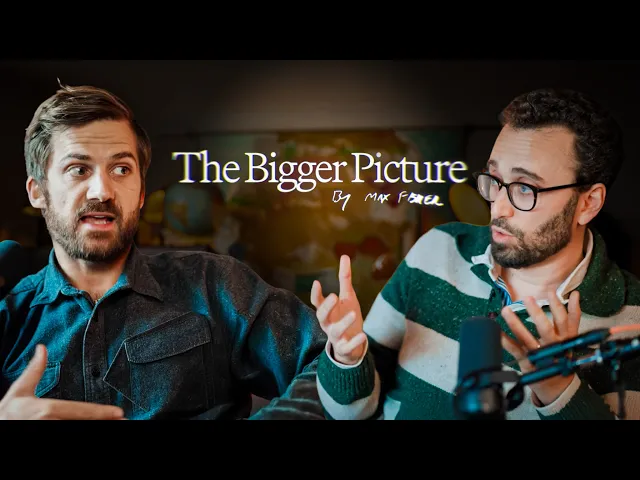
Talking news and media with Max Fisher
Johnny Harris
0:00 Hey friends, I've got some really exciting news for you,
0:02 which is that we are launching another channel,
0:04 this one with the person who taught me how to be a journalist, Max Fisher.
0:09 Back when I was a lowly animator finding
0:11 my way in this world, Max was a reporter.
0:15 He had been a foreign reporter for a decade.
0:18 He had a lot to teach me and I shadowed him.
0:21 I wasn't really supposed to be writing scripts,
0:23 but I was writing scripts when I was at Vox.
0:25 And Max would edit those scripts and we would make videos together.
0:29 Eventually, we invented the map explainer format together.
0:32 Iran steps up its influence in...
0:33 You see this now all the time on my channel.
0:36 It's a mainstay of the channel.
0:37 But Max was a co-developer of that format.
0:40 We then went our separate ways,
0:41 I started my own channel here and he went off to be
0:44 a columnist at "The New York Times" and then to become a podcaster.
0:48 He wrote this amazing book called "The Chaos Machine," and actually
0:50 read his book and reached out to him and said,
0:53 "Hey, we should reconnect." So we reconnected.
0:56 And I floated this idea like, "What if you came over and started a channel
0:59 here at Newpress where we are building creator-led channels
1:03 with journalists who care about explaining things and helping
1:07 audiences understand the crazy news environment we live in.
1:10 We've been working on that for about a year now.
1:13 And today it's live.
1:15 It's called "The Bigger Picture" with Max Fisher.
1:18 And it will be your guide to understand
1:21 the tumultuous news environment that we live in right now.
1:24 Not outrage and opinion and fear-mongering,
1:28 this is going to be rigorous reporting that helps
1:31 you understand what is happening in the world, helps you make sense of it,
1:34 helps you aggregate all of the things that are
1:37 happening so that you don't feel so overwhelmed.
1:39 He's gonna publish a lot more than I publish
1:41 on my channel because he's very prolific and much faster.
1:45 So "The Bigger Picture" is live right now.
1:47 You can see the link in the description
1:48 and if you like what you see on this channel,
1:50 you're gonna like what's over there.
1:51 For those who are still here,
1:52 the rest of this video is gonna be a conversation that I had with Max.
1:55 We talk about our origin story, we talk about media,
1:58 we talk about a bunch of things.
2:01 I hope you enjoy my conversation with Max Fisher,
2:04 the newest Newpress journalist, Max Fisher.
2:06 Welcome to our studio.
2:08 Hey, pal.
2:08 First time here.
2:09 Good to be here.
2:09 I know, I can't believe.
2:10 What do you think?
2:10 Seen it like any other viewer.
2:12 I've seen it so many times and now I'm here and let me tell you,
2:15 it's even better than you thought it was.
2:17 And it's so much tinier.
2:19 Yeah, it's so tiny.
2:19 I feel like I've shrunk into like a little shoebox.
2:22 I almost need to give people a warning before they come.
2:24 "Like, come to the studio.
2:26 It's not gonna, it's not what you think." (laughs)- It feels,
2:29 it's just what you think it's gonna
2:31 be from the videos except one-eighth the size.
2:34 (both laughs) We are actually crammed into a dollhouse right now.
2:37 We are.
2:38 And we've taken a weird sense of pride in like
2:42 continuing to operate this like increasingly large media company.
2:46 Punishing yourself with this tiny little studio.
2:48 (laughs) Yes, because it works.
2:49 Like it's worked but then it doesn't work.
2:51 It's like too small.
2:53 But like, there's something about just jamming everything into this space
2:57 that also is like really spot on for what we make,
3:01 which is like-- It feels very warm, it feels very lived.
3:03 It feels like this is all stuff...
3:05 It feels like I arrived in the middle of a shoot
3:07 and like eight different videos happening in real life.
3:10 And that is kind of what's happening.
3:11 (Max laughing) Always, just stuff everywhere.
3:14 Do you feel like you live inside the channel at this point?
3:16 I, sometimes I do.
3:17 This morning I was driving my son from something, we were on rock climbing.
3:22 And he was asking me about the immune
3:25 system 'cause he was feeling a little bit sick.
3:27 And I suddenly was in the middle of an explainer where,
3:32 (Max laughing) me and ChatGPT and him were
3:34 all like exploring the deeper understanding of how
3:38 antibodies work and how the immune system works
3:41 with a viral infection and all these things.
3:43 And so sometimes I do think that my life is
3:46 a giant explainer because I just-- 'Cause you're doing it so much.
3:50 I'm always doing it.
3:51 To the point, like one time I was
3:53 with my friend on the streets of San Francisco waiting
3:55 to get into a restaurant and I was explaining
3:59 to him something about like the Horn of Africa and Pirates.
4:03 And I was like, and I had like my Google maps out and I was like,
4:06 "If you zoom in, you'll see here and the big boats can go past this thing." (Max
4:09 laughing) And I literally was screenshotting it and drawing
4:10 a line and then like a fan walked up.
4:13 And like they just like walked into like an explainer.
4:16 So you're just doing the video all the time?
4:18 (laughs) Just all the time.
4:19 You are just like a caricature.
4:20 You should, anytime you feel like someone is like
4:22 walking around you and like they're kind of looking,
4:24 "Is that Johnny Harris?" You should just start talking about the Horn of Africa.
4:28 Just so people think like, yeah.
4:29 That is what I do all the time.
4:30 All the time.
4:31 Yeah.
4:32 Alright, let's introduce who you are because you are
4:34 now a part of the family, as it were.
4:37 Reunited.
4:38 Reunited.
4:39 This is a very important reuniting because we
4:43 were in the trenches together almost a decade ago.
4:47 I know.
4:48 Building another new media venture that was making waves and then
4:55 we went our separate ways and now we're back doing it again.
4:59 So Max Fisher is a acclaimed international reporter who has worked
5:05 at little newspapers such as the Washington Post, the New York Times.
5:11 I know him from Vox, which is where I got my start in journalism.
5:15 I walked into Vox as an animator
5:18 with no understanding of what journalism really was,
5:21 other than it had to do with newspapers.
5:23 But I had a lot of curiosity.
5:25 I had some animation skills and I had a degree in international relations.
5:29 And I got into Vox, it was 2014.
5:32 Vox was brand spanking new.
5:34 It was like this industrial concrete floors startup,
5:39 millennial vibes everywhere.
5:41 And all these young smart journalists that like
5:44 just sort of threw me into the trenches.
5:46 And I started to learn how like mass communication worked
5:50 and you were the head of the foreign desk at Vox.
5:55 I'm curious, first off, how you got started in journalism,
5:59 but how did you end up at Vox?
6:00 Like what was the origin story of you getting there?
6:03 I don't actually know the answer to this question.
6:05 I mean, it's funny to hear you describe
6:09 Vox as another kind of like independent starter.
6:11 'cause at the time it was.
6:13 At the time doing like a bunch of people, I was at the Washington Post and like
6:16 a bunch of people leaving the Washington Post,
6:19 like one of the most institutional establishment media brands you
6:22 could have to start a website owned by another company,
6:26 felt like the most like independent rebellious thing you could do.
6:29 And it feels so quaint now.
6:31 Like now that feels like, and in some ways it is just
6:34 like another form of establishment institutional media,
6:37 just like working for a different company.
6:38 But I like a lot of, I'm 40 and like a lot of people, my generation,
6:44 like I came up in college during like the Iraq War and like,
6:49 it was an era when I thought
6:51 of journalism as something that was really important.
6:54 But I also thought like really had my quibbles
6:56 with like the mainstream media and thought like the mainstream media,
6:59 institutional media has all these biases
7:01 that like help bring about the Iraq War,
7:03 but also that's like the only game in town.
7:06 If you wanna be a journalist and like you wanna
7:09 help people understand the world because you think the world
7:12 is fun and fascinating and like interesting and important
7:14 and it's like a good to help people understand it.
7:17 You have to go to, if not a big newspaper,
7:19 than like a news website that is started by people who worked at a newspaper.
7:24 And it's crazy to look back at that now 10 years
7:27 later and like the world is so much bigger, you know?
7:31 And like the things you can do with the media is so much bigger.
7:34 I know that doesn't answer your question, but they're like,
7:35 the answer to your question is just that-- It's changed so fast.
7:38 It has changed so fast.
7:39 Yeah.
7:39 Yes.
7:40 The answer to your question is, I just like,
7:41 I loved helping people around me understand what was going on, especially
7:46 at moments when they felt like confused or like it's upsetting or like,
7:51 I don't know, like when the news
7:53 is scary or when things feel like destabilizing.
7:57 I feel like there's a specific kind of journalism
8:00 that I think you and I ended up doing, like took our different paths to.
8:03 Yeah.
8:04 That you could call explainer journalism,
8:05 although that always feels like a little pat.
8:07 Yeah.
8:08 You know what I mean?
8:08 Like the name-- Yeah, a little gimmicky.
8:10 Yeah.
8:10 Yeah.
8:11 Like the BBC used to have a series
8:13 called like "Explainer" and it was like "Explainer,
8:16 colon, what's going on in Lebanon?"- (laughs) I know.
8:19 And it was like the most simple like Wikipedia timeline,- Right?
8:22 It's like a Google result.
8:23 Yeah.
8:23 Yes.
8:24 Yeah, yeah, yeah, yeah.
8:24 And, and like that was "Explainer." It
8:26 was like a boiled down like computer-generated,
8:30 but like in 2010-- And it doesn't enlighten you.
8:33 Yeah.
8:34 I feel like-- And so what you're describing,
8:37 sort of the impulse that I have too which is like a desire to explain.
8:42 But like, the deeper thing I think is like
8:44 to give people the full story or at least a de
8:49 a bigger version of the story that allows whatever the event
8:52 is happening right now to make sense in the context.
8:55 And therefore that the event right now,
8:57 the headline that you're hearing about actually like,
9:01 makes sense and it sinks in-- Totally.
9:03 As like a real thing happened and has a before.
9:08 Do you ever read this book, "Ghost Wars" by Steve Coll?
9:11 Yeah, of course.
9:12 You have?
9:13 Great book.
9:14 That is the book that made me want to really made
9:17 me like understand the kind of work that I wanted to do.
9:20 Before I read that I was like, I wanna be in media,
9:22 but I'm not really sure what I'm trying to accomplish with it.
9:25 And for people who don't know, this is a book about like the entirety
9:29 of the history of Afghanistan leading up to the Taliban,
9:34 Al-Qaeda, 9/11, the American invasion of Afghanistan.
9:37 Is basically like, how did all of these global
9:40 forces come together for this to happen?
9:42 I remember reading that book and it talking about like religious fundamentalists
9:47 in the Gulf States and political turmoil in Pakistan and the Cold War and all
9:52 of these things that came together to like put this little country in the middle
9:56 of Asia on this path that ended up being the center of the world basically.
10:00 And having this moment of being like, I get it now.
10:04 Like I had been reading about Afghanistan in the news for years,
10:07 just like as a news consumer,
10:09 but I didn't like, "Why is this happening here?"- Totally.
10:11 Like what is the deal with this place and having this moment of like,
10:15 the pieces click together and it feels so...
10:19 Like the aha moment, it feels so satisfying and it feels so empowering.
10:23 Yes.
10:23 And I loved that moment so much.
10:24 I was like, I wanna do this for other people.
10:28 Yeah.
10:28 Like forever.
10:29 Yes.
10:30 Yes.
10:30 Basically.
10:31 And I think that both because like it feels really good and it's just,
10:36 I think especially when people feel like
10:39 scared or upset about the world that's like,
10:41 those are the moments when I've really thought the most about like,
10:43 "Why am I doing this?
10:44 What is my purpose here?" That I feel like that's when it's the most important.
10:49 just because it gives us the tools to understand like what's happening to us
10:54 and around us so we feel like we can navigate it as an individual.
10:57 Yeah.
10:58 Like it feels really empowering,- Man, that's cool.
11:00 It's cool to hear that you had that impulse
11:04 to like create the Steve Coll empowering, enlightenment.
11:08 Understanding, the feeling of understanding early on.
11:12 And like you felt it and then you wanted to create it.
11:14 I feel like my sort of intuition around
11:19 this, it also comes from that same thing.
11:21 It comes from like, "I wish someone had explained it like this."- Totally.
11:25 Yeah.
11:25 And so I'm going to construct something in a way that makes sense for me.
11:28 And it turns out that like a lot of people
11:31 secretly want to understand the world in that way.
11:33 And yet I always had such a problem
11:37 with traditional forms of explaining things both
11:42 in school textbooks and in journalism because it
11:45 always felt like there was something I didn't know.
11:49 [Max] Totally.
11:49 Like they say all these words and there's such a presumptuous--
11:53 It's like there's a big hole in the middle of the story.
11:55 Yeah.
11:56 And it's like there's no one acknowledging it.
11:57 It must be a me problem.
11:58 Right, right, right.
11:58 Is what I thought for a lot of years.
12:00 Totally.
12:00 Oh, everyone knows what Sunni and Shia are in terms of like the difference.
12:04 And why there's the conflict there is like,
12:05 I forgot to read that article that explained that.
12:07 Everyone knows though because they're saying it
12:09 so nonchalantly that like everyone must know.
12:12 And and the truth is they don't know.
12:14 They don't know.
12:15 They don't actually know.
12:16 It's so funny that you mention Sunni and Shia specifically.
12:20 That was actually the moment.
12:22 Yeah.
12:23 Like the radicalizing moment for me, I was at the Washington Post,
12:26 Syrian civil war was happening and I was
12:29 reading all of these stories about like quote,
12:31 unquote why it broke out or like why there are
12:34 these like fighting between Sunni and Shia or these different groups.
12:37 Or like, why is the country fissuring along certain lines?
12:40 And I like would talk to the reporters too because they were my colleagues.
12:43 It'd be like, "Hey, I'm gonna write something about this.
12:46 Like, it didn't really seem like you had space to address this.
12:48 So like, what's going on with this religious conflict?" And I would realize
12:51 that they were incredibly skilled and talented
12:54 at this very important work of gathering facts.
12:57 Yeah.
12:57 And like telling me what was going on in that moment.
13:00 But that is a different set of skills from understanding
13:04 deeply why are things happening the way that they are.
13:07 Like what is the hole in the middle of the story of like...
13:10 And often didn't even think to ask that question
13:13 and like wanting to go out and be like,
13:15 "Well like let me actually try to understand in like a deep way.
13:18 Like why did this country out of all countries break out into this war?"- Yes.
13:23 Out of all wars.
13:24 And it turns out that there's a good
13:25 reason (laughs) that people don't answer question.
13:27 There's a real explanation.
13:27 Right, there's a real explanation, but also a good reason people don't answer
13:29 that in news article 'cause it's hard to figure that out.
13:31 It's a lot of work.
13:32 It's hard and then it's hard,
13:33 like once you gain understanding to then communicate that to people in a format
13:39 that is short and clear and that a million people can engage with.
13:44 That's the then the next difficult thing,
13:46 which is why I love visuals and why I love animation.
13:49 Because animation is this like fourth dimension of understanding
13:53 where you can use, you can use a grid,
13:56 you can use colors, you can use motion, you can use sound and music to teach.
14:01 Was there a moment that you felt like you saw
14:04 that power that visuals had in storytelling and like, explanatory power?
14:10 For me, it started actually when I was like an elementary school student.
14:16 Really?
14:16 'Cause I'm super dyslexic.
14:17 Okay.
14:18 And so reading was always so difficult for me.
14:20 Oh, I see.
14:21 So I would go through sort of the traditional linear forms of learning,
14:27 which were always based on, you know,
14:29 memorizing names and dates and regions and kind of like,
14:32 it's a very sort of taxonomy.
14:34 Like labels are the important thing.
14:36 If you can remember the labels and you
14:38 can repeat the string of words then that's smart.
14:41 I was always so bad at that.
14:42 (Max laughs) I needed to understand it like
14:45 in my belly or I wouldn't understand it at all.
14:47 And the only way for me to do that was to visualize it.
14:50 And so starting really young,
14:53 I would ask to do like video projects to like-- Oh, that's cool.
14:58 Reenact something or to make a video about it.
15:00 And that the act of making something so that I
15:05 knew someone would have to watch and understand was like,
15:10 that was my, the beginning of my training, I didn't even know it.
15:13 And that continued into college.
15:14 I was studying IR and a ton of econ, like I was basically an econ major.
15:20 And so I do all these graphs and all
15:22 these graphs and I started to just design the graphs.
15:25 Like I learned, I taught myself like Adobe Illustrator and started
15:29 to redesign all the graphs and try to understand like,
15:32 why does it slope down like this?
15:33 And like making it beautiful and like just
15:36 expressing it visually was a tool for me,
15:39 not for anyone else's consumption other than like my own or a teacher.
15:43 So that was sort of the basis of it and...
15:46 So it wasn't even just that you were a visual learner,
15:48 it was that in order to get the things that you had in your head
15:51 that you knew you understood for yourself to convey them to other people.
15:54 Yes.
15:55 I had to process it-- Oh, that's cool.
15:56 Through the non-linear process of visualizing things.
16:01 And, and so in college, I wanted to be in the foreign service.
16:06 I wanted to be a diplomat.
16:07 Like I was very into like international things,
16:09 but I was like always leaning on video, both as like an artistic passion.
16:13 I liked the aesthetic of like being
16:15 able to make pictures move and photograph things.
16:18 But then when I learned about animation and graphic
16:21 design that helped me unlock curiosity and then maps.
16:23 That's why maps are such a huge part of my life is because they're the ultimate.
16:27 Like if you want to understand something visually,
16:31 like a map's a fantastic way where you actually have people
16:34 and politics and space that you can then like draw things on.
16:39 I feel like you really unlocked map guy,
16:42 gender inclusive, as an identity for people.
16:44 (Johnny laughs) Like people were out there and knew that they loved maps,
16:47 but I feel like now people know that like,
16:50 no, you can be a map guy, gender inclusive.
16:52 Yeah.
16:52 As like who you are in your heart.
16:54 And like, I didn't realize that about
16:56 myself until you and I were working together.
16:57 Are you a map guy?
16:58 I am now, thanks to you.
17:00 (Johnny laughs) I love maps.
17:02 So that, that brings us to Vox 2015, Syrian Civil War once again.
17:09 I was learning how to be a journalist and kind of being torn apart.
17:11 Like, to be honest, like I was hired as an animator.
17:15 Everyone was whip-smart.
17:17 I'd never published anything to anyone other than
17:20 just like small little things for think tanks.
17:23 And I'm like, I wanna write scripts and like report on things.
17:27 And you all were like, these scripts are really thin and you like
17:30 taught me how to like actually beef up scripts.
17:32 And I was always good at explaining and storytelling.
17:35 But I didn't have the like really make this thing rigorously reported.
17:39 So I got a lot of of training from you.
17:40 And one of the big moments,
17:43 like a real life changing moment for me was you and I were both feeling the same
17:48 impulse that now I understand was like a thing that you had felt for many years.
17:51 Syrian Civil War.
17:52 What's going on?
17:52 Everyone's asking this question now 'cause it was 2014, 2015.
17:56 It's like a really coming to a head in a big way,
17:58 the news and-- I can't even think of something that's happened since then
18:02 where it was like everybody was paying attention to it and everybody was like...
18:05 Confused.
18:06 Yeah.
18:06 We really wanted to understand it.
18:08 And and we were, and I think we sent around on Slack,
18:10 like a New York Times article called like "Syrian Civil War,
18:13 colon, who is fighting whom?" (Max laughs) And there wasn't whom.
18:17 And we just like totally like leaned
18:19 in (Max laughs) to just (indistinct) on the times.
18:22 Yeah, sure, sure.
18:23 Yeah, yeah.
18:23 And we're like, this explainer doesn't do it.
18:25 Like let's totally do what they tried to do.
18:28 It's a list of facts, which is not an explanation.
18:30 Yeah.
18:30 And it's like, and it's like trying to break
18:32 it down with like bullet points and it's like,
18:34 let's actually tell this story in six minutes.
18:37 And so that is when I turned to the map and started
18:40 thinking about like these icons and you started writing an explanation.
18:45 And then we like came together and we developed this notion of like,
18:48 what if we could give every one of the players
18:52 or the groups their own icon and we can load them
18:57 up with motivation and with stakes and put them in territory
19:01 and we can summarize what they want and where they are.
19:05 And the evolution of this thing in a single take.
19:08 Just a map the entire time and everyone's moving around on the board.
19:12 And that, we worked on that it was probably, you know, two, three weeks.
19:17 You voiced it.
19:18 Which felt like so long.
19:19 Yeah, it felt really like two, three weeks and it was six minutes long.
19:22 (Max laughs) Back then that was like our longest video.
19:24 But no one's gonna watch this.
19:25 We had to get permission to make it six minutes.
19:27 Because because we were doing like two minute explainers back then.
19:30 You voiced it like under a blanket or something.
19:33 'cause we didn't have a VO booth, so you were just like under a blanket.
19:36 You voiced it.
19:38 I animated it in like a few days and we put it out and like it went bananas.
19:43 Bonkers.
19:44 Hundred million views on Facebook back when
19:46 that was the, you know, pivot to video.
19:48 I was just actually thinking about that moment because,
19:52 you know, I knew we were gonna have this conversation.
19:54 I knew we were gonna talk about like, oh,
19:55 like how did the arc of my career like bring us back together again.
19:59 And I was thinking about the fact that 10 years ago when we
20:04 made that, despite my like skepticism
20:07 of the establishment media had become like,
20:09 you know, had spent years in it and become like kind of a creature of it.
20:12 So in my mind, my job as a journalist
20:14 and the pinnacle of journalism was writing articles.
20:17 Writing like thousand-word articles that people would read on the internet.
20:20 And there I was at Vox writing articles about the Syrian
20:23 civil war that would do like by our standards really well.
20:26 And get like a hundred thousand reads or maybe even 200,000 reads,
20:30 which was like, we couldn't believe we were reaching that many people.
20:33 And then I worked with you and we made
20:34 a six minute video that reached tens of millions of people.
20:38 And I was like, well that was a fun experiment,
20:40 but I'm gonna go back to my real job now of writing articles,
20:42 (Johnny laughs) which is obviously like the pinnacle of the form.
20:45 And did that for another like five or six years- Yeah.
20:49 Before I was like, "Huh,
20:50 that's interesting that I did one version that reached this many
20:53 people and another version that reached a trillion people more.
20:57 And also it's more fun to watch and it's more interesting.
21:00 I wonder if there's something to that?"= Hmm.
21:02 Wow, I love that.
21:03 Yeah.
21:03 You always have the sensibility around visuals, which I've recently learned.
21:08 It's because you are a cinema like...
21:11 So I have no, as as people will learn quickly,
21:14 I have no technical skills whatsoever.
21:16 But I do love visual storytelling and movies
21:19 especially because it just uses all the senses.
21:23 It engages all of, we've never had an art
21:24 form before that uses every other art form in one.
21:27 Yes.
21:28 It's so cool.
21:28 It's so cool.
21:29 And there's so much power in it if you choose to use it.
21:33 And I think that's the big thing that I learned at Vox was most people...
21:38 'Cause there was a revolution happening at that time that I was able
21:41 to like sort of catch the wave on, which was everyone was like,
21:44 oh, digital video, video journalism needs to be reinvented.
21:47 And most outlets were pouring lots of money on it,
21:49 but they were just basically saying like, let's make pretty articles.
21:54 Like let's like write articles and then like put pretty B-roll.
21:57 Right.
21:57 And we were like, well what if we engage all the senses
22:00 and make sure that the voice talks to the motion in the animation,
22:04 which talks to the B-roll, which sets up the evidence for that and like
22:07 we actually make it a choreographed experience.
22:10 And that was truly like the secret to this.
22:12 And that was a Joss Fong, like Joss Fong who was one of the founders
22:17 of the Vox video team and my editor there, that was her whole thing was like,
22:22 make the voice and the visuals dance together.
22:25 That's the most effective version.
22:27 And that's what we've built this whole thing off of is
22:31 making explainers that really tightly like leverage the power of visuals.
22:34 Well and we're at I think a really exciting
22:37 moment for that because for the last a hundred years,
22:41 anything that like looks good in a movie has been incredibly expensive to make.
22:46 Like it would cost tens of millions of dollars to make like a good
22:50 looking frame that had interesting effects in it
22:52 and that like lighting that looked good.
22:54 And the fact that you were able to reproduce something that would've, you know,
22:59 previously required like years of fundraising to get the money
23:02 for that you could do in like a few weeks.
23:04 Like obviously a huge amount of that is
23:06 the skill that you and the team bring to it,
23:09 which is like not something you reproduce.
23:11 But we're also in a moment where it's possible for someone like our size
23:17 to do something that looks as good as a lot of movies look.
23:21 Yeah, and has this special thing, which I think Newpress is really built off
23:26 of, which is it is relatable and human.
23:31 And even though it's produced,
23:33 you still sense that like human flavor, it's like small enough.
23:38 Yeah.
23:38 That that is the ethic of the internet.
23:39 Like that is the reprieve that people,
23:41 once they could express themselves and consume really conversational,
23:46 relatable things, we learned that everyone secretly wanted it.
23:50 Right.
23:51 But because of the choke point, the bottlenecks of corporate like gatekeepers,
23:54 like no one could actually have access to that.
23:56 And so I really believe that like this next
24:00 era needs to continue to push the form.
24:04 And especially with AI, like the amount of like visual craziness that we'll be
24:08 able to do is just going to explode even more.
24:10 [Max] Totally.
24:11 Yeah.
24:11 But how do we do that while also maintaining
24:15 this beautiful thing that like someone watches and says like,
24:19 "Oh, that's a real person with real questions,
24:21 they're earnest and I can relate to them and therefore like I
24:27 trust them and I wanna be a part of their inquiry."- Right.
24:31 That's a really important ingredient for me.
24:32 And it's something that, I mean it obviously has its roots in kind
24:36 of like 2000s era a blogging and 2010s era blogging where you feel like,
24:40 and I think that also is, it's been forgotten because it was so long ago now.
24:45 But I think a lot of that too is like a reaction to the Iraq
24:48 war and the financial crisis and a sense
24:51 of like these big institutional outlets.
24:52 Like I'm not sure I can trust them.
24:55 Happening at the same time as the internet.
24:56 Now I can access someone who is, you know, even if it's just whoever,
25:00 just a blogger on their site feels like a real person.
25:03 Who's like, they might not be perfect,
25:05 but they're walking me through what they're thinking.
25:07 They're being transparent about it.
25:09 They're not doing this institutional authority voice from nowhere.
25:12 [Johnny] Yep.
25:13 View from nowhere kind of thing.
25:14 And I mean, I think when I think about like
25:16 the first vloggers to really capture that like Hank Green, you know?
25:22 It's someone who you just, you feel like you trust them immediately
25:25 because they're bringing you along on this journey.
25:27 It's like they don't necessarily have the same resources as a huge institution.
25:31 I do feel like we are at a point where that kind of like the vlogger
25:36 voice and the independent voice is something
25:38 that, it's part of the ecosystem now, right?
25:40 Like we all kind of get it, we all know what it is.
25:41 It's part of all of our media diets.
25:43 But I think we are also all feeling some kind
25:46 of a need for not the institutional weight of a big media brand,
25:52 but this sense that like, I can really trust what this person, outlet,
25:57 newspaper, whatever it is,
25:58 is saying 'cause it feels really high stakes right now.
26:01 And it feels really important in a way that maybe it didn't,
26:03 you know, 10 years ago.
26:05 And I think there is an industry
26:09 of professional artificial authenticity that has been created,
26:14 like the influencer economy-- Totally.
26:16 Has developed so well where now people can,
26:19 if authenticity was a currency of trust with early vloggers and bloggers,
26:26 then it became effectively kind of like easy to fake.
26:31 And now people can't trust authenticity.
26:33 (laughs) I know, I know,- Again authenticity now (indistinct) authenticity.
26:35 So, and yet I believe especially in a world of AI
26:40 that like the humanity of journalism of curiosity should always,
26:48 will always, should always shine through.
26:50 And so there needs to be
26:51 a balance of institutional credibility and human authenticity.
26:55 And that I think Newpress, like Newpress it's like two sides.
27:01 It is creator-driven, meaning the reason why we have Sam's channel,
27:05 Christophe's channel, and the channel that you're launching is creator-driven.
27:09 Because we do believe that like the journalism would be better
27:12 if it's driven by your curiosity and people will relate to it.
27:15 But then the reason we're tied together under this umbrella called Newpress
27:21 is because we want that to also signal trust and say like, "Hey,
27:25 we are very transparent about the fact that we are trying to do
27:28 something really rigorous here." You can trust us and we'll earn that trust.
27:31 We'll earn it but then if you trust Newpress because
27:35 you've spent a lot of time with me or with Sam, people will hopefully do,
27:39 like that's what brands are good for, is reducing uncertainty.
27:43 Sure.
27:44 They'll look at your channel and they'll be like, okay,
27:46 if he's the fourth channel in this thing and I've trusted the other three.
27:49 Right.
27:50 My uncertainty, you don't have to spend
27:51 a year like sort of producing that trust.
27:53 Yeah, for sure.
27:54 Yeah.
27:54 And I think that that is the power and the thing that people want
27:57 is like to be able to offload some of that uncertainty to a brand.
28:00 But the brands that have that are kind of like,
28:03 or had that traditionally are now like they aren't trusted.
28:07 And so like we, we have to build that up again.
28:10 You know, what excites me about this moment in media amid all of the, you know,
28:16 economic and industry trends that are scary is that I feel like it's
28:20 a moment where audiences really want to come along for the human element of it.
28:29 And they want to come along for exploring
28:32 the news for what it means on a human level.
28:34 They want the authenticity of a relationship with the creator,
28:37 with the person that they're following, but they also really want to come along
28:42 with the rigor of how do we know what we know?
28:46 And why do we-- They want that journey.
28:48 Why do think this?
28:49 Yeah.
28:50 You know, what led us to believe this piece of information.
28:52 And there's a sense of, you know, maybe it's years of, I think being on social
29:00 media and seeing the way that like the Arab Spring
29:04 unfolded and seeing that you can follow along a story
29:07 in real time in the internet to understand what's happening,
29:10 but also knowing that social media as a decentralized mass really can't
29:15 always be trusted and the algorithms will lead you in weird directions.
29:18 And who knows what that thing was that went viral that I saw.
29:22 And I think there's a sense of like,
29:23 I want someone who I can trust, who I have a human relationship,
29:26 who will walk me through what's happening
29:29 and I want to come along on that journey.
29:31 And I wanna be engaged in it.
29:32 And I think that that is a really unique moment,
29:36 honestly, in people's relationship to media.
29:38 Yeah, it's exciting.
29:39 And we're gonna figure out if it works for the next few years,
29:42 (both laugh) like we'll see.
29:44 So let's get to your show.
29:45 'Cause I do want to hear about like
29:46 how that fits into like our bundle of different
29:49 shows at Newpress and like how you're thinking
29:51 about it in the context of this conversation.
29:54 You went from Vox to the New York Times,
29:57 I remember we went to some restaurant and you told me
30:00 you were gonna the New York Times and you were like,
30:03 "I'm leaving." And I was like, "Oh shit." And then you wrote a book,
30:08 "The Chaos Machine," which is an amazing deep dive into the rise of algorithms.
30:13 I loved that book.
30:15 You have been at Crooked doing a couple of podcast shows and now you are here,
30:21 you are launching a show.
30:22 The show is called "The Bigger Picture with Max Fisher." And it
30:27 is conceived by you as like the Newpress ethos is like,
30:31 it's a creator-driven thing.
30:33 I want to hear, now that I understand a little
30:35 bit about like your heritage and curiosity and explainer stuff.
30:39 Why this show?
30:41 And like what is this going to be in terms of your expression of like
30:46 all of your experience now and what you wanna see in media right now?
30:52 I mean, look, the truth is it's a scary time.
30:56 It is a scary time in our world.
30:57 I don't think that that's a partisan statement.
30:59 I think that if you look at like opinion polls,
31:01 that's an opinion that people hold truly across the spectrum.
31:06 I find reading the news distressing.
31:09 I also feel like I have to read
31:10 the news because you have to know what's going on.
31:12 You have to understand what's happening.
31:13 And I hate feeling caught in that.
31:16 I hate feeling like I have to keep up with what's
31:18 happening because maybe it's gonna burst through the door tomorrow.
31:21 But it's also, you know, it upsets me.
31:24 It confuses me.
31:25 I don't understand where our world is going, where this country is going.
31:29 And partly it is a response to that and feeling like, you know,
31:33 I spent the last few years because I
31:36 kind of, I got disaffected being mainstream media.
31:38 It's also was just like, again,
31:39 it's distressing to read the newspaper all the time.
31:41 I thought I want to have more of a relationship with my readers,
31:45 listeners, viewers, whatever.
31:46 And that was why I turned to podcasting because it's,
31:49 there's more human relationship.
31:51 Because during the pandemic it was a time we're all feeling isolated.
31:54 Does feel like it's a time when just in order to like get through the day,
31:59 we need to understand what's going on in the world around us.
32:03 So that was a lot of what made it feel appealing
32:07 and kind of important to me to have a show that would,
32:10 the ideas will ask a question with every episode,
32:12 something that feels urgent that's, you know, happening in the world.
32:15 Why is it so hard to get a job right now?
32:17 Why do people in ICE wear masks?
32:19 Why is housing so expensive?
32:20 Why is my electricity bill going up?
32:22 Not all of it's gonna be bad.
32:23 It's also gonna be, I wanna do one on why does dating feel so weird now?
32:29 Or like, why do I hate dating all of a sudden?
32:32 And then try to answer those questions in a way
32:36 that will take people on a journey and feel surprising.
32:40 And the idea in the name of the show, "The Bigger Picture" is that we'll start
32:45 with some question that will be about something discreet.
32:47 Why are people in ICE wearing masks?
32:49 And then following that journey we'll start to see how it connects to all
32:52 of these different things that maybe we're also
32:53 curious about or maybe we haven't even thought about.
32:55 About how the law is changing, about what's going on with immigration,
32:59 about, you know, what is Donald Trump up to?
33:01 And the idea is that it will be a journey that is visually interesting,
33:06 that is fun to go along on, or at least engaging to go along on.
33:11 (laughs) That will have twists and turns and then at the end
33:14 of it you will feel a better sense of like,
33:16 "I get it, I have a sense of agency over what's happening.
33:20 I feel a better sense of like being
33:22 able to navigate this world because I have like
33:25 a sense for what's going on and why." Also
33:28 a lot of it was just like you were saying, I'm a big movie guy.
33:31 I love visual storytelling.
33:32 I never thought that I would have the opportunity to do
33:35 primarily visual storytelling because I don't have those technical skills.
33:39 So it felt like absolute serendipity.
33:42 Yeah.
33:42 When you reached out to me, I don't know, it was a year ago.
33:45 At this point, something like that.
33:46 And you're like, we're doing this thing.
33:48 We'd love to have you come along.
33:49 Like I never even would've entertained...
33:51 Wow.
33:52 The possibility.
33:52 But getting to plug in to your team,
33:57 which does such like incredible work is really exciting.
34:01 And the idea of getting to find ways to tell
34:04 these stories that will feel like surprising and interesting to people.
34:07 Cool.
34:07 I love that.
34:08 That's really fun to hear, and I can't wait to see the show take off.
34:11 It's a cool thing to be at the company,
34:15 like to lead the company that is producing the show,
34:18 but because it's led by you, it is your thing.
34:22 Like your cinematic inspirations are making it into the art direction.
34:28 I love being also an audience member.
34:30 Like I love, like witnessing it come to life.
34:34 And also helping it and like supporting it where I can.
34:37 But like that's what I feel about Christophe's show, Sam's show,
34:41 like it is fun to be surrounded by other people who are doing this work.
34:45 And what I find is that each of us have our own way of answering questions.
34:49 And the answer to the question is cool, but it's actually the journey.
34:54 Like everyone has their circuitous little like way of processing information.
34:58 Thinking it through, yeah.
35:00 That actually is the juicier.
35:01 Like Sam's diagrammatic approach to geopolitics and to like
35:06 sports is a way that I don't think, I don't think like that.
35:10 And his curiosity expresses differently than Christophe's,
35:13 which expresses differently than yours.
35:16 And so I think that journey thing as a viewer, as like a consumer,
35:21 I deeply value being able to like,
35:24 see how your brain path process things and doing that out loud.
35:27 It imbues trust, but it also makes me process questions differently.
35:33 Yeah.
35:34 And that's what I'm excited about with this show,
35:35 is like seeing you do that out loud.
35:37 Can I tease one of the episodes?
35:38 Yes, please.
35:38 To speak to that.
35:39 So I'm not gonna give away what the episode is about,
35:42 but just the way that it is going
35:45 to start is actually a reflection of something that would
35:48 like actually happen to me 'cause I wanted to reproduce
35:50 part of the experience of be discovering this thing.
35:53 I was looking at pictures of the skylines of different cities.
35:57 These skylines of these like Asian mega cities.
36:00 You know, Beijing, Shanghai, Kuala Lumpur.
36:03 I was looking at how new they looked.
36:05 And then I looked at a bunch of different skylines over time,
36:08 like photos of like Rio de Janeiro or Mexico City going back like 50 years.
36:13 And if you look at it, like every 10 years the skyline looks different.
36:17 Like you see it growing, you see it getting taller,
36:19 the buildings look new, it expands outward.
36:21 And then I looked at the skylines of American cities
36:24 and they did the same thing up until like 1960.
36:27 And they just stopped.
36:28 Whoa.
36:29 It's completely frozen place.
36:31 And it's crazy because you can see that there was a time when they were
36:35 like growing really quickly and it's not like
36:37 these are like some forgotten old world cities.
36:40 Like these are like New York, Chicago, these are really vibrant, growing cities.
36:44 And if you look at the skylines now you'll be like,
36:46 "Oh wait, all of these buildings are like from the 1890s."- Whoa.
36:50 That's frozen in time.
36:51 And that was, and I won't give away what the video's about,
36:54 but that was something that like unlocked
36:56 for me a question that I had been like, kind of, it's like one of the 20...
36:59 You know how you're always like researching 20 different things?
37:02 Yeah, yeah.
37:02 And like maybe it yields something and maybe it doesn't.
37:03 That's when I was like,
37:05 this is the answer to a question I have been asking for myself for a while.
37:09 Wow.
37:10 And I'm really excited to show people me going on that journey and like,
37:15 not just see the different skylines, but like how that led me to a fun or like
37:20 an interesting realization about things that affect all of us.
37:22 And you can do that because the channel
37:25 is your, the canvas of your own curiosity.
37:27 And and like our whole theory with this different
37:29 media model is that like instead of the brand
37:32 being number one and all of the voices under
37:34 the brand having to conform with the brand's guidelines,
37:38 like a normal sort of assignment-based model.
37:40 Yeah, yeah, yeah.
37:41 We're flipping that into a place where
37:43 the creator's voice is the number one thing.
37:47 And then the brand guidelines are
37:48 there and they're present and there's standards,
37:51 but they are not, they don't impose stylistic strictures.
37:55 And so that you can have your skyline moment.
37:58 Right.
37:59 And I can have my (Max laughs) like whatever
38:01 going looking for bunkers in the Swiss Alps like...
38:04 With your Doritos.
38:05 With Doritos and chopsticks to eat my Doritos because you know,
38:08 (Max laughs) I can't get that dust on my fingers.
38:09 No, of course.
38:10 Yeah.
38:10 So it's just like our quirky minds do much better work when,
38:16 I believe, when they can explore.
38:18 At least they do work of the kind that you mentioned,
38:21 which is the explanatory, trying to process information.
38:25 I think the fact-based, going out, gathering the facts,
38:27 that is something that the traditional institutions...
38:31 I mean, they have bureaus all over the world.
38:32 They can do that.
38:33 It's so valuable.
38:34 [Max] Sure.
38:35 I never wanna like undermine that, our work is made possible because of that.
38:38 But for the work that I think the world
38:40 needs a lot more of curiosity and understanding.
38:43 I believe that it's best done in a world where you can nerd out about skylines.
38:47 Let me ask you something.
38:48 You are very much the person you present yourself to be in your videos.
38:53 Like you are Johnny Harris, YouTube is like also the real Johnny Harris.
38:58 Is that something you have to make an effort to do?
39:01 Do you know what I mean?
39:02 Are you thinking about like, how do I communicate who I am?
39:04 No, no, no, no.
39:06 Or it just happens?
39:07 It's...
39:08 The moment, even at Vox, I was able to be kind of my weird wild self.
39:12 Like they let me, and that's the reason I
39:13 was able to kinda thrive there because they let me.
39:17 It's why when the New York Times tried
39:18 to hire me after that series Civil War video,
39:20 I was like, no, like it's New York Times, but I would be stifled.
39:23 Like I wouldn't be able to do my thing.
39:25 'Cause for me, I don't know how to do it any other way.
39:28 And...
39:29 I tried to pull for that and tried to like help push
39:32 along 'cause I thought it would've been so exciting to work together again.
39:34 But man, you made the right choice.
39:36 Yeah.
39:36 Yeah.
39:37 And for me it was not even...
39:38 It wasn't even an option because I've always needed to be
39:42 able to process in kind of a nonlinear, chaotic way.
39:45 That it was really hard to conform to anything else.
39:48 So yeah, this is me.
39:49 I'm obviously like a, you know,
39:52 like a version of myself on camera that that is not the full me.
39:56 But it is a big part of who I am in terms of a kind of chaotic
40:00 and very curious person who doesn't like to do
40:03 the same thing twice or in the same way, like to do it differently every time.
40:07 And the fact that YouTube exists to allow me to do
40:12 that and to like then matchmake me to people who wanna watch that.
40:16 Like that's a beautiful thing.
40:17 It's like the theory of why I'm able to do this work at all.
40:19 Otherwise, like this would not be my job.
40:22 I wouldn't be able to do this job if
40:23 I was born in like the sixties or something.
40:26 (laughs) It's true.
40:27 Yeah.
40:27 I would never...
40:30 I had trepidations about going onto YouTube.
40:33 It's like, you know, I've written on, reported on the company.
40:38 And people can see what I have said about it.
40:43 The fact that you are able to do what you're doing on it,
40:46 I think is the thing that like gives me faith that like,
40:50 okay, it's like you've got the algorithm and that's,
40:52 you know, there's always a boss, you know?
40:55 And I was working for a newspaper.
40:56 There were bosses of the newspaper and it's like, now the boss is the algorithm.
41:00 And that's always a set of constraints that you have to work in.
41:02 Like that's not a conspiracy theory.
41:05 But the fact that you were able to do it and it's like,
41:08 I can see it, it's rigor.
41:09 It's real journalism.
41:10 It's rigorous journalism.
41:10 Yeah, and people show up.
41:11 People want it.
41:12 And when we do hour long videos, people show up.
41:14 Like there is a lot of people who want this.
41:17 And the algorithm is effectively a reflection of human psychology.
41:19 Like, for better or worse.
41:20 Totally.
41:21 Sure.
41:21 It does give people what they want to see.
41:23 And if people want, there are a lot of people it turns out who want rigorous,
41:27 deep explanations of what is happening in the world.
41:30 And that gives me a lot of hope.
41:32 It gives me a lot of hope that this platform that's off the algorithm
41:37 track can be a space where we can bring like the people who
41:40 want to do that in a big way over to have even more intimate
41:43 and like beautiful learning experiences because they're
41:47 out there and they're thirsty for this.
41:50 And that gives me a lot of hope,
41:52 even in spite of all of the polarizing realities of social media.
41:55 People are sick of it.
41:56 Yeah.
41:57 People are sick of...
41:57 I mean there, you know, there will always be like intense partisans, whatever.
42:00 But I really think that as much as these, so many of these huge
42:05 platforms are priming people for like
42:08 ultra-partisanship and tribalism and conspiracy theories, distrust.
42:12 Like, nobody likes that, you know?
42:15 Yeah.
42:15 It's hard-- We're gonna get tired
42:16 of like the outrage button always being pressed.
42:18 Absolutely.
42:18 Yeah.
42:19 And I think that like, and look, I'm susceptible to it too.
42:22 Yeah, of course.
42:22 I'm not gonna claim that I am immune to it.
42:23 But like nobody feels good after that.
42:26 And like, you feel good and nourished
42:29 after something that feels like enriching and informative.
42:33 Yep.
42:33 Yeah, totally.
42:34 Max Fisher is launching "The Bigger Picture" now.
42:38 I'm very excited to have you in the family-- Thanks, man.
42:41 And back together.
42:41 And we're gonna build this thing together and I'm
42:44 rooting for your channel and here to support it.
42:47 I am absolutely terrified.
42:48 (Johnny laughs) This is a big jump, but I'm really excited.
42:52 Cool.
42:53 And I'm very grateful to be here.
42:54 And thank you everyone watching as supporters of Newpress.
42:58 Let us know what you want more of.
43:00 I'd like to hear about what questions you have.
43:03 We deeply appreciate your support and we will see you in the next one.
43:08 That's a wrap.
43:09 Great sign out.