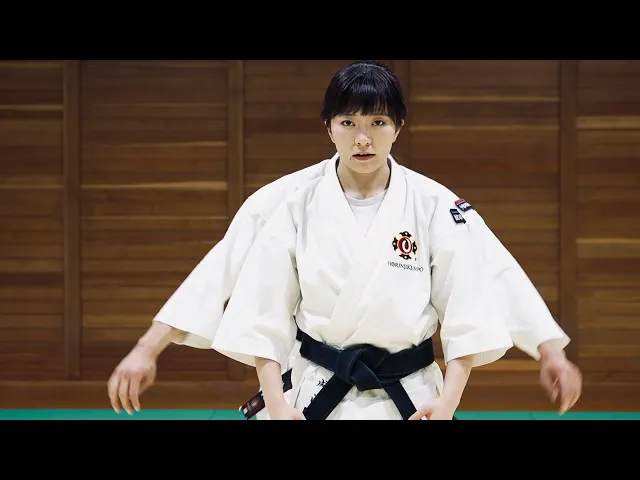
【70 minutes】Self-defense techniques for women【Shorinji Kempo】
kuro-obi world
0:02 Today's Kuro-obi World is a self-defense technique for women.
0:13 Look at this woman.
0:15 She looks very strong.
0:21 This is Mio Narumi, a Shorinji Kempo practitioner and actor.
0:28 Today, let's learn self-defense techniques from Inoue Sensei together with Mio.
0:42 Your daily life may seem peaceful, but suddenly something dangerous may happen.
0:50 What should you do when you find yourself in danger?
0:54 Please take your time to watch the 70-minute feature film “Protect Yourself with Shorinji Kempo!
1:04 Have you ever felt unsafe in your daily life?
1:09 I never actually had to fight, but I think Shorinji Kempo was useful in detecting danger in advance.
1:16 Shorinji Kempo itself is self-defense.
1:19 I believe that everyone can detect danger for themselves.
1:23 For example, do you want to go through a bright and crowded place or a dark and less crowded place?
1:30 Women would choose a place that is more crowded and safer.
1:35 If you are in a crowded place, someone will be there to help you when danger arises.
1:44 I think everyone can detect whether a place is dangerous or safe.
1:48 Women may avoid places where many men are gathered and making noise.
2:00 The very idea of how to avoid dangerous places is self-defense.
2:09 Every woman, regardless of Shorinji Kempo, would think that way.
2:14 If you feel any discomfort or danger, you should stay away.
2:20 I think it is important to keep that in mind on a regular basis.
2:30 First, let's practice the case of your hand being pulled.
2:33 What would you do?
2:43 Well, let me explain.
2:45 If you resist his pull, he pulls harder.
2:50 When he pulls, you go up close to him.
2:54 Do not resist the pulling force.
2:57 Resistance throws you off balance.
3:00 Mio have now defended yourself well with Shorinji Kempo techniques.
3:05 But amateurs are pulled this way.
3:09 If he pulls you, he might hit you with that hand.
3:13 You go behind him using a force greater than his pulling force.
3:22 And kick.
3:26 Very good.
3:32 Let's try again.
3:34 If you inevitably get pulled,
3:41 he will use your strength to balance himself and try to hit you.
3:45 He assumes your repulsive force is coming and tries to hit or throw you with it.
3:50 You approach him on your own, against his expectations.
3:55 Try again.
3:56 Get in behind him without resisting.
4:08 Pulled without resistance, or like this.
4:13 If he grabs your hand, hit his eye.
4:15 If he grabs you, approach him.
4:18 Not in this direction, but behind his shoulder.
4:21 Then hit him in the eye.
4:25 Strike his temple with "ura-ken".
4:27 You can strike from his front or from the side.
4:37 Try it.
4:49 If he actually pulls you, you will be at a distance where you can easily attack him.
4:57 Let's try again.
5:06 You're very good.
5:11 You mean that if the opponent pulls your hand, you approach him instead of resisting with all your might?
5:19 Could you please elaborate a bit more?
5:23 Pull my hand.
5:25 If I resist, you pull harder.
5:30 I would use the force of the pull to get closer to you.
5:34 This is resistance.
5:38 Not so, I do this while approaching you.
5:40 Don't resist the pull of your opponent.
5:43 Move forward in the direction of the pull.
5:45 If you are off balance, get in behind your opponent like this.
5:51 I'll tell you something important.
5:53 If you are about to lose your balance, you want to resist.
5:58 But once you lose your balance, you can move like this.
6:08 Your body position collapses toward the person who is pulling your hand.
6:15 Then you do this while collapsing.
6:18 There is another method.
6:20 If your hand is grabbed, do this.
6:22 Approach the opponent without resisting.
6:30 Then attack.
6:33 You use the force of the pull.
6:36 And you raise your wrist up.
6:41 Do not pull at each other with force.
6:45 It catches you off guard for a second, doesn't it?
6:48 Try it.
6:48 I'm pulling you.
6:52 Raise your hand up.
6:54 Get closer to me now.
6:58 Good. One more time.
7:04 Now you resisted a little, didn't you?
7:06 I'm going to pull harder, and you'll move with it.
7:11 That's right.
7:16 Put your hand up.
7:21 Good.Try again.
7:22 Resist with force.
7:25 You will be pulled, won't you?
7:27 Approaching with a pull.
7:31 Then you hit the eye and "Ura-ken".
7:36 If you pull at each other, the stronger side wins.
7:40 If you get grabbed, you open your hand.
7:47 Your arm is raised now.
7:51 Bring your elbow close to the opponent.
7:54 Put your body between the opponent and your elbow.
7:56 From this situation, if you pull with force, you will lose.
8:01 Bring your elbow close to the opponent.
8:04 Then move your hand like this.
8:10 Then you hit the eye.
8:12 This is called "En-ryu" (Flows in a circle) in Shorinji Kempo.
8:16 When I raise my hand up, your shoulder goes up, right?
8:21 This is "En-ryu" .
8:22 Pull.
8:24 Can you see it?
8:26 Your pinky side palm is open.
8:31 You must pull with your fingers alone.
8:34 That's why you can't pull.
8:35 Try to pull.
8:36 It slips, doesn't it?
8:37 This is “Kagite-shuho” in Shorinji Kempo.
8:41 This situation is easy for you to pull, isn't it?
8:46 The strengths are against each other.
8:50 Let me point my thumb upward in a circular motion.
8:53 Then this part will open up.
8:54 Grip it as hard as you can.
8:57 But this part is open.
8:59 You can't pull me with just the strength of your fingers.
9:04 Would this be the same for men?
9:08 Hold my hand tightly and pull it back.
9:10 Normally, we would pull against each other.
9:13 But when we both have the same force, I will point my thumb up.
9:19 With just this he cannot pull it off.
9:23 Can't you pull it?
9:23 Absolutely not.
9:27 I can relax completely.
9:31 You cannot grip it tightly?
9:32 That's right.
9:33 Because he uses only his fingers to pull.
9:35 This way it's easier to pull, right?-Yes.
9:38 But this way...
9:41 Wait a minute.
9:43 Is this true?
9:45 Let me experience it myself.
9:48 Please hold my hand with all your might.
9:51 Please pull me.
9:52 Easy, right?
9:54 But...
9:55 What?
9:56 I can't pull it at all!
9:58 Why?
9:59 Oh, it's true!
10:01 It's true!
10:03 Grab it with both hands.
10:07 Actually, it is easier for me if you grab it with both hands.
10:11 Because it creates a triangle like this.
10:16 Grip it as hard as you can.
10:21 My whole body is stretched out!
10:24 I am sorry for doubting you!
10:26 This is true!
10:27 Certainly this would be suitable for women.
10:40 Use this as a fulcrum to bring the elbow forward.
10:44 Too much.
10:45 Now he can't pull anymore.
10:50 Relax and open your hand.
10:53 With this part of his hand open, the only thing he can use is his fingers.
11:00 It is not enough to pull her weight.
11:07 He may grab you with his other hand.
11:10 What would you do in this case?
11:16 You lower your thumb.
11:19 He can't pull anymore.
11:23 Grab it with both hands.
11:30 Now you can pull.
11:39 So, if he grabs you like this,
11:45 you turn your hand down.
11:50 Then this part of his hand will open.
11:56 You can easily pull this hand out.
11:59 You can take him down like this.
12:08 At this moment he collapses.
12:11 If the opponent grabs your hand, make this shape.
12:15 He can't pull away no matter how hard he tries.
12:18 This is "Kagite-shuho" in Shorinji Kempo.
12:21 Earlier, the circle went to the shoulder.
12:26 If grabbed by another hand, this circle heads downward.
12:36 Now try it.
12:54 You can deal with it in many ways, such as hitting the eye.
13:00 Try "Jyu-ji gote".
13:06 This part of him opened up so you could do “Jyu-ji gote” easily.
13:12 Let's try it again.
13:16 Hand down.
13:18 See, “Jyu-ji gote” works better, doesn't it?
13:41 If someone grabs your hand, make a circle.
13:46 That is "Kagite-shuho".
13:48 It can be from above or below.
13:51 As you get better, the circle becomes a sphere.
13:55 Draw a sphere horizontally or vertically.
14:03 This is a vertical sphere.
14:08 There are many different ways.
14:10 Drawing circles in "Kagite" is very important for women.
14:16 This makes your opponent lose strength.
14:21 Can this technique be learned at an advanced level?
14:26 No, you can learn from the beginner level.
14:28 "Kote-nuki" is the first technique to learn.
14:31 However, words such as “En-ryu” are difficult to understand, so we teach them through experience of the movements.
14:40 Let me show you what I explain to beginners.
14:46 When you pull against each other, the stronger wins.
14:50 With the force being equal, point your thumbs up.
14:54 It is like pulling each other's strings and then suddenly changing directions.
15:01 You do that with one hand.
15:05 You change the direction of the string that is connecting you to your partner.
15:09 That is "Kagite-shuho".
15:14 You can also do it in this direction.
15:16 But this is the basic movement.
15:18 This is the part that opens up.
15:21 That is the important point.
15:22 Your partner cannot pull your weight just by the power of his fingers.
15:34 I see! At this time, you are also approaching the opponent instead of resisting him with all your might.
15:41 This is easy to understand.
15:43 The opponent pulls you with both hands.
15:45 Do this while approaching him.
15:48 This is “En-ryu”.
15:49 Raise your hands a little and he would lose his balance.
15:58 This is how you manipulate him.
16:01 Do it in the moment.
16:04 It leads to the next attack.
16:09 Let's do this.
16:12 You can't use both hands, so watch out for his kicks as you approach.
16:20 Do this with your elbow while approaching.
16:30 From this position, pull both hands towards your body.
16:42 Very good!
16:45 After that, any technique will work.
16:50 Try again.
17:03 It's the same principle for both hands.
17:08 This is easy for him to pull off.
17:12 Drop your arm like this.
17:18 Drop your arm like this.
17:20 You shouldn't be pulling each other like this.
17:27 If you make him like this, he can't do anything.
17:35 Is it not good to get too close?
17:36 You can get close, but he may kick you.
17:40 So you have to do it quickly.
17:50 Drop your arm down.
17:51 Keep your elbows in.
17:53 When his hand opens, do the same as before.
18:04 Let's try again.
18:05 You're good.
18:26 You can also do it this way.
18:35 I'll show it slowly.
18:37 Now, try this as well.
18:41 An attack on groin or his eyes is most effective.
19:09 Take advantage of the difference in size between you and the man and aim for his eyes or groin.
19:23 Even a small piece of dust in the eye hurts.
19:28 For men, a kick in the groin hurts to death.
19:33 Then do it again.
19:52 “Hi-jitsu Kyo-geki”.
19:53 Aim at the opponent's unprotected area.
19:55 Attack the opponent's weak points, such as the eyes or groin, using your strongest technique.
20:07 Striking techniques are also very effective and will be explained later.
20:24 Earlier I said that you attack either the eyes or the groin.
20:37 You would think, "He's got me. What should I do?” .
20:43 He can attack you in many ways.
20:45 Can you describe this situation in other words?
20:53 He has a hold on me now.
20:55 What can you say about this?
20:57 His face is defenseless.
20:57 Yes, it is.
20:59 His groin is also unprotected.
21:01 There are other unprotected areas, aren't there?
21:03 So, we can think of it this way.
21:06 The fact that he is grabbing you means that he has approached you with his own two hands folded.
21:11 In other words, he is handcuffed.
21:14 With that perspective, you will see the unprotected parts of his body.
21:21 What he could do would be kicking.
21:24 He absolutely cannot hit you while he has you in his grasp.
21:31 Therefore, when he grabs your hand, look at his whole body.
21:35 Do not just look at the part he grabbed.
21:38 Instead of looking at his attack, look at his unprotected parts.
21:41 Do not dwell on the part that was grabbed.
21:46 Then you can deal with the hand.
21:51 It is important to look at his entire body, not just his actions.
21:59 Then you will see his various unprotected parts.
22:02 So, you can say that he approaches you with handcuffs.
22:07 You will feel better when you think about it.
22:12 Don't think he is trying to grab you and kick you.
22:16 What if someone approaches you who can't use both hands?
22:19 Then you deal with it.
22:21 Let's do what you do when your hands are grabbed.
22:34 Let's do "Okuri-gote".
22:35 His face is unprotected when he is holding your hand.
22:41 Let's practice having that perspective.
22:59 He did not grab your hand.
23:00 You intentionally made him grab your hand.
23:40 As we have practiced today, the important thing in Shorinji Kempo is to have different perspectives.
23:52 If your opponent attacks you in many different ways, that is just a perspective from his side.
24:04 If you yourself have that perspective, you will think that you will be beaten.
24:10 Rather, at the moment your hand is taken, the opponent is completely unprotected.
24:14 The attack has not yet come.
24:15 You can defend yourself.
24:16 Always look at both sides of a situation.
24:22 See the whole body, not just one part.
24:24 Look at the other part of the body, not just the part that was grabbed.
24:27 That is “kyo-jitsu,” looking at the opponent's “kyo” = defenseless part.
24:31 If you look only at the opponent's attack, you would not know what to do.
24:37 If I kick you like this, what situation is this for you?
24:43 "Mawashi-geri"?
24:44 Surely I am attacking you with "Mawashi-geri".
24:46 What does this mean for you who defend it?
24:51 Do you understand?
24:52 What about another perspective?
24:56 What am I doing at the same time as kicking?
25:00 You're only looking at this leg, right?
25:02 I block it.
25:03 Surely you will block this.
25:04 He will kick you like this.
25:07 Look at this.
25:08 He is defending here, but his groin is unprotected.
25:13 Other parts of his body are also unprotected like this.
25:18 His face is also unprotected, so you can attack.
25:23 In other words, my groin is defenseless when I am kicking Mawashi-geri at you.
25:30 What will you do?
25:33 I kick you in the groin and hit you in the face.
25:35 You definitely would, wouldn't you?
25:37 You see your opponent kicking and you focus on the danger.
25:45 But you find him unprotected, you'll kick him yourself.
25:49 You changed your mind, didn't you?
25:51 You practice with those two perspectives in mind.
25:55 When he kicks, his face and belly are unprotected.
26:00 And he can't move because he's standing on one leg.
26:05 Meanwhile you can do any attack you want.
26:08 When he puts down his kicking leg, he would do something to you.
26:11 But while he is kicking, he won't attack you with his hands.
26:14 He can only use his hands when he puts his foot down.
26:16 So you should think he cannot do anything while he is kicking.
26:20 You can do a lot of counterattacks in the meantime.
26:23 With that perspective, you will feel more comfortable when defending yourself.
26:32 When I see an opponent kicking me, I feel that this person is approaching me with his groin unprotected for me.
26:38 If you feel that way, what would you do?
26:41 Of course you kick.
26:43 At that point, your feelings are superior to the opponent's feelings.
26:47 This is how you think when you protect yourself.
26:50 He is not kicking, he is unbalanced on one leg and comes up to you with his groin, face and belly unprotected.
26:58 How would you deal with such a person?
27:02 See, you feel at ease, don't you?
27:06 Yes, I have completely changed.-That's right.
27:08 Anyone who is in danger will freeze up in fear.
27:14 But if we can think that the opponent who is attacking us is approaching us with his face and groin unprotected,
27:25 our minds and bodies will be relaxed.
27:28 For example, today, there can be many dangerous situations on trains.
27:33 When I am on the train, I sometimes imagine how I could protect myself if I were attacked by several people around me.
27:42 Then I may observe the strong and defenseless parts of each of them, as in the earlier exercise.
27:50 I make it a daily habit to have both perspectives, which gives me more room in my mind.
28:14 Not every day, of course, but I practice that on a daily basis.
28:18 Of course I also consider my advantages and weaknesses.
28:24 I also calculate what position I should be in if someone nearby attacks me.
28:32 I train myself daily to have that kind of mental attitude.
28:37 You are 63 years old and you are imagining a situation where you would be attacked by people around you on a train!
28:45 Mio, do you ever imagine what you would do if someone attacked you on a train?
28:54 Yes, I have imagined such a situation.
28:56 For example, what kind?
28:59 If someone touched me, how should I handle it?
29:06 Let's hit them in the face first.
29:09 In Shorinji Kempo practice, you always practice with a partner, so you always think about this kind of distance.
29:26 This thinking has become a part of me.
29:33 So even on a very crowded train, I think about the distance between people.
29:48 I feel uneasy when someone comes very close to me.
30:05 I am wary about people coming into a distance where I can strike their eyes.
30:17 What a wonderful disciple she is!
30:21 If you were both on the same train, you would both imagine all kinds of self-defense.
30:26 Of course, it is a training exercise.
30:29 It is very important what perspective you have.
30:32 Not whether you are strong or not.
30:35 Building relationships is also self-defense.
30:37 It is about applying the self-defense techniques of Shorinji Kempo in everyday life.
30:44 If the opponent grabs your sleeve and pulls it,
30:47 he will probably hit or grab you with his other hand.
30:52 If he grabs you,
30:56 block that hand
30:59 or hit him in the eye.
31:00 This is the basis of defending yourself.
31:03 If he pulls on your sleeve like this,
31:08 he may hit or grab you with this hand.
31:12 So you will go behind him and hit him in the eye.
31:15 He may kick you,
31:19 but if you put weight on him he cannot kick you with his back foot.
31:23 You have already learned these self-defense techniques, right?
31:26 If he grabs you, move your foot diagonally forward so that his attack cannot reach you.
31:33 Hit him in the eye.
31:35 Then do this.
31:37 This is the basic principle.
31:39 You have learned it, right? -Yes, I have.
31:41 Now let's try this first. After that, I will explain.
31:56 Let's do it to the last kick.
32:13 You did well.
32:15 But sometimes it can be difficult to protect.
32:20 You might get pulled in this way.
32:22 It is important to try to protect yourself, but you should also practice when you lose your position.
32:27 If he grabs you, strike like this.
32:31 Strike even if you lose your stance.
32:34 In other words, the same way you put your hands on the floor when you fall down,
32:39 you support yourself with the opponent's body.
32:42 Like this.
32:44 Of course you can still hit him in the eye while you are out of position.
32:51 Or you can hit him in the groin. ("urate-uchi to kinteki")
32:59 This kind of practice is also necessary.
33:03 You strike with the strength of your opponent's pull and your strength combined.
33:11 And do it this way.
33:20 Now I used one hand, but you can do both hands as well.
33:25 You strike while you are out of position.
33:29 Naturally, your opponent will be like this.
33:33 You practice preventing attacks and at the same time practicing when you are out of position.
33:38 Then, try it.
33:39 Everyone will try to defend against an attack, but you use the strength created by being out of position to strike?
33:46 If you lose your stance, it means you are going to fall to the ground.
33:50 So when you are pulled and about to fall,
33:53 you strike the opponent's body in the same way as your hand on the floor.
33:57 Hit him with your weight.
34:03 And the reaction of the hit stabilizes your body.
34:12 It is the same as standing up with your hands on the floor.
34:22 His body supports your full weight as you fall.
34:27 So you return to your original position.
34:30 When he stops moving, you attack.
34:32 Mio, let's practice this very difficult looking technique!
34:39 Use your weight to attack in various ways.
34:43 Strike at the same time he pulls your sleeve.
34:48 Good!
34:50 After that, you can do any attack you want.
34:52 Now you were very good.
35:02 Actually, you can't stop this attack by yourself.
35:05 Your body is out of balance and will not stop.
35:08 It is natural for this to happen.
35:10 I hope you learn to adjust well while falling down.
35:15 This attack seems to work all the way into the opponent's body.
35:18 Yes, it is the same as falling to the floor with your full weight.
35:22 Against larger men, women should strike with their elbows to avoid hurting their wrists.
35:41 It works.
35:42 Elbow attack?-Yes.
35:45 I am fine.
35:47 How do you move your feet when your opponent pulls on you?
35:52 I move like this.
35:54 Or like this.
35:58 You look like a drunk.-That's right.
36:00 If you try to support yourself like this, he will resist.
36:04 If that happens, you have to defend yourself properly.
36:07 When you can't defend yourself, like this.
36:10 And like this.
36:12 I just showed you a punch, but there are many others.
36:17 You can also do this.
36:22 This is also possible.
36:24 When he grabs you, you do this.
36:26 What is this?
36:28 You use your feet like this.
36:30 In Shorinji Kempo, there is a technique called "Fukko-daoshi".
36:34 It is an application of a technique originally performed with the hands to the feet.
36:45 This must be done quickly.
36:47 And it must be done with the feet and hands at the same time.
36:52 This is very difficult and you don't need to practice it now.
36:55 Practice hitting while falling.
37:02 Attacks to the eyes are like this.
37:07 It almost looks like drunken fist.
37:10 I think so too.
37:11 Any attack is effective on the eyes.
37:15 It strikes the eyes, not the body, so it can be done from any position.
37:19 Mio, if you master this, you might be able to appear in a Hollywood movie.
37:23 You should practice this.
37:34 Good, but you are still trying to hit him.
37:39 Not like this,
37:41 but your hand hits your opponent as a result of a loss of position.
37:52 Such practice is important.
37:58 That's fine! And then the next technique.
38:01 You are balanced by the reaction of your hand against the opponent's body.
38:07 You should use this reaction.
38:13 With this blow you take your balance.
38:18 You can't keep losing your balance.
38:20 Use his body like a floor to support your weight, and you will be steady.
38:48 Let's do it again with this hand.
39:00 Next time, defend as basic.
39:03 Like this.
39:14 I will show you how to practice.
39:29 Practice these various patterns.
39:33 Practice striking this way as well.
39:40 Practice all of these as well.
39:44 If you think you can do a wide variety of things instead of only one technique, you will have more room in your mind.
39:56 When someone grabs you by the sleeve,
39:59 there is a big difference between having five techniques and being able to do only one.
40:04 So practice as many techniques as you do today.
40:11 Now let's try a variety of techniques at the end.
40:40 Be wary of his right hand.
40:52 Next, defend and then hit his eyes.
41:19 I want to move as quickly as Inoue sensei.
41:23 If you are pulled by the sleeve,
41:24 there are various ways of pulling,
41:31 but if you are grabbed here,
41:34 you turn around like this.
41:40 If an opponent grabs you, move behind him.
41:46 The same goes if he grabs you with his left hand.
41:52 We practiced "Tenbin" earlier, so let's do it.
41:58 Raise your hand and do this.
42:03 Wrap your opponent's arm around your hand and do "tenbin".
42:07 Now try it.
42:08 What to do if you are grabbed by the sleeve from behind.
42:13 Now do "tenbin".
42:15 That's it!
42:18 You should immediately turn around to face your opponent before his next attack comes.
42:31 Next, if someone hugs you from behind with both hands.
42:38 Let's practice a basic example.
42:46 This is called "Yahazu-shuho".
42:49 Move both hands along your hip joint.
42:55 At the same time, move your legs like this.
42:58 Remove your opponent's arms in this way.
43:00 Next, do "Yahazu-nukimi".
43:04 Take the opponent's hand while hitting him in the groin.
43:08 Then throw him.
43:11 Women will have difficulty throwing a man with a large body,
43:14 so you throw him toward the side like this.
43:22 When he grabs you, move your hands like this.
43:28 You may find it difficult to escape from this.
43:32 But you can do this.
43:34 What are you doing?
43:35 There is a pressure point here.
43:37 Hit this pressure point and throw.
43:41 Getting out of this situation is not easy.
43:45 Women should just step on the back of the opponent's foot.
43:53 Another way is to kick his shin with your heel.
44:00 You should use these various methods to escape.
44:03 And you attack with this part of the hand.
44:06 Throw him the moment he is in pain.
44:13 This looks like a very complex technique.
44:16 Yes, it is!
44:17 Let's practice the basic form first.
44:20 I wanted to try this.
44:21 If someone hugs you like this, while you pull your hips back,
44:28 move your hands like this.
44:31 For women, do this.
44:34 You put the opponent in a state of "kyo".
44:40 This is "kyo and jitsu".
44:46 You shrink your body at this moment.
44:49 This is the important point.
44:56 This is "Yahazu-nukimi".
45:00 You stretch and contract your body like this.
45:08 Keep your left leg extended.
45:11 If you bend it, your body may be crushed from above.
45:15 Women should shift their body to the side.
45:19 The opponent falls here.
45:22 Let's do it.
45:25 Round your back and pull your left leg back.
45:31 Your hip strikes the opponent's body.
45:34 Then twist your body and lift him up.
45:38 This is "nukimi".
45:39 Bend down a little like this.
45:42 Throwing while bending over?-Yes!
45:44 Then drop him here while shifting your body sideways.
45:53 Like judo's "ippon-seoi".
45:55 Do it this way.
46:02 Let's do it again.
46:06 Retreat the left leg backward
46:09 and strike the opponent with your hip.
46:16 Move your hands upward.
46:18 This is important.
46:22 And round your body.
46:26 Shrink your body.
46:29 Throw while twisting your body.
46:31 Very good! And throw him!
46:35 The moment he grabs me, my body freezes.
46:38 Try shrinking your body at that moment.
46:42 Once you contract, then extend.
46:45 Then he will be like this.
46:47 At that moment you shrink.
46:51 He loses his balance.
46:54 That moment is important.
46:57 Now let's try it.
47:06 The moment he loses his balance, you throw him.
47:11 You are doing well.
47:23 This is "Yahazu-nukimi".
47:28 In my case, I lift him up, hitting him in the groin.
47:34 Then throw him.
47:42 You are good.
47:44 I can't believe how quickly you did it.
47:58 After that, you can make any attack you want.
48:01 Let's do it one last time.
48:10 Finally, practice this as well.
48:12 If someone grabs your collar and pulls you back.
48:17 There are ways to handle this on both sides,
48:21 but let's do this case today.
48:23 If someone grabs you by the collar, do this.
48:29 This is the shape of the hanger on which the clothes are hung.
48:34 If you tilt the hanger, the clothes will fall off.
48:38 It is the same movement.
48:40 Move your hand like this.
48:53 He grabs you from behind and hooks your leg.
49:17 We practiced the case of someone grabbing your collar, sleeves, wrists or other parts of your body from behind.
49:24 Not only from behind, but also from the side.
49:27 Let's do the case of being grabbed from both sides.
49:31 In this case, you have to deal with it.
49:35 There is a technique called "Ninin-nuki".
49:40 You must have less strength than he does.
49:45 So here's what I'm going to do.
49:48 Instead of pulling against both of you,
49:52 approach the one with the stronger strength.
49:55 You create a 2 vs. 1 situation.
49:57 And deal with it this way.
50:01 Do not resist both sides in this way.
50:05 You make it a 2 vs. 1 situation.
50:08 You can defend yourself here.
50:10 He will have no distance to attack.
50:13 But even if you can escape him, you risk being pulled to the other side.
50:20 So, while defending here,
50:27 kick the other one.
50:28 Then you escape and fight back.
50:34 You should try it.
50:35 Escape from both sides.
50:38 You are being pulled from both sides.
50:45 Come closer to me.
50:49 Do "sankaku-shuho".
50:51 Move your leg and kick toward him.
50:58 And take your hand away from him.
51:00 Then fight back at me.
51:04 This is "Ninin-nuki".
51:06 You have a "2vs1" situation and then deal with it.
51:12 Adjust the distance between each person.
51:14 Kick, escape, and fight back.
51:24 Look, a man is talking to a woman.
51:28 The woman looks troubled...
51:31 Oh, he suddenly grabbed her hand!
51:36 Are you okay?
51:38 That man did something to you, didn't he?
51:42 He grabbed my hand all of a sudden.
51:44 What a terrible man.
51:45 Yes, I was scared.
51:52 Yuto Kawashima sensei!
51:56 Today's topic is self-defense while sitting in a chair, right?
52:01 Yes, what you can do while standing up you can also do while sitting down.
52:07 For example, when you're sitting on a train, the person next to you might grab your hand.
52:18 Today, let's try to deal with that.
52:24 It's a technique called "ryaku-jyuji-gote".
52:26 When you are grabbed from the side like this,
52:32 place your elbow on the opponent's elbow.
52:35 Grip the arm from above and put your weight on the elbow.
52:42 This will lock the opponent's wrist.
52:48 Then, strike.
52:49 Mio, is this a technique you have already mastered?
52:53 Yes.
52:54 I see, so you can use this well.
52:59 There is also the case where someone will pull your hand from the front while you are sitting.
53:09 In this case, if your opponent grabs your wrist and pulls you up,
53:12 you can use the method for dealing with when your posture is disrupted.
53:21 The blow hit me hard.
53:25 Mio, that was really good, so try again.
53:39 This looks very practical.
53:41 You move naturally.
53:46 Yes, it's fun.
53:51 She has a black belt in Shorinji Kempo.
53:53 Nowadays, there are security cameras everywhere,
53:56 so you need to be careful not to look like excessive self‐defense
53:59 when dealing with a dangerous situation.
54:02 It's better to move in close so that it's hard for people around you to see.
54:10 Make it look like “the woman leaned against the man, and he crouched down on the floor”.
54:15 That kind of expression is also part of self-defense.
54:18 Next, hit back with your elbow.
54:26 Then, let go of the hand.
54:27 That looks like a punch.
54:29 Hit with your elbow, then let go of the hand and run away.
54:39 You lean on your opponent, and he falls over and hurts himself.
54:42 Did her attack hurt?
54:44 If it had been a little deeper, it would have definitely worked.
54:48 It looked like a very natural movement.
54:50 It's important to make it look like you're the victim.
54:55 Mio, you're an actor, please act like you're worried about your opponent.
55:05 That way, no one will think you attacked him.
55:16 I'm sorry. Are you okay?
55:20 You don't have to worry about this villain.
55:23 How was it?
55:23 Even if you are a woman,
55:25 if you use the momentum of your opponent to throw your full weight at him, he will surely stumble.
55:34 I think it actually works.
55:39 There are other methods that are harder to see from the outside.
55:43 When your opponent comes close,
55:47 stomp on his foot or kick his shin.
55:53 You kick him in the shin.
56:02 You use kicking, right?
56:04 Kick and then you do the same as before.
56:12 You use your shoulders to attack him.
56:18 You kick your opponent in the shin so that he can't chase you.
56:23 You aim for both his shin and chest.
56:27 Then you run away.
56:31 Sorry for kicking you so hard!
56:32 It's okay.
56:38 Take your hands off me and run away.
56:42 Do you think this is practical?
56:44 Yes, it seems very useful.
56:45 I have a black belt, so I was wondering how much strength I should use to defend myself.
56:53 It has to look like a legitimate defense.
56:56 This was a very helpful lesson.
56:59 Shorinji Kempo is a martial art for self-defense.
57:02 Therefore, you should only use it when your opponent attacks you first.
57:08 If you use punches or kicks, it may look like you are over-reacting.
57:19 To avoid this misunderstanding, try to get the people around you on your side.
57:26 If your opponent tries to touch you, deflect their hand back like this.
57:37 This makes it easy to see that you are not attacking.
57:41 I've heard of cases where this method was used to deal with an opponent until the police arrived.
57:47 It is said that the person was able to control the opponent without fighting.
58:05 The kick actually hits the groin!
58:09 And it also attacks the face!
58:11 In Shorinji Kempo, you practice by actually hitting each other so that you can use it in a real emergency.
58:21 Strike the eye when the opponent gets close.
58:32 Parry the hand and strike the eye.
58:35 You can also kick the knee.
58:43 He pushes in with a punch.
58:44 If you block here, you'll get hit.
58:48 So parry his wrist.
58:52 His punch comes straight.
58:54 So hold down his wrist from above.
58:57 Don't hit it from the front.
59:00 It's coming straight, so you should deflect it from the side.
59:04 Lightly block.
59:06 Then shift your body to the side.
59:09 While moving forward.
59:18 You parried his punch and attacked his eyes now.
59:21 If someone grabs your hand, do this.
59:24 If you practice not hitting, you won't be able to use it in a practical situation.
59:29 Practice actually striking when your hand is pulled.
59:36 Open each finger separately.
59:39 If you strike with your toes, you will hurt the eyes.
59:44 Strike with the back of your hand.
59:46 It's enough if any of the four fingers hit.
1:00:03 Use the momentum of his pulling to get close.
1:00:16 Let me show you how to practice eye attacks.
1:00:23 Strike five times and then remove your hand.
1:00:30 Then, after removing your hand, strike with the back of your fist.
1:00:37 Let's practice striking from close range.
1:00:55 Is there a difference in feeling between practicing not hitting him and actually hitting him?
1:01:02 The distance also changes, so it's completely different.
1:01:06 Certainly, the distance will change depending on whether you actually hit or not hit.
1:01:10 The difference is particularly noticeable when kicking the groin.
1:01:13 If you try not to hit him, your foot won't reach him at all.
1:01:16 In order to actually hit it, you have to insert your foot all the way behind his butt.
1:01:21 He's wearing protective gear, so let's try kicking him.
1:01:24 Using the momentum of his pull, you actually strike and kick him.
1:01:37 You mean kick with my left? -Yes.
1:01:55 Make sure your ankle goes into his groin, not the surface of his armor.
1:02:01 It's as if you pull your leg from behind him.
1:02:05 Bring your body close to his and pull your back leg.
1:02:13 Shift your body like this.
1:02:26 This protective gear is fine even if he kicks it.
1:02:30 So you can kick it as hard as you like.
1:02:32 I understand why you're hesitating.
1:02:47 Right now, you are practicing both eye attacks and kicks to the groin.
1:02:50 It is enough if either attack hits.
1:02:53 He may block an attack to the groin by closing his legs.
1:02:56 If he lowers his head at that time, you can strike.
1:02:59 Attack both simultaneously.
1:03:06 Let's practice the timing slowly.
1:03:25 Inoue sensei, please.
1:03:27 What is "mawashi-geri"?
1:03:29 It leaves your groin unprotected.
1:03:32 Exactly. So, you can do this.
1:03:35 Block and kick while moving forward.
1:03:44 Kick while walking.
1:04:02 Watch the tip of his knee.
1:04:04 He can't kick beyond this line.
1:04:08 So you just need to move up to this point.
1:04:14 If you stay here, you'll get kicked.
1:04:16 But if you move over here, you won't get kicked.
1:04:19 And then you kick back.
1:04:39 You should not block his "mawashi-geri" straight on.
1:04:48 You should parry it from above downwards, and kick.
1:04:52 Do this move.
1:04:56 Kick him back in the groin.
1:05:08 Take this stance.
1:05:17 Do it again.
1:05:18 Even if you kick hard, he will be fine.
1:05:33 That was good!
1:05:34 Next, if he kicks straight at you.
1:05:41 Rotate your body.
1:05:43 Kick back while moving out of the path of the kick.
1:05:51 You don't have to strike his leg.
1:05:54 While parrying his kick, kick back.
1:06:04 Avoid the kick's trajectory...
1:06:05 Kick right away!
1:06:06 Good!
1:06:08 Let's do two more.
1:06:13 Strike a series of punches.
1:06:23 It didn't hit, so try again.
1:06:41 Next, if you are grabbed.
1:06:46 You can strike with all your might.
1:06:50 Just like we practiced earlier.
1:06:56 Good!
1:06:57 Keep going.
1:06:59 Attack without hesitation.
1:07:08 Strike the eyes while falling over.
1:07:10 While falling?
1:07:11 Yes. Strike his eye with your left hand.
1:07:16 That was great!
1:07:17 Keep going.
1:07:19 Let's do it again.
1:07:25 Let's use what we've been practicing.
1:07:43 Next, when you are defending first.
1:07:50 He's going to grab you.
1:07:52 Defend yourself.
1:07:53 Eyes.
1:07:54 Groin.
1:07:55 Do everything correctly.
1:07:59 At the same time.
1:08:01 Give it a try.
1:08:04 If you can do it with one hand, that's good,
1:08:05 but for now, it's okay.
1:08:13 You're really good!
1:08:14 Let's do it two more times to finish.
1:08:27 Let's change the position a little.
1:08:50 "Message to viewers from Inouse sensei"
1:08:52 In the philosophy of Shorinji Kempo, there is a phrase "do not kill, energize" (Fusatsu-katsujin).
1:08:56 Prior to that, it was the phrase "do not kill, do not harm" (Fusatsu-fugai).
1:08:59 Don't kill your opponent and don't hurt him.
1:09:04 You should never kill the other person, and you should never hurt him or her to the point of permanent injury.
1:09:12 In today's world, various dangerous situations can be assumed,
1:09:17 but there may also be situations where you are really in danger.
1:09:22 However, in the spirit of Shorinji Kempo, it is important to control the situation without hurting the opponent and, of course, without killing him.
1:09:32 Even if you use a blow, the purpose is only to make your opponent lose their will to fight.
1:09:38 In other words, the goal is not to beat the opponent, but to always think about the opponent.
1:09:44 Make the other person feel like "I won't attack you anymore."
1:09:52 Then, if possible, admonish the other person, "Don't do that, don't hurt others."
1:09:59 This is our mindset and our spirit.
1:10:03 When an opponent attacks, instead of immediately counterattacking and defeating them, always think about the other person.
1:10:13 After subduing the opponent, you aim to admonish them not to do this again.
1:10:19 That is the spirit of Shorinji Kempo.
1:10:22 For example, when you are a child, you sometimes get along with someone you don't know after having a fight with them, don't you?
1:10:31 I believe this is the true way of human life.
1:10:35 We fight, but we exert ourselves as hard as we can, and afterwards we feel very refreshed and become friends.
1:10:41 The way of life I learned in Shorinji Kempo is that even if the other person does something wrong,
1:10:49 you subdue him or her and firmly rehabilitate him or her.
1:10:52 This is the way of life in Shorinji Kempo.
1:10:54 And what I have been teaching my students is how to look at the opponent.
1:11:01 If an opponent kicks you, don't just look at his leg,
1:11:05 his groin is unprotected, the same with his face,
1:11:09 and he is standing on one leg and not well balanced.
1:11:11 Perhaps this is a situation in my favor?
1:11:15 You should judge the situation as such.
1:11:17 The opponent grabs your arms with both hands.
1:11:20 Yes, your hands are grabbed, but you can also say, “He has both hands cuffed and immobile".
1:11:34 You are not afraid of such a person, are you?
1:11:36 His face, stomach, and groin are unprotected.
1:11:39 He cannot use his hands because he has you in his grasp.
1:11:41 In Shorinji Kempo, we emphasize this two-sided perspective.
1:11:47 Even if the situation looks bad for you, look for the good side for yourself.
1:11:56 It is a two-sided perspective.
1:11:58 Seeing both sides in this way is an important part of the philosophy of Shorinji Kempo.
1:12:01 "Riki-ai-funi", "Ken-zen-ichi-nyo", "Jita-kyo-raku".
1:12:04 The idea that opposites are always in a balanced set is also applied in the techniques of Shorinji Kempo.
1:12:13 And when you actually find yourself in a situation where self-defense is necessary,
1:12:18 I hope you will keep this perspective in mind as you seek to properly subdue and rehabilitate your opponent.
1:12:25 That is the way of life that Shorinji Kempo teaches.
1:12:28 I hope that many people will experience Shorinji Kempo and practice it enthusiastically.
1:12:34 Thank you for listening.
1:12:39 Everyone is a Hero in "Kuro-obi World".
1:12:46 Of course you are also a Hero!
1:12:49 See you again in "Kuro-obi World"!