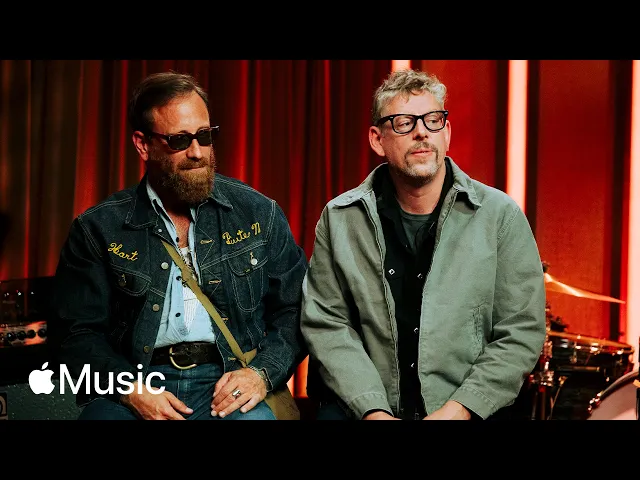
The Black Keys: Peaches!, Growth & Live Performances | Apple Music
Apple Music
0:00 looking back like what's your relationship to not only like sort of legacy
0:04 but like the band that you were then and the band that you are now?
0:09 I mean I think we have a real benefit
0:13 to our current situations cuz we're a better band now.
0:16 Yeah.
0:16 Sure.
0:17 than we were when we first started.
0:19 It was fun as hell and we were able to like basically start at single a ball
0:24 and work our way up the system.
0:25 And um our first record though it's special.
0:29 It's something that we could never make again.
0:31 We couldn't I didn't even know how to play the drums when we made the record.
0:35 We We didn't know how to mix it and we did it ourselves.
0:37 We didn't know how to record it.
0:38 We didn't know how how to really put songs together.
0:41 We were figuring it out.
0:42 And there's like there's like just something about you can you
0:45 if you're want to get into the Black Keys and you follow,
0:48 you can see you can really hear a band
0:49 kind of go through it all, you know, and um
0:54 I think that's part of it.
0:54 But I I I think here we are, you know,
0:56 25 years into our career and playing our best shows we've ever played.
0:59 So, uh maybe they're, you know, we're not playing Madison Square Garden.
1:04 It's probably it's for the best.
1:05 It's probably for the best.
1:06 Probably for the best.
1:08 Um but I mean, we have done it.
1:12 Yeah.
1:11 And I definitely can tell you we've had more fun in the last
1:14 couple days playing shows than we have on that first arena tour.
1:18 Stressed the living out of us.
1:20 We made a lot of money though, but it was very stressful.
1:25 Listening to Peaches in full,
1:26 there is this like real visceral like sense of catharsis for you guys.
1:30 Like listening to this record, it does feel like this is the album
1:33 that you guys like needed to make needed to make.
1:37 Um
1:37 yeah, I mean it wasn't really like the intention wasn't really to make an album.
1:40 You know, we we' had this idea to do a follow-up to Delta Cream for a long time,
1:44 like since we basically since we made it.
1:47 Um, we had a whole separate list of songs.
1:50 I had some, Dan had some,
1:51 but at the end of the day last year, we found ourselves,
1:55 um, we were supposed to be going to Latin
1:57 America on a tour and Dan's father got really sick.
2:00 He got diagnosed with terminal, um, cancer.
2:03 So, we cleared schedule so that we could be
2:06 home and Dan could be close to his father.
2:07 And so, there was a period of time when it was just getting,
2:10 you know, was getting very heavy.
2:11 And I I suggested maybe we should get in the studio
2:15 for a couple hours a day and just cut some stuff.
2:18 I I mean just not even with the intention of putting anything out,
2:21 just like I need to blow off some steam.
2:23 I need to get out of the house.
2:24 Exactly.
2:25 Yeah.
2:26 So we called our buddies from from Mississippi,
2:29 Kenny Brown, Jimbo Matthysse, Eric Deon.
2:31 Eric used to play bass for team Ford and Junior Kimbro and Arl Burnside.
2:36 And Jimbo's played with everybody.
2:38 and Kenny Brown is on some of our favorite albums of all time,
2:41 Hill Country Blues Records and and we we invited him up.
2:44 I I had a list of songs that I'd sort of been like keeping and um you know,
2:51 just songs I I would hear and I think that might
2:53 be fun to play one day or something, you know.
2:54 And yeah, he had he had a whole separate list of songs of what
2:57 that he just busted out and like this is what I want to do.
3:01 So, we just sat down in the room.
3:02 No one had really heard the songs before.
3:04 I didn't even reference them.
3:06 I just got the lyric sheets, tried to remember the chords,
3:10 and then we would just play them on the spot.
3:11 And you're pulling from like deep cuts,
3:13 archival footage of some of these bands
3:14 that like Good luck trying to find the 45.
3:16 Like you're you're find you're trying to find
3:18 these like lost treasures for the most part.
3:20 Yeah.
3:20 I mean, uh, some of it stems from us like collecting records,
3:24 you know, collecting 45s.
3:25 Others just like old blues songs I've loved.
3:28 Some of her like newer songs that I I didn't know about until recently,
3:32 you know, and uh, but they could just kind of ran the gamut.
3:35 But the the but the the thing that connected
3:38 them was that we'd never tried to play them or
3:42 most of us didn't most of us didn't know.
3:44 I never heard like the original versions of like
3:47 You Got to Lose She Does It Right.
3:49 Honestly, till after we had finished the album.
3:51 And so we recorded these songs.
3:53 And when we recorded, we didn't listen back to playback.
3:56 We would just record a song in the same room, right?
3:58 And we'd get through it and we'd be like, "That was fun.
4:00 Let's try another one."
4:01 And we just did that for a few days and then we'd never listen to it
4:04 for months.
4:05 Yeah, we might check it just to like
4:06 see that everything was there at some point.
4:09 We weren't like critically listening at all and then honestly,
4:12 you know, we we did that and um Dance Father Chuck ended up passing soon after
4:17 we finished tracking and and then it was
4:21 kind of straight into promoting No Rain, No Flowers.
4:24 So, so it wasn't until that tour was pretty much kind of wrapping up um that we
4:30 sat down in the studio and like started trying
4:33 to mix what was there, see what was there,
4:34 just cuz we had nothing to do.
4:36 And
4:36 Dan, actually Dan was producing some stuff and I would go over
4:38 to the the studio into the other room and just start fiddling around.
4:43 And then after a couple days, uh
4:47 I would pop over and be like, "Yeah, that sounds good.
4:49 That sounds good.
4:51 Hey, you're not bad at this.
4:52 You're pretty all right at this." We did that.
4:54 Yeah, he kept he would come over and be like, "Yeah, yeah, it's great.
4:56 Do this, this, do this." And then so eventually after like three weeks of that,
5:00 we had a record done.
5:02 It was cool.
5:03 It's actually the perfect way to come down from a tour cuz
5:05 it wasn't like now I'm just at home, have nothing to do.
5:06 I was like going to a job, you know, showing up eating lunch with
5:11 uh the dudes and Tom from Receable.
5:15 Yeah.
5:15 And Tom from accounts uh and um Yeah.
5:18 And it was cool.
5:18 So then, you know, we I think we maybe around that time
5:24 that we we we wanted to use another William Eglesson photo.
5:27 So we found the cuz we did feel like there was a connection to the dub record.
5:31 Clearly
5:32 the fact that you guys got the photo and it does look
5:34 like two bookends of this really important chapter in American musical history.
5:39 It's like, yeah, when Pat found that that photo, um,
5:42 it just felt like it was instantly, oh, that's it.
5:44 That's it.
5:45 This is meant to be.
5:46 You know,
5:46 decisions made for you.
5:47 we got an accidental album and there's the cover
5:49 and like great we don't even think about it.
5:52 Everything just got wrapped up in
5:54 it's like the big rusted out Coca-Cola logo on both
5:56 of the album covers is like I just love it so much.
5:59 And the funny thing is we actually had to like write to get approval
6:04 from Coca-Cola.
6:05 Uhhuh.
6:06 You think you might get like free Coke for a minute, but No.
6:10 No.
6:10 When you guys were actually like making like the decision to All right.
6:14 Well, let's let's do this.
6:16 Were you looking back and I don't know being
6:18 able to reinterpret these artists and reinterpret these songs?
6:21 Did it give you a sense of like abstraction
6:23 of not having to like get in the studio
6:25 and write new work and also kind of process
6:27 what you were going through and being like,
6:28 you know what, maybe it's just easier if
6:29 I let somebody else do the talking for this?
6:32 We just put our own spin on it instantly in the moment.
6:35 We almost got something that sounded more like us than
6:39 sure if we would shed it on something brand new.
6:41 I feel like it's truer to like who we are and almost sounds
6:45 more like uh the first records that we made than anything we've made since
6:49 those early records.
6:50 I mean there was kind of like just
6:51 a necessity to get stuff recorded and get it out.
6:54 We had no we didn't have any money right
6:56 to I mean we could sit around and fiddle
6:58 with something but it wasn't necessarily going to sound better.
7:00 It just would be different.
7:00 And but I do think that, you know,
7:04 like the real essence of the of the of the sound
7:07 of the record and the intention is it had it
7:09 was like I almost feel like Dan was like subliminally
7:12 compiling like a record that his dad would want to hear.
7:16 His dad was a super big music fan,
7:18 big supporter of Dan's career and of our career and was,
7:22 you know, like integral part of the band existing.
7:26 So I think like yeah he's an old hippie like live music fan
7:30 dealer too like antique dealer Americana folk art outsider art
7:34 he taught us about you know art and music and keeping it raw and um
7:41 that was that was the that he loved and he loved to go see live music.
7:45 He loved live performances and this record is that.
7:50 Yeah.
7:49 You know it's all of that.
7:52 Yeah.
7:51 And that's why we uh you know we dedicated it to him.
7:54 Also, I just feel like what you guys are planning to do
7:56 this with this album and kind of put yourself closer to the audience is,
8:01 I think, something that speaks to your origins,
8:03 the intention, and sort of like what we desperately need.
8:07 I think, you know, and and I mean,
8:08 the guys we're taking on the road are are all like kind of monster musicians,
8:13 but in a very specific way where like on Jimbo's work that he's done,
8:18 he's always embraced, you know, like flaws and quirks.
8:22 And same with same with Eric, you know,
8:23 he's like a master of a very unusual style of blues music, you know, and
8:30 and Eric locks in with Pat in a very special way because
8:33 Eric would set it on the same stuff that I did.
8:36 Junior Kimbro.
8:36 Yeah.
8:37 We both were obsessed at about the same age and dedicated our lives to that.
8:42 So, it's like to hear Eric play with Pat, it's it's a special thing
8:46 because my drumming I didn't really start drumming
8:48 at all till I started playing with Dan.
8:51 My whole drumming is just influenced really by uh dance playing.
8:56 Mhm.
8:56 So I think it's coming from the same spot as Eric.
8:58 So it's great to be there.
8:59 And I think that that's it like with being able to play Howland for you and Gold
9:02 on the Ceiling and all the songs with this band
9:05 and just kind of like lean into the swing, lean into the groove, let the songs
9:09 extend the songs, jam them out,
9:12 have have Little Barry with us playing guitar.
9:15 Um it's it's it's like kind of rearranged our brains and um I feel
9:21 like you know we've only played a couple shows so far on the tour,
9:25 but they feel like maybe the best shows we've ever played to be honest
9:29 because it's the first time you know like our trajectory was you know we
9:32 were two dudes in a van and then you know slowly after years and years
9:37 that things started growing and we were in a bus but when we finally like
9:42 kind of started blowing up like it was like We we had a light show.
9:46 We had we were playing arenas and it was
9:48 like we didn't ever get to the spot ever
9:50 where we were like in had an extended band
9:53 and were able to just kind of settle into it.
9:56 It was like always high pressure.
9:58 It was like here it is.
9:59 The first time we played as a four piece band.
10:02 Um aside from one little like benefit thing in a bookstore in New York,
10:05 our first real gig was uh opening for Pearl Jam at Madison Square Garden.
10:10 Oh, casual.
10:11 Like c just like casual casual.
10:12 was the first time you played with a bass player live with a bass player.
10:15 I mean, you had to get the James Dolan like seal of approval.
10:18 Like it was it's like it's wild to think that that
10:21 we had to pay him so his hand didn't open the show.
10:24 Yeah, that's it.
10:24 But I mean to think about like not having control over
10:26 those things in such like a I don't know breakneck amount of time.
10:30 It does feel like you guys are going back to the things you could control.
10:34 I mean, we had control over it,
10:35 but it was not like it wasn't like it was it was different.
10:40 It was just like we got to do this, we got to put on this thing
10:43 and now it's like it just you know it
10:46 feels like um you know the approach is different.
10:50 It's like the you know uh we've been
10:53 able to you know we kept production like lights
10:57 and stuff in a way where it's really aesthetically
10:59 pleasing but the show isn't dictated by the production.
11:02 Yeah.
11:02 you know, and I think that you can get wrapped
11:04 up in this stuff and I think we're just trying
11:06 to settle into a spot in our career where it's
11:09 exciting for us and an enjoyable thing for the fans.
11:11 So, um, that's the way forward, you know, and so we've only played three shows,
11:17 but I do think like Dan said,
11:19 they're they're three of the best shows we've ever played.
11:21 From what I've seen so far, I'm like have to agree with you.
11:23 Like, also the shows of the the longest shows we've ever played,
11:26 you know, and we're doing it without even thinking.
11:30 It doesn't even feel like it.
11:32 You know what I mean?
11:33 We used to have trouble playing long shows and now
11:35 we're like going over two hours and it's like no thing.
11:39 It's it's crazy for us.
11:41 Yeah.
11:41 You guys are just in the flow of it all.
11:43 We're in the zone and it's it feels really good.
11:45 I mean, I could tell like the the time that I spent with the record,
11:48 it does feel like I don't know,
11:50 like I said, like how it does feel in conversation with Delta,
11:52 but it does also feel very much in conversation with like the origins
11:56 of the band.
11:57 And uh I mean do you think you could have put out an album like this 2
12:01 or 3 years ago on your terms with the way that you want to do these live shows?
12:07 We did.
12:07 We did Delta Cream and we and that's like
12:09 almost like a trans North Mississippi Hill Country Blues record,
12:14 you know, but that was a turning point, you know, when we made that album.
12:18 It was a similar kind of circumstance.
12:20 It wasn't like an intended album.
12:22 It was Dan was producing a a record for his record label,
12:26 Easy Eye Sound, uh for Robert Finley.
12:30 Yeah.
12:30 And it was right when we finished the Let's Rock tour.
12:32 And we So we just did our first arena tour in 5 years.
12:35 And we had been home for maybe a week
12:37 and Dan called me on like um a Wednesday night,
12:41 are you free tomorrow and Friday?
12:43 Do you want to come in and record with uh Kenny Brown,
12:45 who I never had met, and Eric had never met.
12:48 And so I said, "Sure." We went in there
12:50 and we just threw down what became that record.
12:54 But once again, Kenny Brown is our hero.
12:56 Like to like when Pat and I first met um we were both into way different music.
13:02 But when I went over to his house, I saw that he had a Arl Burnside 45.
13:07 Sure.
13:06 And it was like the only blues thing he really knew.
13:08 And I was like, "Oh, you know, Arl Burnside.
13:11 Kenny Brown's on that.
13:11 Kenny Brown's on that record." And it's like so from our very
13:15 first days playing music when we were 16 and 17 that was he was there
13:19 with that record we we tracked it and uh then it was like the holidays
13:22 and then co happened and oh man and it was like it was the same thing
13:26 it was like summer 2020 and we listened back and we're like this could be
13:33 cool and so we sent it to Chad Blake who mixed that and there we go.
13:38 That was like and it was it was such a a such
13:42 a cool thing because it was like this is like not an intended album.
13:46 It's It's one of my favorite releases we've ever put out
13:48 and you know and I think it kind of showed us like
13:53 we can kind of just do whatever uh whatever we want you
13:57 know as long as we're enjoying it you know and you know
13:59 I think it signifies you know certain type of fan and deep
14:02 our base like you know this is kind of where our head
14:06 is at most of the time you know I think it's still
14:09 it's still a lot of fun to write a song that's like a hit.
14:13 Yeah, of course.
14:14 You know, um and it's cool to do that, but I
14:16 think uh it's cool to have those, but you know,
14:20 I think like the other night we played uh the song Just Couldn't Time Me Down,
14:24 a song off of um Rubber Factory.
14:27 We haven't played it in maybe, I don't know, 15 years.
14:29 But that was exciting, you know,
14:31 to like to get out there and pull up one of these songs
14:34 that we made as a two-piece that we haven't touched in almost two decades.
14:37 And like we got it together in like literally 30 seconds.
14:41 the whole band was just it was just like they're just like
14:44 we can start throwing stuff from the catalog out there on stage and having fun
14:48 and I'm sure the audience I mean you're talking
14:50 about the fans these people 14 albums in you
14:52 know 20 years on like this that's a treat for them you know what I mean like
14:56 it's a treat for us it's a treat
14:57 for the fans everybody everybody wins really I mean having
15:02 this this crew that we're with they're just capable of doing
15:05 anything and we can throw anything at them and like
15:07 we've played three shows it's been all three completely different
15:10 set lists And like we don't that's new for us too and we're very excited by that
15:17 I mean it speaks to like I don't know the legacy
15:19 at this point you know what I mean that you
15:20 can just kind of switch up the set list
15:22 on the fly and feel like there's so there's importance to that.
15:25 Um you know this new album I'm looking and I'm listening to it
15:28 and the thing I took away from it is now knowing a little
15:31 bit of the context of how it came together but like this idea
15:33 of like perseverance and there's like a sense of defiance on this album right.
15:38 Yeah, I mean I think that that I mean I you know a lot of our career has been um
15:44 you know embracing and supporting the artists that have inspired
15:47 us and very few of them have ever been commercially successful.
15:52 Yeah.
15:52 Uh I mean we do these things we call record hangs which are essentially dance
15:55 parties where we play our 45s which has
15:59 become you know it was just something Dan
16:01 wanted to start doing like in 2022 because it it was getting tedious to be
16:05 on the road for him cuz he doesn't like to go to bars and but it's boring
16:09 to sit on the bus and so we started doing it became like you know
16:12 this thing where he asked me to join him and we start you know we start started
16:16 going really deep into collecting 45s and when
16:21 we throw those things like about 95% of what we play is almost it's just almost
16:26 a celebration of how up the music industry is.
16:29 It's like here are all these great songs that should have been like known.
16:32 They should be in your like musical vocabulary,
16:35 but for we for whatever reason they're not.
16:38 You know, you turn on like a classic rock station and growing up, you know,
16:42 we that would be around like in restaurants I worked down in the kitchen
16:44 and my brother's car and stuff and they were playing like 250 songs tops.
16:49 Yeah.
16:50 from from like two decades of of music, you know,
16:54 and and I mean, uh Dan said the other day, he's like he you know,
16:59 he it every single day essentially we're both hearing songs
17:03 that we've never heard before that are blowing our minds.
17:05 Yeah.
17:05 So I'm like it's just like this and and that's just
17:09 that's just like 60s and 70s.
17:10 Imagine what people are going to do 40
17:13 years from now when they skim through the last,
17:16 you know, streaming era of the music that's never been popularized.
17:20 I don't know.
17:21 I feel like you're honoring those artists with this record.
17:23 And I feel like is that what makes it feel so different?
17:27 You know, there's just a lot of soul in these songs.
17:29 There's a lot of there's a lot there's just a lot of stuff to take away from it.
17:33 And I think that's what this it's easy for us to lean into that material.
17:37 um you know the one of the songs on the record uh
17:40 it's a dream is one a 45 that Dan and I both
17:43 found independently and it's like when he played it for me
17:48 and I I have that I just bought it he's like we're like
17:50 the only probably two idiots that have bought this record in like
17:54 years there's and um yeah I mean I think there's just a lot
17:57 there I mean I I think if we were just covered a seals
17:59 and croft album you might not be talking to us right now
18:04 I don't know I don't know you chop it up in 90 I guess maybe we just AB test it.
18:08 Just AB test it.
18:10 Uh I don't know, man.
18:11 Like I I like speaking as somebody who
18:13 grew up listening to your music uh 14 albums
18:16 in and I mean just You mean put three
18:19 records in the last three years, five in the last three and three years.
18:22 Three and three years is crazy.
18:24 Like six and seven years I think.
18:25 It's it's crazy.
18:27 I mean I mean looking back at at at the the arc of it all and like you know
18:30 the discoraphy like was there a point where you're
18:32 like this is not what we want to be doing?
18:36 Like was it the the scale of it?
18:38 Was it the speed of it?
18:40 Was there any point where you guys were like,
18:41 "Man, I'll go back and listen to records that I I like for me like
18:45 were difficult to make and now with enough time like one of those was Turn Blue,
18:50 but it's one of my favorite records now
18:52 and and I just relisted to it like I don't know 6 months ago and I was like,
18:57 man, that that actually is
19:00 something." And um you know, so I think that's the way I look at it.
19:04 You know, I spend more time thinking about like what
19:06 it would be like to be in late period monkeys.
19:10 What's that in your in your the theater of your mind?
19:12 What's what's it like being it's an interesting place to be?
19:16 And I think that yeah like head is a cool space to be in
19:20 like a band assembled then trying to
19:23 legitimize in the in the in the past tense a little bit like go back
19:26 I think it's kind of interesting.
19:29 I just you know I'm just saying I'm a complete nerd.
19:31 So I mean I think I think having an obsession is a good thing.
19:35 One of my obsessions is is sports and I'm
19:38 a Cleveland sports fan and uh I've seen our team get like really good almost win
19:44 the World Series but it hasn't happened since 1948.
19:48 Yeah.
19:48 But every year they get out there and they really actually try to and I
19:52 think that that like it it actually has affected my my my brain
19:57 just being obsessed.
19:59 Just that Yeah.
20:02 like it's not about the winning, it's about the trying.
20:05 It's about like thoughtfulness.
20:07 So, it's it's it's a healthy spot to be
20:10 kind of have a sort of underdog situation,
20:13 you know, because you can never maintain the top forever.
20:16 And so, it's like when you when it's like
20:18 it's also healthy to go back and be really
20:20 humbled by looking at people who have made incredible
20:23 music to have that have had really no commercial success,
20:27 which is essentially what our entire record collections are made out of.
20:31 I mean, Dan, looking back at like where you've come from, where you are,
20:35 I mean, is this this is it for you?
20:37 This is the most cohesive and sort of like locked
20:39 in that you guys feel like as a band moving forward.
20:43 Where we are right now is is a beautiful place and like um
20:48 the freedom that we have because of all the hardships that we went through
20:54 um I think is worth it.
20:55 you know, we're able to do whatever we want now.
20:58 And um it feels really good just like I
21:02 think what's most important is just having creative freedom.
21:04 And that's that's what we do.
21:07 That's that's what we have, you know?
21:08 That's why we're able to make so much
21:10 art and music and help so many different bands.
21:13 And that's like what drives us every day.