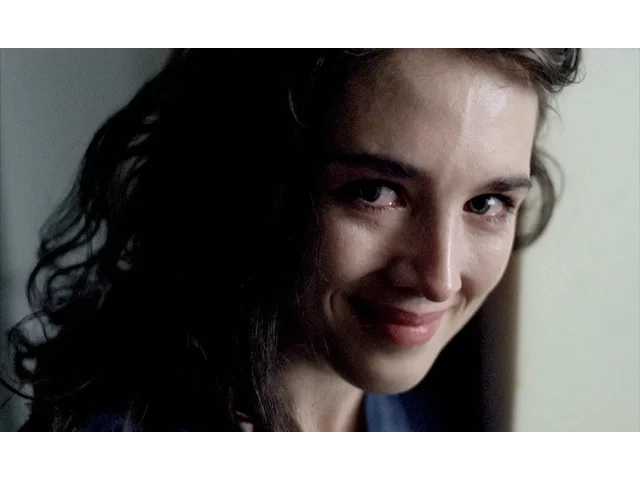
How Does an Editor Think and Feel?
Every Frame a Painting
0:01 Hi, my name is Tony, and this is Every Frame A Painting The other day,
0:09 someone asked me to describe my editing process So I
0:12 started talking about organizing footage and doing selects And she said,
0:16 "No, your actual process; like,
0:18 how do you know when to cut?" And I couldn't describe it at all!
0:26 Like a lot of editors, I cut based on instinct (Kahn) "Nothing
0:29 gets in the way of the editing process...
0:31 It's the process of your thinking.
0:34 I don't cut from what I call 'knowledge'.
0:37 I have to come into it and I have to feel it." It's the same way for me.
0:41 I have to think and feel my way through the edit So today,
0:45 I'd like to talk about that process: How does an editor think and feel?
0:55 The first thing you need to know is that editing
0:57 is all about the eyes More than any other factor,
1:00 the eyes tell you the emotion of the scene And the great actors
1:03 understand that they Convey more through
1:05 their eyes than through dialogue (Caine) "I said,
1:08 'Well, I haven't got anything to say,' So he said,
1:11 'What do you mean you haven't got anything to say?'
1:13 He says 'Of course you've got things to say!
1:16 You've got wonderful things to say!
1:19 But you sit there and listen, think of these extraordinary things to say...
1:24 "Elliot, sweetheart!" "Mhm?" "Have you tried these?
1:28 These are wonderful!" ...and then decide not to say them!
1:31 (Laughter) That's what you're doing!'" And when I'm watching footage,
1:35 this is what I'm looking for: Moments where I
1:37 can see a change in the actor's eyes Like when
1:40 he's making a decision Shots like these are powerful
1:46 because they work so well with other shots For instance,
1:49 when we cut from his eyes to what he's looking at It tells us,
1:57 without words, what he's thinking The next
2:01 concept was really hard for me to learn:
2:04 Emotions take time When we watch people on screen,
2:08 we feel a connection to them And that's
2:11 because we have time to watch their faces
2:13 before they speak (Speaking Chinese) (Door shuts) And time
2:20 to watch them afterwards Editors have to decide:
2:27 "How much time do I give this emotion?" So let's try an exercise:
2:32 look at this shot What do you feel while watching this?
2:42 Now let's try it again What do you feel while watching this?
2:56 Was it a different emotion?
2:59 Editing is full of decisions like these, Where four
3:01 seconds makes a big difference And these choices are difficult.
3:05 There are no right answers Some emotions play
3:08 better if you see them in a single, continuous shot (Speaking Chinese) But other
3:20 emotions play better over multiple shots,
3:22 So you can build up and come down Consider this scene,
3:25 where Luke Skywalker tests his skill (Breathes out) To make this simpler,
3:31 let's just focus on how long each shot is held for Notice that as we build,
3:40 each shot gets shorter and shorter towards the climax
3:43 (Inspirational music playing) (R2 beeps) But after five shots,
3:50 we hit the peak and start coming down (Yoda sighs softly,
3:56 sadly) Not only are the shots getting longer again,
4:01 they're actually held for longer than they were the first
4:04 time And this whole sequence spends about 15 seconds going up,
4:08 but twice that amount coming down, so that we, the audience,
4:11 have time to feel Luke's failure (Breathing heavily) "I can't,
4:17 it's too big." But what happens if you shorten this timing?
4:21 Let's take a look at a very similar scene,
4:23 done more recently See if you can feel
4:26 the difference (Hank) You can do it Scott, come on!
4:36 (Ant laughs) (Scott) They're not listening to me!
4:41 Did you believe that emotion?
4:42 Because in this scene, Scott's failure took 30 frames By comparison,
4:49 Luke Skywalker's failure Took 30 seconds People aren't machines,
5:01 We need time to feel the emotion, And if the movie doesn't give it to us...
5:06 We don't believe it.
5:07 (Schoonmaker) "And I'm finding in movies, recently,
5:09 that I've seen, A lot of things I don't believe.
5:13 I think people are sticking stuff out there And asking you to believe it,
5:18 But they're not making you believe it." And making it believable is really hard.
5:23 (Man) "Let Red go." Because timing is not a conscious process,
5:28 You're just responding to the fact That every
5:30 shot has a natural rhythm (Three gunshots) (Wood
5:36 breaking) (Murch) "There's an in-built relationship between
5:41 the story itself and How to tell a story,
5:43 and the rhythm with which you tell it, And editing is...
5:48 70% about rhythm." (Man yelling at woman) Sometimes the rhythm is obvious,
5:57 Like when the actor is doing something really physical
6:01 (Music intensifying) But other times it's quite subtle For instance,
6:12 the rhythm of people walking back and forth Or the rhythm of a restaurant,
6:18 with cooks, customers, waitresses...
6:22 These rhythms are closer to what we feel in everyday life,
6:25 And, I actually think they're harder to edit
6:28 But if you watch anything over and over again,
6:30 you eventually feel the moment When
6:32 the shot wants you to cut Classical Hollywood
6:43 editing is all about cutting with the rhythm And this is what we mean
6:47 when we say that editing is invisible The cut happens so naturally (Man) "Now
6:53 is there anything else you'd like to know about me?" That you don't notice it.
6:57 (Man) "Would you like to go over to my room?" But you don't always
7:01 have to be invisible Some emotions play better if you cut in a jarring way,
7:05 Like if someone is agitated (Heels clicking on floor) And other
7:15 moments play better If you actually cut to make the audience uncomfortable.
7:19 (Water sizzling) (Schoonmaker) "One of the things Marty's always encouraged us
7:30 to do is to Sometimes hold just a little bit too long...
7:35 (Water sizzling) And then make a cut,
7:42 if it's justified." What really matters is,
7:45 what reaction you want from people (Two gunshots) Because sometimes,
7:56 you can only get that with an unusual cut And that brings me to my last point:
8:04 If editing is so instinctive, how do you learn it?
8:08 I only know one way: Practice.
8:12 (Murch) "And editing is very similar to dance in that way,
8:15 You can explain the rudiments of dance,
8:19 But to really learn how to dance, you have to dance." You have to cut.
8:23 And as you cut, you'll develop a sense
8:25 of rhythm and emotion That's unique to you.
8:28 I've been doing it for ten years and I'm
8:31 still not there But whenever I'm frustrated by an edit,
8:33 I think about something Michael Khan said
8:35 (Khan) "The beautiful thing about editing is,
8:37 I guess maybe writers feel that way,
8:40 I see all that film up there, doesn't matter,
8:42 I'm doing one piece at a time One scene at a time, one cut at a time.
8:47 And there's a lot of film,
8:48 I just do one thing at a time." So take it one shot at a time,
8:52 Because if you watch any image,
8:55 (Man) "You really care?" You'll see it has an emotion
8:58 and a rhythm (Woman sniffing and breathing heavy) And you have to feel...
9:07 When...
9:08 To...
9:22 Subtitles by the Amara.org community