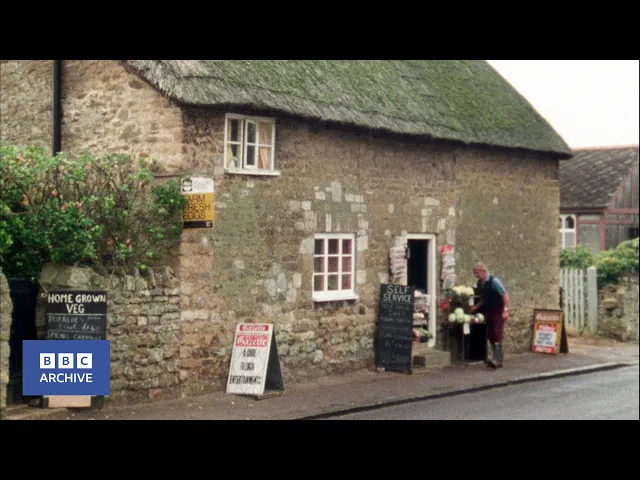
1979: A New Lease of Life for Abbotsbury? | A Diary of Britain | BBC Archive
BBC Archive
0:00 I'm a lease holder here.
0:01 I came down 5 years ago and took a lease on this cottage.
0:06 If people are prepared to come in here as they have
0:10 and put somewhere between 10 and 15,000 pounds into a property,
0:15 then they're saving the village, not destroying it.
0:53 There's been a settlement here at Abbotsbury since at least the Iron Age.
0:57 Sheltered by surrounding hills,
0:59 bordered on one side by fertile land and on the other by a sea full of fish.
1:05 In Saxon times, it was a favored retirement place for kings.
1:09 In the late 20th century,
1:11 it's a retirement place for the middle classes of London and the Midlands.
1:16 Well, now it's a really up and coming village.
1:18 You know, there's more people come to live here,
1:20 more new people and there's still lots of the good old people living here.
1:24 But none of us interfere with what they like to do
1:27 because um we didn't come here to change the village.
1:31 We came to join in with their lovely old-fashioned ways.
1:38 The old-fashioned ways were farming and fishing
1:41 with a thriving rope and net making industry.
1:44 Now the main source of income is tourism
1:47 and that doesn't provide much employment for the locals.
1:50 Abbotsbury's almost completely owned by the Strangeways family,
1:54 a small part of a much larger estate and the family
1:57 have always cared a great deal about the village,
1:59 especially for the look of the place.
2:02 A combined effort by owner and planners has
2:05 controlled the way in which the village has modernized.
2:08 It presents a facade of old-world charm.
2:12 But in order to finance this without selling off houses,
2:15 the estate has had to resort to methods
2:17 which alter the character of the community,
2:19 and they look like having a deep and lasting effect on the life of the village.
2:25 The headmaster of the village school is David Bowden.
2:28 We're now in serious difficulty to maintain a viable school,
2:32 simply because the number of children is dwindling.
2:35 And this itself reflects increasing difficulty
2:38 in the village of getting housing.
2:40 So that a young family who wants a house now can't obtain one.
2:47 This basically is because of the landlord's policy.
2:50 If a house becomes vacant,
2:53 it suits their policy more to make this available to somebody with money
2:57 who can take out an expensive lease and pay for the cost of modernization.
3:01 And this automatically excludes the kind of young family
3:05 with children who would in fact keep the school population going.
3:08 The newcomers, of course, are usually older and don't have young families,
3:14 and this is a disadvantage from the village point of view,
3:17 and we all realize this.
3:19 But I can't imagine that the village would be any better without us.
3:26 Well, you're getting the old old colonels and admirals
3:30 and everything coming in and buying the houses and that.
3:33 They're standing them and everything and that.
3:34 It's people with money and that coming
3:37 in and the youngsters is just getting moved on.
3:40 You know, we won't stand a chance getting a house.
3:41 It's as easy as that.
3:43 We're going to have to find somewhere out of the village.
3:46 Wide wide as the ocean, high as the above.
3:54 Deep, deep as the deepest sea is my savior's love.
4:03 I was so unworthy, still a child of his care.
4:11 For he teaches me, guides me, and protects me there.
4:29 A great barrier of pebbles, the Chesil Beach,
4:32 keeps the sea at bay and protects an 8-mi brackish lagoon,
4:36 the Fleet, a rich feeding ground for fish and waterfowl.
4:40 Swans have been protected and exploited
4:42 here since the Benedictine monks first appointed
4:45 a swan keeper in the 14th century and bred cygnets for the table.
4:51 The last person to eat an Abbotsbury swan was the late Lord Ilchester,
4:54 and that was 16 years ago.
4:56 Now, at nesting time, they're an attraction for tourists.
4:59 Dick Dalley is one of the men who cares for them.
5:02 Well, the day's a day we make our annual swan counts.
5:06 We usually count the swans in the spring,
5:09 and this time of year, just after we release them.
5:13 The swans, they winter down the Fleet, maybe 3 or 4 mi down from Abbotsbury.
5:20 There should be around about 5 to 600 birds
5:24 on the Fleet at this time of the year.
5:28 Usually, they stay because simple reason is
5:31 there's acres of food in front of them.
5:39 Mr.
5:40 Keech has lived in Abbotsbury all his life.
5:42 His wife comes from a neighboring village.
5:45 They work a small market garden and run a shop from the doorway
5:49 of their house selling their own produce and acting as news agents.
5:53 Their daughter, Jackie Pittman, married a local gamekeeper.
5:57 She organizes much of the village's social life, the weekly whist drive,
6:01 rehearsals for the village concert in 2 weeks time.
6:09 This round I find helpful in another way because
6:12 it gives me the chance of when I'm organizing
6:14 anything or I've I've got things to tell people
6:16 I tell them the same time that I'm delivering papers.
6:19 After Ted, could you tell Annie please that the whist sit the Elchester
6:23 tomorrow night instead of the WI hall we've gone back up there.
6:27 You going to come now this now we've gone back up.
6:29 What do you think it's a go?
6:30 Yeah, well, you know, we'd like to see you all there.
6:33 We'll get you the Yeah, very good.
6:37 Could I give a message to your dad?
6:39 Could you ask him if he could come
6:40 to the WI hall Wednesday for a rehearsal with Miss Yes,
6:44 I to think about uh 8:15.
6:48 All right.
6:56 All the swans yourself you find each pair is a little bit
7:00 different to the other and you get some which are more fierce.
7:05 For instance, once I was down there and there was family of swans.
7:12 This particular year I went there and attempted to catch
7:15 usually the female first because she won't leave the cygnets.
7:19 I caught this female and they had seven cygnets.
7:23 When I felt a blow on the back of the head I didn't know what hit me.
7:27 Apparently her mate was out on the fleet feeding and heard her distress call
7:32 and came into her assistance and just flew into me and knocked me out.
7:37 He must have caught me behind the ear with his wing.
7:40 As I saw somebody coming along and collecting with every step.
7:44 Cuz he can they have been known to bite arms and legs.
7:48 And you imagine a bird weighing up 25 30 lb
7:52 and they can fly at by the speed of 30 mph.
7:55 Takes some stopping.
7:56 Something's coming this way.
7:58 It was my poor old leg that kept me out of the game.
8:03 I've got two elderly relatives living still in the village.
8:08 They're my great uncle and my great aunt.
8:11 That's Elsie Gill and William Roper.
8:14 Auntie Elsie is 85 and Uncle Will is 92.
8:19 They're marvelous characters because they have such marvelous memories
8:22 and I never get tired of listening to them.
8:24 My father, he was swan keeper at Clough Hill.
8:28 And he used to to rear 35 signets for the table.
8:33 And he used to have the rear these and kill them.
8:37 And dress them.
8:39 And bring them right down at Spray,
8:41 one each side for and take them to the station
8:43 to send for Holland House in London and Melbury.
8:47 Cuz there was a lot more employment in your than wasn't there?
8:49 I mean how many men would work on a farm?
8:52 We had a farm.
8:54 Yes, on on the farm where I worked.
8:57 There were 20 There was 20 two men working.
9:02 Cuz there's nothing to keep the young people here anymore, is there?
9:05 There's no jobs for them.
9:07 And they didn't drive them out.
9:08 And if they get married, you'll see there's there's no houses for them.
9:11 Not like it used to be years ago.
9:14 I like to go back and see Clough Hill again.
9:16 where you've been there for a long time, eh?
9:18 No, I haven't.
9:18 I didn't seem to have heart to go cuz they said it was knocked about, so.
9:22 Would you like to go back and see it, would you?
9:23 I would love to.
9:25 Yes.
9:27 We came here to live about 18 year ago now.
9:31 Moved into the house.
9:33 It's not used now because we moved down into the village.
9:38 The house itself is called Clouds Hill and it belongs to the Stoneways Estate.
9:45 You know, there's people really willing to pay
9:47 a lot of money to come in tonight, but they just don't want anybody to have it.
9:52 Once you do that, see, that'll be the end of the quietness because
9:56 of of the bird sanctuary would disturb too much.
10:00 It's always been a small owner who lived one side and I
10:05 was a farm laborer or shepherd who used to live the other side.
10:09 And the small owner's job was to see keep things quiet on this end of the fleet,
10:13 see that nobody came up over the boundaries
10:15 so that the birds had perfect sanctuary.
10:31 All right, hold it there a minute.
10:33 Now, it's coming quite nicely, but I would like you to go a little bit slower,
10:37 especially when the treble's coming.
10:39 And remember that this is the last practice but one until we go in the hall.
10:43 So, if you can really put the polish on now,
10:46 keep it nice and steady the same as the speed we started.
10:48 Once more, we'll start at the beginning and go straight through.
11:09 Abbotsbury is famous for its tropical gardens.
11:12 The influence of the sea on its sheltered position makes it almost frost-free.
11:16 For one of Dick Dallas' sons, there's the rare chance of work in the village.
11:20 Now, you've seen what I've done.
11:22 Now, you have a go yourself.
11:23 Don't forget to take the current year's growth.
11:26 Cut 3 in strong right down to a leaf joint.
11:29 Oh, when I left school, I just ruined my getting a job cuz no transport,
11:33 you know, getting away with break foot.
11:36 Cuz the buses only run a certain time.
11:38 You know, if you got a job early start about 7:00, you know.
11:42 You got no transport getting there.
11:43 So, that's why I took this job.
11:46 Judging from the cousins and that, you know, there's 20 and 30.
11:50 A lot of them's moved out.
11:52 You know, couldn't get a house in the village.
11:57 The garden itself is uh 17 acres.
12:02 It was started by the same family who still own it.
12:05 The Strangways Estates, the Fox Strangways.
12:08 And it was started in about 1760.
12:11 In those days, of course,
12:12 they sponsored the old plant collectors who went abroad and collected seed.
12:17 And we've got trees from all over the world, in fact.
12:21 We employ five and we're the biggest employers now of the village.
12:25 Never used to be because the estate always farmed their own
12:27 land and they had a had a quite a workforce then,
12:30 but that's all finished now.
12:32 And most of the land is out to tenant farming.
12:35 So, all in all, I think that the garden's playing an important part
12:38 in in the village because of the it
12:41 was a great attraction for the tourist trade.
12:47 We're a village that still has a a village school,
12:49 but the problem is that the numbers of children are dropping uh steadily.
12:54 We used to be having six a year uh intake of children.
12:58 This has now fallen to about two a year.
13:00 So, our numbers have plummeted from something like 45 to 50 when I first
13:04 began here over 10 years ago to uh approaching high 20s and still falling.
13:11 So, uh we're now in serious difficulty to maintain a viable school.
13:16 The age structure of the village is changing uh drastically.
13:19 I believe that now uh almost a third of the village is over 65.
13:24 Uh this tendency will will go on.
13:25 I I see this is worse.
13:27 And uh seems to me this will uh completely
13:30 alter the whole uh social mix of the village.
13:36 If you have a local argument with, you know, somebody you know,
13:41 and you happen to mention a few things that shouldn't
13:43 have You shouldn't have mentioned it at the time.
13:45 With uh being a newcomer here,
13:48 if you do that, you'll end up getting a solicitor's letter.
13:52 But with, say, people you've known for years
13:54 and you have a right royal with them, you just sort of you know,
13:59 uh the few days and the air would clear and you'd be all right again.
14:03 Cuz that didn't happen in the village, didn't it?
14:05 Not so long ago.
14:07 With uh a person that came into the village,
14:10 he just happened to mention something about newcomers.
14:13 And uh he had a solicitor's letter to say that um uh he
14:19 took his name in vain and called him a newcomer or something like that.
14:24 You just got to mind your p's and q's, I suppose.
14:33 There's an enormous problem with transport.
14:35 Uh we're a village which is 10 mi distant from three towns,
14:38 Bridport, Dorchester, and Weymouth.
14:40 And each of those towns we have problems getting to.
14:42 Uh getting to Dorchester, we have no transport at all, no public transport.
14:47 In Bridport, we have no buses in the winter, and we have um a bus in the summer,
14:53 which is so timed that if you go want to go to Bridport shopping and come back,
14:56 you can't do it on the same day.
14:59 Um in Weymouth, we have I think five buses a day go to Weymouth.
15:04 Um normally, if you want to go into Weymouth and shop and come back,
15:07 it's a day's job because of the timing of the buses.
15:11 You want to go into Weymouth for the evening,
15:12 uh you can't cuz the last bus in is uh at 10:00 to 7:00.
15:17 And there's nothing back.
15:19 Mum, want to go, Mum?
15:21 Oh, shut up, Willie.
15:22 Go and get yourself a bucket or something.
15:28 What were you saying, Mrs.
15:29 Slocombe?
15:30 I was Oh my god, Willie, what is he doing?
15:34 God damn Willie, you don't know where he's been.
15:37 Jeremy.
15:38 I thought they let him leave, Mom.
15:39 Silly boy, that's for the doctor when he comes in.
15:42 You just you sit there now.
15:43 So help me, I'll belt you.
15:46 Silly boy.
15:49 It's him.
15:50 Yeah.
15:51 Yeah, that's him.
15:53 Who's first?
15:54 Uh me, I think.
15:55 And don't be all day.
15:57 We ain't got all day to spare, even if you are ill.
15:59 I got that one.
16:00 Who you have, Willie?
16:03 Third place, diamonds and junk.
16:07 Number three.
16:08 Where's number four?
16:14 Pat, you want number two to come out?
16:16 Four to three.
16:17 Number two is inside you.
16:19 Sorry.
16:22 What's got that number?
16:30 We're not ready yet.
16:31 No, it's mine.
16:32 Is that yours?
16:34 She didn't want to take it.
16:35 That's your Go on then.
16:39 Oh dear.
16:51 There's a lot of thatched houses in Abbottsbury.
16:56 I would like to live in a thatched house in Abbottsbury.
16:59 Not necessarily a thatched house really.
17:01 I mean any house would do.
17:02 But the estate do not sell very many of the houses in Abbottsbury.
17:08 So there's not much chance of getting one really.
17:11 But uh that's one of those things.
17:17 We're just waiting and hoping.
17:18 So Before our men of war shall fall like the sickle grain,
18:48 for Drake is going westward led to sweep.
18:54 Now I love my Sarah and she'd live down on her farm,
18:59 and so long as he feeds her so do I and I'll do her no harm.
19:03 Dear Georgie, where does straw dear Georgie, dear Georgie, where does straw?
19:09 But the straw is too dry, dear Liza, dear Liza,
19:14 the one is to dry their lies at two dry.
19:28 Well, the ownership of the fleet belong to the Strangways
19:32 estate or the better the fleet belongs to them.
19:35 Three miles of it is strictly private mainly for birds.
19:40 And I'm related to a little bit of fishing there mainly for catch
19:45 some fish to eat for the big house and for the workmen.
19:51 I also do a little bit of eel fishing.
20:05 It's nice, very quiet.
20:07 You you can come here know that there won't
20:11 be anybody else about and you can just go along, amble along, please yourself.
20:19 It's um something different.
20:22 It's a job to explain.
20:24 It's peaceful the solitude of the place, peaceful where is a closer the birds.
20:30 Occasionally you hear the fish jump in the fleet.
20:34 Well, it's a peaceful it's away from the rat races as I call it.
20:39 People rushing about.
20:42 Once you get down into the village, well,
20:43 then it's all the down you got the noise
20:45 of the cars and trying noise and that moving about.
20:50 But, once you get onto the back waters it's a different altogether.
20:59 For crossing to work in this area, it's a good setup because you you've got
21:02 a good tourist industry and um you don't have
21:07 the fuss and bother of having to sort
21:08 of go through other businesses to sell your work.
21:12 Um there's been quite a bit of talk in the since
21:15 we came here of setting up other craftsmen in the village,
21:20 but so far nothing has happened.
21:21 There's um been a few people who've sort of looked around,
21:24 but um no other workshop facilities have so far been made available.
21:29 If other people did come in, it would be benefit
21:32 to the village and um probably um people would be able
21:38 to take on youngsters in the village and so on and train
21:42 them to do their sort of work and so on.
21:45 And um it would make uh for a good setup to have some other craftsmen around,
21:51 but uh until there is property available,
21:54 uh I can't see this sort of this coming off.
22:42 You can't walk into a farm with a 10-ton cattle
22:45 lorry and and drive off with 13 heifers or something, can
22:48 They must have must have seen some act.
22:50 Whoever's done it pretty good at it.
22:52 Professional as they say.
22:54 Yeah.
23:32 The ducking decoy was first erected about 1655.
23:38 The locals was employed to dig the pond out by hand.
23:42 And four tunnels or pipes as we call them was erected.
23:47 One each corner of the pond so that you
23:50 could come down most winds and catch duck.
23:53 These things was used or supposedly for food before guns ever come into being.
24:00 The idea was that the man in those days,
24:04 he had some dogs which were trained to walk
24:06 in in eight screens because the duck is a very curious bird.
24:12 As we saw this here,
24:14 there was a fox walking along the side of the fleet
24:16 and there was about 200 duck following him within 10 yards.
24:21 So, they must have noticed that years ago.
24:23 So, they thought if they could get a dog resembling a fox in size and color,
24:27 maybe the duck would follow the dog into the tunnel.
24:33 So, they done that and they found it worked quite well.
24:37 But over the years, they've done away with the dogs and we've
24:42 got what we call cobras now which are very small white duck.
24:47 They come into the pond, we feed them there and they go off onto
24:51 the fleet when you get the winter birds coming in.
24:54 They mix up with them and gradually they bring them back into the pond.
24:58 Then we put more food into the tunnels near the small end.
25:03 The birds should They come on the pond and gradually they
25:06 will feed on not knowing they're going up into a tunnel.
25:56 Oh, I know you feel better.
26:11 Today we don't catch quite so many because there's more wildfowlers about
26:17 and the birds don't seem to come on to the fleet like they used to.
26:22 So, we still get a few as the birds coming on the fleet.
26:27 It's the smallest during the winter.
26:39 The main idea of this was for food.
26:42 Before ringing started, instead of putting rings on their legs,
26:46 they had the next ring for the table.
26:51 But as the years went by, other countries were ringing birds.
26:56 So, we stopped catching for food and they
27:00 wanted to find out more about the duck,
27:01 where do they go to breed during the summer months.
27:04 So, they started having the rings put on them.
27:07 And by that, we've had rings back now or over 300 from over 19 countries.
27:16 As far as ways Central Russia, Germany, Poland, Finland, places like that.
27:23 Things have come back.
27:25 And it's much more interesting than that than just catching them for food.
27:30 All right.
27:31 Off you go.
27:50 Do you reckon they ought to bring back hanging?
27:51 they ought to die.
27:52 Yeah, you reckon they did too?
27:54 Only for special cases.
27:55 You can't You can't do You can't bring it back like it was years ago.
27:59 You You've got to be a very special case and I
28:01 think probably you ought to use it as a deterrent.
28:03 It would Everyone else would would then look at at it as a very serious crime,
28:08 but it's becoming becoming a routine with some people.
28:12 Okay, good.
28:12 Now they're even the rustlers of your cattle.
28:14 You probably shouldn't even try to defend your cattle.
28:17 more for that.
28:17 What for rustling the cattle?
28:18 No, that's true.
28:20 The happiest time in all my life was under the parlor stairs.
28:24 And a nice eye accorded went under the parlor stairs.
28:28 A barrel of beer in the corner stood besides the mighty bundles of wood.
28:33 And I vowed I married a cook I would under the parlor stairs.
28:38 When you reckon you lost all these cattle?
28:40 You know how much they're worth?
28:41 Well, 5 years ago, I lost I lost 10 cows.
28:45 I locked locked everything up afterwards.
28:48 And um I about a 3 week later,
28:51 the whole chains, the gates, the doors were all broken down.
28:54 They were all gone.
28:59 Ah, it's all very well for you fellows to joke.
29:02 This is the second, third time I've lost animals.
29:05 And you locked up, Peter?
29:07 Safe.
29:07 Safe?
29:08 Safe.
29:09 Oh.
29:08 Mrs.
29:09 Look out yours.
29:11 Oh, no.
29:11 We're married till we meet under the parlor stairs.
29:16 Be watchful, say come along, my sweet.
29:19 Under the parlor stairs.
29:21 We'll have a cozy cup of tea.
29:23 And we'll sit again upon your knee.
29:26 And think of the times when you courted me.
29:29 Under the parlor stairs.
29:31 UNDER THE PARLOR STAIRS.
29:38 I BELIEVE THAT, MICKEY.
29:40 THAT WAS IT.
29:41 IT'S ALL RIGHT, TOO.
29:59 On Sunday, the Daley family join their close relatives for the fishing.
30:05 It takes judgment and combined effort to launch a beach boat successfully.
30:14 They watch the pattern of the breaking waves.
30:17 To avoid a capsize and stay dry, they need to choose their moment carefully.
30:53 In our industry there's been as many as five or six boats in there.
30:56 Gone right down to just us now.
31:02 Like both Peter's other things to do now.
31:04 These people don't go to fishing so much.
31:10 I started when the war was on.
31:12 And they've just uh Well, it's different.
31:15 I mean, it's not not every day the same sort of, you know.
31:18 I like just going to a shop or an office and doing the same thing all the time.
31:35 Like my sister said, it's different.
31:37 Everyday is different.
31:39 So, you you're not sort of getting in a rut.
31:41 These 9:00 to 5:00 sort of thing.
31:57 Years ago mackerel was your main diet, wasn't it?
32:00 Especially in down along the south coast.
32:03 Um now they go for other things, don't they?
32:06 Place or the salmon in.
32:10 You know, people go out for a meal, only working class people would buy us
32:13 salmon and they're and their dinner, weren't they?
32:16 Years ago they wouldn't Well, mackerel was one of the main fish, weren't they?
32:22 I think we're backing the wrong side.
32:25 Yes, I would say that also, too.
32:28 But certainly David Aaron should have allowed
32:31 Ian Smith to come in here for discussions.
32:35 Indeed.
32:35 The Queen of England You agree you think so, too, John?
32:37 Yes, of course he should.
32:38 Yeah.
32:38 Of course he should.
32:39 He's got the right to stop him.
32:40 Indeed not.
32:41 After all, he was flying Spitfires for us during the war.
32:45 Which is more than many of them can say.
32:48 The Queen Mother like Ian Smith when she's such a splendid little lady.
32:51 But I think she's Why shouldn't she like him?
32:54 Well, because he's not likable, is he?
32:56 I don't agree with you at all.
32:57 Who's not likable?
32:58 Young Smith.
32:59 Oh, I don't know.
33:00 Very very likable, I think.
33:01 He's my sort of man.
33:03 Well, I said the wrong thing.
33:19 As Archie said, uh the sellers is no good.
33:22 One time used to have a lot of walkers, but now there's no walkers about.
33:26 People come in the summer's evening and couple of free
33:30 walkers be ready to take some fish on and sell
33:32 around the local villages and that, but uh like
33:36 the government stepped in, they'd have so many things, hot water, cold water,
33:40 and that it was uh and licenses to sell the fish
33:44 and it wasn't uh commercially um good for them at all.
33:49 They know it was a waste of time.
33:52 So, gradually they died out.
33:53 Well, now it's just a buyer taking the fish and they the shops
33:57 and there's uh the London market is when you have fish here,
34:02 they send the fish other places.
34:05 By the time you get to the market,
34:06 it's more or less full up with other lorries in with fish.
34:12 But we don't want the village.
34:13 We're all retired people, you see?
34:16 We want some of our youngsters to come on.
34:18 You see, I blame the schools.
34:20 They take our boys and girls into Weymouth
34:22 and Dorchester school and in about 10 years more,
34:24 they don't know nothing about their own village.
34:26 We used to.
34:27 You ask them the name of that wood up
34:29 there or where the stream rises, they don't know.
34:31 No, but they had interest in it, but now they got no interest in it.
34:35 What do you put your heart and soul into?
34:36 The younger generation, of course,
34:38 have got to leave the village in order to obtain employment.
34:42 men used to it.
34:43 Older men used to do it then.
34:44 Well, of course, in years gone by, there was very much more
34:48 There was more employment there was more
34:49 in the village and adjacent to the village and there were more employment.
34:53 Now, with modernization of farming, there are unless unless more or less labor
35:01 required.
35:01 The only alternative, of course,
35:03 is to uh introduce industry and develop the village.
35:09 Which I'm afraid would not be in keeping with
35:15 you fellas to come down from Birmingham and places like
35:17 that with all this happens and buying up the cottages,
35:21 they don't get in our village, fella, a chance.
35:59 When I left school, there was nothing much to do,
36:02 so I just came straight down here.
36:04 And uh you know, I've been here ever since.
36:09 Sometimes you can earn quite a lot, and then you get a lean time and you
36:12 won't earn nothing for, say, 3 4 weeks or more.
36:16 And that's, I suppose, the bad part about it.
36:19 Apart from that, it's not too bad.
36:22 It's uh you know, it's quite exciting at times.
36:26 You know, when you have a lot of fish, you know, it's really exciting then.
36:29 You're running around everywhere trying to get things to go right like.
36:34 Sometimes it's uh you makes you curse like, you know?
36:38 Like uh you know, if you don't have nothing for a say 3 weeks,
36:43 you start to get a bit on edge like, you know?
36:46 Four bloody months.
37:00 But I'll tell you something else.
37:03 When you get some of these newcomers come down here, I watch it.
37:07 They want to take the charge, the women's union,
37:11 the mothers' union, the schools, the church.
37:18 No.
37:17 See, although the admiral does a good job,
37:20 I know that, but that's what happened.
37:22 But never mind.
37:23 But somebody's getting along.
37:25 Somebody's got to.
37:26 Somebody's got to.
37:27 Somebody's got to.
37:27 Someone's got to keep things going.
37:29 Mrs.
37:29 here.
37:29 GWEN AGAINST TIME.
37:39 OH, IF I HAD SOMETHING.
37:42 Isn't it terrible?
37:44 We never had it like this all the 41 years my dad was here.
37:49 I have to ask money, see?
37:51 It's just the trouble, Will.
37:53 They don't want to ask they don't want to put out the money to pay for it.
37:56 That's the trouble.
37:59 We got to blame the state.
38:00 Yes, but I mean the state could do that, couldn't they?
38:03 Of course, the state could do a lot of things, but they don't do it.
38:06 No, well, no, I know, Will, but it's there.
38:10 Instead of leaving this house to be like I can't say it.
38:15 It's my home and I can't say anymore.
38:20 Shackleton, Shackleton, Shackleton.
38:22 I should be dreaming about this when I get old.
38:25 Shocker.
38:27 Happy memories of years ago.
38:30 Yes, happy memories.
38:34 Shocker.