How Scientists Build Consensus: Crash Course Scientific Thinking #5
CrashCourse
0:00 We've known for nearly a hundred years that vitamin C prevents scurvy.
0:03 So why can't I seem to get a straight once
0:05 and for all answer on whether chocolate lowers my risk of cancer?
0:09 Or what about coffee or soy or even kale?
0:14 These are fair questions.
0:15 Maybe you've asked one of them before yourself.
0:17 Why does science seem to be so sure about some things but not others?
0:22 Hi, I'm Hank Green and this is Crash Course Scientific Thinking.
0:26 I don't care if it's good for me.
0:31 [music] Today we are going to talk about scientific consensus.
0:36 The point when an idea with a strong
0:38 base of evidence gains broad acceptance by scientific experts.
0:42 It's how science moves forward.
0:45 Consensus is way more than an opinion or a vibe
0:49 and also a very different thing from just
0:51 letting your Gen Z colleague rename the group
0:53 chat Meatball Zone because it wasn't worth the fight,
0:56 which is a real thing that happened to me.
0:58 Scientific consensus happens only when a claim
1:00 has been run through the gauntlet of skepticism.
1:04 Scientists [music] have conducted many, many studies.
1:06 They have sifted through the evidence, argued with each other,
1:09 tested an idea again and again with different techniques and approaches,
1:13 scrutinized studies that others have done and reached a point where
1:17 the evidence backs one explanation as far more likely than any other.
1:21 Consensus happens only after an idea has been
1:24 poked and prodded and tested from many angles.
1:28 And getting there isn't easy.
1:30 Building a consensus takes a lot of time and effort.
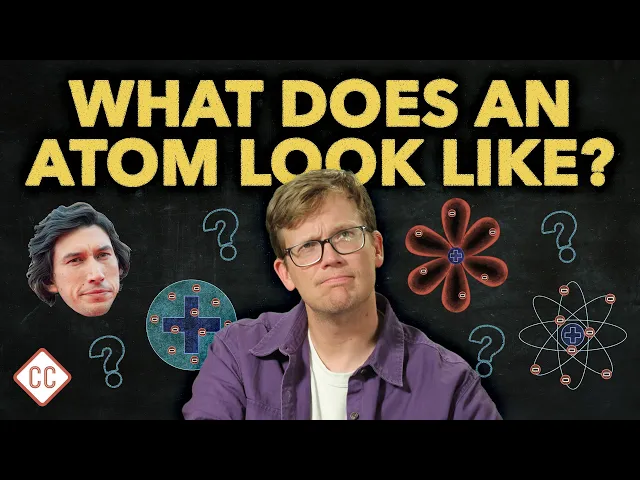
1:33 Think about atoms.
1:34 Not those atoms, these atoms.
1:36 But of course, I've never seen an atom before.
1:39 Even the highest resolution picture any human has ever taken
1:42 of them just kind of looks like blurry out of focus blobs.
1:45 But scientists agree that atoms exist and make
1:48 up everything because they've worked for centuries
1:51 collecting evidence and performing experiments to form
1:54 a consensus around those tiny little building blocks.
1:57 To learn more about this, let's get some sage advice.
2:01 [music]
2:08 What a fine day to learn about science and puzzles.
2:10 Ooh, puzzles.
2:11 I sense an analogy coming, Sage.
2:14 So the scientific process for building consensus is kind of like putting
2:18 together a jigsaw puzzle but without seeing the picture on the box.
2:21 In the case of atomic theory,
2:22 it started thousands of years ago as this idea that everything in the universe
2:26 was made of tiny unseeable particles with the ancient Greeks called atoms.
2:31 Clever name.
2:32 I like it.
2:33 Now at first it was more
2:34 of a philosophical thought experiment before it was science.
2:37 But then this guy John Dalton started thinking about it more scientifically.
2:42 Exactly.
2:43 Dalton, who was a chemist in the early 1800s,
2:45 started to apply that old philosophical
2:47 idea to his research into chemical reactions.
2:50 See, the existence of atoms helped explain
2:52 certain patterns he was seeing in his work.
2:54 He put the first puzzle pieces on the board.
2:56 He said, "Here's a thing that could explain what matter is made up of.
3:01 It had explanatory power, the ability to explain a phenomenon through evidence,
3:05 and that's one of the most important jobs of a scientific theory."
3:08 But it was still just a few pieces of the puzzle.
3:10 He wasn't anywhere near seeing the whole picture or having scientific consensus.
3:15 Flash forward to the end of the 19th century,
3:17 and new experiments provided evidence for what scientists had long expected.
3:21 There's something even tinier [music] inside
3:24 of atoms that's negatively charged, electrons.
3:27 That theory gained more and more support until we had more puzzle
3:31 pieces and an even clearer picture of what an atom looks like.
3:35 And not long after that, the nucleus was discovered.
3:38 But there were still big questions [music] waiting to be answered.
3:40 Things that we did not understand well enough to agree on.
3:44 Exactly.
3:44 Like electrons are weird.
3:46 So weird.
3:47 And we can't say with absolute certainty where they'll be at any given moment.
3:51 So in 1926, we started visualizing electrons as clouds of probability.
3:57 Scientists agreed based on all the available evidence
4:00 that the best we can say isn't where an electron is,
4:03 but where it's most likely to be.
4:06 Being more precise about what we don't know actually makes the picture clearer.
4:10 And naming areas of certainty and uncertainty is what allowed
4:14 scientists to come to a strong consensus around atomic theory.
4:17 And that's today's sage advice.
4:21 So that's how science agrees about stuff.
4:23 But why are there things science can't agree on?
4:26 At least not fully.
4:27 Like how can there be consensus about stuff as tiny and practically
4:29 invisible as atoms but not about the food I put in my body?
4:34 It can feel like there's a lot of mixed messages around food science,
4:37 but there's actually quite a bit about
4:39 basic nutrition that we do have consensus on.
4:42 We know that vitamin C prevents scurvy,
4:44 like I mentioned before, but also that vitamin D prevents ricketetts.
4:47 We know that fiber is good for us, and too much saturated fat,
4:51 salt, and sugar can be harmful to our health.
4:53 But there can be areas of uncertainty within a broader scientific consensus.
4:57 And that's actually where most modern-day science happens,
5:00 in the nooks and crannies of what we don't
5:03 know within the broader context of what we do know.
5:06 Sometimes this means we're seeing details we didn't
5:09 see before because we didn't have all the pieces.
5:12 Other times it means that our idea of what the picture looks
5:15 like has changed because we've got enough pieces to understand it more clearly.
5:19 It's important to remember that debate may still
5:22 happen about smaller details without disproving the main conclusion.
5:26 that scientific debate is part of the process.
5:28 It's how scientists refine a consensus.
5:31 It's the same with the science of nutrition.
5:33 There are some areas that are tricky to bring
5:36 into perfect focus because they're tricky to measure.
5:39 Like, say that I want to understand once and for all
5:41 whether eating chocolate raises or lowers my risk of getting cancer.
5:46 It wouldn't be impossible, but it would take a lot of large,
5:49 highquality studies and someone who cared enough to actually pay for them.
5:53 And if the effect wasn't very large, it would be hard to spot it.
5:57 Plus, it would still be a challenge to get strong evidence either way because
6:01 there's so much we can't control for when studying people and food and health.
6:04 Like, you can't really ethically design an experiment where a group
6:07 of people are on a very specific diet for a very long time.
6:11 And also, think about all the different types of chocolate out there.
6:14 Not to mention all the other foods that people
6:16 eat that could affect the results of a single study.
6:19 On top of it all, things like exercise, genetics,
6:21 and the environment around you all impact your health, too.
6:24 Forget comparing apples to oranges.
6:26 Even comparing apples to apples isn't easy.
6:29 In other words, it's hard to gather enough evidence
6:33 to push a consensus around chocolate's health benefits toward an agreement.
6:38 So, even though the consensus around
6:39 basic nutrition hasn't changed much for decades,
6:42 there's still a lot we don't know about the interaction
6:45 between an individual's health and the food they eat.
6:48 And that brings me to something I think can feel frustrating,
6:51 but in science is very important.
6:54 Scientists always hold open the possibility that with new evidence,
6:58 an explanation could shift or become more refined,
7:01 just like how our model of the atom has.
7:04 But it wouldn't happen overnight.
7:06 It would take overwhelming evidence to shift a scientific consensus.
7:11 Which is why consensus is so important.
7:13 It's a way of saying okay scientists can agree that there
7:16 will always be a degree of uncertainty in any theory
7:19 but with that caveat they can agree on some things
7:22 that are very very likely to be excellent at explaining the world.
7:26 So where do we as consumers
7:28 of science media [snorts] usually encounter scientific consensus?
7:34 It's often in statements like 99% of scientists agree on something.
7:39 Like 99% of scientists agree that climate change is caused by human activities.
7:44 Let's unpack what that means.
7:45 First off, there's no real threshold for consensus.
7:48 Even though we often say things like 99% of scientists,
7:52 all that really tells us is that we have a strong consensus.
7:56 But you could have a strong consensus with 95% or 83%.
8:00 Overwhelming consensus of any degree means that a claim
8:03 has cleared a very, very high bar.
8:06 It's like we've got 3,000 pieces of this puzzle and 2,996
8:10 are spelling out climate change is real and we are causing it.
8:14 It would not just be weird,
8:16 but wildly unlikely to uncover evidence that overturns this fact.
8:20 It would be as strange as learning that atoms aren't real.
8:23 Now, does this mean that we know
8:24 everything there is to know about climate change?
8:27 No.
8:27 There's still plenty of stuff for [music] scientists to debate and discover,
8:31 but they're working on the unsettled
8:33 details within the broader scientific consensus.
8:36 Scientists aren't debating if climate change
8:38 will bring serious warming to the planet.
8:40 They're debating things like the importance of pee bogs for carbon
8:44 storage or how fast methane [music] breaks down in the atmosphere.
8:48 Science can tell us a lot about
8:49 the world from atoms to nutrition to climate change,
8:52 but it can't tell us everything.
8:54 That's just not how science works.
8:56 Science is the process of becoming less wrong over time,
9:00 of always being open to new evidence,
9:02 but also recognizing when an idea is very good
9:05 at explaining all of the weird phenomena of our world,
9:09 has stood up to challenges from every angle,
9:11 and is extremely unlikely to be wrong.
9:14 Consensus is all the big stuff that scientists agree on.
9:18 They understand atoms enough to know what their properties are.
9:20 They understand nutrition enough to offer overarching health guidelines.
9:24 and they understand climate change enough to know that we are causing it.
9:28 But they still don't have a complete model of the atom.
9:32 They still can't say in every case what chocolate will do to your body.
9:36 And there's more to study about how humans are affecting the climate.
9:39 At the end of the day, scientific consensus is what emerges when
9:43 an idea has consistently explained the evidence,
9:46 predicted outcomes, and stood up to challenge.
9:49 It's the big stuff.
9:51 The things that we keep seeing confirmed again and again.
9:54 We know so much more about the world than we did even a hundred years ago.
9:59 Our knowledge continues to build and grow.
10:02 And those puzzles are getting more complete
10:04 [music] and more detailed all the time.
10:06 But science never stops pushing at those edges of what we
10:10 don't [music] know and asking questions about the stuff we do.
10:15 In our next episode, we're going to take a deeper look at the ways
10:18 you can fact check the world around you.
10:20 I'll see you then.
10:21 This episode of Crash Course Scientific Thinking
10:23 was produced in partnership with HHMI Bio Interactive,
10:26 bringing real science stories to thousands
10:28 of high school and undergrad life sciences classrooms.
10:31 If you are a teacher, visit their website for resources that explore
10:35 the topics we discussed in the video today.
10:37 Thanks for watching this episode of Crash Course Scientific Thinking,
10:39 which was filmed in Missoula,
10:40 Montana, and was made with the help of all these nice people.
10:43 [music] If you want to help keep Crash Course free for everyone forever,
10:47 you can check out our Patreon.
10:48 There's a link in the description.