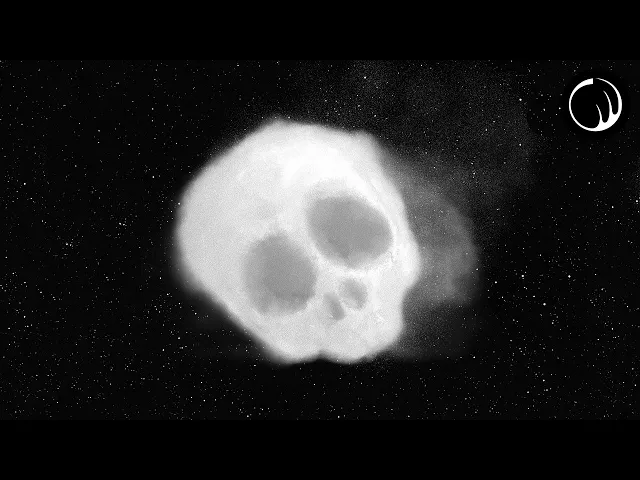
Abjection: The Scariest Existential Philosophy Theory You've Never Heard Of
Pursuit of Wonder
0:00 This video is sponsored by Short Form.
0:02 If you're looking to engage more with the world's best non-fiction books,
0:05 but feel overwhelmed or limited by time,
0:07 Short Form makes reading more manageable without diluting the ideas.
0:11 Get a free trial and $50 off your annual plan using my link in the description.
0:16 There was a moment in time when you were nothing more than a zygote.
0:20 You're in existence, [music] but as a mere cell, determinably you,
0:24 but spherical, smooth, a gel-like droplet with no other distinct features.
0:29 Out of that, somehow, hints of your arms, legs, torso, and head began to grow.
0:36 Slowly, at first, then quickly.
0:38 There was a moment in time when you were nothing more than a fetus.
0:42 A soft, supple, and helpless arrangement of gelatin-like flesh contained
0:46 within and dependent on the body of your biological mother.
0:49 You were alive but not independent.
0:52 Formed but far from complete.
0:54 As your body pushed and molded into a defined state,
0:57 details and functions emerged.
0:59 And soon you entered the world, a suddenly independent thing,
1:03 no longer constrained inside a biological womb.
1:06 Now you were and still are constrained inside the womb of human existence.
1:12 That is the nature of your body and the world.
1:15 Now you must breathe, bleed, sweat, eat, defecate, decay, die.
1:20 If the thought of any of that, the grotesque
1:22 morbid nature of the body and existence, unsettles you,
1:26 you are experiencing an intimation of a dark
1:28 and unsettling concept in philosophy known as the object.
1:34 Objection.
1:35 In 1980, Bulgarian French philosopher, literary critic,
1:39 and psychoanalyst Julia Cava published an essay titled Powers of Horror.
1:44 In it, she explores and defines a comprehensive overview
1:47 of the psychological and philosophical concept known as objection.
1:52 Plainly, objection is the visceral, uncanny,
1:54 and disconcerting experience of becoming aware
1:57 of the mechanisms of one's selfhood and corporeality.
2:00 More specifically, it is the realization
2:03 or interfacing with what is typically beyond
2:05 the boundaries of what we consciously deem
2:06 acceptable and bearable about ourselves and existence.
2:10 It reveals a threat posed by what we
2:12 cannot cleanly exclude from ourselves but wish we could.
2:16 Fundamentally, we define and understand
2:18 ourselves by establishing borders between
2:20 who or what we are and aren't both physically and abstractly.
2:24 For example, on a physical level, we define ourselves by what's in and perhaps
2:28 on our body and not what is beyond [music] it.
2:31 Our border here is the edge of our body.
2:34 But of course, we also define ourselves in abstract
2:37 and conceptual ways like through the character traits,
2:39 [music] preferences, values, and other things we associate with and express.
2:44 Everything we conceptually reject, loathe, or find appalling and wrong is beyond
2:48 this abstract and psychological border and not us.
2:51 We maintain our sense of self through
2:53 the maintenance and order of these boundaries,
2:54 [music] preserving them by keeping everything
2:56 that we deem unacceptable or unappealing out.
2:59 According to Cava, however,
3:01 along with many other psychoanalytic and phenomenological
3:03 thinkers like Sigman Freud and George Patai,
3:06 our conscious mind works to repress and deny many
3:09 qualities that are part of who or what we are.
3:12 We work to ignore, deny, overcome, or repress things associated with our flawed,
3:17 fragile, caporeal, and mortal condition.
3:20 We avoid talk of illness and death.
3:22 We fill our days with frivolous distractions.
3:24 We hide our vulnerabilities and fears.
3:25 [music] We measure ourselves in terms of usefulness.
3:28 And we paint over the terror and madness of so much of what we are and do.
3:32 But in moments when we see, for example, a corpse or our blood,
3:36 vomit or something rotting, we can be reminded of the truth,
3:40 the grotesque nature of our being.
3:43 In these moments of elucidation, according to Cava, our clean,
3:47 orderly sense of self is suddenly damaged and destabilized.
3:50 We experience a loss of distinction between ourselves and the world,
3:53 between subject and object.
3:55 We see the borders dissolve and we become momentarily caught
3:58 in a limbo between our sense of self and other.
4:01 Christa writes, "Objection is above all
4:04 ambiguity [music] because while releasing a hold,
4:06 it does not radically cut off the subject from what threatens it.
4:09 On the contrary, objection acknowledges it to be in perpetual danger.
4:14 Our flesh, blood, vomit, feces and skeleton.
4:17 All of this is us, central to us.
4:20 [music] Objection reminds us of this.
4:22 The clean boundaries of normaly and pleasantness are thin figments.
4:26 And so too is our sense of self and stability.
4:30 Ultimately, whether we accept it or not, we are also what we reject.
4:35 Missanthropy.
4:37 The concept of the object both brings up questions about what we really are
4:41 and leads [music] us to answers that often make us feel repugnant or gross.
4:44 And if we continue further into the limbo
4:46 realm of what we often are but repress,
4:48 deny, and repel, we also find unsettling [music] vices and flaws.
4:53 Our wretchedness, selfishness, greed, hypocrisy, and ignorance.
4:57 Those who have been to this realm can often find themselves
5:00 with some variation of the cynical
5:01 philosophical view [music] known as misanthropy.
5:04 A general dislike or disdain for the human species as a whole.
5:09 With this view, the flaws and vices of humankind,
5:12 moral, intellectual, and aesthetic, [music] eclipse everything else about us.
5:16 All human beings are irredeemably faulty and fickle,
5:19 and society only serves to reinforce,
5:20 [music] organize, and demonstrate our flaws at scale.
5:24 This view has been explicitly [music] referenced or generally
5:26 embodied in the works of many prominent philosophers throughout history.
5:30 17th century English philosopher Thomas
5:32 Hobbes argued that humans are fundamentally
5:34 self-interested and without the imposition
5:37 of an absolute sovereign like a monarch,
5:39 our condition reliably leads to violence [music] and social breakdown.
5:43 He writes, "So that in the nature
5:45 of man we find three principal causes of quarrel.
5:48 First competition, secondly dissidence, thirdly glory.
5:53 The first maketh men invade for gain,
5:55 the second for safety, and the third for reputation,
5:58 the first use violence to make themselves masters of other men's persons,
6:02 wives, children, and cattle.
6:04 The second to defend them, the third for trifles.
6:08 On the opposite end of the misanthropic spectrum,
6:11 17th century Genevan philosopher Jeanjac Rouso
6:14 argued that humans are inherently good,
6:16 but society is a corruptive agent that causes us to become vain,
6:20 competitive, prideful, and ultimately loathome.
6:22 Though Rouso and Hobbes disagree on how
6:24 and when humanity enters the misanthropic [music] lens,
6:27 they both ultimately arrive at a similarly cynical view of humanity.
6:31 Other philosophers like Dioynes the cynic, Arthur Schopenhau,
6:35 and Emil Chiron implicitly expressed
6:37 misanthropic [music] views through philosophies
6:39 that embraced resignation from humanity or an aestheticism of the self.
6:43 Others have expressed a kind of misanthropy through their creative work.
6:46 Writers like Jonathan Swift, Charles Bakowski,
6:49 and Fernando Pasoa all engaged with the humanity
6:52 they rejected through their creative work.
6:54 Ultimately, whether one fully agrees with the view or not,
6:57 we don't need to look too hard or too
6:59 far to at least understand some [music] version of it.
7:02 Humanity is pervaded by vain celebrity culture,
7:05 corrupt political movements, vicious power dynamics,
7:07 everyday selfishness and cruelty,
7:09 the organization and amplification of rage and hatred,
7:12 the immensity of injustice and inequality,
7:15 of famine and war, [music] of desire and futility.
7:19 We seem to so needlessly continue an absurd
7:21 persistent destruction of ourselves and the world.
7:25 Whether that's our fault or the underpinning of nature's [music] is hard to say.
7:30 Antiatalism.
7:32 Perhaps one of the darkest seeming philosophies that misanthropy
7:34 can lead to is what is known as antiatalism.
7:38 The philosophical position that assigns a negative value to human birth.
7:42 Though antiatalism is arguably the logical next step after missanthropy,
7:46 it has very different foundations and implications.
7:48 What separates antiatalism from misanthropic views
7:51 is that it is an ethical position.
7:53 This is also what separates it from individuals who
7:55 choose not to have children simply out of personal preference.
7:58 For the antiatalist, the problem with reproduction is moral.
8:02 It relates to the management and prevention of suffering.
8:06 South African philosopher David Benitar is widely regarded
8:09 as the leading thinker associated with this philosophy.
8:12 In his book, Better Never to Have been, published in 2006,
8:16 he comprehensively formalizes what have become some
8:18 of the most prominent arguments for the philosophy.
8:21 Benitar ultimately argues that human or sentient
8:23 existence is on balance more negative than positive.
8:27 The often intense and regular experiences of pain and [music]
8:30 discomfort eclipse the fleeting and frequent experiences of pleasure and joy.
8:35 Furthermore, Benitar argues that things are actually
8:37 much worse than we are even aware
8:38 of, especially if we reject the notion that existence has a net negative value.
8:43 Benitar claims we delude ourselves into believing
8:45 that our experience of existence is better than it is.
8:48 Partly due to an evolutionary optimism bias known as the Polyiana principle.
8:53 Research does in fact suggest that pleasant experiences tend to be
8:56 remembered more readily and are often
8:57 weighted more heavily than unpleasant ones,
9:00 particularly at the subconscious level.
9:02 Though it should be noted that at the conscious momentto moment level,
9:05 people often fixate on the negative even though
9:07 they evaluate their whole lives as more positive.
9:10 Regardless of any biases,
9:12 if we consider how often we are in some form of discomfort or pain in life,
9:15 it likely does appear to overtake how often
9:17 we are in states of definitive joy or pleasure.
9:20 Even in the best cases, [music] individuals who are wealthy,
9:23 have good family and friends, do work they find meaningful and so on.
9:26 [music] They too will experience
9:28 intense regular unrequitted purposeless suffering.
9:31 No one escapes the pain of hot and cold, hunger and urine,
9:35 anxiety and boredom, the aches of a body that fills and empties,
9:38 cramps and breaks, grows and decays, the loss of all that one loves,
9:43 the disqu of the uncertainty above and beneath all things.
9:48 With this, Benitar concludes that it is better to never be
9:51 and it is morally wrong to bring sentient beings into existence.
9:55 A common and reasonable counter-argument here is
9:57 that even if less frequent or less intense,
10:00 the experience and remembrance of joy, pleasure, love,
10:03 meaning, and wonder can make our existence worth it.
10:06 These qualities do enough work to justify the pain and [music] suffering.
10:10 And so, by not bringing humans into existence,
10:12 such joys, pleasures, wonders, and meanings are missed out on.
10:16 For Benitar, however, it is not all worth it.
10:19 In what is known as his asymmetry argument, he attempts to refute this rebuttal
10:23 by showcasing the asymmetry of pleasure and pain.
10:26 His argument is divided into the following four claims.
10:29 The presence of pleasure is good.
10:31 The presence of pain is bad.
10:33 The absence of pain is good.
10:34 And the absence of pleasure is neutral.
10:37 Neither good nor bad so long as there is no individual being deprived of it.
10:41 With this, Benitar concludes that the presence
10:43 of pleasure cannot compensate for the presence of pain
10:46 in the moral evaluation of birth because the absence
10:49 of pain is good even when no one exists.
10:51 Whereas the absence of pleasure is not [music] bad so
10:54 long as there is no one being deprived of it.
10:56 This might sound bizarre, wrong,
10:58 or counterintuitive at first, [music] and that's fair.
11:00 Perhaps it is.
11:02 But Benitar defends it with several compelling thought experiments.
11:05 For example, consider the planet Mars.
11:08 Right now, no one exists there.
11:10 [music] Strictly in the moral sense, is that bad?
11:12 Is it morally wrong that there are no
11:14 sentient beings on [music] Mars experiencing joy or pleasure?
11:17 Arguably, no.
11:18 It seems to be neutral.
11:20 Alternatively, however, what if there were a civilization
11:23 of sentient beings experiencing constant pain and suffering?
11:27 That would seem to [music] be quite bad.
11:29 There lies the asymmetry for Benitar.
11:31 He writes, "Whereas at least when we think of them,
11:34 we rightly are sad for inhabitants of a foreign
11:36 land whose lives are characterized by suffering,
11:38 when we hear that some island is unpopulated,
11:41 we are not similarly sad [music] for the happy people who,
11:43 had they existed, would have populated this island.
11:46 Similarly, nobody really mourns for those who do not exist on Mars,
11:50 feeling sorry for potential such beings that they cannot [music] enjoy life.
11:53 Yet, if we knew that there were sentient life on Mars,
11:56 but that Martians were suffering, we would regret this [music] for them.
12:00 The fact that we would regret the suffering within their life
12:02 is sufficient to support the asymmetry that I am defending.
12:05 [music] The point is that we regret suffering but not
12:08 the absent pleasures of those who could have existed.
12:11 Of course, on the contrary, one could argue that it is some amount bad
12:15 that an island or planet is [music] desolate without any sentient experience.
12:19 If we took it to the extreme and removed all life from every island,
12:23 continent, [music] planet, and place in the cosmos,
12:25 leaving an unending space devoid of any life,
12:28 consciousness, awareness, joy, meaning, love, or possibility that does arguably
12:33 elicit a terrible [music] sense of regret.
12:36 There are also other legitimate, well-reasoned arguments against antiatalism.
12:39 [music] From a normative, metaethical standpoint,
12:42 why is it moral to prioritize the elimination of suffering,
12:45 even if it's asymmetrically [music] experienced in relation to pleasure?
12:49 Why should it be a prioritization
12:50 to eliminate suffering's predominance over all else?
12:53 Is this not a preferential subjective claim?
12:56 Can we truly say that the absence [music]
12:57 of pain is morally better than the absence of pleasure?
13:00 What objective truth is that rooted in?
13:02 Is this stance not like all stances located
13:05 in the bogggy grounds of assumptions [music] and intuitions?
13:09 Beyond Benitar, there are also many other philosophers and thinkers [music]
13:12 who have shared similar antiatalist
13:14 sentiments from pessimist philosophers like Schopenhau,
13:17 Chiron and Peter Vessel Zapa to writers like Thomas Legatti and Samuel Beckett.
13:22 However, [music] an important thing to consider
13:23 and keep in mind with these individuals
13:25 and their ideas here including Benitars is
13:28 that they are not expressing purely misanthropic views.
13:30 [music] They are not promoting a destructive idea for the sake of destruction.
13:35 It is not inherently a disdain for humanity, but a pity and compassion.
13:40 Schopenhau writes, "If children were brought into the world
13:42 by an act of pure reason alone, would the human race continue to exist?
13:46 Would not a man rather have so much sympathy
13:48 with the coming generation as to spare at the burden of existence?
13:52 Or at any rate, not take it upon himself to impose
13:55 that burden upon it in cold blood?" For most of these individuals,
13:59 this philosophy is not a matter of destroying the human race.
14:02 It is a matter of liberating it.
14:04 However, the problem here is this.
14:06 [music] Let's say antiatalism could and were to be accepted as the morally
14:10 and objectively right view and humanity somehow phased itself out of existence.
14:14 There is absolutely no reason to believe that life would not continue in other
14:18 forms and continue to evolve into other
14:20 forms including intelligent and sentient life.
14:24 What then?
14:25 Suffering in new potentially worse forms.
14:27 [music] Humanity cannot extinguish the fire it was forged
14:30 out of by letting itself be burned up in it.
14:32 [music] Existence is suffering.
14:35 Every being is combustible in its flames [music] as it spreads,
14:38 burns, clears, and replenishes reality.
14:41 Humanity is just the only current species that is self
14:43 agrandizing enough to think that with the [music] extinction of itself,
14:47 all would be made well in the world.
14:49 Then nature would be purged of nature.
14:52 [music] Surely, human life is unique,
14:54 and thus human life is uniquely treacherous.
14:57 We see and feel everything acutely.
14:59 [music] And so the fire that is existence inflicts us greatly.
15:04 But it also fuels us greatly.
15:05 [music] Its combustion fuels us to come up
15:07 with ideas and philosophies not to destroy but to relieve,
15:11 to improve, to transcend.
15:13 [music] Even if that means considering the idea of voluntary extinction.
15:18 Regardless of whether one agrees with the arguments laid forth by antiatalism,
15:22 regardless of whether one sees humanity as gross, contemptable, beautiful,
15:25 allinsspiring, or all the above,
15:28 one cannot deny how remarkable it is that [music]
15:30 a species can create and consider such ideas.
15:32 That it can see and pity its and others pain,
15:35 and it can work to reduce such pain,
15:37 defining new moralities and striving toward better realities.
15:42 Though perhaps if we could return to that zygote
15:44 we once were and could decide whether our legs,
15:46 arms, torso, and head came out, we might decide against it.
15:49 Of course, we cannot do this.
15:51 We cannot [music] and do not choose to be here.
15:54 Nothing does.
15:55 But we are here both individually and collectively.
15:59 We feel we are separate from all that contains us.
16:02 Like we can deny our existence [music] and its nature,
16:04 but we are still formless in the womb of reality,
16:07 constrained by and dependent on it.
16:09 Our borders are not real.
16:11 [music] They are imagined.
16:13 We cannot reason our way out of the order and chaos of nature.
16:16 We cannot escape or revise it.
16:18 Not through continuation, not through extinguishment.
16:22 Life will always strive, and striving will always be painful and grotesque.
16:26 Humanity cannot stop that, but it can participate in it.
16:30 And it can strive [music] to strive for good reasons,
16:33 to love itself in all its flaws,
16:35 and to see the meaning and rationality of the absurdity.
16:46 One of humanity's most profound qualities is its
16:49 ability not only to endure the difficulties of existence,
16:51 but to create and share [music] reasons for and out of this endurance.
16:55 Remarkable ideas, insights,
16:56 and expressions have accumulated in the libraries of history, [music] in books,
17:00 research, and media that help us better
17:02 understand and deal with ourselves and the world.
17:05 That's why this video sponsor, Short Form, is so genuinely useful.
17:09 Short Form produces highquality [music] guides and analytical summaries
17:12 of non-fiction books in both written and audio form,
17:15 making it so that you can tap
17:16 into the world's knowledge and ideas efficiently and effectively.
17:20 Unlike many summary apps which are often brief,
17:23 simplistic or AI generated, short form doesn't just summarize.
17:26 It has an actual team of writers and editors
17:28 who curate and break down books ideas chapter by chapter,
17:31 adding commentary and analysis, connecting them to thinkers and including
17:35 exercises to help [music] the idea stick.
17:37 This is especially valuable for complex
17:39 or dense books like Friedrich Nichzche's thus spoke.
17:43 [music] Having a clear conceptual map before reading the book,
17:45 or having a structured way to reflect on it afterward
17:48 completely changes how much you can take away from it.
17:50 I use short form to help discover new books,
17:52 prime my understanding before reading the complete works,
17:55 or to revisit books I've already read for refreshers.
17:58 Whether you're interested in philosophy, science,
18:00 health, finance, or essentially any subject,
18:03 Short Form opens up a kind of modern library,
18:05 curated, vast, yet accessible and useful.
18:08 For about the cost of one book a month,
18:10 you get access [music] to this entire library of thousands.
18:13 Get a free trial and $50 off the annual plan
18:16 at shortform.com/pursuit [music] or by using my link in the description.
18:21 And of course, as always, thank you so much for watching in general.
18:25 And see you next video.