Rabies Situation Is Insane
Chubbyemu
0:00 JA is a 50 year old man, presenting to the emergency room,
0:05 with anxiety, hypersalivation, and paresthesia.
0:07 Para meaning deviation, like how it’s used in PARAnormal.
0:11 And -esthesia meaning feeling.
0:13 A deviated feeling.
0:14 In this case, he had a horrible burning sensation in his forearms.
0:18 But nothing was burned there.
0:20 He can’t speak to the admitting nurse.
0:21 He has a hard time forming words.
0:23 He’s foaming at the mouth.
0:25 His neck muscles are rigid.
0:26 And clearly, something is wrong with his brain.
0:28 For 15 years, JA had been taking an herbal supplement for general health.
0:33 These tablets fixed his breathing problems, he thought.
0:35 And he took these at least 3 times a week, every week.
0:39 3 years ago, JA presented into the emergency room because something was wrong.
0:43 He was dizzy, and constantly out of breath.
0:45 And a blood test found out why.
0:47 His kidneys had completely shut down.
0:49 This isn’t surprising given that supplement he had been taking for 12 years.
0:52 The active ingredient herb, is from a family called Aristolochiaceae.
0:56 Ancient herbal wisdom, may have known this to be a very take-sparingly remedy.
1:01 Or better yet, just topical.
1:03 Skin only.
1:03 You probably weren’t supposed to take it long term,
1:05 or even really put it inside of your body in the first place,
1:09 because this has aristolochic acid.
1:11 This is nephrotoxic.
1:12 Nephro referring to the kidneys, explaining why JA’s kidneys were shutting down.
1:17 Aristolochic acid inserts itself into kidney cell DNA.
1:21 It turns the kidneys into a stiff fibrous shell,
1:24 incapable of functioning normally, explaining JA’s kidney failure.
1:27 But doctors didn’t know that he had been taking this supplement.
1:30 He didn’t tell them that.
1:31 Because he didn’t think anything of it.
1:32 It was such a minor detail of his everyday life,
1:35 he never gave it a second thought.
1:38 Doctors start him on dialysis.
1:39 This is hooking him up to a machine so that it can filter his blood for him.
1:43 This will remove the wastes that should have been taken care of by his kidneys.
1:47 If those wastes build up in his body, they can rot his body from the inside,
1:51 and very quickly shut down his heart and end everything.
1:53 But this is a temporary fix while they wait for a kidney transplant.
1:57 He has to go to dialysis multiple times a week.
2:00 3 years pass.
2:01 JA’s day finally arrives.
2:02 A kidney is available.
2:04 In rural Idaho, a middle aged man, was found unresponsive in his bed.
2:08 His heart had stopped beating.
2:09 His family was able to find him
2:11 in time for paramedics to arrive and resuscitate him.
2:14 But it wasn’t in time to actually save him.
2:17 At hospital, he never regained consciousness.
2:19 He was declared brain dead.
2:21 On hospital day 5, that man was removed from life support.
2:24 His organs were recovered and prepared.
2:26 And his left kidney was determined to be a match for JA.
2:30 At a hospital in Ohio, the medical team prepares JA.
2:33 It’s time for the kidney transplant.
2:35 Just one kidney.
2:36 But it’ll be enough that he wont need dialysis anymore.
2:39 At least for now.
2:40 Surgery’s done, and JA seems to recover nicely.
2:43 The transplanted kidney is called a graft.
2:46 JA is the host.
2:47 The immune system attacks things that arent supposed to be in the body.
2:51 If JA just got a new organ,
2:53 then the immune system will think that that organ, isn’t supposed to be there.
2:57 The immune system will attack that organ and destroy it,
2:59 while setting off a massive inflammatory reaction
3:02 inside JA’s body if nothing is done.
3:05 This organ rejection is called graft versus host disease.
3:08 But, we can do something about this.
3:10 Medicines were given to suppress JA’s immune system.
3:14 Three of them do three different things: 1) First, steroids.
3:17 They decrease white blood cells.
3:19 They decrease signals that kick off the immune system.
3:22 2) Second, another specialized medicine goes into the white blood
3:25 cells and stops their genes from producing immune signal molecules.
3:29 3) Third, a final medicine stops white blood cells from replicating.
3:33 It doesn’t destroy them, it just stops them from becoming too numerous.
3:36 This ensures that that kidney has time to acclimate inside JA’s body.
3:40 That blood vessels can regrow to that kidney.
3:43 And that his body can recover well.
3:45 On the flipside, this triplet neuters the immune system and predisposes him
3:49 to infections including ones you’re not
3:51 supposed to have in immunocompetent people.
3:53 But everything seems to be great.
3:55 A few weeks pass.
3:56 JA is feeling excellent, and recovering well.
3:59 But 5 weeks after the transplant.
4:01 Something was wrong.
4:02 Hey, quick question.
4:03 Have you learned a couple things from this video so far?
4:06 If you have, and you aren’t subscribed yet,
4:08 I’d appreciate it if you did subscribe and come
4:10 back to see the video I publish next month too.
4:12 I make these videos for fun, and I do them to teach people about medicine,
4:16 and to show how we think in the hospital.
4:18 I’ve made, on average, 1 video a month, every month, since 2017.
4:22 It’s my funtime hobby, making them is the highlight of my day,
4:25 and I’m so happy to be able to share them with you.
4:27 I appreciate you.
4:28 One evening, JA felt a burning sensation in his elbows.
4:31 It would pulsate into a pins and needles feeling in his hands.
4:34 When he got up his from his chair,
4:36 a pain shot up his leg and he collapsed to the floor.
4:39 At the toilet, JA tried to urinate, but… he just couldn't.
4:42 The feeling was there.
4:43 The urge was present.
4:44 But it was like he was in a public
4:46 bathroom with a giant line waiting behind him,
4:48 and the pee fright was too intense.
4:49 He started becoming disoriented to time and place.
4:52 When everything started making sense again, he’d notice that he was shaking.
4:56 At his computer, JA had poured himself a glass of water to take his medicine.
5:01 When he tried to drink, he suddenly choked.
5:03 It just didn’t go down the right way for some reason.
5:06 On the floor, gasping for air.
5:08 Water had gotten into his lungs.
5:09 He couldnt stop coughing.
5:11 Any time he even brought a glass of water to his face,
5:14 he’d have an overwhelming gagging sensation.
5:16 When he’d force himself to sip the water, he would shake uncontrollably.
5:19 The water, cupped in his mouth would spill out and he’d gasp for air,
5:24 unable to swallow the water or breathe, until finally he’d spit it out.
5:27 He needed to drink the water,
5:29 because he needed to take his immunosuppressant medicines.
5:31 But finally, he just totally gave up and stopped taking them.
5:35 One morning JA was found on the floor in the bathroom, screaming and shaking.
5:38 His neck jerking in unnatural ways so shocking to his wife,
5:42 that she calls for 911, and he’s brought to the emergency room where we are now.
5:48 At examination, doctors find a JA with fever,
5:51 stiff neck, agitation and paresthesia.
5:53 The brain is involved.
5:55 The nerves are involved.
5:56 And fever indicates an inflammatory process.
5:59 So, if he’s on immunosuppressants because he’s 5 weeks post kidney transplant,
6:05 then, putting everything together, points to meningitis.
6:09 -itis meaning an inflammation of the meninges,
6:11 the membrane covering the brain and the spinal cord.
6:14 Neck stiffness is a telltale sign.
6:15 The fever is the immune system trying to react to a pathogen
6:19 that got through because the immune system was getting held down,
6:22 to protect his transplanted kidney.
6:24 There’s one way for them to tell if this is meningitis.
6:27 The spinal cord and brain are surrounded by cerebrospinal fluid, CSF.
6:31 In meningitis, this fluid will be infected.
6:35 It might have protein and sugar floating around in it.
6:38 Doctors stick a needle in his back to collect a sample of this fluid.
6:42 But there’s a problem.
6:43 It’ll take about a day to grow out
6:45 detectable amounts of bacteria or fungus from it.
6:47 If they wait for the results to come back before giving him treatment,
6:51 a whole day’s worth of pathogen could grow.
6:54 That can be life or death.
6:56 But there can be other signals.
6:57 When they look at the fluid, it wasn’t cloudy.
7:00 Analysis didn’t show abnormal amounts of protein, or glucose.
7:03 It all seemed normal.
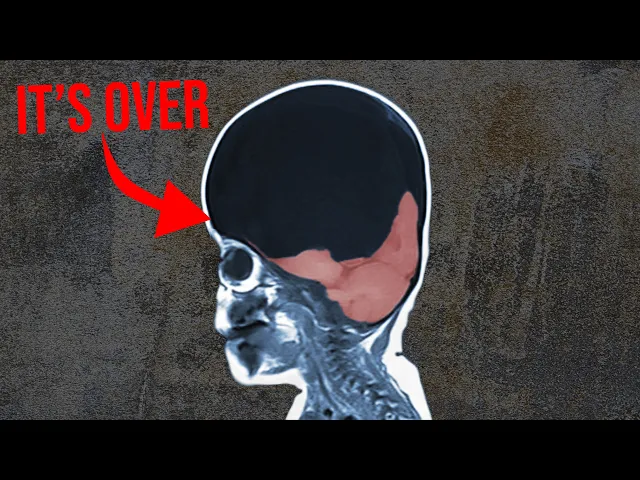
7:04 An MRI shows that something is happening.
7:07 It’s not normal, but it’s also not clear what it is.
7:10 It does kinda look like it’d be a viral infection, if anything.
7:14 Given all this information,
7:16 JA is started on antiviral medicine and empiric antibiotics.
7:19 Doing nothing while all the evidence points to something, IS life threatening.
7:24 Especially at a time like this when every second counts.
7:28 But something else entirely was going on.
7:30 On the second day in the hospital,
7:32 JA was found in his bed, choking on his own spit.
7:35 When he tried to cough, he would choke again.
7:38 At times, he’d shake violently in bed.
7:40 But then, he became unresponsive.
7:41 Doctors sedate him and put a tube down his throat.
7:44 To protect his airway.
7:46 And so that a machine can breathe for him.
7:48 When they look at the test results
7:50 for the bacteria and fungus from his cerebrospinal fluid,
7:53 they found out, this isn’t meningitis.
7:55 So what is it?
7:57 Doctors had written problem list.
7:58 They need to reason out why each one is not the problem.
8:02 And figure out from there.
8:04 Now that it’s not meningitis, it narrows down the list.
8:07 JA’s problems started 7 days ago.
8:09 This pace is important.
8:11 If he deteriorated like this in 7 seconds instead of 7 days,
8:15 he’d have a completely different problem.
8:16 7 seconds usually means some kind of blood
8:19 vessel problem like a clot blocking flow.
8:21 Or a bleed.
8:22 If it took 7 years, that’s a different problem in the opposite direction.
8:26 It could be neurodegenerative like Amyotrophic Lateral Sclerosis, ALS.
8:30 Or it could be a tumor.
8:32 But the MRI didn’t show a tumor.
8:34 There was no brain bleed.
8:35 This means he has an infection, but which one?
8:38 Tetanus causes muscle spasms.
8:39 These can make it impossible to swallow.
8:42 But tetanus doesn’t usually cause an altered mental state.
8:45 Diphtheria is caused by a bacterial toxin
8:48 that strips off myelin sheath from nerves.
8:50 It can cause problems swallowing,
8:52 but, it also makes it so that patients have trouble moving their eyes.
8:56 Their tongue.
8:57 Their face can start to droop.
8:58 None of those happening to JA.
9:00 Botulism is also caused by a bacterial toxin.
9:03 But it paralyzes the patient.
9:05 JA isn’t paralyzed.
9:07 Leaving 1 final infection to be the problem.
9:11 Rabies is an infection.
9:13 It’s from a virus.
9:14 Patients are first incubated after contact with rabid animal saliva.
9:18 That saliva has to get into the body.
9:20 So it’s from a bite or a scratch that breaks skin.
9:23 And then the virus settles for weeks.
9:26 Then the prodrome appears.
9:27 Pro here meaning early,
9:29 and drome from Greek referring to road or path down which one is headed.
9:33 This the early set of symptoms that worsen
9:36 as the patient descends into the acute neurologic phase.
9:40 Followed by Coma, and then, the end.
9:43 JA’s extreme aversion to water dubbed as hydrophobia is unique to rabies.
9:47 The other infections don’t usually cause this.
9:50 His other symptoms were all consistent with rabies too.
9:53 But there’s a problem: JA never came into contact with any animals.
9:57 He didn’t have pets.
9:58 He didn’t go outdoors.
9:59 Prior to transplant, he was sitting in dialysis for several hours,
10:03 several days a week.
10:05 And post transplant, he didn’t leave the house either.
10:08 Human Rabies, is extremely rare in the whole United States.
10:11 Just 125 cases had been reported in the 58 years from 1960 to 2018.
10:17 So… how did he get it?
10:19 Doctors contacted the Ohio Department of Health and Centers for Disease Control.
10:23 Very quickly, JA’s saliva, his blood, his CSF,
10:26 and samples from his neck skin were collected and sent to the CDC.
10:31 Rabies virus RNA was detected in his saliva and his CSF, confirming rabies.
10:36 When they sequenced the viral genome, they determined,
10:39 the rabies JA had, was from a silver-haired bat.
10:43 But when public health officials interviewed JA’s family,
10:46 they confirmed JA never had contact with any bats.
10:49 Or any other animal.
10:51 So… where did the virus come from?
10:54 Health officials looked at JA’s medical record.
10:56 His only contact from the outside world,
10:58 that broke his skin, was the transplanted kidney.
11:01 They traced back to the kidney donor in Idaho.
11:04 They pulled up his medical record.
11:06 No mention of rabies.
11:07 But he was a middle aged man who just suddenly died in his bed.
11:12 Why did that happen?
11:14 Idaho Department of Health and Welfare went
11:16 to the donor family to interview them.
11:18 And this is where they found out everything.
11:22 In December 2024, just days before he suddenly died in bed,
11:25 the organ donor in Idaho suddenly became confused,
11:28 with difficulty swallowing and walking, hallucinations,
11:31 and, he had a stiff neck, just like JA did.
11:34 5 weeks before, in late October, the man was outside his house with a kitten.
11:39 A skunk had approached them.
11:40 Its body language was in a way, that it was going to attack.
11:43 The man kicked the skunk to protect the kitten.
11:46 But it fought back until, it fell unconscious.
11:49 But it had scratched the man’s shin in the encounter, and drew some blood.
11:53 The man was pretty sure it was only a scratch, not a bite.
11:56 But the fact that it broke skin is a cause for concern.
11:59 It’s just that he didnt know it at the time.
12:02 And this is what started this tragedy.
12:04 Rabid animals will hypersalivate.
12:05 Virus is in the saliva.
12:07 Either from a bite, or a scratch, because these animals lick their claws:
12:11 the infected saliva can make it into human bodies when skin is broken.
12:16 Rabies virus replicates in muscle cells at the site of inoculation.
12:20 At the neuromuscular junction, where nerves connect to muscles,
12:23 the virus gains access into the nerves.
12:26 They migrate a few inches every day until they reach
12:29 the spinal cord where they start moving towards the brain.
12:32 This period is the incubation and prodromal
12:34 stage where bad things start to happen.
12:37 In the spinal cord, virus moves very quickly.
12:40 It gets to the brain.
12:41 And then very quickly, it spreads out widely through the nerves.
12:45 In highly innervated places like the salivary glands,
12:48 viral replication explodes.
12:49 Viral shedding gets all over the body.
12:52 The damage that rabies physically does to the brain
12:55 appears mild when compared to other diseases.
12:57 At least from what we know, at the moment.
13:00 By the time the medical team did the brain MRI for JA, the diffuse,
13:04 inconclusive finding may have been rabies already there,
13:08 causing dysfunction rather than brain death.
13:11 And when rabies spreads,
13:12 should that person become an organ donor after it’s over,
13:16 that virus will make its way
13:18 into the organ recipient’s body, infecting them too.
13:21 The reason this is particularly scary is that neither the patient nor
13:24 the medical team knows rabies is even involved at all until it’s too late.
13:29 The donor, who was previously healthy,
13:31 died suddenly with nothing on their medical record.
13:34 By the time the organ recipient develops symptoms,
13:36 virus is in the brain, spread throughout the body,
13:39 and the medical team will have wasted time ruling out the most obvious problems.
13:43 Problems caused by complications post organ transplant.
13:47 This was a chain reaction of unfortunate
13:50 events culminating in the final disaster.
13:53 Health authorities tested a sample of what was left of the organ donor’s
13:58 right kidney and detected rabies virus RNA
14:00 consistent with the silver-haired bat rabies variant,
14:03 consistent with the one found in JA, explaining how JA got it.
14:09 How do you treat something like this?
14:11 Time matters.
14:12 When the kidney donor got the skunk scratch, he had just a window of days,
14:16 where he could have gotten it
14:18 checked out and received post-exposure prophylaxis.
14:20 Theres 2 medicines here.
14:21 The first is antibodies that neutralize the virus.
14:25 The second, tells the body to produce even more of those antibodies,
14:28 so that viruses that have already replicated can be neutralized,
14:31 and that the body can continue to neutralize viruses for years afterwards.
14:36 When health authorities tested serum samples from the organ donor
14:39 that were collected when he presented to the hospital before he died,
14:43 they found he didn’t have any rabies virus antibodies.
14:46 This confirms his family’s statement that he didn’t
14:49 seek out any treatment after the skunk encounter.
14:52 But it also tells us his body didn’t enough
14:55 time to, or wasn’t able to, react to this infection.
14:58 But JA is still alive right now.
15:01 Is there anything that can be done for him?
15:04 In the hospital, blood tests find that JA’s body has produced rabies antibodies.
15:10 However, by the time he presented to the emergency room,
15:13 his disease had become so advanced.
15:15 Virus had replicated all throughout his nervous system,
15:18 and the rest of his body.
15:19 It had come in from the transplanted kidney.
15:22 Traveled through nerves.
15:23 Got into his spinal cord.
15:24 And from there, reached his brain.
15:26 The nerves sending signals from his brainstem to his heart,
15:30 quickly becoming dysfunctional because of the virus.
15:33 His advanced presentation, conflated by a difficult diagnosis,
15:36 in a disease that doesn’t have much
15:39 treatment this late in the course of illness,
15:41 made it difficult for the medical to do much more outside of supportive care.
15:46 But JA’s case wasn’t the only exposure.
15:49 Public health officials found out:
15:51 multiple people received cornea tissue from the eye, from the donor from Idaho.
15:57 Three patients, one each from California, Idaho and New Mexico were recipients.
16:02 This too, can transmit rabies.
16:04 These patients were tracked down.
16:06 The grafts were removed.
16:08 And post-exposure prophylactic therapy were given to them.
16:11 A fourth patient in Missouri had a corneal transplant scheduled,
16:15 but luckily, health authorities were able to stop it in time.
16:19 The health care workers who came into contact with JA,
16:22 who came into contact with the Idaho donor,
16:24 and who came into contact with the 3 cornea
16:28 recipients were also identified and given post-exposure prophylactic therapy.
16:31 The unfortunate part about this situation,
16:33 is that it isn’t the first time it’s happened in the United States.
16:38 In 2004, doctors at a hospital in Texas
16:40 diagnosed 3 organ transplant patients who got encephalitis.
16:43 A fourth patient also was diagnosed after receiving
16:46 part of a blood vessel during a liver transplant.
16:50 All 4 patients became progressively obtunded and lapsed into coma
16:54 and then died within 50 days of their transplant.
16:56 At the time the patients expired, doctors were stumped.
16:59 When they did their diagnostic tests, everything was ruled out.
17:02 They asked the CDC and the Texas Department of State Health Services for help,
17:07 because, these all happened at the same place.
17:10 There could be some kind of outbreak happening.
17:13 And when investigators looked,
17:14 they found that the organ donor had contracted rabies.
17:19 When he died, there were no mentions of rabies in his medical record.
17:26 But they detected rabies virus RNA in his body when they tested it.
17:30 And the organ recipients who died,
17:33 had the exact same rabies virus RNA in their bodies too.
17:37 In countries where Rabies is more common,
17:40 this situation of infection from organ transplant is more well known.
17:44 And JA would have the same
17:47 experience as these other rabies-infected organ recipients.
17:50 On hospital day 7, his heart stopped beating.
17:53 Doctors rushed into his room to try to resuscitate him.
17:55 But no matter what medicines they gave him,
17:58 and the CPR, they weren’t able to resuscitate him.
18:02 At autopsy, his brain samples were sent to CDC.
18:05 Confirmation of his rabies diagnosis by the CDC
18:08 laboratory happened after he passed away.
18:10 By the time he presented to the emergency room,
18:12 the disease was so advanced and virus had spread so deep,
18:16 he only had a few days left.
18:19 Investigators sequenced the RNA they found in JA’s samples and found it was
18:23 from the same silver haired bat variant
18:25 as was found in the Idaho kidney donor’s body.
18:28 They determined that a bat infected the skunk.
18:30 The rabid skunk scratched the donor, infecting him.
18:33 And then his organ donation subsequently infected JA.
18:37 And JA, being someone post-transplant, didn’t go outside,
18:40 didn’t interact with animals, was on immunosuppressants,
18:43 could have had a variety of other, more obvious infections and related issues.
18:48 But instead, it was the one infection that no one was thinking of, at the time.
18:53 After his case was published in December 2025,
18:56 CDC had already been examining guidance on what
18:59 to do so this doesn’t happen again.
19:01 There isn’t anything standard right now, but they want to raise awareness,
19:05 especially in the situation where an organ
19:08 donor had acute encephalopathy when they died.
19:10 It’s really important for the medical team to gather a proper history.
19:15 So while they figure that part out, what can you do?
19:18 The first is, if you’re in America, don’t panic, cause this is rare.
19:22 But, if you are in a place where theres rabies susceptible animals:
19:25 Bats, raccoons, skunks, fox, coyote,
19:28 and if you’re in Asia or Africa, mostly dogs,
19:32 you want to make sure that you get post-exposure prophylaxis therapy.
19:36 This really even goes for something like
19:38 Americans who go camping in places where there
19:40 might be bats and you’re sleeping without
19:42 a tent or any covering over your entire body.
19:45 Rabies prophylaxis is a medical urgency, and not an emergency.
19:48 You have a few days to get it after any possible exposure.
19:52 But please keep in mind, it’s days.
19:55 It’s not months.
19:55 It’s not years.
19:56 It’s days.
19:57 And if you or a family member might be getting an organ,
20:00 you might want to want to ask if
20:02 they checked about the donor having acute encephalopathy
20:04 at the time just before they transitioned to the state
20:08 whereby they will give that organ to you.
20:10 Thanks so much for watching.
20:11 Take care of yourself.
20:13 And be well.