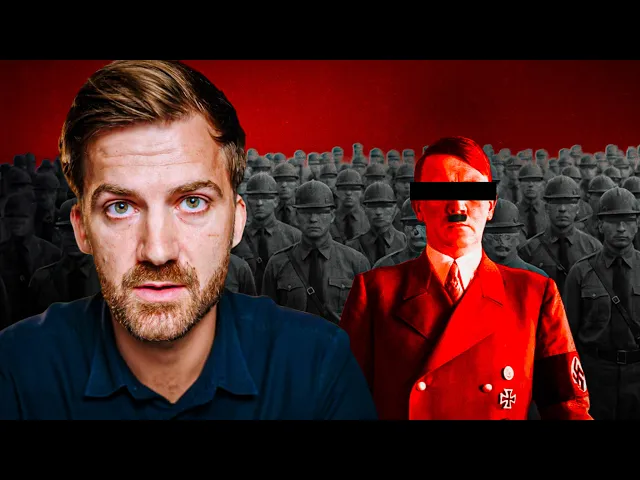
Is Fascism Back?
Johnny Harris
0:01 I keep hearing this word: "fascism."- Fascism.
0:04 Fascism.
0:05 Fascism.
0:06 Fascist.
0:07 He's a fascist.
0:08 Fascist.
0:09 Fascism.
0:09 And I have a confession to make, which is, I don't totally understand it.
0:13 I feel kind of naive.
0:15 When I think of fascism, I think of World War II.
0:17 I think of the Nazi regime committing some
0:19 of the most horrendous atrocities in human history.
0:22 And I think of their ally, Italy.
0:24 But "fascist" has also become this generic insult that people use in politics.
0:29 A weird kind of arbitrary fascism.
0:31 This is what fascist leaders do.
0:33 She's a Marxist, communist, fascist.
0:35 Reject Donald Trump's fascism!
0:37 They're the ones acting like actual fascists.
0:39 Look up the definition of "fascism."- But it's also used
0:41 as an insult in things that have nothing to do with politics.
0:44 This guy's being a total fascist.
0:46 Free expression.
0:47 Not fascist moves.
0:48 What kind of a fascist hash foundry are you running here?
0:53 But lately, I'm hearing the word used more seriously.
0:56 Fascism.
0:57 Experts, historians, scholars,
0:58 some of them are warning that we are seeing the rise of fascism again.
1:04 Are we?
1:10 (book pages flicking) This took us deeper than expected,
1:15 deeper than I can remember going on a video in a long time,
1:18 into books and documents and speeches,
1:21 deep into the research and scholarship on fascism and its history.
1:25 And we got to talk to a whole range of top experts on fascism.
1:29 People who know a lot about this but don't
1:31 actually agree with each other on everything.
1:33 I'm a historian of fascism, populism, and dictatorships.
1:37 The question is, is fascism real and abroad in the world?
1:40 It's very important not to abuse the concept.
1:42 To be a fully-fledged fascist,
1:44 you need a vision of an alternative political system.
1:48 (book pages flicking)- A quick note about what I'm trying to do here.
1:55 I am not the person to give you the correct interpretation of fascism.
1:59 What I can promise you is clarity.
2:02 Clarity on the story of fascism, on the features of fascist regimes.
2:06 And my hope is that that clarity arms you
2:09 with the tools you need to evaluate what's happening today for yourself.
2:12 And I hope to hear from you in the comments,
2:14 to have a good-faith, respectful debate about how you interpret all of this.
2:18 But before you comment, let me show you what I've learned.
2:21 What is fascism?
2:22 How do we define it?
2:23 And how do we start to evaluate if it's happening again today?
2:29 There's a handful of countries that have had what scholars
2:32 might call some kind of fascist regime over the years,
2:35 but in the research we did,
2:37 it has become clear that, to really understand fascism,
2:39 you have to go into its source code,
2:41 the root of it, how it started, how it became so successful.
2:45 So we are going to focus in on these 25 years,
2:48 the years between the two big wars.
2:50 And specifically, we're going to focus on these two men.
2:53 (light thoughtful music)- Before the First World War,
2:58 it's an age of extraordinary technological achievement.
3:01 You get this extraordinary explosion of transport, you know, trains and cars.
3:06 It was a time of mind-bending new machines that were rewriting
3:09 the rules of life itself faster than anyone was ready for.
3:13 It promised everything, but soon it threatened to destroy everything, too.
3:20 In 1914, you get this horrific First World War with absolute carnage.
3:25 Millions dying, millions.
3:27 New mass-produced ways of killing lots of people,
3:31 like machine guns and dropping bombs, et cetera.
3:34 And trench warfare is horrendous.
3:37 (tense uneasy music)- In these four violent years, societies were ripped apart.
3:48 (light pensive music) Italy was actually on the winning side,
3:52 but their allies had promised them all sorts
3:55 of territorial gains that didn't actually pan out.
3:58 Italy felt cheated.
3:59 They lost hundreds of thousands of men.
4:01 It was, in their words, a "mutilated victory," a bad deal.
4:05 But not as bad of a deal as the losers got.
4:08 Especially Germany.
4:09 Who lost over two million soldiers, half a million civilians,
4:13 13% of their territory, which contained 10% of their population.
4:17 Add to this the money that they borrowed to fight
4:19 this war that they now had to pay back: a tremendous amount of debt.
4:23 And on top of all of this, the peace deal
4:26 required them to pay back the victors for this war.
4:29 Half a trillion dollars in today's money,
4:32 something that they actually just recently finished paying off.
4:35 Which led them to borrow more money.
4:37 I mean, it was terrible.
4:38 It scrambled this once very advanced, thriving economy.
4:42 Their money lost 99.9999999% of its value.
4:48 It's wheelbarrows full of cash and an economy in crisis
4:52 that creates a sense of widespread anger and resentment,
4:55 and humiliation among these people.
4:57 So Italy and Germany, they're both feeling cheated and angry.
5:01 And, like, a lot of Europe,
5:02 they're in a sort of a fork in the road with their government.
5:05 They're figuring out what kind of society they want to have.
5:08 (tense thoughtful music) Italy still had a king,
5:12 but they were also doing democracy.
5:14 They had a parliament.
5:16 Germany had parliament and voting.
5:17 Women could vote in Germany.
5:19 They had individual rights enshrined in law.
5:22 But these democracies were fragile, and increasingly they were in crisis.
5:28 So people start wondering if they need to rethink the system entirely.
5:33 It is that sense of total breakdown which generated
5:37 extraordinary enthusiasm about the possibility of a new socialist,
5:41 communist world, or a new ultra-nationalist, racist world.
5:45 One rising option in people's minds was to do what workers,
5:48 soldiers, and peasants had just done in Russia.
5:50 Led by a revolutionary named Vladimir Lenin,
5:53 Russians had just overthrown their government, promising a new way, communism,
5:58 where land and industry would be seized from the elites
6:01 and put under the control of the people, the workers, the peasants.
6:05 At least that was the idea.
6:07 This revolution would create the Soviet Union,
6:10 and the Soviet Union would eventually become a brutal
6:13 dictatorship that would kill millions of its own people.
6:16 But that's not what this video is about.
6:19 And anyway, not yet.
6:20 For now, right after World War I,
6:22 this communist revolution in Russia is looking like
6:26 a desirable option to some of these reeling countries.
6:29 (ominous uneasy music)- [Roger] That inspired
6:34 a lot of extremist Marxists to believe
6:36 that they were on the verge of causing a revolution in their country.
6:40 So this was one revolution on offer.
6:42 And more and more people in Italy and Germany start embracing communism.
6:46 They're going on strike.
6:48 They're occupying factories.
6:49 But communism wasn't the only revolutionary idea
6:52 promising a solution to this postwar misery.
6:55 And that's where we're gonna turn to this guy: Benito Mussolini.
7:01 Mussolini will one day be Italy's fascist dictator, but not yet.
7:06 His path to power is going to have to pass through some very important steps.
7:11 And for that, we made something.
7:13 (gentle pulsing music) We're gonna use this to track the rise of Mussolini
7:18 and Hitler because these steps can help teach us how fascism operates.
7:25 Before World War I, Mussolini was a rising star in Italian socialism.
7:30 He ran an Italian socialist paper.
7:33 He advocated for workers' rights.
7:35 But once World War I started, Mussolini breaks with the socialists because he
7:39 thinks that Italy should join the war, and the socialists are firmly anti-war.
7:44 So they kick him out of the party.
7:45 And this is where he pivots hard.
7:48 He starts his own pro-war nationalist newspaper,
7:52 all about pride and sacrifice and putting the nation above class struggle.
7:56 Italy does enter World War I, and the 32-year-old Mussolini enlists to go fight.
8:02 He gets wounded in a training exercise, and he comes home from the war even
8:06 more resolved in his vision of a strong Italy.
8:09 But now with a new set of beliefs that he gained while in the trenches.
8:14 And he starts to share his beliefs.
8:16 (gentle contemplative music) He starts a club with a small group of other guys,
8:23 a lot of them ex-soldiers like him,
8:26 men who also feel humiliated and are looking for someone to blame.
8:30 And he tells them that Italy's problems are not only
8:34 because of the war and the betrayal from their so-called allies,
8:37 that "mutilated victory," but also because
8:40 of what's happening inside Italy itself,
8:43 where all of these "isms" are poisoning the country.
8:46 Communism and socialism were threatening
8:48 to transform Italy with these worker revolutions.
8:51 And even democracy itself, or liberalism,
8:54 was to blame for all of these problems.
8:57 Italy's democracy had, in his words,
8:59 "gone drunk with compromise." They couldn't get anything
9:02 meaningfully done because they're accommodating all these different viewpoints.
9:06 He says, Guys, this is Italy.
9:08 We're the historic home of the Roman Empire, the foundation of Western society.
9:13 And now we've been betrayed and humiliated.
9:15 But Mussolini says that he has a solution.
9:18 He says that Italy must be ruled by men
9:21 who had just fought in this traumatizing industrial war.
9:25 Men who had been purified by violence and sacrifice and discipline.
9:29 In his eyes, these were a new kind of man,
9:32 a new kind of elite, created not by aristocratic birth but by combat.
9:37 And now these veterans had an obligation to replace the weak,
9:42 entitled elites that had been created by liberal
9:44 democracy and to replace it with a, quote,
9:48 "trenchocracy," the aristocracy of the trenches.
9:50 (light gentle music) So this is like our origin story here.
9:53 It's the spring of 1919 in Milan, Italy.
9:56 Not even a year after World War I has ended.
9:59 And Mussolini is rallying his club of ex-soldiers and sympathizers,
10:04 telling them that violence is actually sacred.
10:06 It's a stamp of nobility.
10:08 Fascism always involved violence and the militarization of politics.
10:12 Violence is glorified.
10:14 Violence is presented as what makes men men.
10:19 This is about men being aggressive, violent, dominant, and strong.
10:22 And that that's a good thing.
10:23 That's the key to restoring the greatness of the nation.
10:26 Not the soft, weak intellectuals that democracy had created.
10:30 And for his new group, Mussolini adopts this symbol.
10:33 It's a symbol that had been used way back
10:35 in ancient Rome and many times over the years,
10:38 including in the French Revolution.
10:40 You see this in the American Capitol building as a symbol of unity and order.
10:47 A stick by itself can be a weapon, but it's also easily broken.
10:52 But gather many sticks into a uniform bundle,
10:56 or a "fascio," in Italian, and suddenly it's a lot harder to break.
11:00 Add an axe to this bundle,
11:01 and you have a kind of indestructible tool of punishment.
11:05 Mussolini is telling his listeners that, under his direction of trenchocracy,
11:11 Italians must become a unified bundle, a fascio.
11:16 Fascismo.
11:18 Fascism.
11:21 Learning the origins of this word has been really
11:23 useful for me to approach this whole story with curiosity.
11:28 Curiosity is the antidote to so many of the problems plaguing our media.
11:32 It's the reason why videos like this are not easy to make.
11:36 And this is why we're building a platform
11:37 and a community to bring curiosity back into journalism.
11:40 It's called Newpress.
11:41 It is live now.
11:42 You can go sign up for free and start contributing to our journalism.
11:47 See what we're working on, ask your questions, and we listen.
11:51 Every story that I'm doing this year,
11:52 I am letting you all in on, and I'm getting your curiosity,
11:55 your expertise, and your insights to help make the story stronger.
11:59 I think that's what we need right now.
12:00 So newpress.com, go check it out.
12:02 Totally free to contribute.
12:04 You can also support us there, too, if you wanna see more of this work.
12:07 So at its very root, fascism begins as a nationalist movement founded by a bunch
12:14 of war veterans set on restoring Italy's greatness,
12:17 and they glorify violence as the key to making this happen.
12:21 (tense thoughtful music) What should be the focus of their violence?
12:25 Well, Mussolini's former friends.
12:28 One of the key aspects of fascism is crushing the socialists.
12:32 (tense uneasy music)- They start hunting for socialists and communists,
12:39 arriving to their meetings, smashing their printing presses,
12:43 beating up the leaders of these worker strikes and protests.
12:46 And more and more Italian men, many of them fellow veterans, join.
12:49 These violent squads, or squadristi, eventually get a new name, the Blackshirts,
12:56 a group somewhere between a gang of street thugs and a private militia.
13:00 And soon their ranks swell to a quarter million people.
13:03 Their acts of violence escalate.
13:05 Soon, they're raiding and burning down
13:07 headquarters of the socialist and communist movements.
13:10 They destroy the office of the socialist newspaper
13:12 that Mussolini once had been the editor for.
13:15 They even murder socialist party members.
13:17 And the violence includes humiliation.
13:19 They would routinely kidnap their enemies and force-feed
13:22 them huge amounts of laxatives, like, just brutal.
13:26 (books thudding) This is a book from while all of this is happening.
13:32 20 fascists arrive in a lorry.
13:34 They attack a club, beat the workers, and set the place on fire.
13:37 Fascists assault a funeral party.
13:39 Make their way into a cafe and seriously
13:42 wound an employee by stabbing him in the chest.
13:45 A band of fascists who are armed and masked attack several citizens,
13:48 including socialists, left on the ground, senseless and bleeding.
13:52 Setting fire to a socialist headquarters.
13:53 Burning banners and furniture.
13:55 Attack a socialist cooperative.
13:56 A doctor is beaten by fascists.
13:57 A socialist lawyer is beaten by fascists.
13:59 Workers are taken to the hospital having been beaten by fascists.
14:02 Strikes a 10-year-old child who is singing "The Red Flag." You get the point.
14:08 These guys were all over the country,
14:09 committing really heinous acts of violence.
14:13 Fascists believe that violence is the source of power,
14:16 and that source of power increases when violence is unleashed.
14:21 Like, how are they getting away with all this stuff?
14:22 They don't actually control the country.
14:24 They aren't an army; they aren't the police.
14:27 They're just a bunch of angry men
14:29 committing violence on behalf of this ultra-nationalist group.
14:33 So why is no one stopping them?
14:35 Like, where is the government in all of this?
14:37 (gentle pensive music) Well, that's the thing.
14:40 Italy's democratic government at the time is divided and weak.
14:44 And the people who did have power in the country were
14:48 actually kind of okay with what Mussolini and his thugs were doing.
14:52 And here I'm talking about the rich people,
14:55 who, like Mussolini, hate communists.
14:58 Remember?
14:59 The communist revolution?
15:00 They're threatening to take away their wealth and distribute it to the workers.
15:04 These business elites are terrified.
15:06 Some members of the ruling group saying,
15:08 Should we fool around with and try and, you know,
15:11 think about a fascist way to resolve these problems?
15:14 So these land and business
15:15 owners actually start funding Mussolini's Blackshirts.
15:18 Over and over, the Blackshirts are even hired
15:21 to break up strikes and to beat up striking workers.
15:25 The first mission of fascism is to crush
15:28 anti-capitalist resistance from the working classes from below.
15:31 So the rich people are letting it happen.
15:33 They're funding it.
15:34 Okay, but what about the army and the police?
15:37 Well, turns out many among their ranks are actually fascist sympathizers.
15:41 Like, Mussolini is talking to these guys.
15:43 He's appealing to these guys.
15:45 Even though his tactics of violence are quite extreme,
15:49 more and more of the population is realizing they
15:52 like the fascist vision of what Italy should be,
15:56 including the way the fascists punish their enemies.
15:59 And then something happens that changes everything.
16:02 (lively pulsing music) Socialists and communists
16:05 are gaining some traction in the parliament,
16:08 and the prime minister, who's like a centrist,
16:11 doesn't want to invite them into his coalition.
16:14 So he turns to Mussolini's fascists,
16:16 knowing that they're kind of becoming a force that can't be ignored.
16:21 He asks them to be a part of his coalition,
16:23 maybe bringing them into the official democracy,
16:26 can tame them and their violent ways.
16:28 They believe that they can control them.
16:31 Because they see them, rightly, as vulgar, as idiotic,
16:36 as narcissistic, and ignorant, they believe they can control them.
16:41 Mussolini's fascists are now an official political
16:43 party that was just invited into the mainstream.
16:46 And this is the next step on this path.
16:48 The fascists have now been accepted, legitimized, first by the business elites,
16:54 and now by the political system, the democracy.
16:56 Mussolini is now a politician in parliament
17:00 along with 35 other fascist politicians.
17:03 But this doesn't solve anything for Italian democracy.
17:05 The new political coalition falls apart almost immediately.
17:09 Italy's government continues to be paralyzed by infighting.
17:11 And all over the country,
17:13 Mussolini's fascist fighters continue to use this dysfunction
17:17 as an opportunity to take their violence to the next level.
17:20 They take over entire cities,
17:22 places with elected socialist leaders, occupying government buildings,
17:28 chasing out the socialist city government, and imposing their own policies.
17:32 Often while the police just look the other way,
17:35 or even help them out in some cases.
17:37 They start marching on the big cities in Italy, like Bologna and Ferrara.
17:41 And eventually, Mussolini directs tens of thousands
17:45 of his Blackshirts to march on the capital, Rome.
17:49 (tense dramatic music) (footsteps marching) Mussolini's movement,
17:56 which started as a club of, like,
17:59 100 men in Milan, now, 3 1/2 years later, was a force that couldn't be ignored,
18:05 gathering in huge numbers just outside the capital,
18:08 preparing to march on the city,
18:10 daring the country's king to use his army against them.
18:14 So the king sizes up his options.
18:15 He likely knows that a lot of the ranks
18:18 of his army probably sympathize with the fascists.
18:21 So instead of standing up to Mussolini and risking a civil war,
18:25 he makes a deal with him.
18:27 He invites him to become the prime minister.
18:33 (footsteps marching) He has real power now.
18:44 He's addressing the parliament.
18:46 And he claims, at first, that he, quote,
18:49 "does not intend to deviate from the Constitution."
18:52 He's going to keep the democracy, he says.
18:54 But over the next four years, he dismantles the Italian democracy from within.
18:59 He says that the parliament and the entire
19:02 political system are wholly unworthy to guide us.
19:05 Now, not everyone's buying this.
19:07 Like, he's not universally popular among the citizenry.
19:10 A lot of people do like him, but a lot of people don't.
19:13 But in the next election, his Blackshirts intimidate and suppress voters,
19:18 which helps the fascists win a huge majority in the election.
19:23 Soon, he's censoring the press.
19:24 He's shutting down newspapers.
19:26 He's creating a secret police.
19:28 You abolish all liberal freedoms.
19:30 You get rid of all freedom of the press, freedom of speech.
19:33 And then he abolishes all other political parties.
19:35 You have a totally alternative system of a single-party state,
19:40 charismatic leader, an alternative legal system.
19:43 And then finally, he abolishes elections themselves.
19:47 This is a revolutionary rebirth.
19:49 And what that means is, you destroy the democratic system.
19:53 It's 1925, and Mussolini has done away with all
19:58 democratic mechanisms that could be used to challenge him.
20:00 And he completes the last step on the fascist path to absolute power.
20:05 (tense uneasy music) As the absolute ruler,
20:08 he rallies the people with slogans like "Believe,
20:13 obey, fight." We know what "fight" means.
20:15 He's been doing that since he started his combat league.
20:18 But these other ingredients, "believe" and "obey," are really important too.
20:22 Mussolini demands belief and submission not just to him but to his story.
20:27 The story that he says will, quote, make "Italy great, respected,
20:31 and feared," restoring it to the glory of an imagined past, the Roman Empire.
20:37 What you're pointing towards is not actual history.
20:40 What you're always pointing to is some kind of beautiful plastic moment.
20:49 (crowd cheering) (crowd cheering)- And Mussolini would
21:04 be the singular voice for the entire nation.
21:06 And as ever, his story glorifies soldiers and the, quote,
21:10 "bloody sacrifice of war," and reimagines the country as a giant military,
21:16 a uniform bundle of sticks, which many Italians will become willingly.
21:21 And for those who don't, their descent will be violently snuffed out.
21:26 Everyone must get in line.
21:28 (tense uneasy music) (footsteps marching) For life is conquest, warfare.
21:33 At first, directed at home against his enemies:
21:37 socialists, communists, liberal democrats.
21:39 But that war must eventually be brought abroad.
21:42 He starts conquering parts of Africa, imposing his "new civilization" on others.
21:54 Okay, so we have our first answer on what fascism is.
22:00 It is a movement started by Benito Mussolini in 1919.
22:05 One that glorifies violence,
22:06 specifically violence against communism and socialism.
22:11 It finds democracy itself as weak and contemptible,
22:15 in need of not just reform, but total destruction and revolution.
22:20 And it tells a story of a superior nation that has been humiliated,
22:24 and that needs to be restored.
22:26 A mythologized past, whose decline they blame on their enemies,
22:31 and whose rebirth they promise under the rule of one charismatic, strong leader.
22:37 And crucially, they gain support from mainstream elites.
22:42 Rich people.
22:43 Politicians.
22:44 That allows them to gain control of the country,
22:46 after which they dismantle the democracy from within,
22:49 and then demand total submission to the state.
22:52 Which allows them to mobilize huge numbers of people with a ton
22:56 of propaganda and then begin a program of conquest and expansion.
23:00 Today, we call that thing fascism.
23:02 And we call it fascism, not because it has some, like,
23:05 Latin root in some, like, philosophy or worldview,
23:08 but because Benito Mussolini chose the fascio,
23:11 the bundle of sticks with an axe on it,
23:14 as his logo when he was making his combat club in 1919 in Milan.
23:17 If somebody else had done this first,
23:20 we would probably call it something different today.
23:22 (dark ominous music) And in fact,
23:25 these ingredients that we just talked about weren't just happening in Italy;
23:29 they were happening in a lot of places in Europe after World War I,
23:33 especially in the countries that lost.
23:35 Which brings us to another angry World War I vet.
23:39 This one in Germany.
23:40 Someone who was watching Mussolini very closely, admiring his rise to power,
23:45 and who will one day take Mussolini's strategy to a whole new level.
23:52 Before we go any further, I need to say thank you to today's sponsor,
23:56 who makes a video like this possible.
23:58 Thank you, Storyblocks, for sponsoring this video.
24:02 And thank you for existing,
24:03 because if you've watched my videos, you've seen Storyblocks in action.
24:07 I rely a lot on Storyblocks to fill in the visuals that we don't have.
24:12 Storyblocks is a giant library of footage, music,
24:17 sound effects, templates, images, all in one place.
24:20 And I'm able to download as much as I want,
24:23 unlimited downloads of all of this really high-quality 4K footage,
24:28 all for one predictable cost.
24:31 And if you edit in Premiere or in After Effects,
24:34 there's a plugin where you can browse this footage
24:36 right inside the editor and import the footage.
24:38 I've been using Storyblocks for years.
24:40 In fact, I'm pretty sure Storyblocks was the first
24:43 brand to ever sponsor this channel back when I had, like, 20,000 subscribers.
24:48 So thank you, Storyblocks,
24:49 for existing all these years and for supporting our journalism.
24:53 My, how far we have come since those days.
24:56 Oh, I almost forgot, I've got a bunch of footage up on Storyblocks.
24:59 Like, if you go to my link, you'll see all of my footage from trips
25:03 to Switzerland and Saudi Arabia, and Greenland.
25:06 You can go use that.
25:08 So if you wanna get started using unlimited downloads from Storyblocks,
25:12 go to storyblocks.com/johnnyharris.
25:15 That link is in the description,
25:16 and clicking that link helps support the channel.
25:18 So thank you once again, Storyblocks,
25:20 for existing, for sponsoring today's video.
25:23 Let's get back to our story.
25:24 (light thoughtful music) Okay, enter Adolf Hitler to the story.
25:33 He's about 10 years behind Mussolini on his own path to power.
25:37 And remember what we talked about earlier:
25:39 Germany is in a terrible place after World War I.
25:42 They have been crushed militarily, politically,
25:44 economically, and way worse than Italy.
25:47 Germany had been one of the most advanced economies on Earth before the war,
25:51 and now they're in the dumps.
25:52 And a lot of Germans are wondering, "What happened?
25:56 How do we fix this?" And once again, one of the answers was,
26:00 Maybe we need a radically new system,
26:02 like communism, like they're doing over in Russia.
26:05 So lots of Germans are joining communist parties and worker councils.
26:08 They're striking, they're occupying factories,
26:10 they're launching armed uprisings.
26:12 And in some places, they're even trying to overthrow the government.
26:15 But there were many Germans, especially returning humiliated war veterans,
26:20 who looked the other way, feeling like they had been betrayed.
26:24 Many Germans had been hearing this narrative that their civilization,
26:28 and even perhaps their race, was superior.
26:32 It was pure.
26:33 And that their art and their music
26:35 and their engineering are more than just a culture,
26:38 that it actually comes from their bloodline.
26:39 They've been hearing stories about
26:42 Germanic people connected to ancient cultures,
26:44 stories that are essentially a misreading of real science.
26:49 Notably, in the relatively new field of linguistics,
26:52 where researchers were discovering that many
26:55 world languages share a common ancestor,
26:58 a group of languages that some 19th-century linguists were calling "Aryan,"
27:03 a name that came from the Indo-Iranian people, an old culture.
27:07 Iran, Aryan.
27:08 And so here we are in the 19th and 20th century,
27:10 and some creative Germans start to imagine
27:13 that actually Aryan isn't just a group of languages.
27:16 Aryan was an actual race.
27:18 An original master race from which all great civilizations sprang.
27:22 And they start to imagine that maybe this master
27:26 race actually started in where Germany is today, North and Central Europe.
27:32 And that all other cultures actually come from us.
27:35 We are the origin of all good cultures.
27:38 The pure starting point.
27:40 The idea was that it was actually the Germans who created
27:42 ancient Egypt and ancient Mesopotamia and ancient Greece, and ancient Rome.
27:46 And so they start to see all other races
27:48 as impure and some races as really impure, as we'll see.
27:52 Now, to be clear, these ideas have no basis in real evidence or science.
27:58 They pull from things like linguistics,
28:00 but then make a lot of really big leaps to create a story of superiority,
28:04 of racial superiority and purity.
28:07 And a link to some ancient pure culture,
28:10 which some Germans start to represent with a symbol,
28:14 an ancient symbol that they adopt from the East.
28:17 It's one that's appeared across many cultures.
28:19 It's a hooked cross, which they would call an ancient Aryan rune,
28:24 an emblem of their mythical Aryan past,
28:27 a symbol that they believed connected Germany back to a noble ancient race.
28:32 (gentle sparse music) This was intoxicating stuff for a lot of Germans,
28:37 especially after the war, when soldiers came home humiliated,
28:42 looking for answers, looking for an explanation on how their great
28:46 economy and civilization was now on its knees.
28:48 And this fantasy of the Aryan race gave them an explanation.
28:53 It allowed them to believe that they actually didn't lose the war,
28:56 that instead they had been stabbed in the back,
28:59 a "Dolchstoß" in their words, a betrayal at home,
29:03 a betrayal by the weak politicians in their democracy
29:06 who had signed this bad peace deal, a betrayal by the communists who had
29:10 sabotaged the war effort with their strikes.
29:13 And the ultimate betrayal, the ultimate group that they could blame,
29:17 was the impure race that was quietly pulling the strings on all of these groups,
29:23 engineering the downfall of the invented Aryan race.
29:29 So this is all happening around the same time
29:30 that Mussolini is starting his combat club in Milan.
29:34 Groups similar to Mussolini's are forming in Germany.
29:37 They're fringe radical nationalist groups.
29:40 At first, they have no presence in actual politics,
29:43 like in the government and the parliament.
29:45 They're just groups of angry men with an obsession on an imagined nation,
29:50 a focus on their current humiliation, and an appetite to commit violence.
29:56 And one of those men was a 30-year-old World War I veteran, Adolf Hitler.
30:05 At the end of the war,
30:06 Hitler joins one of these small, obscure nationalist groups.
30:10 He rises in the ranks of this little group to become the party leader.
30:14 He implements a militia.
30:16 They'd soon be named the Brownshirts, echoing Mussolini's Blackshirts,
30:21 though their official name was the Sturmabteilung,
30:23 the stormtroopers, named after the real German
30:26 Army's elite assault unit in World War I.
30:29 Hitler also helped his little party rebrand
30:32 to appeal to more people, especially workers.
30:35 In ways that make it seem like they're anti-capitalist.
30:37 They called themselves the National Socialists.
30:39 I never understood this until now.
30:41 The full name of Hitler's party was the National Socialist German Workers Party,
30:45 which sounds super socialist.
30:47 Eventually nicknamed the Nazis.
30:49 He named it this intentionally to attract
30:52 people who were interested in workers' movements,
30:55 like the communists and the socialist movements that he opposed,
30:59 but that he knew had wide appeal.
31:01 Though, to be very clear, these guys were not socialist in any meaningful sense.
31:07 It was just a branding play.
31:08 And soon, Hitler is overseeing a new rendition of the hooked cross,
31:14 this fake Aryan symbol.
31:16 His version would mimic the colors of the old German Empire,
31:20 the Second Reich, a nod to the past.
31:22 This symbol, this flag, this is Hitler's bundle of sticks,
31:27 his version of restoring ancient Rome.
31:30 But now with this extremist racial superiority component.
31:34 (footsteps marching) More and more men start to join
31:40 his political street gang as they go hunt down his enemies.
31:44 Hitler has just taken the first step on the fascist path to power.
31:48 (truck engine rumbling) (gentle contemplative music) And his Brownshirts
31:53 look a lot like Mussolini's Blackshirts, guys with clubs,
31:57 guns, and even grenades storming into communist and socialist meetings,
32:01 smashing chairs, lighting stuff on fire, beating attendees.
32:04 The big difference here is that in Italy,
32:07 Mussolini's group became the kind of dominant, violent nationalist group.
32:11 In Germany, there was tons of these groups that would go down,
32:15 hunt down communists and socialists.
32:17 But again, with the racial component, they're also focusing on minorities,
32:20 and at the top of their scapegoat list, Jewish people.
32:24 Who start to just become synonymous with the communists,
32:29 the traitors who they believe brought about Germany's decline.
32:35 So you see the parallels here with what's going on in Italy, right?
32:37 Like in Italy, all of this violence and chaos shows German
32:41 citizens that the Nazis are actually more powerful than the gridlocked,
32:46 democratic government who can't provide order
32:48 or stability for this wrecked country.
32:50 (tense uneasy music) Now remember,
32:53 Mussolini is further down the path than Hitler.
32:56 And Hitler is actually reading about Mussolini's fascist squads seizing towns.
33:01 And in 1922, when Mussolini marches on Rome
33:03 and pressures the king to hand Mussolini the government,
33:06 Hitler reads about this, and he wants to do the same.
33:11 Hitler wants to do a Mussolini;
33:13 he wants to seize the city of Munich and then march on the capital, Berlin.
33:18 So he and 600 of his Brownshirts surround this beer hall.
33:22 This is a place where politicians would come and give speeches to, like,
33:26 huge groups of people.
33:27 Hitler wants this to be the starting point for his takeover of the country.
33:31 He enters the hall, pulls out a gun, and shoots the ceiling,
33:35 and then he yells out that the national revolution has begun.
33:38 He claims that the government has fallen, which it hadn't.
33:41 He's trying to rally the huge group in this beer hall to join him.
33:44 And it totally fails.
33:47 By the next day, his little coup attempt has collapsed,
33:50 and he, his men are arrested,
33:52 and he finds himself in jail, along with a few of his co-conspirators.
33:57 Though he was in jail,
33:58 he somehow still had access to newspapers and books, and a typewriter.
34:03 Meanwhile, in Italy, Mussolini is now dismantling the democracy from within,
34:07 and Hitler is reading about all of this, and he resolves to not give up.
34:12 He doubles down on his goal to take over the country.
34:15 (gentle chiming music) So in jail,
34:19 he spends a lot of time writing, typing up his story.
34:23 Now there's a lot of sources that say
34:24 that he actually just dictated it and didn't write it,
34:26 and that he wasn't a great writer, whatever.
34:28 But the most recent scholarship concludes that Hitler was writing.
34:31 He was writing his ideas on race,
34:33 what had caused all of Germany's problems in the first place.
34:36 He types it all up into pages that would eventually become a book.
34:40 A book that's part autobiography, part racial manifesto,
34:44 part political blueprint for another attempt at a revolution attempt:
34:48 "Mein Kampf." It's a book full of hate
34:51 and conspiracy theories, and it's his story.
34:54 Much of it invented.
34:55 A simple story that he knew would appeal to the psychology
34:57 of millions of desperate people looking for someone to blame for their misery.
35:01 And for that question of who was to blame for Germany's problems,
35:05 Hitler's book had a very clear answer.
35:08 It all came back to communism and the Jews.
35:12 And really, Hitler concludes, the Jews, which he deems an impure race,
35:18 who are using communism as a weapon
35:21 to undermine and ultimately destroy the German nation.
35:24 All problems come back to this.
35:31 The unseen enemy is the Jew who organizes the international conspiracy.
35:36 And then that story is kind of the master narrative.
35:40 And according to Hitler, to prevent that from happening again,
35:44 he says that the nation would have to be purified.
35:51 This purification would have to be based on blood— a shared
35:55 race— and the reclaiming of the sacred land that gives it life.
36:00 Blood and soil.
36:03 People and race.
36:06 And finally, Hitler's book diagnoses where he, Hitler, went wrong.
36:12 It's basically the only accurate part of the book,
36:14 where he assesses that in trying to take
36:17 over the country in that Munich beer hall,
36:19 his big mistake is that he tried to jump from here, to here.
36:25 Using violence, but without gaining that mainstream acceptance from business
36:29 elites and from the democracy that Mussolini had done.
36:32 Violence alone, he now sees, wouldn't be enough to take power.
36:37 So his book outlines a strategy for how he'll do it next time,
36:41 not a forced takeover, but in his words, a, quote,
36:46 "determined cooperation between brute force and political aims
36:51 wisely chosen." So even though Hitler hates democracy,
36:55 he now understands that he must use the democracy to rise to power,
36:59 so that he can destroy it from within.
37:01 In other words, Hitler is going to have to succeed in politics.
37:07 Fascism never cares about democracy,
37:10 but is willing to use it in order to destroy it.
37:13 He gets out of jail in late 1924, and instead of trying another coup,
37:16 he spends the next few years rebuilding the Nazi Party as a legal,
37:20 competitive political machine.
37:22 Remember, he needs to move from here to here, which means winning votes.
37:26 He runs his party in the 1928 election, the Germans vote, and, nope.
37:31 The Nazis barely get any votes.
37:34 But he's undeterred.
37:35 He continues spreading his message of racial
37:37 superiority and backstabbing by the Jews.
37:39 He'll try again in two years in the next election.
37:42 And this is when something happens that will help him out.
37:44 (tense uneasy music) (crowd yelling) 1929 just hit;
37:49 financial markets around the world crash.
37:52 An economic depression sweeps around the world,
37:55 and Germany, which was already not doing great,
37:57 as we talked about, is hit harder than pretty much any other country.
38:01 Soon, one in three Germans are out of work.
38:04 The fascists in Germany appealed to that suffering,
38:07 basically whipping up a working class through xenophobia, through racism.
38:10 Saying to that working class, "I feel your suffering.
38:13 I see it, I'm going to relieve it,
38:14 and you join me in this fascist project."- It was a powerful rallying cry.
38:18 And indeed, the next year, 1930, there's an election,
38:21 and more people turn out to vote for the Nazi Party.
38:24 They're buying into his message.
38:26 He's getting closer to this step.
38:27 And if you listen to his, like,
38:29 campaign speeches during this time, it's pretty nuts.
38:31 This guy is openly stating his intention of dismantling
38:35 democracy and the party system if he gets power.
38:38 Listen to this.
38:51 (crowd cheering)- He's calling for revolution, which people more and more want,
38:57 but he's mixing in racial superiority
38:59 and the easy scapegoat of Jews and communists.
39:02 All of this found a wider audience during the depression.
39:06 And look what happens in the next election.
39:08 The Nazi Party gets more votes than any other party,
39:11 not quite a majority that would've given him control over the government.
39:15 But this is looking like acceptance,
39:18 not just by the political machine, but by the people.
39:20 But wait, back to that graph.
39:22 Look who else is getting a lot of votes.
39:24 The communists.
39:26 And just like in Italy,
39:27 many of the top elites in business and politics don't like the communists.
39:31 The communists promise to come for their wealth
39:33 and their power and take their land.
39:35 And who's anti-communist?
39:37 Well, Hitler is nothing if not anti-communist.
39:41 So Germany's elected leaders do almost exactly
39:44 what Italy's leaders did in this moment.
39:47 Even though they're a little bit leery of Hitler, they let him in fully.
39:51 They let him become the chancellor, the prime minister, basically,
39:54 thinking that they could maybe use Hitler to keep the communists
39:58 down while also keeping some of his crazier revolutionary ideas at bay.
40:05 Even though we're going to "form a government under the leadership of Hitler,"
40:09 we are going to keep "the utmost restriction" on this guy and his party,
40:13 making sure that he governs, quote,
40:15 "within the framework of the Constitution." He's got some crazy ideas,
40:19 but we've got him under control.
40:20 Boy, that sounds familiar.
40:22 So now it's January 1933, and Hitler is in full-blown mainstream power.
40:27 And from here things start to move fast.
40:29 (tense pulsing music) Less than a month later,
40:32 somebody sets fire to Germany's parliament building,
40:36 and the man found at the scene of the crime is a communist.
40:40 He uses that to say,
40:42 "We have a state of emergency."- State of emergency, very powerful tool.
40:47 Within days, he suspends the Constitution.
40:50 And from then on, the entire Nazi regime was based
40:54 on the suspension of all liberal democratic laws and freedoms.
40:59 Freedom of expression, freedom of the press,
41:01 protections from search and seizures, all suspended.
41:04 Within months, he's abolished all other political parties,
41:07 something he said he was gonna do.
41:09 It's 1934, and Hitler has just
41:13 followed Mussolini's strategy and achieved absolute power.
41:17 (crowd cheering) (light tense music) (crowd chanting) (crowd
41:51 cheering) (footsteps marching) (crowd chanting)- And those old myths,
42:15 those racial fantasies about the Aryan race,
42:18 become official policy of the state.
42:27 And just like Mussolini, Hitler begins his war against the people he
42:33 had been planning for years to purge from society:
42:37 Communists, socialists, Roma, disabled people, homeless people,
42:42 sex workers, queer people, and above all, Jews.
42:48 What the Nazis did in their story about the Jews was
42:51 that they assigned to the Jews everything that they themselves were doing:
42:54 We're only responding to things which Jews have already done.
42:58 We are the victims, and all we're doing is responding.
43:01 So yeah, maybe we want to control the world,
43:03 but that's because the Jews already control the world.
43:06 Maybe we use propaganda, but that's because Jewish propaganda has
43:10 already totally dominated the world information space.
43:13 By 1935, he strips any German Jew of citizenship.
43:18 Strips them of their rights.
43:19 and then, in 1938, he unleashes his armed gangs on them.
43:23 They destroy hundreds of synagogues,
43:26 thousands of Jewish shops and businesses smashed and burned.
43:30 30,000 Jewish men arrested and sent to camps.
43:37 Beaten, terrorized, their property stolen.
43:41 World War II hasn't started yet.
43:43 Hitler is just crushing any group he opposes from within.
43:48 And once complete, by the late '30s, he turns his view outward.
43:52 (footsteps marching)- [News Reporter] Poland, September 1939,
43:57 the German foe begins its ruthless march of conquest
44:01 and sets the stage for World War II.
44:04 [Neville Chamberlain] This country is at war with Germany.
44:07 (gentle somber music) (tank engines rumbling)
44:09 (footsteps marching)- Hitler and his now-ally,
44:18 Mussolini, launch wars of conquest that devastate much of Europe.
44:22 And as a part of those wars,
44:25 Hitler implements a series of systematic mass murder campaigns,
44:29 killing about six million Jews, millions of Poles, Slavs, Roma,
44:34 and other civilians that he marks as racially impure or biologically inferior.
44:40 (wind whistles) (tank engines rumbling)
44:49 (airplane engines whirring) (train rattling)
45:04 (bombs booming) So it's easy to lose yourself in this story,
45:32 especially at this point in the chronology.
45:34 But I want to now summarize what we can learn from the rise of these two men,
45:39 these two regimes, what it tells us about what fascism is.
45:47 Both of these men ended up applying a weirdly similar approach to gaining power.
45:52 Both of them started with small groups,
45:54 groups that glorified violence against political enemies.
45:58 Both of them created narratives that sold a mythologized past
46:02 and blamed their enemies for the loss of that mythical past.
46:06 Both of them promised a rebirth of their superior
46:09 nation under the leadership of a singular, charismatic, powerful man.
46:14 Both of them eventually got invited into the mainstream of a democratic
46:18 system by positioning themselves against the forces that scare rich people:
46:22 communism, socialism.
46:24 And both vehemently called for the end of democracy in any form,
46:29 even while they used democracy to gain power.
46:32 And once in power, both dismantled democracy
46:36 from within so that no one could challenge them,
46:38 creating a government and a society,
46:41 and a press, run entirely by the glorified leader,
46:45 which he then used to flood his people with propaganda and fear,
46:49 getting them to act like a giant army that the leader could mobilize,
46:52 first at home, then abroad in wars of conquest,
46:56 including an industrial-scale genocide in the case of Hitler.
47:00 Okay, now this is not the list that defines fascism.
47:03 There is no "the list." But after being
47:06 really deep in the source code of this history,
47:09 this is the list that we believe summarizes the defining features of fascism.
47:14 But now the hard part, the part that's up to interpretation,
47:17 that everyone watching is gonna have a slightly different read on.
47:20 What happens when we apply this list to today?
47:24 After decades of more and more countries becoming liberal democracies,
47:29 meaning democracies that prioritize individual rights and try
47:32 to ensure that everybody gets treated equally by the law,
47:35 the world has seen a reversal.
47:37 There is a decline in liberal democracies around the world.
47:39 That's what this chart is showing.
47:42 [News Reporter] Fresh concerns about the restriction of rights in Hungary.
47:45 [News Reporter] Israeli lawmakers declaring only
47:46 Jews hold the right to self-determination.
47:48 [News Reporter] Judges say Poland's judicial independence is being violated.
47:52 [News Reporter] Modi has been heavy-handed
47:53 with the Indian media and voices of dissent.
47:56 Pair that with the uptake of the visibility of communities
47:59 who openly embrace the fascism of Mussolini and Hitler.
48:02 [News Reporter] Hundreds of men in Rome making a fascist salute.
48:05 [News Reporter] Openly praising Adolf Hitler,
48:07 making celebratory jokes about gas chambers.
48:10 [protestors chanting] Blood and soil!
48:13 Young white men.
48:15 (audience cheering)- Taken together,
48:21 you start to understand the increase in serious people sounding the alarm
48:25 bell that this is maybe the return of fascism of some form.
48:29 Using it not just as the generic insult,
48:31 but actually saying that we're, like, in some version of the 1930s.
48:35 They're citing modern events-- [News Reporter]
48:37 Angry anti-Muslim mob tore through the town.
48:39 [Johnny] That are concerning to them.
48:40 Greenland should be part of the United States.
48:42 [Johnny] That they say meet the criteria of fascism.
48:44 (door slams)- Police!
48:45 Don't move!
48:46 Hands up!
48:46 Don't move!
48:47 [Johnny] Like the rise of militia groups,
48:50 vigilantes, government death squads, violent ultranationalist groups,
48:54 strongman leaders who invoke an idealized past,
48:58 promising to make their nation great once more.
49:02 Massive displays of loyalty and support for the leader and the regime.
49:07 And, of course, blaming the country's problems on some kind of outsider,
49:11 like radical socialists and communists.
49:14 Foreign, Christian-hating communist Marxists and socialists.
49:18 Immigrants.
49:18 Yes, I use the word: "invasion."- Fake fugitives.
49:23 Freeloaders, criminals.
49:25 Rapist illegal migrants.
49:27 [Johnny] We're even seeing the first expansionist ground war
49:29 happening on the European continent since World War II.
49:32 [News Reporter] A full-scale invasion of Ukraine.
49:37 Okay, so we have this list,
49:39 but a lot of this stuff is in the eye of the beholder.
49:42 Like, you might see this and say, "There are definitely regimes and movements
49:47 that are doing all of these things today."
49:49 Or, "I see some elements of this, but no country checks all of the boxes,
49:54 like Hitler and Mussolini did." Which either means there's no fascism,
49:58 or it means that the checklist by itself has a sort of limited usefulness.
50:03 Can it be fascism unless it checks all the boxes?
50:05 Or are some of these so dire and scary that you
50:09 check one or a couple of these, and that's fascism?
50:12 I asked the experts on this, and it
50:15 turns out they all have slightly different answers.
50:18 And I think we can learn a lot by understanding each one.
50:21 First, Federico Finchelstein,
50:23 who says that what we're seeing today isn't fully fascism, but it's close.
50:28 But that we're still missing some really key pieces.
50:32 There is no fascism without dictatorship.
50:35 The destruction of democracy is central to fascist politics.
50:39 What the fascists did is to use
50:41 democratic means to destroy democracy from within.
50:44 Finchelstein says that in order for it to be fascism,
50:47 it has to oppose not just communism, but democracy itself.
50:51 It might play by the rules of a democratic system at first,
50:54 but ultimately, fascism wants to destroy democracy,
50:58 destroy votes and parliaments.
51:00 And in most of the places that critics use the F-word to describe,
51:04 these nationalist leaders still operate within some kind of democratic system,
51:09 even if it's just in name.
51:21 We will not forget our Constitution.
51:26 Finchelstein's point is that until these leaders start
51:28 calling for the end of voting and constitutions, their regimes remain here.
51:36 Not here.
51:37 And thus, they aren't fascist.
51:40 Yet.
51:42 I think there is a fascist risk.
51:44 They are constantly at the verge of turning democracy into dictatorship.
51:49 And this is why Finchelstein's book is
51:50 called "Wannabe Fascists," because it describes leaders
51:53 who have followed some of this path
51:55 of the interwar fascists that we've talked about,
51:58 but they haven't gone all the way, even if they maybe want to.
52:01 Fascism, according to him,
52:03 takes place only over here, when democracy ends fully.
52:07 Fascism wanted to destroy democracy from within in order
52:10 to create an extremely racist and totalitarian dictatorship.
52:15 Meanwhile, Roger Griffin, one of the top experts in the world on fascism,
52:20 also says that until democracy is totally wiped out, it's not fascism.
52:23 Where he disagrees with Finchelstein is that he
52:26 thinks we should move away from this word altogether.
52:29 That the F-word is not actually useful for today's nationalist regimes.
52:36 Because we're so obsessed with the rise of fascism,
52:38 we are not looking at what is the novelty of what's happening.
52:43 What I believe you are seeing is not the rise of fascism,
52:46 the return of fascism, but the rise of illiberal democracy, illiberal democracy.
52:52 Griffin argues that democracy and fascism aren't the only two options here.
52:56 That there's a third bad thing that we can be,
53:00 where we don't trip the fascism alarm fully
53:02 because we still have democracies with parliaments and votes.
53:06 But leaders, instead of destroying democracy from within, they distort them.
53:11 They get rid of their liberal features.
53:14 And, by the way, quick side note, "liberal" is a kind of confusing word.
53:17 Here in the United States, we use "liberal" to describe a left-of-center
53:21 political leaning that supports things like social programs,
53:24 gun control, higher taxes for the wealthy.
53:26 But in this case, I mean liberal in the way that it was used in, like,
53:30 the 1800s and is used by political scientists today.
53:32 Liberal like liberty,
53:34 like governments that ensure individual rights and freedoms,
53:37 equal protections for everyone regardless of your group under the law.
53:42 You can have a system where there are votes and a parliament and representation,
53:46 but don't have the liberal features that a liberal democracy has.
53:51 And Roger Griffin says that this is the thing we should be worried about.
53:54 That calling it fascism takes our eye off the ball of this new thing,
53:59 illiberal democracy, where these nationalist leaders are
54:02 distorting democratic systems to consolidate power,
54:06 making societies less equal while still running it like a democracy.
54:10 What we have got are new forms of nationalism,
54:14 which are contained within democracy instead
54:18 of calling for the replacement of democracy.
54:22 This was surprising to me.
54:23 When I started researching this story, I was under the impression that, like,
54:27 all the experts agreed that fascism was back in some form, but they don't.
54:33 We are not there yet.
54:35 That is, until you talk to some other experts who say that it is fascism.
54:39 The reason we need to use that term is behind it is a concept that helps
54:42 us understand what is going on right now
54:45 in the third decade of the 21st century.
54:48 We need to see that history does not repeat itself in the same conditions,
54:52 in the exact same circumstances.
54:54 This camp says that our checklists are a distraction.
54:57 That we're reading too much into the specifics of the 1930s.
55:02 You don't need all of that in order to have
55:05 fascist control and push forward with a fascist project.
55:09 But William Robinson says that if you do want a checklist,
55:13 the most important item on it is actually the this one,
55:16 where ultranationalists become accepted into the mainstream by the elites,
55:20 like Mussolini and Hitler were.
55:22 This step, where the people in power decide
55:25 that these nationalist groups that tolerate violence are useful to them.
55:30 That's a form of trying to re-legitimate the system.
55:34 This view says that in order for fascism to actually succeed,
55:37 it needs to bring together a specific alliance, a kind of triangulation.
55:43 First, a vulnerable, receptive population.
55:46 [Robinson] This triangulation then brings together
55:48 the fascist project with a mass social base.
55:50 But the third dimension is the ruling class.
55:52 It controls the economy.
55:54 You see, when Trump gets inaugurated for his second term,
55:57 you see behind him are all of the big tech oligarchs right behind him.
56:00 The capital class in the United States have now come on board.
56:04 And finally, you have a view that says
56:07 that the most important items on this list are these.
56:12 It's the way the leader talks.
56:13 The way that they talk about the past and the future.
56:17 What fascism does is it promises a return to an order,
56:22 and the order, of course, didn't actually ever historically exist.
56:27 You're creating this sort of tabula rasa,
56:29 the smooth surface on which the fascist story
56:32 of "we were always innocent" can then function.
56:36 For people like Snyder,
56:37 fascism starts when politics stops being about the future and starts
56:41 to become about a mythic story of a glorious past,
56:45 a humiliated nation, and a leader who promises rebirth.
56:48 If we could just somehow get the enemy off our screen, off our phone,
56:52 out of our country, then there would be this harmony that would come back.
56:56 There will be love, there'll be prosperity, there'll be happiness.
56:59 There won't be conflict anymore because
57:01 conflict was always brought by the outsider.
57:03 And listen, every one of these experts has a different read.
57:06 I don't see any major movement in the West
57:08 that is trying to replace democracy with a totally different system.
57:12 You can't say that because Hitler came to power in Germany,
57:18 and then almost immediately suspended any and all
57:20 democracy and just became a dictatorship overnight,
57:23 that therefore any fascist project has to follow that same model.
57:26 There's not one road to fascism.
57:29 When you use the list mechanism,
57:30 you're missing a kind of the historical sensibility you
57:33 need to actually recognize that thing for what it is.
57:38 And that is because what we wanna do is, like, we look for the rational core.
57:42 In my view, that has not proven to be predictive.
57:46 More predictive would be to look for the fight, the struggle, the enemy.
57:51 And to dwell on that.
57:53 And you're seeing why the experts disagree here.
57:55 They disagree on how much we should read into the 1930s,
57:58 how much the word "fascism" actually matters.
58:01 Obviously, 21st-century fascism is not going to look like 20th-century fascism,
58:05 but it's going to have that underlying
58:07 essence in common with the 20th-century variant.
58:10 There are important fascist elements here,
58:12 and it would be problematic to deny that there are connections to fascism.
58:18 But if we get too obsessed with fascism,
58:20 it takes attention away from actually looking
58:24 carefully at what is happening to democracy.
58:26 Illiberal democracy, whatever we call it,
58:28 is in many ways more dangerous than fascism.
58:31 Illiberal democracy, I think, is inaccurate,
58:33 but because it's inaccurate, it's sort of pacifying.
58:36 If you think that it is just like, illiberal democracy, then you can say,
58:42 "Oh, we'll have another election,
58:43 and maybe the liberals will win next time," right?
58:46 The question of what is a fascist cannot be answered in simple terms.
58:53 I entered this video really wanting clarity on, is today fascism or not?
58:58 Instead, what I have after this long
59:02 journey are a series of patterns: Glorified violence.
59:06 Elites who think violent groups can solve their problems.
59:11 The destruction of a democracy, A myth.
59:14 A lie.
59:15 A fake history.
59:16 A fake promised future.
59:19 So I guess I now know what fascism isn't.
59:22 It's not any politics that I don't like.
59:25 Instead, it's a kind of method, a kind of view on power.
59:29 Fascism instantly conjures the worst of human cruelty,
59:33 how far we can fall under the right circumstances.
59:36 In that way, it's a valuable reminder, a warning.
59:40 But that same weight also makes it hard and difficult to actually be useful.
59:45 It ends conversations as often as it starts them.
59:48 Still, there are a few things I
59:51 feel sure about after going through this history.
59:54 Domination, violence, hierarchy: those aren't the exception in human history;
1:00:00 they're actually the norm.
1:00:01 For most of our existence, the way that we've organized ourselves in large
1:00:05 groups has relied on force and fear and inequality,
1:00:09 and we'd be foolish to think that the ugly
1:00:13 instincts of control and submission and vengeance,
1:00:16 that those things are just going to go away.
1:00:19 So when we study fascism,
1:00:21 what we're really seeing is those old, ugly instincts coming through.
1:00:26 We'd be naive to think that we're beyond it,
1:00:28 that we're too smart or too modern to fall
1:00:30 into those same patterns of fear and control.
1:00:33 We're not immune.
1:00:34 We never have been.
1:00:37 This video isn't the final word on fascism.
1:00:40 It's just where my understanding starts.
1:00:42 The people I talked to for this story don't even agree.
1:00:45 But there is one area that most of them did agree.
1:00:48 Which is that we don't have to wait for it
1:00:51 to be 1933 again to notice that something is happening.
1:00:54 Because the point of understanding fascism isn't to win arguments or to come
1:00:58 up with some ultimate definition that will solve all of our questions.
1:01:02 It's to recognize the patterns.
1:01:05 To point them out.
1:01:07 And to do something about it while we still have options.