S13 E11: Epic Fury, Project Freedom & The Shadow Docket: 5/10/26: Last Week Tonight with John Oliver
LastWeekTonight
0:09 [music] [music] [cheering] Welcome.
0:29 Welcome, welcome, welcome to Last WEEK TONIGHT.
0:32 [cheering] I'M JOHN.
0:33 THANK YOU SO MUCH FOR JOINING US.
0:34 IT has been a busy week.
0:36 The Pope met with Marco Rubio amid
0:38 ongoing tension between the Trump administration and God.
0:41 A judge released this alleged Jeffrey Epstein suicide
0:44 note showing penmanship is still worth teaching in schools.
0:47 And around the country,
0:48 Republicans scrambled to redistrict in the wake
0:50 of the Supreme Court's Voting Rights Act ruling.
0:52 In Tennessee, they convened a special session
0:55 to carve up the state's only majority black district.
0:57 Now, under the law, they still can't intentionally
1:00 redraw districts to disempower people based on race,
1:03 which led to this incredible exchange between one Democratic state senator
1:07 and the bill's sponsor who was desperately trying to play dumb.
1:11 To the sponsor, are you aware that Memphis is predominantly AfricanAmerican?
1:19 Senator Stevens, to respond.
1:22 Thank you, Mr.
1:23 Speaker.
1:23 I I am not.
1:31 [laughter]
1:31 Senator Lamar.
1:32 Thank you, Mr.
1:33 Speaker.
1:34 So, to my sponsor, who went to law school
1:36 at the University of Memphis and lived there for three years,
1:39 you're telling me you're not
1:40 aware that Memphis is predominantly African-American.
1:43 Am I correct, Sen Lamar?
1:45 He's answered that.
1:47 Next question, PLEASE.
1:49 NO, NO, NO, NO.
1:50 DON'T LET HIM MOVE ON TO the next question.
1:51 Unless that is the next question is to the sponsor.
1:54 And who do you think Elvis stole his music from?
1:57 Exactly.
1:58 And while there will obviously be much
2:00 more to say about redistricting going forward,
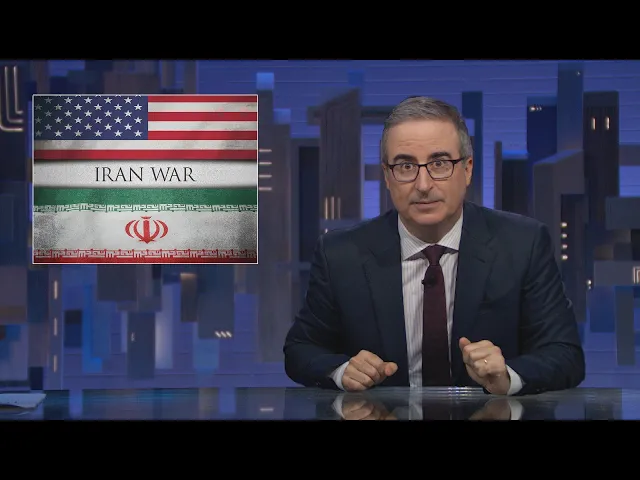
2:01 we're going to turn to our ongoing war with Iran.
2:04 Trump is still claiming his actions
2:05 prevented Iran from getting a nuclear weapon,
2:07 even when the audience for that message is not ideal.
2:11 So, we would have had a ran an Iran with a nuclear weapon.
2:17 And maybe we wouldn't all be here right now.
2:19 I can tell you the Middle East would have been gone.
2:21 Israel would have been gone.
2:23 And they would have trained their sights on Europe
2:25 first and then us because they're sick people.
2:29 What the ARE YOU DOING?
2:31 YOU'RE SURROUNDED by kids.
2:34 That event WAS PART OF TRUMP'S PUSH
2:36 to restore the presidential fitness test in schools.
2:38 You are supposed to be giving them nightmares about gym class, not nuclear war.
2:43 Last week marked 60 days since Operation Epic Fury began.
2:47 And that is meaningful given by law within 60 days
2:49 of informing Congress of the start of a military conflict,
2:52 the president must terminate any use of the US armed forces unless Congress has
2:57 formally declared war or enacted a specific
2:59 authorization for the use of the military.
3:01 Now, the administration's argued they simply don't need to comply with that.
3:05 And on Tuesday, Marco Rubio made this big claim.
3:08 The operation Epic Fury is concluded.
3:11 We achieved the objectives of that operation.
3:14 I'm not going to, you know,
3:15 we're not cheering for an additional situation to occur.
3:19 We would prefer the path of peace.
3:20 But look, the message to Iran, the these guys are facing,
3:23 they they are facing real catastrophic destruction to their economy,
3:28 generational destruction to their economy,
3:30 generational destruction to the wealth of their country,
3:32 imposed on themselves by the by the actions that they're taking.
3:34 They should check themselves before they wreck
3:36 themselves in the direction that they're going.
3:39 Yeah.
3:39 Marco Rubio declared epic fury was over before sending
3:42 a message to Iran's leadership in the weirdest possible way.
3:46 Cuz if there is one group of people who
3:48 will identify with lyrics from a '90s ice cube song,
3:52 it is definitely fundamentalist Islamic clerics.
3:55 They love decades old hip hop references.
3:58 Before his assassination, Ayataly would famously walk the streets
4:02 of Tan wearing HIS FAVORITE RUN DMC SHIRT.
4:06 SO, the administration seemed to be announcing the end of this conflict.
4:09 But the very next day, Trump posted, "Assuming Iran agrees to give what has been
4:14 agreed to, which is perhaps a big assumption.
4:16 The already legendary epic fury will be at an end and the highly
4:19 effective blockade will allow the whole strait
4:21 to be open to all, including Iran.
4:22 If they don't agree, the bombing starts, which isn't great.
4:26 And while it is not the most important part there,
4:28 assuming Iran agrees to give what has been agrees to is just an insane phrase.
4:34 I usually can't stand AI, but in Trump's case,
4:37 it might not hurt if he occasionally asked chat GBT,
4:40 can you rephrase this so it doesn't sound
4:41 like an earlier version of you wrote it?
4:44 And in the midst of trying to figure out whether we
4:46 can refer to Operation Epic Fury in the past or present tense,
4:50 we were suddenly dealing with a whole new operation this week.
4:53 President Trump has directed US Central Command to restart the free flow
4:58 of commerce through the street of Hormuz under the umbrella of Project Freedom.
5:03 To be clear, this operation is separate and distinct from Operation Epic Fury.
5:10 Yeah, we're now involved with Project Freedom 2,
5:13 which is legally distinct from Operation Epic Fury.
5:16 You know, much like this Halloween
5:18 costume called Kids Chocolate Factory Worker Costume,
5:21 is legally distinct from any association with Oompa Loompas.
5:24 are looking very much like the same thing.
5:27 The aim of project freedom was to reopen
5:29 the straight of Hormuz by having the US military essentially
5:31 guide commercial ships through by among other things locating
5:34 mines and passing along that information to the ships.
5:37 But after just a day and a half and only two
5:39 ships making it through out of the roughly 1,600 which were waiting,
5:43 Trump suddenly reversed course, leading to the excellent headline,
5:46 "Trump announces pause on Project Freedom," which is,
5:50 if nothing else, on the nose.
5:53 But but I actually want to focus on a small
5:55 moment from Hexet's press conference because he and the chairman
5:58 of the joint chiefs were asked about some of the weapons
6:00 potentially at Iran's disposal and one of them was pretty striking.
6:04 Are there still concerns about mines in the strait and can you
6:08 kind of clarify these reports of kamicazi dolphins that we've heard about?
6:12 [laughter] Yeah, you heard right.
6:16 She just said kamicazi dolphins.
6:18 That sounds less like a real thing and more
6:20 like something Alex Jones would mutter in his sleep.
6:23 or maybe the name of a bar trivia team full of aquarium adults.
6:27 But incredibly, the Wall Street Journal did report last week that Iranian
6:30 leaders were considering deploying previously
6:32 unused weapons to attack US warships, including mine carrying dolphins.
6:36 And at this point, I'm just going to pause because
6:38 that claim prompted us to do a bit of a deep dive,
6:41 pun very much intended, and apparently military dolphins are an actual thing.
6:45 In fact, since 1959, the US Navy has trained dolphins and sea
6:48 lions to help guard against threats underwater.
6:50 Early experiments reportedly tested more than a dozen species, including sharks,
6:54 rays, and sea turtles before the program settled on dolphins.
6:57 But I could have told you from the jump
6:59 that dolphins would be the standout there.
7:01 Turtles too slow, sharks too stupid,
7:03 rays too difficult to take seriously once you see their mouths.
7:06 Look at this idiot.
7:08 That is not a warrior.
7:09 That is nature's most slippery dweeb.
7:12 Dolphins are apparently used by the military
7:14 because they naturally possess the most
7:15 sophisticated sonar known to science with technology being no match for them.
7:19 And it turns out they're good at a lot of things.
7:22 We train Navy animals to do simple things under extraordinary circumstances.
7:26 For them, detecting enemy divers and swimmers or UVs or or enemy mines.
7:32 Finding the target is easy.
7:34 The animals are natural hunters.
7:36 We just change what they're hunting for.
7:38 Yeah, dolphins are natural hunters, but don't naturally hunt for explosives.
7:42 Typically, they hunt for mackerel or squid, or a scientist will jerk them off.
7:45 I don't have time to get into it right now.
7:47 Just Google that yourselves.
7:49 But according to one expert, actually, you know what?
7:51 I will just tell you quickly, in the 1960s, this woman, Margaret Love,
7:55 tried to teach a dolphin to speak English and thought the best way
7:57 to do that was to live with the dolphin 24 hours a day.
7:59 But her lessons kept getting derailed by the dolphin sexual urges.
8:02 And her solution to that problem was to relieve those urges for him.
8:06 Long story short, the dolphin never learned to speak English
8:09 and was sent to live in an abandoned bank in Miami.
8:11 And I'll be honest with you, if that dolphin didn't learn to speak English,
8:15 I'm not sure it can be done.
8:16 But again, we don't have time.
8:18 The point is, there are military dolphins,
8:20 and over the years, we put them to work.
8:22 We brought a team of five dolphins to Vietnam to guard
8:25 an ammunition pier because that war didn't have enough going on.
8:29 In the run-up to the first Gulf War, a team of six dolphins patrolled the harbor
8:32 in Bahrain and escorted Kuwaiti oil tankers through dangerous waters.
8:35 And during the Iraq war,
8:36 a team of dolphins helped disarm more than 100 anti-
8:38 shship mines and underwater booby traps planted by Saddam's forces,
8:41 meaning dolphins have objectively done more frontline military
8:45 service than anyone with the LAST NAME TRUMP.
8:48 NOW, the USDA has consistently maintained it only uses
8:52 dolphins for defensive purposes and not to attack the enemy,
8:56 pointing out that since dolphins cannot discern
8:58 the difference between enemy and friendly vessels,
9:00 it would not be wise to give that kind of decision authority to an animal.
9:04 It's also claimed that rumors to the contrary arise from media speculation,
9:08 thanks in part to a popular movie in 1973 which reinforced those ideas.
9:12 And specifically they are talking about this movie.
9:18 Unwittingly he had trained a dolphin to kill the president of the United States.
9:25 Can you find B?
9:27 Find me.
9:29 Stop be.
9:30 The thing on Bee's back will hurt.
9:33 Far.
9:34 Stop be now.
9:40 George C.
9:41 Scott in a Mike Nichols film, The Day of the Dolphin.
9:52 Yes.
9:52 Yes.
9:53 Yes.
9:53 Yes.
9:54 Now, [applause] okay, for the record, unwittingly,
9:58 he had trained a dolphin to kill the president of the United
10:00 States is from the bottom of my heart the funniest sentence in history.
10:05 It is such a perfectly direct summary of the plot.
10:08 They even put it on the actual poster
10:10 for this actual movie that was again directed by Mike Nichols,
10:14 you know, of the graduate who's afraid
10:17 of Virginia Wolf and the Day of the Dolphin.
10:20 A few fun facts.
10:21 Mike Nichols apparently referred to the this film as the fish movie
10:24 and had a hard time during its production as innumerable delays were caused
10:28 by the dolphins who tended to make a game out of rearranging
10:30 the underwater lights once they had been set up because of course they did.
10:34 Well done, dolphins.
10:35 According to the screenwriter, on the last day of the shoot,
10:37 they apparently did three takes of the dolphins swimming off,
10:39 and after take three, THEY NEVER CAME BACK AGAIN.
10:43 Well done, Dolphins.
10:44 And finally, Nicholls repeatedly claimed he made
10:46 that movie as a favor to Roman Palansky.
10:50 Just in case you thought THAT MOVIE COULDN'T GET ANY WEIRDER.
10:53 NOW, at this point, you might understandably be wondering,
10:56 "Wait, if dolphins don't carry mines to enemy ships,
10:59 then why is the US government being
11:01 asked about Iranian kamicazi dolphins?" Good question.
11:04 Well, the US Navy insists that we don't use dolphins to do that.
11:08 But other countries apparently have trained them to attack.
11:11 The Soviet Union's Navy reportedly developed its own marine mammal program,
11:15 as part of which dolphins and other aquatic mammals were
11:17 trained by Russian experts to attack warships and enemy frogmen.
11:20 Now, after the dissolution of the USSR,
11:23 the program fell into neglect in the 1990s,
11:25 and when funding for the project ceased.
11:27 Many were moved to a private dolphinarium to perform for tourists in Ukraine.
11:31 Eventually, the tourist trade dried up, and sadly,
11:33 their trainer was then forced to sell those military trained killer dolphins,
11:38 leading to the immortal headline, Iran buys kamicazi dolphins.
11:42 Now, admittedly, that was 26 years ago,
11:45 and some reports have speculated that those particular dolphins would now
11:48 be too old for Iran to use in the straight up form, which is a bit rude.
11:52 But even if that is true,
11:54 Iran may have gotten new dolphins from Russia since then,
11:56 given it's reportedly revived its killer dolphin program.
11:59 Oh, and one more thing here.
12:01 A few years ago, Hamas apparently claimed Israel had a dolphin weapons program,
12:05 too, leading to the real headline in the Jerusalem Post,
12:08 "Killer Zionist dolphins.
12:10 Hamas claims they exist.
12:13 And that headline is a minefield even
12:15 the best trained military dolphin could not navigate safely.
12:19 Anyway, I think we've all heard a lot more about bomb
12:22 dolphins this week than we thought we were going to on Monday.
12:25 Which brings us back to the Iran war because who knows what is coming next.
12:29 We're taping this on Saturday as the US awaits
12:32 Iran's response to its proposal to end the war.
12:34 But it's definitely not a great sign
12:36 that both sides have now resumed attacking each other.
12:38 And Trump's even a floated the idea
12:40 of resuming Project Freedom if no deal is reached.
12:43 Though in his screaming next to a helicopter time on Friday,
12:46 he added a little twist.
12:48 We may go back to Project Freedom if things don't happen.
12:51 But it would be Project Freedom Plus, meaning Project Freedom Plus other.
12:58 Look, I think it's pretty clear
13:02 this guy has got absolutely nothing because Project
13:06 Freedom Plus is the most ridiculous series of words I have seen this week.
13:10 Which is really saying something cuz I'll
13:12 remind you that tonight you've repeatedly heard
13:14 the phrase unwittingly he had trained a dolphin
13:17 to kill the president of the United States.
13:19 And now this.
13:21 And now [cheering] people on TV are not excited about Star Wars Day.
13:27 May the Fourth be with you.
13:28 Yes, today is May the 4th.
13:30 You Star Wars person?
13:32 No.
13:32 I've never seen Star Wars, but he's I like he's a classic.
13:35 Baby Yoda, and he's a classic.
13:36 So, exactly.
13:37 Okay.
13:37 All right.
13:37 Well, that's enough about Star Wars.
13:40 But this annual day is very important.
13:41 I know to my older brothers and some of the other Star Wars fans.
13:45 Some people call them nerds, but they call themselves fans.
13:47 You know, I'm going to be honest with you guys, okay?
13:49 My [music] stepdad used to make us watch Star Wars as punishment.
13:53 Like if we got Yes.
13:54 If we got in trouble.
13:54 It was not my thing.
13:55 Well, he got he got in trouble how he liked it.
13:57 He was obsessed.
13:58 He was looking for friends.
13:59 I'm just going to I'm just going to just just stay right [music] here.
14:02 Hello, Darth.
14:03 Nice to meet you.
14:04 I never got into it.
14:06 He never watched a single Star Wars.
14:08 Nope.
14:08 Never did.
14:10 We're happy to be doing some trending again today.
14:12 May the fourth be with you.
14:13 [music] Yes.
14:14 There you go, Deon.
14:15 And also with you.
14:16 There you go.
14:21 Moving on.
14:21 [cheering] Our main story tonight concerns the Supreme Court.
14:25 It's been in the news a lot lately,
14:26 especially thanks to last week's Voting Rights Act decision.
14:29 If you haven't heard,
14:30 it was a 6-3 decision in the case of White People versus everybody.
14:33 And you'll never guess who they ruled in favor of.
14:36 But I actually want to talk about a pattern you may have noticed recently.
14:39 Basically, Trump comes out with a new executive order or action.
14:42 A bunch of legal experts say,
14:44 "I'm not sure he can do that." Some courts weigh in and say,
14:46 "Yeah, he definitely can't do that.
14:48 He needs to stop." And then this happens.
14:51 Looks like the Supreme Court is allowing President Trump
14:53 to implement his ban on transgender people serving in the military.
14:58 The US Supreme Court is letting the Trump administration
15:00 move forward with freezing $4 billion in foreign aid.
15:03 The justice is ruling that the president can indeed proceed
15:07 with his plan to try to dismantle the education department with mass layoffs.
15:12 Right.
15:12 The court has been repeatedly jumping into ongoing cases to say, you know what,
15:16 while this works its way through the courts,
15:18 Trump should get to do the thing that he wants to do anyway.
15:21 It's basically a football referee saying,
15:23 pending a final ruling on the illegality of the quarterback having a gun.
15:27 I'm just going to stand back and see where he's going with this.
15:30 And that is possible thanks to the rise of what's known as the shadow docket.
15:34 And to explain what it is,
15:35 it's probably useful to remember how regular Supreme Court cases are decided.
15:39 When you think of a Supreme Court case,
15:41 you're thinking of a case on the merits docket.
15:43 [music] A case starts in a district court, is appealed to a circuit court,
15:46 often called an appeals court,
15:48 and then it's petitioned to be heard by the Supreme Court.
15:51 From there, briefs are written, arguing each side,
15:54 then oral arguments where the justices can ask questions,
15:57 and then they meet privately in person to discuss the case and vote on it.
16:01 They spend months writing long opinions and dissents,
16:04 and then we know who won and who lost and why.
16:07 And that detailed explanation helps these lower courts understand
16:11 how to apply it to similar cases going forward.
16:14 Yeah, that is very basically it.
16:16 Although one small thing there, saying when you think of a Supreme Court case,
16:20 you're thinking of the merits docket.
16:21 Excuse me.
16:22 You don't know what I'm thinking of when I think of the Supreme Court.
16:25 Especially as what I'm actually thinking about is
16:27 how the sequel to Legally Blonde, Legally Blonde 2,
16:29 Red, White, and Blonde dropped the ball by not
16:31 having Lwoods argue a case in front of it.
16:33 Come on, guys.
16:36 The best part of the first movie is
16:37 the murder trial and the sequel has no trial scenes.
16:40 You set the movie in DC and don't let El show what
16:43 she can do in front of the highest court in the land.
16:46 That is madness.
16:47 Anyway, that is what I'm always thinking
16:49 of when I think of a Supreme Court case.
16:51 The one I'm eventually going to bring against the producers
16:53 of Legally Blondoo for not putting Reese in a position to succeed.
16:58 But admittedly, the second thing I'm thinking of is that process,
17:02 the regular established path to the Supreme Court,
17:05 district courts, circuit courts, Supreme Court.
17:08 But if a litigant is in a hurry and they think
17:10 the Supreme Court's going to be extra friendly to them for some reason,
17:12 then the shadow docket offers a much speedier way to get your case there.
17:16 Basically, any litigant in a federal case can
17:18 ask the Supreme Court to step in and provide
17:21 a temporary ruling on what should happen while
17:23 their case works its way through the system, which can take years.
17:26 By the way, five votes among the nine justices are
17:28 needed to grant a request for the court to intervene.
17:31 And that request must meet certain criteria,
17:33 including that the applicants would suffer
17:35 quote irreparable harm if it's not granted.
17:38 And that term irreparable harm is really
17:40 important because it sets a very high bar.
17:42 Which is why for years,
17:43 the docket's main use was in one particular type of case.
17:46 As this law professor explains, if someone's going to be executed the next
17:50 day and he's the the person's lawyers are saying,
17:53 "Listen, I this my client was convicted
17:56 or put on death row for the wrong reasons.
17:59 He's innocent or there's some problems
18:00 in the process." The Supreme Court might say, "Okay,
18:03 we're going to stay the execution order under
18:05 this emergency process because once this person's executed,
18:10 we can't fix the the problem." Right.
18:15 Right.
18:14 Once someone is executed, it is generally too late to do anything about it,
18:19 besides maybe sending them a card from Hallmark's belated exoneration section.
18:24 But Trump's now using the shadow docket
18:26 for a lot more than just death penalty cases.
18:28 Because if a lower court issues a ruling that he doesn't like,
18:31 say pausing an executive action until it's been fully litigated,
18:35 he'll now run to the Supreme Court and ask
18:37 them to rule in his favor on the shadow docket.
18:40 And recently, he's been doing that a lot.
18:43 This is every time the federal government had
18:44 a case there back to the first Trump administration.
18:47 [music] And here's just eight months into his second term.
18:50 It's being used in record numbers.
18:53 Yet Trump keeps claiming he needs an emergency
18:55 ruling and the court keeps agreeing with him.
18:57 That chart is pretty striking.
18:59 Though to be fair, you could probably use it
19:01 for any number of things in the second Trump administration
19:03 from measles cases to gold nailed to the walls
19:06 of the White House to use of the phrase when it happens.
19:10 And this strategy is paying off.
19:12 As in the last year alone, the courts issued decisions via
19:15 the shadow docket that allowed this administration
19:17 to cut hundreds of millions of dollars worth of grants to universities,
19:20 dismiss every transgender service member from the military,
19:22 cut a third of the Department of Education,
19:24 fire hundreds of thousands of federal employees,
19:27 and refuse to spend $4 billion in congressionally appointed foreign aid.
19:31 And look, there are clearly a lot of problems with the current Supreme Court.
19:35 Six of them to be precise.
19:37 the Five Boys and this preschool teacher who still hits.
19:40 But their work on the shadow docket has empowered some of Trump's worst
19:44 policies to the point it's now become his go-to method to get his way.
19:48 One former solicitor general has even said of the docket that it's
19:51 swallowed the court both in terms of workload and even practical importance.
19:55 So given all that, tonight let's look at the shadow docket,
19:58 what it is, why it exists, and how it's being abused.
20:01 And let's start by acknowledging the term itself is a bit It was first coined
20:07 by a law professor criticizing the practice
20:09 and some justices do not care for it.
20:12 Amy Con Barrett said she prefers emergency docket and Brett
20:15 Kavanaaugh reportedly pushed for calling it the interim docket.
20:18 Samuel Alito actually gave a whole lecture to Notre
20:20 Dame law students about how misunderstood the docket is.
20:22 And fun fact, his lecture wasn't supposed to be recorded,
20:25 but we got the audio of it and here's a taste.
20:28 The term is memorable and suggestive.
20:31 Journalists and some political figures have found it useful.
20:36 It brings to mind something sneaky and dangerous.
20:40 And I'm sure when ordinary people who don't follow
20:43 the work of the Supreme Court closely hear it, they're disturbed.
20:48 They say, "What are these people trying to do?
20:50 What are they trying to hide in the middle of the night?
20:52 Let the sunshine in." That's exactly what I'm going to try to do this afternoon.
20:58 Okay.
20:59 Set aside the bad faith claim of saying, "Let the sunshine in during a lecture
21:03 at an exclusive law school that you've explicitly asked not
21:06 to be recorded." Alito argued that day that there's
21:09 absolutely nothing wrong with deciding cases on the shadow dock.
21:12 And anyone who says different is just a sore loser.
21:16 The real complaint of these critics is that we
21:19 should have granted relief when they think it
21:21 should have been denied and we have denied
21:24 relief when they think it should have been granted.
21:27 If they want to criticize us on those grounds, fine.
21:30 Let them make their case.
21:32 But attempting to disguise their real complaint
21:35 with a lot of talk about a secretive, sinister, shadow docket is unworthy.
21:42 Okay, Samuel.
21:43 But you can not like a decision and also not like how it came about.
21:48 Things can suck for more than one reason.
21:51 You know, like when Jeopardy was looking for a new host
21:53 and the producer in charge of the decision said, "Guess what?
21:56 We found him.
21:57 It's me.
21:57 Congratulations to me on winning my contest.
22:00 I look forward to working with the guy who I am.
22:03 People had a lot of concerns about that and this guy
22:06 sucks at hosting Jeopardy was only one of them.
22:09 And it is not unreasonable to have complaints about the shadow dockets process
22:12 given the damage some of these rulings have done because in many cases it
22:16 has sure seemed like the court's intervention caused a lot more irreparable harm
22:21 to people than Trump would have suffered simply by waiting for a regular ruling.
22:25 take their decision to allow Trump
22:27 to dismiss every trans member of the military.
22:29 That had immediate consequences.
22:31 As this service member explains, it's going to be devastating.
22:36 Should that occur, I will lose a core component
22:39 of my identity that's been with me my entire life.
22:42 I will lose the single source of income right now for my family,
22:46 the health care, the benefits associated
22:47 with that, the onost housing that we have.
22:50 Um just we'll lose everything at that point.
22:54 Yeah.
22:54 And when one party in the case stands to lose everything while
22:57 the other will just have the exact same military he did yesterday,
23:01 it seems clear which party would need emergency
23:04 relief before the case was decided on its merits.
23:06 But to be fair, I am not a Supreme Court justice, am I?
23:09 I just occasionally try to bribe one on TV.
23:13 And while a shadow docket decision is technically temporary
23:16 while the case makes its way through the system,
23:18 once an administration has a ruling that lets them do what they want,
23:21 they have every incentive to drag their feet and delay a case's appeals.
23:26 All of which makes it incredibly frustrating when you
23:28 hear Amy Coney Barrett blly defend the docket like this.
23:33 We're not resolving a case finally.
23:35 We're just saying it's a kind of a for now.
23:40 This is our best judgment about the merits,
23:42 about the likelihood of success on the merits,
23:44 and then you're considering other factors, too.
23:47 Yeah, it's just a for now decision.
23:49 So, that soldier losing her job really shouldn't complain.
23:52 She's only losing it for now.
23:54 All she has to do is not need
23:56 money or housing until the court eventually gets around
23:58 to deciding whether or not it should have
23:59 been taken away from her in the first place.
24:01 But that is just the beginning of the problems here because justices
24:04 are also frequently making sweeping decisions
24:07 without fully understanding a whole case.
24:10 Cases are decided on the shadow docket without oral argument and sometimes
24:14 without the full picture of the evidence
24:16 that lower court proceedings might provide.
24:18 Take the case of Gnome versus Vasquez Podomo.
24:20 involved immigration raids in LA where federal
24:23 officials conceded they were using race and ethnicity
24:26 as a factor in deciding who to stop which is this is true racial profiling.
24:32 A lower court told the government correctly to cut that out,
24:35 but the government then appealed via the shadow docket
24:38 and the Supreme Court ruled that they could proceed.
24:40 And in a rare move, Brett Kavanaaugh actually wrote
24:42 a brief explanation of why he reached that conclusion,
24:45 saying immigration stops were typically brief and that individuals
24:48 may promptly go free after making clear
24:50 to the immigration officers that they are US
24:52 citizens or otherwise legally in the United States.
24:55 But that is for a bunch of reasons.
24:57 First, the notion that any interaction with law enforcement is typically
25:01 brief is something only a white guy named Brett would confidently assert.
25:06 [cheering] But also,
25:07 that's not even what the details of the case he was ruling on showed.
25:12 As Justice Stomayor pointed out in her descent,
25:14 two plaintiffs in the case had actually
25:16 tried to explain that they were US citizens.
25:18 One was then pushed against a fence with his arms twisted behind his back
25:21 and the other was taken away
25:23 from his job to a warehouse for further questioning.
25:25 So Kavanaaugh's opinion wasn't even based on the facts on the ground.
25:30 And whether that's because he was moving too fast
25:32 to read up on the case, which is kind,
25:34 or simply didn't care, which feels way more true,
25:36 it doesn't really matter because the court had already ruled.
25:40 And that ruling is actually one of the key reasons why earlier this year,
25:44 federal agents in Minneapolis felt empowered to do like this.
25:47 American citizens are getting stopped and questioned,
25:51 including a woman walking down the street.
25:54 And it's not where you It doesn't matter where I was from.
25:57 [screaming] I belong here.
25:58 I am US citizen.
26:00 And this Uber driver.
26:01 I can hear you don't have the same accent as me.
26:03 That's why I'm Oh, so you go by accents now.
26:06 People have been stopped for simply appearing to be Somali
26:10 or appearing to be Latino or appearing to be foreign.
26:13 And it's concerning because we also know we're not
26:17 getting these stories from Irish folks and Norwegian folks here.
26:23 Yeah, I bet you're not.
26:25 And look, I'm not saying they should have done it,
26:27 but it would have at least been a change of pace
26:30 if the feds in Minneapolis had done some throwback anti-European racism, too.
26:34 You know, signs in diner windows saying things like
26:36 no spaghetti eaters and water fountains reading Swedes only,
26:40 just to balance things out a bit.
26:43 But the fact you can now be targeted for just speaking
26:45 with an accent has given rise to some truly striking exchanges.
26:50 You're not allowed.
26:51 I don't care.
26:52 What country are you from?
26:53 You're not allowed.
26:54 I'm from this country.
26:56 You know what, sir?
26:57 Now talking to you, seeing hearing that you have an accent.
26:59 I have reason to believe that you are not born of this country.
27:02 You just country.
27:03 Do you have documentation?
27:04 I do have my documentation and you present it to me.
27:07 Why you asking me for my paperwork?
27:09 Because of your accent.
27:12 You have an accent, too.
27:13 Where were you born?
27:14 Where were you born at?
27:16 Put your hands down.
27:18 [applause] That is madness.
27:20 No one should ever be arrested for speaking in an accent.
27:23 Unless, of course, that person is C Hanks.
27:26 But even then, I think we can probably just
27:28 let him talk it down to a large fight.
27:30 Now, it's worth noting that thanks to Kavanaaugh's opinion,
27:33 what you just saw is now commonly referred to as a Kavanaaugh stop.
27:37 Arguably the worst thing to bear Brett
27:38 Kavanaaugh's name other than Brett Kavanaaugh himself.
27:41 But the thing is, we only know about Kavanagh's
27:44 faulty reasoning because he actually bothered to explain his logic.
27:47 Something again on the shadow docket the court doesn't technically have to do.
27:52 Decisions can come down with no public discussion and no
27:55 guidance to lower court judges on how to analyze similar cases.
27:59 That's a practice Samuel Alito has strongly defended,
28:01 saying, "When we issue an opinion,
28:03 we are aware that every word that we write can have consequences,
28:06 sometimes enormous consequences.
28:08 So we have to be careful about every single thing that we say.
28:11 And on her book tour last year, Amy Con Barrett made a similar case.
28:15 Well, the emergency orders present a challenge because they do require the work
28:19 of the court to proceed far more quickly than it normally does.
28:23 You know, I pointed out in the book that there are
28:25 turtles all over the court because normally the court moves slowly.
28:30 It changes slowly.
28:31 Justice moves slowly at the court because we are very deliberate.
28:35 Um, the emergency docket moves much more quickly
28:37 and it is a much more recent phenomenon.
28:40 The emergency docket is newer and so I would
28:41 say those processes are still being shaped and sorted out.
28:46 Okay, first and least importantly,
28:48 I am frankly furious that I'm only just learning
28:51 that the Supreme Court apparently has a turtle thing.
28:54 That is now my second favorite fact about turtles.
28:58 Just below some turtles breathe through their butt.
29:00 Yet more proof that God occasionally drank on the job.
29:04 But if your argument is we're not really built for emergency docket decisions,
29:08 then maybe you shouldn't be choosing to do them all the time.
29:12 And unexplained decisions can also be frustrating to lower court judges who
29:17 argue it can diminish their credibility
29:18 when their rulings against the administration get
29:20 overturned on the shadow docket with little or no explanation because it
29:24 makes it seem like they did shoddy work and are biased against Trump.
29:28 And that's not the only problem because there's also
29:30 the question of whether shadow docket rulings set precedent.
29:33 Basically, are they for now temporary decisions about one case or are they
29:37 meant to be guideposts in how judges are to interpret the law going forward?
29:41 Interestingly, just 5 years ago, Alito argued the former,
29:45 saying that shadow docket decisions do
29:47 not make precedent on the underlying issue.
29:49 But lately, other justices have argued the opposite.
29:52 Both Gorsuch and Kavanaaugh at one point issued a ruling reprimanding
29:55 a lower court for not treating a shadow docket decision as president,
29:58 saying lower court judges may sometimes disagree with this court's decisions,
30:02 but they are never free to defy them.
30:04 And it is pretty shitty to admonish someone
30:07 for not understanding rules that are not only unclear,
30:10 but seem to be constantly changing.
30:12 It's the judicial equivalent of getting yelled at in the TSA line.
30:16 Hey, shoes off.
30:17 No, just the left shoe.
30:18 It's right shoe on and left shoes OFF LIKE IT HAS ALWAYS BEEN.
30:22 KEEP YOUR BELT ON.
30:23 NO, NOT LIKE THAT.
30:24 TIE AROUND YOUR HEAD LIKE QUAIL MAN FROM NICKELODEON'S DUB.
30:28 IT'S NOT THAT COMPLICATED.
30:29 YOU ARE NOT FREE TO DEFY ME.
30:33 [applause] All this confusion is understandably frustrating to lower
30:37 court judges who would be more than happy to defer to the Supreme Court if it
30:42 would just tell them what the they're deferring to.
30:45 Here is one judge venting about that exact problem.
30:48 That's why we need a opinion from the Supreme Court
30:51 because we don't need a future Supreme Court come and says,
30:53 "Well, we didn't really say that because
30:55 we didn't give any reasoning behind it." Sure.
30:58 People need to understand it and and give confidence to an opinion.
31:01 We need to understand why you did it.
31:03 We judges would just love to hear your reasoning as to why you ruled that way.
31:08 Then we it makes our job easier.
31:10 We will follow the law.
31:12 We will follow the Supreme Court.
31:13 But we'd like to know what it is we are following.
31:18 Exactly.
31:18 Judges would be happy to follow directions if the court just gave them some.
31:22 If you bought an earth and slurp bookcase from IKEA and the instructions
31:26 were just a little guy shrugging and pointing at a bookcase,
31:29 YOU'D BE JUSTIFIABLY PISSED.
31:31 HEY, GET OFF YOUR ABSTRACT SWEDISH ASS and give me some directions.
31:35 That's the ONLY REASON THAT YOU ARE HERE.
31:39 But but maybe what'll hurt the Supreme Court the most
31:41 in the long run is that these decisions seem nakedly political.
31:45 Because it turns out the best predictor of how this court will rule
31:48 in shadow docket cases seems to be who is president at the time.
31:52 For instance, the Biden administration brought far fewer cases
31:54 to the shadow docket and won just over half the time.
31:57 But the Trump administration, which uses it far far more,
32:00 prevails 84% of the time.
32:02 And look, maybe the justices have nuanced reasoning for voting the way they did,
32:07 but if they do, they're not saying so.
32:09 And that is a big problem.
32:11 And I know that for some Trump supporters,
32:13 all of this may be gratifying in the short term,
32:17 but as this law professor explains, over the long term,
32:20 this approach poses real risks to the court's very legitimacy.
32:24 You know, 20 years ago, when all the court was doing through
32:27 emergency applications was lastm minute stays of execution,
32:31 I don't think there was a big
32:32 clamor for the justices to provide lengthy explanations.
32:36 But now that these orders are having these profound effects on the ground,
32:41 the fact that we see the court intervening,
32:43 oftentimes undoing hundreds of pages of analysis from lower
32:47 court judges and providing no explanation of its own,
32:50 I think is a real part of the problem.
32:52 Um, and it deprivives all of us,
32:54 the lower courts, the relevant government decision makers,
32:57 the public, of any ability to assess why the justices ruled the way they did.
33:02 Exactly.
33:02 My son is right.
33:05 I quick side note on that.
33:08 Come home Nathaniel.
33:09 Your mother is ill and for her sake our feud must cease.
33:13 But he is right.
33:15 As the legal director of the ACLU put it,
33:17 if the justices can make significant decisions without giving any reasons,
33:21 then there is really no limit to what they can do, which is not good.
33:25 So what can we do?
33:26 Well, there are a bunch of fixes Congress could impose,
33:29 especially given it controls the Supreme Court's budget,
33:32 including simply requiring the court issues written
33:35 explanations whenever ruling on the shadow docket,
33:38 which really doesn't seem too much to ask.
33:40 And if that burden means that they won't be able to do
33:42 as many shadow docket cases as they currently are, all the better.
33:46 But that is just the beginning.
33:48 Significant Supreme Court reforms have to be on the table now.
33:52 And I know that many bulk at that, including members of Congress.
33:55 But think of it like this.
33:56 When the Supreme Court allows the president to act in ways contrary to statutes,
34:00 like say not spending congressionally appropriated funding,
34:04 that is seizing power from Congress.
34:06 And maybe it is time for Congress to start taking a little power back.
34:10 And I know the court itself will [cheering]
34:12 object to the idea that it's a political body.
34:15 Just this week, Chief Justice John Roberts
34:18 whines that people think we're making policy decisions.
34:21 I think they view us as truly political actors,
34:23 which I don't think is an accurate understanding of what we do.
34:26 But to be clear, this is a mess of the court's own making.
34:31 Because there's something both frustrating and deeply patronizing about justices
34:35 choosing to issue unexplained rulings in the middle of the night,
34:38 only popping their heads out for fingers
34:41 whenever they've got a shitty book to sell,
34:42 and then scolding us for not understanding
34:44 what's going on inside their gorgeous pristine minds.
34:48 And look, as we have discussed before, when they do write their reasoning down,
34:51 it often exposes the degree to which they can seem to reach
34:55 for predetermined conclusions before working backwards
34:57 to fill in a legal rationale.
34:59 But at least they have to put the work in.
35:02 And I know that some will say no substantive
35:04 court reform is likely to happen during this administration,
35:07 which is obviously true.
35:09 But it is still worth starting the conversation
35:11 now because there are lots of ideas for court
35:14 reform from adding justices uh to no longer
35:16 allowing the court to set its own dockets.
35:18 They always seem to get kicked down the road for a later discussion.
35:22 You may remember Joe Biden came into office and handed
35:25 the idea of court reform off to a blue ribbon commission.
35:27 And if you're thinking, "Oh yeah, what the became of that?" He actually released
35:32 a set of proposals in July of 2024.
35:34 you might have missed it.
35:35 Not only because it was around a month after he imploded on the debate stage,
35:39 but also because it was the week after he withdrew
35:41 from the race and nobody was going to be reading that report then.
35:46 The only thing people were reading that week
35:48 were 500 different TWEETS ABOUT HOW CARMELA WAS BRAT.
35:51 It was it was a weird time, but you know, it all worked out.
35:55 The point is, we have two and a half years between
35:58 now and the next election to lay the groundwork for change.
36:02 And I'd argue that it's worth doing
36:04 because this court has eroded people's confidence
36:07 to the point it's now considered a political
36:09 arm instead of a necessary check on political power.
36:12 And if you ask me that qualifies as, if I may borrow a phrase,
36:16 actual irreparable harm.
36:19 And now [cheering] this.
36:21 And now for Mother's Day, just leave mom the alone.
36:27 Right.
36:27 As we've mentioned this morning, it is Mother's Day weekend.
36:29 time where we try and give credit where
36:30 credit is certainly do and celebrate our mothers.
36:33 Most people get their mom's cards, maybe some flowers,
36:35 always a good one, and some goodies.
36:36 Maybe you can even take her to brunch Sunday morning.
36:38 Another good one.
36:39 Another good one is TO BE LEFT ALONE.
36:42 The answer to the question, what will moms get on Sunday?
36:45 Rest, relaxation.
36:46 We can only hope.
36:47 Be left alone.
36:48 And being a mom, I'm telling you what we appreciate the most is alone time.
36:51 [laughter] I'm just saying some peace and quiet.
36:55 Yeah.
36:54 Maybe he'll give me some peace and quiet finally.
36:58 Okay.
36:58 Okay.
36:58 Well, we'll see.
37:01 You You probably don't have a clue what's going on, and that's a good thing.
37:03 Oh, I have a clue.
37:04 I told him, "Leave me alone.
37:05 Let me sleep in bed and relax." I want sleep and peace and quiet.
37:09 For me, I say it every year.
37:10 My husband knows.
37:11 Just leave me alone.
37:12 That's all I want.
37:14 I'm down to do like [music] a breakfast or a lunch and then leave me alone.
37:18 She wants a hotel room and to be left alone.
37:21 Yeah, just let mom stay in the bed and that might do it.
37:24 That might be all.
37:24 Put the note under the door.
37:25 I like handmade cards or anything sentimental [music]
37:28 because it puts thought into it and it's sweet.
37:30 Keep them and uh leave me alone.
37:34 [applause] That's our show.
37:36 Thanks so much for watching.
37:37 We'll see you next week.
37:38 Good night.
37:38 [cheering] [applause] Wow.
37:55 Wow.
37:58 [snorts] Wow.
38:00 Wow.
38:01 Wow.
38:01 Wow.
38:02 Wow.
38:04 [snorts]