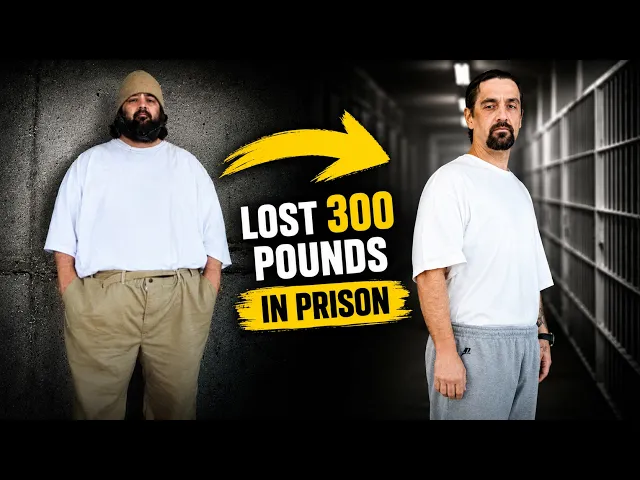
I Lost 300 Pounds In Prison — This Is How I Did It
Ian Bick
0:00 My guest today is Rusty Pingburn, who went from selling candy as a kid
0:03 to becoming involved in major meth trafficking,
0:06 getting sentenced to 5 years in federal prison,
0:08 and losing nearly 300 lb behind bars.
0:12 Today, he shares how it all happened and what that life was really like.
0:20 I was originally born um in Joplin, Missouri.
0:24 Okay.
0:24 What was that like?
0:25 What was your upbringing like?
0:26 Well, I I wasn't raised the entire time.
0:29 I I I was born in Choplain and my mother wanted to have a better life for me.
0:33 So, what she did was she moved me to uh California,
0:37 San Diego, California to try to get me a better life.
0:41 But it didn't really work out for her and it was hard, life was hard on her.
0:44 So, she had to move send me off to family.
0:48 So, I bounced around from family to family to family until
0:51 I was about um I was about I would say 13.
0:57 Then I they then family just couldn't have me.
1:00 So, they shot me back to San Diego.
1:02 She kind of got her life a little bit back together.
1:04 And then we decided to move back to Joplain.
1:07 And so, about the age of 14 14 until um about 2004
1:13 when everything went down is when is is is my is my span.
1:17 So, where was your dad?
1:19 He was he was he was just never around.
1:21 He He just wasn't there.
1:22 He's been out of the picture.
1:23 I I I met him one time, but other than that, the time I met him,
1:27 he I I think I was 16 and I went to his house and said,
1:31 "Hey, um" and he knew exactly where he was.
1:33 And he just told me he he really
1:35 wasn't interested in in having a relationship with me.
1:38 So, I I met him once.
1:39 So, he he's not in the picture.
1:41 Never never has been.
1:42 Did you ever have any father figure in the picture or No, I I did not.
1:45 I I did not.
1:46 I that that might have been right why why some of this went through.
1:51 But um and a lot of this was I I think was just wanting belonging.
1:57 I didn't really have any belonging.
1:58 I didn't really have an um upbringing
2:01 because I was I never had childhood friends,
2:03 never had school friends because I never stayed in one
2:06 in one school more than a year, year and a half.
2:08 So I just kept moving all the time.
2:11 So I think when I was 14 is when things began
2:16 is because that's when I was of course in Joplin, Missouri.
2:19 I was 14.
2:20 I started selling started selling candy.
2:22 I was the I was the candy person that sold candy out of the lockers
2:25 and that made people want to come to me
2:29 during in the middle of class wanted wanted
2:31 to come to me to get candy and then the honey buns and and and nutty
2:36 bars and of course you have your little
2:37 deals and that gave me the sense of influence.
2:40 It gave me a sense of belonging.
2:41 People wanted to be around me because I was the I was the candyman.
2:45 And that influence just grew as I grew.
2:48 Do you think that had a big impact on you as a child?
2:51 All the moving around,
2:52 not having that stability mixed with not having the father figure.
2:56 I do see that at today.
2:57 I do see that now.
2:58 Of course, I didn't see all that then, but but reflecting back, yeah,
3:01 I I do see that as as the that was
3:06 my addiction was the influence, the belonging,
3:09 the the the needing to be needed was could
3:13 I could have been could have stemmed from not having
3:15 a father and not having friendships and not and being
3:17 alone all the time and just being with my mother.
3:19 So, I do see that being being a factor of course.
3:23 Aside from that and that entrepreneurial spirit you were just describing,
3:26 how else would you have described yourself as a kid?
3:31 I would have to say I I was a loner.
3:33 I I I was the person that really would go and play by myself,
3:38 just go just go be alone like on a schoolyard.
3:42 At the time it was in San Diego, California.
3:44 And that is if you ever been it's schools were large.
3:48 It was large.
3:49 It was one teacher maybe 60 70 students.
3:52 So, but I was just I was just alone.
3:54 I I I really never did well in school.
3:56 But even I remember during recess I was just I I just didn't really
4:01 associate with people because I didn't I
4:03 didn't really get a chance to know anyone.
4:05 And by the chance by the time I would get a chance to know anyone,
4:08 I was already moving to another school.
4:11 So, it was just Santa Monica, Santa Barbara, San Diego, Chila Vista, Sanro.
4:17 Moved to Iowa from Iowa.
4:18 Moved to Alabama.
4:19 From Alabama, moved to Georgia.
4:21 It was just I was always on the move and then from family member
4:25 to family member which was a different school
4:27 to a different school to a different school.
4:29 So I think I was I was really just a loner until again it
4:34 it goes right back till I was like 14 and I started selling candy.
4:38 I I I started just selling soda pops and candy.
4:40 And then I then I became someone I I I enjoyed having people knowing my name,
4:46 people wanting to be around me.
4:48 And I actually in the I remember looking forward to in between classes.
4:52 That was that was my green light.
4:55 That was my that was my happy time.
4:56 That was when everyone the bell rang.
4:58 It would people would just rush me.
5:01 I loved that.
5:02 That that became an addiction.
5:03 I mean, and that's where it fell that and it
5:06 just it just graduated as the years went by.
5:09 It graduated higher and higher and higher from candy to other things.
5:14 What are those other things?
5:15 Well, it it's it ended up with cigarettes.
5:18 And I've found me a good plug with with with cigarettes.
5:21 That was the days when cigarettes were
5:23 on the aisle instead of behind the counter.
5:25 So, I had I had a a a person that would go in and swipe
5:29 a couple cartons of cigarettes and sell each carton to me for $5.
5:33 While I'm selling candy and soda pops,
5:35 I moved on to cigarettes and would get a carton of Marls or a carton of Camels
5:39 for $5 and be able to sell those packs to the kids for two and $2 if I might.
5:43 Two two Yeah.
5:44 $2 $2.50 to the kids and really be able to make a lot of money
5:48 and be able to he would he would buy he would go and swipe alcohol,
5:53 swipe this, and just and I would buy it from him and sell it
5:55 sell it back at at outrageous prices because kids are going to buy Jack Daniels.
6:00 kids are going to buy alcohol.
6:02 And that that was me.
6:04 I was the go-to guy.
6:05 And that just the the higher I went,
6:08 which was from candy to cigarettes to alcohol to to weed,
6:13 it more people it just flooded in to where I never finished eighth grade.
6:18 By the time I was in eighth grade, school was in the way of me making money.
6:23 So it did it it just went from there.
6:25 So you dropped out of school at that point.
6:27 I I I didn't have time for school.
6:28 It was getting in the way.
6:29 Oh, how how does your mom react to this?
6:32 She was at a point where, son,
6:34 I just can't keep up with you and you're just too much.
6:38 You're you're just you're all gas, no breaks.
6:42 So, she she she gave up on me.
6:44 She actually she actually kicked me out at 16
6:47 when she came downstairs and early in the morning
6:51 and and came down and saw me at the at the table
6:55 weighing up a pile of drugs and said, "Son, I just can't have this in my life.
6:59 you're going to have to get out.
7:00 But at the same time, she loves me.
7:01 I'm her baby.
7:02 As I'm leaving, she makes sure I have a spare key to get in.
7:06 So So do you feel like you picked, you know,
7:08 that hustle mentality and say drugs or anything you
7:11 were doing at the time over your own family?
7:14 Yeah, I did.
7:14 I did.
7:15 I I'm definitely a mama's boy.
7:17 I still went and saw her every morning.
7:19 We had breakfast every morning.
7:20 But but yeah, I I cho I chose the influence.
7:24 I chose the life.
7:25 I chose the importance.
7:27 And along with that came the drugs.
7:29 I chose that over over family.
7:31 And then family, the rest of the family
7:34 distanced themselves from me because I'm the only
7:36 family I'm the only family member
7:37 in my entire family that's ever even been arrested.
7:40 Everyone else like excelled in different directions.
7:43 And I just just went in that direction.
7:47 And no one in my family went that direction.
7:49 I was the only one.
7:50 So I was what's the word?
7:51 Ostracized or the black sheep that I was the black sheep.
7:55 I was definitely the black sheep.
7:56 I was the only one who ever been arrested.
7:58 When you're 16, you're out on your own.
7:59 Where do you think you saw yourself in 5 years?
8:03 To be truthful, I saw myself as as I'm going to be a baller.
8:07 I'm I'm I'm going to I'm going to run this town.
8:09 That was I I I that's what I I strived for at 16.
8:14 I strived I wanted to be the man.
8:18 I wanted to be the person who everyone came to.
8:20 And I had I was determined that I was going to run things.
8:24 I would I was determined.
8:26 I I at 16 I was headstrong on being the being the boss.
8:33 So what happens?
8:34 Where do you go?
8:36 It went from it went from um I remember ended
8:41 up from the from getting the the old school biker crank,
8:44 moving on to the biker crank.
8:46 Then it it and once I once I tried the once I tried crank for the first time,
8:51 I I never done it before.
8:53 And I remember being in a trailer delivering some
8:56 some some weed and there was a couple people
8:59 in the back and I went back to deliver some
9:01 weed and they were they were twisting a light bulb.
9:03 And I think I was I think I was 18.
9:07 I think it was 18 when I when I really
9:09 got interest I really got introduced into into the the meth
9:14 and they asked me if I wanted to hit and I was like all right let's do it.
9:18 So, I took a hit and as soon as I took that hit and blew it out, I was like,
9:21 "This is what I'm going to do and I'm going to do a lot of it."
9:25 And I could see in my head
9:27 the opportunity because everyone was talking about crank.
9:31 That's what it was called back then, crank.
9:32 Everyone was talking about crank.
9:34 Everyone was was talking about it.
9:36 I was just the weed guy.
9:37 I was I was moving five, six, seven pounds of of weed,
9:41 but I didn't have anything to do with meth.
9:43 But as soon as I took that first hit,
9:46 it was this is this is my new avenue and this is what I'm going to do.
9:50 I know lots of people that talk about this, so here's what I'm going to do.
9:54 And I and I asked him, hey, how much is this going for?
9:56 Hey, can I get some?
9:58 I got some cash.
9:59 And it just shot from there.
10:01 And then restrictions started happening.
10:04 And then I met some people who I think this was probably before I was 19.
10:11 I met some people who were the old school the old school the the manufacturers.
10:16 I I met I met a couple and I and I we became friends and I moved in with them
10:20 and there was actually two cooks that lived in one house
10:23 and I moved in with them and I was the one
10:25 who knew everybody so they were cooking and I was
10:28 I was pushing all all of their product and it just
10:32 took off and then the government put a put a restriction
10:37 on the the precursor the ephedrin put a precursor on that.
10:41 So then it then it became really really tough to manufacture.
10:47 Step back step back just a little bit.
10:49 Um one one of the gentlemen um burn burn his arm up.
10:53 A can can of acetone exploded burn his arm up.
10:56 So he needed he needed an extra hand.
10:58 So that's where I learned how to mix and learn how to manufacture.
11:03 So I started manufacturing a little bit and did that for a little while.
11:09 I was able was able to make my own and and kind of hone
11:11 in on that really and really be able
11:13 to feel that that side of being a manufacturer.
11:15 But once once the once the restrictions came in, it really really slowed down
11:22 and then I then I started meeting the people and that's when the ice came in.
11:27 That's when the ice from down south came in and I found me a really
11:31 a really good plug on that and that was really like an unlimited supply.
11:36 And so I had a plug that had unlimited supply.
11:39 I think I was I would say around 20 around 20 years old.
11:47 Ian about 20 years old.
11:49 This person that was the main plug and I was the main plug in Joplain.
11:53 I was the main one.
11:54 By then it was moving it was moving in different states.
11:56 I I I was I was provided in different states.
11:59 This person had a high-speed chase and went to jail.
12:02 So it the area just went dry for a month and then
12:08 I had a knock I had a knock on my door.
12:11 It was a knock on my front door and everyone comes to the back door,
12:15 but I had a knock on my front door and I opened the door and it
12:18 was three gentlemen and one of them
12:21 was an interpreter and basically let me know,
12:24 we know who you are, you're fat boy.
12:26 Um, can we come in?
12:28 And I I I I had a feeling what was what who they were.
12:32 They came in and they let me know everything you've been doing come from us.
12:37 And now here's your opportunity because this person's gone.
12:43 Here's your opportunity and we need the opportunity.
12:46 We know who what you're doing and we're
12:49 the ones this person was getting it from.
12:51 So let's do this.
12:53 And it was like more you could not push enough for them.
13:01 It didn't matter if you pushed five pounds in a week, they wanted 10.
13:05 And if you could push 10 pounds in a week, they wanted 15.
13:08 They wanted 20.
13:08 It was always you're you are the you are the main person.
13:11 They even told me, you're the first,
13:12 you're the only white boy we're dealing with, and you're
13:15 the only white boy in this area now.
13:16 So now we we rely on you.
13:19 And I had a lot of people under me relying on me.
13:22 So I kind of got myself caught in a situation where this is no longer fun.
13:26 Ian, I was in a I was in a spot where this is no longer fun
13:30 because now it's you're going to do
13:32 this and the people under me are dependent on this.
13:37 But I still like I still like the influence.
13:39 I still like the the idea of let me let me give you an example.
13:44 There was a there was a a a particular time
13:48 that really really reminds me that I wanted some night vision.
13:50 Every tweaker wants night vision.
13:52 I wanted some night vision.
13:54 So I told one of the people under me, I want some night vision.
13:58 That night, a package came, a a air airtight air sealed package came and it
14:05 was it was it was a gray steel box.
14:07 And when I took the wrapping around, opened it up,
14:10 it was like a militaryra sniper night vision scope that when you turned
14:15 it on, it was like and when you look through it at night,
14:20 everything was daylight and people walking by it put little it put little
14:23 red squares on them and it was like way beyond what I wanted.
14:27 But it was that's the type of influence I was talking if I
14:30 said I wanted I I wanted something to check bugs in my house.
14:33 They came back with something just high-tech.
14:36 And that was the influence I liked.
14:39 I I love the fact that you didn't need cash anymore.
14:42 Cash wasn't even a problem.
14:43 It was the product was the was the currency.
14:46 Cash was just cash was just the fuel
14:49 that drove the train to bring the product in.
14:52 It was like I was connected with um rental rental companies,
14:57 hotel companies, wireless phone companies and everything.
15:01 I just paid I I I knew the I knew the managers there
15:05 and I knew managers all over states where I could just pay in product.
15:09 So I you didn't really cash was everywhere but I didn't need cash
15:12 and that's I I really focus on I don't want to um take
15:17 away the fact that there is a problem with addiction of substances
15:23 but my addiction was influence my addiction
15:25 was the belonging my addiction was fame
15:29 now who were these guys that approached you
15:33 they were people from down south I'm I I I didn't talk about them in my case
15:40 and um I I still don't think it it'd be great it'd be great to talk about them,
15:43 but it it was people from down south.
15:45 Now, you were that big of a player in the town or was the town just small
15:48 enough that they knew you were the guy in that area that they came and saw you?
15:52 Yeah, it was the the the plug that I
15:55 had that that went on that high-speed chase,
15:57 the plug I had when I first met him,
15:59 he had several people that he was um distributing
16:04 to and it ended up by the end of it,
16:07 I was his only person he was going to and basically told everyone else,
16:11 you go through Fatboy, me, go through Fatboy.
16:15 And because I I was I was I was huge.
16:18 Go you go to Fatboy.
16:19 So all of his connections became my connections
16:22 and I was his main I was his main go-to.
16:24 So of course the people above him knew that and when
16:28 he went down they just came straight to me and said, "Okay,
16:30 now you're taking his place." So it it all it it actually came to a point where
16:37 it was just so much for me that even
16:40 though everyone listening would say this is absolutely insane,
16:43 but I had to have a little a little notebook that was filled up with like 50
16:48 or 55 names and I had to keep track of numbers and of who who this was.
16:53 So I had so I had to find people to work under me to take care of that.
16:58 So I recruited five people and had each one
17:01 of those five people have like 10 people they're going to.
17:04 So it I just started building building a little organization.
17:08 And that was that that was when it was a downfall.
17:12 That was when that was that was around 2002 2003 is when it was no longer fun.
17:21 It was it was depressing.
17:23 It was it it was more than it it just seemed
17:28 like a full-time 24/7 job and I didn't even like it anymore.
17:34 I didn't even like it.
17:35 I had a high tolerance.
17:36 I Everyone else was able to get high,
17:38 but I wasn't able to get high because I had a high tolerance.
17:41 Yeah.
17:41 So, you mentioned you you tried meth that first time.
17:43 You never ended up getting hooked on it.
17:46 Yeah, I did.
17:46 Oh, you did get hooked on it.
17:48 Yeah, I did.
17:48 But the but but the thing is is you never notice.
17:52 You don't notice that you're hooked when you have an unlimited supply.
17:55 You don't notice you're hooked until you realize
17:58 that everyone else is just is just smoking just
18:01 a little bit and are staying up two
18:03 or three days and you're you're just smoking constantly.
18:06 You're smoking meth like you're smoking
18:08 cigarettes and you're sleeping every night.
18:11 But it didn't matter because there's an unlimited supply.
18:15 So, I mean, I I I I I rarely like to talk I I rarely like to glorify my past,
18:22 but I think sometimes it's important for substance,
18:26 but I really don't like to glorify my past too much, but
18:29 No, you were still able to effectively sell even though you were using.
18:34 Yeah.
18:34 It didn't affect your business at all.
18:36 No, no, it didn't affect my it it in the end
18:39 it was basically it with with the people under me,
18:42 it ran itself until it didn't.
18:45 And until the until the day um until the day that my house was raided and they
18:52 put the flashbangs in the front and the back
18:54 and they they they they repelled through the windows.
18:56 They they came in.
18:58 They they didn't find anything.
19:00 So I fell under that ghost dope that that we all we all know about.
19:03 I I fell under that.
19:05 But what what what hit was they didn't I
19:09 was confident they wasn't going to find any drugs
19:11 there because that that was my home and I had I had a I had a house for product.
19:15 I had a house for cash.
19:17 But I was confident they weren't going to find anything.
19:20 But when they brought brought the drug the drug dogs
19:22 in and I and I was I was zip tied.
19:25 They brought the drug dogs in, they found an event.
19:30 inside the vent there was a sock and inside that sock was a bunch
19:34 of large scraper bags from from the from the packages that I opened
19:38 up and I just I just rolled up and started saving and just just
19:40 saving them and they ended up getting a little over 40 grams on that.
19:45 So there was a there was a possession charge there was there was a it
19:49 it I found out they were building a case for like three years on me.
19:52 So they watched me and let me let me just dig
19:54 my hole for three years and and that's that's what the feds do.
19:58 Do you know how they first found out about you?
20:04 From from what my lawyer told me,
20:06 there were over 16 people who um signed statements on me.
20:11 There were over 16 people and there was a few of them
20:14 that were that were embedded and they they were CIS that one
20:21 of them one of them was actually in my circle that was I
20:26 know now I didn't know then but I had a lot of time
20:29 in the bunk to think about it but I know now because I
20:32 I went and I went a couple times just didn't want to do
20:35 anything so I rode around with this person and I I remember
20:39 riding around with him for two or three days riding around with him,
20:42 but he never he never made any any deals.
20:45 He never made any he never made any moves.
20:48 We just hung out and rode around and went
20:50 to the car wash and went and and just went and partied,
20:53 but he never he never did any deals.
20:55 But whenever he got ready to drop me back off,
20:57 he pulled out and was able to pay me, was able to just have the money.
21:01 It didn't it didn't register until later that he
21:04 was he was uh he he was on the job.
21:08 Give us a financial breakdown of your operation.
21:11 What are you guys selling things for?
21:13 How much are you making a day, a week?
21:17 I would say I'm going to lowball and say
21:21 I was making three to $5,000 a day profit-wise.
21:26 I I was making3 to 5,000 a day.
21:27 So, I was putting some back in the duffel bag in the woods.
21:30 And luckily for my luckily when it came time, I was able to have about 150,000.
21:36 143 went to a lawyer.
21:37 143,000 went to a lawyer, but I was able to stuff some away.
21:41 But, um, I was a degenerate gambler,
21:44 so I went to the casinos quite a bit and spent a lot of money.
21:48 I mean, I I would go in there
21:50 with six or $7,000 and come out buming a cigarette.
21:53 I was a degenerate gambler.
21:55 I really was.
21:56 So, I gambled quite a bit.
21:57 I spent a lot of money.
21:58 I partied a lot.
22:00 I flashed a lot.
22:01 I did a lot of things that on the rules you don't do.
22:05 I did.
22:06 I was in a small town.
22:08 You shouldn't do that.
22:08 I was in a small town.
22:09 I was flashing.
22:10 I had I I had nine cars.
22:13 I I was flashing in Joplin, Missouri.
22:15 A small small town.
22:16 And you shouldn't do that.
22:18 But I was.
22:20 And the guys down south tolerated this.
22:24 They didn't feel like they even had anything to worry
22:26 about because I had I was bringing them all the money.
22:30 And they even told me and I didn't believe them that I was under investigation.
22:36 And they wasn't worried about it.
22:38 All they had to do was go back go back down south.
22:41 They they weren't they they wasn't worried.
22:43 As long as the money was coming in, they knew
22:45 there was no way they was going to get in trouble.
22:47 And I made sure no one nobody above me no no nobody above me got in trouble.
22:52 And they weren't worried about you telling or anything like that.
22:54 No.
22:55 No.
22:55 They they they already established the clear lines of what would happen.
23:00 And I wasn't going to cross that line.
23:02 They we already had all that established and I already knew
23:05 that these people are not going to put up with with telling.
23:11 How how old are you at this point in time?
23:13 When when I was when I was I believe I was 26 when I went into the feds
23:19 and I was 89 26 27 because I know I was 32 in 2010 when I was released.
23:27 I did 60 months in federal prison for for distribution of methamphetamines.
23:33 That was my that was that was my my charge.
23:35 I did I I I was served I was handed 60 months.
23:39 So I went to federal uh forest city Arkansas
23:43 FCC started out at the medium and lowered my points.
23:47 I went to the medium because I didn't have
23:48 a GED and I had a warrant for my arrest.
23:53 So that that raised my points.
23:54 So I went to a medium instead of a low.
23:56 It was my first time went to a low,
23:58 but I went to a medium and then I got my GED,
24:00 got my warrant lifted and was able to get
24:03 transferred and finish it everything out in the low.
24:06 Um um I would say 27.
24:10 I think I was 27.
24:11 So I I would say from maybe the age of 20, maybe 20,
24:16 21 until until it until it all went down is is
24:20 when I was when I when I was doing the main stuff.
24:24 How did your mom react to your arrest?
24:29 She was heartbroken.
24:30 She told me the whole time she was she's passed now.
24:34 So she she was heartbroken and at the at the same time I do I do
24:39 remember times when I would go to her house because I would I left my mother.
24:44 I would go to my h I would go to my mom's house every morning.
24:46 We would have um sausage, egg,
24:48 and cheese biscuits with every morning with almost without fail.
24:51 while I would be at her house in the morning
24:53 and there would be times when I just wanted to go there cuz nobody no I'd turned
24:58 my phone off and it was just me and mom.
25:00 But there I do remember one time of her I dumped
25:04 out a sack of money and I was counting it and she
25:06 came over and she was crying while she was helping me count
25:09 the money and telling me son you're going to go to prison.
25:12 You're breaking, you know, you're breaking your mother's heart.
25:14 You know you're breaking my heart.
25:15 while she's helping,
25:16 let me let me help you and helping me straighten out money and help me do this.
25:22 She I put my mother through quite a bit.
25:25 She had to she had to watch she had to watch
25:27 me be arrested once and by not having a driver's license
25:30 and sliding into her driveway sideways and then being tackled
25:34 and and taken to the ground with her coming out saying, "He's innocent.
25:38 Don't leave my baby boy alone." That's a that's
25:41 a mother's instinct is is is your baby's always your baby.
25:45 But yeah, I I I put her through hell.
25:50 I really did.
25:51 Do you think you'll always think about that?
25:52 You know, even though she's since passed,
25:55 just those moments that you put your your family through.
25:58 I do.
25:58 I I really do.
26:01 I I know I I am a Christian and I know my mother is
26:10 up there watching me and I know I know she's watched me before she passed.
26:14 She was able to watch me get out.
26:15 She was able to watch me be released and dig myself out of my hole.
26:19 She was able to watch me begin to build a life,
26:23 begin to find a my be be able to find um a girlfriend, which is now my wife,
26:29 be able to finally see me become someone she
26:33 knew I I meant to I was meant to be.
26:35 I I was meant to be a a better person.
26:38 And what I really wish she was here for was
26:41 to see what I'm doing now with with my organization.
26:43 That's what I really wish she was here to see now.
26:46 I know she's seen it, but I really wish I I I I miss her.
26:49 I miss I I I go into I I go into prisons now and and speak with with um people
26:56 inside inside the gates and I I can still hear
26:59 my hear I can hear what my mother would say.
27:01 And she would tell me, "Son,
27:03 I don't know why you're going into prison talking to these people.
27:06 Didn't you get enough of prison while you was in there?
27:08 Won't you wait till they get out?
27:09 You don't have to go back in there.
27:10 They're going to keep you.
27:11 That's what they're going to do.
27:12 They're going to find something and keep you.
27:14 It it it it's just my mother.
27:15 It's just sometimes I think about my mother
27:17 and laugh at the things she would say,
27:19 but I I know my mother would be proud of of how
27:22 far I've come even though I put her through a lot.
27:24 But yeah, it it it does hurt that I put that I I
27:27 made my family that really loved me so much back away from me.
27:31 So there there are some feelings there.
27:33 in the leadup up to the arrest.
27:34 I know you said that the guys down
27:35 south were telling you that you were being investigated,
27:37 but did you feel it that they were coming
27:39 that day or that they were on to you or
27:42 I I I actually did and everyone told me that I was just high and that I
27:47 was just seeing things and I would tell them I don't get high anymore, guys.
27:52 I there are suburbans following me.
27:55 When I go inside places, I do see I do see camera flashes.
28:00 I do see these things.
28:01 I do see guys in suits going through
28:02 my trash can and everyone is saying you're just high.
28:06 You're just seeing things.
28:07 No, I seen I seen guys in suits and ties digging through my trash.
28:13 I know.
28:13 I saw that.
28:14 I I I know I'm not hallucinating.
28:17 I haven't been up three days.
28:18 I sleep every night, guys.
28:20 You guys need to listen to me.
28:22 Something's I mean, something's going on.
28:24 But there was a a crazy story.
28:26 There was a an abandoned house across the street from my house.
28:31 I stayed in that abandoned house at night to watch
28:36 my house to see if it was being watched.
28:39 And people and I tell that to people and they say, "Oh yeah, you were high.
28:43 Oh yeah, you was definitely No, I wasn't.
28:45 No, no, I wasn't.
28:46 I was really that concerned that I was that I
28:48 was being watched." I remember going to a car wash.
28:50 We all met at the car wash.
28:52 That that was the thing back in the day was the self car washes.
28:55 We would all meet there.
28:56 sometimes and deliver deliver money or do things.
29:01 And I remember seeing a couple people peeking around
29:06 the corner and they had suits on and I said something,
29:10 "Hey man, we got to get out of here.
29:11 There's people with suits on.
29:13 Man, you're you're just seeing things." No, I'm leaving.
29:16 So I I know I seen things.
29:18 I And I know now I was absolutely right.
29:21 And I wish I could tell those people, listen, I was right.
29:24 I knew what I was talking about.
29:25 You guys just thought I was high.
29:27 Now, when you get arrested, did they give you bail or No,
29:30 they put me on um unsecured.
29:32 It was a I can't move the non serenity or No, it was a it was a unsecured bond
29:38 and they let me go through pre-trial at my mom's house.
29:41 So, I stayed with my mom and throughout the pre-trial
29:44 and that that lasted with my with my lawyer a little over a year.
29:50 and my lawyer came to me and said,
29:52 "This is the this is the best we're going to do is get is is get you
29:56 on this possession." It started out at 297 months
30:00 and he he worked it down and he said, "You're out of money now.
30:04 You don't have any more money.
30:05 There's really this is really as far as we're going to go.
30:07 And if you don't take if you don't plead guilty,
30:10 our next step is to go to trial." And I I tell you right now,
30:13 I promise you, if you go to trial, you're going to lose.
30:16 So, you need to take this.
30:18 this is the best it's going to get.
30:20 And I was like, I'm paying you all this money.
30:23 I don't want to effing go to go to prison.
30:26 I'm paying you all this money.
30:27 And he says bluntly.
30:29 You're going to prison.
30:32 It's just a matter of are you going to do 60 months or are you
30:35 going to do you're going to do all you're going to do 32 33 years.
30:41 If you take it to the box,
30:42 you're you're going to do they're going to knock you in the head.
30:45 Or you can take this deal right here.
30:47 this is the best it's going to get.
30:48 You don't have any money.
30:50 My services aren't free.
30:51 This is it.
30:52 This is all you're going to get.
30:53 There's no sense in fighting anymore.
30:55 So, I I said, "Okay, I tap out.
30:58 I tap out.
30:58 Let's do it." What happened to all the people under you on your case?
31:03 Because you said it was a big indictment.
31:05 There were there were four people and they all they
31:10 all got basically the the same deal except one person.
31:15 One person decided to be buck wild and go on the run.
31:19 And this one person actually went to a a military
31:24 gun a gun gun show mil where the military showing
31:27 off guns while he was out of his mind and had
31:32 and had a truck and they had this um M60.
31:36 I can say all this because it's all done
31:37 and over with, but they had this M60 on a trailer
31:40 that that was beltfed and it was on a trailer and it's
31:43 right it was right by if anyone's familiar with Joplin, Missouri,
31:47 it's called the John Q Hammond's um trade John Q Hammond's Convention Center
31:51 and at this place they had these side long side garage doors and they
31:55 had all the doors open because it was it was summer and they had
31:58 this this beltfed gun on a trailer and it was right by the door.
32:02 He went in there, backed in and hooked up the trailer
32:05 and took it and took pictures and flashed and took pictures
32:09 of all of it and then sold it to people down
32:12 south and they when they when they finally ran into him,
32:17 they found they found on his phone pictures of this gun
32:20 that they've been looking for and they knocked him in the head
32:24 and he got he got a lot of time which we
32:28 we we all we all ended up getting um 60 months months.
32:32 One was one was um 80 months, but he ended up getting all that time.
32:38 And then while he was in there,
32:39 he wanted to affiliate and wanted to um jump in a car and did
32:45 some things he shouldn't have done and added another 10 years on a sentence.
32:49 So, he I mean, he's still in he's still
32:51 in because of his because of his bad choices.
32:54 But there were there were there were four of us and me
33:01 that we all went in and um one person all all of us
33:07 are out now except that one person and that one person could have
33:10 been out but because of what he did he went on the run.
33:13 He went and decided to keep just to keep ball until you fall and he fell.
33:18 They fin they finally got him like three years
33:20 later and it just it just spiraled after that.
33:24 Were you scared to go into prison?
33:26 Absolutely.
33:26 I was scared.
33:28 I I was scared.
33:29 And what I what I also found out was it didn't I thought I was
33:34 doing big things until I went in and then you realize you were a flea.
33:40 I met a I met a person in there who was doing three
33:44 200year sentences for he got busted on a barge with 200 metric tons.
33:51 So that is like there's no no there's no sense in telling my story.
33:55 This person here I mean just just shut me down.
33:58 So it was very scary.
34:01 Um for give you an example I I was scared to death.
34:05 I I did have to go to the hub.
34:07 I and I'm I'm sure you know about this.
34:09 You you have to go to the to the transfer center.
34:11 You have to get you have to get classified and do all that.
34:13 And then they then when the bed opens, they send you wherever that bed is.
34:17 Mine was in in Arkansas, Fourth City.
34:20 And I got to Forest City at the medium.
34:23 It was my first week there.
34:24 I wasn't talking to anyone.
34:26 I I I already went through the let me check your paperwork.
34:30 Let me check who you are.
34:31 They first thought I was Hispanic because when I went in there,
34:34 some Hispanics came in talking in Spanish to me
34:36 and then they talked English and they said, "Take off your shirt.
34:39 We want to see your tattoos." Well, I didn't have any tattoos.
34:42 And I was like, "Look, man.
34:43 I'm a white boy." So, they left and here comes the white boys.
34:46 Where are you from?
34:47 Let's see your paperwork.
34:48 Let's um you're from Joplin.
34:51 Okay.
34:51 Well, let me go get someone who's from Joplin.
34:52 They went and got someone who came from Joplain.
34:54 And a person came in.
34:55 He's like, "I'm from Joplain.
34:56 Do you know so and so?" "No, I don't know that person.
34:58 Do you know this person?" know I don't know this person.
35:00 I mean it was him and me up.
35:02 Do you know this person?
35:02 I was like no.
35:03 He goes so you you don't know any of these people and you're from Joplin.
35:06 And I said look man I don't know what you want from me but I don't
35:10 know these people you're naming and I mean I'm just here to do my time man.
35:16 I mean you checked me out.
35:18 What's I mean I don't know these people.
35:20 So what man?
35:22 And that went on.
35:24 But the first week was was a reality check
35:29 because if you're if you're familiar with the federal system,
35:32 you know they have TVs, but you can't just watch TV unless you have a radio.
35:35 You have to have that radio.
35:36 You have to tune into it.
35:38 I didn't have a radio yet.
35:39 It was my it was my first week.
35:40 that I was sitting in a in a TV room and there was
35:42 a gentleman probably three chairs down from me and he was watching TV
35:48 and I saw in the corner of my eye a person walk up
35:51 behind him and hit him three times in the neck and walk away.
35:56 And that was my first weekend is watching
35:58 this person lose his life three chairs down.
36:02 And that was like this is real.
36:05 This is scary.
36:06 This This is like um I'm going to my cell and I'm
36:12 I'm gonna see if I can if I can just do bunk time.
36:14 I'm just gonna bunk I'm just gonna bunk this out.
36:16 I'm not gonna mess with anything.
36:17 But I ended up just like just sitting.
36:21 I was really quiet.
36:22 I just I I just I sat outside my cell learning the rules of okay,
36:26 you can't stay in your cell because you have to give your sail time.
36:28 They need sale time.
36:30 Everyone has to have their own time.
36:31 So I just sat out I sat outside.
36:33 I walked the yard.
36:34 I was I was 4 and 486 pounds.
36:38 I remember this because they they tailor fit your clothes.
36:41 I was 486bs.
36:43 I had a 76 inch waist.
36:46 I know because they they measured me and walking
36:48 to the chow hall because I was so out
36:51 of shape and so out of breath and I smoked s I was just I was in bad shape.
36:55 Walking to the chow hall made just the first couple nights I
36:59 ended up being so sore that it was just so hard on me.
37:02 My legs were sore and there was like an incline going to the chow hall.
37:06 So it was just like a painful struggle to get to the chow hall.
37:10 And so I just started walking.
37:11 I just did a lot of walking and a lot of reading.
37:14 A lot of walking and reading.
37:15 And that walking turned into running.
37:17 And that running turned into my my first mile
37:19 was was took me about 21 minutes to shuffle.
37:24 That was my first mile.
37:25 When I was released I was doing I think
37:27 I think it was um seven 7 minutes and 20ome.
37:31 That was my last mile, but I was I I left running 9 miles a day.
37:35 It doesn't look it now because that was in 2010.
37:38 But yeah, I I went in at 4 486 and got out at 189 lbs.
37:42 Well, so you lost what 300 lb almost.
37:45 Yeah.
37:45 Yeah.
37:45 I I lost more than d more than double what I was when I went in.
37:49 Yeah.
37:49 Just just by running, exercising, focusing on myself.
37:53 And a lot of people say you a lot of people I'm sure you hear a lot
37:59 of people do say if you're going to go
38:00 into prison you're you're going to have to affiliate.
38:02 You're going to have to ride in a car.
38:04 No you don't.
38:05 No you don't.
38:06 You don't have to ride in a car.
38:07 You can you can do your time solo.
38:09 You can do your time solo.
38:10 When I was when I was in the federal the federal hold in Green
38:14 County um in Springfield at the federal
38:17 hold waiting for the marshalss to pull chain.
38:20 You know what pull chain is?
38:21 Waiting on them to pull chain.
38:23 Um, there was an older gentleman that told me,
38:25 he said, "You're going to be just fine.
38:26 Let me give you three rules."
38:27 And these are great three rules if anyone's listening.
38:30 The rules about the rules of surviving prison is never gamble,
38:35 never get in debt, and mind your business.
38:38 Keep your eyes open, but you don't see anything.
38:40 And you'll do just fine.
38:42 And do not affiliate.
38:44 You don't have to affiliate.
38:45 I I don't know about state.
38:47 I don't know.
38:47 But what what I do know is in my experience and where I was at in my experience,
38:55 I didn't I didn't affiliate.
38:57 I was able to talk with anyone.
38:58 I was cool with anyone.
38:59 I could play chess with anyone.
39:00 I could play cards with anyone.
39:02 I could talk with anyone.
39:04 Now, I did know that if things went down a couple times, things did go down,
39:09 you're it's because because you're white, you you better be on the white side.
39:15 If stuff go does go down, you better be on the right side.
39:18 But for the most part, I rode solo.
39:21 I I did my time solo.
39:22 And I I looked at it as the people on my side
39:25 are the people who was behind me when I got sentenced.
39:28 And there was no one behind me when I got sentenced.
39:30 I got sentenced alone.
39:32 So that's that's who I was riding with were the people
39:34 who supported me when I was when when I was being sentenced.
39:37 And there was nobody.
39:39 So nobody was behind me.
39:40 So nobody I'm supporting.
39:41 Tell us about some of the negative
39:42 effects of being that heavy going into prison.
39:45 You know, between sleeping on a bunk like that.
39:47 You don't get a special mattress and even food and diet, everything like that.
39:53 Well, when you first get in, you're you're on the top bunk.
39:56 That was that that was hard to navigate.
39:58 They put you on the top bunk.
39:59 They did put me on the top bunk until I was able to figure
40:02 out how to navigate the um the the I can't remember the name for them,
40:08 whether they're called um shot requests or medical requests,
40:12 the BP forms or whatever.
40:14 Yeah, BP forms of saying I'm I'm heavy.
40:16 I and I'm too big to be getting on the top bunk, which took two or three months.
40:20 And then they gave me a bottom bunk restriction
40:23 and basically said to my bunky, I have a slip,
40:27 a piece of paper, says I'm on the bottom bunk
40:29 and you're gonna have to go to a top bunk.
40:32 He I mean he we we were cool by then and he understood and he didn't mind.
40:35 So I I was able to do I was able to write
40:37 it out the rest of the time as a bottom bunk.
40:39 Even when I lost weight, I was I was a bottom bunk.
40:41 I had I I kept that card that I was I was bottom bunk restriction.
40:45 Now that was a medium.
40:45 So it was you were in the cell with someone.
40:48 Yeah.
40:48 What was that like navigating being that large in a in a tiny cell with someone?
40:53 Well, I found out really quick that um I
40:56 found out really quick that you're going to stay clean.
41:00 You're you're going to he was there first.
41:02 So, that's his house.
41:04 And until you get your own house, that's his house.
41:07 That's his rules.
41:07 You're going to respect you're going to respect that person's rules.
41:10 And eventually, I was able to move and get my move
41:15 and was able to get my own sale and that became my sale.
41:17 And it it is it is pretty hard to navigate when you're really
41:22 really heavy because everything everywhere you need to go is a is a walk.
41:26 I mean it's it the closest place was maybe a half a mile.
41:29 You're going to walk everywhere.
41:31 So you're you're going to get some exercise or you're not going to make it.
41:34 I mean you're going to get some exercise.
41:36 And I and I took advantage of if I'm going to keep
41:38 walking I might as well go out to the yard and just walk.
41:41 And that walk just turned into your body telling you speed it up, speed it up.
41:45 And your your body will talk to you and say,
41:46 "Hey, you can go a little bit faster,
41:48 a little bit faster." And again, before you know it,
41:50 I'm I'm running nine miles a day.
41:52 It might it might have might have taken three years,
41:54 but I'm running nine miles a day.
41:56 What were you eating in there?
41:57 Were you staying away from commissary food?
41:59 Were you just eating the chow hall food?
42:00 What did that look like?
42:01 In the in the beginning, I was eat I was eating the chow hall food,
42:04 but my my mother sent me in $120 every month,
42:07 which was what that that's that's my mother.
42:09 She had my back.
42:10 And I ended up eating basically just tuna and peanuts.
42:14 And that was like my main main diet was tuna and peanuts and just just protein.
42:20 I I would eat a little bit of oatmeal, but I got a little obsessed with it.
42:24 I even had a book that someone that someone gave to me that had
42:27 a book of everything edible in the calories
42:30 and the carbs and I was counting everything.
42:32 I I was making sure I was staying under 1,000 calories.
42:35 I was making sure I was doing and I and I really would make a journal.
42:38 I still have the journal.
42:40 I should have brought it, but I I still have my journal that I went
42:43 that I went through in my weight and what I'm eating.
42:45 And I would write down what I'm eating that day and and plan what my plans
42:48 are of what I'm going to eat today and how many calories it is that day.
42:52 And everything down to to the tea on that day of what I'm
42:56 going to consume and how many calories total that day I'm going to have.
43:00 And if I run this far,
43:01 every if you run 21 minutes, that's when you start burning calories.
43:05 That's when you start burning off your carbs.
43:07 So, I'm going to burn off this.
43:09 I it was like it almost became a science to me and that's what
43:12 I focused on was was myself was was I kind of got obsessive with it.
43:16 Yeah.
43:17 There there was nothing better than you know you take
43:19 your tuna take some mackerel mayo little hot sauce and some crackers.
43:23 People eat that.
43:24 Way better way better than showal.
43:26 Yeah.
43:26 But once once I figured that out I I stayed away from the rice.
43:30 I stayed away from the beans.
43:31 It was it was really just tuna mackerel.
43:34 It was peanuts.
43:35 And sometimes I would mix that.
43:36 Sometimes I would have that when I really wanted a treat.
43:40 You could get the um you could talk one of the uh
43:43 the Muslim fellas into because they got special they got special trades.
43:47 You could talk to them into giving you a piece of a piece of their rye bread.
43:50 They would get rye and you could talk you could pay
43:52 some stamps and get some of their rye bread and I
43:54 would treat myself with rye and a little bit of peanut
43:57 peanut butter and then put on put on some a banana.
44:00 Pay for pay a stamp and get a banana out of the chow hall.
44:03 You get a little honey on that too.
44:04 Oh yeah.
44:05 Yeah.
44:05 That was like maybe a once a month treat for me of of this.
44:09 I I got to where I was losing about 12 pounds every week and and that's
44:16 I think that I think the average is I think the average is is um I
44:20 think it's two pounds a week back then is what I read in Men's Health magazine
44:23 was like two pounds a week and I was doing 12 but I was really heavy.
44:27 the the the first 150 pounds just dropped.
44:31 And then after that, you start hitting those plateaus.
44:33 And then what?
44:34 Then you start doing workouts and you start
44:36 getting up early in the morning and doing
44:37 a routine and then going out and doing like an hour and a half routine.
44:41 And then this was at the low after there's no more sales.
44:44 You're just in an open dorm and you you start doing a routine for an hour,
44:48 hour and a half, and then you go out
44:49 and you run three miles and then you go eat.
44:51 Then you then you rest a little bit.
44:53 Then you go run another three miles.
44:54 And then maybe right before yard closed, you go run another three miles.
44:58 So, were people teasing you when you first got there?
45:01 No.
45:01 No.
45:02 I I think they was actually cheering me on.
45:05 I was I was actually I was
45:07 actually congratulating and they they they watched me.
45:10 They was like, "I see you.
45:11 I see you.
45:11 Keep doing it.
45:12 You keep doing it." I was I was in the low at the same time the TI was in there.
45:17 The rapper.
45:19 Really?
45:19 Yeah.
45:19 I got He did time in Arkansas.
45:22 Yeah.
45:21 Wait, was the low in Arkansas that you went to?
45:23 Yeah, he did.
45:24 He did eight months there.
45:25 So I I was there and he and he actually congratulated me.
45:28 I remember running by and he was out there doing
45:30 some type of workout with he had he had he
45:32 had like an entourage that I rumor has it
45:37 that he he paid a bunch of people to protect him.
45:40 I don't know.
45:41 It just is what I heard.
45:42 So I have I have no receipts on that.
45:45 But he always had an entourage.
45:47 But um he was out there working and I'm running.
45:49 I'm just getting done running.
45:50 He was like I see you big man.
45:52 Gave me a little fist bump.
45:53 So I I I fist bumped TI, but I was in there with TI.
45:56 I give you credit for losing the weight because you you know people say, "Oh,
46:00 how do people come out of prison fat?" And there's guys that whether they
46:04 went into prison skinny and got fat or they went in fat and stayed
46:07 fat because they'll just I I'd watch guys with a giant rice bowl sitting
46:11 by the TV all day and they'll go through one or two bags of chips.
46:16 Yeah.
46:15 Kill like a giant one of those Moon Lodge
46:17 bags of chips or the shebangs in one sitting.
46:20 The noodles, the rice, all those bowls.
46:22 These guys got huge bellies on them.
46:24 Like hard rock.
46:25 How about those honey buns?
46:27 I always was so jealous of the guys that could
46:29 eat a honey bun every morning and stay skinny.
46:33 Obviously, there was the bigger guys that couldn't,
46:35 but there was guys that would have coffee and a honey bun every single morning.
46:40 That honey bun has like 3,000 calories, the glazed ones, the jumbo ones.
46:44 Insane.
46:44 And then when you start looking at the backs
46:46 of like the ramen noodles and all of these things, the sodium is insane
46:53 without the packet.
46:54 But and you look at even the the beans, that's the worst one.
46:57 And all those meats because they're not refrigerated,
47:00 they're not fresh, it's all processed, you know.
47:02 Yeah.
47:02 It's it's terrible food for you.
47:05 Yeah.
47:05 But at the same time, they sure enjoy celebrating and throwing a big spread.
47:11 The the Hispanics could throw a spread.
47:13 the Hispanics could really get down and throw a spread.
47:16 And they and and they grouped up and threw a big spread all the time.
47:20 I was in there for the um election um where Obama Oh, 2008.
47:26 Yeah.
47:26 I I I was in there I was in there and was able to watch
47:29 on the Do you remember um the big
47:32 giant oil spill that they that they broadcasted
47:35 for days and days and days and months and counted it down?
47:38 They watched the spill.
47:39 I was I was in for that.
47:40 I was in for that.
47:41 I was in for the crash and the recession.
47:43 So, I really didn't I really missed all that.
47:45 When I when I went in the um and this is
47:49 just a testament of of what you miss while you're inside.
47:52 When I went in, flip phones were just coming out.
47:55 I mean, not a color screen, just a flip just a basic Motorola flip phone.
47:59 And I remember, right, this was when I first got busted, just a flip phones.
48:03 And right before I went and went to court,
48:06 the the first Mo Motorola Razor came out.
48:09 That was that was way back then.
48:11 and I got to watch the smartphone emerge.
48:15 The iPhone came out in 2008 or seven around that.
48:18 I was in middle school, the iPhone 3.
48:20 Yeah.
48:20 So, but I was always so jealous of the guys that had the Motorola Razors
48:23 because I was with my parents had AT&T and I think that was Verizon,
48:28 like the really thin ones.
48:30 The Razer?
48:30 Yeah, we really I always wanted one.
48:31 So, I had like a Sony Ericen like the flip up one
48:34 and then I got the iPhone after having a first flip phone.
48:37 That's interesting.
48:38 You were there in 2008 when the market crashed.
48:40 Yeah.
48:41 Did inmates feel that at all?
48:43 Like parents or family stop putting money
48:46 on their books or what did that look like?
48:49 I can't really speak to that.
48:50 I know I know my my mother faithfully sent me $120 every month.
48:55 I mean, the first the first I would say six months
49:02 I was getting random deposits and I know where they came from.
49:05 I was getting random random deposits 300 here,
49:07 maybe 500 here on my books and it would be a random
49:10 name and I knew where it was coming from, but that just stopped.
49:15 And then my my my mother continuously
49:18 throughout the entire bit would send me $120.
49:20 $120 on top of I was a GED clerk
49:24 and I I can't remember the I can't remember the level,
49:28 but I know I was making I was making $29 a month, which is pretty good.
49:32 I was a GED clerk.
49:33 I was responsible for for um keeping track of how many
49:36 hours a person had before they had to take their GED.
49:39 So that I was a GED clerk.
49:40 So and it only it only required a couple hours a day of work,
49:44 but I but it was I can't
49:46 remember the classifi classification that they called it,
49:48 but um that was that was my pay.
49:50 It was $29 a month.
49:52 I remember that $29 every month came in, which was a lot.
49:57 It's a is a is a big paycheck when you're in there.
50:00 I mean, out here, of course, that's that's that's peanuts.
50:02 But did did you stay away from drugs in prison?
50:05 Oh, yeah.
50:06 So, you had kicked that habit by the time you got in there?
50:08 Yeah.
50:08 I I I didn't smoke.
50:10 I was a smoker, but it it was I didn't really have any craving for cigarettes.
50:16 I think it was a mindset of knowing you're not going to get a cigarette.
50:21 You're not going to be able to find a cigarette.
50:23 You don't have money to pay for a cigarette.
50:25 So, it's not one's not going to come your way.
50:27 and nobody's just going to say, "Hey, you look cool.
50:30 Let me give you a cigarette." So,
50:32 there was a mindset of you're not going to smoke, so get over it.
50:36 So, I didn't I didn't smoke.
50:38 And I I was done with drugs.
50:42 I I say this a lot in universities.
50:44 I I knew I was done when the feds came
50:48 in and pointed guns to my head and told me to get down.
50:50 They didn't make me get down.
50:52 I fell down to my I fell fell to my knees thinking, "God, this is over.
50:56 This is over.
50:56 Finally, it's over.
50:58 Did they have the drug program in uh hard?
51:01 Did you Were you able to do that?
51:02 I did.
51:03 So, it was around back then.
51:04 Yeah.
51:04 Yeah.
51:05 It It was the Yeah.
51:06 What was it?
51:06 Residential residential drug abuse program.
51:09 Yeah.
51:09 So, you were able to get time off your sentence?
51:11 Yeah.
51:11 Yeah.
51:12 Yeah.
51:12 I was able to I I was able to not get not not get
51:16 I think I I was able to get the full six months halfway house.
51:19 I was able to get the full six months halfway house which I was which I was
51:23 able to um when I when I was released
51:26 I didn't want to go back to Joplin Missouri.
51:29 I went to Springfield Missouri and I knew I knew
51:32 that if I went back to Joplain I would go right back.
51:35 The pastor welcomed me back with open arms.
51:37 We all know that Ian the pastor welcomed me back with open arms.
51:40 So I decided I'm I'm going to make my make my way in Springfield.
51:44 This is my this is my home.
51:45 I'm going to build a life here.
51:47 So, I stepped off a bus in 2010 with no money, no connect.
51:52 Well, I had a little bit.
51:52 I had like $72, but no money, no connections.
51:55 I didn't have a road map or a blueprint.
51:58 I didn't have any anyone any a mentor.
52:01 I I had never had a job before.
52:03 I was 32 years old and never filled out an application.
52:06 So, I had no guidance on what to do.
52:08 So, I had to navigate this.
52:10 and the director at the halfway house handed me a bus pass
52:14 and let me know you have two weeks to get a job or we're
52:19 going to send you back because your bed's not only expensive but there's
52:22 a lot there's a long list of people wanting your bed so you have
52:25 two weeks to get a job shook my hand and said good luck
52:28 to you and I remember in the halfway house right when you walk
52:31 in to your right there was a pay phone and a phone book
52:34 and there's your resources and you you had a you had a bus pass So,
52:41 that's what I'm trying to do with with uh my organization is I'm trying to reach
52:47 out and provide all the things that I wish I had when I was released.
52:51 Mentorship, guidance, some someone who's been there.
52:54 Someone who can say, "Here's what worked for me.
52:57 Maybe this could work for you." What was your plan when you got out of prison?
53:00 What did you want to do?
53:02 I did not have a plan.
53:03 I I my my plan was I was not going to return to the life I once lived.
53:09 That was my only plan.
53:11 I didn't I had no idea what I was going to do.
53:14 I didn't know how to look for a job.
53:16 I didn't know how to apply for a job.
53:18 I knew that I could go to the to the downtown part
53:21 of wherever I was and start going inside buildings and just say,
53:26 "Can I have an application?" And I didn't realize
53:29 that at that time when I got out in 2010,
53:32 most of the time I heard you have to apply online.
53:35 Oh, sure.
53:35 Apply apply online.
53:36 Apply online.
53:37 And then the the the places that did give me an application,
53:41 which was one fast food place that I I I I refuse to go.
53:46 I refuse to go eat today because of this.
53:49 On the application, it said if you have tattoos
53:52 visible with a short sleeve shirt, need not apply.
53:56 And it was a fast food place.
53:58 It was a fast food place.
53:59 And people say, "Oh, you can just get a fast food job." No, you can't.
54:03 No, no, you can't.
54:04 And if you're not hip to if you're not hip to um internet,
54:09 if you're not hip to filling out applications online,
54:12 if you're not hip to building a resume,
54:13 if you're not hip to all this and there's been no
54:16 structure of learning how to do this, which there was no classes,
54:19 there was nothing in there.
54:20 If you're not hip to that, you're lost.
54:23 So, that's another thing I I try to provide is
54:26 going in there and finding out what do you have, what don't you have,
54:29 where can we fill the gaps on what you need because I had nothing.
54:33 I had no structure.
54:34 I didn't know what to do.
54:35 I went I ended up going into a library
54:39 to the to the Springfield library and trying
54:42 to get online there and trying to figure
54:44 trying to navigate the internet to look for jobs.
54:47 And what if you don't have an address?
54:51 What if you didn't go to a halfway house?
54:53 What if you 1212 your bit and you just got released
54:56 and you're the vast majority do not want to go back?
54:59 But the system is is a one-sizefitit all.
55:03 And that's not how we are.
55:04 We're not all one size.
55:05 We're we we all have different needs and different
55:08 ideas and different tools and we all need different things.
55:12 So there needs to be something in place
55:14 to fix all that so where it can be individualized.
55:17 And that that's what I'm trying to do.
55:18 I feel like that was right at that era, too,
55:20 where, you know, it was so hard to get it.
55:22 They really discriminated against felons, you know,
55:25 right in the in the middle of those, you know, the 2010s.
55:28 That stigma.
55:29 Yeah.
55:29 That stigma and and really, you know, just made it so hard,
55:34 you know, checking the box and everything like that.
55:36 Yeah.
55:36 You getting out and that was to me that was
55:41 um rock bot that was a rock bottom for me.
55:47 Rock bottom was to me really it wasn't when I got sentenced.
55:51 It really wasn't when the feds kicked in my door.
55:55 Rock bottom was for me, Ian,
55:57 I think was the day I got released and stepped off that bus because that that's
56:02 when I stepped out into a world that no longer saw me as a person.
56:05 They only saw that that felon across my chest that that federal inmate 18797045.
56:11 That's that's all they saw.
56:14 when while a few months before I was released,
56:17 I got a piece of paper and I got a piece of paper,
56:19 a copy of for city send in Springfield,
56:22 Missouri a notification saying that a known drug
56:26 trafficker is going to enter the enter their area.
56:28 They sent that to the sheriff's office
56:30 and the sheriff's office sent a copy back, which I also got a copy that said,
56:34 "We accept that a drug trafficker is going to come into our area." So,
56:38 automatically, you know, Rustin Pangburn isn't going to enter Springfield.
56:41 a drug trafficker is going to enter Springfield.
56:44 And that's how you're being released as as a crime, not as a person.
56:49 And that's that's a that's a stigma that, like you said,
56:52 was really really hardcore back then.
56:54 It's starting to ease up a little bit and changes starting to happen.
56:57 There are some movements being made, but yeah, you're you're absolutely right.
57:01 That was at a time that it was if you're a felon,
57:04 you're you're just a felon and good luck to you.
57:08 Yeah, prison's the easy part for a lot of sentences,
57:10 especially the guys getting sent to or woman getting sent to a camp or a low.
57:15 That's the easy part.
57:16 You know, you do your time, sit down, vacation, you know, relax.
57:20 Yeah.
57:20 You miss your family,
57:21 but that that's not as hard as the rebuild when you come out.
57:24 It really is.
57:25 Like I had low moments in prison, but nothing was as hard as the rebuild.
57:29 Yeah.
57:29 you know, I had the three years of grinding, you know,
57:33 really hard work at at at Whole Foods, just busting my butt every single day.
57:37 That was harder than prison, you know.
57:39 Yeah.
57:39 And that's what a lot of people don't understand, Ian,
57:42 is is I I I I tell people when I go inside when I go
57:45 inside and speak with him on on on the inside is we have an advantage.
57:50 We we know what determination is.
57:52 We know that we're not quitters.
57:54 We we know how to focus and be determined.
57:57 And then like you said, when you got out,
57:58 you busted your butt probably harder than most people
58:00 who haven't been locked up would bust their butt.
58:03 You went in there and you grinded.
58:05 You knew how to grind because you had focus.
58:09 You learned focus in there.
58:10 And you had determination of I'm not going back in that place.
58:13 I'm not going back in that in that wild cage.
58:16 I'm going to do whatever it takes.
58:17 And if I have to work harder today,
58:19 if I have to put one more application in, I'll put two more in tomorrow.
58:23 And if I get I'm not afraid of getting nos.
58:25 I've heard so many I've heard I've heard the word no, we're not hiring.
58:29 Every way you can say it, nice or plain, I've heard no.
58:33 But all it takes is that first yes.
58:35 And once you get that yes,
58:36 you're not going to you're not going to you're not going to let that yes slip.
58:39 You're going to you're going to make you're going
58:40 to make them appreciate they gave you that first job.
58:44 My first job was as a telemarketer selling time shares.
58:47 I was that person you hang up on.
58:48 That was me.
58:49 I sold time shares.
58:50 I was a I was pretty good at it.
58:52 I mean, I I I did a lot of time talking on the phone.
58:55 So, I I was good at I was good at talking on the phone.
58:58 So, I I I did pretty good.
58:59 My second job, Ian, was at a nursing home doing laundry.
59:04 I was the laundry guy.
59:05 And then I got promoted to janitor.
59:07 And that's where I met my wife.
59:09 Yeah.
59:09 I met my wife and she was a CNA.
59:11 And she and she said, "You you should be a CNA." So, I went to the DON,
59:16 Department of Nursing, and I said,
59:17 "Can I be a CNA?" And they said, "The residents love you, Rusty.
59:20 Of course you could be a CNA." So I went so
59:23 and they said we'll send you to school and we'll pay for it.
59:25 We we we love you and my wife says everyone loves everybody loves Rusty.
59:30 So I went back I went to school got my became a CNA certified nursing
59:35 assistant and that was the moment I had a career because that's a career path.
59:40 When you're a CNA you can go in so many directions on a career.
59:43 You can be an an RN, an LPN,
59:46 you can become a nurse, you can it's a career pathway.
59:49 But and so that's what me and my wife did.
59:51 And then we wanted something different.
59:53 We wanted something better.
59:54 So we Ian, we Googled what is
59:57 the highest paid profession without a college degree.
1:00:00 And guess what?
1:00:01 Number three is a nurse or transportation, trucking, transportation.
1:00:07 So we said, you know what?
1:00:09 We're going to make this jump.
1:00:10 So we we we just made the leap, a rough leap, and we we saved up.
1:00:16 We saved up for a couple months so we could make make a couple
1:00:19 months worth of bills and we ran
1:00:21 down from from Springfield ran to Indiana Indianapolis,
1:00:24 Indiana and went to a trucking school and we
1:00:27 both together got our trucking license and to this day
1:00:30 together we are over the road truck drivers and I'm when I'm off work I am when
1:00:36 I'm not on the truck I am I'm why not mindset and when I'm on the truck we're
1:00:40 husband and wife teams and we've we've been we've
1:00:42 been on the road chewing the highway up ever since.
1:00:45 That's awesome.
1:00:46 Yeah.
1:00:47 Yeah.
1:00:47 She She's She is my angel in the rain.
1:00:50 She has never once saw me as a as the crime.
1:00:53 She's always saw me as potential.
1:00:55 She actually said, "Right when I met you, I knew you were husband material.
1:00:59 You were a good guy.
1:01:00 You were solid.
1:01:01 You were you were someone that was going to get
1:01:03 things done and you are the opposite of me." She said, "I like to procrastinate.
1:01:08 You like to jump to it." Now, like when she said, "La,
1:01:11 let's go be a trucker." I said, "Okay, let's set it all up.
1:01:13 Let's go.
1:01:14 let's let's do this.
1:01:15 Let's let's not talk about it.
1:01:16 Let's be about it.
1:01:17 And that's that's what she said she loves about me.
1:01:20 But she's my angel in the range.
1:01:21 She she's there to let me know that even though you're going in universities,
1:01:26 even though you're going in in prisons,
1:01:28 even though you've now been accepted as a PIC, a partner in corrections,
1:01:32 she lets me know, don't get don't get a big head.
1:01:35 I know where I know you where you've been.
1:01:37 I don't you need someone to keep you grounded.
1:01:39 She does keep me she she's quick to put me in check and I love that about her.
1:01:44 She she's my angel in the rain.
1:01:46 See, that's what I tell people all the time.
1:01:47 You know, so many people 99% of people that would
1:01:51 come out of prison or or have fallen down life, they'll go and want to say,
1:01:55 "I want to be that CNA right now." And they'll
1:01:57 knock on the door and they'll tell them no.
1:01:59 Because of their past or whatever, you're not qualified.
1:02:02 The real trick is what you did.
1:02:04 You start at the bottom.
1:02:05 you know, the janitor or I I I equate this to restaurants.
1:02:09 They might not hire you.
1:02:10 They probably won't hire you as the chef
1:02:12 or the waiter or the waitress right then and there,
1:02:15 but I bet you they'll hire you as a dishwasher for minimum wage or below.
1:02:19 Get your foot in the door, work hard, and start there.
1:02:22 But no one wants to put in that work.
1:02:23 Most people don't want to put in that work.
1:02:25 But if you start at the very bottom, you're a case in point.
1:02:28 You can work your way up and it'll open doors on character.
1:02:32 Yeah.
1:02:33 A lot of jobs are technically not felon approved,
1:02:36 but you you get in that door somehow and people
1:02:39 will notice you and the character is what matters.
1:02:41 And they'll make exceptions.
1:02:43 There's exceptions made all the time.
1:02:45 Yeah, there is.
1:02:45 There there really is.
1:02:46 And whether it whether it is like you said a bus boy,
1:02:49 whether it is we we have worked we have worked for $29 a month.
1:02:54 So, we don't mind working our butts off for $9
1:02:58 $10 an hour because we just made we we just came
1:03:01 from a place where we're making $29 a month and you're
1:03:03 telling me you'll give me $8 an hour, $9 an hour.
1:03:06 I'll bust my butt for that.
1:03:08 Other people are like, I'm not being a bust boy.
1:03:10 That's icky.
1:03:12 I'll do that and I'll rock and roll at that and I'll excel
1:03:15 at that and then you'll again raise yourself up be on on any profession
1:03:23 whether even you go to construction a construction site and say let me
1:03:26 just be a laborer let me clean up around the a roofing crew let
1:03:30 me just clean up clean up the grounds let me just be
1:03:32 a laborer a day laborer and a lot of people don't want to do
1:03:35 that but we will we will we know how to grind like you said
1:03:40 you you you grinded for three A lot of people don't a lot of people
1:03:43 don't they take that they take that for granted that that we don't
1:03:48 we we we know that grind and we're willing to put in that grind
1:03:52 and like you said it you start at the bottom and work and work
1:03:56 your way up and and build your build your build yourself a reputation
1:04:00 and a character where when you go to that do and you say
1:04:02 hey I would like to be a CNA and they said we would love
1:04:05 for you to be a CNA we'll pay for your schooling we'll and then
1:04:09 you get a career and that and that that's just a good boost of confidence.
1:04:12 And that's what I that's what I tell
1:04:14 people is is I'm I'm partnering with nursing homes.
1:04:18 I'm partnering with um mechanic trucking m diesel mechanic shops.
1:04:21 I'm partnering with um construction crews.
1:04:25 Places like places that I know people would would love
1:04:28 would love would love to have a start at the bottom.
1:04:32 I'm even doing I even thought about what are
1:04:34 some places that people don't often think about tattoo shops.
1:04:38 How many people do you know that was that was inside
1:04:40 that that was their career inside was was was with was
0:00 with was with was with was with was with was
1:04:43 with was with was with was with was was Slinging ink.
1:04:44 Well, what if we could partner with it with several um tattoo companies,
1:04:48 tattoo shops and when someone comes out is was a really good artist,
1:04:53 have them go straight in because you've seen some great artists in there.
1:04:58 There are some great artists.
1:04:59 There's my my artist was was someone who's never going to come out.
1:05:04 No one's ever the outside world's never gonna see
1:05:07 his work because he's doing he's doing a double life.
1:05:10 So, no one's ever gonna see his work and it's just a shame
1:05:14 that if he got out he could he could excel most tattoo shops.
1:05:18 He was just he was amazing.
1:05:21 So, it's Yeah, that that's what I like to share with people.
1:05:24 Now, talk about the challenges of keeping the weight off after prison.
1:05:28 I mean, you're in prison, you you lose all that weight.
1:05:31 It's easy to keep it off in prison if you're following
1:05:34 a certain uh you know uh routine or workout or whatever,
1:05:38 but then life hits you when you get out of prison.
1:05:40 You you don't have that time to walk 9 miles a day or eat certain food.
1:05:45 You know, it it hits you.
1:05:46 So, explain that to people.
1:05:48 Well, when you're in prison,
1:05:50 you have a time to focus 100% of the day on yourself.
1:05:56 You can focus 100% of the day and you don't have to pay rent.
1:06:00 You don't have to do that.
1:06:01 You you you focus 100% of of your time on working out,
1:06:06 running, resting, working out, resting, running multiple times a day.
1:06:11 But when you get out, the world is in a hurry.
1:06:14 And it's not slow motion.
1:06:17 The as soon as you as soon as you step off that bus,
1:06:21 the world's went and got into a big hurry without you.
1:06:25 And you have to keep up.
1:06:26 And there are times when work or life is going
1:06:29 to tell you you don't have time to work out.
1:06:32 And until you get yourself established where you can build a workout routine,
1:06:37 you're not going to have time.
1:06:38 So keeping yourself really really healthy, I'm not going to say is impossible,
1:06:42 but your your your prison routine is is over when you get out.
1:06:48 You're going to have to you're going to have
1:06:49 to work your your your your health routine
1:06:53 is going to have to you're going to have
1:06:54 to put that aside and figure that out later.
1:06:56 First, you got to figure out how you're going to get your life
1:07:00 on track and then you're going to have to blend blend in workout.
1:07:03 And for me, I just didn't have time.
1:07:05 And I was able to stay about 214 pounds.
1:07:09 I gained some weight.
1:07:11 And I stayed 214 pounds until I got on the truck.
1:07:14 And I I will admit, I'm not I'm not blaming
1:07:17 the truck that I gained a lot of weight back,
1:07:19 but I'm saying um there's not a lot of time to work out when
1:07:25 you're on the truck because most of the time when you get done driving,
1:07:28 you're just wore out.
1:07:29 You you just got done driving 600 miles, 10 hours,
1:07:32 and you want to go to sleep, and now it's your wife's turn to drive.
1:07:37 And then when she gets done driving, you're just waking up,
1:07:40 but the clock is telling you now it's your time
1:07:42 to drive and you got you you got freight to move.
1:07:45 So there's just not a lot of time.
1:07:47 You're at truck you're at um rest areas.
1:07:49 You're at truck stops.
1:07:49 Where where you going to work out at?
1:07:51 I do see people working out, so I can't really use that as an excuse.
1:07:54 I do see people stretching and getting out and walking a little bit,
1:07:58 but for the most part,
1:07:59 you're tired and then when you wake up, your partner's tired.
1:08:02 My wife's tired.
1:08:03 She wants to go to sleep and the dispatchers are telling you it's time.
1:08:08 You got to move that freight.
1:08:09 So, you don't have an hour or two hours to kill for for a good workout.
1:08:13 So, you're a husband and wife team.
1:08:15 You're a team driver.
1:08:16 They expect that truck to stay moving 24/7.
1:08:18 And I've been doing that for a decade.
1:08:20 So, I've you just let yourself go.
1:08:25 Um that's a little bit on me.
1:08:27 So, yeah, it it's challenging to to um have that routine in there and get
1:08:31 out and think you can keep that routine
1:08:33 because you're not going to keep that routine.
1:08:35 It's not going to happen.
1:08:36 What advice would you tell your younger self
1:08:38 if you could sit across from him today?
1:08:46 That's a good question.
1:08:47 What What advice would I tell my younger self of what I what I know now?
1:08:54 What I would tell my younger self is
1:08:59 you're getting ready to go down you're getting ready to go down a a wrong path
1:09:02 that's going to give you great outcomes instantly,
1:09:08 but the long run is going to the long run is going to hurt you.
1:09:12 So don't take don't believe in instant gratification because
1:09:18 the path to instant gratification always leads to a brick wall,
1:09:21 always leads to a dead end.
1:09:23 It's it's a lot better to have have long-term
1:09:28 goals and earn everything because it's going to come quick,
1:09:33 but it goes away just as fast.
1:09:35 So, my advice would be don't don't take the easy path.
1:09:40 Don't don't take shortcuts never lead in the right direction.
1:09:44 That's that would be a good one.
1:09:45 Shortcuts never lead in the right direction.
1:09:47 Tell everyone about your organization, what you have going on.
1:09:49 Um, I am the founder and CEO of Why Not Mindset.
1:09:53 I call it Why Not Mindset because when you get out
1:09:57 when you when life taps you on the shoulder, and it will.
1:10:00 And it tells you that you're broken.
1:10:02 Tells you that you don't belong and you can't make it,
1:10:04 you need to dig in and dig deep and answer back, why not?
1:10:08 Why not believe I deserve a second chance?
1:10:10 Why not believe that I can have a better life?
1:10:14 And it was that one question, Ian,
1:10:16 that those two little words, why not, that changed everything for me.
1:10:20 I didn't have a job.
1:10:21 I didn't have any money, but I had a why not mindset.
1:10:24 And with that mindset, I was able to write my first book.
1:10:27 And I was able to build a program
1:10:30 that is specifically designed for people being released after incarceration,
1:10:35 the why not mindset to give them all
1:10:39 the things I wish I had such as a mentorship,
1:10:41 guidance, job opportunities, just belief.
1:10:46 Belief, most importantly, belief.
1:10:48 Belief that that that that real transformation is possible.
1:10:52 And that's what I'm doing.
1:10:53 I'm reaching inside prisons.
1:10:55 I'm talking with criminology students and letting them
1:10:57 know that we are we are not a number.
1:11:01 We are we are people and we're not our crime and people do
1:11:06 deserve second chances and I'm here to redefine I I'm here to redefine them.
1:11:11 Rusty, I appreciate you coming on the show today, man.
1:11:13 This was great and I'm glad we could make this happen.
1:11:16 Thank you so much for having me on.
1:11:17 I've been I've been looking forward to this.