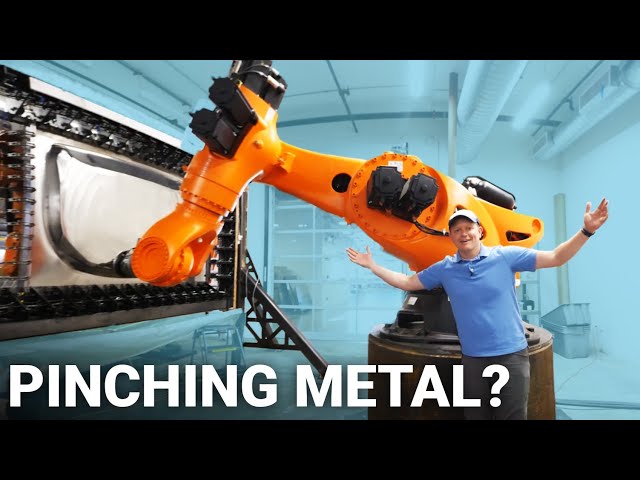
ROBOFORMING: Behind the Scenes as Machina Labs (The Future of Metalworking) - Smarter Every Day 290B
Smarter Every Day 2
0:00 hey it's me Destin welcome to the second channel here this is smarter everyday 2
0:03 this is the channel where I like to go deep into the Weeds on the topics
0:07 like more technical detail stuff like that it's also where I I'm a little more
0:10 laxed with the editing so I hope you enjoy this we're going to be at Machina
0:14 labs and we're going to be learning about Robo forming is what they call it uh
0:17 it's also known as incremental sheet forming
0:20 but we're going to learn all about this process
0:22 and how it works if you enjoy this the second Channel I'd appreciate it if
0:25 you would consider uh supporting on patreon that'd
0:28 be amazing or just I don't know subscribing
0:30 to the second Channel this thing's been going for a while here and it's slowly
0:34 getting a larger and larger following which is
0:36 fun but if you're into that feel free
0:37 to subscribe if not no big deal enjoy the tour with Ed and bobac here
0:42 at Machina Labs let's get to it okay we're all miked up so your Ed is
0:46 that right yes Ed May Ed May okay CEO uh CEO coo CEO CEO okay
0:52 what's your background man uh engineering um so
0:56 um as academically I was a computer engineer um you know spent early days most
1:00 of these working on machine learning stuff companies like
1:03 Google Microsoft um end up going to SpaceX
1:05 eventually um and as a software engineer there
1:09 when I kind of realized all the challenges
1:11 we had manufacturing stuff and how hard it is to change geometry and design uh
1:16 after that when I saw those challenges got
1:18 really excited about 3D printing uh so joined um I think Bob's coming to oh
1:24 hey what's up hey I'm Destin Bob nice to meet you nice to meet you Bob
1:28 cool perfect pronoun actually like to I've got
1:31 a friend named bobc yeah oh yeah yeah
1:33 okay so so now we have bobc bobc what's your title I uh had the technology
1:39 Partnerships at at Machina okay so he's
1:43 also a co-founder a co-founder you're a co-founder
1:45 okay so so you guys made it happen and my understanding is uh I I like
1:50 Machining and learning about stuff like that background
1:52 mechanical airospace engineering your mechanical no computer
1:56 science what's your background materials Mater oh
1:58 we're going to talk okay sounds great so
2:01 my understanding is you guys have a way to create shaped metal by forming it
2:07 by I don't know how to say it touching it in a very special way is what
2:10 I'll say but but you you come in and and you you I don't know
2:16 let me just draw it right here so my understanding is you guys have a planer
2:22 a plane of metal and you bring two tools in and you can touch the metal
2:27 like that and depending on the position of this what do you call these tools I
2:32 call them end defectors but you know
2:34 forming styluses U but yeah end Defector forming
2:37 end defectors okay got it so these two IND defectors when they come in drop
2:41 my marker so when these two IND defectors come in and they put Force right here
2:46 you can deform uh you can deform the steel in there and if you do it
2:51 in a certain way I'm assuming I I haven't got here yet but I'm assuming
2:54 the position of this versus this matters yes okay and so you can do things
3:00 that are really interesting yeah so I think the best analogy that I can think
3:04 of you know how a Potter you know you have a clay on your you know kind
3:08 of turning table and the Potter kind
3:09 of pinches the clay with their finger and slowly
3:11 deform it that's what we're trying to do with sheet um but you know it's
3:15 a very strong sheet and you know requires
3:17 thousands of Newtons to deform it but it's
3:19 very similar so the angle between these two
3:21 tips when they vary it changes your wall angle uh the amount of pinch Force
3:25 how much force you're applying also changes how
3:27 much you're deforming the sheet um so we
3:30 something complex happens between the two tips it
3:32 can be you know defamation with the with the pinch it can be Shear it can
3:36 be stretching there's combination of different mechanisms happening
3:39 until get you a part that you want
3:41 so we're I you are playing in the really fun area of the stress strain
3:46 curve like you're you're going plast past plastic
3:49 deoration and so my understanding if if I
3:52 let's just let's just go here so like let's say steel so steel we're going
3:56 to go up uh and then we're going to yield it and then we something like
4:00 that is that right yep correct well you're perfect high you know everything no I
4:04 don't I don't know everything so when you when you're pushing on a metal you got
4:08 what which one is this this is strain right no this is stress this is stress
4:12 okay stress strain strain okay Bob back I'm
4:15 coming over and looking at you now so
4:17 stress strain curve I'm going to just give you that so when we start deforming
4:21 the metal we get to right here and we get yield and then we get permanent
4:25 deformation right there right plastic deformation
4:28 but the in theory the the plastic deformation starts even
4:35 earlier but on a macro scale starts up there and generally as a rule of thumb
4:40 you do the 0 2% let's say type of thing then you define a yield
4:47 for yourself that's one going to be
4:49 my yield strength there so just by telling me that I learned that you know a lot
4:53 about fracture mechanics right because you you
4:56 start getting yields down here and stuff right
4:59 yes yeah okay okay we're going to be
5:01 able to talk I think this is going to be really fun so so what
5:04 do you do when you when you push these two IND defectors in together so I
5:08 I imagine you have many different things you
5:10 can do you can start mushing and molding
5:13 the metal that's the Potter wheel or the Potter uh metaphor right yeah yes you
5:17 can either push them together um and then
5:20 obviously like the area underneath expands um
5:23 but they get thinner the sheet gets thinner
5:25 but also like usually depending on the what wall angle you have you usually have
5:28 the tips actually slightly let's say we started
5:32 forming right uh you usually have the tips
5:35 slightly off right you have a tip here and a tip here between the two wall
5:41 angles like they don't necessarily need to be
5:43 on top of each other depending on what wall angle you're forming and how much
5:46 your thinning you're trying to create you change
5:48 the angle between the tips I see I
5:50 see so so if okay I I understand what you're saying I have no idea how
5:54 to point to this piece of metal and explain it but I'm guessing you have
5:57 tools we can look at we can see the robots downstairs doing the same same thing
6:00 should we go do it yeah let's do it does that work for you yeah oh
6:02 yeah okay cool here's your cap y thank
6:04 you great thanks for being willing to jump
6:07 in and go for it of course this be F you should like if you
6:10 are interested this is one of those that this is a cool thing yeah you might
6:16 want to know about this you should like this is tintic service steel okay so
6:22 it's not magnetic but then when you do
6:25 the forming because you're kind of changing how
6:28 the metal is structured then the formed areas
6:32 are becoming magnetic how does that work I
6:35 I don't I guess I don't understand how
6:38 a metal becomes magnetic so the the amount of work you put into the metal
6:43 induces some phase transformation into the metal like
6:46 your structure is essentially changing and that makes
6:49 the metal magnetic really yeah can you change
6:52 that based on how you work the metal how much work you put in determines how
6:56 much transformation you have and then oh it's
7:00 it's a direct correlation correlation with that oh
7:02 wow I did not know that so that in fact if you look at some
7:06 of your kitchen sinks and you put magnets in there and if it they're good
7:10 quality and what depending on you would see that oh it's magnetic here Etc so
7:16 so it's a known phenomena so my fellow
7:19 Metals guys will say oh yeah that's strain
7:21 induced you know transformation so it's it's well-known
7:25 phenomena but now with this technology you can
7:27 actually control it oh really you can dial it in you can dial okay that's pretty
7:33 interesting but but these parts traditionally would
7:36 be made with large large uh what do
7:39 you call them molds or mandrels yeah dyes or molds dyes yeah well some of them
7:45 cannot be made using dye so you have uh the video you have around stamping
7:49 so this one if you make a mold for it then this part gets stuck
7:53 on a Dye oh I see right because then there's going to be mold behind
7:56 and then you have an overhang angle here so the D will can you is this too
8:00 heavy to pick up yeah no pick it up it's just 2 millimet sheet can you
8:04 hold it right there please this is one MIM 32,000 32,000 yeah so so I see
8:10 what you're saying so it would get stuck on a die okay stuck on so now
8:14 with our technique the robot can get
8:16 into the part and actually form in the overhangs and um that allows you to do
8:20 things that stamping cannot easily do interesting unless
8:23 you comp create a very complicated die
8:26 that falls basically opens up into pieces afterwards
8:30 I see so so you you have access
8:32 to to more interesting geometries but the trade-off
8:36 is it takes a little more time to make the part it takes a little
8:38 bit more time to make the part but if you take in account the fact
8:41 that you had to make a mold to make the part then in a lot of cases
8:46 up to even thousands of parts we
8:47 faster really right because you can start making
8:49 the part you know two hours after your design is done with the mold you have
8:53 to go through iterations on the mold and usually the mold the design of the mold
8:56 is also slightly different than the design
8:58 of the part right because the sheet has
8:59 a spring back you spam bit it comes off it moves again right so your mold
9:04 is usually different than your than your actual
9:06 geometry just not the negative of your geometry right so you have to go multiple
9:10 trials potentially on the mold there simulation software
9:12 that helps you get close to what the mold needs to look like to get a certain
9:16 part but they're not super super accurate
9:19 so for some complex geometries you have to do multiple molds so by the time
9:22 you're going through those iterations you're spending hundreds
9:25 of thousands of dollars you get your part you might be even FAS just forming
9:30 with us but then once you're forming the part
9:31 obviously we're slightly we're slower than stamping stamping
9:34 few seconds you get your part so this is great for development and low rate
9:37 initial production yes I think that's the first
9:40 area that we're going after but you'll be
9:42 surprised where where the break even point is
9:44 it's further down the the chain than than
9:47 the the chain you think you know we were talking with Tesla a few few uh
9:51 few weeks ago and they spent $150 million on a Stamping Plant in in toson
9:56 right um so $150 million meaning that like
9:59 you have a very huge facility the stamping
10:01 presses you have to have area for storage
10:03 for dyes so once you start thinking about the full cost that it takes all
10:07 the equipment machinery to die and then the equivalent
10:10 at how many cells can we buy
10:12 with our technology then the throughputs become very
10:14 close interesting right so but but you're right that it makes a lot more sense
10:19 for you know lower volumes and that's
10:21 where we start right interesting yeah I want
10:24 to see the machines yeah let's go we do it yeah let me grab my bag here
10:27 that's actually it's a funny thing we're
10:28 you're doing a special project we we're you're
10:31 going to know more about it uh in the soon but um we are forming
10:35 a hood of a car over there the hood of a car yeah yeah I actually
10:38 was reading up on this technology and my understanding
10:41 is like I think Ford helped develop
10:44 it a long time ago is that true or is a little different so there
10:47 is a there's academic Legacy probably I would
10:50 say 30 years of academic Legacy uh some
10:54 of those folks are actually advisor to our company
10:55 some of the bigger researchers in the field
10:58 like Northwestern has been working on it
11:00 uh some folks in Europe have been working
11:01 on it um but then some corporations like I think Ford Boeing Nissan did some
11:08 R&D work in this um but nothing really
11:12 commercialized out of those those efforts so we're
11:15 kind of the first people who are bringing
11:16 it commercially out there and there are few
11:18 enablers we applied like you know being able
11:21 to model process using data as a poos to relying on physics Bas simulation um
11:26 using more cost-effective systems with robots as opposed
11:30 to building very complex customade systems so there
11:32 are a few enablers we're adding to it that kind of made this possible
11:36 in a commercial software and and software yes yeah
11:39 and that's where you come in uh that's right yeah yeah yeah okay um so the yeah
11:45 the software side is is yeah the other piece of it which is one
11:49 of the core enablers uh even though I
11:51 come from a software background I have been I've
11:53 been in manufacturing for a long time right so uh before this I was at a company
11:57 called relativity space I was in in charge of a 3D printing team that oh
12:00 yeah um mayor um yeah so so been working on intersection of robotic software Ai
12:06 and Manufacturing for the past uh 10 15
12:09 years it's amazing it's beautiful like how close
12:13 can we get can we go to the frame yeah let's go let's go I
12:16 think that one is actually our design our geometry so you can show all of it
12:20 so you're running cuas uh we runas at the moment the robotic system is cuka
12:26 um but we also can use fanex so you can see on the other side
12:30 those are fanic robots y uh we are robot agnostic um those are yeah we pretty
12:35 much basically build the whole control system
12:38 for the robots from scratch so it's not dependent
12:40 on any features that the ca has it's pretty difficult to film yeah it's pretty
12:48 cool so it's like a dance can can I go talk to yeah of course gentlemen
12:54 come on look at this real quick oh
12:57 that's amazing it's different than I thought it's
13:02 actually pushing sorry I'm being rude I'm I'm
13:06 destined Mark what's up man nice to meet
13:08 you nice to meet you how you doing man doing well is it okay I
13:11 love your channel oh thanks I appreciate that I I love your robots is pretty is
13:15 pretty cool yeah pretty so you're Mark I am all right so what's your background
13:20 um my background's in composits actually um
13:23 but Bobak recruited me and found me and now
13:26 I'm a robots guy oh really you can switch just like that that it was
13:30 a steep learning curve I think but it's been a couple years um can you show
13:33 me what's happening over here yeah so
13:36 this is incremental forming yep incremental metal forming that's
13:41 right yep uh it's 2 mm aluminum sheet and there's one rope on on each side
13:45 and they're sort of pinching and uh it's a lot like um like a potter's
13:50 wheel sort of like spinning like that but here
13:53 the uh the tips are moving instead
13:55 of the work piece and it doesn't have to be round right you can sort
13:58 of push any shape you want and so layer by layer uh we're sort of stretching
14:02 and pinching and pulling uh whatever shape I want here out of this metal so
14:07 so the triangle here is coming out
14:10 of plane that's right which means this one over
14:13 here uh are there any Optical lockouts I need to be aware of nope you can
14:16 walk right up to it can I walk here yep all right thanks just try not
14:19 to get between the robot and the sheet you should be good yes sir so
14:23 so this one is pushing that's right so this R do you have a force
14:27 gauge on this IND Defector yeah there's load cells on both robots so you can
14:30 feel exactly what they're doing um can I show the that too or we keep it
14:35 on the screen here you can see over here what's going on so so I could
14:41 imagine here's the workstation here's this is
14:43 the forces that both robots are feeling right now
14:46 okay so which can you tell me what colors are what uh yeah there's uh
14:50 the Z component the inplane component and then
14:53 green is just the total okay um and so there's robot number one here is the one
14:57 that's pushing and then robot number two here is the support that's on the other
15:01 side it's pretty easy to understand the forces
15:03 pushing into the plate but the inplane forces
15:06 are the side to side forces as the thing
15:08 moves around there's what you could do is you could do this process with just
15:12 one robot and you could just sort of poke in metal and basically do a bunch
15:15 of work by stretching but the boundary conditions like it does it then you load
15:19 the whole thing up in tension right so what we're doing by having a support
15:22 robot on the other side is you pinch and so you localize all the force Just
15:26 Between the tips um which sort of reduces tension on the sheet um and makes
15:30 it so you can form a lot more
15:31 accurately that's amazing I'm sorry that I'm interrupting
15:34 you because I'm just very excited and I realized I'm being rude so I'm so
15:38 sorry all right so so if you were let's can we talk about that over here
15:43 yeah so if you were to not have this robot and only have the other
15:48 robot yeah do they have names um sometimes
15:52 uh these don't have names yet these are
15:54 one and two um but over there we have Jeffrey and Stumpy okay and over there
15:58 we have thas and princess that's fantastic okay so this is one and two so is
16:04 this two uh this is yeah this is the support robot this is robot
16:07 to the support robot yeah okay so um so one is pushing so I would expect
16:14 a positive force or compressive force on that one and this one do you if it
16:19 was just holding in one position would you
16:21 just hold the robot here until it fills
16:23 force from the other side so that you know that you are actually pinching we
16:27 get pretty fancy about about it where basically
16:30 okay should I talk about all this stuff
16:31 am I allowed to do that should just well should I let him do it since
16:35 ultimately his authority no no no I mean I I think I think Mark Mark knows
16:39 yes go ahead now continue sure yeah just
16:41 Happ yeah really there's control systems on both
16:44 of these robots where we can sort
16:46 of plan their nominal trajectory that just sort
16:48 of is the theoretical what they should be doing um they also like they feel
16:53 the forces and we use that to update
16:56 um to make corrections to the trajectory Bas continuous yeah so one of them is
17:00 correcting for its own deflection underload because they're
17:03 not infinitely stiff the other one is trying to hit a Target pinch force that we
17:07 set okay okay so it's it's an interesting
17:11 combo right you're forming parts that are like
17:13 half a supposed to be in the end like you're pinching a half a millimet sheet
17:16 sometimes I think this is a 2mm sheet so yeah you have two robots
17:20 on a pretty large envelope right so the envelope
17:22 is 12T X 5T getting two industrial robots
17:25 to be very accurate in this envelope is one task that we have to do
17:29 through a lot of kind of calibration
17:30 and proper kinematics um but then the moment they
17:34 start touching sheet the sheet were resistant so
17:36 and these robots are pretty noodle you can
17:38 kind of imagine every joint slightly deflects right
17:41 so there are controls and mechanisms that basically
17:45 uh compensate for that deflection to to so
17:47 the robot stays accurate under Dynamic load
17:50 right sometimes depending on what sheep re forming
17:53 it can be like 20,000 Newtons of force
17:56 that you're applying it's like as high as a weight of a truck on a very
17:58 very small end Defector on the forming side right so being able to and under
18:03 those loads robots sometimes deflect 6 7 mm right and you want to pinch a sheet
18:08 that's only 2 mm or half a millimeter so we have to adjust for that so
18:12 there's a control Loop that uses to force sta some of the other data
18:15 to constantly figure out how it can stay
18:17 accurate and and pinch the sheet the right
18:19 way but if I uh can you give me an IND Defector with your finger
18:23 like that just straight up so I can imagine if the two IND defectors are coming
18:27 in and touching each other do they
18:29 always stay perpendicular to each other or normal
18:32 they they depending on what all wall
18:34 angle they're forming and what is the thickness
18:35 of the sheet they might they basically they the whole um uh angle radius between
18:41 the tips is part of the part
18:43 of the forming process depending on basically what wall angle
18:46 you're trying but it is a sphere uh we have different tens tips there's a sphere
18:50 tip there's a flat tip uh depending what kind of effect you want to get
18:54 out of the part you might want
18:54 to use different end effect different radi as well
18:57 if it's a sharp crease okay so that detects the smallest feature that you can do
19:01 like you've done like quarter quar an inch
19:04 diameter or some very fine detail features
19:07 I think these are what 3/4 3/4 an inch diameter yeah and what is the thickness
19:12 of this plate again 2 mm 2 mm so like 880,000 wow can you tell
19:17 me about the uh the boundary conditions I'll call it I don't know what to call
19:21 this but the uh the frame yeah so you have a term yeah we call it
19:25 uh the fixture or the frame actually you were right we call it the frame she
19:28 filming frame um so you can see hydraulic
19:31 clamps all around that you know just creates
19:33 boundary condition for the sheet and holds it in place um we used to just use
19:39 this with clamps but we're going toward
19:41 the uh toward the future where it's automated
19:43 the robot can pick up a sheet with the suction cup put it in the frame
19:47 then the clamps automatically close hold the sheet
19:49 and then allows us for the sheet to not slip while we're trying to form
19:52 that's amazing um you can imagine in the future
19:55 you can also play with this boundary condition a little bit to let a little
19:58 bit of a slip right slippage or like uh defle I don't know there's there's
20:04 so much vocabulary here that I don't have right yeah so this is this is
20:08 a hard thing that's the boundary condition essentially
20:12 you you want to have a variable boundary
20:14 condition to adjust and accommodate for what's
20:17 happening during the forming process essentially got so
20:21 you control the amount of basic pressure you're
20:23 putting on the sheet uh from the classs
20:26 okay it what is what do you call it when if I were to take
20:29 a sheet and I were to touch in the middle I would get more deflection than
20:33 the edge is that edge effects is that what that's called or I we call
20:36 it like boundary condition effects that's what you
20:38 guys call it yeah but uh but you're
20:40 right that's something that you have to account
20:42 for um boundary condition affects the accuracy of the parts that you get so we
20:47 have a whole software stack that tries to account
20:49 for that right um so you form a part and then so you can imagine
20:53 you form apart you can then scan it actually the same robot scans it afterwards
20:57 to do quality um to figure out yes exact quality or I should just figure
21:00 out what it Formed to update the model and then it will like okay I formed
21:04 this these are the areas that we're off
21:06 that means maybe I should have pushed more in some areas and pushed Less in some
21:10 others and can manually iterate on that keep
21:13 generating data and then later create a model that will tell you okay in order
21:16 to form this geometry and this location
21:18 in the sheet you need to actually form a completely
21:20 different part and in the end you're going
21:22 to actually get the right part with all these things you talk about you might
21:25 overshoot here unders shoot here just like injection
21:28 or something all these processes have that what
21:31 is the what is the Beni of this you
21:33 know the Beni 3D print the boat that you print when you're testing a uh
21:37 you're testing a 3D printer do you guys have an equivalent or what is it
21:40 Mark like a cone a pyramid little thing just a cone yeah my favorite one is
21:44 the face now actually it just looks cool yeah it looks cool um and so you
21:49 guys will print that to test new software yeah um what are you optim we do
21:53 all kind we we can't decide we keep doing cool new ones um what are
21:56 you optimizing for like everything accuracy speed surface
22:01 finish um yeah all three at the same
22:04 time is is the is the hard part that's the Holy Grail yeah it was
22:07 hey nice talking to you man this is awesome dude I really appreciate it yeah
22:11 and this is going to go to next week it's going to get shipped to Chicago
22:17 fapte I don't know if you ever go to fapte trade show it's like a lot
22:21 of fabrication technology the machines Fabtech it's
22:25 like a biggest manufacturing show in the United
22:26 States probably after imts you're telling me
22:29 this now and it's next week now I want
22:31 to go and I can't go the same thing is going to go on a truck
22:36 get shipped back there oh really so
22:39 no installation not no pouring concrete this whole
22:42 thing is going to go is a big deal for you guys this is going
22:45 to be a pretty big de so can you imagine all the other cells if you look
22:47 at it they're all in concrete right and we had to actually if you go
22:52 around you will see the concrete that's under
22:53 the cell looks a slightly different yeah it's
22:56 new than the rest you need a foundation for no vibration yes to just hold
23:01 these things like I said sometimes they apply
23:02 Force as high as the weight of a truck
23:04 all that for just goes into the foundation
23:06 right um and and the regular warehouses
23:09 you do like you know 5 in of a like a 3,000 psi concrete if
23:13 it's best you have to do 13 in of uh 5,000 psi concrete to just
23:18 be able to and with rebar and everything to be able to uh counter the forces
23:22 with this new platform we're completely decoupling
23:25 foundational requirements so you can put this actually
23:28 on the this actually fits on the back of a little boy and you can kind
23:32 of ship it anywhere in the United States
23:33 that's cool that's very cool yeah man this is
23:36 like this is mechanical engineer geek Heaven
23:39 this is great one thing that's interesting to me
23:42 is you can see you can see the whole sheet deform if you look very
23:52 close the whole there is like a deflection
23:56 that you see obviously but then that's where
23:59 the the controls come in to accommodate for most what is the step over
24:05 on this particular run 0.6 mm6 mm yeah the face is 0.3 that's one of the many
24:15 knobs we can turn I see I see and so I assume the the lower
24:23 the step over the the better the surface
24:25 finish that's right yeah but then it takes
24:27 longer you know it's just adaptive kind
24:29 of step over so as opposed to Machining where
24:31 you go in kind of water lines we can potentially say just fill the whole region
24:36 right oh yeah so like when you go to a lower shallower wall angles just
24:40 increase uh decrease the layer height so you
24:43 get more layers and steeper wall angles have
24:45 less just like when you're doing CNC milling and you take a bigger bite bigger
24:48 bite slower bite whatever or smaller bite that's
24:50 cool so that end effector how much uh how much engineering went into that Oo
24:57 we probably went through I'll show you some
25:00 of the designs but we went through six
25:04 seven different designs for that end Defector from just
25:07 being the static stylus to different types
25:10 of coating that goes on the stylus what
25:12 the substrates look like can it take the forces and not Bend um doesn't is it
25:17 going to not shatter if we suddenly shock
25:19 it uh because it happens sometimes and then
25:22 does it need to move do you need a some kind of a bearing so
25:26 that it reduces the friction forces uh so we went through a bunch of designs
25:31 and this is actually designed there's like two
25:33 more designs Beyond this that we have done
25:35 so this is actually three version two versions behind so it took me a second
25:38 to realize it's actually rolling isn't it yes
25:41 so this is specific one does there are
25:43 other ones that we have that roll in different ways um uh like a ballpoint pen
25:48 yes exactly so this one is just uh I can't predict where it's going Mark you
25:57 have a complicated program so yeah it's
26:00 rolling along the pointing axis I'll say yeah
26:05 as you can see like if you changes the wall angle Z in in plane Z
26:09 also changes right the robot actually moves out
26:11 of the plane and in plane please explain
26:13 that so so the robot is not always in the same plane right as as you're
26:18 going in steeper wall angles it basically
26:20 moves around the forming forming T I see
26:23 so if if you're I so what what do you you call it the wall angle
26:28 yeah so like if if with respect to the with respect to the sheet what
26:32 is the angle of the the forming angle
26:36 it's basically the complement of uh draft angle
26:40 okay right I see that's awesome and you can see at the corners where it sort
26:43 of changes wall angle where the tip sort of goes in and out at the corners
26:47 it changes yeah like right here sort of at the bottom of the part you'll
26:50 see it comes out now and then it'll go back in oh so I see
26:53 so we're moving in the Z yeah like this wall is steeper than this wall
26:58 and now it gets steeper again so the tip sort of goes in and out there
27:01 to uh basically keep the tips perpendicular
27:04 to the surface that you're forming ah I see
27:09 so even though it looks like it's a 2d operation on any one slice it's actually
27:13 a 3D operation the whole way around so it's more not a helix but it's
27:17 a uh I don't know I forget the fusion 360 term for that but does that have
27:23 a turn I don't know I don't know might be this one is spiral they're
27:27 planer slice but the tips sort of move like this sort of depending on the wall
27:30 angle that you're forming oh really and we have some fancy non planer slices too
27:34 we want to talk about show you some the parts through that are non planer so
27:37 like you're forming on a curved section yeah
27:41 so now you're not starting from a flat
27:43 sheet you're forming from a section that's
27:44 already have forming in it now your robot
27:47 is actually going into a non-plan or Surface to deform and make a uh another
27:51 feature out of it oh that's awesome sweet so this is what's going to happen yeah
27:56 we're doing the face and then this triangle is the one that's just started over
27:59 there right now this whole thing is about
28:01 90 minutes um then it'll do this hexagon
28:03 part this one's actually um a spiral rather than layers mhm so there's no um
28:09 I feel it's a 1 mm pitch but it's just a spiral the whole way yeah
28:14 um and then all of these are actually chained together as a single operation so
28:18 the robots will do one and they'll immediately
28:20 go over and start the next one without slowing
28:21 down or that's interesting cuz when I looked at it on the internet I thought
28:24 you were going to do one plane and then just move in the z-axis and do
28:28 more and more planes but you don't have to do that we can do whatever we
28:32 can imagine yeah is it faster to do it you know one feature at a time
28:37 uh you can sort of hide the seam if there's no links like right here
28:40 there's a bit of a seam if you look really closely where we transition but if
28:43 I do a spiral then you won't find that on this part you transition meaning
28:47 you move up um like this one is just planer slices so you sort of do
28:52 one Loop and then you step in and you do the next Loop oh I
28:55 see um the other one there is pathed as a spiral so it's just a continuous
29:00 um sort of going a little bit deeper the whole is it also faster um
29:04 I guess a little bit cuz you don't have to turn around uh-huh um so yeah
29:07 that one it just kind of goes the whole way that's awesome yeah you're right
29:11 the face is cool yeah I like the face oh you might want some paper towels now
29:16 it's all good it's not uh dangerous
29:18 or anything it's just I get really greasy around
29:20 here too we're good Ed you don't have to worry about it it's just right here
29:25 okay I will uh thanks sorry about that yeah of course um this is actually
29:35 an interesting thing so like you know I told you like the robots as we were
29:38 forming they apply a lot of force and that sometimes caus them to deflect so
29:43 there's a period where we actually characterize
29:45 the amount of deflection the robot gets in each
29:47 joint and that's a Tracker right measures
29:51 the deflection and that allows us to model
29:53 the deflection and it count to what what
29:55 accuracy um we're constantly improving it I think
29:58 the total accuracy depends on the parts really
30:01 because it comes down to also the spring
30:03 back of the sheet uh so there's like coupled with the material uh so what we
30:07 are measuring we haven't I don't think we
30:09 have measured recently what how accurate the robot
30:11 itself can be I think the repeatability of the robot is2 mm so that's the that's
30:15 where we want to get to um but you know combined with the sheet depending
30:20 on the geometry we can go be as good as sometimes plusus one in a very
30:24 large part uh millimeters right you just it just blew my mind a little bit
30:30 there's a lot of math here so can is there a robot around this corner there's
30:34 a robot but it's not running at the moment but you to it okay so I'm
30:38 going to leave this here so leave this here can I walk there yeah of course
30:44 it's a it's a off St so if I understand what you just said like
30:48 there's many ways to arrive at this point with this linkage yes okay yes and if
30:56 I arrive at this point and a apply 5,000 lb in that direction right I'm
31:02 going to get a certain radial deflection here
31:04 yes I'm going to get a certain radial
31:05 deflection here that joint and there so what you just said is your code is
31:12 uh I don't know what the word is I I does the word homic systems mean
31:17 anything to you yes yes okay you have to also determine how you get there
31:23 in order to anticipate the deflection yes exactly
31:27 so so so I think what you're trying
31:29 to say is that then there's two types of accuracy like get the robot to one
31:33 point but then also accurately move from one
31:35 point to another while the forces are
31:37 changing on the robot is that what we were trying to get yes that's well well
31:42 no I wasn't thinking that far ahead I was just thinking the first thing so so
31:46 it's an incredibly complicated problem right yeah
31:49 it's I think it's basically bringing in Dynamic
31:51 load into equation of kinematics right so
31:56 with the load now there's an extra are like
31:58 okay The Joint A1 not only need to be at 60° they need to be
32:01 at 60.1 or 60.2 de depending if at the end theor is facing facing like a 5,000
32:08 lb horse right and including
32:10 that in the into the kinematic calculation that's hard yeah
32:14 it's it's fun it's a fun thing that our robotic team is foring up am I
32:18 correct in saying uh I'm not sure that this is true but am I correct
32:21 in saying let's let's say I'm determining because
32:24 of uh what I'm going to do this has
32:27 to be at Z is this 0 de or 180 what is this uh the tip
32:31 right now you can say 0 de like 0° so if this is at 0
32:35 degrees and I'm pushing into that are there
32:38 many different ways to set up the robot
32:40 to get there or is there only one way it can be set up no
32:42 so because we have seven axes there is
32:45 probably there's unlimited ways to to to get
32:48 to that point uh with different poses right so what do you do do you
32:52 pick a few things and say this always has to be here this always has
32:54 to be here no so there there's so
32:57 so many cool things you can just choose randomly
32:59 choose or you can optimize for example
33:01 for stiffness in certain direction that your force is
33:03 going to be so you say Okay move the robot and a rail so the joints
33:07 are the most stiffest combination to apply
33:10 the most amount of force without deflection um
33:13 so there's like you you have a you have a function to optimize at that point
33:16 right and you can kind of part of your creatics you can figure out what
33:18 EXA you want to do you're Wicked smart dude no I'm not yeah you guys
33:24 are you guys are awesome so was this an earlier version of the uh
33:27 this was actually our first this is as first sell I think like there are parts
33:31 of this our whole our team welded this together um we were kind of just doing
33:36 back of the envelope calculations and uh
33:39 this was the literally the first sale this is
33:41 the first sale it was funny because when we started the sell um we didn't have
33:45 a lot of money so we were like we went to robot manufacturers like oh let's
33:49 sell this 6 months lead time and it's going to cost you you know hundreds
33:53 th000 so we end up buying these robots
33:56 from automotive manufacturer these are the robots they
33:58 want to throw away they're like reached the end of their lives we don't need
34:02 it anymore so we bought them very cheaply
34:04 brought them in this facility they have been
34:06 since then they have been putting too much two twice the hours that they already
34:09 had they're still working which is good
34:12 it's actually yeah this robot can actually move
34:14 on a track there's morean roves on a track uh yeah it's is full seven aess
34:17 SP of them on both sides I'm in I'm in love with this place man those holes
34:23 on the top those are like early
34:25 on we're experimenting and we were like different
34:28 part sizes Etc so we didn't know what is it like a gen generalized sort
34:33 of a size that we can use so it was like you have a like
34:36 a magnetic drill drill holes oh next part's
34:39 coming in it's smaller let's drill a hole now
34:42 now that we have like a much better system so you see yeah so so
34:47 you love seeing this this this there a lot of nostal a Swiss cheese now yeah
34:52 over time what do you feel when you see this cell versus the new ones I
34:56 know I think it's going to come a long way um for sure um those are
35:00 days I mean we like we were like literally sitting on the ground putting holes
35:03 in the concrete to put things on the ground um yeah so but it's kind
35:07 of the good thing is this cell is actually one of our most reliable cell even
35:10 to this day really yeah it just went through so many trials that like it just
35:14 works the smoothest you just know how you know all the things so and this is
35:18 the what are the names of these robots you ended up calling these this one
35:22 is Stumpy and that one Jeffrey because
35:24 this Stumpy is a little bit shorter than Jeffrey
35:28 what is uh can you tell me about the IND Defector here this is earlier version
35:32 right yeah so can I stand here yeah of course um so the goal is
35:36 you know we really what we want to do is even though we are doing sheet
35:39 forming really our long-term goal is to build
35:42 what we call like a robotic Craftsman Like
35:44 A system that works like a Craftsman like you know you can pick up a forming
35:47 tool form it drop the forming tool pick up a scanner scan it drop the scanner
35:53 pick up a trimming tool you can see there's a spindle there so you can
35:56 pick up a spindle this one yeah and then that one too I don't understand
36:00 it the last one oh down here at the bottom yes both of them are spin
36:04 on that one is an an angle is that a uh is that a er20
36:08 that's like a tormach head or something what um yeah so the idea is like yeah
36:14 you can easily change it so you can see a tool changer here that that can
36:18 drop a tool pick up another tool and just move on to the next operation
36:22 right and that's kind of the we're imagining
36:24 these robots like really working like a Craftsman
36:26 that can pick up tools and different
36:27 things okay so you're not you're not pushing
36:30 like oh you're applying electrical contacts and then
36:34 you have the mill here yeah so you can like yeah once you pick up it
36:38 automatically connects through the electrical contacts and now
36:40 it's a the robot now has an ending Milling end Defector and then can drop
36:43 this pick up the forming in the vector go back to forming can you is
36:48 this the the current what do you call this the wrist or um so this is
36:51 a rest of robot but this is called the master tool changer so it's a master
36:55 and that's the slave the basically the picks up this light so you have indexing
36:59 pins to align it and you also align on the plane so you have total indexing
37:06 and then what what's going on here so
37:07 those are actually the the bearings that through
37:10 air pressure they lock into the tool okay so once the once the once it pick
37:14 up the slave this thing basically through air
37:16 pressure come out and then lock into the tool
37:18 so the tool will not fall oh that's amazing and and what is this you
37:21 told me but I I forgot so there are different connection so these are pneumatic
37:24 connections and these are electrical connections got it
37:27 um yeah will you show me the tools
37:29 or is this the best place for that or should we do that somewhere else
37:31 no we can talk about the tools I think uh so you can see right now
37:34 we do mostly forming and trimming so we do mechanical trimming um so you can
37:38 see that tool is an a spindle um uh that allows us to cut the parts
37:44 after we form them and then you
37:46 have different versions of a forming end Defector
37:48 so that one doesn't have the final end Defector that goes into it okay it does
37:52 the forming the one next to it it it does you can see that the end
37:56 Defector uh is right in there you'll look and pick it up let me give
38:01 you a it's really cool don't worry about the don't worry about the grease yeah
38:07 right here um you got it um trying to get the some of the so
38:14 your your tools are they carbide or is that too brittle um so we we tried
38:20 a bunch of material um right now most of our tools are the base of it is
38:25 carbide but then on top of it we have a coating um that coating is
38:29 slightly more complicated we have tried a bunch
38:31 of different things that's proprietary yes so can
38:33 you can B that's a coating that basically allows us to do many parts for many
38:38 parts without uh without basically destroying the part
38:41 or destroying the tool it's a pretty
38:44 simple tool isn't it yes so that that the end effector is pretty simple this is
38:47 one of our designs we have multiple designs this is some of one of the design
38:50 that we're working at them but then the coating getting to that that's a secret
38:55 sauce that that that took a while it took a while like you know 700 p.m.
39:01 running to UPS you know get this out you know and so
39:06 is is the goal that uh I'm just going to ask
39:08 a business question feel free not to answer but because you have
39:12 the secret sauce on the tools do you hope to sell the tools
39:14 is that part of it yeah I mean we we basically
39:17 the tool and all the holder so that's just the end effector
39:20 of the tool there's all the all the other parts that goes
39:22 into the tool that gives it some degrees of freedom um yes so
39:26 as part of the business we also provide the end Defector
39:30 um and the perishables and the perishables and the consumables yes um
39:34 but yeah I think really I think even though that's a secret
39:36 sauce it really also comes down to the software pieces that we put
39:40 together you know without the software if you get these T robots
39:42 to do some first heuristic path like a machining Milling path the part's
39:46 going to be inches off for forgive me I don't know what
39:48 the in in this application what is the word heuristic mean like
39:52 for example if you you say get the robots and run
39:54 them in just you know get the geometry slice it in uh
39:59 water lines and start forming it the final part is going
40:03 to be inches off of what you actually want really so you have
40:07 to really account for a lot of different things we talked
40:09 a little bit about deflection of the sheet spring back of the geometry
40:14 itself um and then the fact that it can also tear so
40:17 if you don't have put right amount of compression force between the tips
40:22 you might tear the sheet right so we get to the Cracker
40:25 limit and we tear the sheet so um combination all those things
40:30 are counted in our software to get you a part that's going
40:32 to be you know uh very close to the to your final
40:35 geometry and not like inches off um so that's I think where
40:39 the real Secret Sauce is the software piece um but allistic means
40:44 like you take everything into account is that what that means no
40:46 what I meant when I said heuristic is that like if somebody buys
40:49 a robot and says okay I'm going to do a Milling path
40:52 based on my heris stics it's probably not going to give you
40:55 a right path if you just like assume that like well I'm
40:57 going to do the the most simplest thing that I can do
41:00 the part is going to be inches off you have to actually
41:02 do a very non-intuitive path I see to get to the right
41:06 part that's what I that's awesome bobc do you do finite element
41:09 analysis on this stuff at the the pinch point between the IND defectors
41:13 we we started doing those back in the at the beginning uh
41:17 we used like the you know off the shelf tools like Alisa
41:21 those type of things generally speaking because you have to track
41:25 the the history of your forming and you cannot apply the usual you
41:30 know boundary condition simplification symmetry
41:33 those type of thing your run times
41:36 are going to become very kind of long and the computationally becomes
41:40 very expensive to to run those calculations so we're doing work on you
41:46 know accelerated ways of doing
41:48 the calculations developing you know circuits models
41:53 on top of the finite element package to be able to actually
41:57 have fast running tools that we can actually run that's awesome nin
42:02 thing about our process is as you're forming you're going to gather
42:05 all the data you need uh during the process right you can
42:09 use those data to not necessarily do finite element models right just
42:16 build an empirical model right instead of doing a finite element model
42:20 and that would not be accurate and it's going to take competen
42:22 time just run AP part capture the data and then over time once
42:25 you do thousands and thousands of Parts you can just use
42:27 the data to have a high fidelity empirical model it's not based
42:31 on physics laws it's not a fin out element model but it's
42:34 probably predicting it much better than final it's based on experience yes it's
42:38 like that's what no I was going to say that's the Craftsman
42:41 that that's kind of what Ed mention about the Craftsman like back
42:45 in the day they'll like okay work as an apprentice learn how
42:49 hard do they need to hit this thing get that learning and then
42:53 actually by the time they're they're there they they know okay I
42:57 need to hit this steel this hard this aluminum not as hard
43:00 there's that that's the real sort of approach and the strength because
43:04 all that data is being collected that's rad can can we go
43:08 back over to the force gauges sure is that okay yep hey
43:12 real quick just a little break here to say thank you to everybody
43:15 that supports smarter everyday on patreon patreon is the single biggest thing
43:21 that supports smarter every day and and just makes it where everything
43:24 levels out like I don't have to worry about month to month
43:27 like do we have a sponsor how's it going smarter every day
43:30 is supported by patrons in a huge huge way and uh I'm
43:34 grateful for that stability that you bring to my life and it's
43:37 not for everybody um but if you are interested in that you
43:40 can check it out at patreon.com smarter everyday if you'd like to chip
43:45 in on what smarter everyday is and the videos we kind
43:48 of make if you feel like this brings value to your life then
43:50 I'd be grateful if you'd consider that if not no big deal
43:53 I'm just excited to be exploring Robo form room with you here
43:56 this is amazing isn't it I think it's really really cool the software
43:59 has to be incredible so let's get back to talking with Ed
44:03 and bobac and let's see what they have to say you're you're
44:06 looking at the force diagr right is it is yes is it
44:08 running there's another part yeah we're doing a hood over there I
44:15 also like just highlight that you know if you don't have like
44:20 the the like we have an on-site machine shop that like
44:26 if you don't have that sort of agility in adopting and everything
44:30 in terms of getting stuff done like uh you wouldn't be able
44:34 to move this fast so like having that integration for us is has
44:38 been very key so it's
44:39 a partnership between robotic manufacturing and traditional
44:41 manufacturing is that is that just like like tools that we need
44:44 like if we try something doesn't work we go to our machine
44:48 shop here we're like hey let's change this angle and do that do
44:52 it really quickly and rapidly as opposed to you know having
44:56 to wait to do it so having that vertical integration within the company
45:01 has been CH is is cute super fast fast all right so
45:06 this is another Force Mo Force what do you call this Force
45:08 graph yeah so we're looking at the forces the total force
45:11 that the forming robot and the support robot the forming robot is the robot
45:15 that's pushing in the direction of defamation the support robot is
45:18 the second robot so R2 uh R1 is a forming robot R2 is
45:23 a support robot you can see that one more time please I
45:25 wasn't focused can you point again so R1 you can see it's
45:28 a forming robot and R2 is a support robot uh forming robot
45:32 is the one that's pushing in the direction of the defination and support
45:36 is trying to localize the defination just to that area that you're
45:40 trying to deform so the the full sheet doesn't globally deflect so
45:44 maybe I maybe I didn't understand earlier with Mark when I thought
45:48 I did so it's always going to be positive deformation or positive
45:51 force right on both robots well it depends on the on the on the frame
45:57 of the if you're talking about the sheet frame
45:59 one robot is forming in this direction another one applying force
46:02 in this direction I see so for basically the forces from the robot
46:08 should basically match the forces from the other robot plus the forces
46:12 that goes into the clamps right so the one robot is always
46:16 applying slightly less Force than the other so it's a it's
46:20 a complicated free body diagram because
46:22 you have planer deformation involved and not
46:25 only do you have planer deformation involved you have planer deformation
46:29 with a weird looking shape right and so that's why it's so hard
46:33 yes and that's why we also rely on empirical modeling as opposed
46:36 to try to really try to understand the physics to a very
46:40 small detail we we we understand it as much as we can
46:44 but at the end of the day it comes down form the part
46:45 capture the data and empirically model what's happening as OPP po who
46:49 try to really wrap your head around all the details that's going
46:52 on because between the tips I would say all three mechanisms
46:55 of defamation is happening you you have a little bit of Shear you
46:59 have a little bit of stretching you have you have all three
47:01 right so the three being um yeah sheer uh like the tension
47:08 compression tension compression is shear tension compression sheer okay can I
47:12 see what this one's doing real quick and then I'll come back
47:14 and see if I understand this better what what is the thickness
47:22 of this um so this is a 2mm aluminum sheet uh we are
47:28 forming a custom hood for a custom truck custom hood for a custom
47:35 truck whose truck is it your truck well you don't have
47:39 to say this is a secret project that's going to come up
47:43 so okay got it all is it uh am I is it
47:46 okay to show that we're doing it yeah you can show you
47:48 can show the track but I just likeing you you will uh
47:50 it's a full vehicle project that's going to that's going to be
47:53 come out at some point okay Ed question this robot's stationary this robot
48:00 has an additional axis the answer is embarrassing so this is
48:06 our second manufacturing cell why is that embarrassing well I'll tell you so
48:09 this is our second manufacturing cell uh we still didn't have enough money
48:12 to buy new robots so we bought them used and at the time
48:16 we couldn't find a rail in the market so we just
48:19 welded that and put it on a pedestal that's why it's called
48:22 Princess because it's on a pedestal princess is on a pedestal all
48:27 right you guys are you guys are likable that is massive that's
48:34 massive so this this I don't know if You' seen Titans um
48:38 this robot's called Titan uh the model of it and they can
48:43 they can apply as high as 20,000 Newtons of force really yeah
48:46 so sometimes when we do very thick sheets we're doing like 3
48:49 or 4 mm steel uh um it can be it can basically
48:53 applies up to 20,000 Newtons to deform the that's crazy so I
48:58 noticed it's going a lot slower on this thicker metal this it's
49:03 going slower because this is on an older version of the software okay
49:07 it's the same thickness as that one that you saw oh is
49:10 it it's the same thickness but in this specific she these robots
49:13 can do much thicker but uh it's uh this one is
49:17 the same thickness it's uh we are on wi1 that one is
49:20 on V2 so the controls have improved on that one so you
49:23 can go faster that's amazing that you've that you've upgraded that much
49:28 cuz it's fast over there yes it's all about like figuring out
49:32 how fast you can kind of command the joints on their Dynamic load
49:35 without over torquing them and kind of optimizing that get to the point
49:38 where we can have maximum acceleration without over toring the joints
49:43 as the load on the tip is also changing all the time
49:47 can you please say that again it's all about maximizing the acceleration
49:51 you can get at the tip at the end Defector without getting
49:56 an over torque on the motors right so in the earlier versions
50:01 We would be very conservative because we couldn't do that calculation of what
50:04 will be the maximum torque I can apply to this motor while
50:07 I maintain the accuracy so with the new version now we do
50:10 those calculations so we go as fast as we can and apply
50:13 as much as the acceleration that we can at the end
50:15 of vector basically pushing the motors to its limit before it over Tor
50:20 so does that mean that the software is robot specific because
50:24 you know the torque limits on each motor or is it parametric
50:26 and that you can parametric okay yeah the reason I keep flanking you
50:30 like this is because I'm keeping you and the robot in the frame
50:33 I'm not being awkward that's that's what I'm doing no let me
50:36 know I was I feel sometimes I feel like maybe you're asking
50:37 me to get out of the No No I was I just
50:39 figured i' just come out and tell you what I was doing
50:41 cuz it's like I'm just trying to sneak behind you or something
50:44 sorry about that so um it is parametric so you load each
50:49 individual robot and um you have torque limits on each robot
50:54 in the so you have a robot model you have a uh I guess
50:58 we call this the the part the model model has different features
51:02 yes and then do you also have to build in the I
51:05 guess you have to have two robots yes because I've seen
51:08 this done without a second robot where you just have like a rubber
51:13 pad on the bottom and then in that case it actually is
51:17 only z-axis yes is that true yes so in that case you
51:20 have only one robot and you can push it against the pad
51:23 in our experience that doesn't produce
51:26 accurate Parts you cannot properly localize
51:28 the deformation like I said it's really a tricky dance between
51:31 the two robots being able to get into the right angle with respect
51:35 to each other depending on what feature they're trying to form
51:38 and then depending on how thick the sheet is they need to counter
51:42 even with more Force the support robot need to counter even
51:45 with more force uh in a very surgical manner so we have noticed
51:49 that when you try to be like form it against um a uh
51:54 kind of rubber or something the part just doesn't end up being
51:56 very accurate because you always have a fixed force on the other
51:59 side or I mean a Rel is it hooks law applies
52:02 on the other side they're probably have some kind of I think
52:06 it's it's actually probably a little bit complicated because the the the rubber
52:09 is usually probably applying a little bit of compression on all sides
52:13 yeah I've never fully thought about but we realize that it's just
52:16 you can get very accurate what I like about you guys is
52:20 you're like you can do all the math you can do all
52:23 this crazy stuff but in the end it's going to do what
52:26 it's going going to do yes so let's just go rip something
52:28 up and and get that data and then fold it back
52:31 in and then lather rinse repeat do it that that that's like an I
52:36 would give kudos to Ed is really like okay let's do it
52:41 you know you can go and kind of try to figure out
52:45 oh let me figure out the forces let me figure but it's
52:48 so much informative when you do the actual part and kind of fix
52:52 the problems issues and then okay next one and capture those learnings
52:57 yeah I remember like early days we took the whole team
53:00 to a I don't know if you know Bobby Walden he's like
53:02 a very famous sheet shaper so he shap sheep shapes sheep shape sheets
53:08 with uh with hammer right so like like holds all the sheet
53:11 goes on their power hammer hammers it into shap does a lot
53:14 of custom panels for like like hot rods and old cars and I
53:17 remember early days um there's somebody I knew from a long time
53:21 I actually like worked in his shop for a little bit
53:23 I was like okay like we're we're forming this company we had
53:25 the early team like let's get him into his shop and these guys
53:29 Hammer sheet with their hand to really understand what's going on because
53:33 all at the end of the day I think matal does what
53:34 it does and if you think and then there's variances between batches
53:39 of the material uh some have higher strength some have lower strength
53:42 so you got to be adaptable um and a system who can just
53:46 look at what it did and constantly improved that's a system that's
53:49 going to win that's why humans still can do sheet shaping it's
53:51 very tough to was very tough for for for static systems
53:56 to do it other than humans right so you you guys just don't
53:59 you just don't suffer from analysis by paral what am I saying
54:02 that what is it analysis paralysis analysis paralysis yeah you just don't
54:07 do that you're like go hopefully I mean we want to be
54:11 intentional and thoughtful about it as well but I think there's a lot
54:14 of unknown unknowns when you step into physic physical world and you
54:18 start start getting those and understand those as you go through them
54:22 yeah that's great man I I'm I feel stupid cuz I've been
54:25 waiting my whole life to say paralysis by analysis and I boted
54:28 it but it is what it is dude this is awesome man
54:33 how long will it take to make a part like this can
54:36 I go right here yeah just um yeah I think that would
54:38 be good I think that it's not going to you can see how
54:40 much far it back comes back and then I won't uh
54:44 right here yeah I think it should oh yeah you can kind
54:46 of see the line actually I'll just let it come to me
54:50 here so depending on the so the full frame so this is
54:54 a 10t frame um right now this one is very going going
54:58 very slow so this one takes probably 15 hours to finish but we
55:04 have done a full frame with the newer version of the robot
55:07 in less than 5 6 hours so so when you get done
55:12 with this thing you're going to have a fully formed sheet
55:16 this is going to be a hood for a truck yes it'll be
55:19 done how do you get it out of that do you like
55:21 jigsaw it out or so the same robot after it's forming it
55:25 scans it and then Maps the scan to the trimming path so
55:30 it aligns the trimming path to the scan the best way picks
55:33 up a trimming end Defector and trims the part up but once
55:37 you start let's say let's say I start trimming it that's a heavy
55:40 part mhm how do I not drop it does the other
55:43 robot hold it while it so that's maybe something we can do
55:46 in the future for now what we do is we leave few
55:48 tabs in so you leave few tabs around the part and then technicians
55:52 come in and cut the few tabs and take it out
55:54 but we want to make sure the robot at least does the accurate
55:56 cutting um so that the before you remove it before you remove
55:59 it and then you leave few tabs in and then you cut
56:01 those tabs and clean those tabs up dude it's really cool yeah
56:04 do you do you give a lot of uh you give a whole
56:07 lot of Tours don't you um not actually a whole lot really
56:11 yeah I think we have been like really heads down for a while
56:14 and then I think just more recently as we are kind
56:16 of expanding the operation I think we have been you know we have
56:19 been asking people to come and see that we used to do
56:21 we did a most of our customers even our customers when we
56:24 have done parts for them when they come here they're like
56:27 this is much bigger robot than I thought in the video it looked
56:30 like it was pretty small they come here it's like 30t X
56:33 30t sou can you can you hold this yeah can we use
56:36 it I'm just going to show how big it is it's big
56:41 thanks yeah that does the scale uh bobc can you take me
56:46 to the metal like your stock like do you have sheet stock
56:50 somewhere yeah yeah there's some here they're like a distributed all over
56:55 the place but these these are the ones that have been
56:57 of these are the ones that we've cut to blank to the size
57:01 that we want to do for the customers and they're ready to go
57:04 and everything is you know labeled you know so that we can
57:08 have full traceability from the start to the end of the part
57:12 but will you tell me uh the difference is this galvanized this one
57:16 seems to be yes this is the galvanized steel yes so will
57:20 you tell me the uh the difference in working galvanized versus aluminum
57:24 versus stainless I mean are there different things that you have to take
57:28 into account so that the amount of like a pinch that you
57:31 apply the kind of the rate that you form so we've started
57:34 forming for example like in The Other Extreme like titanium and you
57:39 do that at room temperature maybe you have to like go slower
57:44 for those type of metals with the forces that are involved compared
57:48 to like that 2 mm aluminum or the one that you saw
57:50 earlier that's kind of like those type of pro the that's where
57:55 the function of the a function of the metal itself now if
57:59 you have like a galvanized steel where you have to be conscious
58:03 of the the the coating that you have on the metal then
58:06 you have to also choose about think about like what type of end
58:10 effector do you use for that so that you don't damage
58:13 the the coating as much so if you had titanium and you have
58:19 the ability to cut you have a trimming IND Defector you called
58:23 it like back in the day when they were building the sr7
58:26 71 they didn't know how to work titanium yes I saw
58:28 the glimmer in your eye to this day I don't think they can
58:31 easily form they can easily work titanium really yeah I think it's
58:34 a tough just a tough alley to work I mean we figured
58:37 out how to machine it but still forming it is very tough
58:40 unless you elevate temperatures and room temperature is really tough to form
58:43 T but in theory could you use this technology to form it
58:48 and then go in and cut the rivet holes yes and are
58:51 you very excited about that I think that's that those are
58:53 the areas that you're the most excited like enabling alloys were just impossible
58:57 before you know I think for example for Hypersonic you you said
59:00 SR71 but all the Hypersonic applications as you know the focus of attention
59:04 a lot now with some of our customers they have a very
59:07 hard time forming skin of these aircrafts out of uh you know
59:10 high temperature Alloys titanium in canel
59:13 we're talking about refractory Alloys um
59:17 and yeah know we're excited to be able to like just form
59:18 and cut uh in one shot without having to spend like you
59:22 know you know hundreds of millions of dollars in let's say plastic
59:26 super plastic forming uh equipment yeah uh okay so do we have
59:29 a titanium part we can actually show you probably yes so let
59:32 me find yeah let's do it I do have uh I think
59:36 that's a we just want to make sure it's a part that's
59:38 not a customer part yeah that that's the but I I have
59:42 the nickel one but that's a customer part I think we have something
59:45 that might I'm pointing the cameras at the ground so I don't
59:47 see anything can I follow you here it's fine can I uh
59:52 what is this all right this is our assembly room so we
59:54 assemble the frames the electron ICS um the tool Changers so this is
1:00:00 where we assemble all the different pieces that goes into the cell
1:00:02 oh that's awesome so we actually these are the clamps so
1:00:05 these are the clamps yes so we machine them all steel yes
1:00:09 the clamps are steel water jet water jet and I think they were
1:00:13 and then they coated them the anod powder coat them and then
1:00:16 I go some titanium for you is it okay if I look
1:00:19 at this stuff yeah so you can kind of see there are
1:00:21 different end effectors um uh is that a is it a Thrust
1:00:25 bearing no that that one I think is there so that's
1:00:29 a needle bearing for a for one of my ectors if you would
1:00:35 prefer I don't show stuff just no we can we can we
1:00:37 look at it in the end I think I think people this is
1:00:39 going to be outside anyway but you can see this is
1:00:41 a bigger T you can see a needle bearing inside of it um
1:00:43 yep yeah so that's interesting I would have expected a Thrust bearing
1:00:47 there yeah yeah so I think uh maybe we should we should
1:00:49 we should talk to our uh our engineering team if you get
1:00:52 some of your advice that would be great oh no that's that's
1:00:55 interesting and you can kind of see so these are actually so
1:00:58 we know how we talked about we create different um there's different
1:01:02 versions of the tool so we kind of this is for the ballp
1:01:06 ballpoint version this is how we kind of measure and grind
1:01:08 the tool down um so we have our own grinder so we
1:01:11 build everything we said like the tools are all built here oh
1:01:14 man yeah you can make custom carbide tools yes is this that's
1:01:19 awesome so when I saw the video I didn't think you were
1:01:23 actually rolling I thought you were I thought you were hammering yeah
1:01:28 can you do that as well you could actually one of our plans
1:01:31 down the road is um as we are going with the thicker
1:01:33 sheets and higher strength sheets how can we bring the yield
1:01:37 of the sheet down one way is ultrasonic like you maybe can
1:01:41 apply some kinetic energy to bring the yield down um or you can
1:01:45 locally heat it so you can vibrate the sheet as you're working
1:01:48 it is that what you're saying yeah basically just like basically like
1:01:51 same as hammering but like much more much faster and much uh
1:01:55 uh basically get that a kind of ultrasonic um um kind of uh
1:02:00 frequency to to hit the sheet with the end Defector with the end
1:02:02 Defector golly man yeah it allows you allows you to go
1:02:06 through the higher higher um higher strength anded you were one
1:02:09 of the Most Fascinating People I've ever met no is this titanium
1:02:13 this is titani cut out the part from the customer cut out
1:02:16 but you can see kind of the rest of the sheet it's
1:02:18 actually pretty thin sheet super strong how much does a sheet of titanium
1:02:22 like this cost this one is expensive okay upset uh that's incredible
1:02:28 and so why did you why did this is all not part
1:02:32 of the part but this was kind of like the form I
1:02:35 don't know what the word is I think they can we set
1:02:37 it up here please yeah yeah and we kind of we you
1:02:40 know I think the the anal good analogy for folks who
1:02:42 are like familiar with 3D printing support is a support support structure
1:02:46 for a forign part interesting and you do that for what reason so
1:02:52 we do that so that basically we have have um enough we create
1:02:58 enough stiffness around the part that as we are forming it
1:03:01 the part is not buckling got it right okay so cuz I'm
1:03:05 pushing here okay wow that makes sense because if I'm pushing right
1:03:11 here if I'm so steeper angles give more rigid Parts yes ah
1:03:18 and the deeper it is it becomes rigid that no no I'm
1:03:21 like that that explain and the deeper it gets also you are more
1:03:24 rigid because have to overcome a little bit of plast elastic deformation
1:03:28 before you get to plastic yeah so like if you want to do
1:03:31 a very shallow part it just doesn't work you're just going
1:03:33 to you're just going to push the part in and out once you
1:03:35 go further deep then you create more rigidity you you can easily
1:03:40 overcome the initial elasticity and get to plastic regim faster right my brain's
1:03:46 on fire so can I can I try to say what
1:03:49 you said but I don't have the words you do no go
1:03:52 for it so like if if if I have a a sheet
1:03:54 like this and I put right here it's going to deflect yes because
1:03:59 of like the co what what is it cosine or tangent yes
1:04:03 is tangent right so it's going to deflect easier you have more
1:04:07 planer deformation but if I can rock that up the more I
1:04:09 go like this I'm going to be in straight up compression yes
1:04:14 but I can't do that cuz I'll Buckle the sheet yes so
1:04:17 I have to find an optimized position that's best for the part
1:04:21 yes and also you're probably doing stuff about tool path too yes
1:04:25 yes is that how you do it yep now you can start seeing
1:04:30 how this whole design of space around the part is also affects
1:04:35 the accuracy of the part right so you can start thinking about
1:04:38 how you can generatively come up with this design space using the empirical
1:04:43 model empirical model to come up with something that's going to give
1:04:46 you the best results right you want certain stiffness in certain direction
1:04:51 because the parts have its own the stiffness kind of properties so
1:04:55 the idea is like once you have all the data you can
1:04:57 combine all these things to come up exactly automatically suggests to you
1:05:00 what the what the what the scirt needs to be like have
1:05:03 you taken uh this is a dumb question but I I don't
1:05:08 really understand what it does to the material cuz the material has
1:05:11 to flow yep maybe flow is not the word but it has
1:05:13 to move flow is the right word flow is the right word
1:05:17 so if if I'm making have have you taken a plane and then
1:05:22 done a a a sweep like that and then did dog bones
1:05:26 along the way to see what it does to yes I think
1:05:30 that's work that have been doing with some of are you allowed
1:05:33 to talk about that just general terms like we were benchmarking some
1:05:38 not titanium necessar not yet but benchmarking against hydroforming um some some
1:05:44 Aerospace grade aluminums and we did form the same geometry using our process
1:05:52 our Robo formed Ser geometry and a hydrofor process and we took
1:05:57 dog bones with an independent sort of a tension test on each
1:06:02 spot tension sp sp hardness um like you said it was like
1:06:06 different wall angles different directions so you can kind of characterize how
1:06:10 much work hardening you put in into each uh depending on the direction
1:06:14 and the wall angle like you said like you know you
1:06:15 can create a kind of almost a uh what I call
1:06:19 that is that a as a geometrical name now I can I where
1:06:24 like it's constantly increasing yesal a name for I I anyway
1:06:31 but yeah getting different wall angles so you can see how much work
1:06:33 Harding you're getting based on your wall that's amazing and so uh
1:06:37 did you get any information out of it that you're willing to talk
1:06:40 about yeah yeah no it's um it's funny like early on we
1:06:43 were asked you know customers were kind of had experience with 3D
1:06:48 printing know 3D printing if you asked like if you had 3D
1:06:52 printed this part and you had asked like like hey what what's
1:06:57 the properties there I'm like I don't know where where was it
1:07:00 printed which location in the chamber all that stuff with this process
1:07:04 you know you're working the metal you're working the metal be more
1:07:08 than this so the strength is going to be higher and in metals
1:07:13 like you generally increase the strength your elongation ductility comes down so
1:07:18 the the general outcome was with our process you work the metal
1:07:23 more so the strength is higher at the end of forming let's
1:07:26 say compared to hydroforming or stamping but then your elongation is going
1:07:30 to be lower from them and that that was generally for the aluminums
1:07:34 were like you're 20 to 20 20 to 30% stronger using
1:07:40 our process to make the part obviously your elongation and the amount
1:07:44 of energy that you can absorb with the system might might be
1:07:48 lower okay so please explain hydroforming because I was shaking my head
1:07:53 but I'm not a th% sure I understand hydr forming so is
1:07:57 that a competitive process it is a yes yes and no um
1:08:03 it is a process where you do need a tool or a dye
1:08:07 to make the parts so our process you don't need any you
1:08:11 just have those in so you do need that tool whether you
1:08:15 have a bladder on top of it or not so you you
1:08:18 would have the fluid on the top with a bladder you put
1:08:21 the metal there you press and you kind of conform to the shape
1:08:25 of the the the D that to think of it stamping
1:08:28 except one side is fluid fluid pressure okay right so you're pushing
1:08:32 against the D with fluid I see um so it's a old
1:08:35 process I think it's a process that like people try to use
1:08:37 when they want to get rid of at least one D I
1:08:39 see and sometimes it gives you it allows you to do a deeper
1:08:42 draw uh depending on depending on the alloy uh and the geometry
1:08:47 um but in that in this Cas specific case the customer wanted
1:08:50 to replace our process with that so we kind of did some
1:08:54 of the tensil templ sample tests uh uh benchmarked against that I
1:08:58 see yeah so with hydroforming yes you have a die on one
1:09:02 side just like you said and then you you have that bladder
1:09:05 or I've even heard of explosive hydroforming um but you still have
1:09:09 to machine that dieye yes and what you're saying is you don't
1:09:13 have to do any of that it's all software load yes so
1:09:16 as you develop a faster routine with your software tool path you
1:09:21 have the ability to get to prototype faster is that true yes
1:09:25 so I mean you get your first part hours after your design
1:09:27 is done here with Hydro foring you still have to go through
1:09:30 die design like your part is one thing now you have
1:09:33 to design your die manufacture your die
1:09:35 go through multiple iterations because every
1:09:37 time your die is basically not giving you the right part now
1:09:40 go machine another die versus with us is just change the software parameters
1:09:43 and go again um so usually get like you know I even
1:09:47 with Hydro forming I think the fastest customers we have had we
1:09:49 worked with SpaceX for example or like one of the fastest out
1:09:52 there like Tred to really push the vendors to get to the parts
1:09:54 fast like two to three months at least before you get
1:09:57 into your parts and you're doing it in a day yeah in a day
1:09:59 you can be done I mean there was like parts that we
1:10:01 got from customers they send us an order at like 2:00 p.m.
1:10:05 and then 10:30 the part started run 10:30
1:10:07 at night the part start running the next day
1:10:09 we have the part yeah that that's something
1:10:11 that's something to be proud of um okay so so if I'm looking at this sheet right
1:10:15 here is the material the thickest it will ever
1:10:18 be right here in the plane and anytime I
1:10:21 work I'm having to move material so it's going
1:10:23 to be thinner yes here is that true yes so I think the good law you want
1:10:27 to apply is that kind of conservation of volume
1:10:30 right so as you're going on a higher wall angle the cosine of your wall angle
1:10:36 or S of your draft angle times the original
1:10:39 thickness roughly gives you the thickness you're going
1:10:40 to get in the part can you say that slower please so cosine of the wall angle
1:10:45 or the sign of the draft angle times the original
1:10:48 thickness of the sheet will give you the thickness
1:10:51 you should nominally get okay in that sitation
1:10:53 obviously depends on the material properties and how
1:10:55 it flows but roughly that gets you there
1:10:57 but this is only if you almost form the part in water lines so I can show you
1:11:02 some other parts if you form the part in stages that's what I was about to say
1:11:06 then you can play so if you were to push if I were to start right here
1:11:09 and I were just to push up yes then I would have parts of it that are
1:11:15 that would still be thick there and basically if
1:11:19 you go deep first you could make a thin
1:11:22 wall angle yes and and then you could have thicker uh features at the bottom is
1:11:27 that right yes actually let's go I'll show you on the on a I can show you
1:11:31 on the um on a whiteboard okay so so
1:11:36 you can imagine so okay so you originally have
1:11:38 a sheet right and you have certain thickness let's
1:11:41 say we call it t Okay um and then you're forming the part so that same part
1:11:47 now it has something like this right yeah so
1:11:55 now now you have this Alpha angle angle this was T and this is zc T Prime
1:12:01 mhm you can kind of if you do
1:12:03 simple trigonometry T Prime is cosine Alpha uh time
1:12:09 T okay right to your point it in reality will end up happening is this is T
1:12:15 and this is not this gradually happen so just one second let me let me look
1:12:19 at this so T Prime is this or this T
1:12:24 Prime is this thickness T is this thickness okay
1:12:28 got it yep right and and this is
1:12:31 obviously Alpha and that's if you start working it
1:12:34 from here and you're drawing it as you go it out yeah but if I were to start
1:12:37 here and push there then I would expect
1:12:39 this to remain thick so in reality even when
1:12:42 you do this you usually have a little bit of in reality you can I cut do
1:12:47 your thing so you in reality actually looks like
1:12:50 this right and then you get thin and then
1:12:53 you get thicker again at the end and this is going to become your T Prime so
1:12:57 you have a little bit of thick and thick on both sides yeah but so what I
1:13:03 was going to say but again the the just
1:13:05 law generally applies but in in instead of forming
1:13:09 if I form this this way that's what I'm going to get if I form it let's
1:13:15 say I go and form first I form in order to form that wall ball first I
1:13:20 form something like this and this is let's say Alpha and then I formed this wall
1:13:29 into this push this out and this ises so
1:13:35 you would bring the IND Defector normal to the wall and then push P it out so it
1:13:39 becomes a threedimensional brake it comes from break
1:13:42 or even like even like if I like water
1:13:44 line this out not necessarily just push in water
1:13:46 line this form it out right like start
1:13:49 from here and assume this is now my second
1:13:51 forming surface and start forming that and this is
1:13:54 becomes base then the this thickness in the end
1:13:59 is T will become T initial T time cosine Alpha cosine beta which means that you
1:14:10 can actually control the thinning depending on what
1:14:13 stages you're going to have in your forming process
1:14:15 it's it's a that's that's the first Bend
1:14:18 and that's the second Bend second B so you
1:14:19 have yes and then cosine Alpha cosine beta
1:14:22 is usually smaller than cosine Alpha plus beta so
1:14:27 now you you control thinning right you're now
1:14:29 actually thinning the material less but it depends
1:14:31 on the order that you get you got there
1:14:33 yes yes that's fascinating so so a lot we call
1:14:36 this actually restriking restriking yeah you strike the part
1:14:40 restrike it then to another shape and now
1:14:42 you're Distributing thickness a little bit better so
1:14:45 the part doesn't thin if you're doing a very
1:14:48 high wall angle so why would you want
1:14:50 to do that why why would you want a thicker
1:14:53 wall thickness um yeah what you see what I'm trying to say if you have a high
1:14:58 angle the the wall thickness probably doesn't have
1:15:01 to be incredibly the problem is so what is
1:15:04 cosine of 90 one uh cosine of0 1 cosine 90 Z 90 Z so that means that if
1:15:10 I push this to a 90° wall angle I'm going to have zero this is going
1:15:14 to tear ah I see right so so in order to be able to do 90 and overhangs
1:15:22 then you have to go in multiple stages
1:15:25 to to distribute the thickness a little bit better
1:15:29 so you're managing it's also going to determine whether
1:15:33 it's sheer or whether it's uh tension as well
1:15:35 yes yes and so you have to look at more Circle yes mhm more Circle 2D
1:15:41 or 3D more Circle this is 3D so could you do another thing could you do could I
1:15:49 restrike make a plane here and then instead
1:15:53 of having a tool right here could you ever
1:15:56 have a situation where you bring a whole
1:15:58 IND Defector over that's a like a plate yes
1:16:01 or like a or like a line and then you could actually truly do a 3D break yes
1:16:07 can you do things like that so you're actually
1:16:09 touching up on the right thing that's that's why
1:16:11 we're talking about the PHT and uh in mechanical
1:16:14 engineering so to do a proper Bend you
1:16:16 need three points you only have two points
1:16:19 so yes if you really want to constraint it
1:16:22 then you need a line or something that gives
1:16:24 you three points um if you haven't done
1:16:26 that I think our goal is really stick with the idea of like you only have two
1:16:30 points figure out the math figure out
1:16:32 the model that gets you the right thing because
1:16:35 the least amount of tools that we have
1:16:38 the more flexible the system is right if I can
1:16:40 get away from not having some custom IND
1:16:42 Defector on the other end that's going to be
1:16:44 a line or a plate then the more easy it is for me to be more flexible right
1:16:50 if you have like a tool tray of like 20 30 different tools it becomes a little
1:16:53 bit more complicated and economically starts to not
1:16:56 make sense sometimes got it but in like
1:16:58 the the far distant future I could see where
1:17:01 you would have a rivet gun somewhere on an infector
1:17:04 or you would have a way to put in Pim nuts and and things like that are
1:17:08 you working towards that or that's we're not quite there yet we do all we can do
1:17:11 different processes we already do forming and trimming
1:17:13 and scanning we can think about surface finishing we
1:17:16 think about riveting we can even do additive
1:17:19 like add a welder to it do some additive features on top of that um we started
1:17:23 from sheet metal because of I think sheal is just
1:17:25 like the largest metal processing sector today right
1:17:28 so there's a lot of need but yes no
1:17:30 we can do other processes in the end as well but as hopefully we can have tools
1:17:34 that are not very geometry specific as much
1:17:38 as we can right that's awesome so what's special
1:17:41 about how you do the titanium the titanium
1:17:44 generally to form it you do need to go
1:17:46 to elevated temperatures because titanium doesn't like
1:17:50 to be shaped the way we're doing it because
1:17:53 of the stresses that you have imposed on the metal
1:17:55 you can actually do it on at room temperature
1:17:57 so and that's a big deal it's a big deal cuz then if you go to elevated
1:18:02 temperatures you need special molds that can work
1:18:05 at high temperatures you need a lot of energy intensive
1:18:09 sort of systems all that stuff so it's
1:18:12 process optimization it's process optimization but again enabling something
1:18:18 new not like now you don't have to you can change your design but you don't have
1:18:22 to worry about like a expensive temperature dependant Services
1:18:27 that's amazing awesome and thanks Bob no thank you
1:18:30 I appreciate it so Mark has figured out how
1:18:31 to get uh my GoPro clamp on this thing
1:18:35 so we can see sneak through here if you want yeah how did you how did
1:18:38 you do I'm going put it like right on here like this okay so you can see
1:18:41 the tip so it can ride along yeah and so this would be the convex side uh
1:18:47 no concave excuse me all right so go ahead
1:18:49 and can you start the GoPro so marks figure
1:18:54 out how to uh get this on there okay great can we see the tip I think
1:18:58 so yeah okay great cool all right we'll
1:19:01 back up we'll see what that looks like all
1:19:06 right should I resume it uh let me yep H hold on I might have to like
1:19:19 manually restart this thing this is actually cool
1:19:22 you'll get to see the whole thing start sort
1:19:24 of from the beginning and he's doing another startup
1:19:31 routine real quick so does it have to you
1:19:34 have to calibrate it when it starts I'm
1:19:35 going to manually retract it and sort of bring
1:19:37 it back into the home position and then we'll
1:19:39 start the next one I'm just kind of backing
1:19:58 out of this part here so you're controlling
1:20:02 is that the Z AIS that's right yeah I'm just going in positive Z right now I'm
1:20:07 just manually driving this thing and manually I usually
1:20:12 like to go nice and slow it's just so I don't you know crash it or anything
1:20:17 I'm going to go this way a little bit this is the positive X Direction so you
1:20:21 can see it's parallel to the sheet yep might
1:20:23 retract a little bit more in Z this is
1:20:26 in Z yep um now I'm going to switch it into automatic mode I'm going to send
1:20:31 it to the home position it's going to sort of twist and go up here I can
1:20:34 stop it at any moment don't be too
1:20:36 nervous okay all right and so you're just observing
1:20:42 so you don't crash yeah I'm just watching it
1:20:46 I know what it's going to do but just to be safe safety yeah yeah yeah all
1:20:50 right so this here sort of the home position
1:20:55 all right that one's set up now I have to do the other one real quick yep
1:21:05 and that's like standard industrial robot stuff you're
1:21:07 doing right now uh yeah there's generally sort
1:21:12 of three different ways that I can operate
1:21:15 this thing I can jog it around manually like I'm
1:21:17 doing right now I'm going to back up so I can sort of see it um there's
1:21:26 how long did it take you to learn industrial robots I don't know how to learn I
1:21:32 think you know I started working in the about
1:21:35 the insur SpaceX and then that relativity I
1:21:38 think they're they're pretty intuitive I think once you
1:21:41 start asking it to do things that are outside
1:21:43 of what they're supposed to do that's going
1:21:45 to get tough right you know like for us to sync these two robots to the point
1:21:50 where they are actually accurate um that we cannot
1:21:54 really rely on the original software stack that comes
1:21:56 with it that's when it gets a little
1:21:57 bit trick but the actual robots they have done
1:21:59 a very good job I mean it's very easy good user interface yeah all right are you
1:22:04 ready for some robots to start moving yes sir
1:22:10 all right first they're going to go into sort
1:22:11 of a start position then I'm going to start
1:22:17 the path so this is going to the you're going to the next part that's right yeah
1:22:29 I'm starting on the first layer of the next
1:22:31 part so it'll sort of hover over the spot
1:22:35 and then come in and then start moving there's a lot floing the she too yeah
1:22:55 it's all right Ed what do you call
1:23:08 those dimples that I'm hearing that noise what is
1:23:13 that that's the plate moving that's the sheet
1:23:15 yeah buckling in and out because the boundary conditions
1:23:17 are loose allow that part so those are
1:23:19 the things you need to account for when you're adjusting
1:23:23 for the accuracy I see right so when you form the part you can when you scan
1:23:28 it you figure out okay these are the areas
1:23:29 that we're off these are the areas undershoot
1:23:31 these are the areas we overshoot and then
1:23:33 you adjust for it for the path and then
1:23:35 it counts for this um kind of loose movement
1:23:38 in the shoot that's awesome once you have uh
1:23:47 to your point once you actually have a little bit of depth gives it a little bit
1:23:50 of stiffness then it becomes much more stiffer
1:23:53 and doesn't move like this oh wow that's why
1:23:55 a lot of parts have a little bit of skirt as in the beginning there's a little
1:23:58 bit of portion that like you form into gives
1:24:01 it some stiffness now you have like what we
1:24:03 call a bathtub to actually form the part
1:24:05 in right so you're localizing the rigidity by making
1:24:09 a like kind of like an ie beam locally yes like a little little kind of like
1:24:14 uh yeah basically an ie beam yeah yeah
1:24:19 so it's not popping anymore yeah so he created
1:24:22 a little bit of stiffness there so no pop
1:24:27 still moves a little bit but yeah and that's
1:24:40 that takes pretty long time for that that feature
1:24:42 to be printed right that whole thing takes
1:24:45 90 minutes yeah got it and you guys are going to leave and leave all this right
1:24:51 oh yeah we typically leave things running overnight
1:24:53 all the time so you you run lights out
1:24:55 yeah yeah it's awesome sweet um you know what we could do so I can just leave
1:25:04 that GoPro here we ship it to yeah
1:25:30 [Applause] satellite half domes half domes yeah hemispheres yes
1:25:42 so what is the uh what is the surface
1:25:45 not what is the thickness across this actually
1:25:47 gets pretty thin so I think we started 2 mm uh in here you're probably 4 before
1:25:54 yeah pretty oh yeah so on the on the highest
1:25:57 angle you get get pretty pretty you see
1:25:59 this one actually fail so oh I see how did you catch that I think they ctd
1:26:07 I mean that one is visible but I think
1:26:09 many of these got CT oh that's interesting because
1:26:11 when you're doing pressure vessel calculations you assume
1:26:13 a uniform thickness and you don't have it you
1:26:15 don't have it so we need to make sure that we get to a to minimum at least
1:26:19 something that they're they're comfortable with yeah that's
1:26:23 an interesting GE there yes so the reason I
1:26:27 actually put it next to that that they can kind of see the sections in the other
1:26:31 one it's an annulus so there's like basically
1:26:33 annulus that comes together there's 16 sections that come
1:26:36 together and then you can form a tral tank
1:26:39 that is so cool yeah that's amazing this is
1:26:43 just a demonstration say it's manually TIG welded
1:26:45 so you got some like defamation as you're tigging um but um oh I can see
1:26:51 the future like if you had multiple robots holding
1:26:54 them in position and he had a robot welder yes you could then weld it after you
1:26:57 form it also our goal is to get to a point where we can do just do
1:27:00 this in two section top and bottom through
1:27:03 that restriking operation then we can also distribute the thickness
1:27:06 a little bit better so you kind of form it instead of forming in water line you
1:27:08 form it like this um and then these tanks
1:27:13 NASA used to make them with bump formers
1:27:15 back in' 60s for satellites it's like a very
1:27:18 efficient design for satellites because it's very volume efficient
1:27:21 right instead of having sperical tanks around your satellite
1:27:23 which is easy easier to make but then
1:27:25 you don't take advantage of the full volume
1:27:27 you can have a full tank around the satellite
1:27:29 really and it pass through for electronics and stuff
1:27:32 wow I wonder if that NASA is smart I wonder if it has something to do
1:27:36 with like solar loading on one side of the satellite
1:27:38 or the other so you keep the fluid
1:27:40 the same temperature they're smart yeah so but it
1:27:43 was very hard to manufacture but you did
1:27:45 it like this and you had support on each side do you call it support we call
1:27:49 it a skirt skirt but yeah it's basically same
1:27:52 as effectively as a support that's cool y so
1:27:56 you have a laser scanner on there to verify
1:27:58 the geometry you ever have a laser cutter or anything yes so we do we don't do
1:28:02 laser cutting today we might add it
1:28:04 in the future right now we do mechanical cutting so
1:28:07 using a spindle we cut the part out
1:28:09 um safer it's safer and also just preserves material
1:28:12 properties like you don't have heat affected zones
1:28:15 as you're cutting um but uh but eventually but then
1:28:19 it doesn't give you as good of an edge quality so with laser you get a very
1:28:21 good Edge quality but you might have we
1:28:23 defected edges you've done a lot in your life
1:28:26 in a short amount of time no thank you it was excited I think I was excited
1:28:30 to to all it was was lucky to be friends with a lot of smarter people that ended
1:28:36 up I got involved with a lot of projects that's a very humble way of saying
1:28:39 that where did you go to school uh USC
1:28:42 USC yeah they have a good engineering program there
1:28:44 computer science uh computer science good I think
1:28:47 but also I had like a very like a unconventional
1:28:49 but I left school so many times to go work cuz I always felt like you know
1:28:52 as long as if school is not going to you work yeah what's the point so I
1:28:56 left a few times I I left work at Microsoft for a couple years and then I worked
1:29:00 for Google for a little bit um now I went to SpaceX and got really liked it
1:29:04 so I left scratch school just just you know
1:29:07 join so you didn't really focus on the end like the piece of paper at the end
1:29:11 you focused on the actual education right and you
1:29:13 said oh well the limits of my education
1:29:15 are I'm not getting hands- on time so you
1:29:17 just went and got it yes I mean if it was an opportunity for to actually get
1:29:20 stuff done and do it and learn I
1:29:22 think I always took that opportunity it's it's just
1:29:24 you know until you end up doing like like I said always know it's like there are
1:29:27 so many things you don't know unless you start
1:29:29 doing it and that's when you kind of learn
1:29:30 it right so so what would you say to a young person right now that's coming out
1:29:35 of high school and they're interested in uh
1:29:37 robotic manufacturing I think Robo forming is a unique
1:29:41 subset of Robotics industrial robots I think they
1:29:44 should just start you know joining the projects
1:29:47 that are doing these things right I think intern
1:29:49 early just make sure in you're schooled you're intern
1:29:52 early you need to have a still have
1:29:53 a good Foundation but now you can learn Foundation
1:29:56 anywhere you can you can even watch your videos
1:29:58 and learn some of the foundation right the video
1:30:00 you just made yeah yeah exactly so I
1:30:03 think that's just the beauty of it right now
1:30:05 you can just decide what you like and go
1:30:07 learn whatever you need to learn while doing it right go find the people who are
1:30:11 doing that join them and meanwhile learn everything you
1:30:13 need to learn and you know so don't necessarily
1:30:16 get caught up in the uh traditional education system
1:30:19 education get this and get this yeah and then go to work yeah dude I'm impressed
1:30:25 with you you're an impressive dude man thank you
1:30:27 so much thank you yeah yeah okay we came to another room what is this this is
1:30:33 our post-processing room so this is where we basically
1:30:36 once the parts are done we bring it here clean it out you know we cut the tabs
1:30:41 that you might have in the part and that's what I want to see here so so
1:30:44 we've we've cut these tabs I notice you
1:30:47 insert and then you go along here what is
1:30:50 the methodology here I noticed they're they're kind
1:30:52 of interesting so is that a function of the robot
1:30:55 path there the tool path yes so basically
1:30:58 the robot comes in cuts it leaves some tabs
1:31:01 and then in the end you kind of cut some tabs you can see kind of the sheet
1:31:04 moves slightly and those are the spring back
1:31:08 comp residual stresses right so when you're forming
1:31:11 the part you actually have to form the part
1:31:13 slightly different that what you you think you're
1:31:15 going to end up getting and then in the end it kind of shrinks a little bit
1:31:19 and then you're going to get the rock
1:31:20 butt so you accommodate for this yes oh that's
1:31:24 interesting and so once you make that cut you're
1:31:27 done and so you're not going to you would have to rescan it if you had any
1:31:31 other processes after the cut but you don't care
1:31:33 you're going to come in here and jigsaw
1:31:34 that out what's exciting for till now like we couldn't
1:31:38 do with stamping is that you know you
1:31:40 couldn't do whole lot of different designs because
1:31:42 for every design you have to make a new
1:31:44 mold right so with our process now you start
1:31:46 can make very intricate designs of sheets that you
1:31:49 can kind of put them in a sandwich structure like you kind of stack them them
1:31:53 against each other maybe you're Riv it at certain
1:31:54 points and now you for example all of them together can look like a wing a shape
1:31:59 of a wing but this Wing is super performant
1:32:01 because it's very light but because of the structure
1:32:03 of those sheets that were inside of it
1:32:06 becomes really rigid right so you can optimize
1:32:08 the structure whereas you were like in an airplane
1:32:11 you used to have like you were limited by the type of material you had to create
1:32:15 a LeRon or something inside the the plane
1:32:18 you can create a customized even AI optimized
1:32:22 part that's the key right now you can actually
1:32:23 iterate on it and you say okay give
1:32:25 me five six 10 different sheets that are specifically
1:32:28 optimized for this application the robots will form it
1:32:30 and then maybe you want to change your criteria
1:32:32 and optimize it for another application and the robot
1:32:34 will uh form a different one and the computer
1:32:36 comes up with these designs I I can even imagine a future where you would build
1:32:40 a wing you would have the different structure
1:32:42 that you're describing inside and you load test it yes
1:32:46 and because you could do it in 3 days
1:32:48 do another you build four wings with different optimized
1:32:51 structures and you see which one breaks at what
1:32:52 load absolutely oh that's or you can capture
1:32:55 so much data and then train these model
1:32:59 chose the data to train the computer to come
1:33:00 up with the most optimized model too right
1:33:02 yeah yeah the old test and evaluation model model
1:33:05 test model because you can generate you can generate
1:33:08 Parts without process faster than you can simulate it
1:33:11 yes that's what I think the computation say
1:33:12 that again that was huge you can form Parts
1:33:16 faster than you could simulate it on a computer
1:33:18 right that is such a big deal yes so you're not like even reputation is a slower
1:33:25 than forming Parts in physics right so without
1:33:32 process thank you so much for watching this the second
1:33:35 channel here on smarter everyday 2 I guess is what we call this channel but um
1:33:40 yeah this Channel's pretty cool there's just I get
1:33:42 to go deep into the details it's really
1:33:44 really cool if you're watching this stuff you're obviously
1:33:47 a very intelligent person and I'm just glad
1:33:50 that you're here because I'm learning on all
1:33:52 this stuff and I'm EXC excited that you're excited
1:33:54 to learn with me so anyway if you'd like
1:33:57 to consider subscribing to smarter everyday 2 that would
1:34:00 be amazing because it's kind of like slowly
1:34:03 this channel is like the slow steady channel
1:34:05 That Could it's just like slowly growing which I think
1:34:08 is really cool so if you'd like to check
1:34:09 that out feel free to consider subscribing if
1:34:12 not no big deal I am Destin I'm just
1:34:14 grateful you're here have a good one bye [Music]