The Greatest War Movies Ever Made, According to a Retired General
The Bulwark
0:00 Hey everybody, welcome back to Bullwork Takes.
0:02 I am Sunonny Bunch.
0:03 I'm culture editor at the Bullwork.
0:04 Uh I'm very pleased to be joined today by Mark Hurtling.
0:07 Uh because we are going to be talking about
0:09 a subject that's near and dear to my heart,
0:10 war movies, but a subject that Mark has a lot of experience with.
0:14 Uh obviously a lot of I'm not even
0:16 I'm not going to everybody knows your CV here,
0:18 so I'm not going to waste their time and bore them with that.
0:21 Um but I'm really excited to talk about this because a I've
0:24 wanted to pick your brain on this topic for a while.
0:26 This is this is going to be a fun episode for me.
0:28 But also uh because I feel like there are some lessons here that we
0:31 can learn uh in in the culture more broadly, but also, you know,
0:34 maybe maybe the folks in the White House if they stumble across this video,
0:37 if it shows up in their uh YouTube algorithm,
0:40 they could they could take away a few things, too.
0:42 We'll see.
0:43 I don't know.
0:43 Mark, thanks for talking to me today.
0:45 Hey, this is great, Sunny.
0:46 And thanks for opening it up with culture.
0:48 I'll I'll insert one thing that was you just brought up.
0:51 You know, in the military, they tell us that we have to learn
0:53 leadership through a through a three-legged stool.
0:56 The one leg is what you learn in the schoolhouse.
0:59 The next leg is what you
1:01 learn through experiences in your operational assignment.
1:04 And the third leg is what you learn from self-study.
1:07 And I consider watching war movies and reading books a self-study.
1:11 I kind of put together a list and we'll see what you think about it.
1:14 I refuse to judge your list.
1:15 I won't do it, but I am excited to see it.
1:17 So, we've got a top 10.
1:18 Technically, it's a top 12.
1:20 And I can we maybe we could discuss, you know, titling conventions here.
1:24 Uh, you know, numbering conventions here with these ties, but that that's okay.
1:28 That's 12 is 12 is good.
1:30 Um, so starting, we're going to start at 10 and work work our way down to one.
1:33 Uh, number 10 on your list, uh, because you always start at the 10,
1:36 you go down to the one, is Gettysburg.
1:38 Gettysburg, which is a classic Civil War film.
1:42 It is Ted Turner wrote did this film, you know,
1:45 wanted to give an homage to the Battle of Gettysburg.
1:48 Uh it has a great historical fiction based
1:51 on the book by Michael Shara, a killer angels.
1:54 And it's an excellent portrayal of the effects of personalities in war,
1:59 how dynamic personalities interact,
2:02 how they can cause great friction or how they can either win
2:05 a battle or lose a battle depending on which side you're on.
2:09 So it it's it's really some it has some great lessons about how
2:13 personalities interact even though it's based
2:16 on a historical fiction by Michael Shara.
2:18 Let's get more specific here.
2:19 So when when we're talking about the personalities
2:21 that helped win or lose a war, what what's something in the film that folks
2:25 should focus on if they're watching it?
2:27 Say like, "Oh, this is a good example
2:29 of how uh Lee kind of collapsed on the battlefield."
2:33 Well, the the Gettysburg campaign was an invasion of the North.
2:37 Lee persuaded Jefferson Davis that he could do it and it would take
2:41 the war to the north and cause them a great deal of pain.
2:44 And part of that was due to cognitive dissonance.
2:47 He really thought uh the will of his army
2:50 could overcome the material of the Union army and put them in disfavor while
2:55 at the same time taking resources away from the north,
2:58 the food, uh the cattle, the horses,
3:01 the cannons that he was going to scound with when he went into Pennsylvania.
3:06 So on the other side, you had a brand new commander, uh,
3:10 a guy who had replaced the former general of the Union Army,
3:13 a guy named me, and he was just starting to get his act together.
3:17 The resources were good on the north, much greater than they were in the south,
3:21 but the personalities were coming together.
3:24 There were some personality disconnects, some toxic leaders,
3:28 some communication problems on both sides.
3:31 But because of Lee being as adamant as he was and changing
3:36 what he was doing constantly in the battle on the campaign plan,
3:41 it caused disaster for the South and it started, you know,
3:45 the the the road to ruin for the southern armies.
3:48 Next up, tied for ninth, uh you've got Patton and a bridge too far.
3:52 Patton is one of my favorite uh war films.
3:55 It's written by Francis Ford Copala.
3:57 Um of course it stars George C.
3:59 Scott as uh General Patton himself.
4:01 Why do you have this one on the list?
4:04 Well, the the two of them talk about campaign
4:06 planning uh which is what's something the military does.
4:09 You know, the military doesn't determine strategy.
4:12 They take the strategy and then turn it into operational and tactical plans.
4:17 So, in both of these movies, there's some interesting dynamics.
4:22 uh in Patton the lesson is all about the presence
4:26 and influence of a commanding general and how uh
4:30 he was overcome to a degree and sometimes during
4:34 a career that caused great problems by his superersized ego.
4:38 You know, Patton had the ego the size of the state
4:40 of Texas and sometimes that got him in trouble.
4:44 He was always too demanding.
4:46 He didn't quite understand his troops.
4:49 Although he's seen as a guy that was a terrific commander,
4:53 but if you look deeper into Patton's history,
4:56 not just these battles in North Africa and Europe,
4:59 but going back to the time when he was a colonel and a lieutenant colonel,
5:03 Patton was not a very nice guy.
5:05 I mean, he led the attack on the bonus marchers in Lafayette Park
5:08 and on the mall in DC in the 1930s and just basically uh beat the guys,
5:15 his cavalry unit, the third cavalry uh regiment,
5:19 beat the guys on the National Mall who were just there
5:22 trying to get pay from their service in World War I.
5:25 So, anybody that watches the movie Patton has to go
5:28 beyond that personality to understand who Patton truly was.
5:33 Uh the the movie that was tied for ninth in my view was a terrific
5:38 movie called A Bridge too far and it was all about Operation Market Garden.
5:43 Also in World War II uh Montgomery's plan to go north and seize
5:47 some of the bridges and ports in the low countries uh of Holland.
5:52 There was an over optimism on planning.
5:55 The campaign plan was extremely optimistic.
5:58 it didn't mitigate the risk in terms of getting people
6:02 to different locations and because of that there was strategic failure.
6:07 So you know this movie talks about
6:09 tactical sacrifices of units versus questionable strategic outcomes.
6:15 So you can have a great army doing
6:18 wonderful things under great tactical and operational uh leadership
6:22 but if the strategic plan is not nailed down
6:26 and if you haven't kind of mitigated the risk.
6:30 Uh you're placing a whole lot of burden
6:33 on those who serve for an endstate that doesn't come about.
6:37 Yeah.
6:37 A bridge too far is an interesting one.
6:39 So this comes out in 1977 uh in it is
6:43 it's written by William Goldman who of course wrote Marathon Man,
6:47 you know, The Princess Bride.
6:48 He's written a number of classic movies, etc., etc.
6:51 Um but it's interesting again comes out in 1977,
6:53 so it's it's a few years uh after Vietnam.
6:56 There's this kind of downer sense.
7:00 It definitely it definitely hits this mood of like maybe we can't do everything.
7:04 Maybe maybe we actually can't do everything we want to do out there,
7:09 which is which is uh unusual for a big war movie like this.
7:14 They usually have slightly slightly happier outcomes.
7:17 You put your finger on something really interesting because it was it did
7:21 come out right after the the Vietnam after we ended the war in Vietnam.
7:25 It also pointed to uh sometimes you don't listen to the senior generals.
7:30 Sometimes the politicians should question them and in this case it
7:33 was Churchill and and uh Eisenhower who really allowed this operation
7:39 to to take place and it was flawed primarily because they wanted
7:44 to assuage Montgomery in his plan for going into the low countries.
7:49 So again, the leadership aspect of this is fascinating uh
7:53 in the a very complex environment that requires a lot of the both
7:59 the airborne and the tank troops uh that were trying
8:02 to seize these bridges and get up to where the ports were.
8:05 Number eight on your list is Restrepo,
8:08 which is a documentary about the war in Afghanistan.
8:11 Uh this came out in I believe 2010.
8:14 It was co-directed by Sebastian Younger who's a American journalist
8:18 with a British photojournalist by the name of Tim Heather Heatherington.
8:23 Why is Restrepo on the list and what what should we take away from it?
8:27 It was a war of my generation and I
8:30 knew a lot of people that were fighting there.
8:32 So in watching Restreo in 2010,
8:35 I was anticipating that it was not going to be realistic.
8:39 In fact, it was exceedingly realistic from just
8:42 the raw humanity of what the soldiers do,
8:45 the trust they build within their small unit teams,
8:49 uh, small unit adaptation to a mission that's really
8:53 tough in a in a very difficult complex environment.
8:57 um peer leadership uh the the ability of young soldiers to step up
9:03 at the tactical realm and also their ability
9:07 to share hardship in really tough conditions.
9:11 Uh but in in this particular movie they
9:15 showed the soldiers of this unit having constant contact.
9:19 They were always in combat.
9:21 They were always in battle.
9:23 There was clear mastery of the tactics by this unit,
9:28 but again there was an unclear strategic purpose.
9:32 So if you talk about the heroism
9:34 of young soldiers and military personnel doing their job,
9:38 Restrepo is a perfect example.
9:41 But then you also get to the point of so what?
9:45 uh if the strategy is bad, if they've put it been put in a context where
9:49 it's very difficult for their tactical actions to control the battlefield,
9:55 then you're going to have failure.
9:56 And in fact, that's what happened uh at the end state of the movie
10:00 because while the trust at the squad level is the foundation for tough fights,
10:06 uh those squad level personnel depend on the higherups
10:09 to make sure that they're doing the right thing.
10:11 We're going to have another uh war on terror error film here in in one second,
10:16 the next one as a matter of fact.
10:18 But I I'm just curious what your take on is what
10:20 your take of generally speaking the films that have come out
10:24 of these conflicts have been like have the films been true
10:28 true to life accurate what or what what have they been lacking?
10:32 I'd say a percentage of the ones that have come
10:34 out of Iraq and Afghanistan have been true to life.
10:37 They've represented the soldiers well.
10:39 They've done a very good job of showing capabilities
10:43 and and the the leadership at the small unit
10:47 level as being excellent much like I would say
10:50 of most of the movies in V about Vietnam.
10:53 Uh but it also paints the picture that you know you can win
10:57 every battle but if you don't have a strategic vision and a strategic objective
11:02 from the political side and and the grand
11:05 strategy from the the senior officers within
11:09 a military you're going to have problems and you're not going to win a war.
11:13 And that's one of the things that I think was most interesting about Restrepo.
11:17 And it was also like you said, Sebastian Younger was the one that put
11:21 this together based on his writings and he
11:24 saw the dedication and the sacrifice
11:26 of the young soldiers and yet he still questioned
11:30 the overall uh objective of the war
11:34 in Afghanistan after uh certain time frames were
11:37 passed and what the senior generals were saying
11:40 about what they could and could not do.
11:42 So, uh, let's go to to the next entry on, uh,
11:46 your list here, which is Zero Dark 30 at number seven.
11:49 Now, Zero Dark 30 is a little bit unusual compared to some of the other films
11:53 in this list because technically it's about a CIA
11:56 agent and the the efforts of the intelligence apparatus here,
12:01 but it highlights something uh, very key about the role intelligence um,
12:07 assimilation plays uh, for the modern military.
12:10 Right.
12:11 Yeah.
12:11 And that's why I picked it, Sunny.
12:13 This this particular movie is one of my favorites.
12:16 It's not truly a war movie, if you put it that way,
12:19 but it's actually a film that really shows how the US
12:25 military today uses intelbased operation
12:29 to conduct their campaigns and their battles.
12:32 Uh, and in this case, it's the story of Maya, who has a a CIA agent who has just
12:40 relentless focus on driving the objective of finding Bin Laden.
12:45 And, you know, she makes a lot of mistakes.
12:48 The CIA makes a lot of mistakes.
12:50 They're they're learning about the culture of Afghanistan,
12:53 the culture of al Qaeda as they were fighting them.
12:57 But, you know, the the biggest thing I see in this is how long it took them
13:03 to collect the intelligence for this one critically important
13:08 target that so many operations were basing their action on.
13:12 Um, and and it really gets to the point of how institutional endurance sometime
13:18 in combat and sometimes not even tactical
13:21 success will bring completion to an operation.
13:25 So this this is my homage to the intel community.
13:29 Uh having seen them in combat and used them in combat so many times in Iraq,
13:35 uh understanding how much they play a part in the kind of daily
13:39 operations we do uh anytime we send men and women to war.
13:45 It's a fascinating movie.
13:46 It's one of my favorite films just generally speaking of the 2010s.
13:49 I think director Katherine Bigalow um and screenwriter Mark Bold do a great
13:53 job of uh depicting a long drawn out conflict that is kind of open-ended.
14:00 And it was actually it's funny they when they started shooting the movie,
14:04 the script ended before uh before Osama bin Laden was killed
14:09 in that in the raid because they they that's just they the script was done.
14:14 They started shooting it.
14:15 He hadn't been he hadn't been killed yet.
14:17 Um, so they they ended up having to kind of reshoot the end uh afterward,
14:22 which I that that it it it it's something to think about because that is
14:26 a very different movie if it ends
14:28 without the acco the the objective being accomplished.
14:32 It it comes almost a little more nihilistic.
14:36 Yeah.
14:36 You know, and the other thing that I think was interesting in this uh
14:39 because I know some of the people that were portrayed in this movie,
14:42 especially uh Admiral Bill McRaven as the head
14:46 of the special operations command uh as he retired,
14:50 but he was relentless as was Stan Mcristel in terms
14:54 of finding ways to get after uh the terrorist cells, especially Bin Laden.
14:59 Um, the thing that I found interesting and what I experienced in combat
15:04 was the extremely close relationship between
15:08 the intelligence agencies and the military forces.
15:12 uh you know when I was in Iraq both Stan
15:14 Mcristel and Bill McRaven were there as the uh the Jac
15:18 commanders and we worked very closely together in multinational division
15:22 north in the northern part of Iraq during the surge
15:25 where they would put together the intelligence that they would
15:29 fuse from captured prisoners from things on the street from reflections
15:34 through satellites and overhead imagery through signals intelligence and they
15:39 use the intelligence agencies as well as their own military intelligence,
15:44 the DIA, and also intel troops on the ground to really
15:49 drive to the point where they were breaking up networks and cells.
15:54 And that's something we haven't seen in previous wars.
15:58 There's always been an intelligence community and a military community,
16:02 but I think both Bill McRaven and Stan Mcristel fuse
16:05 those together uh in this very unique kind of conflict.
16:10 We're gonna uh go to to an earlier uh conflict now with Courage Under Fire.
16:15 Uh coming in at um number six on your list, Courage Under Fire,
16:19 directed by Ed Zwick,
16:20 who is kind of known for making really good highquality message movies.
16:26 Um which kind of ties into what we're we're talking about here.
16:30 when you're when you're watching uh Courage Under Fire,
16:32 what is your takeaway of uh the the difficulties
16:37 that come with, for lack of a better word,
16:40 friendly fire, uh you know, uh things that happen,
16:44 think accidental deaths of your of your own men
16:46 by your own hand in the in a in a conflict.
16:49 And Sunny, that's why I chose this movie.
16:51 This this one haunts me to be honest with you.
16:54 it.
16:54 Most people won't choose this as one of the better war movies of its time,
16:59 but it was written after Desert Storm
17:02 and there were several instances of Fratricside,
17:04 green on green, blue on green, uh implications there.
17:09 Uh but I I really drove it home because as a cavalry guy myself,
17:14 as a as a tanker, uh I understand the implications of being inside of that tank,
17:20 much like Denzel Washington portrayed and how
17:23 your visibility and your situational awareness is
17:26 really tough and the training of tankers
17:29 and armored crewmen is just it it's excellent.
17:32 But even with that, when you're inside that 70
17:36 ton M1 A1 and you have those very small vision
17:39 blocks that you're looking out of and trying to engage
17:42 the enemy while you have this armor protection around you,
17:46 it's always difficult.
17:47 That's the first thing.
17:49 The second thing in my view was just the the different
17:54 views of the battlefield and how war stories are told.
17:59 You know, this is a movie truly where you have three different character,
18:02 Denzel Washington, Meg Ryan, and a third character that was
18:07 an an observer uh watching uh action from different
18:13 perspectives with all of their own egos being
18:16 applied and they all saw the action differently.
18:20 uh having had when I was last in Iraq in 2007,
18:25 we actually had a fratricside incident where an American soldier
18:29 shot another American soldier because of a loss of situational awareness.
18:33 And I had to talk to that soldier's father and tell them what h the one
18:37 that was killed and tell him why he was
18:40 killed uh and and how it was extremely unfortunate.
18:45 But things like this happen in war and the combination of confusion, uh,
18:53 fratricside events and moral injuries in one battle that is portrayed time
19:00 and time again through different perspectives and lenses in Courage Under Fire.
19:05 I thought was just a fascinating approach to a war movie.
19:08 That is I that's fascinating and that must have been uh gut-wrenching
19:13 um for I can't even imagine can't can't even imagine you know I
19:17 I I deal with uh hanging hanging commas and the such that that's
19:22 the hardest thing of my job is just a what a nightmare.
19:25 Um the the other the other thing that's
19:28 interesting about courage under fire is that there there
19:30 there's almost a fourth perspective here which is
19:32 the perspective of the folks in the White House who
19:36 just want this to go away that who just want this to like end and be over which
19:41 is another thing that you know winds up playing
19:44 into some of these stories and these narratives right?
19:47 Yeah it sure does and you know we
19:49 can point to real life events across the board.
19:53 Uh I happen to be my one tour
19:55 in the Pentagon was during the time when Pat Tilman was
19:58 killed and I watched from close in how that was
20:03 addressed by senior military and civilian leadership and it
20:07 was not comforting uh the way some of the civilian
20:10 leaders wanted to portray that when we had
20:13 senior military leaders no we can't use this soldier's
20:17 death in a fratricside uh for these kinds of purposes.
20:20 So again, this is the dynamic of conflict when you're in a democratic society
20:26 and you have both civilian and military
20:28 leaders looking at things from very different lenses.
20:32 All right.
20:32 Uh moving moving on, we have another tie on the list here.
20:36 Um at number five, Blackhawk Down and We Were Soldiers.
20:40 Uh, Blackhawk Down, of course, directed by Ridley Scott,
20:43 one of the great one of my top films,
20:47 not military, not you know, war films, films of the 2000s.
20:51 Just an amazing um and occasionally infuriating uh film.
20:56 Uh, and and We Were Soldiers starring Mel Gibson.
20:59 Um, set in uh that was it's Vietnam, right?
21:02 That's that's Vietnam.
21:03 Um, I uh God, I haven't seen We Were Soldiers in forever.
21:07 I need to I need to rewatch that one.
21:08 Why are these on the list?
21:10 The reason I combine them because they have the same kind of lessons.
21:15 Uh Blackhawk Down obviously in Moadishu was a rural environment.
21:19 Uh one of the first times that that soldiers in mass were
21:23 placed in a situation a a group of rangers and some aviators
21:27 that were unfortunately brought into a situation where one of their helicopters
21:32 was set down and or shot down and there was a rescue mission.
21:36 And we were soldiers once came from the book uh by Hal Moore.
21:40 We were soldiers once in Young talking about
21:42 the first real battle of uh the Vietnam War,
21:46 the Adriang campaign uh where a a mass of cavalry troopers were inserted
21:53 by air assault into a uh what they thought was a safe landing zone.
21:58 turned out to be right in the middle
22:00 of a large Vietkong Vietnamese area basically that was all underground.
22:06 And in both of these situations,
22:08 what you have is a plan for a tactical execution
22:13 of an operation which comes unglued because of degraded condition.
22:18 You have massive direct and unexpected fire from multiple directions uh
22:24 on the soldiers that are on the ground
22:26 after having been inserted by helicopters.
22:30 you see just unbelievable courage and commitment uh you know based
22:36 on the the medevac helicopters that were coming in in both
22:41 instances in Yadrang and also in Mogadishu to try and rescue
22:45 those who had been downed on the ground and couldn't get out.
22:49 Uh you have in u in Blackhawk Down you have urban chaos.
22:55 uh you're right in the middle of a very
22:56 large city where you don't know where the enemy is.
23:00 In uh we were soldiers,
23:01 you have Vietkong literally pouring out of underground tunnels
23:06 from a mountain attacking these soldiers who had just been inserted.
23:10 And you know what what my lesson is from this is
23:15 that in both situations both in in Moadishu and in the Adrang you
23:20 had highly competent well-trained soldiers being put into a chaotic situation
23:28 and in both cases the leaders the tactical leaders uh pulled them through.
23:34 Uh it it is a uh when you take a look at the ends, ways, and means of combat,
23:41 uh let's in this case eliminate the ends
23:44 and just talk about the ways you maneuver and the means you have to bring fire
23:50 upon an enemy when you're in a chaotic environment.
23:53 Uh it's it's just masterful the way the unit leadership in both these cases
24:01 uh adapted to the situation and pulled their forces out of a crisis event.
24:07 Blackhawk Down, one of my one of my absolute favorites.
24:10 Uh and it's a great I don't know what your home
24:11 video setup is like uh at at your house, Mark,
24:14 but if you have a 4K Blu-ray player,
24:16 the the Blackhawk Down is a uh is a reference grade 4K disc.
24:21 It's a it's it's a must own just for the image quality and sound quality alone,
24:25 let alone this the story.
24:26 Uh which again I think is is great.
24:29 Um
24:30 and the cinematography is magnificent in both of those movies actually.
24:34 Yeah.
24:35 I I just want to highlight one one quick thing
24:37 which is the the sense of brotherhood uh and and spre
24:42 and and just the the way these guys fight for each
24:45 other more than any you know mission objective or or whatever.
24:50 the uh there's there's just a great quote from Hoot that he's
24:53 played by Eric Banner in the film that that lives in my head.
24:56 When I go home, people will ask me, "Hey, Hoot, why do you do it, man?
25:00 What are you, some kind of war junkie?" You know what I'll say?
25:02 I won't say a goddamn word.
25:04 Why?
25:05 They won't understand.
25:06 They won't understand why we do it.
25:07 They won't understand that it's about the men next to you.
25:10 And that's it.
25:10 That's all it is.
25:12 That is not a unique sentiment to this film,
25:14 but it is it is shown in every frame of the movie.
25:17 Every frame of the movie is about that idea.
25:21 Yeah.
25:21 Hey, can I say one more thing?
25:23 You know, since you mentioned that about Blackhawk Down,
25:25 I'll I'll say one more thing about We Were Soldiers.
25:28 That's one of the great movies in terms of showing
25:32 the home front too that while the battle was ongoing.
25:36 Uh Hal Moore's wife Hal Moore being a battalion commander,
25:40 Lieutenant Colonel, his wife was back at Fort Benning or yeah,
25:44 Fort Benning I think it was uh going
25:47 or at least it was filmed at Fort Benning going around
25:49 to the different houses telling soldiers uh family members
25:54 who were killed uh that their soldier had been down.
25:57 And that that also rings true with me
26:00 uh from different standpoints of my career,
26:02 watching spouses of soldiers who were deployed,
26:07 making sure they're taking care of the family
26:09 members who lose their soldier in battle, too.
26:12 And that that's really an emotional moment
26:14 for me as well when I watch that film.
26:18 Yeah.
26:18 Yeah.
26:19 That's it's tough.
26:19 That is tough.
26:20 We're on to number uh number four on your list.
26:23 And this is this is the only movie
26:25 that you sent over that I have actually not seen.
26:27 It's 1949's 12:00 high uh starring Gregory Peek.
26:32 Uh it is it is in the National Film Registry.
26:36 Uh this is it was selected there in 1998 I believe directed by Henry King.
26:40 Won a couple of Oscars.
26:41 You highlighted this because of what it can teach folks about leadership,
26:45 which I think is a a great under underrated
26:48 lesson that more people could use in their daily lives.
26:52 Why did you pick 12:00 high?
26:54 It it is a classic in terms of being the gold standard for leadership teaching.
27:00 I've used it in you teaching MBA students.
27:03 I've used scenes from it because Gregory Pek comes in as a very
27:07 hard-nosed commander because he has a unit that's a little bit out of control,
27:11 a little bit undisiplined.
27:13 So it's a transition from uh uh understanding or trying
27:18 to understand the people in the unit which really makes up any
27:22 successful unit how the people are cared for to a discipline
27:27 to rebuilding a broken unit uh and and having them combat effective.
27:33 And it's just a fascinating story because
27:36 you see the dynamics that you know when
27:39 when you're appointed to a job as a commander or a leader of an organization,
27:44 you know, everyone tells you you have to care for your soldiers.
27:48 And the first implication of caring is
27:51 that you're taking care of them and you're
27:52 hugging them and making sure that they have
27:55 good food and good clothing and, you know, good place to sleep.
27:59 But sometimes the most intense method of caring is to treat them rough,
28:04 to make sure that they're abiding by standards,
28:07 that the standards have been instilled, that they're training hard.
28:11 And the reason you're doing that is for the long term.
28:14 You want your soldiers to survive on the battlefield.
28:17 In this case, it's it's about a an army
28:20 aircore unit going into battle in Europe.
28:24 But uh you know the commander in this unit actually comes across
28:29 as a prick early on uh and everybody hates him but they begin
28:33 to see how his standards and his driven training will turn them
28:37 into a unit and save their lives in the long in the long run.
28:41 Uh so that's why I like this movie.
28:43 It's just a great example of what good leadership entails.
28:48 And it's not just the easy stuff.
28:50 It's the hard stuff and the decisions that commanders make on the battlefield.
28:55 Yeah.
28:55 Yeah.
28:56 All right.
28:56 Uh we are going to move on to number three on your list.
28:59 It was this is a an A&E uh TV movie.
29:02 I think it came out in 2004, early 2000s.
29:06 Um the uh starring Tom Celich, Ike Countdown to D-Day.
29:10 Now uh this is this is what I was I was
29:12 a little bit surprised it was this high on your list,
29:14 but that that said Tom Celich excellent Dwight D.
29:18 Eisenhower.
29:19 That's a that's a that's a great
29:21 that's a great uh great role, great performance.
29:23 What why is why is this on your list?
29:25 Yeah.
29:25 But but tell me, Sunny, admit it.
29:27 You would never expect Tom Celich to be playing Dwight Eisenhower, would you?
29:32 No.
29:32 That's why it's so good.
29:33 It's You couldn't couldn't believe it.
29:35 And and I think Tom Celich deserved an Academy Award
29:39 for this or whatever awards they give out for made for TV movies.
29:42 But he plays a perfect calm,
29:46 understanding strategic level Eisenhower who has been given the job
29:52 by both General Marshall and President Roosevelt to pull a coalition together.
29:59 And for the first time in American history,
30:02 uh this is a guy that's pulling together
30:05 not just a political a military leader in Montgomery,
30:09 but also a political leader in Winston Churchill.
30:12 He's pulling together the Poles and and a very
30:15 divided French army uh between the free French
30:18 and the ones that that he's got to rely
30:21 on once he gets excuse me into the territory.
30:25 But it just shows the requirement of senior generals to conduct strategic
30:33 influence campaigns sometimes to accept the things
30:37 that they don't want to accept, make tough decisions that that help
30:43 allies contribute in the best means possible.
30:46 But it also shows how uh Eisenhower even while
30:50 doing all those things uh contributed to the building
30:54 of the D-Day force and the decisions he
30:58 had to make in terms of building the organization.
31:02 You know, this is another example I use in my MBA classes to talk about
31:06 strategic leadership because if you say strategic leadership
31:10 is a combination of ends, ways and means.
31:13 When Eisenhower got his message from General
31:16 Marshall that was transmitted from FDR, his mission statement was a simple one.
31:23 It said, "Enter to the continent of Europe and defeat
31:27 the Nazi war machine." And he had to figure everything else out.
31:32 how many troops he needed, where he was going to attack,
31:34 what kind of logistics was he going to require, uh what kind of training,
31:38 how how could he pull those multinational forces together,
31:42 where was he going to land, how he was going to do it,
31:44 and every single decision he had to make as a strategic
31:48 leader was questioned by a member of the alliance.
31:52 So, he had to really fuse all of that decision making into a perfect plan.
31:58 And then even when he had the perfect plan come down where he
32:02 had a joint force of the British Navy and the airborne troopers who
32:06 were going in and the air the army air corpses that was conducting
32:10 bombing campaigns and and the Marines that were attacking the Rangers on D-Day.
32:16 He had to pull all of that together in a massive plan
32:20 that I can't even imagine uh and at the same time make everybody happy.
32:25 And even then there were risk.
32:28 You know, just a few days before D-Day, uh,
32:31 he got a bad weather report and had to make a call.
32:34 Do we want to keep those forces off the coast of France,
32:38 potentially give ourselves away, ruin our deception effort, uh,
32:42 and maybe have them capsized in a major storm that's coming through,
32:46 or should I delay a day and see what the weather's going to look like tomorrow?
32:50 I can't imagine the kinds of decisionmaking
32:54 that that that required from one person and they
32:58 were all waiting for him to give the go and it all rested on his shoulders.
33:03 Then I'd add one more thing, Sunny,
33:05 and I think this is the most important thing.
33:08 As the D-Day landing was about to begin, he wrote two letters.
33:13 one which was a basically a congratulatory letter
33:16 and the other one was taking the fault if everything failed.
33:21 So he was ready to say, "Hey, I made some bad calls.
33:24 It's all my fault." That's something that really takes a dedicated,
33:29 selfless leader to do.
33:31 And I think Eisenhower is a is a true profile
33:35 in courageous actions for for what he did on D-Day,
33:38 notwithstanding what he did during the rest of the war.
33:42 Yeah.
33:42 the uh it's it's interesting that you
33:44 mentioned the the weather conundrum because
33:46 there's a movie coming out at the end of this month actually the end
33:48 of May uh called Pressure which is about that that very that very 3-day
33:53 stretch where they were trying to figure out well is this storm going to hold
33:55 off it's I believe it's told from mostly from the perspective of the uh
33:59 the meteorologist James Stag but uh Brendan
34:03 Fraser plays Dwight D Eisenhower I'm I'm
34:06 excited for that one I've heard very good things all right so number two
34:08 we've have another TV thing Band of Brothers this is the archetypal dad TV show.
34:15 This is what you sit down and you watch it uh over Memorial Day weekend.
34:19 This is this is the thing.
34:20 Band of Brothers.
34:21 Uh and of course this is you know um another movie about a spree core
34:26 and you know pulling together and you know fighting for the man next to you.
34:30 But it is also just every episode endless lessons about leadership.
34:35 Right.
34:36 that that's what makes it so uh important and why it's number two on my list
34:41 because it is a series and and throughout
34:45 this series of Band of Brothers you can
34:48 determine every single leadership lesson that you need
34:51 to teach and and what I'd suggest is
34:54 is you know I I'll tell you openly that most of these movies that I chose were
35:00 because of their leadership focus and this is
35:03 one of the best because you can point to any one of the episodes and draw
35:08 some type of leadership from communication issues to treatment
35:12 of soldiers to toxic leadership to training to standards
35:17 to discipline to caring uh to the emotions
35:21 of fear and anxiety in combat to doing the wrong things doing the right things.
35:27 I mean it's it's countless uh the the number of lessons you can learn
35:32 from this small box set of various uh
35:37 adventures of these troopers from the 101st Airborne Division.
35:41 And and what what's interesting to me too uh
35:44 again I I'll draw a personal reference to this.
35:47 I had the u the great honor of commanding a brigade of the 101st.
35:54 this brigade uh this same brigade that is portrayed in Band
35:58 of Brothers during my last tour in Iraq in 2007.
36:02 And so they certainly are proud of that history.
36:06 They're proud of the individuals that were part of the Band of Brothers.
36:09 And I will tell you that even some of those individuals from World War II
36:13 uh visited them after they came home
36:15 from Iraq and shared their lessons from, you know,
36:19 60 70 years ago to these young troopers who had just come out of combat in Iraq.
36:24 Again, just one of one of the best.
36:26 I don't I I you don't need, frankly,
36:29 you don't need either of us to tell you how good Bander Brothers is probably.
36:31 It is, but if you haven't watched it, please do.
36:34 It's It's I'm sure you can find it streaming
36:36 on HBO Max or pick up one of those box sets.
36:39 Uh the the Blu-ray set always looked really good.
36:42 And number one, another World War II picture from a similar creative team.
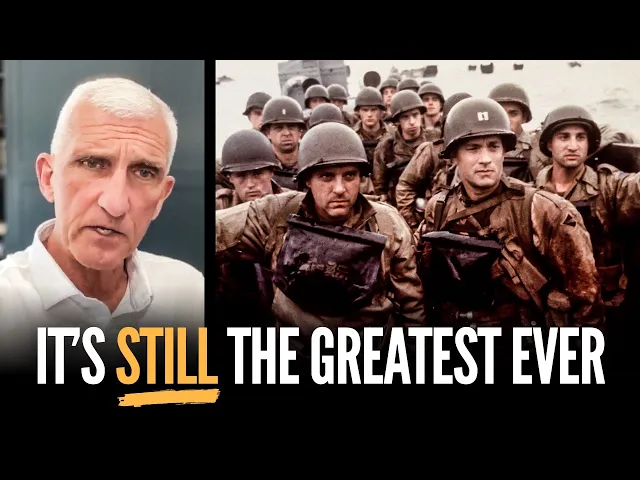
36:47 Steven Spielberg uh produced both.
36:50 Tom Hanks produced both.
36:52 Um but Steven Spielberg directed and Tom Hanks
36:55 starred in number one here uh Saving Private Ryan,
36:58 which you know, you cannot say enough about that opening sequence, right?
37:02 That's the combat sequence in a war movie.
37:05 It is the def definitional defining one.
37:08 But it's so much more than that.
37:09 I mean that that's that's the first 20 of the minutes of the movie.
37:12 There's another 2 hours plus after that which really gets into some of the very
37:16 hard uh the very hard decisions and choices and the chaos of combat.
37:22 Why why did you pick this as number one on your list of war movies?
37:26 just because it is so wellm made and and as you just said,
37:30 the first 22 minutes are the best representation
37:33 on film of any combat sequence I've seen.
37:37 Uh I've I've watched a lot of war movies and it was just so
37:42 incredibly realistic and the kind of experiences
37:46 those young men had on D-Day in 1944.
37:50 Uh it gives you a feel for the battlefield.
37:53 If you're not a soldier uh and and you're
37:55 not wincing uh through through that first 22 minutes, if you are a soldier,
38:01 you're probably shielding your eyes because you've experienced
38:04 it at one time in your life or another.
38:06 The first 22 minutes are just an understanding of what
38:11 we ask young men and now women to do.
38:14 But secondly, as the movie goes on, you see every
38:19 aspect of young soldiers lives when they're in a combat situation.
38:24 You see the smartass guy from the Bronx.
38:27 You've seen you see the guy who's the sniper who thinks he
38:31 can end the war just by getting within range of Adolf Hitler.
38:35 You see the medic who who uh basically sacrifices
38:39 his life to try and defend a little girl.
38:42 You see the arguments between, you know,
38:45 the captain and the smartass guy from the Bronx
38:49 about what to do with a prisoner of war,
38:51 the moral requirements of how to treat prisoners properly
38:55 because that is who we are and what we do.
38:58 You see the stoic face of the platoon sergeant
39:01 always backing up his leader uh in Tom Hanks.
39:05 and and and you see the real calm, cool, collected,
39:10 centered captain of Rangers in that's portrayed by Tom Hanks,
39:16 uh the the captain Miller, which I think is one of the best portrayals I've
39:20 ever seen of true leadership in a small unit organization.
39:25 And here's the fun fact for you, Sunny.
39:27 You're going to like this.
39:28 Right down the street from my house, about three or four miles,
39:31 is a retirement community, uh, a high-rise apartment building.
39:36 And a couple of years ago, I was asked to go to a hundth birthday party
39:41 of of a retired twostar general by the name of John Re.
39:45 Rae.
39:47 Uh, General Rain is now 104 years old, and he was Captain Miller on D-Day.
39:55 He was a ranger in the 75th Ranger Regiment at Point to Hawk and got
40:01 on to Dog Beach by mistake just like Tom Mil Captain Miller's team did.
40:07 And luckily for me, Major General Rain,
40:11 West Point graduate, class of 1942, is still alive.
40:15 He's as as verbal as you can imagine
40:20 with all of his uh capacities and and uh mind.
40:24 He's in a wheelchair.
40:26 He doesn't move all that well, but boy, he can tell stories of what it was like.
40:30 And I asked him if he had seen Private Saving Private Ryan.
40:34 And he said, he kind of shrugged.
40:36 He said, "Of course I have." He said,
40:38 "All of us have." And and then he said, I asked him, I said,
40:41 "How realistic was it?" And he kind of shook his head,
40:44 "No." And I said, "What do you mean?" And he said,
40:47 "It was worse than what they portrayed in the film."
40:51 So that gives you an idea of even as bad as those first 22 minutes were
40:56 and the and the patrolling across Europe that that Ranger squad did.
41:02 Uh how bad it really was in terms
41:04 of what the greatest generation gave during World War II.
41:09 That's uh I mean that's that's intense.
41:11 That's a great story too, man.
41:12 104.
41:13 That's a that's great that he's still still with us.
41:16 Um that's our top 10.
41:18 I I like I defy anyone to come up with a better top 10.
41:20 If you have suggestions, leave them in the comments.
41:23 Uh hit hit like and subscribe and all that.
41:25 But really chime in.
41:26 Let us know what you think.
41:28 Um but there there is a there is another reason we are here,
41:30 which is again let's synthesize these uh some of these the lessons
41:35 from these movies to to kind of come up with a plan for folks.
41:39 Like if you want to learn how to be a better a better military leader, yes.
41:45 just a better incorporate how to incorporate these rules
41:49 and suggestions and themes into your life generally speaking.
41:53 How what can we take away from these to learn
41:55 how to be better leaders uh in in our lives?
41:59 Well, it's interesting to me, Sunny, that all leaders face chaos.
42:03 Uh they face crisis in their organizations.
42:06 We saw that in the medical community during COVID.
42:08 We see it uh in the economic community when there's a market crash.
42:13 But when you see it in combat,
42:15 we're talking about life and death and on a large scale.
42:19 Uh so how do you deal with crisis?
42:22 How do you control chaos?
42:25 How as a leader do you remain calm
42:27 in situations where your inner being is screaming out saying,
42:32 "I can't handle this anymore." uh h how do you deal with those things and how do
42:38 you prepare to be resilient when you're faced
42:41 with that kind of challenge with that kind of demand?
42:45 So that's that's one lesson.
42:47 Uh and and you learn that by just placing yourself
42:50 in situations where uh you step outside your bank of courage.
42:56 You try and take things on that you might not
42:59 otherwise take that that you find ways to push yourself forward
43:04 beyond the fear that you might have whether it's speaking
43:08 in front of a crowd or controlling a squad in combat.
43:12 They both have elements of fear in them.
43:14 And and you know normal human beings want
43:18 to shy away from fear, fight or flight.
43:21 But some human beings say let's take it
43:23 on and let's try and manage it and control the chaos.
43:28 That's number one.
43:29 Number two, the big lessons that I learn from from these uh
43:35 various movies is how many facets of leadership are out there?
43:41 uh how you communicate, what are your attributes,
43:44 what kind of character do you have,
43:46 what values do you adhere to, uh what is your presence,
43:50 what's your personal presence, not just the way you appear,
43:54 but the way you center yourself.
43:56 Uh how do you learn and grow every day to increase your intellectual capacity?
44:02 Um, how do you communicate and understand that communication is not only
44:07 how you speak but how you listen and how your body language
44:11 and tone of voice and facial expression and your techniques of delivering
44:16 that communication become so very important when you're trying to be precise?
44:21 How do you steward your organization and how do you build teams?
44:27 And then the last thing is how do
44:29 leaders claim authority and take responsibility for their actions?
44:34 These are the kinds of things I judge myself on and I judge other leaders on.
44:40 How do they do these various elements
44:43 of leadership and both their attributes and their competencies?
44:46 And then using all of those things,
44:49 how do they influence teens to do the right things to to have a moral
44:55 center and and to raise up and be above the common level of life.
45:00 Um, so every one of these movies has elements
45:04 of that that I like to pick out and say, see that?
45:07 See what they're doing?
45:09 That's leadership.
45:10 Um then there's the lesson truly of uh from a military
45:15 and political perspective the difference between
45:19 small unit tactics what those young soldiers
45:22 or sailors or airmen or marines or coast guardsmen are doing when they're
45:27 facing the threat to what are the political leaders and the senior generals
45:32 asking them to do and do they understand really what's happening
45:36 at the at the lower level and are those senior senior people really telling
45:41 the American public what their soldiers are going through and how they're trying
45:47 to protect them given uh the the best way they can do things.
45:52 And then really the final lesson and I'll I'll kind of end here.
45:55 What drives a nation to send their military to war?
46:00 Uh what are the reasons we use?
46:04 And they better be good ones.
46:06 There better be true threats and there better be an explanation
46:10 to those in a democratic society like the people who
46:13 are our civilians and also uh our congressional base because if
46:19 you're doing this willy-nilly or you're doing this on a whim,
46:22 it's not a good play when you're talking about putting lives at stake.
46:27 Uh you know, I often tell the story that I've got a box on my desk.
46:30 If I can pull it over here and it's got the pictures
46:36 of 253 soldiers that I lost under my command in combat.
46:42 You can see this and every day on the top
46:46 of the box it has a phrase that says make it matter.
46:48 That was something General Dempsey said.
46:52 That make it matter is the equivalent
46:54 of what Captain Miller said to Private Ryan
46:56 at the end of Saving Private Ryan when he
46:59 pulled him in close and he said, "Earn this.
47:02 Earn this." And then you see decades later,
47:07 Private Ryan being an old man walking up
47:10 to Captain Miller's grave in Arlington National Cemetery,
47:15 turning to his wife and saying, "Tell me I'm a good man.
47:20 Tell me I've earned this.
47:22 That's, you know, that's really something that should
47:25 come through in every war movie we watch.
47:29 It's an understanding of how hard it is to put your life on the line
47:34 when you raise your hand and say
47:35 you're going to support and defend the Constitution.
47:38 And it gives you an indicator of the challenges that those people
47:42 who wear the cloth of the country take when they do it.
47:45 Um, it's not a game.
47:47 It's not something that should be driven for only uh personal reasons.
47:52 It's to maintain the security of our country.
47:55 And in each one of these war movies,
47:57 to a certain degree, we see elements of that.
48:01 So that's that's my preaching for today, Sunny.
48:04 No, that was uh I look again this is a lesson
48:08 that everyone in in government uh in your in our personal lives
48:13 should think about uh when we're when we are discussing um
48:17 the the I don't whatever military actions are happening on any given day.
48:22 Lord Lord only knows uh where where we'll be next.
48:25 This was amazing.
48:27 Thank you so much for for the time, Mark.
48:28 I really appreciate it.
48:30 Appreciate it, Sunny.
48:31 Thanks for thanks for doing this.
48:32 you and Sam and Tim who and Sarah who all thought this up.
48:36 Uh it's going to be fun to to see what the reaction is to it.
48:39 Yeah.
48:39 And again, if you have ideas, leave them leave them in the comments.
48:42 And make sure, by the way, I didn't even mention this at the top of the episode,
48:45 but make sure if you enjoyed this, if you if
48:47 you took something away from it, and I hope you did,
48:50 uh make sure you pick up Mark's book,
48:51 If I Don't Return, A Father's Wartime Journal,
48:54 uh which is I like it's look, I I my own father served in in the Air Force.
48:59 he served in combat and it is a it's a it is it's a bracing thing.
49:04 People should people should read um the thoughts uh that that go through
49:10 those the heads of those who are serving
49:12 and the hearts of those who are serving.
49:14 Um it's uh it's important you know and if
49:17 if you enjoy these these bull work these fun bull
49:19 work talks that we do uh make sure that you
49:22 get tickets to our live shows out in California.
49:25 Right.
49:25 We've got two tour stops coming up.
49:28 I Mark and I aren't going to be there, but Sarah, Tim, and Sam will be.
49:30 Go to uh the bullwwork.com/events.
49:33 And uh I I I had a lot of fun here.
49:36 Thanks again, Mark.
49:36 Really appreciate it.
49:37 You got it.
49:38 Hey, Sunny, one thing though, we're probably going to get a lot of mail
49:40 saying we've missed one or two great movies.
49:42 And I'm sure we have because there's too many out.
49:45 There is.
49:45 No, this is this is why I'm saying just put it in the comments.
49:48 We We can do a we can do a second episode on everything we missed,
49:51 you know, in a couple weeks.
49:53 I think that would be that would be very doable.
49:55 Uh but it's it's going to be you know there are so many good ones.
49:59 Would be happy to do a makeup episode.
50:01 Sorry.
50:02 Sorry we missed your favorite uh episode.
50:05 That'll be that'll be a fun one, too.
50:07 All right.
50:07 Thanks, honey.
50:08 Appreciate it.