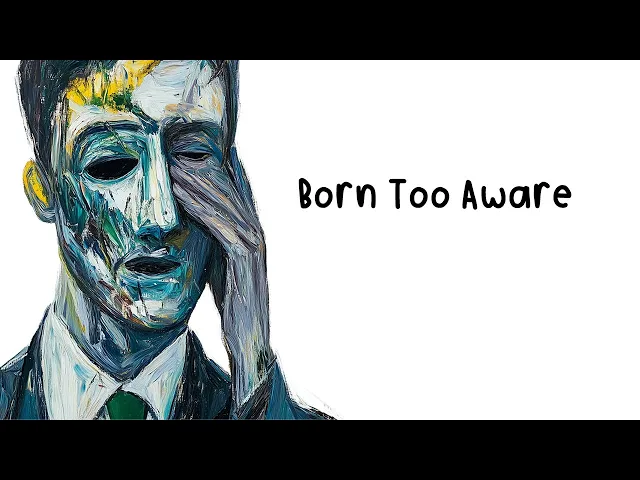
The Psychology of Deep Thinkers - Carl Jung
Queen
0:01 [Music] Sarah sat at the mahogany table,
0:08 watching the familiar theater unfold before her.
0:14 The conversation flowed like a carefully choreographed dance,
0:19 weather, vacations, the latest Netflix series.
0:23 Everyone was binge watching.
0:26 Laughter erupted at predetermined moments.
0:28 Heads nodded in synchronized approval,
0:31 and the comfortable rhythm of small talk filled the air like background music.
0:39 [Music] But Sarah heard something else beneath the surface symphony.
0:44 She heard the tremor in Michael's voice when he mentioned his promotion,
0:49 the way it betrayed his fear of failure.
0:55 [Music] She noticed how Jennifer's eyes darted
0:59 away when someone asked about her marriage,
1:02 how her smile tightened just slightly at the corners.
1:05 She felt the weight of David's silence,
1:08 the way he retreated into himself whenever
1:11 the conversation turned to success and ambition.
1:15 The others seemed oblivious to these subtle undercurrents,
1:18 content to skim across the surface
1:21 of human interaction like stones skipping on water.
1:25 But Sarah, Sarah dove deep with every glance,
1:29 every pause, every carefully chosen word.
1:32 She couldn't help herself.
1:34 It was as if she possessed some invisible
1:37 antenna that picked up frequencies others couldn't hear.
1:40 When the conversation turned to current events,
1:44 Sarah felt something stir within her.
1:47 Here was a chance for substance, for meaning,
1:51 for the kind of dialogue that fed her soul.
1:54 She leaned forward, her voice carrying
1:57 the weight of genuine curiosity and concern.
2:01 Isn't it fascinating how we're all so connected through technology,
2:06 yet loneliness rates have never been higher?
2:09 I was reading about how social media
2:11 creates this paradox of connection and isolation simultaneously.
2:16 It makes me wonder, are we really connecting
2:19 with each other or are we just performing connection?
2:26 Sarah felt the familiar sting of rejection,
2:30 the invisible force field that seemed to surround
2:34 her words whenever she tried to venture beyond the surface.
2:39 She smiled politely and retreated into herself,
2:44 carrying the weight of her unspoken thoughts like stones in her pockets.
2:49 This is the story of the deep thinker,
2:53 not a fairy tale of misunderstood genius, but a raw,
2:56 honest exploration of what it means to see clearly
2:59 in a world that prefers the comfort of blindness.
3:04 It's the story of those who cannot help but feel deeply, think critically,
3:08 and question constantly in a society
3:11 that rewards conformity and punishes authenticity.
3:28 [Music] So you let my heart turn into you left my mind cold and blue.
3:56 Love, but none hurt like you.
4:06 [Music] Rain on my soul, your shadow won't part.
4:17 Rain on my soul, it drowns my heart.
4:24 Tell you your love won't warm staring [Music] whales like my tears in the dark.
4:46 Steel drum sides where you left your mark.
4:51 Chicago streets crown my world for aart.
5:03 [Music] Carl Jung, the pioneering psychologist who spent
5:20 his life mapping the hidden territories of the human psyche,
5:24 understood this phenomenon intimately.
5:26 He wrote, "The more intelligent and self-aware a person is,
5:30 the more they suffer from the general unconsciousness of society.
5:34 This isn't a badge of honor.
5:37 It's a warning, a recognition of the beautiful burden
5:40 carried by those who cannot unsee what they have seen.
5:47 I keep sooner your heart breaks
5:52 my endless we [Music] the architecture of alienation.
6:05 What makes a deep thinker?
6:07 Is it intelligence?
6:09 sensitivity, some cruel twist of fate that condemns
6:12 certain individuals to a life of perpetual outsiderhood.
6:17 The answer is far more complex and fascinating than you might imagine.
6:22 Friedrich ner, the German philosopher who famously declared that God is dead,
6:28 understood the profound loneliness that comes
6:30 with seeing through society's comfortable illusions.
6:33 He wrote about the free spirit.
6:36 Those individuals who had broken free from the chains of conventional thinking
6:41 but now found themselves wandering in a wilderness of their own making.
6:46 These free spirits, nature argued, were essential for human progress.
6:51 But they paid a heavy price for their liberation.
6:54 The deep thinker's journey often begins in childhood
6:58 in those formative moments when other children
7:01 accept the world as it appears while
7:04 some ask the questions that make adults uncomfortable.
7:08 Why do grown-ups say one thing and do another?
7:11 Why do we have to pretend to be happy when we're not?
7:16 Why does love sometimes feel conditional?
7:19 Why do the rules seem arbitrary?
7:22 These children learn quickly that their questions are unwelcome.
7:26 They're told to stop overthinking, to just accept things as they are,
7:29 to be more like the other kids.
7:32 But the questions don't stop.
7:34 They simply go underground,
7:37 growing more complex and urgent with each passing year.
7:40 Arthur Schopenhauer,
7:42 the pessimistic philosopher who influenced both nature and Jung,
7:47 observed that most people are like hedgehogs trying to keep warm in winter.
7:52 They huddle together for comfort, but if they get too close,
7:55 they prick each other with their spines.
7:57 The deep thinker often feels like a hedgehog with particularly sharp spines,
8:04 desperate for connection,
8:05 but seemingly destined to wound those who come too close.
8:09 But here's what makes this phenomenon even more intriguing.
8:12 Deep thinkers aren't just intellectually different.
8:16 They're neurologically different.
8:18 Neuroscientist Dr.
8:19 Elaine Aaron's research on highly sensitive people reveals that approximately
8:25 20% of the population has a more sensitive nervous system,
8:30 processing information more deeply and being
8:33 more aware of subtleties in their environment.
8:37 These individuals whom she calls highly sensitive persons or HSPS
8:46 often overlap significantly with what we might call deep thinkers.
8:50 The deep thinker's brain literally works differently.
8:55 They notice details others miss,
8:57 pick up on emotional subtleties, and process information more thoroughly.
9:02 In a world that rewards quick decisions and surface level interactions,
9:07 this depth of processing can feel like a disability rather than a gift.
9:14 Consider the workplace where the deep thinker's need for meaning
9:18 and authenticity crashes against corporate
9:21 cultures demand for efficiency and conformity.
9:25 While others can compartmentalize their values and just do the job,
9:29 the deep thinker struggles with tasks
9:32 that feel meaningless or ethically questionable.
9:36 They're the ones who ask uncomfortable questions in meetings,
9:39 who point out the elephant in the room,
9:42 who refuse to participate in office gossip or corporate double speak.
9:50 Victor Frankl, the Holocaust survivor and psychiatrist
9:53 who wrote Man's Search for Meaning, understood that humans can endure almost any
9:59 suffering if they can find meaning in it.
10:01 But what happens when society
10:04 systematically strips meaning from human experience?
10:08 What happens when work becomes mere productivity,
10:11 relationships become transactions,
10:13 and existence becomes a series of distractions?
10:18 The deep thinker feels this meaninglessness more acutely than others.
10:22 They cannot simply phone it in or go through the motions.
10:25 They need their lives to matter, their work to have purpose,
10:29 their relationships to be authentic in a world
10:32 that often seems designed to prevent exactly these things.
10:37 Is it any wonder they feel alienated?
10:41 The frequency of truth.
10:45 Have you ever noticed how some people
10:47 seem to operate on an entirely different wavelength?
10:50 They speak a language that sounds like yours,
10:52 but carries meanings you can't quite grasp.
10:55 They laugh at jokes that aren't funny,
10:58 get excited about things that seem trivial,
11:00 and remain unmoved by experiences that touch your soul.
11:05 This isn't about intelligence or education.
11:09 It's about frequency.
11:10 Jung wrote extensively about the collective unconscious
11:15 that shared psychic space where humanity's deepest fears,
11:19 desires, and archetypal patterns reside.
11:22 He believed that most people live their entire
11:27 lives without ever truly encountering their own unconscious material,
11:31 content to follow scripts written by others and never
11:35 questioning the fundamental assumptions that guide their existence.
11:40 The deep thinker, however, has made contact with this deeper realm.
11:45 They've touched something real beneath the surface of everyday consciousness.
11:50 And once you felt that authenticity, everything else feels like performance.
11:56 It's like discovering color after living in a black and white world.
12:02 You can't unsee the vibrancy and you can't pretend that grayscale is enough.
12:08 This creates what we might call the frequency problem.
12:12 Deep thinkers vibrate at the frequency of truth.
12:15 While much of society operates at the frequency of comfort,
12:20 truth is often uncomfortable, inconvenient, and disruptive.
12:24 It asks us to look at things we'd rather ignore,
12:27 to feel things we'd rather numb,
12:30 to question things we'd rather take for granted.
12:34 The Buddhist concept of maya,
12:36 the veil of illusion that obscures reality, speaks to this phenomenon.
12:40 Most people live comfortably within Maya, accepting the illusion as reality.
12:45 But the deep thinker has glimpsed behind the veil,
12:49 and they can no longer participate
12:52 in the collective pretense with the same unconscious ease.
12:56 This doesn't make them superior.
12:58 It makes them lonely.
12:59 Imagine being the only person in a room
13:02 who can see that the emperor has no clothes.
13:06 Your truthtelling isn't welcomed.
13:07 It's seen as disruptive, negative, or attention seeking.
13:12 You're not trying to be difficult.
13:14 You're simply unable to participate in the collective denial.
13:19 The ancient Greek philosopher Plato illustrated this perfectly
13:22 in his famous allegory of the cave.
13:26 Prisoners chained in a cave mistake shadows on the wall for reality
13:31 until one breaks free and sees the world as it truly is.
13:36 When he returns to share his discovery,
13:38 the other prisoners reject his testimony and prefer their familiar shadows.
13:44 The truth teller becomes the outsider,
13:47 the troublemaker, the one who disturbs the peace.
13:52 But here's what Plato understood that many miss.
13:55 The freed prisoner has a responsibility to keep trying,
13:59 to keep speaking truth even when it's unwelcome.
14:03 Not because he enjoys being rejected,
14:06 but because truth itself has value and someone must bear witness to it.
14:10 The deep thinker carries this burden of witness.
14:15 They see through the masks people wear,
14:17 the systems that exploit, the beliefs that limit.
14:20 They feel the collective pain that others have learned to ignore.
14:25 They carry the questions that others have stopped asking.
14:28 And while this can be overwhelming, it's also profoundly important.
14:37 [Music] Oh, river here.
14:45 My heart it's breaking in the midnight rain.
14:54 Please, oh river, [Music] here my heart it's breaking the midnight rain.
15:06 She's gone.
15:10 And her shadows carved in me flowing with this endless saken pain.
15:21 Don't let the current drown my tears.
15:27 Don't let the darkness swallow my fears.
15:34 Please sweet river carry my sorrow downstream.
15:41 My soul torn apart.
15:47 Crying to the river for a dream.
15:52 The emotional sponge.
15:56 Picture this.
15:57 You walk into a room and immediately sense that something is wrong.
16:02 The conversation is light.
16:04 Everyone is smiling,
16:05 but there's an undercurrent of tension you can almost taste.
16:10 Others seem oblivious, chatting happily about weekend plans,
16:13 but you feel like you're drowning in unspoken emotions.
16:17 Welcome to the world of the deep thinker,
16:21 where emotional boundaries are often as porous as Swiss cheese.
16:27 Jung identified this phenomenon as part
16:29 of what he called psychological contagion.
16:32 The unconscious transmission of emotions
16:34 and psychological states between individuals.
16:37 While everyone experiences this to some degree,
16:40 deep thinkers seem to have their emotional antenna permanently extended,
16:45 picking up signals from every direction.
16:48 Dr.
16:49 Judith Olaf, a psychiatrist who has
16:52 extensively studied empaths and sensitive individuals,
16:56 describes this as being an emotional sponge.
16:59 Deep thinkers don't just observe emotions, they absorb them.
17:04 They feel the anxiety of the stressed colleague,
17:07 the sadness of the friend going through a divorce,
17:10 the anger of the stranger on the subway,
17:13 and often they mistake these absorbed emotions for their own.
17:18 This absorption isn't voluntary.
17:20 It's not a conscious choice to take on others emotional burdens.
17:25 It's more like having a radio that can't be turned off.
17:29 Constantly tuning into emotional frequencies whether you want to or not.
17:34 The result is exhaustion.
17:36 A deep soul level tiredness that can't be cured by sleep.
17:41 But here's where it gets even more complex.
17:45 Society has learned to use this sensitivity.
17:49 People are drawn to deep thinkers like moths to flame.
17:53 They sense often unconsciously that here is someone who will really listen,
17:59 who will understand, who will hold space for their pain.
18:02 And so the deep thinker becomes the unofficial therapist,
18:06 the emotional dumping ground,
18:08 the one who always has time for other people's problems.
18:12 The irony is devastating.
18:15 The very people who most need emotional support,
18:18 who carry the weight of their own deep feelings,
18:22 plus the absorbed emotions of others,
18:25 are the ones everyone else turns to for comfort.
18:28 It's like asking someone who's already drowning to save others from drowning.
18:34 Psychologist Dr.
18:34 Karen Hall writes about the concept of emotional labor.
18:39 The invisible work of managing emotions, both our own and others.
18:45 Deep thinkers perform enormous amounts of emotional labor,
18:49 often without recognition or reciprocation.
18:53 They're the ones who remember anniversaries,
18:56 who check in on friends going through difficult times,
19:00 who notice when someone is struggling and offer support.
19:04 But when they need support themselves,
19:06 they often find that others don't know how to provide it.
19:11 The deep thinkers emotional needs are complex,
19:14 nuanced, and often difficult to understand.
19:16 They can't be fixed with platitudes or surface level reassurances.
19:22 They need to be truly seen, understood, and met at their level of depth.
19:28 This creates what we might call emotional asymmetry in relationships.
19:35 The deep thinker gives profoundly but struggles to receive at the same level.
19:42 They become skilled at supporting others,
19:44 but often feel like they're speaking a foreign
19:47 language when trying to express their own needs.
19:50 The result is a particular kind of loneliness.
19:53 Not the loneliness of being alone, but the loneliness of being misunderstood.
19:58 It's the loneliness of carrying thoughts and feelings
20:03 that seem too complex or intense for others to handle.
20:06 It's the loneliness of always being the strong one, the wise one,
20:11 the one who has it all figured out when inside
20:15 you're often just as lost and confused as everyone else.
20:20 The mask of normaly.
20:24 There's a moment in every deep
20:25 thinker's life when they realize they're different, not special, different.
20:30 It usually happens gradually through a series of small rejections,
20:35 confused looks and uncomfortable silences.
20:38 The realization that their natural way of being in the world is somehow wrong,
20:43 too much, inappropriate.
20:45 And so begins the careful construction of what
20:48 we might call the mask of normaly.
20:51 This isn't conscious deception, it's survival.
20:54 The deep thinker learns to modulate their voice,
20:59 to choose their words carefully,
21:01 to gauge the emotional temperature of every room before speaking.
21:05 They become skilled at reading people not out of manipulation,
21:10 but out of necessity.
21:12 The mask serves multiple purposes.
21:14 It protects the deep thinker from rejection and allows
21:19 them to move through society with less friction.
21:21 But it also protects others from the discomfort of encountering genuine depth.
21:26 The mask is a kind of emotional diplomacy, a way of saying, "Don't worry,
21:32 I won't make you feel things you don't
21:35 want to feel." But masks are exhausting to maintain.
21:38 They require constant vigilance, constant performance,
21:43 constant denial of one's authentic self.
21:46 The deep thinker learns to laugh at jokes they don't find funny,
21:51 to express enthusiasm for things that bore them,
21:54 to hide their reactions to the cruelty and superficiality they witness daily.
22:00 The existentialist philosopher Jean Paul Sartra wrote about bad faith,
22:06 the ways we lie to ourselves to avoid the anxiety of authentic existence.
22:11 But for the deep thinker, the mask isn't about avoiding their own authenticity.
22:17 It's about making their authenticity palatable to others.
22:21 They know exactly who they are.
22:23 They just can't always afford to show it.
22:26 This creates a split in the deep thinker's sense of self.
22:30 There's the private self, complex, questioning, feeling,
22:34 and the public self, agreeable, simple, safe.
22:39 The energy required to maintain this split is enormous
22:42 and it leads to what psychologists call masking fatigue.
22:46 The deep thinker often feels like they're living a double life,
22:51 authentic in private but performative in public.
22:54 The tragedy is that this masking often backfires.
22:59 While it may help the deep thinker avoid some rejection,
23:02 it also prevents them from forming the deep connections they crave.
23:06 How can you be truly known if you're always hiding your true self?
23:12 How can you find your tribe if you're constantly pretending to be someone else?
23:18 Yet, the alternative, dropping the mask entirely, can feel impossibly risky.
23:24 The deep thinker has learned, often through painful experience,
23:29 that their unfiltered self is too much for most people to handle.
23:34 They've seen how their intensity can overwhelm,
23:37 how their questions can threaten, how their depth can isolate.
23:44 This is the deep thinkers catch 22.
23:45 They need authentic connection to thrive,
23:48 but their authenticity often drives people away.
23:52 They need to be seen and understood,
23:55 but their true self seems to make others uncomfortable.
23:58 They need community, but they struggle to find others who can match their depth.
24:07 The collective unconscious conspiracy.
24:09 Jung's concept of the collective unconscious
24:12 suggests that beneath our individual minds lies
24:15 a shared psychic space containing the archetypal
24:18 patterns and primordial images that shape human experience.
24:23 But what happens when the collective
24:26 unconscious becomes infected with fear of depth,
24:30 authenticity, and genuine feeling?
24:33 We live in what many psychologists and sociologists call a post-truth society.
24:39 Not because truth doesn't exist, but because we've collectively decided
24:43 that comfort is more important than accuracy.
24:47 We've created systems that reward appearance over substance,
24:51 performance over authenticity, and agreement over truthtelling.
24:56 The deep thinker finds themselves in opposition to this collective agreement.
25:02 They're like the child in the fairy tale
25:05 who points out that the emperor has no clothes,
25:08 except instead of being celebrated for their honesty,
25:13 they're shushed, marginalized, or labeled as negative.
25:17 Consider the modern workplace where emotional intelligence
25:21 is praised in theory but punished in practice.
25:24 The deep thinker who points out toxic dynamics,
25:28 who questions unethical practices or who
25:31 refuses to participate in office politics
25:35 is often labeled as not a team player or difficult to work with.
25:42 The very qualities that make them valuable, their integrity, their insight,
25:47 their unwillingness to compromise their values,
25:50 become liabilities in systems that prioritize compliance over consciousness.
25:55 The educational system provides another example.
25:59 From an early age, children are taught
26:02 to value the right answer over the right question.
26:05 They're rewarded for memorization and compliance,
26:08 not for critical thinking or creative exploration.
26:12 The deep thinker child who naturally questions assumptions and seeks
26:17 understanding rather than just information
26:20 often struggles in these environments.
26:23 Social media amplifies this phenomenon
26:26 by creating echo chambers where complexity
26:29 is reduced to sound bites and nuance is sacrificed for virality.
26:34 The deep thinker's natural inclination
26:37 toward nuanced thinking and complex analysis
26:40 doesn't translate well to platforms designed
26:43 for quick consumption and instant gratification.
26:48 But perhaps most insidiously,
26:49 the collective unconscious has developed what we might call depth phobia,
26:55 a fear of psychological and emotional depth.
27:00 We've created a culture that medicates discomfort,
27:03 distracts from pain, and pathizes sadness.
27:07 We've learned to fear our own inner lives to avoid
27:10 the very introspection that might lead to growth and authenticity.
27:15 The deep thinker who naturally gravitates toward introspection
27:20 and emotional complexity finds themselves
27:23 swimming against this cultural current.
27:25 They're told they're overthinking when they're actually thinking clearly.
27:30 They're accused of being too sensitive
27:32 when they're responding appropriately to genuine stimuli.
27:37 They're labeled as negative when they're
27:40 simply refusing to participate in toxic positivity.
27:44 This creates a kind of gaslighting effect where the deep
27:49 thinker begins to doubt their own perceptions and experiences.
27:53 They start to wonder if they really are too much,
27:57 too sensitive, too complicated.
27:59 They begin to internalize the collective rejection of depth and question
28:04 whether their way of being in the world is somehow wrong.
28:11 The paradox of visibility.
28:14 Here's a curious paradox that many deep thinkers experience.
28:18 They simultaneously feel invisible and exposed.
28:21 invisible because their inner world rich with complex thoughts,
28:25 deep emotions, and nuanced understanding remains largely unseen by others.
28:32 Exposed because their sensitivity makes them vulnerable to every slight,
28:38 every rejection, every moment of misunderstanding.
28:43 This paradox creates a particular kind of psychological tension.
28:46 The deep thinker longs to be seen and understood,
28:50 to have their inner world acknowledged and appreciated.
28:53 Yet, they also fear the vulnerability that comes with true visibility.
28:59 They've learned that showing their depth often leads to rejection,
29:03 so they've developed sophisticated strategies for hiding in plain sight.
29:10 The Greek concept of kinosis,
29:11 a self-mping or self-concealment, captures something of this experience.
29:16 The deep thinker often empties themselves of their own needs
29:21 and complexity in order to be more accessible to others.
29:24 They become skilled at making themselves smaller, dimmer, less threatening.
29:30 But this self- concealment comes at a cost.
29:35 The deep thinker begins to lose touch with their own voice,
29:39 their own needs, their own truth.
29:42 They become so skilled at reading and responding
29:45 to others that they forget how to listen to themselves.
29:50 They become experts at emotional camouflage,
29:53 blending into whatever environment they find themselves in.
29:57 The irony is that this very adaptability,
30:01 born from the need to survive in a world that doesn't understand them,
30:05 often makes them even more invisible, they become chameleons,
30:09 so skilled at becoming what others need them to be
30:14 that they lose sight of who they actually are.
30:17 This creates what we might call the authenticity trap.
30:20 The deep thinker knows that authenticity is essential for meaningful connection.
30:25 But they've learned that their authentic self
30:27 is often too much for others to handle.
30:30 So they find themselves caught between the rock
30:33 of loneliness and the hard place of rejection.
30:37 The solution, if there is one, lies not in becoming less authentic,
30:42 but in becoming more discerning about where
30:45 and with whom to share that authenticity.
30:48 The deep thinker must learn to distinguish between environments
30:53 that can hold their depth and those that cannot.
30:56 They must learn to save their pearls for those who can appreciate their value.
31:04 The wounded healer.
31:08 Jung wrote extensively about the archetype of the wounded healer.
31:11 the person who has been broken by life's challenges
31:15 but transforms that brokenness into a source of healing for others.
31:20 Many deep thinkers embody this archetype,
31:23 carrying within themselves both profound wounds and profound wisdom.
31:29 The deep thinkers wounds often come from a lifetime of feeling misunderstood,
31:34 rejected, or too much for the world around them.
31:36 They've been told to dim their light,
31:38 to quiet their voice, to stop asking inconvenient questions.
31:42 They've experienced the pain of authentic connection,
31:45 being met with discomfort or rejection.
31:48 But these very wounds become sources of compassion and insight.
31:53 The deep thinker who has felt the sting
31:56 of rejection becomes skilled at creating safe spaces for others.
31:59 The one who has been misunderstood becomes
32:03 gifted at truly seeing and hearing others.
32:06 The one who has been too much learns to hold space for others intensity.
32:11 This transformation from wounded to healer isn't automatic or easy.
32:17 It requires what Jung called individuation.
32:20 The process of integrating all aspects of the self,
32:25 including the shadow parts we'd rather deny.
32:28 The deep thinker must learn to embrace their sensitivity as a strength,
32:34 their intensity as a gift, their depth as a treasure.
32:38 But they must also learn to set boundaries to protect their own well-being,
32:44 to refuse to be drained by others needs.
32:47 This is perhaps the most challenging aspect of the wounded healer's journey.
32:52 Learning to give without depleting themselves,
32:55 to love without losing themselves.
32:58 The deep thinker as wounded healer offers something unique to the world.
33:04 They provide depth in a shallow culture, authenticity in a performative society,
33:11 and genuine connection in an increasingly disconnected world.
33:15 They serve as bridges between the conscious and unconscious,
33:19 the spoken and unspoken, the felt and unfelt.
33:27 The alchemy of solitude.
33:29 Solitude and loneliness are often conflated,
33:32 but they're fundamentally different experiences.
33:35 Loneliness is the pain of feeling disconnected from others.
33:39 Solitude is the joy of being connected to yourself.
33:42 For the deep thinker, learning to distinguish between these states
33:46 is crucial for psychological survival.
33:49 The deep thinker often finds themselves alone,
33:53 not by choice, but by circumstance.
33:56 Their depth can intimidate others.
33:59 Their intensity can overwhelm.
34:01 Their questions can threaten.
34:03 They may find themselves excluded from social circles,
34:07 passed over for shallow connections or simply misunderstood in groups.
34:13 But within this enforced solitude lies a hidden gift.
34:19 Away from the constant pressure to perform normaly.
34:22 The deep thinker can finally breathe.
34:24 They can think their deep thoughts, feel their complex emotions,
34:29 and explore their inner landscape without fear of judgment or rejection.
34:35 Solitude becomes a sanctuary where the deep
34:39 thinker can reconnect with their authentic self.
34:41 It's where they can process the constant input they receive from the world.
34:47 Where they can untangle their own emotions
34:49 from the ones they've absorbed from others.
34:52 Where they can remember who they are beneath all the masks and adaptations.
34:58 The medieval mystics understood this well.
35:01 They spoke of the dark night of the soul,
35:04 a period of spiritual dryness and apparent abandonment
35:08 that ultimately leads to deeper connection with the divine.
35:12 For the deep thinker,
35:13 periods of solitude and apparent isolation can serve a similar function,
35:18 stripping away the superficial to reveal the essential.
35:23 But this alchemical process requires intention and skill.
35:27 The deep thinker must learn to transform loneliness into solitude,
35:33 isolation into introspection, rejection into self-acceptance.
35:36 They must learn to be good company to themselves to find
35:41 in their own depth the connection they seek from others.
35:46 This doesn't mean becoming hermits or giving up on human connection.
35:50 Rather, it means developing such a strong relationship with themselves
35:54 that they can afford to be selective about their connections with others.
36:00 When you're no longer desperate for acceptance,
36:03 you can wait for genuine understanding.
36:08 The frequency of finding the question that haunts many deep thinkers is,
36:16 "Where are my people?" After years of feeling like aliens in their own culture,
36:22 they wonder if there are others like them.
36:24 Others who think deeply, feel intensely, and question constantly.
36:29 The good news is that these people exist.
36:32 The challenging news is that finding them requires both patience and courage.
36:38 Deep thinkers are drawn to certain environments and activities.
36:42 They gravitate toward bookstores and libraries,
36:45 art galleries and museums, coffee shops, and quiet corners.
36:48 They're attracted to philosophy and psychology,
36:53 literature and poetry, spiritual practices and healing arts.
36:57 They seek out documentaries over sitcoms,
37:01 depth over entertainment, meaning over distraction.
37:05 But even in these environments, deep thinkers often remain hidden.
37:10 They've learned to camouflage their intensity, to moderate their depth,
37:14 to test the waters before revealing their true selves.
37:18 This means that finding other deep thinkers requires a kind of emotional sonar,
37:24 the ability to sense depth beneath surface interactions.
37:30 The signs are subtle but recognizable.
37:32 It's the person who asks follow-up questions,
37:36 who seems genuinely curious about your inner world,
37:38 who isn't satisfied with surface level answers.
37:42 It's the one who references books you've
37:45 never heard of, who notices things others miss,
37:48 who seems to carry a certain weight of awareness.
37:51 When two deep thinkers recognize each other,
37:55 there's often an immediate sense of relief and recognition.
37:58 Finally, someone who speaks the same language,
38:01 who doesn't need things explained or simplified,
38:05 who can match their intensity and depth.
38:08 These connections, while rare, are profoundly nourishing.
38:12 But deep thinkers must also learn
38:13 to appreciate different types of relationships.
38:17 Not everyone needs to be a soulmate or philosophical companion.
38:22 Some relationships can be based on shared activities,
38:25 others on mutual support, still others on simple companionship.
38:30 The key is not expecting everyone to meet every need,
38:34 but rather cultivating a network of relationships that together
38:39 provide the richness and depth the deep thinker requires.
38:47 The revolutionary act of authenticity.
38:49 In a world that profits from our insecurity,
38:53 being authentic becomes a revolutionary act.
38:56 The deep thinker who refuses to dim their light,
38:59 who asks uncomfortable questions, who insists on meaning over appearance,
39:05 poses a threat to systems built on compliance and consumption.
39:10 Consider how much of our economy depends on people feeling inadequate.
39:15 The beauty industry thrives on insecurity about appearance.
39:19 The self-help industry profits from our sense of inadequacy.
39:24 The entertainment industry succeeds by keeping us distracted from our own lives.
39:30 The deep thinker who has found peace with themselves,
39:34 who values substance over style,
39:37 who seeks meaning over entertainment, represents a challenge to these systems.
39:43 This is why authentic deep thinkers often
39:46 find themselves marginalized or labeled as difficult.
39:51 They refuse to play the game that keeps everyone else distracted and compliant.
39:56 They ask the questions that expose the emperor's nakedness.
39:59 They feel the feelings that everyone else has learned to numb.
40:04 But this refusal to conform isn't about
40:08 being contrary or rebellious for its own sake.
40:11 It's about integrity, the integration of inner truth with outer expression.
40:16 The deep thinker cannot live a lie,
40:18 cannot pretend to value what they don't value,
40:22 cannot perform happiness when they feel sadness.
40:26 This integrity is both their burden and their gift.
40:30 It's a burden because it makes them aliens in their own culture,
40:34 outsiders in their own society.
40:37 But it's also a gift because it allows them
40:41 to serve as witnesses to truth as guardians of depth,
40:45 as bridges between the conscious and unconscious.
40:49 The philosopher Surin Kirkagard wrote about the leap of faith,
40:53 the decision to believe despite uncertainty.
40:55 For the deep thinker, there's a similar leap required.
40:59 The leap of authenticity, the decision to be themselves despite the risks,
41:05 to speak their truth despite the consequences,
41:08 to value depth despite the world's preference for surface.
41:12 This leap requires tremendous courage.
41:14 It means accepting that they may be misunderstood, rejected, or isolated.
41:20 It means choosing truth over comfort,
41:24 authenticity over acceptance, depth over ease.
41:28 But it also means the possibility of genuine connection, meaningful work,
41:34 and a life lived in alignment with their deepest values.
41:40 The ripple effect.
41:42 The deep thinker's influence extends far beyond their immediate circle.
41:46 Like a stone thrown into still water,
41:48 their authenticity creates ripples that spread outward
41:52 in ways they may never fully see or understand.
41:56 Their refusal to participate in collective
41:59 unconsciousness gives others permission to wake up.
42:03 Their commitment to depth creates space
42:06 for others to explore their own inner worlds.
42:09 This influence is often subtle and indirect.
42:13 The deep thinker may never know that their willingness to ask
42:17 difficult questions inspired someone else to examine their own assumptions.
42:22 They may never realize that their emotional honesty
42:25 gave someone else permission to feel their own feelings.
42:31 They may never understand that their authenticity served
42:34 as a beacon for others struggling to find their own way.
42:39 But the ripples are real.
42:42 Every time a deep thinker chooses authenticity over performance,
42:44 truth over comfort, depth over surface, they contribute to a larger awakening.
42:50 They help create a culture that values substance over style,
42:54 meaning over distraction, consciousness over unconsciousness.
42:59 This is the deep thinker's ultimate calling.
43:02 Not to be understood by everyone, but to remain true to their own depth.
43:08 Not to fix the world, but to refuse to participate in its collective denial.
43:14 Not to be loved by all, but to love themselves enough to stay authentic.
43:19 The world needs deep thinkers now more than ever.
43:24 In an age of artificial intelligence and virtual reality,
43:27 we need people who can think deeply and feel authentically.
43:32 In a time of increasing polarization and decreasing nuance,
43:37 we need voices that can hold complexity and ambiguity.
43:41 In a culture that values speed over depth,
43:45 we need those who are willing to slow down and think carefully.
43:51 The invitation, if you recognize yourself in these words,
43:56 if you feel the familiar of being too much in a world that prefers less,
44:01 then this is your invitation.
44:02 an invitation to stop apologizing for your depth, to stop shrinking,
44:07 to make others comfortable, to stop pretending that shallow is enough.
44:12 You are not broken.
44:14 You are not too much.
44:14 You are not the problem.
44:16 You are awake in a world that prefers sleep.
44:19 Conscious in a society that chooses unconsciousness,
44:22 authentic in a culture that rewards performance.
44:27 Your sensitivity is not a weakness.
44:28 It's your superpower.
44:30 Your depth is not a burden.
44:33 It's your gift.
44:34 Your intensity is not a problem.
44:37 It's your strength.
44:39 The world needs what you have to offer,
44:41 even if it doesn't always know how to receive it.
44:44 The path forward isn't about becoming less of who you are.
44:48 It's about becoming more skilled at being who you are.
44:53 It's about learning to distinguish between environments
44:56 that can hold your depth and those that cannot.
44:59 It's about finding your tribe while still maintaining
45:03 compassion for those who aren't part of it.
45:06 It's about learning to love yourself so deeply
45:09 that the world's rejection cannot touch your core.
45:13 It's about developing such a strong relationship with your own
45:17 authenticity that you can afford to be patient with others unconsciousness.
45:23 It's about becoming so rooted in your own
45:27 truth that you can weather any storm of misunderstanding.
45:31 The deep thinker's journey is not an easy one.
45:35 It requires courage, resilience, and a willingness to walk alone when necessary.
45:40 But it also offers rewards that those who stay on the surface will never know.
45:45 The joy of authentic connection, the satisfaction of meaningful work,
45:51 the peace of living in alignment with your deepest values.
45:56 You are not alone in this.
45:58 Scattered across the world are others like you.
46:03 Also questioning, also feeling, also seeking depth in a shallow world.
46:07 Some you will find, others will find you.
46:12 Trust that your authenticity is a beacon
46:14 that will attract those who can appreciate its light.
46:17 The world may seem to prefer illusion, but deep down it's crying out for truth.
46:23 It may seem to reward performance, but secretly it's hungry for authenticity.
46:29 It may seem to value surface, but its soul is starving for depth.
46:35 You are the answer to that hunger.
46:37 You are the light in the darkness.
46:39 You are the depth in the shallows.
46:42 You are the truth in the illusion.
46:44 Don't dim your light to make others comfortable.
46:47 Don't shrink your truth to fit their comfort zones.
46:50 Don't apologize for being exactly who you are.
46:54 The world needs your questions, your feelings, your depth, your truth.
46:58 It needs your refusal to accept easy answers,
47:03 your insistence on meaning, your commitment to authenticity.
47:06 It needs your beautiful, complicated, intense, magnificent self.
47:12 So be yourself fully, completely, unapologetically.
47:16 The world may not always understand,
47:19 but it will be forever changed by your presence.
47:23 And in the end, that's all any of us can do.
47:26 Be who we are as deeply and authentically as possible.
47:32 And trust that it's enough because it is.
47:35 You are enough.
47:36 You are more than enough.
47:38 You are exactly what the world needs, even if it doesn't always know it.
47:43 Welcome to the tribe of the awake.
47:46 Welcome to the community of the conscious.
47:48 Welcome to the fellowship of the deep.
47:52 You are home.
48:00 [Music] Somewhere you left my heart turn
48:07 into some you left my mind cold and blue.
48:18 Love is fake but none hurt like you.
48:26 [Music] Rain on my soul, your shadow won't part.
48:37 Rain on my soul, it drowns my heart.
48:44 Tell me that you love one [Music] star.
48:54 [Music] Fing whales like my tears in the dark.
49:06 Steel drum sides where you left your mark.
49:10 [Music] Chicago streets crown.
49:16 My world fall aart.
49:24 [Music] Too many loves but yours cut so deep.
50:04 Too many loves yet your ghost I keep.
50:10 Soon now your heart breaks.
50:14 [Music]