The Underrated Brilliance of... Boring
How Money Works Uncut
0:00 We certainly live in exciting times.
0:02 Even if you ignore the barrage of headlines that would have
0:06 been considered once in a generation events just a few years ago,
0:09 we are still living through perhaps the most intense
0:11 period of technological and societal change in human history.
0:14 On a more personal level,
0:16 we are working jobs that didn't exist a generation ago,
0:19 making a career in ways that may or may not even be legal,
0:22 and living lives that are going to look considerably different from our parents,
0:26 for better or worse.
0:28 Amongst all of this uh excitement, it has become very easy to chase new trends,
0:33 fall into increasingly easy financial traps,
0:34 and adopt a rather nihilistic view that maybe all
0:37 of these changes aren't leading us in the right direction.
0:40 But you already knew all that.
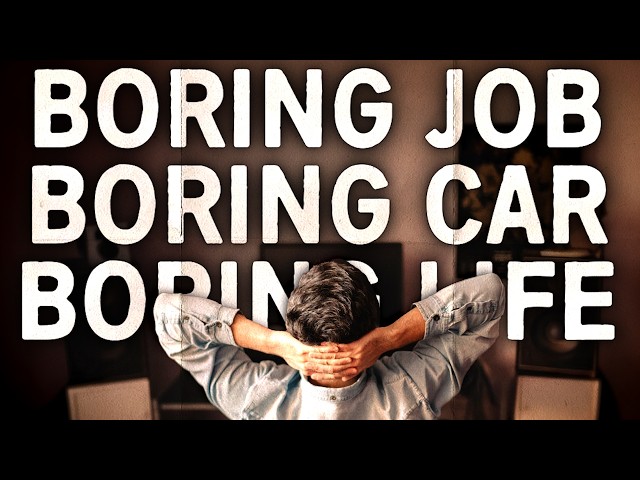
0:41 What all of this has shown though is the hidden brilliance of boring.
0:46 Boring jobs, boring investments, boring decisions,
0:48 and maybe even a boring lifestyle have gone from an unfortunate burden
0:52 to a coveted luxury that even the richest people in the world are embracing.
0:56 Or at least they are pretending to.
0:58 You're pretty low-key in terms of what we think about billionaires.
1:01 You don't drive a Lambo.
1:03 No, I I do not.
1:04 That is Sam's Toyota Corolla in the parking
1:06 lot of FTX headquarters in the Bahamas.
1:08 My name is Tammy and I'm 38 years old and I
1:11 quit my nursing job to open up a laundromat in Arizona.
1:15 My business brought in around 475,000 in 2024.
1:17 Do any of your billionaire friends ever joke with you about
1:20 the Cadillac and that you're driving and not a something flashier?
1:24 We have 2,755 people on the Forbes Forbes billionaire list this year.
1:29 This is the McDonald's I go to.
1:31 So, what do you have at McDonald's?
1:32 Probably three times out of four I get a sausagey McMuffin
1:35 and but then at lunchtime I get quarter pounder and try.
1:39 Billionaires are not like you or me.
1:41 But it's really important for them that you think they are.
1:44 So important in fact that some of them
1:46 are now spending millions of dollars every year
1:48 for PR agencies to spread the message that they
1:50 are just regular people that drive regular cars,
1:52 eat at regular restaurants, and live in regular homes.
1:55 But in the age of flex culture,
1:57 why the are these people trying so hard to look normal?
1:59 The now convicted fraudster Sam Bakeman Freed once had billions of dollars
2:03 of customer funds at his disposal to live a lavish life in the Bahamas.
2:07 In the early days of FDX,
2:09 Frerieded and his co-conspirators reportedly drove around
2:11 in the expensive sports cars typical of Crypto Bros.
2:14 According to evidence presented during his trial,
2:16 SPF would later sell the cars and advise other
2:19 executives at FDX and Alama to do the same because
2:22 it didn't fit with the image of the company
2:24 that they were trying to present to customers and investors.
2:26 SPF's shitty Toyota Corolla that paid influencers made such a big
2:29 deal of was about as authentic as the company's internal accounting department.
2:33 The car, the haircut,
2:35 the wrinkled haircut were more carefully managed than customer funds.
2:38 The group did this because they knew
2:40 that the image of a boy genius that didn't care
2:42 about luxuries or power would be appealing to people
2:44 looking for an honest place to keep their funds.
2:47 SPF and the rest of the gang were all frauds,
2:49 but putting a lot of effort into crafting a folksy image is done by most
2:53 prominent business leaders for three simple reasons
2:55 that are mostly[ __] If you know these strategies,
2:58 you will be able to see through what is little more than personal marketing.
3:01 The first reason that they do this is
3:03 because even if they aren't running a fraud,
3:06 acting like an every man still gets people to give them what they want.
3:09 Stealth wealth is when rich people buy products that are
3:12 of high quality but does not flaunt their wealth.
3:14 They do this because they don't want the attention and problems
3:17 that come along with people knowing that they are rich.
3:19 Billionaires doing a Bloomberg or NAS daily interviews featuring their basic
3:23 car and geeky wardrobe is not the same thing as stealth wealth.
3:26 Instead of hiding their financial means,
3:28 these people are just trying to show off as loudly as possible
3:31 that they don't care about their money or that their money hasn't changed them.
3:35 It's not stealth wealth.
3:36 So, let's call it poverty peacocking.
3:38 And it's a great move for their personal brand and any companies they represent.
3:41 Humble CEOs are the new fashion.
3:43 The world's biggest companies are run by men
3:46 who wear hoodies and turtlenecks instead of tailored suits.
3:48 And other business leaders are trying
3:50 to emulate that trend because investors like it.
3:52 If business leaders very publicly give up flashy luxuries,
3:55 it also sends the message that they will be frugal
3:58 running their business and the data actually backs this up.
4:01 What role has luck played in your success?
4:04 Well, there there's luck enters into everybody's life.
4:07 According to a study conducted by the National
4:10 Bureau of Economic Research, in 2012, CEOs and CFOs who were not frugal
4:13 in their own spending were more likely to have instances
4:16 of insiders perpetuating fraud and were more likely
4:18 to push equity based incentives to increase their own income.
4:22 The study separated personally frugal and flashy
4:24 executives by looking for purchases like a personal
4:27 car that was worth over $75,000 or a boat that was over 25 ft.
4:32 Billionaires and executives didn't actually want to give up their luxuries,
4:35 so they just started lying about it.
4:37 Buffett does own an old beatup car,
4:39 but he is usually driven around in a fleet of suburbans with his security team.
4:43 Zuckerberg wears the same gray shirt everyday,
4:46 but they are customade by Brunell Coochinelli.
4:48 Musk does rent a tiny home next to the SpaceX factory,
4:51 but the Wall Street Journal pointed out that he spends
4:55 most of his time in an 8,000 ft $12 million mansion,
4:58 and all of these men fly private.
5:00 They are welcome to these luxuries.
5:02 It is their money.
5:03 But there are still two more reasons why they
5:05 try so hard to pretend that they don't exist.
5:07 So, it's time to learn how money works to find out why
5:10 billionaires spend millions to try and convince us that they spend nothing.
5:13 This week's video is sponsored by Monarch Money,
5:16 which has basically become my go-to place for keeping track of my finances.
5:20 Monarch is private and adree, syncs with over 13,000 banks,
5:24 credit cards, and investing accounts,
5:26 and pulls everything into one clean dashboard.
5:28 No ads, no data selling.
5:30 You're the customer, not the product.
5:32 In Monarch, I can see my spending, net worth, debt payoff,
5:35 recurring bills, and even my credit score all in one place.
5:39 The budgeting setup is flexible with simple rules
5:41 and categories that keep things organized without feeling strict.
5:44 And the insights help explain what is actually changing monthtomonth.
5:47 I use it during my monthly budget check-ins,
5:50 and having everything synced into one view
5:52 makes things feel way calmer and less overwhelming.
5:54 I can get the full picture with a quick glance instead of bouncing between apps.
5:58 If you share money with a partner,
6:00 Monarch has a shared view so you're both looking into the same goals,
6:03 bills, and overall financial picture.
6:04 If you want your finances to feel more clear and under control,
6:09 check out Monarch using the QR code on screen and use code HMW50 for a discount.
6:17 The second reason that really rich people go above and beyond
6:20 to look normal is because it is an effective sales tactic.
6:23 If you make millions or even billions of dollars in your life,
6:26 I have good news for you.
6:28 Unless you made your money as the founder and CEO
6:30 of a household name company or you are a celebrity,
6:33 it's really easy for you to live a life
6:35 where nobody knows who you are apart from your family,
6:37 close friends, and the people that work for you.
6:40 According to Forbes, there are 2,640 billionaires on Earth in 2023,
6:46 down from 2,668 in 2022.
6:49 The publication also admits that many
6:51 billionaires are not included in this number
6:53 because they could not collect data to accurately report their private fortunes.
6:56 Even if you are really interested in personal wealth,
6:59 you would probably know 50 of these people at most,
7:02 and the rest just look like people in suits.
7:04 The point is that every other rich person you know
7:06 about is only known about because they want to be.
7:09 And why would they give up an easy life to enjoy their wealth and peace?
7:12 It's because their own success is one of the best ways to sell stuff.
7:16 Whether it's Musk promising that full self-driving is just around the corner,
7:20 Trump slapping his brand name on everything,
7:22 or Kevin Oly role playinging as a businessman to pitch FTX, people buy success.
7:27 People also buy relatability.
7:28 So, the clever billionaires that want to use
7:30 their image to boost their own company will make sure
7:33 that people can see them living lives that people
7:35 can relate to and aspire to at the same time.
7:38 The New York Post recently ran an article about Warren Buffett's wife,
7:41 who was supposedly overheard complaining about how expensive a $4 cup
7:45 of coffee was at the annual Allen and Company Sun Valley Conference,
7:49 which is nicknamed the summer camp for billionaires.
7:51 This story is also picked up by publications like Business Insider that ran
7:55 it with the title Warren Buffett just
7:57 became even more relatable for a billionaire.
8:00 If it wasn't obvious, let me ruin the fun for you.
8:03 Nobody at this conference would have passed along
8:06 this kind of personal conversation to the press.
8:08 You are reading about it because they want you to read about it.
8:12 Buffett's frugality is credited in his investment company success.
8:14 So, he is selling an image just as much as Trump
8:17 is with his stakes and Olyri is with his wacky pants.
8:20 For Buffett, this is a better story than a bunch of billionaires
8:23 getting together to talk in private about well, who the knows?
8:27 The only information that seems to leak
8:29 from these events is how expensive the coffee is.
8:32 Being relatable is an equally important sales tactic
8:34 to people who want to sell a get-rich quick course.
8:37 An important element of any grift like this is that people need
8:40 to believe that someone has become wealthy and that they can do it, too.
8:43 So, grifters will often talk about their humble
8:45 beginnings while standing in front of a rented Lamborghini.
8:48 This creates a situation where a lot
8:50 of the people you see promoting their courses
8:52 on YouTube will be poor people pretending
8:54 to be rich people pretending to be poor people.
8:57 Billionaires and get-richqu salesmen presenting a different
8:59 image of themselves to the world than who they really are behind closed
9:03 doors probably won't surprise most of you.
9:05 But there are two ways this lie
9:07 is hurting the personal finances of regular people.
9:09 The first way is simply the financial harm that buying into the trope
9:13 of the relatable millionaire or billionaire can
9:15 do to people who follow them blindly.
9:17 Successful people telling regular people to cut down
9:19 on luxuries to improve their financial situation is fine.
9:21 But if they are telling them to cut down on luxuries to take
9:24 on a side hustle so they can spend their money on a course instead,
9:27 that's obviously bad.
9:28 And it tragically happens all the time.
9:31 It's easier for people with something to sell to ask
9:34 people to cut down on discretionary spending if they have already
9:36 built up a personal brand around driving a cheap car
9:39 and living in a tiny house even after they become a millionaire.
9:42 Being a frugal millionaire is also easier to fake if the supposed
9:46 millionaires ever get questioned about the legitimacy of their own success.
9:50 Obviously, grifters building an image so that they
9:52 can sell a bad investment or overpriced
9:54 course are going to do serious financial damage
9:57 to the people they rope into their schemes.
9:59 But even the billionaires paying their PR teams to get them positive media
10:02 coverage about how relatable they are are still doing damage to a lot
10:06 of people's personal finances because they
10:08 are reinforcing a common trope in personal
10:10 finance that everybody's financial problems are
10:12 caused by them spending too much.
10:14 The lies that very wealthy people tell about their humble cars, basic homes,
10:17 and average lifestyle makes it easy
10:19 to guilt people for enjoying little luxuries.
10:21 Because if Warren Buffett drives an old car, why do you need a new one?
10:25 This does not excuse the reckless spending
10:27 that a lot of Americans are guilty of.
10:29 But it does take the attention away from their income.
10:32 After a certain point,
10:33 people can't improve their personal financial situation by being more frugal.
10:37 They need to increase their income.
10:39 And that's the third reason that billionaires
10:41 spend too much money on looking poor.
10:42 and helps them keep their workers in line.
10:45 The accounting firm Ernston Young in a report estimated that the number
10:48 of family offices in the world had doubled between 2001 and 2016.
10:53 Family offices are investment firms dedicated exclusively
10:56 to managing the wealth of a single
10:58 family where you and I have some shares on Robin Hood or Schwab.
11:01 The ultra rich keep their money in family offices.
11:04 An article by Barren reported that one of the fastest
11:08 growing expenses for these firms was public relations.
11:10 Many of these family offices are so big that they
11:13 now have as much influence as private equity firms.
11:15 And with influence comes scrutiny.
11:17 Private equity firms are some of the most
11:19 hated financial institutions because they have a long history
11:22 of bankrupting beloved companies and laying off thousands of workers
11:26 all to try and turn a slightly better profit.
11:28 Right.
11:29 Um that's exactly right.
11:30 uh what we've seen, you know,
11:33 in uh industry after industry uh where private equity buys up
11:37 uh businesses is that they're really responsible for some of the worst,
11:41 most abusive business practices in the country.
11:43 The scrutiny has been very bad for private equity,
11:46 but the anger is only directed towards the managing partners of these companies.
11:50 When a family office does the same thing,
11:52 public outrage over job cuts would be blamed on the family.
11:54 And that's where a good PR team is employed.
11:57 It's easy for workers to demand better wages from a company
12:00 owner who is photographed lounging on a super yacht.
12:02 It's easier for a company owner to push
12:04 back against worker demands when all of their public
12:06 profile is about how they try to save every
12:08 cent they can in the name of their business.
12:11 The author of the article concluded that corporations
12:14 became people as people too became corporations.
12:16 And while the number of corporations has actually been falling,
12:20 the number of billionaires has been rising.
12:22 But there are actually far more billionaires in the world than most people know.
12:27 According to Forbes,
12:29 America has 735 billionaires worth a combined $4.5 trillion.
12:33 But how many billionaires are there really?
12:37 When Forbes publishes their list,
12:39 they add a small qualifier that almost nobody notices.
12:43 There are 735 listed billionaires in America
12:46 because nobody knows how many there really are.
12:48 Forbes employs more than 50 employees in 16 countries to compile their list.
12:53 According to their methodology article,
12:54 they use public financial records, interviews with employees,
12:57 rivals, attorneys, and they attempt to validate
13:00 the numbers by contacting the billionaires directly.
13:02 Some cooperate and give Forbes access to their personal
13:05 finances so they can report a more accurate number,
13:08 but the magazine admits that most don't.
13:10 But on the other hand, um, you know,
13:14 these billionaires often don't want you to look under the hood
13:19 and they're constantly finding clever ways
13:22 and different ways to filter their money,
13:25 move it around, try to hide it, or or, you know,
13:29 just coming up with just new um, you know, tax strategies.
13:32 Much of the list is an estimated guess,
13:34 but there are also a lot of billionaires out there
13:37 that will never show up on the list even though they should.
13:39 The list is really, you know, a list of individual billionaires rather than,
13:44 you know, widespread family fortunes.
13:46 And the same thing for people asking
13:49 about Vladimir Putin or or things like that.
13:52 It's hard to break out where money is so intermingled with the government.
13:57 One group are the crony government leaders using
13:59 their country's central bank as their own personal credit card.
14:02 But I think there is another group that is even more interesting than that.
14:05 Forbes and Bloomberg,
14:06 who both get a lot of online attention from their billionaires list,
14:09 have behind closed doors, admitted that they have no way of keeping
14:12 track of the most common type of American billionaire.
14:14 In an interview with the New York Times, Kiri Dolan,
14:16 the editor who oversees the Forbes team responsible for the annual list,
14:20 gave a profile of a billionaire that they would never be able to find.
14:23 She told the Times that it's someone who
14:25 quietly sold a stake in a business for, say,
14:28 $250 million in the '90s and then invested it.
14:30 Well, that's it.
14:31 That's all there is to it.
14:33 $250 million is a big exit, especially back in the '90s,
14:37 but it wouldn't have made the news unless it was a well-known household brand.
14:40 Most good businesses of this size are boring
14:42 and only sell their products to other businesses.
14:44 As a former investment banker who has worked on a lot of these deals personally,
14:48 I can tell you that $250 million exits happen every day.
14:51 And sometimes it's not even the founders who
14:54 are walking away with all of the money.
14:56 Silent early investors in a private company would only show up on the paperwork
14:59 in the part that tells the acquirer where to send the money.
15:02 If a person took all of their earnings from a sale
15:04 in 1999 at the height of the dotcom bubble and put
15:07 all of that into the market and then spent a meager
15:10 $1.2 million a year or $100,000 a month on themselves,
15:13 they would now be worth $3.3 billion
15:15 and nobody would know unless they wanted them to.
15:18 There are flashy individuals that want to show off their wealth.
15:21 And there are billionaires that couldn't avoid attention
15:23 because the companies they founded are too well known.
15:25 But most billionaires are invisible to everybody but their close family,
15:29 their accountant, and the IRS.
15:31 There are three very important reasons why these billionaires do this and two
15:35 fascinating strategies they use to make sure they stay under the radar.
15:38 The first reason that most billionaires try very hard to stay off
15:40 the Forbes list is because of the problems that come with public notoriety.
15:44 Lottery winners are routinely harassed by people begging for money,
15:47 filing frivolous lawsuits,
15:48 and family members pitching them a business idea over Thanksgiving dinner.
15:52 The average lottery winner is seven times more
15:54 likely to declare bankruptcy than the average American,
15:56 and the public attention they get is a big reason why.
15:59 Not only is getting chased for your money annoying and costly,
16:02 it can be dangerous.
16:04 Known wealthy people are the logical targets of kidnappings,
16:07 burglaries, and blackmail.
16:08 High-profile business leaders and celebrities employ personal security.
16:12 But it's difficult for these teams to always cover all their family members.
16:16 Personal security is also expensive
16:17 and inconvenient because they need to travel,
16:19 work, and live with you to remain effective.
16:22 A nice relaxing life enjoying your riches can quickly
16:24 turn into another job of managing a security team.
16:28 executive protection agents serving Bollywood's biggest stars
16:30 can earn more than $300,000 a year.
16:32 If nobody knows who you are or what you have in your Schwab account,
16:37 then all of these problems can be avoided.
16:39 And that's just the first reason.
16:40 The second reason that most billionaires try very hard
16:42 to avoid being included on the Forbes list is
16:45 because they don't want to be seen alongside
16:47 the same people that normally get included in the magazine.
16:49 A lot of people that get articles written
16:51 about them in Forbes paid for the privilege.
16:53 Magazine subscriptions are down and selling online ads
16:56 doesn't make nearly as much money as selling
16:58 physical copies did back when it was
17:00 the most popular way to read these publications.
17:03 Magazines like Forbes have had to look for alternative
17:05 revenue sources and doing paid articles is a lucrative option.
17:08 People with seaite career ambitions will get
17:10 their PR manager to pay the magazine a few
17:13 thousand to write a fluff piece about how
17:15 they reshaped corporate culture at their last company.
17:17 For a few thousand more,
17:19 they can be included on a list like the Forbes 30 under 30.
17:22 Most of these lists are comprised of people that paid to be there with a few
17:25 big names like Sam Bankman Freed and Martin
17:28 Skreli smattered in to give the list some credibility.
17:31 It was once an honor to be among Forbes's annual
17:34 selection of 30 innovative business people under 30 years old.
17:37 But in recent years, more and more individuals who have appeared
17:41 on the list have ended up behind bars.
17:43 Forbes reports on a lot of people that want
17:45 attention because they are the easiest people to report on.
17:48 Business people normally only want attention if it serves them in some way.
17:52 Linking a Forbes article on your resume and LinkedIn profile could
17:55 be a good career move and worth the few thousand it cost.
17:58 But for people who are already rich,
17:59 it looks like they are desperate for attention.
18:01 There is no way to tell who was written about in Forbes on their own merit,
18:05 who was written about unwillingly,
18:07 and who was written about because they paid for it.
18:09 Established billionaires don't want people to assume it's the latter,
18:12 so they just avoid media attention altogether.
18:14 The other group of people that pay magazines like Forbes to write about
18:18 them are scammers that make their money
18:20 by selling online courses or cryptocurrency projects.
18:22 If you watch some of their ads,
18:24 you will see that they brag about being featured in Forbes or Money Magazine,
18:27 which gives them a lot of credibility,
18:29 and they can win over some skeptical customers.
18:31 Most people will think that magazines like this wouldn't
18:34 play any part in promoting a scam, but they would.
18:36 Could it be that the Forbes 30
18:39 under 30 list really just attracts entrepreneurs who
18:42 really don't have a legitimate business just
18:44 to land on their list for social proof?
18:46 The business people that billionaires work
18:47 with every day know about this paid publicity.
18:50 So for them showing up in Forbes is a mark against someone's business case.
18:54 The third reason that most billionaires avoid
18:56 publications like Forbes is plain old selection bias.
18:59 The people getting featured in Forbes magazine are usually
19:02 at the height of their careers or business success.
19:04 After that, there is a long way to fall and not a long way left to go up.
19:08 The people that are heads of major companies
19:10 or members of high-profile families can't avoid it.
19:13 But anybody that seeks out attention knows the risks
19:15 and does it anyway because they like the attention.
19:18 People with these character traits will long-term be less
19:21 likely to manage their wealth and their business effectively.
19:23 They will be more likely to take large risks
19:26 and be overly assured in their own business skills.
19:28 People like Kevin Olirri would be a lot wealthier today if they had
19:32 just invested their early career winnings
19:33 into the market and then did nothing else.
19:36 Someone's financial success becoming public information can also
19:39 turn a lot of their customers off their brand.
19:41 People like to support small family businesses over soulless corporations.
19:44 But if they find out that the owners are already billionaires,
19:48 their customers loyalty will not be as strong.
19:50 On the expense side, a known billionaire will also be
19:53 offered more expensive options anywhere they go.
19:55 they will get over quoted by contractors
19:57 and get judged for negotiating discounts.
19:59 There are very few benefits of having one's wealth publicly
20:02 known and there are a lot of problems it causes.
20:05 Smart billionaires understand this and smart
20:07 billionaires are more likely to stay billionaires.
20:09 So, you have just become a billionaire
20:11 and you want to stay completely anonymous.
20:13 Excellent.
20:14 I have clearly taught you how money works.
20:16 So, here is what you are going to need to do.
20:19 If your money is coming out of the sale of a business,
20:22 make sure it is a private sale.
20:24 These days, launching your company onto public markets through an IPO is only
20:27 really necessary if you are going to be the next Facebook or Amazon.
20:31 And if your company is that big, sorry, it's already too late for you.
20:34 A private equity exit or acquisition from a bigger
20:37 company is quieter and easier to in most cases.
20:39 And terms of the deal don't have to be public record in the press release,
20:43 so there is nothing for the journalists at Forbes to dig up.
20:46 Once you have secured the bag, you should then invest it broadly in the market
20:50 and avoid putting too much money into any one company.
20:52 If you own 5% or more of any public company,
20:55 you must file what is known as a form 13D with the SEC.
20:59 13Ds are public for anybody to see because the SEC wants investors
21:02 to be aware of who the biggest shareholders are in a public company.
21:06 If someone with more than 5% of the company shares needed to sell quickly,
21:10 they would push down the stock's price significantly.
21:12 Investors should pay close attention to who a company's top shareholders are.
21:15 Because if it's the people that will be in a bad financial situation personally,
21:19 it will be bad for the stock price, even if the business fundamentals are good.
21:23 As a billionaire that values their privacy,
21:25 you would be best served to limiting any individual
21:28 investments to no more than 4.99% of the company's shares.
21:31 This has the additional benefit of making sure you are diversified as well.
21:34 Another way the SEC can snitch on you to Forbes magazine is through a form 3.
21:39 This must be filed if you own more than 10% of a public
21:42 company or if you are a company officer like a CEO, CFO, or chief legal counsel.
21:47 A form three also needs to be filed if you are a company director.
21:50 So, if you want to stay hidden, don't take too many of these positions.
21:54 You can have a billion-dollar portfolio,
21:55 and only the holdings you have in the companies
21:58 you are a director of will be public.
22:00 So, if you want to sit on a few boards,
22:02 you can, but it will put your name out there.
22:04 The other way that your wealth
22:05 becomes public knowledge is through lawsuit discovery.
22:08 If you get sued, anything that gets turned
22:10 up by the lawyers is entered into public record,
22:12 except for in the rare circumstances that evidence gets sealed.
22:15 The best way to avoid lawsuits is to avoid detention.
22:18 So, as a new billionaire that's trying to stay out of the public eye,
22:22 you are already doing everything right.
22:23 Billionaires will also take advantage of holding
22:25 companies and trusts set up in states
22:27 that have strong asset protection and privacy laws like Nevada and North Dakota.
22:31 If you live outside of America, you should consult my video on the Panama Papers
22:35 to find out how the global billionaires get it done.
22:37 Once you have the accounting set up,
22:39 the next step is to just avoid the Austinacious displays of wealth.
22:42 You can still live in a beautiful home.
22:44 Just make sure it's in a private area
22:46 and that it's not the most expensive in the area.
22:49 You can still drive a nice car, but don't post about it all over social media.
22:53 You can still fly private,
22:54 but don't put a logo or name down the side of your plane.
22:57 Your best defense is being too boring to write about
23:00 and for your actual wealth to be too difficult to verify.
23:02 If you ever get a call from any of these publications,
23:05 just laugh quietly and tell them that you wish you were worth a billion dollars
23:08 and that you would prefer that they didn't imply
23:11 that you were because that would be materially inaccurate.
23:13 If they have no way to definitely verify your wealth,
23:16 they won't risk adding you.
23:17 Now, the first step in this is obviously becoming a billionaire.
23:20 And I don't have the best answer for you there because,
23:23 and I hate to be the one to tell you this, you really don't want to be one.
23:27 I was watching the 1999 movie Office Space the other day,
23:30 a comedy set at the peak of the 1990s corporate culture.
23:34 It is one of my all-time favorite movies,
23:36 but the more I watch it, the more I notice something.
23:39 The core of this comedy is its cynical commentary
23:42 on working a boring job at a boring company.
23:45 But the more I watch it, the better the jobs of Peter and his co-workers look.
23:49 Because it's a comedy, the writers took a lot of creative
23:53 liberties to make Peter's working environment especially terrible.
23:56 But even still, 20 years later, it doesn't look that bad.
23:59 His office cubicle would be a luxury to most workers
24:02 today in an open plan office with no walls in sight.
24:05 He is allowed to go on extended lunches with his colleagues.
24:08 And even his over dramatized, shitty boss knows that working on a weekend
24:12 is a big ask rather than an expectation.
24:14 This made me think of the classic anecdote,
24:16 find a job you love and you will never work a day in your life.
24:20 Most of us go to work because we have to, not because we want to.
24:24 And that means a lot of us are stuck spending a good
24:26 portion of our waking hours doing things that aren't very enjoyable.
24:29 A cunning strategy that school career planners and LinkedIn gurus will
24:33 promote to get around this unfortunate predicament is to find a job
24:36 that you love doing so that you are excited to go to work
24:39 every day and you don't feel like you are working at all.
24:41 On the surface, this sounds sensible.
24:44 Now more than ever, with new technologies,
24:47 there are millions of different job titles out there
24:49 with new professions and career paths being made every single day.
24:52 My job as a now full-time YouTuber didn't exist 15 years ago.
24:57 But now, it's the career that children want most,
25:00 beating out traditionally popular options like astronaut.
25:02 But I want to do what I do best,
25:05 which is to reign in on this parade of finding fulfillment through your work.
25:08 Instead, I want to try and convince you
25:10 that what you want instead is a really boring job.
25:13 A job that doesn't make you or anybody else excited.
25:16 A job that nobody would dream of.
25:19 There are lots of very attractive jobs out there that for a number
25:22 of factors would appear to be preferable over other jobs.
25:25 There is being a doctor, lawyer, or highle corporate executive,
25:29 which is enticing because these roles are traditionally very well-
25:32 paid and are very well respected by society at large.
25:35 If you tell someone that you are a seuite executive at a Fortune 500 company,
25:40 you are instantly going to get more respect than
25:42 if you told them that you work in retail.
25:44 Is this how it should be?
25:45 Of course not.
25:46 But it is.
25:47 And people are willing to sacrifice a lot for that respect.
25:50 These roles come with the expectation of very long and irregular hours.
25:54 To say nothing of the years of grueling study or corporate
25:57 buttkissing needed to get the jobs in the first place.
25:59 Now, there's actually nothing wrong with these jobs.
26:02 Most people know what they are getting themselves
26:04 in for when they pursue these kinds of careers.
26:07 And the trade-offs are clear.
26:08 Most people do these jobs because of prestige, not because they love them.
26:12 So what about jobs that people are more passionate about?
26:15 The jobs that people would supposedly love to do.
26:18 I am talking about jobs in the fields that people get excited about like gaming,
26:23 fashion, travel, and sports.
26:25 Imagine getting paid to make video games
26:27 or attend fashion events around the world.
26:29 Sounds like a dream, right?
26:31 Well, no.
26:32 Bigname companies in aspirational industries are more
26:35 often than not terrible places to work.
26:38 The reason for this is simple.
26:40 They know that people want to work for them.
26:42 So, if you as a worker aren't willing to put in unpaid overtime,
26:46 deal with abusive management, and accept comparatively low pay,
26:49 then there are dozens or sometimes even hundreds
26:51 of equally qualified candidates who are willing to put
26:53 up with these issues because they get to work
26:55 what they thought would be their dream job.
26:58 Turnover in these companies is extremely high, especially when it is considered
27:02 that these businesses are attracting skilled careerdriven workers.
27:05 The type of worker that you might normally expect
27:08 to stick around for longer than a regular employee.
27:10 Now, of course, changing jobs regularly is actually a good idea.
27:14 Employees that change companies on average every 2 years are paid
27:18 significantly better than their peers who
27:19 attempt to work for internal promotions.
27:21 But you need to be quitting for the right reasons.
27:24 Quitting your current job to start a new,
27:26 more senior role at a company offering double
27:28 your current salary is a great career move.
27:30 Quitting your current job because you can't mentally handle another week
27:33 of a coding crunch is probably going to stall your career development.
27:37 Another reason it's best to avoid doing what you
27:40 love for work is that you won't love it forever.
27:42 Even the most exciting jobs you can imagine have
27:45 a lot of boring work that comes with them.
27:47 A video game tester will spend most of their time doing the same
27:50 mission over and over again to make sure there are no bugs.
27:53 And most people that work for NFL teams spend
27:55 their days in an office answering emails just like everybody else.
27:58 Even if a dream job does manage to live up to its hype initially,
28:02 there is one surefire way to end up hating something you originally loved.
28:05 And that is being forced to do it for 40 hours
28:08 a week with the threat of homelessness hanging over you if you don't.
28:11 Really, you are much better off working for money and then using that money
28:15 to enjoy things you love in your own time, in your own way.
28:18 Hopefully, I have convinced you that exciting jobs are not all that they seem.
28:22 But surely that doesn't mean that a boring job is the best alternative, right?
28:26 Well, they have a few big perks that a lot of people don't really consider.
28:30 A boring job at a boring company will on average be easier to get than the rare,
28:35 more prized jobs at exciting companies.
28:37 Having more options available to you, especially early in your career,
28:40 can be a big head start over your peers who wait it
28:43 out or go through extended internships to get a traditional dream job.
28:47 Boring jobs will also on average pay better.
28:51 Ford's median employee made $64,316 in 2018,
28:55 including bonuses, overtime, and stock awards.
28:58 GM's median employee made slightly more than $77,849.
29:02 Tesla, a far more exciting business, paid its median employee just $56,163.
29:08 This of course will not be true for every company.
29:12 But again, if there are more people that want to work at a company,
29:16 then generally that company can get away with paying their workers less.
29:19 This is even more apparent when we zoom out to look at entire industries.
29:23 On average, web developers will earn more than game developers.
29:26 A marketing manager for Exxon will earn
29:28 more than a marketing manager for the Patriots.
29:30 And an administrative assistant at a bank will
29:33 earn more than an administrative assistant at Vanity Fair.
29:36 If you are doing a job to make money,
29:38 you should maximize the amount of money you can get for doing that job.
29:41 You won't see the name on the side of your building from your desk anyway.
29:45 Now, if making money isn't the most
29:47 important thing for you when considering a career,
29:49 a boring job still has its perks.
29:51 Boring jobs are just genuinely more enjoyable.
29:53 A boring company is more likely to be filled with employees and managers who
29:58 realize that a job is something people do to put food on the table.
30:02 This type of corporate attitude tends
30:03 to result in more productive workplace relationships.
30:05 A manager at a generic, boring company that has been in their job
30:09 for decades and has no ambitions of moving
30:11 up the corporate ladder is not going to take
30:13 it personally when you ask for a raise, a promotion, or a reference letter.
30:17 Contrast that with a company where the management
30:19 has drunk the we are changing the world Kool-Aid,
30:21 and you are much more likely to face opposition when doing
30:24 these things that all employees should really be doing as regularly as possible.
30:28 Time and time again, we hear stories about high staff turnover and toxic
30:32 workplace culture in companies that sound exciting from the outside.
30:35 This is because when managers believe what they are doing is
30:38 more important than just working a job to make a living,
30:41 they naturally expect their colleagues to work
30:43 harder than should reasonably be expected to.
30:46 Toxic workplace cultures are almost inevitable in environments
30:48 where managers will think to themselves that straight up
30:51 verbal abuse is really just a heated disagreement amongst
30:54 peers who are too passionate about what they do.
30:57 These types of managers are also much more
30:59 likely to go unchecked in exciting fields because again,
31:02 staff turnover is not a big deal when
31:05 there is an endless line of new candidates.
31:07 Now, before anybody says it in the comments, yes, you're absolutely right.
31:11 There are great managers and there are
31:13 terrible managers in every kind of company,
31:15 but you are much more likely to run into one
31:17 in a job that you thought was going to be exciting.
31:21 And that's the biggest bonus of a boring job.
31:24 Better management on average.
31:25 That boring company manager from earlier that has been at their job for a decade
31:29 will have one big advantage over the manager
31:32 from an exciting company with high staff turnover.
31:34 They will have more experience at their job.
31:36 Working for a manager that has seen every possible problem
31:39 the job can throw at them is going to be
31:42 a much more pleasant experience than working for a manager
31:44 who is figuring it out as they go along.
31:47 A more experienced manager also has less to prove.
31:50 If they feel secure in their own position,
31:51 then they won't feel the need to work their employees
31:54 to the bone to avoid becoming one of those turnover statistics themselves.
31:57 Last month, I made a video about why management is always terrible.
32:01 And the reason that video was so important
32:03 is because people don't quit jobs, they quit managers.
32:06 Even the best, most exciting job in the world would quickly become
32:10 unbearable with a useless manager that takes
32:12 their shortcomings out on their workers.
32:14 Working a boring job gives you a better chance of finding a good manager
32:18 who will make your time at work not totally miserable and also help to progress
32:22 your career so that you can make more money and use that to enjoy
32:25 the hobbies that other people were dumb enough to try and build a career around.
32:28 I have a theory about why we all love movies like Office
32:32 Space or TV shows like Parks and Wreck and The Office so much.
32:36 These shows all highlight the realities
32:37 of a boring workplace to a comically ridiculous degree,
32:40 but at the same time, they are also very comfortable places to work.
32:44 The people stick around,
32:45 and even the bad guy bosses are not abusive towards their employees.
32:49 Maybe this is an indictment on how low the bar
32:51 is for what we consider comfortable working arrangements in America.
32:54 But I think it's something more.
32:56 We turn to these kinds of shows for comfort binge watching.
33:00 We wouldn't do that if we didn't secretly think that maybe working
33:04 alongside these people in these boring offices wouldn't be such a bad thing.
33:08 And you'd be right.
33:09 Because honestly, working for some visionary who's going
33:11 to change the world and bring you along
33:13 for the ride while paying you truckloads of cash
33:16 isn't all that it's cracked up to be.
33:18 After what we've seen over the past few months,
33:20 I think we finally need to admit once and for all that these people are idiots.
33:25 I screwed up.
33:26 Like I was CEO.
33:28 I had a responsibility.
33:30 That means that I was responsible ultimately.
33:32 We did not catch and fix these issues faster.
33:37 Are you sincerely trying to save the world?
33:41 Well, I'm trying to do good things.
33:43 Yeah.
33:44 Uh definitely not worried about getting sued,
33:46 but I'm worried about doing something for my own benefit.
33:50 Like I want more, but I know you can't talk about it.
33:54 I don't know which side.
33:55 I regret for every single person that had to go through that.
33:59 It was not my intention and not what they signed up for.
34:02 Do you swear to tell the truth, the whole truth, and nothing but the truth?
34:06 I do.
34:07 The FTX bankruptcy has shed light on a lot of bad
34:10 business and investing practices both within the company and outside of it.
34:14 One of the biggest issues that now seems funny in hindsight was
34:17 the undue attention placed on the business's founder and CEO Sam Bankman Freed,
34:21 or SBF as he is better known amongst recently bankrupt crypto bros.
34:25 In the leadup to its eventual collapse,
34:28 SPF arguably got more attention than the multi-billion dollar business he ran.
34:33 Unsophisticated financial commentators all the way up
34:35 to the world's largest venture capital firms were captivated
34:37 by the fact that he wore the same
34:40 sneakers as their grandparents and drove a Toyota Corolla.
34:43 As the FTX story unfolds,
34:45 allegations are now coming into light that this geeky persona was
34:48 little more than a carefully curated image and that Bankman Freed would
34:51 go as far as to intentionally act erratic with outside investors
34:55 because it furthered his image as some kind of misunderstood visionary genius.
34:59 But what was for some reason a big selling point for SPF
35:02 and his doomed companies should really be a cautionary tale for all of us.
35:06 Visionaries do not make good CEOs.
35:08 And to take it a step further, good CEOs should not be visionaries.
35:12 It's easy to throw stones at the rubble of a bankrupt company like FTX.
35:16 But celebrity CEOs have become a genuine problem
35:19 that might be costing us all a lot of money,
35:22 even if we don't directly invest into their companies.
35:24 When we were talking about visionary CEOs whose
35:26 personal image is inseparably linked with their companies,
35:29 it's hard to look much further than Elon Musk.
35:32 Musk is obviously a talented guy and his mere mention
35:35 of a company or a cryptocurrency can send valuations skyrocketing,
35:38 but that's not a power you want your CEO to have.
35:42 Investors in Musk's ventures have mostly done
35:45 well for themselves up until this point.
35:47 But that trend is starting to reverse.
35:49 Tesla's stock price is down over 50% from its peak,
35:52 which means a lot of investors in the company are
35:54 now holding on to positions where they have lost money.
35:56 His drawn out acquisition of Twitter has not been going well to say the least.
36:00 By almost every educated estimate,
36:02 he significantly overpaid for the platform because
36:04 the alternative was going to prison for stock manipulation.
36:08 Musk used his significant stake in Tesla as collateral for the loans
36:11 he needed to take out to close the $44 billion deal,
36:14 which has now put downward pressure on the electric car company that had
36:18 no direct involvement in Twitter outside of sharing the same visionary CEO.
36:21 People find it much easier to get behind the idea of a charismatic
36:25 person than they do to get behind the ideas of a big corporation.
36:28 And this can be great for building hype around a company,
36:31 but then for better or worse,
36:33 that company becomes linked to that person's decisions.
36:35 Individuals who have only been told how smart they are for decades
36:38 on end are prone to making more
36:41 erratic decisions than boring structured corporate management.
36:43 The problem for investors is that by the time a CEO
36:46 like Musk has crafted themselves a public image as a visionary,
36:49 the stocks they represent are already overvalued,
36:52 and any dumb decisions they make going forward
36:54 will represent outsized downside risk to that position.
36:57 If a business sells itself on having a visionary CEO,
37:00 any investor in that business is putting their money
37:03 behind a person as much as they are a business,
37:06 and people are much less predictable than well-regulated companies.
37:09 Musk's ongoing Twitter saga and some bad PR moves
37:12 in the past have hurt investors in his companies.
37:15 But he is a saint compared to a lot of other talented visionary CEOs.
37:19 Outright fraudulent companies like FTX, Theronos,
37:21 and companies really cutting close to the line like Wei Work would not have been
37:25 possible without charismatic figureheads distracting investors
37:27 from the fact that their business makes no sense.
37:30 Startup founders do need to occasionally be
37:33 their own hypemen to attract early investors and customers.
37:35 But there is a big difference between talking about what a business can
37:39 bring to a market and talking about a personal vision for changing the world.
37:43 Even if businesses do not start off with fraudulent intentions,
37:46 admitting failure early on is going to be much easier for a manager to do
37:50 if they have not align their personal
37:52 identity with the success of their business.
37:54 There is no way of knowing for sure,
37:56 but Elizabeth Holmes probably didn't set out
37:58 to start a vehicle for investment fraud.
38:00 She started out to build a medical technology company.
38:03 When her technology didn't work,
38:04 the right thing to do would have been to admit the failing and either
38:07 shut down the company or try to raise
38:09 more money to continue research and development.
38:11 But failures and setbacks are not what you
38:14 would expect of a visionary CEO like Holmes.
38:16 So she took a different route that destroyed billions
38:18 of dollars and landed her in prison for 11 years,
38:21 sentencing Elizabeth Holmes of Theronos to more than a decade in prison.
38:26 Remember, of course, Holmes was convicted um about some business
38:30 dealings related to this failed blood testing startup.
38:33 An exciting company with boring management is going to do much better long-term
38:37 than a boring company with managers that are celebrities in their own right.
38:41 The explosion in the number of visionary CEOs
38:43 in the past 20 years is no accident.
38:46 Today, CEOs of large companies will personally hire public
38:49 relations consultants to polish their personal image in the media.
38:52 Corporate ladder climbing CEOs try not to attract too much attention.
38:56 They mostly want to make sure that a cursory googling of their name
39:00 won't say anything that could affect
39:01 their chances of landing another 8 figure role.
39:03 But company founders will often take this a step further.
39:06 People like Holmes, Newman, Bankman, Freed,
39:08 and Musk worked carefully to curate an image of themselves
39:12 as a genius who was simply destined for success.
39:14 A fine-tuning of their public image goes
39:17 beyond framing them as misunderstood geniuses as well.
39:20 Bezos, Holmes, Zuckerberg, Newman, Buffett,
39:22 the Waltons, and most recently, of course,
39:25 SPF himself have all had articles written
39:27 about the cheap cars they use to drive.
39:29 PR consultants will grant access to media outlets that are willing
39:32 to report on these cars because it furthers their image as a frugal,
39:36 pragmatic business owner who is more interested in changing
39:39 the world than they are in surrounding themselves with luxury.
39:41 These same articles conveniently exclude details like
39:43 the fact that Bezos has two private jets,
39:46 a dozen homes around the country, and a very expensive toy rocket hobby,
39:50 and Zuckerberg owns an entire Hawaiian island.
39:52 Buffett, the king of the humble persona,
39:55 also owns a private jet and mostly gets driven around in a fleet of suburbans.
39:59 And Bakemanfreed may have very well driven a Corolla,
40:01 but he also used hundreds of millions
40:03 of dollars worth of investors money to buy up
40:05 luxury real estate all over the Bahamas
40:08 for the enjoyment of himself and his fellow FDX executives.
40:11 The problem this creates for businesses is
40:12 that it becomes very hard to pivot away
40:14 from the ideas that aren't working because it
40:16 can hurt the personal brand of the visionary CEO.
40:19 Whereas, if the company was being led by a generic corporate suit,
40:22 it is far less damaging for them to change course or simply be replaced.
40:26 The biggest problem today with so-called visionary
40:28 CEOs is that they normally hurt the everyday
40:31 functions of the business and can ironically
40:33 actually reduce how innovative the company is.
40:35 You talking to me?
40:36 A report by the Harvard Business Review titled Why Visionary Leadership
40:41 Fails looked at 136 managers across various levels of the corporate hierarchy.
40:45 They found that managers that could be
40:47 identified as visionaries often micromanaged their staff,
40:49 were prone to being overly fixated on irrelevant details,
40:52 and quashed the free flow of ideas amongst their peers and subordinates.
40:56 Visionary leadership was also found to create a culture of dispondency
41:00 in the workplace amongst workers who weren't
41:02 fully aligned with their visionary CEO's vision.
41:04 If workers can't contribute their own ideas towards a project,
41:07 they are unlikely to put in any more effort than the bare
41:10 minimum to qualify for a promotion or to simply avoid termination.
41:13 Visionary managers were also shown to create
41:15 this culture for all levels of management underneath them.
41:18 If a middle manager has a personal vision for how
41:21 something should be done and won't accept anything different,
41:23 then the managers beneath them won't be engaged and neither will the managers
41:27 beneath them and so on down to the bottom of the corporate ladder.
41:30 If that visionary leader happens to have the very top job,
41:33 then it can create this culture for the entire company.
41:36 A lot of companies run by visionary
41:38 leaders have been famously terrible places to work.
41:40 Tesla and SpaceX have very high stat
41:43 turnover rates compared to their industry average.
41:45 Emerging stories from inside FTX are not painting a good picture,
41:49 and even Apple during its era of Steve
41:51 Jobs was a famously unpleasant place to work.
41:54 My camera's not turning on.
41:57 What's that?
41:58 I did slide it and let go.
42:04 It's not turning on here.
42:08 Okay.
42:08 We'll let an expert see if you can turn it on.
42:11 A CEO's job is to decide on strategic directions for a company and put the right
42:16 process in place to make sure the company
42:18 stays on track to achieve those results.
42:20 It sounds like an easy job,
42:21 but it is hard and timeconuming and frankly quite boring.
42:24 It's much more fun to roleplay Tony Stark and get directly involved
42:29 in the development of whatever is going to make the next week's headlines.
42:33 Companies grow by attracting and utilizing talent.
42:35 Even if a visionary CEO is legitimately brilliant,
42:38 they are never going to be as creative or solve big
42:40 problems as effectively as a good team of qualified and motivated staff.
42:44 But if visionaries really do make terrible corporate leaders,
42:47 then why are there so many of them?
42:49 Well, the Harvard Business Review presents
42:51 a compelling answer to this question, too,
42:53 which is that most people that see themselves
42:55 and want themselves to be seen as visionaries
42:57 are more likely to start companies and have
42:59 the right personality to seek early stage capital.
43:02 Pure sample bias means if more people
43:04 in this group of people try to start a business,
43:07 more of them will be successful enough to become household names
43:09 even if they have a lower starting chance of becoming successful
43:12 as compared to a founder who just wants to build
43:15 a solid business in an area where they see a good opportunity.
43:18 Now the final mistake of visionary CEOs is that since
43:21 their personal reputation relies so heavily on the success of their company,
43:24 they find it impossible to scale back operations even
43:27 if it is in the best interest of their stakeholders.
43:30 And quite frankly, it might be inevitable
43:32 that we get some incredibly irresponsible people
43:34 at the top just based on how many there are in the broader population.
43:38 If everybody was financially responsible,
43:40 there would be nobody left to spend money on disposable consumer junk,
43:44 overpriced restaurant meals, lease pickups, and day trading courses.
43:46 But all of these purchases give other people a job.
43:49 If you are being financially responsible,
43:51 are you denying an opportunity to somebody else to be financially responsible?
43:55 And does that mean that you should be grateful
43:57 to all of the people living paycheck to paycheck?
44:00 The average American is not in a comfortable financial position at the moment.
44:04 And it's the same story everywhere around the world.
44:06 Money that people saved in the pandemic has
44:08 evaporated and credit card debt has taken its place.
44:11 But how much of this is reckless and how much of this is
44:14 what people who do not make enough money do to keep up?
44:17 People are being financially irresponsible,
44:19 but they are also being financially[ __] and those are not mutually exclusive.
44:24 If you think of someone who is financially
44:26 responsible or you want to be financially responsible yourself,
44:29 there are a few things you are going to need.
44:32 An emergency fund and retirement savings are a must.
44:35 Most financial advice also recommends that you have a car paid for in cash.
44:39 Oh, and by the time you're 30,
44:40 you should have a house that you put a 20% down payment on.
44:44 The things that make people financially responsible are really expensive,
44:47 and a lot of people simply can't afford them.
44:50 It's easy to think to yourself that everybody
44:52 in financial distress is doing something dumb.
44:53 But the reality is that no matter how thrifty a lot of Americans get,
44:57 they will struggle to even save up an emergency fund,
45:00 let alone everything else that qualifies someone as financially responsible.
45:03 People saved a lot of money during the pandemic because of government stimulus,
45:08 pause student loans, and because spending money was hard.
45:12 People were saving for the things that would make them financially secure.
45:15 In a 2021 survey conducted on 1,037 Americans by Go Bank Rates,
45:19 a financial market data firm,
45:21 44% said that they were saving for an emergency fund,
45:24 19% said that they were saving for retirement,
45:27 and 13% said that they were saving for a home,
45:30 which was roughly half of the respondents that didn't already own a home.
45:33 In 2023, according to a follow-up report by Bloomberg and data from the Fed,
45:37 all of the money that people were
45:40 wishfully putting towards being financially responsible is gone.
45:43 Uh, what?
45:44 It's gone.
45:44 and it's all gone.
45:46 According to the report,
45:47 only the top 20% of Americans still have any excess savings.
45:50 With disheartening figures like this, people are more likely to give up on slow
45:55 and steady financial responsibility and look
45:57 for opportunities that could change their life overnight,
46:00 like lotteryies, get-rich quick schemes, and risky investments.
46:03 It has a low chance of success.
46:05 But many Americans now think that they have no chance
46:08 of success by doing it the slow and steady way.
46:11 So, they make these financial mistakes.
46:13 People tried financial responsibility during the best years ever
46:16 for saving money and it evaporated just months later.
46:19 Being poor is also really expensive.
46:21 Poorer areas don't attract big stores.
46:23 So people who live there either have to drive
46:26 up for an hour round trip to get food
46:28 or use convenience stores for groceries which could charge
46:31 a significant markup over big box retailers like Walmart,
46:33 Trader Joe's, or Costco.
46:35 Food deserts are just the first way that poor people stay poor.
46:38 But what about the people who could do better?
46:41 There are people who just don't have enough income left over
46:44 after essentials to buy the increasingly
46:46 expensive essentials to be financially responsible.
46:48 But there are also a lot of people who do have
46:51 the means to be financially responsible and just make dumb decisions.
46:54 Otherwise, Dave Ramsey would have nobody to yell at on his show.
46:57 Our choice.
46:58 Your choice is don't be stupid.
46:59 That's your choice.
47:00 Well, there are actually three reasons why
47:02 it's in your best interest for these people
47:04 to get their[ __] together and one big reason why you might not want them to.
47:09 The reason that you don't want everybody else to be financially responsible
47:12 is that it would make investing for your own financial goals more difficult.
47:15 More money entering the stock market would push up prices,
47:18 which is great if you already own all the stocks you ever want to purchase,
47:21 but it's bad if you are planning on consistently
47:23 investing over your career like financially responsible people do.
47:26 A more expensive stock price does not affect
47:29 the business fundamentals or performance of a company.
47:32 So, as a financially responsible investor,
47:34 you should actually prefer that prices stay low.
47:37 Warren Buffett is a legendary investor that people follow because
47:40 of his long track record of finding undervalued companies to invest in.
47:43 When Buffett buys a stock through Berkshire Hathaway,
47:45 he needs to disclose his position to investors.
47:48 When Buffett announces a new purchase, the market rallies behind him instantly,
47:52 putting him in a profitable position on his purchase.
47:54 That sounds like a perk of being one
47:56 of the most legendary investors of all time.
47:58 But Buffett has said in shareholder meetings that he
48:00 hates when this happens because it makes a good
48:02 stock more expensive to buy into if he wants
48:04 to purchase more of a company in the future.
48:07 Obviously, you are not Warren Buffett,
48:09 but if everybody became financially responsible,
48:10 you would share the same problem.
48:12 If more people were buying the same shares that you
48:15 wanted to buy to fund a long-term goal like retirement,
48:17 then you will end up paying more for the same portfolio.
48:19 The only time that you actually want a stock's price
48:22 to be high is when you want to sell it.
48:24 Currently, if everybody became savers and investors,
48:26 the people that would stand to gain the most are wealthy people who already have
48:30 large holdings of assets to sell to people
48:32 entering the market for the first time.
48:34 The same thing would happen for other
48:36 financially responsible purchases like a house.
48:37 If people gave up vacations, fancy dinners,
48:40 and expensive cars to save diligently for a house,
48:42 they would become even more expensive, making it harder for you to buy one,
48:46 thus making it harder for you to be financially responsible.
48:49 Additionally, investments like stocks and real estate only have
48:52 value because they make something to sell to people.
48:54 So, if everybody decides that their 2-year-old iPhone
48:56 is good enough and they don't need to upgrade,
48:59 that would hurt the earnings of Apple as a company and you as a shareholder.
49:02 So, you might be thinking that maybe it's a good
49:05 thing that so many people make so many dumb financial decisions.
49:07 It's easier to get ahead if everybody else is tripping over themselves.
49:11 But then, there are three reasons why despite the extra competition,
49:14 you should still want people to be more financially responsible.
49:16 The first reason is that people being better
49:19 with their money would be better for everyone.
49:21 People are afraid of a future where they will own nothing and be happy about it.
49:26 The growth of subscription services, where people pay monthly for entertainment,
49:30 applications, cars, food, housing, and everything in between,
49:32 has grown in popularity in part because people no longer have
49:35 the means or discipline to save up to make a one-time upfront purchase.
49:39 Companies have capitalized on this to build a recurring
49:41 revenue model where people pay a monthly fee
49:44 for everything that works out to be a much
49:46 worse deal on a time value adjusted basis.
49:48 According to the subscription economy index report,
49:51 the market for subscription services has grown by 435% over the last decade.
49:55 It is expected to grow even more by reaching
49:58 a market size of 1.5 trillion by 2025.
50:01 According to the market research and consulting firm Forester,
50:05 the number one reason that subscription services have become
50:08 so popular with consumers is exactly what you would expect.
50:11 People don't have enough money to pay for things upfront anymore.
50:14 Now, subscription services are not bad by themselves.
50:16 Sometimes it's a great way to try
50:18 a product without committing to a single upfront purchase.
50:21 And it has other advantages like forcing companies to push through
50:24 updates on their services so they don't lose their recurring revenue.
50:27 What is bad is when there is no other option that is not a subscription.
50:31 There are now some things that are
50:33 hard to buy without paying a monthly subscription.
50:35 This very video was made using the Adobe suite,
50:38 which is no longer available for upfront purchase
50:41 and can only be used on a subscription.
50:43 Even if you want to buy something like a car,
50:45 dealerships are going to make more money by putting you on a lease
50:48 than they would by selling you a car in all cash.
50:50 So, they have structured their businesses to push those deals.
50:53 __] like this is only possible because there
50:55 are enough people that buy these services that businesses
50:57 have been able to transition to them
50:59 and in many cases completely discontinue their upfront sales offerings.
51:02 The second reason you should want everybody to be
51:05 as financially responsible as possible is for exactly the opposite reason.
51:09 An even scarier future where you own everything and are miserable.
51:13 Poor financial planning and overconumption go hand in hand.
51:16 According to data from the EPA, the average American uses more than
51:20 their body weight in consumable products every day.
51:23 Reckless spending has financed big cars,
51:25 big houses, big meals, and big convenience.
51:27 That all comes at a financial cost, but is also an environmental cost.
51:32 Even if you don't personally care about the environmental impact,
51:35 this benefit is still important to you.
51:37 If people buy less of everything and are
51:39 more conscious of where they spend their money,
51:41 then there will be more stuff left over for you.
51:44 Less consumption will also reduce how
51:46 much we collectively pay in environmental taxes,
51:48 which will make it even easier to be financially responsible.
51:51 And that's the third reason why we can afford for everybody
51:54 to be financially responsible and would be better off if they were.
51:57 Some companies need people to spend their money recklessly to stay in business.
52:01 Fast fashion, consumer lenders, automakers, debt collectors, hotels, airlines,
52:05 and restaurants all do well from people yoloing their paycheck
52:08 away or signing up for irresponsible amounts of debt.
52:11 But other companies like groceries, healthcare,
52:13 and repairs won't be as affected.
52:15 Some companies would actually do better as people have more
52:18 money to make investment purchases into things that are expensive upfront,
52:21 but pay themselves off overtime, like new homes,
52:24 solar panels, and highquality, long-lasting clothes.
52:27 If you save money, you will eventually spend it on something.
52:30 And long-term purchases are generally better for everyone than easy consumables.
52:33 More responsible spending done by everybody
52:35 with the intention of being financially secure will
52:38 also mean services like social security will
52:40 have more to give to people in need.
52:42 The bonus fourth reason is that if people
52:44 are spending less of their money on useless junk,
52:46 then we won't need to work as hard to make that useless junk.
52:49 Today, the average American is not working as many
52:52 hours as they used to 100 years ago.