The Hidden Enemy That’s Making You SICK and FAT
Jesse Chappus
0:00 You've brought up saturated fat a couple times.
0:02 That is still a big fear for a lot of people who are stepping into a lower carb,
0:06 keto, carnivore diet.
0:09 Let's bust that myth right up front.
0:11 Yeah, I love, you know, when I was a young dietitian,
0:14 as I'm sure many people on your podcast have talked about,
0:16 you know, I was just told like it was very black and white.
0:20 You know, unsaturated fat, good for you.
0:22 Saturated fat clogs your arteries.
0:25 you know, you had all these very dramatic
0:27 images of like butter and beef and, you know, this causes this secluded artery.
0:32 And, you know, I even remember watching a video in high school of, you know,
0:35 the uh scientists like cutting into plaque and being like, "Look,
0:39 there's LDL in there." And it was like saturated fats cause LDL to increase.
0:44 And so, you have all this this fear around LDL and LDL increasing.
0:49 And you know, of course, that's caused um you know,
0:52 an explosion of people to be prescribed statin
0:55 drugs in with the goal of like reducing LDL.
0:58 So, it's very unfortunate because you know, as I as I wrote about in my book
1:03 and I know many other people have talked about LDL,
1:05 cholesterol in general is so important like
1:09 it's it's the foundation of your cell membranes.
1:12 It's important in hormone production.
1:14 Um we have very good data and not just like oh a 100
1:19 people study like metaanalysis of hundreds
1:21 of thousands of people that the higher
1:24 someone's LDL was especially as they age the less risk of infection they
1:29 have LDL is important in your immune system the less risk of cognitive decline.
1:34 So here we are lowering LDL and then potentially giving people risk
1:38 of not only getting an infection
1:39 but having dementia and Alzheimer's and other issues.
1:42 So you know just like so many other things in nutrition we you
1:47 can't look at things in a vac context is very important and I think
1:51 most people kind of know that on a surface level but you really
1:55 I always encourage people to understand you
1:57 know ask your doctor ask your dietitian
1:59 like why do I need to do this tell me explain it to me
2:03 and I it's it's pretty unfortunate and a lot of dietitians can't oh
2:06 LDL is bad you need less that's not an explanation you know talk
2:10 to me about the mechanism So let's let's break it down like you said.
2:14 Okay.
2:17 LDL very important in the body but we see it gets stuck in arteries.
2:22 Why does it get stuck?
2:22 It has all these important functions.
2:24 So is it taking you know um is it
2:27 doing its job ringing you know has so many infections
2:30 in the body and then all of a sudden just
2:32 be like hey I'm I'm mad I'm clogging your arteries.
2:35 No it's not like a jackalin hide thing.
2:37 You have to have some type
2:38 of inflammation and oxidation within the arterial walls.
2:42 So what causes that?
2:44 You know, we know the number one cause
2:46 of that is high blood sugar over time, right?
2:48 Hypoglycemia.
2:50 That's why type 2 diabetics have an extremely high risk of heart disease.
2:54 You know, it really goes hand in hand.
2:55 Um you know, and unfortunately the higher A1C goes,
2:58 it tends to be your your risk goes up.
3:00 I mean some people you know A1C is of 10 you know 12
3:04 14 yours can be like sixfold of having a heart attack and it's
3:07 like it's not because your LDL it's because your blood sugar is so
3:12 high you know you've got this inflammation
3:14 oxidation the the solution isn't to necessarily
3:16 lower your LDL the solution is to get rid of that inflammation
3:20 and oxidation and of course there are other things that cause um you know
3:25 inflammation there's certainly autoimmune disorders there's
3:27 other factors but unfortunately My overwhelming experience
3:31 being in this field now for 16 years is pre-diabetes and diabetes is rampant.
3:36 You know when I was a a kiddo like in high school
3:39 and stuff we used to call it was uh childhood onset and adult onset.
3:44 Now you you know now it's type one and type two because the youngest
3:49 person I I saw in the clinic that had type two diabetes was eight.
3:53 You know now I'm seeing um working with ONA health.
3:56 have seen people, you know,
3:57 in their teens and 20s with pre diabetes and full-blown diabetes.
4:02 Well, I think this is going to be a general theme,
4:04 this metabolic dysfunction throughout the conversation.
4:07 You've already connected it to heart disease,
4:10 but let's take a step back and talk about somebody eating
4:15 to the old food pyramid and when they up their carbs,
4:20 what that does with the blood glucose and over time if they do that chronically,
4:24 the effects on insulin and the damage that does throughout the body.
4:28 Yeah.
4:28 Yeah.
4:28 And this is also where I think context is important
4:30 because the more you know studies and research and we have
4:35 some very good just even an anecdotal um people populations
4:40 that just eat a very high carbohydrate diet that are really healthy.
4:44 You know I was very fortunate when I was um 20 years old.
4:47 I went to Kenya for six weeks and had to run with the distance runners.
4:51 It was it was magical.
4:53 um you know was in a very rural area and I think I
4:57 mean we probably ate I don't know 20 grams of protein a day.
5:01 was very, you know, rice, but everything was grown.
5:04 You know, there was the no processed carbohydrates at all, right?
5:09 And we were also, you know, the group I was with, we were running,
5:13 that was the first time in my life I'd run, you know, 100 miles a week.
5:16 Um, so you're running an incredible distance,
5:19 but the absence of any seed oils, any um, you know, hydrogenated oils,
5:24 any processed foods, people getting lots of sunlight,
5:26 people with good community,
5:28 I I saw minimal metabolic dysfunction during my time there.
5:33 Uh, you know, but you come back to America,
5:37 people aren't eating whole food carbohydrates.
5:40 It's pretty rare that people I meet someone who's very sick.
5:43 You know, type two diabetes, um,
5:44 obesity, heart disease, fatty liver, PCOS, cancer,
5:48 all all these things are under
5:50 the u umbrella of metabolic dysfunction that says,
5:53 oh, I'm eating sweet potatoes and um, you know, brown rice and chicken.
5:58 It's like people are eating these donuts and breads and cookies
6:02 and crackers and all these things that have just been so ultrarocessed,
6:05 you know, over time that it just caused rampid dysfunction.
6:09 And so I think there has to be some type of conversation around that.
6:13 You know, what could you be a metabolically healthy person eating
6:16 a much higher carbohydrate diet if it was all um whole food carbohydrates?
6:21 You kept your fat really low, you ate a lot of clean protein, probably.
6:25 But once you are sick, which unfortunately is a lot of the population, you know,
6:30 the type two diabetics that I see, like they can't,
6:32 they're so sick they can't even tolerate like an apple.
6:34 Their blood sugar is going to go too high.
6:36 Does that mean they can never eat an apple again?
6:38 No.
6:38 That just means that we really have to get their carbohydrates down.
6:41 Like we have to get your the end is completely full.
6:44 Their muscles, their liver, everything is saturated with glucose.
6:47 And so, um, I kind of forgot what your actual
6:51 question was as I gone off on a tangent here.
6:53 Well, let's get into mechanism as that's happening.
6:56 Somebody who is having too much sugar,
6:58 too many carbs, blood glucose is high chronically.
7:03 Yes.
7:02 The damage that the elevated blood glucose does
7:05 throughout the body and then the elevated insulin.
7:09 Yeah.
7:09 And it's gnarly.
7:10 Like I mean I've seen I working in acute care
7:17 really started to break me cuz you saw you saw many
7:20 things that were preventable and you saw people being given
7:24 information that was going to cause them to continue to suffer.
7:27 And let me give you a few examples.
7:29 You know I think a lot of people kind of assume like
7:32 oh you know people in the hospital they're 70 they're 80 they're 90.
7:36 Not necessarily.
7:37 I'm seeing people I saw a gentleman
7:39 with a severe cardiovascular failure who was 28.
7:42 I saw a person that needed a um kidney
7:45 transplant at 35 due to severe type two diabetes.
7:49 um you know people I literally had a gentleman who was you know
7:52 51 who was in the ICU and he was massively septic and as I'm
7:56 reading through his chart he had stepped on a piece of glass a week
8:00 ago and he had his peripheral neuropathy was so bad he couldn't feel
8:04 it which is another consequence of type two diabetes right you lose feeling
8:08 in your legs so this shard of glass had like you know implanted
8:12 and caused a massive infection and he didn't even know it like that's how
8:15 sick some of these people are and so type two diabetes And this is,
8:20 you know, this isn't I when I talk to my younger
8:22 people and I consider anyone younger than me young, right?
8:24 30s, 20s, I'm not saying this to scare you,
8:28 but I'm saying this so you know, like this will ruin your life,
8:32 you know, and if especially if you have pre-diabetes,
8:35 you have an opportunity to completely reverse this.
8:38 But if you keep this going, it doesn't end well.
8:42 You know, you're going to have your teeth are going to rot.
8:45 You're going to have kidney failure.
8:46 you die of a heart attack.
8:48 You're not going to be able to fill your limbs.
8:49 You're going to be weak because your body
8:51 can't actually use the fuel you're eating.
8:53 It is a horrible way to live, but it's also incredibly reversible.
8:57 I had a gentleman, Jesse, he his A1C was 10.
9:02 So, for reference, if people are new to your show,
9:04 you know, we want you to be under 5.7.
9:07 5.7 to six to 6.5 is pre-diabetes.
9:10 Damage is being done.
9:12 This is like your body like the sirens are going off.
9:14 above 6.5, you have full-blown diabetes.
9:18 And so this gentleman was 10, not good.
9:20 And he literally said though, like, tell me what to do.
9:22 I will do it as strict as possible.
9:24 Nigerian gentleman, a really nice guy.
9:26 He had his family back in Nigeria.
9:27 Said, I I I am their supporter.
9:29 I have to be well.
9:30 And so we put him on a very strict low carb diet.
9:33 And you know, a lot of times people struggle.
9:37 They argue with you.
9:37 They don't want to give up foods.
9:38 He was I've never seen somebody so on it.
9:43 and he got his labs tested 71 days, not even 3 months later, his A1C was 5.4.
9:49 So, we went from 10 and he had seen other doctors and dietitians.
9:54 They wanted to put him on meds and they
9:55 wanted to do this nonsense consistent carb diet.
9:58 And in 71 days, he no longer has diabetes.
10:01 So, it's not pre-diabetes.
10:04 He also lost like 25 pounds, too.
10:06 A big part of the problem as somebody's
10:08 heading into these waters we've been discussing metabolic dysfunction,
10:12 pre-diabetes, insulin resistance, is the fact that so much of this is taking
10:18 place silently in the body over a number of years.
10:23 And often times it's not till you're really far down the line
10:26 and you have something like diabetes that you find out that there's a problem.
10:31 Can you explain what's happening in that 10 to 15 years in the body
10:36 physiology-wise as things are breaking before they
10:41 get to that full-blown type 2 diabetes?
10:43 Yeah.
10:43 You know what's really hard is I think a lot of people unfortunately
10:48 function at such a poor baseline
10:50 that they don't really even realize they're sick.
10:53 you know a lot of um you know I also have
10:55 had the privilege to work with um you know women young women
10:58 with like eating disorders anorexia and osteoporosis you know you most
11:04 of the time you don't know you're losing bone density until it's fracture
11:07 hit right and so same thing is very similar with um
11:10 pre-diabetes or type two diabetes you're just going along and you're just
11:14 like I don't know I'm just I'm a busy person and I
11:17 just you don't really know but you know there are obviously some
11:21 warning signs you So um you know gaining gaining fat especially
11:25 gaining like belly fat um people often will say they feel incredibly
11:28 fatigued the idea of exercise seems overwhelming um you know some gentlemen
11:34 deal with erectile dysfunction women have PCOS but as far as like
11:38 the damage that's starting you know your body your body does not
11:43 there's so many mechanisms to keep your blood sugar at a stable
11:46 level like your body does not want to have elevated blood
11:49 glucose because that changes the pH of your blood which once Again,
11:52 it's very dangerous.
11:54 And so, you're just you're causing you're
11:57 causing all kinds of inflammation in various areas,
12:00 whether it can be, you know, the arterials of your eyes,
12:03 their kidneys, it can be their heart.
12:05 And it just sometimes it depends genetically.
12:08 You know, people that might have more
12:10 of a genetic predisposition to store fat as visceral fat.
12:13 You might be potentially potentially setting yourself up
12:17 for a heart attack even if you're relatively young.
12:19 You know, I've unfortunately had people that had arteries
12:22 that were like 50% blocked and they're in their 30s.
12:24 Oh my god.
12:26 You know, so there's so many things that could
12:28 potentially be happening that you might not even know.
12:32 And of course, you know,
12:33 our terrible original food guidelines and then you have
12:36 the food industry that just makes all these convenient, easy processed foods.
12:41 Then we have a society that just, you know,
12:43 supports it's it's not even it's the most unusual
12:48 phenomenon that as a society we really support food
12:50 addiction and we support being fat and we support
12:53 hey if you can't work because you're too fat,
12:55 we'll just put you on disability and we'll age you.
12:57 And I'm not trying to be um you know to um rude or whatever, but I've seen it.
13:03 You know, I worked in some long-term care places.
13:06 I worked in um lots of hospitals.
13:08 And that should not be the solution.
13:11 The solution should be, you know,
13:12 you you're obese, your weight, you got these issues.
13:14 We need to help you.
13:16 We need to set you up to get you well, you know.
13:19 So, it's really really unfortunate just how the how the system is set up.
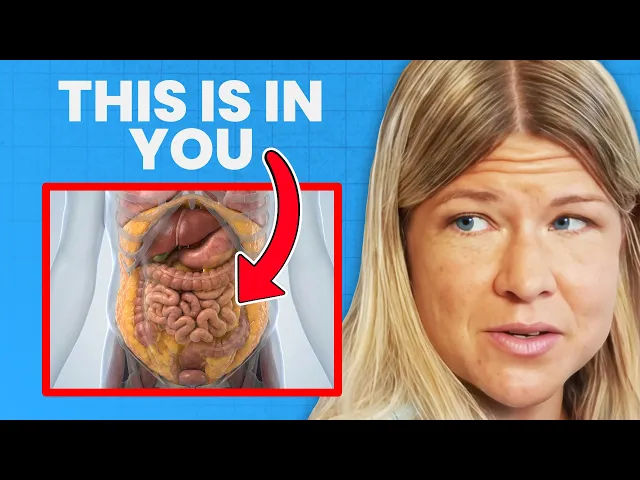
13:23 Still, you quickly mentioned their visceral fat.
13:26 And this is the fat that's deep within the abdomen,
13:30 the dangerous fat that somebody can be accumulating and not
13:34 even really notice the difference looking in the mirror.
13:38 So, another invisible thing happening under the hood
13:43 that can be causing a lot of problems.
13:45 Yeah.
13:45 And wouldn't it be wild?
13:46 I was talking to a friend about this because
13:48 um you really you can't really know how
13:52 much visceral fat and thank you for pointing
13:53 that out because we have two types of fat, right?
13:55 We have subcutaneous like the fat kind of like around you can see around
13:58 like your arms or whatever and then the visceral fat which is the fat around
14:01 our organs and that's the much more dangerous and um if getting a DEXA
14:07 scan which of course shows your bone
14:08 density and muscle muscle mass but also shows
14:11 fat and visceral fat like what if once a year everybody had to get
14:15 lab tests and you know ideally you'd get lab tests maybe twice a year
14:19 but yeah sometimes we see people that haven't had lab tests in 10 to 15
14:22 years and so being able to keep an eye on your numbers, track your numbers.
14:28 Um, that would be that would be ideal
14:32 if somebody wants to get objective with this and get lab
14:35 testing done to see their baseline and then track over time.
14:39 You mentioned the HBA1C,
14:42 would you look at that as part of a bigger panel to assess?
14:47 100%.
14:48 I love that um a lot of healthcare providers especially
14:51 in this space has started recommending fasting insulin um because you know
14:56 I h I have a few people that I've worked
14:58 with that their A1C was normal you know and I'm talking like
15:03 I have a gentleman you know 52 he's like a little
15:07 taller than me I want to say 5'9 and he's 400
15:09 lb and so you would think like this guy's got to be
15:13 diabetic A1C is 5.3 let's get your fasting insulin tested Oh,
15:17 it's 65 for reference.
15:20 I think I think um an intro like sizz under like 10 or 12.
15:24 I mean theoretically I think it's like goes up to 20 is kind of the max range,
15:29 but you know most healthy humans we want it I would say
15:32 under 12 under 10 cuz when you have your pancreas pumping this guy
15:35 his pancreas is pumping out so much insulin that it's actually keeping it
15:40 looks like his blood sugar is normal but what it what is insulin too?
15:43 Insulin is a fat storage hormone.
15:45 It's taking all that all that carbohydrates he's eating and it's
15:48 storing them as fat because his cells are completely saturated.
15:51 He can't store it as um you know carbohydrate anymore.
15:55 And so fasting insulin is a very important piece of the puzzle, you know.
15:59 And so this this guy who's been told by doctors like no, you're not diabetic.
16:02 No, you're fine.
16:04 No, you're not fine.
16:05 Your fasting insulin is through the roof.
16:07 And if you you have an amazing ability to store fat.
16:10 If we were in a famine, you'd be great.
16:11 We're not in a famine.
16:12 and you're going to kill yourself if we don't make some changes here.
16:15 But the good news is despite, you know,
16:17 your fasting insulin, despite your blood glucose,
16:19 despite your usually people like that have very high triglycerides as well,
16:23 um, and we can reverse that.
16:24 We just have to change how you're eating.
16:26 To me, as we're talking, there's three different areas that are jumping out
16:30 at me that are a big part of this problem.
16:32 One being the social acceptance of being fat, which you mentioned.
16:37 two, the dietary guidelines, at least up until now,
16:40 have been telling people to eat carbs,
16:43 a lot of carbs, to stay healthy, which is backwards.
16:46 And then three, the fact that a lot of this is
16:49 going on hidden until somebody gets to that type two diabetes.
16:53 So to me, it's this threeprong disaster that has led us to where we are.
16:59 May I add a prong?
17:00 May I add an additional prong?
17:03 about um what people think, believe,
17:06 and perceive because how you think about situations, your mindset.
17:10 I tell you what, I can I've seen people
17:13 with like my my gentleman that I just said
17:16 with that A1C had less resources than a lot of people
17:18 I worked with and had more success because he said,
17:21 "You tell me what to do and I'll be damned if I don't do it." Like,
17:24 I will do everything.
17:25 And you know, I we meet with these people every week and hey,
17:28 have you had any struggles?
17:29 Have you blown up?
17:30 What do you mean have I had any struggles?
17:31 I did exactly what you I mean had such a you know like iron will
17:35 you know had that self-belief that I can do this I will do this I
17:39 am capable of do this I mean so many people are so tired and they
17:43 they they feel like societ their jobs
17:45 have beat them down maybe their relationships whatever
17:47 that they just I can't do this I've tried all these diets h just give
17:50 me the meds whatever you have to have
17:52 that strong self-belief because life is hard
17:56 anybody's listening to this we you know
17:57 things with their family things with finances things
18:00 you have to believe that I will figure this out and how where I got to.
18:04 It's not my parents' problem.
18:06 It's not my spouse's problem.
18:07 It's not the government's problem.
18:08 It is my problem.
18:09 Where you put the blame, you put your power.
18:11 I can fix this and I will fix this.
18:13 And just every day, every meal,
18:15 that's very passionate about how you think because
18:19 that's the only way you're going to overcome.
18:20 It's just too easy to fail.
18:22 You know, society literally sets you up
18:24 like you can't go anywhere without crappy food.
18:27 So, okay.
18:28 So far, we've talked about lab tests.
18:30 We mentioned that people can notice weight gain
18:33 as they're heading down this path, but not always.
18:36 What other symptoms can somebody look at without going to the doctor other than
18:43 the weight gain piece if they have it to see if they're headed down this path?
18:47 I often find that people are unusually fatigued, you know, at various places.
18:53 If you're you start your day, I'm just going to do a hypothetical time at 6:00.
18:56 And if you're exhausted at 10:00 and then again at 2:00
19:00 and you're just like slamming coffee and carbs to get through the day,
19:04 that is not a good sign.
19:06 If you notice when you have carbohydrates, let's say you're just like, "Oh god,
19:09 I just I don't want to go to work and you have a granola bar or milk,
19:13 something very high in carbs and you feel really good,
19:15 like you kind of feel." That's also not a good sign.
19:18 You're you're riding that blood sugar roller coaster up and down.
19:21 I we want to be stable.
19:22 You should feel good and level most of the time.
19:25 Um, if you are unable to do cardio for 10 minutes,
19:30 if the idea of going for an uptempo 10-minute walk is like,
19:34 "No, I can't do that." Like,
19:36 we should all be able to, you know, do 15 to 20 minutes.
19:41 I'm not saying you need to go run an ultramarathon.
19:44 Who does that?
19:44 That's insane.
19:46 Hashtag me.
19:47 But you do need to be able to do something to get your heart rate up.
19:50 Like if you're to the point where getting
19:52 your heart rate up for one or two minutes,
19:53 you're just like that's not a good sign, you know?
19:57 So, you added another prong, the ownership piece to this.
20:00 I'm going to add one more prong.
20:02 The fact that people need to know that they can
20:05 get better with a lot of these chronic health conditions.
20:08 You go to the doctor, you go to the dietitian,
20:11 and conventionally we're told that the best we can
20:13 do is medicate and prevent going further down the line.
20:18 Throughout our conversation,
20:19 I hope to get into the nuance here of the fact that depending where you are,
20:24 there's a lot of hope here and you can reverse some of this stuff.
20:27 That is like my message to people like
20:30 the human body and brain because there's a lot
20:32 of people that are listening to this or that themselves
20:35 or their families or their children are severe anxiety,
20:38 severe depression, suicidal ideation.
20:40 The human body and the human brain have a tremendous capacity to heal,
20:45 greater than anybody has ever allowed you to believe.
20:47 your doctor, your, you know,
20:49 even like potentially you might read it in the Bible and you're like,
20:51 "That's impossible." No, it's not.
20:54 But you have to fuel it correctly, you know,
20:57 and like you said, you go to a doctor.
20:59 Gosh, and this is the problem.
21:02 And you know, I say this very respectfully because I know doctors.
21:04 I I know many doctors.
21:05 My two oldest sisters are doctors, right?
21:08 So, but you have five to seven, maybe 10 minutes with the person.
21:14 They're going as fast as they can.
21:15 They're trying to type.
21:16 They're giving you meds.
21:17 They're telling you good luck.
21:18 You might see them at 6 months.
21:19 Like, what are you supposed to do with that?
21:21 You know, that's not actually helping you move forward.
21:24 You need to understand how to get better.
21:26 And and just like you said, I think that's very important.
21:28 You need to truly believe that you can
21:32 get better and take ownership of that because often,
21:35 you know, I was told as a young
21:36 human that um people don't really recover from anorexia.
21:39 Like, you're going to have this the rest of your life.
21:41 It's going to rule your life.
21:42 you're going to have to become kind of this high functioning
21:44 person that's constantly dealing with racing thoughts around food and, you know,
21:48 obsessing about that and worrying about that.
21:50 And when we tell people this, you know, they believe it.
21:53 Hey, you have type two diabetes.
21:54 You're just going to have to take insulin your whole life, you know,
21:57 and you're probably going to get sicker, but we're going to manage it.
21:59 We're going to do our best we can so you don't get too much worse.
22:02 What total nonsense.
22:03 But people have to realize, and I know this isn't going to be
22:06 like news to people who listen to your podcast, that this is a business.
22:10 And if you if you get better, I don't make money off of you.
22:14 I can't heal you because then I lose you as a customer.
22:17 I also can't kill you because then I lose you as a customer.
22:19 I have to keep you perpetually sick.
22:20 And that's the business model of our healthcare system kind of blows.
22:26 So, we have to rise above that and say like, no, we believe we can get better.
22:31 We have more than, you know, tons of clinical evidence we can get better.
22:35 And so we're going to take those steps every day and get better.
22:41 Another piece we can add on is having a why.
22:43 And you talk about this in your book.
22:45 We need to know we can get better.
22:47 And then we need to really get down in the nitty-gritty
22:51 and find out what's at the root of our why to get better,
22:54 which is going to give us so much momentum on this journey.
22:59 Yeah.
22:59 And you know, I've talked to interestingly talking to more people about this.
23:03 If you're struggling with a why, like I've had people say like,
23:06 "I just don't have a reason." And you know,
23:08 once again, working with a lot of mental health um patients,
23:12 sometimes our why can be very simple.
23:14 Like, okay, let's table that.
23:16 Give me one thing that you think you might want in the future.
23:20 Like, it doesn't have to be because I do think it's good to have a profound why.
23:23 Like, hey, I love myself.
23:24 I want to do this.
23:24 But if you're struggling finding a why, okay,
23:26 maybe someday I'd like to adopt a kitten.
23:28 That'd be cool.
23:29 All right.
23:29 like it we don't have to find this profound why because we do have
23:32 to act like action you know motivation
23:34 always comes before um after action people get
23:37 that backwards you know oh I'm going to go to the gym when I
23:39 feel motivated okay guess what I'm never going to the gym if I ran when
23:43 I was motivated I'd run like I don't know one day a month it's
23:47 hard so you have to decide like I'm going to do this action action action
23:52 always always matters but yes if you're if you don't if you can't find
23:55 this profound dramatic why start with you know
23:58 what it'd be really cool to like myself.
24:00 It'd be really cool to have a partner.
24:02 It'd be really find anything that gets you started.
24:05 Since you made it to the end of this clip,
24:07 I know you're going to love the full episode.
24:09 Click here to watch.
24:10 I'll see you over there.
24:11 We are not going to medicate or moderate out of this.
24:14 They have great at it.
24:15 Tons of clinical published trials on people
24:18 reversing type 2 diabetes with lower carbohydrate diets.
24:21 But if you're very sick, you need to be focusing on what does your body need.