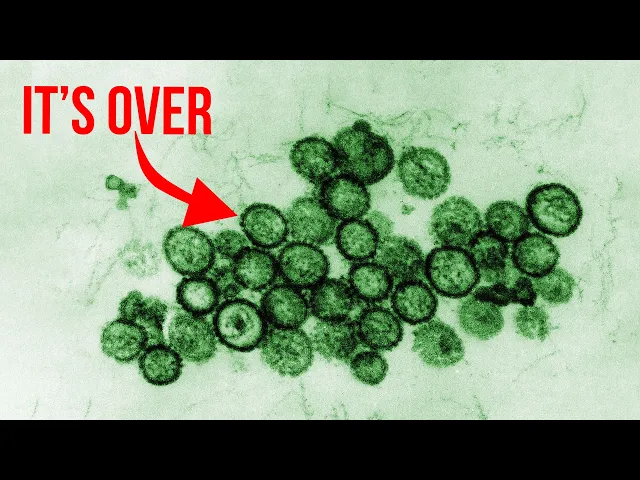
Hantavirus Situation Is Insane
Chubbyemu
0:00 Hi Dr.
0:00 Bernard here.
0:01 I am going to cover a case
0:03 of Hantavirus that was published in Literature in 2025.
0:05 From the same country where it appears
0:08 the 2026 cruise ship incident originated from.
0:10 I am going to cover it as written, and give you perspective of how we would see
0:14 this case as if it came through our hospital.
0:16 I will tell you a little bit about hantavirus,
0:18 and why I don’t think overt panic is
0:20 warranted in context of the 2026 cruise ship incident.
0:23 And I’ll just tell you my personal advice right now,
0:26 it’s very simple and everyone should have been living it anyways:
0:29 1) wash your hands often.
0:30 Before and after you eat.
0:32 After meeting with people.
0:33 And do it as the first thing when you get home.
0:35 Wash them thoroughly, for twenty seconds, and do it twice in succession.
0:38 Think as if you’re a surgeon and you’re about to do surgery on someone.
0:42 2) if you feel sick, and/or have a fever, stay at home.
0:46 And 3) if you have trouble breathing, go to the hospital.
0:49 Simple rules for life in general, I highly recommend them.
0:53 JB is a 52-year-old man presenting to the emergency room sweaty and nauseous.
0:58 He had hypotension.
0:59 Hypo meaning low.
1:00 Tension referring to blood pressure.
1:02 Low blood pressure.
1:03 And he had a fever.
1:04 When doctors measured his blood oxygen saturation, it was 89%.
1:08 Under 90 needs emergency medical attention because
1:11 it means that the body is suffocating.
1:13 They see him sitting there confused, obtunded, and unaware of where he was.
1:17 These symptoms suggest his brain is starving
1:19 of oxygen and something terrible is happening.
1:22 A chest X-ray reveals his lungs are filled with fluid.
1:25 This prevents the oxygen exchange from the air,
1:28 into his blood, explaining why he’s suffocating.
1:31 A blood test confirms he has hypoxemia.
1:34 Ox referring to oxygen.
1:35 And -emia meaning presence in blood.
1:38 Low oxygen presence in blood.
1:40 It’s not just low saturation, the oxygen actually isn’t there.
1:43 But why is that fluid in his lungs?
1:46 He might be volume overloaded.
1:48 Water has flooded his body and has no where
1:50 else to go other than to squeeze into his lungs.
1:53 Or his lung blood vessels have been leaking.
1:56 Or there’s an infection in his lungs.
1:58 Some of these will take time to confirm.
2:00 But doctors need to do something NOW.
2:02 JB was given supplemental oxygen.
2:04 Air is only 21% oxygen.
2:06 Vastly increasing the amount of oxygen per
2:09 inhalation should ameliorate some of the hypoxemia.
2:12 And this buys some time.
2:14 But as the hours pass, it stops working.
2:18 JB’s oxygen saturation decreases.
2:19 Something very bad is happening to him.
2:22 And it’s happening very quickly.
2:23 And, it’s getting worse.
2:25 He’s transferred to the intensive care unit.
2:27 JB is sedated.
2:27 A tube is placed down his throat so that a machine can breathe for him.
2:31 But as the hour passes, JB goes into shock.
2:34 His blood pressure suddenly drops even more.
2:36 This means that blood can’t get to all of his organs.
2:39 But most importantly, it cant get in to his brain.
2:42 If oxygen already wasn’t getting into his brain
2:45 adequately because he had hypoxemia, then,
2:47 adding severe hypotension on top means that there’s seconds
2:50 to minutes left before his brain suffers permanent damage..
2:54 Because oxygen makes energy production happen in cells.
2:57 Normal blood flow and breathing helps clear
2:59 out the wastes produced by brain cells.
3:01 When that mechanism no longer functions, JB’s brain will cease to exist.
3:05 2 medicines were immediately given.
3:07 The first one constricts his blood vessels and forces his heart to beat harder.
3:11 The second one tells his kidneys to hold on to water.
3:14 These should push his blood pressure higher.
3:16 But it wasn’t enough.
3:18 Shortly after his ICU admission, JB stops making urine.
3:21 His kidneys have completely shut down.
3:23 Doctors had to hook him up to a dialysis machine
3:26 so that the body waste that would have been urine, can be filtered out of him.
3:30 A chest CT scan confirms JB has pulmonary edema.
3:33 This is the fluid that’s in his lungs.
3:35 And there seems to be more now than when he presented to the emergency room.
3:40 But this higher resolution scan gives more insights.
3:43 It kind of looked like JB had a fungal infection.
3:45 But this was borderline.
3:46 If it isn’t fungus, then for sure what’s happening isn’t a typical infection.
3:51 Other parts of his lungs had collapsed.
3:53 Doctors start him on multiple antimicrobial agents
3:55 to cover a wide variety of pathogens.
3:58 It’s still not clear that this is absolutely an infection.
4:01 But if it is, one of these could start working some,
4:04 and buy time to figure out why this much fluid has flooded into his lungs.
4:09 They write a list of problems,
4:10 and they need to rule each one out to make a diagnosis of what’s wrong,
4:14 so that they can treat him properly.
4:16 Hey quick question.
4:17 Have you learned something from this video so far?
4:20 If you have and you aren’t subscribed yet,
4:22 I’d really appreciate it if you did subscribe and come
4:24 back to see the video that I post next month too.
4:27 I’ve made one video a month on average, every month since 2017.
4:30 This is my fun time hobby,
4:31 and I make these to teach about medicine through stories.
4:34 It’s one of the best ways that we teach clinically.
4:36 I make these and it’s genuinely one of the highlights of my day.
4:40 I’m thankful for the opportunity to make these for you.
4:43 Appreciate you.
4:44 JB was previously healthy.
4:45 He had just come back from a trip in Argentina,
4:48 before experiencing a fever for 7 days.
4:50 These are important to know,
4:51 because theres only a couple things that this could be.
4:54 It’s not a previously known chronic disease.
4:56 And fever means, this could be an infection.
4:58 That involves fluid in the lungs.
5:00 That means, this could be pneumonia.
5:02 The problem is, pneumonia usually comes with a productive cough.
5:05 He didn’t have that.
5:06 And when he was tested for respiratory bacteria and viruses,
5:10 they all came out negative.
5:12 So, this isn’t pneumonia.
5:14 Fever also could mean inflammation.
5:16 If not pneumonia infection, then, maybe this is autoimmune.
5:19 The immune system attacking the body.
5:22 Shortly after ICU admission, JB’s kidneys failed.
5:24 That could be the immune system attacking it.
5:27 When that happens, the immune system can also attack the lungs simultaneously.
5:31 And this pulmonary capillaritis, -itis meaning inflammation.
5:35 Capill from capillary which is the small blood vessels in the lungs,
5:39 and pulmonary referring to the lungs, can result in diffuse alveolar hemorrhage.
5:43 Alveoli being the air sacs surrounded
5:46 by capillaries where oxygen exchanges into the blood.
5:48 The bleeding would be the fluid that’s flooded into his lungs.
5:52 And the bleed would be getting worse coinciding
5:54 with his kidneys suddenly shutting down in the intensive care unit.
5:57 But the reason this why this isn’t likely,
6:00 is because nothing indicated that JB had autoimmune disease.
6:03 Blood test didn’t say it.
6:04 Past medical history didn’t show it.
6:06 So, this was unlikely, leaving one final problem.
6:09 JB had fluid in both lungs.
6:11 Without evidence of pneumonia,
6:13 this means that his lung blood vessels were leaking.
6:16 He fell into shock when he arrived to the ICU.
6:19 Both of these together, suggest viral infection.
6:21 And given that he had recently been in Argentina before he had the fever,
6:26 this suggests one virus that wasn’t tested for when doctors look at pneumonia,
6:31 because it doesn’t cause pneumonia, rather,
6:33 it suffocates the person by flooding their lungs with fluid.
6:37 This one is called hantavirus.
6:39 In the intensive care unit,
6:41 doctors order serologic and molecular testing for hantavirus.
6:44 This is not a standard test, because,
6:47 this is not a common problem in most places on this side of the earth.
6:51 And it came out positive.
6:53 What is hantavirus?
6:54 The original name was Hantaan Virus.
6:56 From the Hantan River in Korea.
6:59 This exact location tells us how this was re-discovered in modern English.
7:04 In 1951, United Nations troops stationed by the Hantan River started
7:08 reporting an epidemic hemorrhagic fever that would end in kidney failure.
7:11 At the time, they didnt know what it was that caused it,
7:14 and they didnt know how it was happening.
7:17 27 years later, Dr Ho Wang Lee was
7:19 able to identify what caused that hemorrhagic fever,
7:21 and he found out, it was a virus that’s first hosted in infected rodents,
7:26 before being passed on to humans.
7:28 He named this the Hantaan Virus.
7:30 It looks like it had been described and alluded
7:33 to in ancient Chinese texts from thousands of years ago,
7:36 describing inflammatory fever diseases that ended in kidney and lung disease.
7:40 For sure, this appears to have been a known entity to locals for centuries.
7:45 When scientists looked closer, they found that this virus had been
7:48 circulating around much wider area than previously thought.
7:51 Korea, China, Japan, Russia, and getting as far as Scandanavia.
7:54 And when we started developing the technology to sequence genomes,
7:58 we found out that many viruses in different
8:01 geographic locations were genetically similar to Hantaan Virus.
8:04 They were related, though, just slightly different.
8:07 And this is where the Hantavirus family comes from.
8:10 One reason why theres distinction among family members here,
8:12 is that the illness caused by each virus can be a little bit different.
8:16 Overall, they either cause kidney failure,
8:19 or, they cause cardiopulmonary failure, like in JB’s case.
8:22 And, at least during the time of Dr Ho Wang Lee,
8:25 it was found that most all of the viruses in the family
8:29 were transmitted to humans through airborne particles of infected rodent feces.
8:34 You inhale them, and then it gets you.
8:36 However, there was a pivotal discovery that linked
8:38 the Americas with these Eurasian hantavirus species.
8:41 On May 14, 1993, a 19 year old man was
8:46 driving through the Four Corners to go to his fiancee’s funeral,
8:49 when suddenly, he couldn’t breathe.
8:51 He had no known health problems.
8:52 He was a marathon runner.
8:54 He stopped at a local gas station because regular
8:56 people back then didn’t have cell phones back then, and he called for help.
9:00 An ambulance arrives, but, before it does,
9:02 he collapses because he can’t breathe.
9:04 In the emergency room, they find that fluid had filled into his lungs.
9:08 And within minutes of arriving to the hospital, he’s not alive anymore.
9:11 This didn’t make sense.
9:13 Someone this young and healthy shouldn’t pass away like this.
9:16 New Mexico Office of the Medical Investigator was contacted.
9:19 And the investigator at the time was totally shocked.
9:22 Because, a few weeks earlier,
9:23 another young woman nearby had also passed away in the same manner.
9:27 She was previously healthy too, but then suddenly, she had trouble breathing.
9:30 Collapsed.
9:30 And then it was over.
9:32 At autopsy for both patients,
9:34 doctors noticed that there was nothing structurally wrong with their lungs.
9:37 They just suddenly filled with fluid, and then their lives were over.
9:40 Something very bad was happening.
9:42 That 19 year old man’s fiancee.
9:43 He was going to her funeral.
9:45 Why did she pass away?
9:47 Investigators found out that she was only 21.
9:49 She had passed away only a few days earlier.
9:52 She was also a marathon runner like her fiancee and previously healthy.
9:55 During her autopsy, a different doctor who was present.
9:59 He immediately remembered a recent consultation that he
10:01 was a part of, involving 2 more young,
10:04 previously healthy adults who collapsed after
10:06 suddenly not being able to breathe, and then subsequently passed away.
10:10 Both of those patients also had unexplained pulmonary edema.
10:14 New Mexico Department of Health sent a letter to Arizona,
10:17 Colorado, New Mexico And Utah,
10:18 because it appeared there was an occult illness happening right at the border.
10:22 And they received responses: multiple cases of a mysterious illness that all
10:26 presented the same way in previously healthy patients,
10:29 had been reported all around the Four Corners.
10:32 And even worse, it was 80% mortality.
10:34 CDC was asked for help.
10:36 They tested autopsy samples for gene samples of various pathogens.
10:40 And it was here where they saw something that had been never seen before.
10:44 Public health officials went to homes of the deceased.
10:46 They found rodents in and nearby the buildings.
10:49 They collected them.
10:50 Tested them.
10:51 And found these rodents had the same pathogen genetic material,
10:54 that these patients did at autopsy, meaning that something was passed on.
10:58 When they were able to grow it, they discovered a virus,
11:02 that was a previously un-described species of hantavirus.
11:05 This is the first time a cluster
11:08 of infections was formally described in the western hemisphere.
11:11 But there was a problem.
11:13 Infected small animals were the only known
11:16 vectors to hantavirus known at the time.
11:18 And massive quantities of small animals,
11:20 enough to mutate an entirely new species of hantavirus,
11:24 can’t easily get from Asia to New Mexico,
11:27 meaning, this species, had always been here.
11:30 But why was it showing up in 1993?
11:32 Not too far from the Four Corners,
11:35 there were persistent rains all over the midwestern United States in 1993.
11:39 The rivers that feed into the Mississippi River started overflowing.
11:42 And after several months,
11:44 the water became so much that the Mississippi River itself flooded.
11:48 This was the one of the worst floods in US history.
11:50 But where did that rain come from?
11:52 And what does it have to do with hantavirus?
11:55 On July 16, 1990, there was a magnitude 7.8 earthquake in the Philippines.
12:00 Two weeks after the quake,
12:01 local residents reported steam was coming from a nearby volcano.
12:05 Over the next several months, successive earthquakes were felt until April 2,
12:09 1991 when that volcano Mount Pinatubo erupted.
12:12 It sent 20 megatons of Sulfur Dioxide into the atmosphere,
12:17 and triggered a volcanic winter.
12:18 The global temperature dropped half a degree celsius for 2 years into 1993.
12:23 This created abnormal conditions for excessive precipitation
12:26 in North America causing a river flood.
12:29 But also, the Four Corners also had massively increased rains.
12:34 And this is where it connects to hantavirus.
12:37 In spring of 1993, a sudden influx of biologists
12:40 came into the Four Corners region to study.
12:43 The rodent population had exploded by 10 times,
12:46 because there was an increase in local vegetation due to increased rain.
12:50 Public health officials at first didnt realize this.
12:52 But once they made the connection, they realized: with more rodents,
12:56 it means there was more chance for rodents to get infected.
12:59 And more chance for an infected-rodent-associated-disease
13:02 to be transmitted to locals.
13:05 Meaning, hantaviruses had already existed in North America.
13:08 It’s just that we hadn’t directly observed it yet for multiple reasons.
13:13 In 2025, a high profile case of Sin Nombre hantavirus was reported.
13:17 That’s the one from the 1993 outbreak.
13:20 Betsy Arakawa, wife of Gene Hackman, had passed away in her home in New Mexico,
13:24 while his dementia had progressed to the point
13:26 where he didn’t realize what was happening.
13:28 She very likely, felt ill for days after her first exposure,
13:32 and then suddenly couldn’t breathe.
13:34 And it was found to be hantavirus.
13:36 It is endemic in this region of the country.
13:39 Finding her case is a legacy
13:41 of this direct observation of hantavirus in the region.
13:44 But in 1993, this region still wasn’t quite aware of it.
13:48 And why?
13:49 Well, this is not a densely populated part of the country.
13:52 If cases had shown up in the past, they were probably one-offs that were hard
13:56 to identify without multiple cases showing a pattern.
13:58 You can see it happening in realtime as the 1993
14:01 outbreak was unfolding at first from the 19 year old man.
14:04 It would have looked like people suddenly collapsing for no reason.
14:08 But with 10x more rodents in an area than normal,
14:11 clusters of cases will draw attention, and allow investigators to connect ideas.
14:15 But when it was identified in 1993, scientists wanted to know,
14:20 is this North American species different than the hantaviruses found in Asia?
14:24 And if South America has different small animal species,
14:28 and this virus is transmitted through infected animals,
14:31 is it possible that South America has different hantaviruses too?
14:36 And the answer to both was yes.
14:39 Argentina.
14:39 1995.
14:39 2 people in a rural area in the south (El Bolson) suddenly stopped breathing.
14:45 At autopsy, doctors found hantavirus genetic
14:47 material in the lungs and the liver.
14:50 When they compared it to known hantaviruses, it was distinct.
14:53 They named this one the Andes Virus.
14:55 This was interesting because, if this was spread by infected rodents,
14:59 well, South American rodents are different from North American ones.
15:02 And while they didn’t know which rodent
15:05 could transmit this Andes virus at the time,
15:07 it wasn’t very long until they found out
15:09 that Andes Virus can be transmitted from human to human
15:12 in a small cluster of infections in the same
15:15 town where the virus was first found the year earlier.
15:18 This brings us to 2026.
15:19 A group of people boarded a cruise ship in Argentina.
15:22 Near where Andes Virus is known to be.
15:25 5 days later, one of the passengers started feeling ill.
15:28 And 5 more days later, he wasn’t alive anymore.
15:30 No one knew what happened.
15:32 When the ship arrives at St Helena island 13 days later,
15:35 on April 24th, his body was examined at the hospital.
15:38 His wife, who accompanied his body, wasn’t feeling well.
15:41 The next day, she took a flight
15:43 from St Helena island to Johannesburg, South Africa.
15:46 When she lands, she collapses at the airport, and then passes away.
15:50 The cruise company hadn’t confirmed that these deaths
15:52 were related to a medical situation onboard that boat.
15:55 But the same day when the wife passes away,
15:57 another passenger on the boat becomes ill.
15:59 He’s evacuated to South Africa, and admitted into the Intensive Care Unit.
16:03 5 days later, on May 2nd, another passenger on board the ship,
16:07 has difficulty breathing, before suddenly passing away.
16:09 From the patient still alive in South Africa,
16:12 doctors are able to confirm that he has hantavirus.
16:16 World Health Organization is contacted,
16:18 and they were able to identify 7 total cases of hantavirus onboard the ship,
16:22 and including the deceased as of early May 2026.
16:26 And it was here where WHO was able to confirm, this was Andes Virus.
16:31 This is the one that can be transmitted human to human,
16:34 and evidence was already mounting before it
16:36 was confirmed that this was the causative agent.
16:39 Started from Argentina.
16:40 The ship’s doctor, who would tend to those who feel ill,
16:43 started getting sick himself and had
16:45 to disembark the ship to get medical treatment.
16:48 Andes virus is a different hantavirus species than what JB likely suffered.
16:53 The reason we know this is because
16:55 Argentina has multiple hantaviruses unique to different regions.
16:59 Andes Virus comes predominantly from the south.
17:01 JB got sick in the north.
17:03 But despite all of this, the illness is still more or less the same,
17:07 in that there’s a sudden cardiopulmonary collapse that follows
17:10 a period of time where the patient will feel sick.
17:14 So that’s why it’s important for you
17:16 to get medical attention immediately if you feel sick,
17:18 especially during times when alarm bells for hantavirus
17:21 have been raised in your local area.
17:23 There is no direct medicine to give for hantavirus
17:26 cardiopulmonary syndrome as of the time I am publishing this.
17:28 It’s supportive care.
17:29 It’s the tube down JB’s throat for the machine to breathe for him.
17:32 If that doesn’t work,
17:34 then it’s redirecting his blood to a machine that oxygenates
17:36 it for him and pumps it back into his body.
17:39 Over time, it’s known that the body does eventually clear out the virus,
17:43 taking out the fluid that fills into the lungs,
17:45 and allowing the person to be able to breathe once again, normally.
17:49 And all of this is possible if the person
17:51 sought and received the correct care in time.
17:54 So there’s a few things here to know.
17:56 Some people are concerned, and rightly so, about the 2026 cruise ship outbreak.
18:01 Because there’s passengers who disembarked the boat after
18:03 the announcement that someone had died on board.
18:06 I haven’t been on a cruise for a long time,
18:08 but I can’t imagine if I would be ok knowing that there’s a dead body
18:11 on the ship for my vacation for 2 weeks before anyone does anything about it.
18:15 Where are they keeping the body?
18:16 Is it in the room next to mine?
18:18 I hope not.
18:19 But if this virus can transmit from human to human,
18:22 and that virus was circulating among the passengers,
18:25 and there are passengers who left early,
18:27 is it possible that they could be spreading
18:30 it out to everyone around them in their hometown?
18:33 That’s a question everywhere in the news right now.
18:36 It is possible.
18:37 And the only real experience that is
18:39 known about this comes from southern Argentina,
18:42 in the 1996 case cluster, and a second one that happened in 2018.
18:46 One person had gotten infected.
18:48 They were ill while at a birthday party.
18:50 And people at the birthday party who sat close to this person,
18:54 subsequently got sick 17-24 days afterwards.
18:56 One of these people had a very active social life
18:59 and went on to infect 6 more people before he was symptomatic.
19:03 And 16 days after symptom onset, this person stopped breathing, and it was over.
19:08 His wife had a fever while attending his wake.
19:10 And 10 people who came into close contact with her during
19:14 the wake became ill 14 and 40 days afterwards.
19:17 And in total, there were 34 people getting
19:20 infected and 11 deaths from this 2018 outbreak.
19:23 Something important to note from this: no healthcare
19:26 worker who treated the infected patients got infected themselves.
19:30 And medical teams are exposed to (almost)
19:32 every bodily fluid possible during treatment.
19:34 They did have protective equipment on, but it wasn’t uniform.
19:39 Keep in mind, we’re speculating whether or not the human
19:42 to human transmission comes from saliva droplets and other body fluids.
19:46 Some of the transmission described between patients
19:48 in this paper is a little ambiguous,
19:51 for example, this patient, is reported as his daughter.
19:54 This method of transmission is a valid topic to bring up.
19:57 However, I hope something in here was reported incorrectly.
20:00 And also simply saying hi.
20:01 Very possible Andes Virus can be
20:04 transmitted through saliva droplets like sneezes,
20:06 but we just dont know enough right now.
20:08 What we do know, is that the difference between this and 2020,
20:12 is that back in 2020, we had never seen that before.
20:16 It was kind of similar to something we saw in 2002, but also not really.
20:20 And the unknown part in the very early months of the year was the scary part.
20:25 But this Andes Virus, has been known for 30 years.
20:29 The 1996 and the 2018 cases demonstrated
20:31 that the virus had no mutations in that time period.
20:35 And it looks like in the 2026 situation, it hasn’t changed much, again.
20:38 Thats not to say it wont change going forward.
20:41 But we can only act on the information that we have now.
20:44 If it changes, then adjust accordingly.
20:46 The point of this is that we know what to do in the cases of hantavirus.
20:50 And it’s good that the alarms have been
20:52 raised so that should a case come through,
20:54 the medical team will know what to look for.
20:57 What is particularly dangerous is when the medical team doesn’t
20:59 know what they’re looking for and diagnose hantavirus as something else,
21:03 like a pulmonary embolism, atypical pneumonia, or pulmonary capillaritis.
21:07 That’s why I showed the differential diagnosis in JB’s case.
21:10 This is unlike January through April of 2020,
21:13 where that pathogen really was something new.
21:15 This isn’t new.
21:16 We’ve known about it for decades in America, millennia in Asia.
21:19 This is a data point that one should be aware of.
21:22 Take note of.
21:23 You should take the precaution of making sure
21:26 your hands are clean by washing after you come home.
21:28 Wash your hands before you eat.
21:30 If you feel sick and have a fever, stay at home.
21:32 And if you really don’t feel well, go to the hospital.
21:35 This is your datapoint.
21:36 And those are actions for you to take.
21:38 Because now the whole world knows about hantavirus,
21:41 should someone actually have trouble breathing
21:43 that descends to sudden cardiopulmonary collapse,
21:45 they are more likely to get the right care that they need,
21:49 than compared to before the time this hantavirus cruise ship story came out.
21:54 Doing those 3 things and paying attention are all
21:56 the brain power I personally will dedicate to this.
21:59 And that’s my humble recommendation to you as well.
22:02 For JB, he was in the intensive care unit for 40 days.
22:05 During this time, his respiratory
22:07 function and blood pressure gradually improved.
22:09 His kidneys were able to completely recover.
22:12 After physical therapy and rehabilitation, JB was able to make a full recovery.
22:17 This is what a hantavirus cardiopulmonary case looks like.
22:21 All hantaviruses that cause this syndrome more or less look like this.
22:25 The renal hemorrhage version that’s found in Asia looks a little bit different.
22:29 But the 2026 cruise ship one is the cardiopulmonary one.
22:33 When one gets the right treatment in time, they can make a full recovery.
22:37 And good thing that we’re able to raise the alarm bells now,
22:40 so that should any patient present to any
22:43 given hospital with similar symptoms like JB,
22:45 which are fever, confusion, shortness of breath,
22:48 with low oxygen saturation and hypoxemia with a fever AND they
22:52 may have had prior contact with someone who had hantavirus,
22:55 the hospital should be able to order the right
22:59 tests (they still would need to rule other things
23:01 out just in case) in the right time so
23:04 that they can deliver the correct care to that patient.
23:07 Just based on the information we have at the time
23:09 I am publishing this, I am not overly panicked about this.
23:13 Be mindful.
23:13 Have it in the back of your mind.
23:16 Take your necessary precautions, and continue on.
23:18 Take care of yourself.
23:20 And be well.