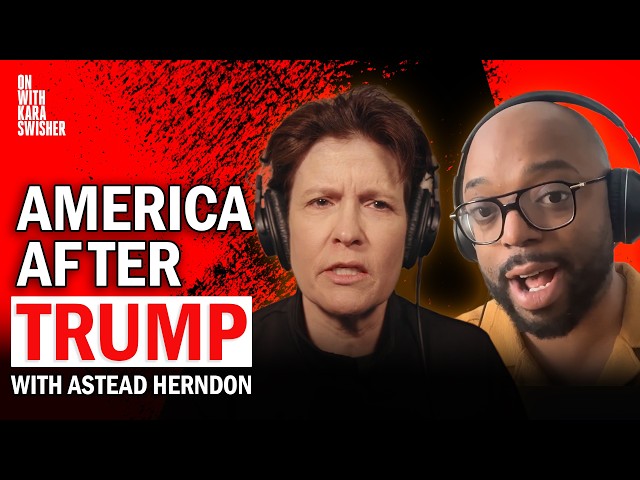
Political journalist Astead Herndon on the fight for America’s future
On with Kara Swisher
0:00 Who do you see anyone taking over the magga mantle?
0:02 It starts with JD Vance and others.
0:04 And so I think he's going to have first right of refusal.
0:09 And if that flop happens, then floodgates open.
0:12 But I think it's a real a big chance that flop happens.
0:15 So
0:16 So let's talk about where MAGA movement is and whether or not it's splintering.
0:19 I think for people who haven't lived in the turning points world, you know,
0:24 like I I used I follow Charlie Kirk on some
0:26 of his tour and leading up to the 24 election.
0:29 I don't think you can fully appreciate how much
0:33 of a fundamental promise Donald Trump broke with the Iran war.
0:37 Talk about looking past the midterms,
0:39 how you assess the medium and long-term prospects for Democrats.
0:43 It feels like Democratic base has recognized that um the the normal
0:48 shell game of kind of electability
0:50 is not something they're inherently differential to.
0:53 Now, does that mean that there's can be no moderate candidate that wins?
0:55 Absolutely not.
0:56 Like I think that that means you need to be
0:59 someone who has your own version of a vision.
1:02 It is.
1:08 Hi everyone.
1:08 Today my guest is journalist and fellow Vox podcast host ED H.
1:12 turned in.
1:13 We're talking about Donald Trump and what a postTrump America could look like.
1:18 Yes, people, it is coming.
1:19 This is a great conversation.
1:21 So, stick around.
1:23 Aad, thanks for coming on on.
1:25 Thank you for having me.
1:26 I appreciate it.
1:27 I'd love to know what was the thinking behind
1:29 what you wanted to do and where where you're going.
1:31 Your new Vox podcast's called America Actually with a dead Hearnden.
1:36 Um, you said when you started developing it,
1:38 your first thought was I want to be Trump free.
1:40 So, you're trying to figure out what American politics
1:42 will look like without Trump as the driving force.
1:45 Uh, I'd love to know why you decided to do it this way,
1:48 leave the Times, obviously, and and what you've found so far.
1:52 Yeah.
1:52 Yeah.
1:52 I mean, for me, it was really about kind of embracing our new media space.
1:57 I wanted to do and be somewhere where I could embrace all mediums, right?
2:03 Text, video.
2:04 I wanted to do that based on the premise of like my own
2:08 kind of journalistic lens and kind of free myself of time subscriber.
2:13 Uh, and I also just think that like
2:15 in this kind of moment of politics specifically,
2:19 people um trust individuals.
2:21 They trust people who kind of can put themselves out there transparently,
2:25 can put their process out there transparently.
2:28 And so I kind of wanted to just do that in its
2:30 clearest form and felt like box was the best opportunity to do that.
2:35 Um and to the point about Trump freess, you know,
2:38 as we were thinking about what's going to make this, you know,
2:40 what's what's going to define this show and and kind
2:42 of what do we want our lane to be?
2:44 Obviously, my work has been around elections,
2:46 national elections, midterms, and presidential.
2:49 And this one is unique in that um you know it's the first time since
2:53 2016 we've had these two open primaries
2:55 or at least are building to open primaries.
2:59 They made me think you know we are on this journey
3:01 of theoretical Trump replacement but it seems kind of uh implausible right now.
3:08 I think he takes up so much of this it takes so
3:11 much of up of our ecosystem it's can hard to see past him.
3:14 And so I thought that you know it can
3:17 we can use these elections and we can use kind
3:19 of this runway as an opportunity to start telling that story
3:23 because I think that will be the deeply defining stories.
3:26 What parts of this do we take with us?
3:27 What parts are we leaving behind?
3:29 like what parts of this are defining to a change country
3:34 like I don't I'm making a new word here but is
3:36 it possible to leave behind because certain presidents and certain political
3:40 figures have left either a stain or or a lasting impression right
3:45 yeah and I also think that his um the way
3:48 he has exploited political systems a lasting impact the way
3:53 that he has broken down norms or just increased some levels
3:56 of shamelessness of elected officials I think it's a lasting impact.
4:00 But I still think there are some things uh uh
4:03 whether on the on the Democratic side that's defined themselves around
4:07 opposition to him or on a Republican side that's kind
4:10 of just deferred to him personally that we just simply don't know
4:13 cuz when you say Trump Free when I read that I was like
4:15 can we be is it possible like even dead he'll be interesting right?
4:20 Yeah.
4:20 Yeah.
4:20 So I don't really I mean it more beyond him.
4:22 I just mean non-Trump centric more so and I just think that takes the issues
4:27 that we think about all the time and puts a different lens on them.
4:30 Yeah.
4:30 And so instead of asking simply like uh uh
4:34 you know what the impact is from the top down or or what kind of the last person
4:39 in the room was to push him for decision making.
4:41 We're looking for the impact of that.
4:43 We're looking for how that's going to play
4:44 out in terms of other elected officials.
4:46 And mostly we're looking to how people have tried to live,
4:50 how have people have largely been
4:52 dissatisfied with the solutions that he's proposed.
4:55 And so I think that's really come through in the second term universally.
4:59 And so it makes our framing in my opinion a little easier.
5:02 Yeah.
5:02 It's interesting because one of the things I I
5:04 keep thinking about is like how do you move on?
5:06 There was a brief moment where you forgot about
5:08 Trump after he lost when he was in, you know,
5:11 Igny and he went down to Mara Lago and the insurrection
5:14 and everything else until Kevin McCarthy showed up essentially.
5:18 He was on his way
5:19 to the trash heap as
5:21 I think that's a underrated moment people forget about like uh
5:24 in that post2022 midterms uh there was a big space of Republicans.
5:29 I was at that Republican winter convention where they were talking
5:32 about kind of how he was electoral drag on the party.
5:35 They had also assumed like many others did that his looming
5:39 legal problems would be kind of the nail in his political coffin.
5:42 And so sometimes when Republicans act as if they've seen
5:45 this and they've been on the train the whole time.
5:47 I'm like that's not true.
5:48 Like I I remember those moments when they were
5:51 trying to create space for other people to come in.
5:54 It's simply that the base rejected it when and and we saw this, you know,
5:58 when I was making the runup my times
5:59 podcast when those when those criminal indictments came,
6:03 it for a lot of that that Republican electorate,
6:06 it felt like a need to rally around the guy and that completely
6:10 changed the tenor of what was going to be a more open race.
6:14 You know, it's not just a personality block or things like that.
6:18 it is that there was a moment in time
6:20 in which that kind of window for Republicans to see
6:24 the ability to move past them collapse and so
6:26 their self-interest started aligning with where their base increasingly
6:30 was post those indictments and so I just think
6:32 that some of those seeds uh we've seen in individual
6:36 moments but this election and the our our our march
6:39 to 2028 will bring them more clearly out
6:42 right well interestingly it still has this as you say lasting impact according
6:47 to a new Ipsos poll which I am in apparently and I'm quite purple.
6:50 I have I have purple fans.
6:52 Hey, that's great.
6:53 I know.
6:53 I was sort of surprised.
6:54 I'm like, "Hey, San Francisco lesbian here." But sure, why not?
6:58 Um, online platforms and personalities, especially those on the right,
7:01 have overtaken television and print outlets as regular news
7:04 sources among people who voted in previous presidential election.
7:07 That's very obvious.
7:08 Talk about um that because you know Trump
7:11 2.8 does had a lot of influencers, broers.
7:15 I think they're sort of on the Wayne a little bit too,
7:17 but uh as they But are they the new political journalists?
7:21 How do you look at like as you made your decisions because
7:24 you you literally went out and talked to people which is called reporting.
7:28 I know kids it's this really cool thing.
7:29 You actually find out what people think and then you come to a conclusion
7:33 based on that and you can have your own insights and everything else.
7:36 But talk a little bit about that.
7:38 I mean, it definitely is a change in in in in news ecosystem,
7:41 and we've seen it as we've been on campaign trail.
7:43 When we ask people where they get
7:45 their news or where they're getting information from first,
7:47 you hear people increasingly who don't want that information at all.
7:51 Like, I think that's the number one change I I I feel like I picked up.
7:55 People kind of openly saying, "Well, I keep clear of that.
7:58 I don't try to I don't try to hear that.
8:01 I try to insulate myself from that 100%." And then
8:04 the second thing I think is leaning on individual voices who
8:07 people trust who are increasingly and I think in that um
8:11 Biden years especially were more right-wing were more of those brocasters.
8:15 I think we're sign starting to see that change
8:16 a little bit as that uh uh uh ecosystem changes.
8:20 But it it was true that I think it did displace your kind of shared
8:24 political reality of the times A1 or the kind
8:28 of shared political reality of cable news
8:30 even if they're arguing about things electorate doesn't
8:33 care about it mostly did keep a kind of guard rail of discourse on establishment
8:38 that I don't think is necessarily there anymore.
8:41 And so I think another thing that's hugely
8:43 changed too is not just the news sources
8:45 but the fundraising mechanisms too from you know
8:48 from small donors uh uh you really have
8:51 a a a specific activist class or people who are like most interested and you can
8:56 raise a lot of money by just speaking
8:58 in that uh just speaking to those people too.
9:00 And so there's a lot of incentive for the influencer age of politics right now.
9:05 It's almost impossible to imagine a Trump
9:07 presidency without the rise of social media.
9:09 change what Americans expect from their politicians.
9:11 We even see Democrats copying aspects of the cell Gavin Newsome for example.
9:15 Can a normie candidate win the presidency again?
9:18 Will successful candidates have to be that way?
9:22 Troll and meme their way to virality because I
9:24 wrote a column a couple of years ago, 2018,
9:26 when I was writing for the Times and I said
9:28 he's the world's greatest internet troll and this is important,
9:31 you know, this is an important aspect.
9:33 Um, which everyone was like, no,
9:35 it's the it's the political, you know, press class.
9:38 I was like, he's he's bypassing.
9:40 And so is by the way, AOC.
9:42 I compared, you know,
9:43 these genuine whether you like them or not is a different thing,
9:46 but they're certainly genuine voices.
9:48 Mom Donnie certainly uh you're watching it in real time.
9:51 He's really quite good at it.
9:52 The way
9:53 people who can go directly to their audience and people who have kind of cut out
9:57 that gatekeeper to create a sense of trust
9:59 and they're they deliver their own news to their audience.
10:02 The biggest thing that McDumi has is that kind of credibility as kind of direct
10:07 to camera uh uh direct to Instagram
10:10 audience organizing ability that he's cultivated over time.
10:13 So I definitely think you're right that um uh
10:15 the new type of politician I think led by Trump uh
10:19 has played assignment editor for media bypassing us but also
10:23 I think can um talk to their voter more directly.
10:26 to the point about norm normie candidate.
10:28 Uh I still do think that you can be a sort quote
10:31 unquote normal candidate and maybe not an open troll and still win.
10:35 But I do think you have to command attention
10:37 or have the ability to command attention in this economy.
10:41 And so in this in this decentralized landscape,
10:44 I don't think uh uh you can simply rely
10:48 on the press release or the X statement or or or whatever.
10:53 I think you have to have the ability to do the 30 second video,
10:56 to do the threehour sit down and to be able have a message that cuts
11:00 through on both fronts because sometimes I think
11:03 that we only think about um uh you
11:05 know the the delivery of message but what the biggest thing I think that helps
11:09 Zoron or AOC is a consistency of message too that they can kind of bring Yeah.
11:15 that they can bring to every platform and they're very comfortable in that.
11:19 You know, I make the example of there was so much
11:21 back and forth obviously about Harris going on Joe Rogan 24.
11:26 She did do big podcast and such, but I was like the content of what she
11:31 brought to that platform was pretty much a stump speech.
11:35 That's right.
11:35 And so if you're going to go to new mediums and behave in an old way,
11:39 I don't think it does the same type of work.
11:42 You need to bring
11:43 that new message to that new medium and that's where the magic happens.
11:46 Yeah.
11:46 We had talked about it and I was like,
11:48 "You don't understand." And I didn't mean it this way.
11:50 I was like, "Everything is promiscuous now." Like I I
11:53 and I don't mean to be in a sexual way.
11:55 It's like you have to be on all the time.
11:57 You have to be very genuine and you and people can sense that very quickly.
12:02 Even if they don't like you,
12:04 they like you like because you're there and communicating the person you are.
12:08 I wanted her to do a show called uh recently unemployed with Kamla Harris.
12:12 Um which I thought would have been very funny.
12:15 And she goes around and talks to unemployed people like
12:17 honestly that's like that's a great idea.
12:20 Guys who wear the sneakers, t-shirt, jeans,
12:22 like that's the look everybody likes about you.
12:24 And so and that's what you're actually like that.
12:28 Yeah.
12:28 And I think that to your point that gets
12:30 you closer that gets you closer to the person, you know, we've seen her be.
12:34 I think particularly as folks who have got to see her privately or covered her
12:37 rather than I think um prosecutor mode which the[ __] thing I call the[ __]
12:42 Yeah.
12:42 Sometimes I think when the lights come on was the switch that flipped
12:46 and so I kind of empathize sometimes
12:48 with politicians about like the risk of authenticity,
12:52 the risk of being genuine in that many settings.
12:54 I think particularly like in a gendered way
12:56 like we have not supported women candidates coming
12:59 to the coming to media and electorate as full
13:03 self like so I get the trepidation there.
13:05 I just also get that it's required in this landscape
13:09 and I don't think you can get around that.
13:12 That's the risk of that sort of genuiness or authenticity.
13:15 The the clip the you know the clip farming
13:18 can make one moment into a larger definitional space.
13:22 And I think that's if you're playing from a place of risk,
13:25 particularly as a politician, that's been why they've been so distant from it.
13:28 Right?
13:28 It's the question is, does it really hurt?
13:30 Because look, Trump just keeps barreling[ __] through, right?
13:33 But he's obviously radically uh radically reshaped
13:36 American politics and he's not just the communications.
13:39 He tried to overturn the election in 2020.
13:41 He's been an authoritarian bender since he
13:43 was reelected with some with mixed success,
13:46 I think you'd have to say, but mostly Republicans have gone along with it.
13:49 So, we touched on this earlier.
13:51 How do you look at what happens after he leaves office?
13:54 How do we fix the ir irreconcilable differences between Maga's authoritarian
13:58 tendencies and those who believe in democracy and the rule of law?
14:01 I do believe without the person there,
14:03 there is some there's not JD Vance is isn't
14:06 likable nor is he does he have the same power,
14:09 charisma, whatever, however you want to use it.
14:12 So what happens in this post Trump
14:15 from your as you're starting to do this podcast?
14:18 You know, one of the things I remember um uh from my time in Trump
14:22 land is how many of their voters would clarify how we're not a democracy.
14:26 We're representative, you know, we're a representative democracy.
14:28 We don't have we don't have a direct democracy.
14:30 And they would use that as kind of an insulation from their fear that a more
14:35 direct democracy as the country was changing was
14:38 going to displace them in terms of power.
14:40 And I think it's been a really motivating factor for Republicans even as Donald
14:45 Trump has made this authoritarian bin is that a lot of them have come
14:49 to hear that democracy term as a u uh and Fox News is telling
14:56 as a way for secretly voting illegals
14:59 and George Sorosbacked groups to steal elections.
15:04 And so it allowed fertile ground for Trump's authoritarian push.
15:09 It was fertile ground for an electorate that was primed to say, "Hey,
15:14 this system as is actually moving away from us." And so that's the question
15:19 I kind of start with when we think about after him is like,
15:23 can there be a renewal of uh of democracy or are
15:28 we kind of changing our floor into this kind of inevitable slide?
15:32 A and I think one of the things that you know like you
15:35 know obviously animates that question is I think it was a real mistake
15:38 for Democrats in 2024 to pitch democracy as a as as a thing
15:45 that just Donald Trump broke and not a thing that needed fixing overall
15:50 renewal.
15:50 Yeah.
15:51 And that
15:52 there was an opportunity to say hey you know let's make this better and that's
15:57 the way that we recommmit to this because I think what I hear from Dr.
16:01 independent is an understanding of a broken Congress, right?
16:05 A desire for things like term limits,
16:08 particularly with the stuff like the Supreme Court.
16:10 Like there is a understanding among people who
16:13 are distant from politics right now that things
16:16 aren't necessarily working or that system seems seems
16:19 at least outdated from responding to people's concerns.
16:23 And so I think that that is an opportunity for anybody,
16:26 particularly as we move toward this next election,
16:29 to say that's part of my vision of a postTrump America is
16:33 to renew a commitment to some baseline principles that he's blown up.
16:37 I just think that for Washington,
16:39 they have a little bit of their self-interest is at odds here, too.
16:42 And so that's where these outsider candidates are kind of interesting to me.
16:46 like because that's ground that they can take
16:48 up more clearly and they can say things like,
16:51 you know, removing money from this stuff or super PACs or or term limits.
16:56 And I think Washington gets uncomfortable with that.
16:58 Yeah.
16:58 But I don't think they're necessarily doing the old fighting Washington thing.
17:01 It's a very different thing.
17:03 It's, you know, usually it was like I'm
17:04 here because I'm not a creature of Washington.
17:06 I think they've moved past that some
17:08 of these candidates and they're all different stripes politically,
17:11 which is interesting.
17:12 And I think the ones that go,
17:13 "I'm here to fight Washington." I'm like, "Well, that's not really what I want.
17:16 I want some new fresh ideas, right?" And so they sort of dismiss it,
17:21 you know, like, "Well, yes, of course.
17:23 We we know how we feel about that." Like, they're past it in some way.
17:27 Yeah.
17:27 I think solutions are the key point.
17:28 Correct.
17:29 I think there is a diagnosis of problems that's kind of agreed
17:32 right now partially because I think Trump era has laid them bare.
17:36 And so I don't think you're going to win on just saying, "Hey,
17:39 this is an issue." Like I think that that was
17:42 a a a something that even I think back
17:44 to the 2020 Democratic primary like it was a policy paper
17:49 contest and I think that'll be a little different now too
17:52 but I do think the burden will be on um a party that
17:58 uh even democratic base wants ideas once wants wants a feeling of fight.
18:04 Yeah.
18:04 But I think that mostly is it is
18:07 um expressed and your level of political creativity.
18:10 You know, how how are you showing me that you're going to do
18:13 this really well that you're going
18:16 to go beyond the rhetoric we've already heard?
18:18 Yeah, he just did this really well when they were asking about president.
18:20 He's like, I'm really not concerned about that.
18:22 I'm concerned with the potholes and I'm concerned with this and of course I'm
18:25 thinking about that which I think is sort of like a dismissive like this thing
18:30 which is interesting because the other day I think I said on pivot I'm
18:33 like you know we can go on and on about the history of Donald Trump
18:36 there'll be a million like thumb sucking
18:38 essays about wither Donald Trump what does
18:41 he mean what now post whatever you I'm just waiting for all those uh which
18:45 I will none of which I will read and um and but what what's interesting
18:50 is I said it's actually an opportunity to say he's broken a lot of things.
18:53 Well,
18:54 okay, what are we going to build now?
18:56 We don't have to build it back, right?
18:58 Like what what didn't work?
19:00 What what did And everyone's like, "Oh, how could you say that?" I'm like,
19:03 "Cuz a lot of things were broken." Like I think everyone has a sense of that.
19:07 I mean, he's broken them, but what do we want now?
19:09 It gives you an opportunity to for renewal,
19:12 which is I think what you're aiming at with this podcast.
19:14 Yeah, I 100% think that's where a lot of folks are.
19:16 And so, our our goal is to see the the seeds of that.
19:19 like what are the groups who are going to define our postTrump future.
19:22 We're thinking about the growing parts of the electorate,
19:24 first generation Americans, uh people of faith, uh uh people
19:28 who have necessarily been marginalized or people,
19:31 young people, people under 30, um I think are a big one for us
19:34 in terms of who's going to drive some of that future.
19:37 People's anxiety about changing work economy.
19:39 And I think the place that tech plays in that is a huge thing for us.
19:43 Like we want to track some of that.
19:46 You know, I'm in so many places
19:47 that are talking about the inevitability of, you know,
19:50 job displacement and things and then you're in an electorate that feels kind
19:54 of resentful that everyone's talking about this from a from a certain place,
19:58 you know, and I'm like, what's the impact of that gap?
20:01 How does that gap manifest itself in our elections and things like that?
20:04 And so, taking the issues and then taking the buckets of people, I think,
20:08 help us find some of the seeds along the way
20:11 because by the time we get to an open 27 primary,
20:13 I think that's when they're going to be expressed.
20:15 But the candidates will be vessels for those things.
20:18 So let's talk about where MAGA movement is and whether or not it's splintering.
20:21 I I think it is.
20:22 It seems like it.
20:23 It doesn't seem like just a TV show, reality show.
20:25 Certainly could be that.
20:26 And Trump's shows have done that.
20:28 Um but he's attacked Tucker Carlson, Megan Kelly, Alex Jones, Candace Owen,
20:32 all of them been critical of Trump over the war in Iran specifically.
20:36 Um comedians Joe Rogan, Andrew Schultz,
20:38 and Theo Vaughn have been publicly reconsidering their support,
20:40 although Joe Rogan all it takes is to give him a psychedelic and then he's back.
20:44 Uh, what a thirsty[ __] that guy is.
20:47 Anyway, um, are is that really happening?
20:51 Talk a little bit about that.
20:53 And and explain for people.
20:55 I mean, obviously there several of them are doing it for show.
20:58 They make content out of everything.
21:00 There's not one feeling that doesn't go unexpressed by any of them essentially.
21:05 Yeah.
21:05 I mean, I think for people who haven't
21:07 lived in the Turning Points world, you know,
21:11 like I I used I follow Charlie Kirk on some
21:13 of his tour and leading up to the 24 election,
21:16 uh, you know, I used to go to Turning Point events a bunch and Trump won.
21:20 If you haven't lived in those kind of podcast world,
21:22 I don't think you can fully appreciate how much
21:25 of a fundamental promise Donald Trump broke with the Iran war.
21:30 like they motivated that group for a long time that they have talked
21:34 about as the defining factor of why Donald Trump was not traditional Republican.
21:39 And so even as he flagrantly broke every other promise,
21:42 even as he tariffed his way to inflation,
21:45 even as he did things that were clearly
21:47 violation of campaign promises that that they just accepted,
21:50 they kind of held on to this piece as a reason of why he was still distinct.
21:54 So when now that has blown up,
21:55 I think that's why you're seeing some of this spill out.
21:58 And it is, I think, uh, an early indicator.
22:01 We're starting to see some of this in numbers.
22:03 Uh, in the recent NBC poll that was released this week,
22:05 I was looking at Trump's strongest level of approval
22:08 rating among Republicans is at its lowest level yet.
22:11 Yes, that's still like 79 80%.
22:13 But he's usually in the '9s, right?
22:15 He's usually in a kind of universal agreement among Republicans.
22:19 The other thing I would say here is this is where it matters that Donald
22:22 Trump's coalition was built off of more
22:25 than just traditional Republicans because the people
22:27 who are the most likely to break from him from the Iran war uh
22:32 um debacle are people who came to him for that kind of non-traditional reason.
22:37 And when you look at like the Tuckers and all that world,
22:40 their audience is mostly younger folks and people
22:43 who would not define themselves as traditional Republican party, right?
22:46 He's tormented.
22:47 And so yeah, at least it so in those I
22:52 think there has been a legitimate backlash against and so
22:56 combined with Epstein presumably
22:57 combined with Epstein which I think was a big factor in that too
23:00 and so I think that you get you start to see some of those flavors.
23:03 I was talking to you know we have this Trump MAGA radio
23:06 host on his name is John Frederick's and he was even he
23:09 was admitting that you know if I could change he was like
23:11 if I could change two things it would be tariffs and epste.
23:14 I'm like those are big things sometimes um because the for the us of who have
23:19 known Donald Trump to be a liar or be a manipulator or whatever the whole time.
23:25 I think there can sometimes be um a oh here they go again just on um you know
23:31 just just making content or they just say
23:33 this and they make kids and make up and certainly
23:35 that might happen but I think this is
23:37 a little different because of just how fundamental um no
23:41 forever wars and specifically no regime change war
23:44 with Iran was to Donald Trump's relationship to this world
23:48 right there's also anti-semitism and a couple of other Israel anti-Israel
23:52 and there's certainly much to criticize Israel especially Netanyahu about it,
23:56 but they're they're like died in the wool.
23:58 Like they absolutely I mean what Tucker Carlson's doing
24:01 is beyond just some like you know principal.
24:03 I don't like the other day Marjorie Taylor Green who's
24:07 so reasonable these days for some reason like on certain issues.
24:10 I'm like, "Ask her about trans." You know, she'll go right back to shape.
24:13 Right.
24:13 Right.
24:14 Like that's I was like, "I'm sorry." She's But one of the things she did,
24:18 she was talking about the war.
24:19 And I do believe she's quite sincere, right?
24:22 It's sinc It's a sincere belief.
24:23 The two things that are sincere to me are Epsteina and America first, no wars.
24:27 That is Yeah.
24:28 I mean, for that crowd,
24:29 it is
24:30 they believe those things from him
24:33 100%.
24:33 And I think Epste is for for folks even more
24:35 shocking because we knew the facts about his relationship with them.
24:38 We knew that Donald Trump is not but he had presented himself
24:42 as you know the poor man's rich man.
24:45 Yeah.
24:45 And so that was core to his relationship with that base.
24:49 And I think in that even that like Qanani conspiratorial
24:52 universe that has gotten wrapped into a lot of this.
24:55 They thought he was going to come back
24:57 and open the floodgates for for for the Clinton crimes.
25:01 And I think the reality of that has swallowed
25:04 up a lot closer to home than they thought.
25:05 Oh yeah.
25:05 When Epstein first happened,
25:06 I was in those groups and I and I think Scott was like,
25:09 "Oh, it's going to blow." I'm like, "This is not going to blow over.
25:11 You don't know.
25:11 You don't understand.
25:12 They're This is core." Now, a group of people that were maybe not core,
25:16 but certainly convinced that Trump could help them were
25:19 Latino v voters who helped propel him to victory.
25:22 Uh but a recent poll by a third way in uh Unidos
25:25 US found that Trump's unfavorability number is now 66% with Latino voters.
25:30 Talk about this coalition.
25:32 Yeah, we've seen it in the special elections.
25:34 We've seen it in places like New Jersey.
25:36 It's been big shifts in kind of Latino voting communities.
25:39 Uh uh we just did uh an episode talking about
25:43 um uh immigration changes and even people uh you know,
25:47 we were talking reporters from Arizona who were talking
25:49 about the 180 they've seen specific to Donald Trump's actions.
25:52 I mean, I think when we talk about Latinos, you know,
25:55 you have to talk about from a first place
25:57 a diverse group who doesn't always see themselves in a community.
26:02 They always seem like I'm like,
26:04 you think I have anything in common with Richard Grenell?
26:07 I don't think so.
26:08 At firstand, you know, if you've ever been in some of these places
26:11 and you're looking at them as if they uh are are
26:14 have any feeling of connectivity with someone crossing the border
26:17 in El Paso or the Cubans are different than the Venezuelans,
26:20 you know, like some of that's not always true and we should acknowledge that.
26:23 That's hard for us to understand.
26:25 But I think that I think Trump who says like reeffried beans from whatever
26:30 is Donald, you know,
26:31 Trump did have a diagnosis of a couple
26:33 problems particularly border security that I
26:36 think sometimes people um uh conflated
26:39 with his mass deportations push which is unpopular, right?
26:43 Like but like the less people coming across
26:45 southern border is largely popular and uh true
26:49 among even some Democrats uh who felt
26:51 that that was something that was ignored under Biden.
26:54 I think you also have to acknowledge like you know particular to um
26:58 you know when we talk to kind of folks who are in Latino communities
27:02 the faith-based community that um you know the some of the pushes that was
27:07 some of the pushes that were seen
27:08 about like democratic liberalism I'm thinking about
27:11 abortion rights I'm think about LGBT rights
27:13 had a backlash in certain areas particularly
27:15 a lot of faith-based areas that we saw on uh alongside border but I
27:20 think the most important thing that's happened in the last two years It's
27:24 simply he just taking all of the accurate
27:26 diagnosis and not focusing on solutions.
27:29 Right.
27:30 And so it is not hard to follow who's to blame for rising prices right now.
27:36 Right.
27:36 Exactly.
27:36 Because he made it quite clear by uh by an obnoxious tariff
27:40 announcement nobody wanted and by a war to raise energy prices nobody wanted.
27:45 And so I'm like everyone gets that.
27:49 And I think that is the number that's the number one driver.
27:52 So the brutality of the of the the brutality of the immigration push too.
27:56 I think it's a is a I had a lot of people who are conservative who
27:59 like well I believe in strong borders but not this way.
28:02 Like it was a lot of but not this.
28:04 And so I believe China is[ __] us but not this.
28:07 I would ask people you know they had mass deportations now signs at the RNC.
28:11 Like some of this he did not was not a surprise right.
28:14 No, but
28:14 but I think people's assumption of who right always falls to um
28:20 you know the bad guy you know they will they will they will
28:23 follow through on their promise of targeting
28:26 violent criminals or people who have
28:28 been convicted of a Lisa crime and that's not what we saw right
28:32 not my babysitter not exactly exactly Renee good like you know like not
28:38 a mom dropping her kid off
28:39 exactly all the things we saw was a was a was a disconnect and I just think
28:42 in general like they embraced a showy uh you
28:48 know you know Steven Miller wanted 3,000 arrests per day.
28:52 He did not say he that was not about who was being targeted.
28:57 That was not about clean it up.
28:58 Yeah.
28:59 That was about a projection of a type
29:01 of person they don't they want to make feel uncomfortable.
29:05 So, I think those numbers are a reaction to a message
29:09 they intentionally tried to send about who is welcome here and not.
29:13 And I don't think that was the that was
29:15 the issue that they were sent there to do.
29:17 Even if you know, I would say discriminatory language
29:20 or or or that type of rhetoric has been there the whole time.
29:22 Yeah.
29:22 Cuz then he's talking about you, just so you know.
29:24 Now, another group that has been very tight with him are Christians obviously,
29:28 but bickering with the pope and posting a Jesus-like image of himself.
29:32 Marjorie Taylor Green called it more than blasphemy.
29:35 It's antichrist spirit.
29:37 Everyone's trying to do this doctor thing,
29:39 but I think pretty hard to like it's hard
29:41 to imagine evangelical voters pulling the lever for Democrats,
29:44 not withstanding the appeal of James Telerico, who I like to call baby Jesus.
29:49 But, um, talk about this evangelical support.
29:53 Has it splintered?
29:54 Is there is there an opening for someone like Telerico who's quite progressive?
29:58 I would say if you listen to him.
30:00 I personally I think that um I think they'll stick with him or Yeah.
30:04 I think that I've I I have come to the kind of Pavlovian
30:08 response with evangelicals that that they
30:11 stick with him and partially that's because
30:14 of my in my own reporting they have the bar that they've set
30:18 for the to break with Trump is so
30:21 high because there it's not about his personal actions.
30:24 No, it's barely about his policies.
30:26 Right.
30:26 Right.
30:27 You know, you know, when I talked to Al Mohler,
30:30 conservative theological seminary a couple years ago for the show,
30:33 he was saying that he was willing to back
30:35 um people who had stormed the capital in that midterm,
30:38 even though he found that to be an anti-democratic move because he was
30:42 so scared of the rise of gay and trans people on the other side.
30:46 And so I'm like, if it's always that motivating factor, I think that folks,
30:50 a lot of those folks always return back to conservative or Republican politics.
30:54 Um, I find the Catholic stuff really interesting though.
30:57 Like I think that more than um evangelicals are my question there.
31:02 Like I find um I find Trump's fight with the pope to be
31:06 like indicative of like his lack of his you know I think he
31:12 chose better targets or at least that he was a he was
31:15 a big enough figure that the ch targets he chose feel kind of small.
31:19 I think this pope is a losing battle.
31:21 I think that's why you feel see uh Van stepping away from it.
31:24 And honestly, I think you know even the growth among cath
31:27 Catholicism among among um American young people and things like that.
31:31 Welcome to my world my son.
31:33 I'm like those type of things to me have
31:35 an interesting question of like it does evangelicalism does
31:39 that wave of Christian nationalism reser like retain its
31:42 kind of primacy and Republican politics as we move forward?
31:46 I think that's the question I have.
31:47 My son was we were talking about Protestants and how the German princes
31:51 wanted to Martin Luther to do it because they wanted power over the pope.
31:53 there was a lot more political stuff happening at the time
31:57 and one of the and so each Protestant denomination have
32:00 to have different you can find a very conservative Protestant group
32:03 of evangelicals and you can find a very li a very liberal
32:06 one and one of the points he was making he said
32:09 the reason I like going to church is that there's all
32:12 different people of on all the you have opus day
32:15 and you have the Jesuits and you have this all under one doctrine consistency
32:20 and it is one doctrine it really even if there's there's It is.
32:24 And so, you know, that's what he is attractive to him about it like,
32:28 and which was I hadn't thought about.
32:30 I was like, "Oh, you're right.
32:31 It's it's a there's not 10 different flavors of it.
32:35 There's there's different people in it,
32:37 but they live within the pope organization essentially."
32:41 I have heard people make this argument about the power
32:43 of it be that kind of consistency and monoculture.
32:46 You know, I come from a, you know,
32:47 the most Protestant background ever and my father's a Pentecostal pastor.
32:51 And so like all of us sometimes like Catholicism,
32:54 I feel like I went to a Catholic college.
32:56 I went to Marquette and so I was sometimes like learning the like
32:59 kind of rituals and other things like later than other other people.
33:02 And I remember someone making this point to me and I finding it quite powerful.
33:05 They're like you could be in any part of the world and be any type of person.
33:09 There's all these different disciplines and they are all
33:11 based in the kind of same construction and you
33:14 know that that kind of wavering of personality
33:17 or theology that you could sometimes find among product
33:20 disagreements right about women
33:21 that that that you know in a world of difference that kind
33:25 of sameness and pointing to something actually what felt more powerful.
33:28 So I can see why he made that argument.
33:30 Well it was interesting he's like I like that and I like disagreeing
33:34 but it's also one doctrine and the pope is at the top of it.
33:38 I'm like don't the pope you don't know you don't
33:40 break the pope you don't you don't like it's really
33:43 even among people who don't mess with don't mess
33:47 with the south side of Chicago like pick different fights Trump
33:50 this guy is very speaking of communication skills this guy's got him
33:53 in space so last thing about the Republicans and we'll talk about
33:56 the Democrats speaking of the next GOP uh nominee who do you
34:00 see anyone taking over the MAGA mantle as you're starting this exploration
34:04 yeah I mean obviously we it starts with JD Katy Vance and others,
34:08 but I definitely think that he is showing the difficulty
34:11 of how to maintain the Trump coalition without Donald Trump, right?
34:15 And so whether that is from a personality lens
34:17 or I think from a from a principles lens,
34:19 like I I I I think JD Vance has tried to give MAGASM
34:24 a set of principles and to pretend as if it's a kind of consistent thing.
34:28 But then he finds himself on the wrong side of stuff like Iran Moore, stuff like
34:33 I said he has the charm of a cyber truck, but go ahead.
34:36 Yeah, I mean he's he's changed who he
34:37 is so many times for the purposes of ambition.
34:40 I feel like we have to also say who
34:41 will the version of JD Vance in 2028 even be?
34:44 We don't even know that.
34:45 He'll call himself they them if he needs to.
34:47 I'm like the man has been 10 versions of himself for that.
34:51 Is there someone emerging?
34:53 Because one of the things I was thinking of is
34:54 benches and I felt like the Democrats have a better bet.
34:56 like there's a lot of people coming up younger
34:59 like I don't I don't know who they are
35:00 in the Republican party cuz it's so on Trump's
35:03 on top and then you have all these other
35:05 He also has has in the particularly in the midterms he's been president in
35:10 pretty much chosen the worst candidates possible for the purposes
35:14 of building a bench but I think Trump's lasting impact honestly is
35:18 their primeness for an outsider right so I don't think when
35:23 even Republicans think about bench they're looking back to, you know,
35:27 uh, House members or someone on the rise in Congress.
35:30 I think that like, you know, um, uh, uh,
35:33 even someone like, you know, I would put the RFK Juniors.
35:37 I would put Marco Rubio, of course, but like I think even but I do think someone
35:42 can make a argument for kind of principled version of MAGAM.
35:46 I don't know if that's a Marjorie Taylor.
35:48 Is there any figure you see that you're intrigued by?
35:51 I guess not.
35:52 The first thing I the first thing I
35:54 felt about Republicans like six eight months ago was
35:57 that Vance was putting himself in a pickle
35:59 and I think that's everyone can see that now.
36:02 I don't know but he has a lot
36:04 of interpersonal clout in that world like and so more
36:09 than even his more than a question of like
36:13 will the public want someone to run against him.
36:16 I wonder if someone with credibility in Republican circles runs against
36:19 him simply because they seem to like have liked the guy privately,
36:24 you know, more than even publicly, right?
36:27 And so I guess I don't have any other
36:29 options yet or any folks who are catching my yet
36:31 because I think Republicans have been very differential to him
36:34 um in terms of laying that path for him.
36:37 And so I think he's going to have first right of refusal.
36:42 And when that and if that flop happens, then the floodgates open.
36:46 But I think it's a real a big chance that flop happens.
36:49 Yeah, I think he Well, maybe if he has a baby, shows the baby off.
36:52 I don't know.
36:53 But I think he makes Mike Pence look exciting.
36:55 Um, every episode we get a question from an outside expert.
36:58 We actually have two for you to answer.
37:00 Here's the first from Lulu Garcia Navaro,
37:02 host of the New York Times podcast, The Interview.
37:06 Hi Estad.
37:07 Hi Carara.
37:09 Uh, I'm here in Maine.
37:11 um which brought to mind a question.
37:14 It seems like the upcoming midterm elections are going
37:18 to tell us something about where the respective parties are
37:21 at and it seems like a lot of the fights
37:25 are about what a postTrump world is going to look like.
37:29 So, I'd love to get your view on where
37:33 you think those fault lines are and if there's going
37:36 to be a place in the Republican party for people
37:39 like Susan Collins who will be running uh again in Maine
37:43 as senator and where you think someone like a Graham
37:47 Platner um who is seeking the nomination for the Democrats
37:51 to run against Susan Collins where he fits in in all
37:55 that um and you know where the bases are at respectively.
38:00 Uh it seems like there's just like a lot of insurgent energy.
38:03 See you soon.
38:04 I one I think she's totally right.
38:05 Like there is insurgent energy and Graham Platin is writing that.
38:08 A lot of those scandals that you know came out um a lot of folks thought would
38:12 be kind of fatal for him and every poll
38:14 has a bigger and bigger margin from Janet Mills.
38:17 I think that because he explained it.
38:20 He explained it.
38:20 He was clear about it.
38:21 But I think also there is a growing
38:23 acceptance that real people or real candidates have
38:27 passed that they uh they have lived on the internet like the rest of us and they
38:31 have said and done stuff on the internet
38:33 that they may have regretted and if I think
38:35 you know folks feel that kind of authentic
38:38 uh explanation from you they're willing to hear it.
38:40 I think the Susan Collins example is
38:42 an important one because Republicans have kind
38:43 of given her a little bit of space to just run her own race, right?
38:47 Like she's had her tiffs with Donald Trump.
38:50 he's, you know, necessarily talked about it,
38:51 but they'll find a way to obviously financially and kind of rally around.
38:55 What I think is just shows though is that the excitement,
38:58 the energy, the new ideas are coming from the Democratic side right now.
39:02 You're not seeing kind of Republican midterm candidates who
39:05 have really who have really gotten their bases on fire.
39:09 They're still kind of living in the Donald Trump personality shadow.
39:13 And so people like Graham Latner have are bigger,
39:15 I think, than the individual brand of their party.
39:18 And I think that's a change right now
39:21 because of how um invested the Democratic base is.
39:24 I think a big shift that's happening on them
39:26 is that the most interested parts of the Democratic base,
39:28 the most who are most politically news savvy have become so much more activisty,
39:33 so much more invested.
39:34 They want a fight and that kind of no kingsish shift.
39:38 I'm like it hasn't been necessarily has
39:40 maybe it's become a little more progressive,
39:42 but it's certainly become more um activist.
39:45 it's certainly become more um uh less
39:47 passive for I think the traditional Democratic playbook.
39:51 And so I think those shifts are some of what we're
39:53 seeing in Maine and I think what we're seeing across the country.
39:55 And here's the second expert question from Ben Collins, the CEO of The Onion.
40:00 Cara Aet.
40:01 Hello.
40:02 Uh great to see you from the wonderful city of Chicago.
40:04 This is Ben Collins, the owner of The Onion and also operator of Infowars.
40:10 So uh there's a war on your mind, you know.
40:13 Anyways, uh, first time long time.
40:15 I just wanted to ask you a quick question.
40:18 Um, don't give me a[ __] answer like Amy Clolobashar or something.
40:23 Who is your real secret dark horse for 28?
40:26 Like mine is like George Clooney.
40:30 I think you can do much better than that.
40:34 But I want like a name.
40:35 Do not like if you say Alyssa Slotkin, Cara, just turn the podcast off.
40:40 Like end the podcast.
40:42 I want to hear like a real left field D that you
40:44 legitimately think could win both the nomination and the presidency in 2028.
40:50 So thank you.
40:52 The only I love the question.
40:54 The only unfair part here is he stole the good answer which with George Clooney.
40:58 I'm definitely team um outsider as underrated.
41:02 I'm definitely think that there is appetite
41:05 for someone who represents a clean break.
41:07 I think things like experience have actually decreased in importance around
41:11 the electorate and c creativity and ideas like we talked about matter more.
41:16 Um so I think that name ID plus
41:20 um plus legitimacy on like some liberal credentials.
41:25 Uh so he took Clooney, I'll take Mccane.
41:28 Um or maybe like a Brown version of people
41:32 are kind of down on the rock these days.
41:34 Um, I'll go back to like uh, no,
41:39 I I'll stick with I'll stick with I'll just plus one his Clooney.
41:42 I think that's a good I think that's a good call
41:44 and I think that's the exact type of lane I'm talking about.
41:47 All right, let's get to the Democrats.
41:48 Uh, we only got a little time.
41:50 Um, the current state, according to a poll by Civics, uh, non uh,
41:54 white non-ol graduates currently have 70%
41:57 unfavorable opinion of the Democratic party.
41:59 That's actually good.
42:00 It seems like being anti-Trump isn't enough for the Democrats,
42:03 even when Trump is unpopular.
42:04 As you said, it's neverending internal debate over whether the party
42:07 should moderate its social positions or to broaden his appeal,
42:10 double down on progressive economic policies.
42:13 Talk a little bit about this.
42:15 Would either one work with workingclass white voters?
42:18 Bernie is still enormously popular and it
42:21 seems like AOC is headed that direction,
42:23 too, but I don't maybe she's a lady, so they can't stomach that.
42:26 I remember being in Iowa in 2019 and meeting
42:29 this guy who was so torn between Bernie and Mike Bloomberg
42:34 and I remember thinking like what you
42:36 know what's the consistency here you know like
42:39 and you talk to people for long enough time and the consistency is not
42:43 in that ideological spectrum right he's not pro-
42:46 billillionaire one day and anti-billionaire the next day
42:49 he basically liked a guy with strongish beliefs who he
42:54 felt he knew what they want what they cared about,
42:57 no matter if what they cared about seemed to be um at odds with one another.
43:03 And I say that to say when we talk about this kind of ideological fight,
43:07 I think the Democrats biggest problem is um
43:10 clarity of beliefs no matter what those beliefs are.
43:14 So I think you can be I think you can own
43:17 a kind of moderate lane in a Mikey Sher way and show
43:20 that you know I'm going to cry a national emergency
43:23 to lower your electricity prices and that makes a lot of sense
43:26 but I think you can also have clarity in the Zoron way
43:29 and that makes a lot of sense in that place but I
43:33 what I think you can't do is is waffle on naming
43:39 the villains of an affordability crisis of inflation of things like Yeah.
43:43 And I think there are issues that have such root among electorate
43:47 they become litmus test for authenticity
43:50 on will you speak truthfully about villains.
43:53 You know I think Epstein's part of that.
43:55 I think Apac money is part of that now.
43:57 Like I think there's ways that the the the you have to show
44:01 yourself as being trustworthy to follow
44:04 through on said ideas around electability.
44:07 But ma more than anything, I think that the conversation about where to fall
44:12 on this ideological spectrum inherently leads them in bad directions.
44:18 Because if you're putting your finger to the wind and saying
44:22 that's where you're starting from, right?
44:24 And how do I calibrate that correctly to where people are?
44:27 That's the wrong process.
44:29 Yeah.
44:29 So basically what you're saying is this we have to all agree.
44:32 I'm like no you don't.
44:33 Why do you have to agree?
44:34 You don't.
44:34 And cuz I I I think Mani's single-minded focus on affordability is working,
44:39 but even though it's hard to imagine
44:40 a Democratic socialist winning in another state necessarily.
44:44 Um, but either are there talk about the practical lessons
44:48 here because obviously he's charismatic and he's just a really
44:51 wonderful communicator in so many ways and I have
44:54 yet to see him stumble in something and I you
44:57 know it's easy to stumble but talk about what
45:00 that what that does because uh as you said Mickey
45:04 Cheryl or Abby Spamber or you know Taler Rico couldn't
45:08 be more different from each other and from him right?
45:12 Yeah.
45:12 I mean, I think they're coming to things though
45:15 with uh uh with a desire for political creativity.
45:18 I think they're not seeing the the the system as is.
45:22 And I think you have to pitch from the premise of that sort of change.
45:25 And what I would also say though is
45:27 like like I feels like Democratic base has recognized
45:31 that um the the normal shell game of kind
45:35 of electability is not something they're inherently differential to.
45:38 So, I don't think you can just say, you know, as they're finding out in Maine,
45:42 as they may find out in Michigan,
45:44 that this person's supposed to win and this person
45:46 went and and the electorate just follows.
45:48 I feel like they they, you know,
45:50 a lot of people feel like they have been told the right thing
45:53 to do for too long and that walked them into a Donald Trump,
45:56 you know, and so that kind of that kind of a thumb on scale,
46:01 particularly from the DSCC's of the world, is not what's working.
46:04 Now, does that mean that there's can be no moderate candidate that wins?
46:07 Absolutely not.
46:08 Like I think that that means you need to be someone who has your own
46:12 version of a vision that isn't someone who is like you know so I
46:16 you know I think about the Michigan Senator Alyssa Lock as someone even you
46:20 know she was having that back and forth with Assam[ __] about whether to come
46:23 to Michigan or not and I remember her response being like you know I
46:26 don't want to go on the stream because of how this person's talked about me
46:28 for a long time and I'm thinking like that gets that's like a clearer
46:32 way to articulate what I think is someone who is you know trying to show
46:36 themselves as fighter and all those things wants to stay distant from far left
46:40 but does not want it to be because she can't handle those questions or she
46:43 tries to like but it's you know so I'm saying like there's a way
46:46 that I think you can show your values show clarity in those values and also
46:52 um not make um question you know not make the far left or the growing
46:57 progressive lane inherently offputting to you right
47:00 like I think that the true um
47:03 you know I think that this will next year will be an effort to build
47:06 that coalition But it's going to be difficult because we see these litmus tests,
47:11 you know, popping up already.
47:13 And I think you see an electorate that is sick of litmus test is sick of sick.
47:19 It's so interesting.
47:20 I, you know, it's like doesn't fall on that same litmus
47:24 test barometer as kind of political elites do.
47:26 So they're imposing these tests that I don't think is where voters are.
47:31 You know, purity tests on both sides.
47:33 And by the way, Republicans are abusing them more at this point,
47:35 even though some on the left and progressive areas can be really irritating.
47:39 So can some of the centrist people be really irritating.
47:42 But but it but the purity test thing is really
47:45 sha chafes people's asses as far as I can tell.
47:48 Like can't I be, you know, can't I have different opinions?
47:51 Um now that said, Virginia voters just paved
47:54 way for a Democraticleaning new map to help
47:56 counter Republican gerrymanders in states like Texas
47:58 and Ohio and and AOC had the right point.
48:01 we're playing their game if they want to play this.
48:03 She she was excellent messaging that, I have to say.
48:06 But according to population trends,
48:08 the 2030 census will lead to Democratic states losing six to 12 House seats.
48:12 Republican states gain the seats in corresponding electoral college votes.
48:15 And Supreme Court is poised to overturn section two of the Voting
48:18 Rights Act and potentially hand at least another 19 seats to Republicans.
48:22 talk about looking past the midterms,
48:25 how you assess the medium and long-term prospects for Democrats or what are you
48:29 seeing out there that might be helpful if they want to convince those voters,
48:35 you know, go with us because
48:37 yeah, I mean, you're right that the it was an impressive
48:40 kind of short-term push for things like Virginia to happen.
48:42 I think they fought Democrats to semi-neutral or even close
48:46 to leading for when it comes to this year's midterms.
48:48 But the long-term population shifts, the trends towards Republican areas will be
48:52 bad for Democrats in the electoral college.
48:54 The gap between um you know the Senate kind of um uh proportion gap will
48:58 be harder and harder for them to find their way to things like 60 votes.
49:02 And I think you know even we think about the court packing that Donald
49:06 Trump is engaged in that obviously is
49:07 difficult to wind back with lifetime appointments.
49:11 And so I, you know, obviously the kind
49:12 of structures of government have given Republicans, I think,
49:16 a a clear advantage in this in the sort of long-term power sustainability,
49:21 but Democrats have known some of these challenges.
49:23 There was the reason why um uh uh you know,
49:26 the John Lewis Act was supposed to be a top
49:29 priority for the Biden administration um um in terms
49:33 of like trying to have a national bullwalk against
49:35 gerrymandering and trying to make Congress at least more equitable.
49:39 they weren't able to pass those things.
49:40 I think what makes if you're I think if you're a Democrat,
49:43 what I do think is more true now though is
49:46 a willingness to use power and a willingness to pull the levers
49:50 in ways that I think traditionally I think it took them
49:53 a long time of seeing Donald Trump do that to embrace that themselves.
49:57 And so I think if there is a Democratic president in 2028,
50:00 there will be a much more concerted push for more muscular activity.
50:05 Yeah.
50:05 for a more muscular uh rethink of how of some
50:09 of these structures for a for a project 2028ish,
50:14 you know, 2029 sort of thing where
50:17 they're thinking about how they even use things
50:21 like uh the federal workforce or how they restore
50:24 those type and so like that type of kind
50:26 of 360 rethink I think allows there to be
50:29 more solutions on the real structural things you're identifying.
50:33 But without that, that is where Republicans know they have permanent root.
50:38 They're not as worried about their waning
50:41 electoral advantages because one, you know,
50:45 they eight years ago thought they couldn't
50:47 win any working class people of color votes.
50:50 They now learned that that's not
50:52 something that's like inherently offputting to them.
50:54 And then the second thing I think they know is they have they know
50:58 that there are some of these structures that have baked in their power, right?
51:01 And so I think if you're a Democrat that has to be amongst the priorities,
51:05 but if there is some more willingness for the party to at least exercise,
51:09 you're seeing the governors do it.
51:10 The governors, the Democrat, that's a big push, too.
51:13 Pritsker is one of those.
51:14 Newsome obviously in different ways.
51:16 There's very few of them that aren't quite good at what they're doing.
51:19 Like, and you could see their popularity, too.
51:21 Like, you can I think that's still what we're talking about.
51:23 Yeah, you're in Michigan.
51:24 We love Gretch even Republic, you know, not maybe as much, but still
51:29 that type of willingness to use do what you
51:31 came there to do and show that proof proof point,
51:34 I think is a lasting um uh impact of the of the post2024 era for Democrats.
51:39 So, so wrapping up, we only have just a few more minutes.
51:41 Um, you know, there's lots of issues, the war in Iran,
51:44 obviously with twothirds of Americans disapproving how he's handling it.
51:47 Obviously, the Epstein thing still uh still sticks over everything.
51:52 he's there in the room every moment of the time.
51:54 Um that will eventually Wayne probably.
51:57 Um but you know the war for sure is one of these moments.
52:00 Gas prices, affordability.
52:03 Um there's so many things and of course Trump says
52:06 gas prices will drop as soon as the war ends,
52:08 but the Pentagon says it could take he's not telling the truth.
52:11 But um talk a little that that said,
52:14 how do you look at what the most important issues are moving
52:18 into the midterms as you're looking because the midterms is about postTrump.
52:22 It really is.
52:22 It's about what what now?
52:25 What do you what do you think the key um the key things are?
52:31 like the e easiest thing for the midterms is the popularity of the president
52:35 and I would say what kind of gas prices are, you know,
52:38 and I think in the trade direction that we're in, in the in the in the tariff
52:42 to inflation direction that we're in and um that's all bad signs.
52:46 Uh I think the second thing you think about
52:48 with the midterms is like the candidate quality in those individual
52:50 races and Democrats have basically gotten the candidates they mostly
52:54 want that also helps them in these sort of things.
52:58 And so I think that when um we're looking at the seeds here,
53:02 all the signs do add up to something that would be a better night or at least
53:07 the conditions are right for Democrats to do
53:10 what they hope to do in the midterms.
53:12 I guess to me we still go back to that structure question because
53:16 the only you know it can be a blue wave or a blue
53:20 trickle or whatever but the way that we have drawn these maps means
53:24 that if that doesn't happen in a concerted area for for for like
53:29 of you know if that doesn't happen in these three Arizona house districts
53:32 you might still be thinking about only a one or two seat majority
53:36 and so that's the hard part about these midterms is that the pure
53:40 expression of people's displeasure does not inherently
53:44 mean some national wave reflected in Congress.
53:47 Right.
53:48 Very good point.
53:49 And so I think people should temper some of the expectations with that.
53:53 But to answer the core question are the conditions there
53:56 and and what are the first things we should look at?
53:58 We should look at this president's massive unpopularity
54:01 and particularly the pain he's driving in people's pockets.
54:03 That's the that will be the most important.
54:06 Yeah.
54:06 So let's last very quick question.
54:08 Um, on a hopeful note,
54:09 America actually has a partnership with Report for America,
54:11 an organization that puts emerging journalists in local newsrooms nationwide.
54:16 I'd love you just to end on what are some unreported
54:19 positive stories you're getting from these young boots on the ground reporters.
54:23 Yeah, we just talked to one in Arizona who was telling
54:25 us about the like um how uh the mass organization among
54:30 uh young people who have done a lot of the um
54:32 a lot of the grassroots pushing back against Trump's deportation policies.
54:36 We're hearing stories from we're collecting stories
54:38 from them about the World Cup and about like the ways that uh that that you
54:43 know is kind of logistically changing their some
54:45 of their communities but also bringing a sense of like optimism and and a sense
54:50 of representation to parts of their states
54:52 that they like you know that felt unseen.
54:55 Um and so I really like them as like a touchstone to the ground.
54:58 I really like them as a way um that we
55:01 get a sense of original reporting outside the bubble.
55:04 But I'm excited to get even more things from them.
55:07 But um you know, but we expect them to be
55:09 at gas stations this summer and talking to people at you know,
55:12 the pumps, what they're talking and what they're feeling too.
55:15 And so their ability to feed that back to us,
55:18 I think um will really help us out.
55:20 Have grocery store I I who don't look at prices I don't I just never do.
55:24 I never have.
55:24 I'm like what?
55:26 Like I I've never done that in my life.
55:28 I Yeah.
55:28 No, it's it's wild out here.
55:30 I feel like when I was outside, when I was doing a lot of that reporting,
55:33 Walmart parking lots, my favorite and so, uh, we'll have them there, too.
55:37 Yeah.
55:38 Yeah.
55:38 Which would be great.
55:38 Like a lot of places because I think there's inc I think voters
55:41 are much more I always trust voters to be more articulate even though,
55:45 you know, you can make fun of MAGA people or whoever doesn't know stuff,
55:47 that's easy picking.
55:49 Yeah.
55:49 But when it comes to prices,
55:50 when it comes to how they're feeling and and and the clarity
55:53 of how much that matters more than other things, I love hearing that firsthand.
55:58 Rightstead, thank you for your time.
55:59 And you can find America Actually on YouTube and wherever you get your podcast.
56:03 I'm thrilled you're here.
56:05 Today's show was produced by Christian Casterell,
56:08 Michelle Aloy, Katherine Milsop, Megan Bernie, and Kaitlin Lynch.
56:11 Nishad Kerwa is Vox Media's executive producer of podcasts.
56:15 Special thanks to Sam Lee, Katherine Barner, and Julia Sharp Lavine.
56:19 And our theme music is by Trackademics.
56:22 If you're already following this show, may James Telerico,
56:24 also known as Baby Jesus, bless you.
56:27 If not, you've got the Antichrist spirit.
56:31 Thanks for watching.
56:32 See you on Thursday.