Jon Lovett Opens Up About Graham Platner’s Scandals & If Chuck Schumer Was Right
In Good Faith with Philip DeFranco
0:00 Hey, welcome back to the Ing Good Faith
0:01 podcast where every week I'm talking to people
0:03 I think are the most important and influential
0:05 people in the world and in specific sectors.
0:07 And this week my guest is pod save America and love it or leave it John Love it.
0:11 Right.
0:11 And John was a speech writer for then Senator Hillary Clinton
0:14 before going to the White House to write for President Obama.
0:16 He was also a Hollywood producer and maybe
0:18 his highest honor being a contestant on the show Survivor.
0:20 He'd probably consider that neck andneck with his Pod Save America Empire.
0:23 But today we just we talked about so much.
0:25 We covered Graham Platner, the the tearing down of the White House,
0:27 the neverending government shutdown, and ultimately who John Love It is.
0:31 Yeah, I hope you enjoyed the episode as much as I enjoyed doing it.
0:33 And if you did, definitely subscribe, give it five stars on Spotify and Apple,
0:36 and give it a like on YouTube.
0:38 So, John, I'm going to I'm going to do something I don't normally do.
0:40 It's it's kind of a dealer's choice.
0:41 Do you want to dive straight into the the the news of the now,
0:44 and that might be heavier, or do you want to go light?
0:46 Because I want to talk about news, but I also want to talk about you.
0:48 I'm I'm interested in both.
0:50 Let's hit the news.
0:51 Let's start with the news.
0:52 Let's get to the light later.
0:54 Okay.
0:54 So, I think the only way to kind of like introduce this now,
0:57 this is going to be up on uh Thursday, I believe, morning.
1:01 Uh Graham Platner, where are you at right now?
1:05 It's kind of like taken over at least.
1:07 Once again, I don't know how much of the news cycle that actually
1:09 even takes over because everything I I consume is algorithmically uh pushed.
1:13 And so, all of a sudden, I'll start getting I'll be like, "Oh,
1:15 this is everywhere." And initially, it's just,
1:17 you know, 300 like tweets, stuff like that.
1:19 But Graham Platner, uh where are you at with it right now?
1:23 his, you know, this blew up in part because he
1:26 he popped on uh the the Pod Save America pot.
1:29 Yeah.
1:30 So, all right.
1:31 Graham Platner, really interesting guy, really interesting life, right?
1:36 somebody that uh served in the Marines, left the Marines,
1:40 joins the army, uh comes home pretty disillusioned, pretty angry,
1:45 has a Reddit phase that's pretty heinous and ugly, picks himself up,
1:50 becomes an oyster farmer, builds a happy life,
1:54 decides he wants to run for office.
1:56 Now, it's becoming a debate about this person,
1:59 but I also think it's a bigger debate, too.
2:02 So, uh, in the midst of this, it turns out,
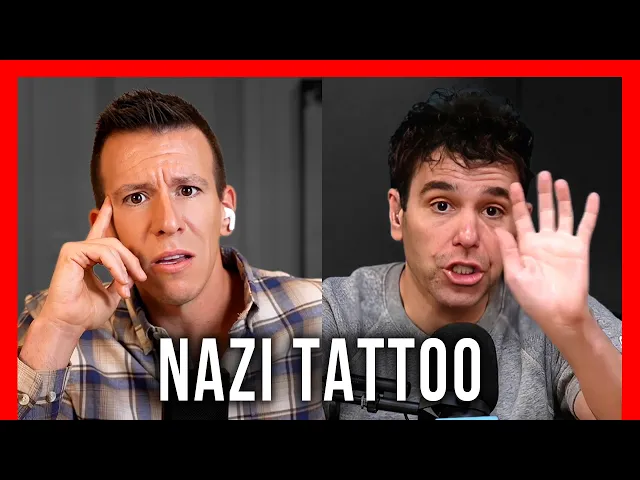
2:06 uh, oh, he does have a Nazi tattoo, which which stinks.
2:11 You know, you hate that.
2:13 You hate that, right?
2:14 Because that sounds really bad.
2:16 You know, to find out somebody has a Nazi tattoo,
2:19 a tattoo of a skull that's associated with a specific unit of the Nazis,
2:24 you know, look, there's a lot of people that are becoming a bit too familiar,
2:27 bit too friendly to the ideas of the Nazis.
2:29 I don't care for that.
2:31 But uh at least in the Democratic party in full cast out uh he
2:37 explains it that he didn't that he didn't know where the that that the symbol
2:41 was associated uh with the SS that it was a bunch of guys
2:45 drinking while uh um uh in Croatia uh while they were serving.
2:52 they got a tattoo because it looked scary,
2:55 that he had made it through army vetting,
2:57 that he had made it uh through a security
2:59 check and nobody had flagged it as being hateful.
3:03 Uh he even shared on Pod Save America
3:06 video of him dancing shirtless at a wedding.
3:08 A Jewish person was apparently uh one of the people in that wedding.
3:11 Not something you would do if you knew it was a a Nazi tattoo.
3:14 Apparently, since he's recorded Ponzi America, he's gotten it covered up.
3:18 He's turned it into something else.
3:20 uh uh some sort of a an animal wolf wolf of some kind.
3:25 Um and so I think there's like two big questions.
3:28 Um one is should Graham Platner be a senator from Maine?
3:32 And the other is what do we do uh
3:35 when confronted with somebody with a story like Graham Platner's?
3:38 Now the first one I actually like I I don't[ __] know.
3:41 Like the other uh one of the other candidates the the is is Janet Mills.
3:48 She's the governor.
3:49 Uh there are people who feel very strongly that she
3:52 has proven that she knows how to win in Maine,
3:54 that she has a record, that she's less of a risk.
3:57 I think that's a completely fair argument.
4:00 I'm not a Maine voter.
4:02 I have no[ __] idea what the best calculus is on the politics.
4:06 So, you put that aside.
4:07 JD Vance the other day uh said that a group of young Republicans
4:12 in a group chat between roughly 18 to 40 uh making jokes about gas chambers
4:18 and Hitler and a bunch of racist jokes that these are just kids telling
4:22 offensive jokes who deserve to be given
4:25 grace who shouldn't have their lives ruined.
4:28 Not but a few weeks before in the wake of the heinous Charlie Kirk
4:31 assassination uh he says that people who
4:35 made offensive comments online should be fired.
4:37 The administration is even saying people
4:38 who made offensive comments should be deported.
4:41 That that would ruin somebody's life.
4:44 And so I don't think it's that hard to be consistent.
4:46 And what consistency requires is holding people accountable
4:51 for their words and their actions while at the same
4:54 time being willing to listen and to be
4:57 open to the possibility that people can change, that they can apologize,
5:02 uh that they be that they can become better versions of themselves.
5:05 doesn't mean every apology is sincere.
5:07 Doesn't mean you have to accept every apology.
5:09 But if we don't allow for a politics in which apologies uh can be real.
5:14 It means that people are always defined by their worst
5:17 moments and we don't give people the space to become better.
5:20 And if we don't give people the space to become better,
5:22 people will will prove you right.
5:26 And so [clears throat] I don't know what the politics dictates.
5:30 And I and I look, I I think there
5:31 are people sincerely shocked by Graham Platner's comments and there
5:35 are people who are like stunned by the fact
5:37 that anybody could have had this tattoo for this long,
5:39 maybe don't find his explanations plausible.
5:41 I think that has just something he has to deal with.
5:43 He has to address.
5:44 He has to like answer for it.
5:46 Like we have to build a welcoming movement.
5:48 We have to build a movement that says to people,
5:51 "Hey, you could have had a dark face.
5:54 You could have had a Reddit face.
5:56 Like the internet incentivizes people to be
5:58 cruel and mean and and radical and extreme
6:02 to get a rise out of each other that and we know where that path can lead.
6:06 And if there's people that have gotten off
6:08 that path and found community and connection and and found
6:11 a way out like we should be welcoming to them because that's a good unto itself,
6:14 but also because those can be a voice for others,
6:17 can be a help to others, a path for others to follow.
6:20 Now there's a huge space between being welcoming and making somebody a senator.
6:25 totally understand that.
6:26 But there's also a big space between saying uh
6:30 somebody shouldn't be a senator and[ __] this guy.
6:33 He said those things, that's enough for me.
6:36 He has this tattoo.
6:37 That's enough for me.
6:39 Uh like that kind of politics to me is really counterproductive.
6:43 Trump believes in kind of being close-minded in like a politics of domination,
6:48 in seeing the worst in people, appealing to the worst in people.
6:50 That's an authoritarian tendency and like the internet kind
6:54 of drives that in us a little bit, right?
6:55 Like a kind of a desire for like domination
6:58 and control to like prove your right to own people.
7:02 We have to appeal to a kind of more of a democratic virtue.
7:05 And maybe this is earnest and maybe people roll their eyes,
7:07 but what is the opposite of what what Trump is offering here?
7:10 It's being vulnerable and curious and open and generous.
7:14 uh doesn't mean you don't have a a firm like position that people
7:18 need to be held accountable for the bad[ __] they've done and said.
7:21 Um but we've got to be able to sit in the discomfort
7:24 of knowing that people are complicated and they live complicated lives.
7:28 Like this guy like clearly came out of the military a broken person,
7:34 hurt and angry and disillusioned and nihilistic and got out of it.
7:38 That's amazing.
7:39 That's inspiring.
7:40 like see past the the the politics of it just to see that as a story
7:45 that you can find some hope in even
7:47 if you have questions even if it's not perfect.
7:49 So maybe not a perfect question because it does sound like the way
7:52 that you're talking about it you're talking about a very complicated situation.
7:55 I mean with what we're seeing as far as how
7:57 it's playing out and it's different depending on where you go.
7:59 Does this feel like just does this feel like to a certain
8:02 degree purity testing but also with a mix of uh people
8:06 that have genuine concerns slash people kind of trying to jump on it
8:10 and throw water on the campaign before it can fully get started?
8:13 [sighs] You know, I don't know.
8:15 I don't I like you know one person's um you know
8:19 one person's purity test is another person's like reasonable moral line, right?
8:24 Like we all have tests.
8:25 Of course we have to.
8:26 That's that's that's how you decide who should be, you know,
8:30 whether a representative of you, part of your coalition, right?
8:33 We all have different a sense of what those boundaries should be.
8:35 So I I really don't know.
8:37 I think some people are genuinely sincere.
8:39 I think there is also like a pylon kind of culture.
8:42 I I also think people have just a lot
8:44 of pent up frustration and anger about the state of politics.
8:50 And u it's more fun to yell at a parent who listen sometimes.
8:54 And like I think people like arguing uh uh internally inside of the coalition
9:00 and yelling at people because they know they'll get a rise out of somebody.
9:02 They know it's somebody who cares what they have to say.
9:04 I think there's a little bit of that going on.
9:05 Uh but and then I think a lot of times we
9:09 see people like rehash their previous thing that bugged them, right?
9:15 It's like it's like we kind of have these sort of it
9:18 ends up being a a a left center left divide.
9:21 People think of it as like a rehash of Hillary versus Bernie,
9:25 whatever the like the kind of people will like find the grooves
9:28 of the previous fights and try to make something about that.
9:32 Like I I I don't know my like I
9:35 I just trying to just be honest about the complexities
9:39 of it because so much of what the politics
9:42 through the through like the current kind of noisy algorithmic
9:46 media does is it kind of like just rips
9:48 out context and destroys nuance and like just rewards people
9:52 for being uh um pretty simplistic about this kind
9:55 of stuff and it incentivizes people to feel that way.
9:58 And all I can say is like I I I think we got to fight
10:01 that and that's something you can we can
10:03 what's great is you can actually do that yourself.
10:05 You can you can fight that and like not be a participant in that.
10:08 Sometimes I wonder though well not wonder I
10:09 think that it is I'm more of a cynic.
10:11 I think that it ends up being a losing battle because
10:12 even the first question right you gave this very like thoughtful.
10:17 You're still figuring it out.
10:18 Seven minute answer and it's like you know 30 seconds is getting clipped.
10:23 You know that's going to happen.
10:24 I should I could have been pierier.
10:25 I should have been pissier but I'm sorry.
10:27 I'm not I'm not putting it on you.
10:28 I'm just saying it feels like a losing losing battle because otherwise
10:31 then you're talking and talking points and you're not being a real person.
10:34 Yeah.
10:34 Look, I I don't know.
10:37 I I still think that people offline are uh not only complicated themselves,
10:46 but willing to entertain other people's complications.
10:49 Uh people are much more generous and compassionate and open
10:53 in the real world than they are on the internet.
10:56 Now, that's a bad sign or a good sign depending on how you see it.
10:58 But I I do think that the loudest voices don't necessarily
11:03 resonate the most and uh people are able to I think
11:08 um people have complicated views despite
11:11 only being exposed often to simple ones.
11:13 I hope I hope.
11:14 Yeah.
11:14 I I did want to ask you one thing.
11:16 I don't know how much you know um as far as the timeline
11:19 because I didn't know when you guys maybe were sent the clip.
11:22 Was it like right with the uh right as the interview was happening?
11:26 Because I I just started thinking like if
11:28 I got a tattoo [gasps] and someone revealed,
11:31 hey, by the way, Nazi[ __] Um how fast I would get that that covered up.
11:37 Um or or like to the point he said it takes a while to get removed.
11:41 So I don't know.
11:41 I didn't know if you knew the timeline.
11:43 I don't know the like the exact like play
11:45 by play but uh you planner came on Pod Save
11:49 America uh recorded Monday and Tommy Vtor my co-host
11:56 basically walked him through like all of the various controversies
12:00 uh and uh as part of it there was this video
12:04 that I don't know what the stat I don't know whether
12:06 it was going to come out how it was going
12:08 to come out but it was uh uh and as clearly like
12:12 I don't know, he seems like a smart guy.
12:14 Certainly, if you knew you had a secret Nazi tattoo,
12:19 uh the way you would handle it wouldn't be to uh show it
12:22 then have a controversy about it and then cover it up the next.
12:26 Certainly a strange way to handle it.
12:28 So, it it lends credence to like the face value explanation
12:31 that like he was caught off guard by what this was.
12:34 Now, maybe he should have known.
12:36 There's a lot of people on the internet
12:38 who are suddenly like uh uh Nazi symbologists.
12:41 Like, I'm sorry.
12:42 Like, I I don't know.
12:43 I've read a lot of books about World War II and Nazis, you know?
12:47 I read the the the the Stevenson trilogy on the r
12:51 the modern retelling of the rise and fall of the Third Reich.
12:54 I'm a Jewish guy.
12:55 Like, I I like I didn't know that symbol.
12:57 I It looked like it was like when I saw it, I was like, "That's a Nazi symbol.
13:00 It looks like it's from Adult Swim." Like
13:01 I I like I would never have thought that.
13:02 It doesn't, you know what I mean?
13:03 You look at you're like, "It looks a little silly, you know?
13:05 Like I had no[ __] idea." Maybe we'll learn that that's not true.
13:09 You know, maybe this is naive.
13:10 you know who I I I don't know.
13:12 I have no idea.
13:13 But, you know, you're just left with the impression of a guy
13:16 that lived a complicated life and maybe one that doesn't
13:20 look like the life led by uh keyboard warriors uh who
13:24 are um typing from high above on their high high horses,
13:28 you know, from way above the ground looking down uh from their keyboards.
13:32 Maybe that's too judgmental.
13:33 Maybe I'm part of the problem.
13:34 Uh but I don't know.
13:36 I like he's he has to answer for it.
13:38 Maybe he hasn't done that enough.
13:39 Maybe there's more he has to say,
13:40 but I think he deserves a chance to answer for it.
13:42 Based off of your experience in the space,
13:43 and I mean, obviously everything's changing.
13:45 I mean, how do you think that this is going to play out?
13:47 Is this is this going to stop his campaign?
13:51 Do you like if this is if they emptied everything out as far as oppo research?
13:55 Do you think he moves forward, he is competitive or wins in the primary?
14:00 What are your thoughts here?
14:01 If you if I I I know people hate to speculate,
14:03 but if there's anyone that I'm going to ask,
14:05 I would I would ask you and a few people.
14:07 You know, I really hate to be in the prediction business.
14:11 Uh I I tr and I sincerely like I have no[ __] idea.
14:14 I'm not from Maine.
14:15 You know, I don't know.
14:16 I I I don't know uh what will happen in the coming weeks.
14:22 Also, by the way, like who knows what other oppos, right?
14:26 There may be other stuff that comes out that that like
14:29 adds to this in a way that's hard to deal with.
14:31 I I like I I don't know.
14:33 I'm not I'm not on the Platiner campaign.
14:36 I have no idea.
14:37 But he is very compelling.
14:38 He like has a perspective that is valuable.
14:46 Clearly it is resonating with people.
14:48 Maine is small enough that you can uh
14:52 have a very personal connection as a candidate.
14:56 Will the argument that Janet Mills is proven and less risky and by the way also
15:01 qualified and like has a record uh
15:04 that people respect like will that win the day?
15:08 I don't know.
15:09 Like I respect that argument.
15:10 I have I have I worry about a Democratic
15:14 party in which the choices between someone unproven, exciting,
15:20 but also a risk and with liabilities versus somebody who's
15:25 77 and uh has has said they'll only serve one term,
15:31 which basically means I guess the risk will push off
15:33 to the next election when what it won't be as important, right?
15:37 like that was the argument used in defense of Biden staying in, right?
15:41 Like that is a that is an argument against investing in new people.
15:46 Now, I know that's that's not that you'd
15:47 have to take that to its logical conclusion.
15:49 You can still have Janet Mills uh be your representative
15:52 in the fight against Susan Collins while investing in in talent,
15:54 but there's a problem of Democrats not investing in talent
15:57 and then when a time comes to run elections saying, "Well,
15:59 I guess it's just the old guard then." and uh hard to you
16:04 know maybe in every maybe in each election that argument makes sense but you
16:08 step all the way back and we're in real trouble here as a party
16:11 people don't know what Democrats stand for young people see don't see
16:15 themselves in the party we're losing people
16:19 that's not Janet Mills's fault and she
16:21 deserves to be evaluated on her own terms and to make her own
16:25 case but um I worry that the risk the true risk the greater
16:31 risk over time is a Democratic party that is not investing in its future.
16:37 Is there anything specific and it's probably a stupid question
16:39 that that is that has put you in this mindset?
16:42 Has it or has it always been kind
16:43 of your mindset as far as reinvesting in in younger talent?
16:49 I mean, is it the Biden of it all?
16:51 Yeah, I mean, it's the Biden of it all, but it was problem before that.
16:55 It was a problem before that.
16:57 even put Biden aside.
16:59 the Democratic leadership in Congress is older
17:03 and but it isn't honestly like age is a is
17:06 a symbol of it but you know I was talking to Tim Miller he's on the bull work
17:14 uh former Republican really smart guy
17:17 and we were talking about why farmers who are getting[ __] over by Trump
17:24 administration policies aren't more of a political
17:26 wedge against those polic policies, right?
17:29 Like if Democrats were pursuing a policy that meant you had to bail
17:35 out farmers because they the market had been wrecked by the administration.
17:40 Oh, and by the way, we're going to take
17:43 the money that comes from the tariffs you're paying at Walmart
17:47 and give it to Argentina for to to bail them
17:49 out while bringing in their beef to undercut American farmers.
17:53 uh uh there like the amount of protest, the amount of attention,
17:57 the amount of political cost that there would be would be staggering,
18:00 but that doesn't seem to to be happening.
18:02 And and why why what's missing?
18:05 And there's a lot missing.
18:06 has a lot.
18:07 It's complicated, but I do think part of it is who are
18:10 the mainstream leading Democrats who you would say could go to uh Nebraska,
18:17 go to uh a a a rural farming community
18:21 and and and speak with force and enthusiasm and authenticity for that group
18:28 of people to that group of people and and like you
18:32 kind of got to go pretty far down the list, right?
18:35 like you start to think, well, Bernie, right, that's somebody who could do it.
18:38 Barack Obama potentially could be somebody that could do it.
18:42 You know, there's Dan Osborne who ran
18:43 as an independent that had uh some purchase,
18:47 but we just over and over again over the last like 20 years,
18:50 you have seen that that Medicaid on the ballot can do well in a red state.
18:55 uh union rules, marijuana legalization, uh choice,
19:00 a bunch of policies on the ballot in a red
19:03 state can actually do really well in Utah, in in Missouri, all across uh states
19:09 that are considered unwinable for for Democrats.
19:12 So why is it that those policies can do well, but the people can't?
19:15 What is missing?
19:16 What are we getting wrong?
19:18 Some of that is not the fault of Democrats.
19:20 Some of that is the media environment.
19:22 Some of that is uh uh right-wing misinformation, sure.
19:26 But it is often easier for Democrats uh to imagine
19:31 what like like we can we can imagine America
19:34 becoming a completely different authoritarian country more easily than
19:38 we can Democrats winning 60 seats in the Senate, right?
19:40 Like there's just we we we don't really know
19:43 even have a we don't even think about it.
19:45 So, uh, we talk about the anti-democratic nature of these institutions,
19:49 which didn't bother us as much when Democrats were,
19:51 uh, able to win in rural states, and we got to figure out why that is.
19:55 Part of that is just figuring out why the Democratic
19:58 party has been reliant on a smaller and smaller coalition.
20:03 I mean, it was connected to something that you were saying.
20:04 I mean, do you are you past this or do you find yourself still every
20:08 day maybe driving yourself insane with the question
20:11 of what if Obama did insert blank?
20:13 What if Obama did or are you past that?
20:15 you're like, or or does that drill into your head?
20:20 And then I'll get you back to the podcast in just a minute,
20:22 but let me take a minute to say uh credit card companies,
20:24 they love you, or I guess they love
20:26 your money because the second you're late, boom, fee.
20:28 It's like dating someone who charges you for texting back slow.
20:30 And every minimum payment,
20:31 it's just another way to keep you on the hook forever.
20:33 But here's the good news.
20:34 PDS debt helps regular people break free.
20:37 Or they've already helped hundreds of thousands cut debt,
20:39 stop the harassing calls, and actually keep their own money.
20:42 Credit cards, personal loans, medical bills.
20:44 PDS Debt has custom options for all of it.
20:46 This isn't a one-sizefits-all gimmick.
20:48 They actually look at your unique situation and create a plan designed for you.
20:51 No minimum credit score, no schemes, just real solutions that work.
20:54 That's why PDS debt is A+ rated by the BBB has thousands
20:57 of five-star reviews on Google and holds a five-star trust pilot rating.
21:00 The translation people trust them because they actually deliver results.
21:03 It's your money.
21:04 It's your future.
21:04 I mean, why let banks keep writing the rules when you could be
21:07 on your way to being debtree in less time than it takes to scroll TikTok?
21:10 And you're just 30 seconds away from starting that journey to get debtree.
21:12 You can get your free assessment and find
21:14 the best option for you right now at pds debt.com/defranco.
21:17 It's pds debt.com/defranco or hey the QR codes on screen.
21:21 Just scan it and take the first step today.
21:26 I'm not past it at all.
21:28 I wish I was.
21:29 I'm not past it even a little like I know it's like cliche and like I know it's
21:34 uh uh like almost like beside the point, but it is true, right?
21:39 Like sometimes, you know,
21:41 because we're so drowning in takes and opinions all the time,
21:43 you got to find something new to say, right?
21:46 But sometimes like, you know, boring, immutable,
21:50 kind of constant facts about our situation can still be worth
21:55 saying like what like Barack Obama put his feet on the desk.
22:00 Barack Obama wore a tan suit.
22:01 Barack Obama put mustard on a burger.
22:03 whatever it was.
22:04 Donald Trump puts out a video where he's
22:07 um shooting diarrhea out of an airplane on Americans.
22:12 Uh no comparable reaction.
22:15 Th this is a but like what if Obama stuff whatever.
22:20 But like what is the what is
22:21 the real what is like the asymmetry underneath this?
22:24 Republicans can go on Fox News and insult liberals,
22:29 insult people that live in America's cities,
22:32 make fun of the cities, hate the cities, mock the cities.
22:36 Uh there is no equivalent for a Democrat.
22:39 I mean, could you imagine Elizabeth Warren goes on, I don't know,
22:42 Rachel Matto and starts uh talking about rural Americans being dumb yokals.
22:47 You like, it's inconceivable, right?
22:48 First of all, wouldn't do it.
22:50 Wouldn't have the instinct to do it and wouldn't be good.
22:52 wouldn't wouldn't be seen as good politics.
22:54 Doesn't work, right?
22:55 Like, for whatever reason, Ted Cruz thinks that kind of thing plays,
22:58 but but Elizabeth Warren never would.
23:01 Why?
23:01 Like, what is it about the like the the culture of our politics?
23:05 And and I don't know the answer, but I do think part of it is that Republicans
23:13 have seen for decades the mainstream media as being against them.
23:18 And that's not totally fair.
23:19 But what is true is that mainstream media
23:22 treated Democrats as protagonists and Republicans as antagonists.
23:26 That Democrats had agency, that they were characters,
23:30 uh that you understood and whose motivations were clear
23:33 to you because there's a liberal bias of the people,
23:36 not necessarily always in the coverage, but in the people.
23:38 and Republicans were these outsiders and that was
23:43 a bias against them in some ways,
23:45 but it also meant that that they were able to be outsiders in how they
23:50 talked about the mainstream media and the kind
23:53 of whatever cosmopolitan culture from which it sprang.
23:57 And like that's one reason, but man,
24:00 uh it is amazing uh what uh the different standards are.
24:04 And I think part of it is figuring out like well
24:07 how do maybe we just stop pretending that that's true, right?
24:10 Like maybe we don't maybe and that means saying
24:12 like if Obama couldn't do this, maybe Trump shouldn't, right?
24:14 Like maybe it's okay to call it out.
24:16 I don't know if it's I don't know if I want to ask this as like
24:19 you thinking of this as a from a strategist
24:22 standpoint or maybe just a pure American standpoint,
24:24 but right there's there's a bunch happening at the same time.
24:27 Do you think that there is a which which
24:31 is more of a winning message or or focal point?
24:34 uh Trump, right, demanding that the DOJ uh pay him $230 million.
24:38 The the people who would approve that settlement being his personal lawyers,
24:41 obviously that matters.
24:42 Andor focusing on um the money uh the bailout with uh
24:49 Argentina where to your point like people in the United
24:52 States uh are suffering and most likely depending on how uh
24:56 this shutdown goes and negotiations go going to suffer far more.
24:59 So it's a great question.
25:01 You know, I think sometimes we get ourselves wrapped
25:03 around the axle as like an opposition that's like,
25:08 you know, um we shouldn't be, you know,
25:12 this is just a distra distraction from Epstein.
25:14 Epste is just a distraction from the economy and that's just a distraction
25:18 from the we got to focus on this and not on that.
25:21 And maybe it's unsatisfying, but basically to your point about how we're getting
25:26 information and how you were saying how I don't
25:28 even know what's breaking anymore or what's new or big
25:31 because I just see what's in my feed, right?
25:32 My feed it's, you know, we have like algorithmic pricing for the news and we
25:36 we all see a specific version of the world now.
25:38 Fine.
25:39 But what that means is you got to figure out
25:42 a way to ride these waves of attention wherever they go.
25:47 And that means you have to have an answer for when Trump is talking about
25:52 uh doing a settlement with himself uh
25:55 with the Department of Justice from American taxpayers.
25:58 Uh you got to find a way to ride ride the attention
26:01 wave when they are demolishing the east wing of the White House.
26:05 Uh you've got to get help figure out how to get it in front of people
26:09 that the Trump is doing a bailout
26:11 of Argentina when he promised to do America first.
26:15 That means being interesting and and funny, direct,
26:20 passionate, whatever, in a way that resonates with people.
26:23 And then you've made a you've you've turned
26:25 this into a worse story for him somehow, right?
26:27 The story is bad for Trump, right?
26:29 More people know about it, the worse it is.
26:30 You don't have to put much spin on the ball,
26:32 but our job is to figure out how to get that in front of people.
26:34 Sometimes that's about, you know,
26:35 going into this studio and like just showing the clip and talking
26:38 about it because that's going to get it in front of more people.
26:40 for politicians that's about having a response
26:42 that breaks through and makes news, gets that in front of more people.
26:45 It's like it's a real game of inches and you
26:47 have to be fighting on every one of these stories,
26:49 but it's no longer how it used to be,
26:50 which is there's a limited amount of space in the newspaper.
26:53 So, if we're picking a fight on this, we're not
26:54 going to be able to pick a fight on that.
26:55 Okay.
26:55 So, on the note of it being crazy and it being bad um in, you know,
27:01 with so much feeling bad right now,
27:03 has there been anything that you would say is
27:06 not as bad as you thought it would be?
27:09 What has not been as bad as I thought it?
27:12 That is the closest we're probably going to get to a a light question.
27:16 I
27:17 I'll tell you this.
27:20 I I look, right before there were people
27:23 that were up in arms around the ballroom,
27:24 the pre the presidential the new presidential ballroom,
27:27 and I had my I had trouble getting my dander up about this.
27:30 uh just never been a big uh like I don't you know American
27:35 symbols and you know tradition and all like that's not that motivating to me.
27:41 Maybe that changes because he's literally tearing down the east wing
27:44 of the White House when he actually promised that he wouldn't.
27:46 He said don't worry we're not going to have to uh we're not even going to touch
27:50 it I think is the exact words he
27:52 used maybe paraphrasing and now they're tearing it down.
27:54 So it's another example of him just lying.
27:56 Uh, fine.
27:57 But I think people get get get themselves up in arms
28:00 around that like kind of the theater of Trump and now
28:03 they're tearing down the ballroom and that's a symbol tearing
28:05 down the waste wing and that's a symbol for Trump's destruction.
28:08 Like I don't know like I I don't care that much about that.
28:10 Like he can renovate the White House.
28:12 Um, it's not that important to me.
28:16 I I it's hard because I I do think he has done things
28:20 faster um and more aggressively than a lot of people anticipated.
28:24 myself included, they really were ready.
28:28 They were they were ready.
28:29 Every president, two-term presidents, the first term, uh,
28:34 the White House runs them a little bit, right?
28:36 It's it's an impossible impossible job.
28:39 It's a job that doesn't make sense.
28:40 You're in charge of of missiles, social security checks, welcoming boy scouts.
28:44 It's crazy job.
28:47 Mhm.
28:46 And so there's a way in which of presidents
28:49 have to learn how to take control of it.
28:52 And they tend to do that more in the second term, obviously.
28:56 But Trump had a four-year break that gave a bunch of people time to get ready
29:00 and to make up for the lost time in the first when they were stymied by courts,
29:05 by Congress, and by institutionalists and less enamored,
29:11 less loyal Republicans inside of the administration.
29:14 And they really set out to make sure that didn't happen again.
29:16 Um, and so those positions are no longer filled by uh
29:22 those that lent Trump credibility because he no longer believes he needs that.
29:26 Um, and a lot of those people have been captured um or are afraid.
29:33 And so he's just been able to move faster and run roughshod.
29:38 Uh I was surprised by how fast some of the colleges,
29:41 the law firms, some of the media companies capitulated.
29:44 Hopefully, we're now getting ourselves onto a stronger footing where people
29:48 are learning that there's potentially
29:50 a political price amongst the anti-Trump coalition,
29:52 which does represent a lot of people.
29:55 You're seeing that with colleges being afraid to sign now,
29:57 which is I think good.
29:59 Uh, but is there something where that doesn't happen as bad?
30:03 I like I really You give me What's your example?
30:05 What's something you think that didn't didn't go as bad?
30:07 Oh, no.
30:08 I've been asking people because I think it's
30:11 as bad or at times worse like everything.
30:14 Um I'm I'm here's what I'll say.
30:17 I'm surprised that the economy has not taken a larger hit.
30:21 Um but I think that's being propped up by a few
30:23 things that still could burst and I'm hoping against it.
30:26 But that's where it ends up being in this weird
30:28 situation where it's like I'm hoping for the best.
30:30 Um I'm hoping for the the the least rough uh future, you know.
30:35 Um, but [laughter] it it does there's just a lot happening right now that feels
30:41 like okay that that can work for a short term uh sort of thing.
30:45 But long term uh I do not see it.
30:48 We're just it seems like just very different levels of how
30:53 bad it's going to be and who's going to be impacted.
30:56 So, and I think that's all true and it's
30:58 all very dangerous and it's all very bad.
31:01 Part of what has made it bad, right,
31:03 is you look at like Tim Cook walking into the Oval Office with a bobble,
31:07 Intel giving him 10%.
31:09 Uh Disney and Paramount doing these sort
31:14 of drug deal payments uh settlements for these lawsuits.
31:19 And it's Trump gaining power he probably couldn't take, right?
31:23 Like they could have fought it and won, but they chose not to.
31:26 Same with the law firm.
31:27 Same with the colleges.
31:29 And that's really bad.
31:32 But it is power he couldn't take, right?
31:35 And still couldn't.
31:37 They don't like this is not a the country
31:39 wasn't clamoring for this kind of takeover.
31:44 The these are not popular.
31:47 These are not like popular agenda items.
31:49 75% of the country is angry at Trump for failing to focus on prices.
31:53 and you know through tariffs,
31:55 through immigration crackdowns, he's making those problems worse.
31:59 Seven or eight million people came out as part of the no king's protest.
32:04 One interesting thing that's come out is just in the last couple of days a bunch
32:08 of polling showing that the majority of Americans
32:10 do not believe ICE officers should be wearing masks.
32:13 But beneath that, the number of Americans
32:16 who are now just pro-immigration, not on policy,
32:19 not in any specifics, but just are now pro- immigration has dramatically risen.
32:23 That the crackdown is igniting in people a debate about values
32:30 and people are not coming down on the side of Trump.
32:33 People are not seeing what Trump is doing and coming to respect it.
32:35 Now, there are people who think the crackdown goes too far.
32:38 I think people that that Trump uh is too extreme,
32:41 but they still don't trust Democrats, right?
32:43 They still think that there's a problem Democrats don't understand, right?
32:46 They don't believe or understand what Democrats stand for, who they are,
32:49 what they believe, what they would do.
32:51 Um and so as much as they don't like Trump,
32:53 it's not like they view Democrats so much more favorably.
32:56 It's a huge problem, right?
32:58 But in terms of Trump's agenda, this is not some mass mobilization.
33:02 Like what is their version of a no king's protest?
33:04 How many people would show up?
33:06 It's not there's there's no equivalent.
33:07 That's why they have to make fun of it.
33:09 They can't match it.
33:10 Yeah.
33:10 I don't know.
33:11 I I mean, when you talk about the the way that Dems are are seen,
33:14 I've only recently started going to to local events um because my uh
33:19 my wife's running for school board and so I'm I'm slowly um
33:24 just familiarizing myself uh with the space and I was watching the the head
33:28 of Georgia Dem speak to the small room and it was very
33:32 much like very aware that the the Dems's brand is hurting and kind
33:37 of saying like but it's the best we've got and it It feels
33:41 like that's kind of the message and it and it makes me
33:43 wonder if there if that is something that can grow because even there
33:48 the the people that were angry um about some other recent elections that had
33:54 happened and other messaging is like we have to get past Trump bad, right?
33:59 You look at polling, Trump bad only goes so far.
34:02 Um it maybe helps you during the midterms depending
34:05 on what the hell these midterms even look like.
34:07 Um, and I and I mean that both as as far as like
34:10 trying to get people to not vote as far as uh Republicans.
34:14 Um, or I mean even the the the polling that we're seeing in, you know,
34:17 Virginia and New Jersey.
34:19 Very interested to see what happens there.
34:20 I'm also very interested to know your thoughts there.
34:22 But I don't know.
34:23 It's uh I I do I do wonder if the the Dem brand is
34:28 something that can be revitalized or if it's it is going to be something else.
34:32 Um, and I don't know if you have thoughts there.
34:34 I think look you know big changes happen this is like this is a moment of big
34:39 change right like big transformations happen suddenly something
34:41 new emerges totally possible but I I also
34:44 don't think it's impossible that we slowly
34:46 but surely build a better brand for the Democratic
34:49 party some of that it will just depend
34:51 on charismatic leadership emerging with a story to tell
34:56 uh there was a a poll that came out today or yesterday
35:00 that since the shutdown began approval
35:03 of dem Democrats by Democrats has risen dramatically.
35:06 Right?
35:06 It was like something in the 30s.
35:07 Now it's in like the high 50s.
35:09 So there's just a bunch of people out there,
35:12 Democrats who are desperate to see their leaders put up a fight
35:15 and just seeing Democrats being willing to hang together and say,
35:18 "No, we're drawing the line on healthcare." There's a lot
35:19 of bad[ __] going on, a lot of stuff that's wrong,
35:22 a lot of ways in which we need to fight back.
35:23 A lot of reasons to not fund this government,
35:25 but we're going to draw the line on healthcare.
35:26 We're going to make that our fight.
35:27 We're going to pick that fight and we're going to take it to its end.
35:29 We're going to hang together.
35:30 That's impressive.
35:30 They've done it.
35:31 uh probably better than I think a lot of people
35:33 hope for in terms of the politics of it.
35:35 And it's led people to say, "Okay, they're all right.
35:37 They're willing to do that.
35:38 That that doesn't solve everything.
35:39 There's a lot of problems, but but it tells you that there's uh um
35:44 that like Democrats are willing to listen and say,
35:46 "Hey, thank we like they'll respond, right?
35:49 Like you're willing to fight, we'll have your back, right?
35:52 That's a good sign." Um, you know,
35:54 there was a uh I saw I think I can't remember who it was,
35:58 but there was a question on um about,
36:01 you know, who represents the future of the Democratic party.
36:03 Is it Abigail Spamber or is it uh Zoran Mandani, right?
36:07 And the answer is yes.
36:09 The answer is yes.
36:11 And like my like how do you fight authoritarianism, right?
36:17 Like how do you arrest a downward slide?
36:22 It's really hard to do.
36:23 Nobody has all the answers and it's different every time.
36:26 Um because you're trying to prove a game is
36:29 worth playing against people that don't play by the rules.
36:31 That sucks.
36:32 That sucks.
36:33 But whatever the answers are, it's going to look different in different places.
36:38 It's going to take a bunch of different strategies.
36:39 It's going to take creativity
36:41 and resourcefulness and ingenuity and fast thinking.
36:44 But at root, we do know that the answer
36:48 to a rising authoritarian movement is a mass mobilization,
36:51 a pro-democracy movement big enough to stop it.
36:55 That can take many forms.
36:56 That can look like many things, but that is what it will take.
36:59 That means a bunch of people who are not necessarily natural allies have to suck
37:03 it up and see themselves as allies
37:06 and understand they're part of a big movement together.
37:10 Uh that to me is what we're trying to build.
37:13 And yeah, I want great mainstream democratic
37:17 leadership in Congress to be part of that.
37:19 But it's bigger than them.
37:21 It's going to be it's about them.
37:22 It's about uh religious organizations.
37:25 It's about unions.
37:26 It's about nonprofits.
37:27 It's about um us as individuals.
37:30 It's about using our power not just as voters but as employees,
37:35 employers, students,
37:37 members of of clubs and groups, people that are part of a community, right?
37:41 Like that's the muscle we need to kind of kind
37:45 of work and some of that will be political,
37:48 but I think sometimes we like look to political leadership as going
37:50 to have as as if they're going to have the answer.
37:52 Never have, never will.
37:53 That's not how it works.
37:54 That's us.
37:55 That's going to be us.
37:56 Um, and you know, that's like Vote Save America.
37:59 And what we try to do here at Crooked is we try
38:01 to give people outlets for ways that they can get involved and participate.
38:04 Yes, electorally, but also in between.
38:06 Um, how to organize, how to do the organiz organizing between elections, uh,
38:13 like how to do the relational organizing,
38:14 which is about talking to people in your lives.
38:16 Like we all have to see ourselves as sort of leaders um,
38:19 as part of this pro-democracy movement.
38:21 and to where we started.
38:22 Yeah, part of that is knocking on doors and and and getting
38:25 out there and doing kind of big capital P politics,
38:28 but some of it is about like practicing democracy.
38:31 And maybe that's earnest and people roll their eyes,
38:33 but you have to practice it.
38:34 And democracy is a practice of listening, talking to people,
38:38 being open, being curious, being vulnerable, being generous, right?
38:41 Like th those are de democratic practices
38:44 that Trump is so like innately allergic to.
38:47 Regarding the the higher polling, regarding the the fight,
38:50 I have to ask you, um, is it possible that we, and I'm using a collective we,
38:56 have been underestimating Chuck Schumer's sense of strategy,
39:00 or no, completely different.
39:03 So, I let me let me let me let me practice being generous.
39:07 Uh, I'll try it.
39:08 Not my not my instinct.
39:11 Uh, so I was skeptical.
39:13 I didn't first of all before the shutdown I was like really
39:16 skeptical uh and skeptical in all directions by the way like uh heard
39:22 the arguments that said hey we should not do a shutdown we don't
39:25 have a path out of it the minority party will lose respect that argument
39:30 we should shut the government down over healthcare it's a hinge it's
39:33 a it's a policy on which we have unity it's a it's one
39:36 where we can maybe get some extract some concessions that's the fight we
39:40 should pick and the argument says like are they're shutting down the government.
39:45 I'm sorry.
39:45 They're they're firing people willy-nilly.
39:47 They're they're they're they've got mass agents on the street.
39:50 They're disregarding Congress.
39:52 They're doing open corruption.
39:54 Healthcare, we have to fight this on everything on democracy.
39:57 Every We can't fund a government that is doing a authoritarian takeover.
40:01 Respect that argument, too.
40:02 Healthcare felt like in the middle felt like uh um you know, half a loaf.
40:06 And then yet, it seems to have really put Republicans on their heels.
40:11 It the the country uh is seeing the Democratic argument.
40:17 Uh blame is obviously going to be um shared,
40:20 but it's certainly not falling on Democrats
40:22 the way Republicans would have predicted.
40:24 And it's in a sense about prices and costs in a way that kind
40:27 of resonates with the kind of underlying
40:28 politics of Trump failing on these issues.
40:30 And and like they that was I that seems like it was the right fight.
40:34 I get it.
40:35 Right.
40:35 And that's a that's a strategy coming from uh the leadership in the Congress.
40:39 Good for them.
40:40 The question has always been like as communicators,
40:42 are these the best people to be the voice of an opposition?
40:46 And I I don't think there's anybody who thinks that like
40:49 Chuck Schumer is the great voice of the Democratic opposition.
40:53 Um, so it's it's complicated, but you know,
40:57 like when you ask people to fight and then they fight,
40:59 you should be say, "Okay, thanks.
41:01 I'm glad you're doing that.
41:01 I appreciate that." You know, like I I I don't think he's perfect.
41:04 He hasn't stopped being Chuck Schumer in all
41:06 the ways that he can be silly and some
41:08 of the videos don't work and he's kind of goofy from he's an old school guy.
41:11 He's like from the era of like the Sunday
41:13 press conference to get in the Monday papers.
41:15 It's just a different different generation.
41:17 Um but I'm glad they picked this fight
41:18 and I'm glad he's holding people together.
41:21 When you see uh certain politicians like Marjorie
41:23 Taylor Green uh voicing the concern around healthcare
41:27 and and and [snorts] and do you see
41:28 articles that that say like Marjorie Taylor Green,
41:31 welcome to the to the left or things like that?
41:34 Uh do you do you think that this is it's a it's a broken clock situation?
41:38 She is a true uh America first ideologue
41:41 that that's separating from from the the party.
41:43 What what what are your thoughts there?
41:45 It's really interesting.
41:47 It's strange, right?
41:48 Like because it's not just that she's like it's not a one-off comment.
41:50 Like she's giving interviews that are pretty thoughtful, right?
41:53 Like these are like long these are like wholesome comments that like,
41:56 okay, you're making a lot of sense.
41:57 I I I have I have no idea, you know?
42:00 I I uh maybe it is a broken clock situation.
42:04 I do think there's something there are a lot
42:08 of different kinds of ways somebody becomes MAGA.
42:13 Uh there are some people that are purely cynical, purely cynical, right?
42:17 The Rubio's, the JD Vances.
42:20 Uh there are people that are scared, right?
42:22 that they're they're they're just they're along
42:24 for the ride and uh they don't like it,
42:28 but they're not going to put their heads up.
42:30 They want to keep their seats.
42:31 They don't want to beounded.
42:32 They're they're nervous about it.
42:34 Um there people that have justifi it like if I weren't here,
42:37 somebody else would be people a lot of stories people tell.
42:40 Um but it's interesting like
42:41 the people that are genuinely ideologically motivated.
42:45 Uh I I think Marjorie Taylor Green is one of those people.
42:47 I think Thomas Massie is one of those people.
42:49 I don't like their views.
42:50 I don't agree with them.
42:50 I think they have some pretty heinous views.
42:52 Um, but uh there's sincerity to it, right?
42:56 Like I don't think does anyone think Marjorie Taylor Green is doing a show?
42:59 Like I I think she I think she operates from conviction.
43:02 Some of them are kooky.
43:03 A lot of them pretty wrong to me.
43:05 But you know and uh maybe that speaks to something like real about her politics.
43:14 It's been like whenever Trump was even in the first term, right?
43:17 Like there were places where Republicans in Congress were willing to buck
43:21 Trump and one of them was the Freedom Caucus around spending, right?
43:25 Like there they have sincere conviction and that led
43:28 them to take positions that bothered Trump.
43:31 Sometimes he would tolerate it, right?
43:33 Ran Paul's like this too.
43:34 Sometimes they would tolerate it,
43:35 but sometimes they would like sometimes he would like attack them.
43:38 Massie is now turned on completely.
43:40 Um but like there are still places where like interesting like
43:43 they care more about that than they do about pleasing Donald Trump.
43:46 Marjorie Taylor Green, I have no idea, but like it seems sincere.
43:51 Uh I'm sure she'll get back to sincerely
43:54 holding positions I find disgusting soon enough.
43:57 But I'm glad she's making these points
43:58 about healthcare because they're completely true.
44:00 I'm glad she's sincerely pointing out that they're preventing
44:03 a a member of Congress from taking office because they
44:05 don't want to release the Epstein files or that the House
44:07 of Representatives has not been in session for weeks,
44:10 not just because of a shutdown,
44:11 but because they're afraid of this uh resolution uh
44:14 that would certainly pass once they've seated this new member.
44:16 So, like, yeah, glad she's out there.
44:18 When somebody's saying the right thing, it's okay to say that.
44:21 And I mean on the note of uh you know what
44:23 people actually believe or their intent I to kind of switch more
44:27 to you uh I was interested what first drew you to politics
44:31 like was it idealism curiosity a sense of responsibility a gig?
44:37 Oh that's interesting.
44:38 I no um I was motivated by uh anger and desire to please my teachers.
44:45 That's probably what it was.
44:46 No I I you know like I was a a like closeted pretty closed off kid.
44:54 Uh I think politics was a like an access point
44:59 to um a place where I could like get to be smart,
45:04 you know, and like learn about something and be smart about it.
45:07 Um and like get like and and and in a way that allowed
45:12 me like vent about something without talking about the real thing, right?
45:16 You could be mad about politics.
45:17 You could be mad at Republicans.
45:19 You could have these views,
45:20 but you I'd never have to say like, "And oh, by the way,
45:23 it's because I'm afraid to say um that I'm
45:26 attracted to to to uh to to men." And so,
45:30 like, you could just get out of having to say
45:32 that, but you could still have these enthusias enthusiastic positions.
45:36 And I think that was part of it.
45:39 Um, was there was there a specific
45:43 moment where you took a took a step or um went a little
45:47 further because I mean for me uh I've talked about it with my audience.
45:50 It was I was in college for a completely different thing and uh I
45:53 I made a video because Rush Limbbo was randomly taking shots at Michael J.
45:57 box and I was like, "That's insane." And that was
46:00 randomly the thing that that got me uh sounding off.
46:03 And so I didn't know if there was a single thing for you or it was just kind of
46:07 No, it was just like a slow like a slow steady kind of focus.
46:11 Um I like remember I I was always interested
46:15 in in national politics and I remember when I was in college,
46:21 I was also interested in how it tied into campus politics.
46:24 when I was a student, I think it was my s was my sophomore year, my junior year.
46:29 Two friends and I uh made a website.
46:35 It was called Fact Track, faculty tracker.
46:38 And the idea was you could rate and review professors and courses.
46:42 This is like before or maybe
46:43 at the very same time that ratemyprofessors.com was launching.
46:46 So this is like literally is this like 2001?
46:50 I was 2001 maybe we're talking about like really like a long time ago.
46:54 And we were we built this thing
46:56 and it was literally just because there was nothing.
46:59 There was no forum.
47:00 There was nowhere for people to ask about professors or classes,
47:02 what they liked, what they didn't like.
47:03 So, oh, we're going to make this.
47:04 We didn't think about it as like a company.
47:06 It was literally something we're going to donate like
47:08 kind of make a part of the Williams website.
47:09 Williams College is where I went because we thought it
47:11 would be like a nice service that people would like.
47:13 Meanwhile, like a couple years later,
47:14 ramy professors.com sold for like several hundred million.
47:16 Like, oh my god, we're[ __] morons.
47:18 But, uh, we just wanted to make something that we thought would be helpful.
47:21 And we got a ton of[ __] for that.
47:23 Like we got a lot of[ __] uh from people that were like this is wrong.
47:28 There shouldn't be a place where you can anonymously review people.
47:32 Uh was it primarily faculty that had this opinion?
47:35 Yes.
47:35 Yeah.
47:35 There were some students that sided with them
47:37 but yes it was faculty that found it to be intrusive and they had we had
47:42 we didn't know what we like we weren't programmers.
47:44 I I like I was certainly didn't know anything about programming.
47:47 They knew a little but like it was a really rudimentary thing
47:49 and they were like well people outside of the campus can post.
47:51 It's like, oh, we figured out how to stop that, right?
47:53 So, like you, it was basically a website for people on the Williams
47:56 College campus to anonymously review and rate faculty and write things.
47:59 Was there was no numbers was like literally just write a review.
48:02 Um, professors including professors in which uh two
48:06 of the like my friends were in the class, right?
48:08 They they made the website, they're in the class,
48:10 professors railing against it in the class.
48:12 Uh, the Boston Globe comes and like writes about
48:14 the controversy and refers to us as a as libertarian sophomores.
48:18 um a reporter that went on to be
48:20 a big political reporter at the times years later.
48:24 And it was a very kind of it was an influential moment.
48:27 It was like a it was a um an important
48:30 moment because uh I remember feeling so like um shocked
48:37 by the outrage over it because it was so clear
48:40 to me that this was like like what are you afraid of?
48:42 Like what are you afraid of?
48:43 you're afraid of people talk like saying how they feel about it like
48:48 it's going to be too mean like it was a preview of to me
48:51 of like kind of the what what politics would become right which is
48:56 like I'm sorry this is literally just people being free to say how
49:00 they feel about the classes and and sharing that information with each other
49:04 um but you want to find a way to talk yourself out of it
49:07 to say that it's wrong because you what you don't like this kind
49:10 of speech um and that was a little bit radical radicalizing for me.
49:16 Uh but uh I was already
49:19 It sounds like it was you know you shook up power dynamics and you know
49:23 that that sort of that sort of reaction
49:25 it's not uncommon when we when we see it.
49:28 Um but also I mean on the note of speech um I I
49:31 was interested you know with with your history of uh in your time
49:34 of writing speeches in the White House was there was there any
49:38 kind of moment that felt like the the most personally meaningful for you?
49:42 There were a couple.
49:43 I remember during the fight for Obamacare,
49:47 we flew to I believe strongville, Ohio,
49:51 and President Obama was giving a speech about
49:55 the afford about why we needed to pass healthcare reform.
49:58 And uh the there was a woman who was supposed to be a guest
50:02 at the speech because she had
50:04 this story about being unable to afford healthcare,
50:06 how she been just been given a terrible ride
50:08 by an insurance company and all the ways in which
50:11 this law would have prevented what was already
50:14 a terrible health situation from becoming a terrible financial situation.
50:18 And she wasn't able to go to the speech because she had already become so sick.
50:23 and and President Obama ran through all the reasons we needed the bill.
50:26 Like I'm here because we have to do this.
50:28 Uh I'm here because we need to uh
50:31 remove these barriers to people having affordable healthcare.
50:34 I'm here because of NOTM.
50:35 Her name was Noma.
50:36 And I remember feeling like so proud to be
50:39 in the room for that because that felt really meaningful.
50:43 Yeah.
50:44 And I mean when when it comes to impact
50:46 or or maybe I don't know if it's power or control,
50:49 do you feel like you had the ability to be more impactful
50:54 in that role or what you're doing now is you know leading pod save America.
51:00 Um yeah I mean there might be just such drastically
51:03 different things but there is that constant conversation that people have
51:05 of like if I would go into politics or uh if
51:07 I would you know try to impact change from the outside.
51:10 I truly don't think about it that way.
51:11 And I'll tell you like let me tell you how I do think about it.
51:15 Uh which is I remember like when when I was
51:18 a speech writer I remember think like well what's my job right
51:22 and because it's a strange role right like you channel someone
51:26 uh you do what they're not able to do because of time.
51:30 Some people write for presidents that couldn't do it if they wanted to.
51:32 Barack Obama could write the speech if he had the time.
51:33 Doesn't have the time.
51:34 Uh so could a few others, right?
51:36 Uh but what I always felt was you know it's not really
51:40 my job to know the right thing to say to the country.
51:44 It's not my job to understand the politics.
51:47 It's not my job to have the answers.
51:50 It's my it's my job to know what it's President
51:53 Obama's job to know all that stuff and my job is
51:56 to channel what would be the most helpful for him
51:58 in this moment uh to to to say about it, right?
52:02 And so it's his job to know that.
52:04 And if he's doing his job and I'm giving him what he needs as a speech writer
52:08 and the team is able to come together and edit it and and make it what he needs,
52:11 then we're all doing our jobs.
52:13 And like maybe that was a way of dealing with the kind of pressure of it.
52:17 I remember there were we were in the middle
52:18 of the financial crisis and there'd be these jobs numbers
52:23 that would pop out and they'd be horrible right very
52:24 early on and the jobs numbers would come out the markets
52:29 would be about to open and President Obama would need
52:32 to go to the microphones to quickly speak to address
52:35 the numbers explain what they're doing to try to kind
52:37 of temper the reaction put it in context very urgent
52:42 and I remember kind of working
52:44 on those speeches and there'd be the Treasury Secretary
52:48 and the National Economic uh Council head and another
52:51 policy adviser here and a political adviser here,
52:54 other person there, all kind of going
52:56 through the document and taking their edits,
53:00 trying to figure out how to make their edits work,
53:02 trying to get to yes on things.
53:03 Your job is to kind of very quickly kind
53:05 of you don't need to be the best writer,
53:07 you need to be a good writer, you need to be the best at politics,
53:08 you be good at politics, you don't need to be the best collaborator,
53:10 you need to be a good collaborator to do all these things,
53:12 kind of synthesize all this, get this done.
53:14 And I remember you like finalizing the speech and then you'd look over
53:17 on the television screen and there would be the four windows of like CNN, MSNBC,
53:21 C-SPAN, Fox News, whatever the four news
53:23 boxes were and the president's podium would
53:25 be on all of them because they were waiting for the president to speak.
53:29 And so in those moments really like what
53:32 are you going to do with that like pressure?
53:34 And my way of dealing with it was like that's not my pressure, you know?
53:38 That's not like I that's not my pressure.
53:39 It's not like I I'm just I'm the person that happened to be here
53:43 uh to help these people and to help the president figure out
53:46 what he is meant to do in this moment and I have
53:49 a certain like skill set to help them navigate this and write
53:52 their way through it and figure out the rest best way to do it.
53:55 Um but that's how I feel about it.
53:57 And then like for podcasting, uh we're just trying to talk through in real
54:05 time what is happening in a way that is
54:07 helpful for people um and that helps people see
54:10 themselves as agents and participants rather than just frustrated observers.
54:16 There's a lot of media out there that that treats people like observers,
54:20 that watches politics through a pair of binoculars,
54:24 uh that treats it like a nature documentary,
54:26 and we're aliens on the outside of it, but we're not.
54:29 We're citizens and participants.
54:31 And uh we're all seeing the same thing.
54:34 We're all uh uh frustrated by the same things.
54:36 Like there's a lot of people uh that feel the same way.
54:39 And if we can be helpful uh and talk you through it,
54:43 have an honest conversation,
54:44 have a way to separate the signal from the noise, maybe with some jokes,
54:48 uh maybe in a way that helps you feel like you're not
54:51 alone in this, like that's valuable because we got to keep people engaged,
54:54 keep people paying attention.
54:55 outside of the the the Pod Save America world.
54:59 Um, what are I mean because kind of on this note,
55:02 who are like two or three commentators or players
55:05 in this space right now that you think are are
55:08 doing exciting things or you're excited to see what
55:11 they continue to do over the next two, three years?
55:13 Yeah, look, I I think the Bull work, which are a group of former conservatives,
55:21 former Republicans, um, have done something really interesting and praiseworthy.
55:31 You know, being a Democrat who's furious
55:33 at what the Republican party has become,
55:35 like, uh, it's important and I'm glad we're doing it.
55:39 But if you were a Republican and stood up against the tide,
55:43 like that was real cost.
55:45 It was.
55:45 And it is a and and we know that's true because so few[ __] people did it.
55:51 It's wild.
55:52 It is so depressing and embarrassing and and just such a symbol
55:57 of like the depravity of the era that that that all
56:03 of these people that claimed to be principles principled conservatives
56:07 just gave it up at the first sign of trouble.
56:09 But the Republicans that didn't um that was
56:12 hard clearly and that meant risking their jobs.
56:16 That means breaking friendships.
56:18 like that's a real thing they did
56:19 and they built something really principled and I
56:21 think that that's impressive and uh you
56:24 don't have to agree with them on everything
56:26 but to the point we had a conversation we had earlier it's like we need
56:29 to build a movement that's big enough to have space for the center right former
56:34 Republicans all the way to the far left right like I you know there I
56:38 like Medie Hassan I do I like I we we get along I think he's
56:42 really[ __] smart don't agree with him
56:44 on everything um but he's really passionate
56:46 and direct and and confrontational and I think
56:50 sincere um and not afraid of a fight.
56:53 Like I think that's cool.
56:54 I think we need people like that.
56:55 And I just I believe we have to see all
56:59 of those people as being part of one big fight.
57:01 And um yeah, those that those would be the two I'd throw out.
57:06 Okay.
57:06 No, I love that.
57:07 Um, I mean, on the on kind of this kind of same sort of vibe, I mean,
57:10 what are what are something what's something about working
57:14 in politics do you think that that most people,
57:16 even maybe politically engaged people like fundamentally misunderstand?
57:20 Is it is there one like key thing?
57:21 Is it just a lot of things?
57:23 You know, my answer on this has kind of changed over the years.
57:26 Here's like, you know, you see like Mike Johnson,
57:29 speaker of the house, and he goes on television and he says, "Oh,
57:33 there's a hate America rally." where you see uh I don't
57:38 know somebody like kind of dissemble or refuse to be honest about
57:44 something that's so brazen and clear and you think like how
57:47 does a person get that way right like how does that happen
57:50 and it took me time outside of politics to to to feel
57:54 this but I think there's a lot of people that are
57:58 like me when I was a kid in that politics is
58:02 an outlet for feeling a little lonely feeling feeling a little powerless,
58:06 feeling um uh that people don't see you, whatever it may be.
58:12 Um and there are people that I think are drawn to politics because um they're
58:17 really ambitious and they want they want
58:19 that praise and they want that attention, right?
58:21 They they want to take up space.
58:23 And there's a lot of people that start that journey when they're pretty young.
58:26 And because they never get off the ride for even a moment,
58:30 they really don't challenge that mentality at all.
58:33 like politics is so so so important to them.
58:37 It is all they've ever known.
58:40 And then you say, well,
58:41 that's like how does Lindsey Graham go from somebody who was John McCain's
58:44 best friend and someone that Democrats could talk to to become such a radical?
58:50 Why does Joe Biden hang on so long?
58:53 Why does Diane Feinstein refuse to leave office?
58:57 like like why are people willing to to base themselves?
59:00 Not those people specifically,
59:01 but why generally are people willing to debase themselves just to stay
59:04 in politics to get up the next rung of the ladder?
59:06 And the answer is I don't think they[ __] know.
59:09 I just think it's all they've ever done.
59:11 It's all they've ever thought about.
59:13 They've never taken space from it.
59:15 And it's a pretty immature mindset.
59:17 It's a mindset of all they've ever cared about,
59:19 thought about, worried about is politics.
59:22 And uh like I think there's a lot of people like that.
59:25 I mean, there's incredible people that have devoted their lives to politics.
59:28 I don't want to like say otherwise.
59:29 Like, they really are.
59:30 And people who are so earnest and good
59:32 and all they want to do is like they're like, I care about healthcare policy.
59:36 I want to make healthcare policy better.
59:37 I will give my life to it.
59:38 There are tons of people like that.
59:40 You meet them every day.
59:41 They are fantastic and awesome and we're better for it.
59:44 And Trump is trying to undermine those people every day.
59:46 Um, but I do think in terms on the political side,
59:48 I think there's a lot of people that just
59:49 have like unexamined motivations and I and I do think
59:54 it spurs a lot of like the tension and craziness
59:58 u in a way that's like not really talked about.
1:00:01 That make sense?
1:00:02 Yeah.
1:00:02 No, it does.
1:00:03 And you know what?
1:00:03 I'm going to I'm going to ask you kind of one
1:00:05 last question unless you don't have an answer for it,
1:00:08 but uh I would say what do you think is the the most difficult
1:00:10 thing that you've had to confront about
1:00:12 your yourself or reality because of politics?
1:00:15 I think the challenge that I feel, I don't know if it's the biggest,
1:00:19 but I would say it's the one I feel most often
1:00:22 is what does it mean to be productive
1:00:24 in politics as somebody that's communicating about politics?
1:00:27 And that can manifest itself in a lot of ways, right?
1:00:30 Like you were asking like,
1:00:31 do we talk about the $230 million um uh deal for his own
1:00:36 uh uh legal fees or do we talk about the ballroom?
1:00:39 Do we talk about the terrorists?
1:00:40 And sometimes it's like is like I don't want to chase Trump around.
1:00:43 Like Trump is like the kind of media
1:00:45 director for the whole country at this point.
1:00:46 Like he sets the he sets the morning
1:00:48 agenda for everything we're going to talk about.
1:00:49 That stinks.
1:00:50 Like I don't want to chase Trump around.
1:00:51 Like is that what we're supposed to be doing?
1:00:52 Is that right?
1:00:52 Is that productive?
1:00:53 I see why it's you know I understand why we're doing it and I want to confront.
1:00:57 We have to always be fighting back and making
1:00:59 the best argument but like is it productive?
1:01:00 I worry about that.
1:01:02 I also think about it in terms of like honesty because I
1:01:06 want to be like as honest as I possibly can about how
1:01:10 I feel while at the same time knowing that sometimes the biggest[
1:01:14 __][ __] in life are people that say like I'm just being honest.
1:01:18 I'm just being honest, right?
1:01:19 Like that's like the most like the the classic dick headline.
1:01:22 And so it's like I I want to know that like I am
1:01:26 being generous with people that are part of this like with our allies.
1:01:29 I do.
1:01:30 But I also don't want to pull punches.
1:01:31 And so like, you know, you asked me about Chuck Schumer,
1:01:34 like like I I want to be honest about what I view
1:01:36 as like why I I like sometimes worry we don't have the right leadership,
1:01:40 but I also don't want to be another person um that is
1:01:44 like kind of part of a circular firing squad all the time.
1:01:48 Like you know, when is the right time for infighting?
1:01:50 When is the right time for criticis criticism internally?
1:01:54 Uh versus when do we have to all pull together?
1:01:56 like I want to like how do you think about telling the telling the hardest
1:02:01 of hard truths to your friends like and what is the best way to do that?
1:02:04 Um like I I think about that in terms of what it means to be uh
1:02:08 uh productive and and so so like
1:02:11 that that to me is I think the day-to-day challenge.
1:02:14 Um and I and and the truth is I don't think there's like easy answers to it.
1:02:17 I think you got to feel your way through it.
1:02:20 Um because the the goal I think is to have a welcoming,
1:02:24 honest, open conversation, but also one that doesn't view
1:02:29 that that that just that wants to be helpful, right?
1:02:32 And like those things honest,
1:02:34 they're not always and in fact they're most often not in tension,
1:02:38 but occasionally they are.
1:02:39 And you have to like figure that out, you know,
1:02:41 like how to be authentic without just being a being a scold or a busy body
1:02:45 or somebody that's constantly kind of in the armchair
1:02:47 uh like kind of doing the quarterbacking, you know?
1:02:50 Yeah.
1:02:50 Sean, thank you so much for the time, man.
1:02:52 Good to talk to you.
1:02:52 That was great.
1:02:53 And that, dear listener, is the end of today's podcast.
1:02:56 Thank you for watching or listening.
1:02:57 If it's your first time here, definitely make sure you subscribe.
1:02:59 And hey, if you enjoyed the episode,
1:03:00 give it five stars on Spotify and Apple or give it a like on YouTube.
1:03:03 You know what?
1:03:04 While you're at it, leave a comment on what you agreed
1:03:05 with, disagreed with, or who you want to see next as a guest.
1:03:08 Thank you.
1:03:08 Stay safe out there.
1:03:09 Stay sane out there.