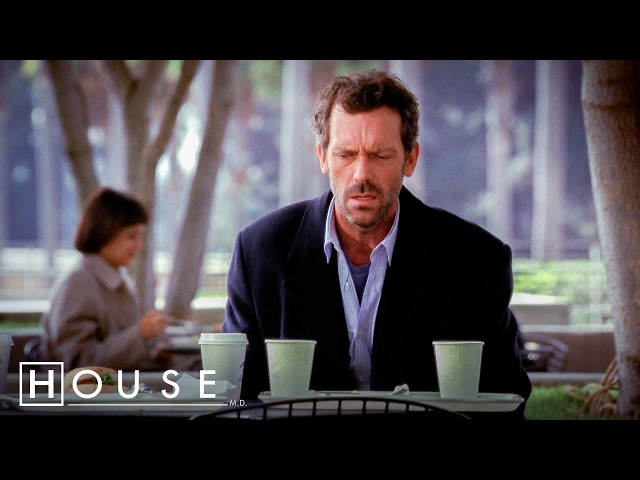
House's Unethical Act to Save 16-year-old Boy's Life | House M.D.
House M.D.
0:00 There's a problem.
0:02 Complications in surgery?
0:03 Surgery went fine, he's in recovery, but we took a vial of CSF and tested it.
0:07 Wait.
0:08 Turns out the bowling wasn't the cause of his problems, it was a symptom.
0:10 Oligoclonal IgG, which means multiple sclerosis.
0:15 And the reason it takes three days to tell me this?
0:17 Because we're having a disagreement about whether or not it is MS.
0:19 No lesions on the MRI.
0:21 It's early.
0:21 He's had the disease for maybe 2 weeks.
0:23 criteria requires 6 months to make a definitive diagnosis.
0:26 Oh, who cares about McPherson?
0:27 I hear he tortured kittens.
0:28 McDonald.
0:29 Oh, Dan.
0:30 Wonderful doctor.
0:31 Love kittens.
0:32 The VEP indicates slowing of the brain.
0:34 Without the lesions, we can't be sure.
0:35 Well, if it is, it's gone from zero to 60 in 3 weeks,
0:38 which would indicate rapidly progressive MS.
0:40 Not the fun MS with the balloons and the bike rides,
0:43 but cripples and wheelchairs.
0:44 We should wait until we
0:45 Start treating him now, maybe he can walk for another couple of years,
0:48 maybe live for another five.
0:51 Break it to the family, I'm going home.
0:53 There are some medications to manage [music] the symptoms,
0:55 but as the disease progresses, the problems will become more severe.
1:00 Bowel and bladder dysfunction, loss of cognitive function, [music] pain.
1:04 What's it going to hurt?
1:07 The brain's like a a big jumble of wires.
1:10 MS strips them of the insulation and the nerves die.
1:14 Brain interprets it as pain.
1:15 But by starting treatment, we're going to prevent that for as long as possible.
1:20 We're looking into a couple of specialists,
1:21 and until we get you squared away, you'll stay here.
1:30 Security, check the videotapes from all perimeter cameras.
1:33 He's still got to be in the hospital.
1:34 Where's Chase?
1:35 Main floor.
1:36 Okay.
1:36 You take the cafeteria and administration,
1:38 I'll hit the research annex and work my way back to you.
1:41 There are experimental treatments.
1:44 Ongoing research.
1:45 Who knows what they'll discover in a year or two?
1:48 This is where I dropped the ball.
1:50 Dan, we're standing on the roof of the hospital.
1:55 Dan.
1:57 Dan, you're not on the field.
2:00 He doesn't know where he is.
2:01 Dan, Foreman.
2:04 Dan.
2:07 DAN?
2:07 DAN, NO!
2:08 DAN!
2:08 I TELL A FAMILY that their boy almost stepped off a roof, they must be thrilled.
2:12 They're not suing, but I think only because Chase asked them.
2:14 Why does everybody always think I'm being sarcastic?
2:17 This is great news.
2:18 He doesn't have MS.
2:20 Parents should be thrilled.
2:21 Well, the mom, anyway.
2:22 Of course, the dad probably doesn't know.
2:23 Why doesn't he have MS?
2:25 He was on the roof thinking he was on a lacrosse field,
2:27 conscious and therefore not a night terror.
2:28 You want some of this?
2:30 Yeah, sure.
2:31 He was in an acute confusional state,
2:34 which doesn't fit with a demyelinating disease like MS.
2:36 Oligoclonal bands.
2:37 Were real.
2:38 They just mean something other than MS.
2:40 So, what are they telling us?
2:42 That his immune system is working?
2:44 Right.
2:45 He has an infection in his brain.
2:46 What about sex?
2:48 Well, it might get complicated.
2:50 I mean, we work together.
2:51 I'm older, certainly, but maybe you like that.
2:53 maybe he has neurosyphilis.
2:55 Huh.
2:55 Nice cover.
2:56 Sorry, RPR was negative.
2:58 We don't need a definitive test to confirm it.
3:00 Sure.
3:00 Didn't need one to confirm MS.
3:01 Okay, let's wait for you to run titers
3:03 on 1,400 viruses while this kid's brain turns to mush.
3:06 So, the fact that he doesn't have MS, it's it's really not good news after all.
3:10 Well, it is if it's neurosyphilis.
3:12 Likelihood of a false negative on an RPR test, 30%.
3:15 Likelihood of a 16-year-old having sex, roughly 120%.
3:19 I'll start him on IV penicillin.
3:20 No, we're not going to wait for that.
3:21 The most effective way to deliver the drug is right into his brain by the spine.
3:25 We can't.
3:25 In a cramped space like the brain,
3:27 increased intracranial pressure from a high volume drug
3:29 like penicillin can herniate his brainstem and kill him.
3:32 A neurologist in his right mind would recommend that.
3:34 Show of hands, who thinks I'm not in my right mind?
3:38 And who thinks I forget this fairly basic neurological fact?
3:41 Who thinks there's a third option?
3:45 Very good.
3:46 What's the third choice?
3:47 No idea.
3:48 You just asked if I thought there was one.
3:51 Patient has a shunt in his brain.
3:53 There'll be no increased pressure.
3:54 We can put as much penicillin into his body as we want.
3:57 Excellent.
3:57 Inject him through a lumbar puncture.
4:00 The treatment should start helping soon.
4:02 Let us know if it's easier to focus on things when you remember stuff.
4:07 Don't fight it.
4:08 Just let it happen.
4:09 No.
4:10 He'll be dead in 2 days.
4:11 I give it a day.
4:13 Dan.
4:13 Not You okay?
4:14 Dan.
4:15 Night terror.
4:16 Body decomposition once he's in the grave.
4:20 He's hearing voices.
4:26 Push 2 mg IV Ativan stat.
4:30 [screaming] How can you just sit there?
4:32 If I eat standing up, I spill.
4:34 Our son is dying, and you could care less.
4:37 We're going through hell.
4:39 You're doing nothing.
4:41 You haven't checked in on him once.
4:43 Blood pressure is 110 over 70.
4:46 The shunt is patent, well placed in the right lateral ventricle.
4:49 The EKG shows a normal QRS with deep
4:51 wave inversions throughout both limb and precordial leads.
4:54 LFTs are elevated, but only twice the normal range.
4:57 Oh, yeah, and he's hearing voices.
5:00 Go hold his hand.
5:03 Go on.
5:03 I'll bust your train.
5:09 Got any sample bags on you?
5:11 I don't believe you.
5:13 Going to run DNA tests?
5:14 Your son is deathly ill.
5:16 I know it's terrible.
5:18 The fact is, if I don't keep busy with trivial
5:19 things like this, my head I might start to cry.
5:22 You're an ass.
5:23 What's this?
5:23 Parents' coffee cups.
5:27 I can't believe you.
5:27 I've had this conversation once already.
5:29 You got something else to do, do it.
5:30 Otherwise, do this.
5:32 House is right.
5:33 The father's not the father.
5:36 Dude doubled up on me.
5:39 You're not going to believe this.
5:41 The mother's not the mother, either.
5:43 You lied to me.
5:44 We didn't lie about anything.
5:46 You, on the other hand, accused us of molesting our son.
5:49 Perfect.
5:49 Can we get off my screw-ups and focus on theirs?
5:52 Theirs is bigger.
5:53 You're not Dan's parents.
5:54 We're his parents.
5:55 He was adopted.
5:56 He doesn't need to know.
5:57 I do.
5:58 Adoption makes us just as much as Listen.
6:01 When we were taking his medical history, were you confused?
6:04 Did you think we were looking for a genetic clue to his condition,
6:06 or did you think we were trying to ascertain
6:08 who loves him the most in the whole wide world?
6:11 you find out about this?
6:13 I sampled their DNA.
6:15 We didn't give you any DNA.
6:16 Your coffee cups from the cafeteria.
6:19 You can't do that.
6:20 Again?
6:21 Why are we getting hung up on what I did?
6:23 Your medical history is useless.
6:24 No, we gave you a detailed history of his biological mother.
6:29 Her history, non-smoker, good health,
6:32 low cholesterol, no blood pressure problems.
6:35 Dan was adopted 2 weeks after he was born.
6:37 You have his history, there's nothing you need to know that we didn't tell you.
6:39 Sounds reasonable.
6:41 Well, if you want to transfer your boy, that is your choice.
6:45 I still think it's the wrong vaccinated?
6:49 The biological mother, when she was a baby, did she get her vaccinations?
6:52 Dan was vaccinated at 6 months.
6:55 Mhm.
6:56 Do you know why kids get vaccinated at 6 months?
7:00 Because before that, they are protected
7:01 by their biological mother's immune system.
7:05 So, was she vaccinated?
7:11 An infant picks up a regular old measles virus, gets a rash,
7:15 is extremely uncomfortable, has a wicked fever, but he lives.
7:19 And here's the kicker.
7:21 Once every million or so times, the virus mutates.
7:25 Instead of Dan having a fever and a rash,
7:28 the virus travels to his brain, hides like a time bomb.
7:33 In this case, for 16 years.
7:36 Subacute sclerosing panencephalitis.
7:39 I know.
7:40 There's only been 20 cases in the United States in the last 30 years.
7:43 Suppose you can make an argument the kid's still in stage one.
7:46 Once SSPE moves to stage two, it's Boom.
7:49 Stage two is universally fatal.
7:52 I assume it's impossible to know when he might move into stage two.
7:54 He's already started showing symptoms.
7:56 Could be a month, could be tonight.
7:59 Can we treat it?
8:00 Ask the neurologist.
8:01 Intraventricular interferon.
8:03 I'm not going to shove a spike
8:04 into his brain and drip interferon without confirming this diagnosis.
8:08 Tap him.
8:08 You won't get a reliable result for measles antibodies in his CSF,
8:11 not after everything we've given him.
8:13 So, the wrong treatment kills any hope of the right diagnosis.
8:16 Why do people lie to me?
8:20 Could also kill him.
8:21 You're a ball, Foreman.
8:23 Tell me I don't have to biopsy his brain.
8:27 Well, there's one other way.
8:31 You sure this isn't going to hurt?
8:33 Yeah.
8:33 It's just scary as hell.
8:35 See, we go through the pupil, and you won't feel it.
8:38 The eye's been paralyzed.
8:39 The needle travels to the back of the eye,
8:41 which is where we'll perform the biopsy on your retina.
8:50 So, we've confirmed that the problem is this mutated virus.
8:53 The treatment for SSPE is intraventricular interferon.
8:57 Implanting a Ommaya reservoir under the scalp,
9:00 which is connected to a ventricular catheter
9:01 that delivers the antiviral directly to the left hemisphere.
9:05 You want us to consent to this?
9:06 I don't even understand what you're talking about.
9:08 Well, the antiviral Look, I'm sorry.
9:15 I can explain this as best I can,
9:17 but the notion that you're going to fully understand your son's
9:20 treatment and make an informed decision is it's kind of insane.
9:26 Here's what you need to know.
9:29 It's dangerous.
9:31 It could kill him.
9:33 You should do it.
9:35 Hey, good morning.
9:37 Good news on your EEG.
9:38 Treatment is working.
9:40 And your immune system is responding.
9:42 I know it's early.
9:44 Just want to take a look.
9:47 All right.
9:48 Let's see what that brain [music] of yours can do.
9:51 Name as many animals as you can that start with the letter O.
9:55 Ostrich.
9:57 Ox.
9:58 Old elephant Well, that's [music] two better than last time.