So This is Peak Smartphone
Marques Brownlee
0:02 So this is peak slab phone?
0:04 for now anyway.
0:06 We gotta talk about it.
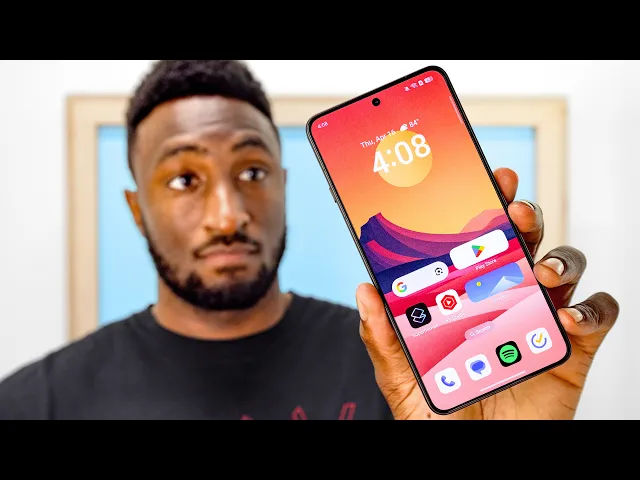
0:08 So this is the Oppo Find X9 Ultra.
0:10 By the time you see this, I've been testing it for almost a month.
0:14 It's their newest maxed-out flagship that makes
0:16 Samsung's S26 Ultra feel not so ultra.
0:19 Snapdragon 8 Elite Gen 5, 7,050mAh battery,
0:22 6.8-inch super bright OLED and an insane
0:25 200-megapixel camera system on the back...
0:27 It is ridiculous, and it's got me thinking a lot about peak...
0:32 slab phone, which is, of course, a moving goalpost.
0:34 See, I called Oppo Find N6...
0:36 peak foldable a couple weeks ago because it
0:39 just feels like we finally reached the watermark of...
0:42 just being a great phone that happens to fold in half.
0:45 They'd one by one engineered away all of the downsides of a foldable,
0:49 from the front bezels to the cameras to the crease to get to that point.
0:53 And that's really exciting.
0:54 Peak...
0:55 slab phone, though, it's a little harder to define.
0:58 Like, there's obviously going to be a better slab phone in a year,
1:02 but you know, there's so many things that make a great smartphone...
1:06 And as far as...
1:07 special...
1:08 watermarks that we're trying to achieve,
1:10 I think we've achieved basically all of them except for one.
1:14 And hot take, we're not going to achieve that last one.
1:18 So hear me out...
1:19 If you've been following smartphones like me for the past decade plus,
1:22 you've seen lots of trends come and go and then some of them stick around.
1:26 So curved screens, they just came and went.
1:29 Pop-up cameras, they came and went too.
1:31 Ultrawide cameras though, those stuck around.
1:33 And so now, as boring as it is,
1:35 we've kind of settled on this final form of a default...
1:38 high-end, maxed-out flagship smartphone.
1:41 Easiest way to see it is to just look at my five pillars of a great smartphone.
1:45 I've always said if one phone can have great display,
1:49 great battery, great build, great performance...
1:52 and great cameras, like, if you can ace all five of those things,
1:56 then you have a great phone.
1:57 Now each of these things, you know,
1:59 is exciting at different times as we get different innovations,
2:02 and they're all changing at different rates.
2:04 But for the past 20 years, all of these categories have felt like they're...
2:08 chasing something...
2:10 that like drives everything to get better.
2:12 So display.
2:13 Right, let's just take that as the first example.
2:15 Everyone...
2:16 for the entire history of smartphones has just wanted a screen on the phone...
2:20 that just looks good...
2:21 all the time...
2:22 that's the watermark.
2:23 And so over the years of smartphone screens,
2:25 they've gotten bigger and bigger, they've gotten thinner bezels.
2:29 You know, they tried curved edges for a while, but it turns out that wasn't it.
2:33 And now we've essentially settled on a large, flat, bright...
2:37 OLED, high refresh rate, high resolution...
2:38 fingerprint reader underneath and a hole punch
2:40 up at the top for a selfie camera...
2:42 They look good outside in the sun now because they get insanely bright,
2:46 and they also look good in the dark because they all get
2:48 all the way down to 1 nit and have high frequency PWM dimming.
2:52 So we still get...
2:53 higher peak brightness numbers and contrast ratios and occasionally
2:56 special features like the privacy display in the bleeding-edge phones.
3:01 But for the most part now...
3:02 in flagships, they have great displays.
3:06 Box checked, watermark achieved.
3:08 So then, what about battery?
3:09 Okay, everybody wants a great battery in their smartphone.
3:12 What does that mean?
3:13 Honestly, just, I want my phone to last all day...
3:16 no matter what.
3:17 Then that's a great battery.
3:18 Now, when we first got 4G phones,
3:20 I remember my HTC Thunderbolt didn't even last till the end of the school day.
3:24 They were terrible batteries.
3:25 But phones have gotten more efficient
3:27 and batteries have gotten bigger and more dense.
3:30 So there was like a 3,000 milliamp-hour barrier that all these flagships hit,
3:34 and then 3,500 and it just kept getting better and better.
3:37 The average screen-on time for a good phone before it died was...
3:41 went from two hours to three to four...
3:43 and then five.
3:43 Anybody spending five hours on their phone in a single day to kill it,
3:49 that's getting a bit ridiculous.
3:51 But you could still do it, I guess.
3:53 But then silicon carbon batteries came along, like in the last two years.
3:57 And so in a few short months,
3:58 the normal flagship battery size went from 5,000 milliamp-hours...
4:02 to 6,000.
4:03 And even higher than that, the X9 Ultra here has a 7,050 milliamp-hour battery.
4:07 So now these phones are just, they're just too good to die in a single day.
4:11 Regular use, they're gonna work no matter what.
4:14 I gave my battery award last year to a phone that could
4:16 get me seven to eight hours of screen-on time every single day.
4:19 Most of the time that's actually a two-day phone.
4:21 Like, I'll end a normal day with 60% left
4:23 and then I just don't even charge it overnight.
4:25 But then if you do actually kill it in a day with some insane day,
4:28 then they'll have like 100-watt wired charging.
4:30 Or 50-watt wireless charging like this with the right accessories.
4:34 So basically we got there.
4:35 These phones have incredible batteries kinda no matter what.
4:38 Box checked, watermark reached.
4:40 Now great performance is maybe a little more subjective since
4:43 that includes the software and people have different preferences there.
4:47 But...
4:47 generally if you have a high-end chip,
4:49 smooth animations and a responsive display,
4:51 keep that thing updated for a long time
4:53 and most people are gonna feel pretty good about it.
4:56 The improvements we get year-over-year these days are like in the highest end...
5:00 that you might notice in like graphically intensive games...
5:02 or benchmark scores basically.
5:04 So you know, performance is definitely box checked,
5:07 and then great build quality is just, I mean it's all there now.
5:11 Metal rails, square...
5:12 built like a tank.
5:13 Slightly improved glass every year that's still glass.
5:16 And then IP69 dust and water resistance.
5:19 As long as the design isn't ugly, we're all good here.
5:22 So then there's great...
5:23 cameras and, and this is the one where we
5:26 get kind of stuck a little bit because okay, we want great cameras.
5:29 What does that mean exactly?
5:31 You've probably noticed every smartphone presentation now is...
5:34 more camera than ever.
5:35 It used to be like one or two slides,
5:37 now a new phone is like 20 slides about just camera stuff.
5:40 Actually just did this little experiment that I've
5:42 been posting on Shorts and maybe leave
5:44 a like or comment on this video if you want to see like a long-form...
5:47 breakdown of it all.
5:48 But we took a picture on every generation of the same phone
5:52 and put them back-to-back to see the differences and they were fascinating.
5:57 I did iPhones, I did also every Samsung phone,
6:00 I did every Google phone, we did daylight, low-light, backlit.
6:04 But the one thing that struck me as I was sitting there,
6:07 you know, getting my picture taken by 17...
6:09 phones in a row and I'm looking at these phones,
6:12 I couldn't help but notice how massive...
6:14 these cameras got over the years.
6:16 It went from a literal pinhole webcam on the back to, to this...
6:20 huge...
6:20 plateau multi-camera system just dominating the back of the phone.
6:24 I think the camera watermark people want to use now in 2026
6:28 is that a smartphone camera system is as good as a regular camera.
6:33 And if we can achieve that, then we can say it's a great camera.
6:37 Unfortunately, this is a battle against physics that...
6:40 can never fully be won.
6:41 As much as these are doing a hell of a job of getting close like this...
6:45 X9 Ultra is the most ridiculous camera system I've ever.
6:49 And next year, sure, there's probably gonna be an even more ridiculous one.
6:53 But let's look at this.
6:54 The whole phone is built around this camera system.
6:57 From the design, like the faux leather on the back, the orange accent,
7:01 the Hasselblad and Oppo text being sideways to the specs themselves.
7:05 It's five camera sensors back here, and each one of them is either the best...
7:10 or among the best numbers on paper I've ever seen.
7:12 200-megapixel main camera with the biggest 200-megapixel sensor we've ever
7:16 seen in a phone with a wide aperture and OIS.
7:19 Then a 200-megapixel 3x telephoto camera.
7:21 Literally the biggest telephoto sensor we've ever seen in a phone.
7:25 Bigger than a lot of phones' main cameras.
7:27 There's also a second zoom.
7:28 There's a 50-megapixel 10x camera with sensor-shift stabilization,
7:32 and there's a 50-megapixel ultrawide...
7:34 and...
7:34 a dedicated color sensor that they're calling this true color camera
7:38 to help get the most accurate white balance in photos and videos.
7:41 And, a shocker to absolutely no one, this is a great...
7:44 camera system.
7:45 Oppo's X9 Pro already won my smartphone camera of the year last year.
7:49 This is the ultra version of that phone...
7:51 So it's got a lot of the same tasteful,
7:54 relatively minimal processing with just better hardware.
7:56 And so that's just a treat.
7:57 There's still plenty of processing going on, and it takes a while.
8:01 You can actually snap a shot and then wait
8:03 two to three seconds to see it finalize everything.
8:05 And it can get a bit HDR-y sometimes,
8:07 but for the most part, any shot you can imagine,
8:10 any shot you're thinking of getting,
8:12 you can probably get it, and it'll come out really good.
8:15 There's just so much versatility with these focal lengths, too.
8:18 But there is a difference there.
8:20 There's a difference between super versatile...
8:22 and as good quality as a regular camera.
8:25 Those are two different things.
8:28 The irony with this, you know, Oppo,
8:30 is they clearly want you to think of this as like a Hasselblad camera.
8:33 They...
8:34 bought the licensing, and they use the same accent colors,
8:37 and it's got the knurling around the camera ring...
8:39 And this is based on the Hasselblad X2D Mark II.
8:42 They say it on their website.
8:45 I actually own the Hasselblad X2D Mark II.
8:49 These are...
8:50 these are like opposite cameras.
8:51 They could not be further apart!
8:53 The whole point of an incredible smartphone
8:56 camera system is to be the most capable,
8:59 versatile, convenient camera possible, no matter where you are,
9:03 no matter what situation you're in.
9:05 This computer is going to try its absolute hardest
9:08 to not let you take a bad picture or video.
9:11 It's why it's called computational photography.
9:15 The X2D Mark II is a professional,
9:17 very deliberate camera that doesn't have computational photography.
9:22 It doesn't even have a video mode.
9:24 So I think it's actually kind of a mistake to compare these two.
9:28 The smartphone will never, I'll just say it,
9:30 will never actually replace a high-end professional camera at what it does.
9:34 Just physics, you know, they,
9:36 these sensors get bigger and better every year, but so do these.
9:39 I actually think that's true about everything.
9:42 Probably over...
9:42 like, an RX100-type of camera.
9:44 But I think what we're settling on is
9:46 that a truly great smartphone camera is obviously really good quality,
9:50 but it's one that minimizes the misses and maximizes the makes.
9:53 Like, it's like that self-moving basketball
9:56 hoop that Stuff Made Here, a YouTuber,
9:58 made a couple years ago, where no matter what your skill level,
10:01 no matter how bad any of your shots are,
10:04 you can always end up with a make, you just can't miss!
10:07 And if you don't know better, you might even think that that's your skill: "Wow,
10:11 every shot looks so great." "I'm killing it!"
10:14 That's what computational photography is trying to do.
10:17 A lot of us, you know, enthusiasts, don't love that look.
10:21 So if you can do that without the over-processed look, then that would be great.
10:26 So anyway, the updated watermark, I think,
10:29 that we're chasing is that a great smartphone camera
10:33 can take a really good photo or video anytime.
10:37 That's what we're chasing.
10:38 That's not to say you can't have a little fun,
10:42 because not only does this, and phones like it,
10:44 try to defy physics with things like portrait mode to simulate a larger sensor,
10:49 and even the Hasselblad modes with lens
10:51 emulation to mimic the bokeh of these bigger,
10:53 better lenses, but they're also making literal lens
10:56 attachment accessories to unlock even more incredible capability.
11:00 This, and also the Vivo X300 Pro,
11:02 are at the forefront of that with these attachments
11:05 that are honestly kind of insane.
11:07 Like, Oppo has it with Hasselblad, Vivo is doing it with Zeiss.
11:11 This phone has a whole specialized case and lens
11:14 attachment and battery grip with a two-stage shutter button.
11:18 It's truly hilarious that you can carry
11:20 all this stuff around and actually take some
11:23 pretty incredible 400-millimeter zoom photos that you
11:26 can technically say you shot on your smartphone.
11:29 But at the end of the day,
11:30 as good and as fun as this is, it's really impressive.
11:34 It's still mimicking the real thing, as good as it's gotten.
11:38 So the strength is definitely still in its versatility.
11:41 Like, it really reminds me of all the parallels
11:45 of when someone tries to turn their iPad into a laptop.
11:49 You...
11:50 You can kind of do it, kind of...
11:52 Like, the software is still not exactly desktop software,
11:56 but you can multi-window mostly the same way.
11:59 And the web browser is mostly desktop-class,
12:01 and there's a file manager now, so that's nice.
12:05 And if you ignore the kind of wobbly weight distribution...
12:09 Eh...
12:09 kind of a laptop??
12:10 It's cool that it's gotten that good, but nobody sane would say that it's
12:15 a one-to-one replacement for a high-end, pro-level laptop.
12:19 But!
12:20 for regular use, stuff that most people are doing:
12:24 YouTube, video watching, social media, web browsing, word processing,
12:28 basic stuff, even some light photo editing and video editing,
12:33 it is actually as good as anyone will need.
12:35 And that's a smartphone camera.
12:37 Professional cameras, of course, will always have their place.
12:40 That's what I keep shooting these videos with.
12:42 That's what us hobbyists and professionals love.
12:45 But I will also keep shooting the Auto Focus channel exclusively on smartphones,
12:49 because that's also really fun and it demonstrates the capabilities
12:52 and how good that these keep getting over the years.
12:55 The latest episode was actually shot on this X9 Ultra,
12:57 so if you want to see what the footage from this phone looks like,
13:00 I'll link it below the like button.
13:01 It is so good.
13:02 Thanks for watching.
13:03 And I'm very curious to see your comments below,
13:06 what you think of peak slab phone in 2026.
13:09 Catch you in the next one.
13:11 Peace!