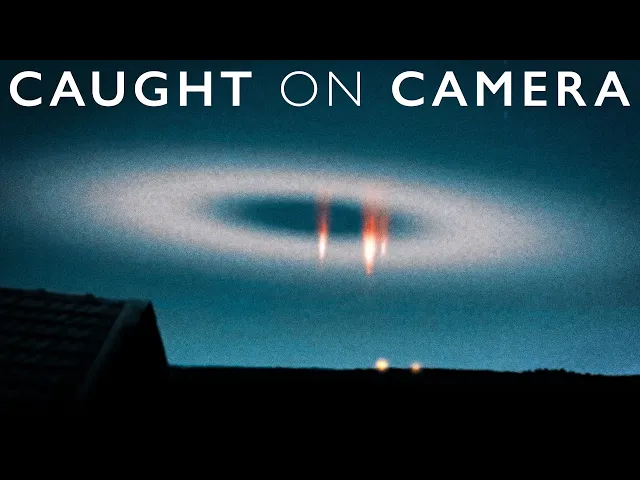
The Strangest Phenomena Ever Seen on Earth
Astrum Extra
0:06 The Earth's atmosphere may look empty, but it's really a complex and dynamic
0:11 place swirling with gaseous matter and thermal energy.
0:16 Some of its most spectacular activity is best viewed at night.
0:21 If you've ever watched a lightning storm or a meteor shower,
0:25 the breathtaking Aurora Borealis in the north
0:28 or the shimmering Aurora Orales in the south,
0:32 then you know what an incredible light show the sky can put on.
0:37 But in recent years, with the help of highly sensitive cameras,
0:41 researchers have been able to document a number of unusual,
0:45 previously unrecorded light producing phenomena.
0:49 These occurrences which happen high in the Earth's
0:52 atmosphere are known as transient luminous events.
0:56 What are these strange phenomena?
0:59 Why are they so elusive?
1:01 And what can they teach us about the hidden workings of our atmosphere?
1:07 I'm Alex Mccoan and you're watching Astramm.
1:10 Join me today as we look at incredible images of transient luminous events as we
1:16 explore and unravel some of the most
1:18 mysterious and elusive phenomenon in the night sky.
1:23 Let's begin with a remarkable image.
1:26 It looks like a cross between a lightning storm and a jellyfish, doesn't it?
1:31 This is a red sprite,
1:33 and the formation you're looking at is fittingly called a jellyfish.
1:37 It's incredibly big, spanning up to 50 km and originates at an altitude
1:43 of 70 to 80 km above the Earth.
1:46 Sprites are short-lived events lasting 3 to 5
1:50 milliseconds and they travel downwards at blazing speeds,
1:55 reaching 10% the speed of light.
1:58 For years, sprites were only rumored to exist.
2:02 Reports can be found as far back as the 18th century,
2:05 but a theoretical basis wasn't published until 1925 when physicist CTR
2:12 Wilson speculated that the electrical breakdown
2:14 could occur in the upper atmosphere.
2:17 However, despite years of unverified sightings,
2:21 it would take more than six decades for their existence to be confirmed.
2:26 So, what are sprites?
2:29 Unlike lightning, which is extremely hot, sprites are cold plasma events,
2:35 much like the reaction inside a fluorescent tube.
2:38 Let's think about that fluorescent light for a moment.
2:41 It requires a power source to ionize
2:44 the gases trapped inside in order to emit light.
2:47 As it happens, sprites also require
2:50 an electrical discharge to trigger their fluorescent reaction.
2:54 You see, inside a storm cloud,
2:56 there is friction between rising ice crystals which become
3:00 positively charged and sinking soft hail particles which become negative.
3:06 These positively charged crystals in turn cause a negative
3:10 shield layer to form in the air above them.
3:13 When a positive discharge happens in the form of a lightning strike,
3:17 the cloud becomes neutralized, but the negative shield layer remains.
3:21 We now believe it is this unstable,
3:24 negatively charged shield layer that causes electrical
3:27 breakdown in the upper atmosphere, producing sprites.
3:32 It is even possible that sprites aren't especially rare.
3:36 What makes them incredibly difficult to observe is that they occur high
3:40 in the ionosphere where they are often
3:43 hidden by the storm systems that produce them.
3:46 So, to see a sprite, you need a clear sight line over
3:50 a thunderstorm or perhaps a camera positioned above it.
3:55 As you can see here,
3:56 the International Space Station was lucky enough to get one in action.
4:01 Sprites glow red because under the low pressure conditions where they originate,
4:06 nitrogen emits low frequency red light where its molecules get excited.
4:11 Compare this to auroras, which are usually green.
4:14 That's because at the higher elevation where auroras occur,
4:18 Earth's atmosphere has greater levels of oxygen
4:20 whose molecules fluores green when they get excited.
4:24 But sprites don't always produce red light.
4:28 Sometimes a sprite will set off a secondary event at a lower elevation.
4:32 These secondary events, or tendrils, often appear blue.
4:37 While their light is also produced by nitrogen,
4:40 the higher pressure causes them to glow blue and near ultraviolet.
4:45 As a result, some larger sprites, like the jellyfish we saw earlier,
4:49 have a remarkable appearance, glowing red at the top and blue at the tentacles.
4:56 Sprite tendrils aren't the only tle's with a bluish tint.
5:00 This event is known as a blue jet.
5:04 Discovered only recently,
5:05 blue jets are a distinct phenomenon also initiated by storm systems.
5:11 In these events, the positive charge at the top of a storm
5:14 cloud forms a leader with a negative shield layer above the cloud,
5:18 producing a discharge that propagates upwards.
5:22 This excites the nitrogen, making a spectacular cone-shaped jet that glows blue.
5:29 Why blue?
5:30 Well, remember what we said about
5:32 how atmospheric pressure affects excited nitrogen gases?
5:36 Blue jets occur much lower in the atmosphere than sprites,
5:39 which is why they flues a different color.
5:42 There are also smaller TLEs called blue starters,
5:46 but scientists believe they are simply failed blue jets.
5:50 These dimminitive cousins only reach 20 km above the Earth.
5:55 At the other end of the family is
5:57 a separate phenomenon known as the gigantic jet and it
6:00 occurs much higher in the atmosphere which is why
6:03 the upper portion changes color from blue to red.
6:07 We'll leave today with one of the rarest and least understood tle.
6:12 These green or red phenomena are known as elves.
6:16 A quaint acronym that stands for a mouthful.
6:20 Its full name is emission of light and very
6:23 low frequency perturbations due to electromagnetic pulse sources.
6:27 Try saying that five times fast.
6:30 Unlike sprites and jets, elves are diffuse ring-shaped phenomena
6:35 that occur even higher in the atmosphere.
6:38 And unlike what the name suggests, they are huge.
6:43 Elves can grow up to 400 km in diameter and occur 100 km above the Earth.
6:50 But despite their size, they are extremely short-lived events.
6:54 They only last a millisecond, so brief that they can't be seen by the naked eye.
7:00 While little is known about elves,
7:02 we believe they are caused by an electromagnetic
7:04 pulse produced by the discharge of an underlying thunderstorm.
7:09 So, there we have it.
7:10 An introduction to some of the most spectacular transient
7:14 luminous events that have been confirmed in recent years.
7:18 What other luminous phenomena may be lurking in the Earth's atmosphere?
7:22 It's tantalizing to think about,
7:24 and because this is still a fairly new field of research,
7:27 we can only imagine what new surprises may be in store for us.
7:32 Want more videos about weird atmospheric phenomena on Earth?
7:36 Let me know in the comments.
7:41 Picture the ocean on a dark and windy day.
7:48 Rather than smooth rolling waves,
7:50 the surface is rough and choppy with deep troughs and frothy crests.
7:56 Now, imagine that stormy ocean flipped upside down and blanketing an entire sky.
8:03 It may sound crazy, but that image
8:06 is a pretty close approximation of aspiritus clouds,
8:09 an extremely rare cloud type that was only
8:12 recognized by the World Meteorological Organization in 2017.
8:17 Aspiritas, which translates to rough and uneven,
8:21 is one of the rarest cloud forms on record and the only one
8:25 to have been formally added to the WMO's cloud atlas in almost 70 years.
8:31 Given how recently they were discovered,
8:33 not much is known about how or when aspiritus clouds form,
8:37 although we have some theories.
8:39 So, what makes Aspiritus clouds different?
8:43 Why haven't we noticed them before?
8:46 And could their discovery provide a blueprint
8:48 for identifying extremely rare weather events in the future?
8:54 I'm Alex Mccoen and you're watching Astramm.
8:57 Join me today as we look
8:58 at spectacular highdefinition images of aspiritus clouds.
9:03 Learn what scientists think could be
9:05 giving them their dramatic appearance and explore
9:08 the exciting implications of this unusual
9:11 convergence of citizen science and trailblazing research.
9:17 In 2006, Jane Wiggins, an amateur photographer located in Cedar Rapids, Iowa,
9:23 took a photo from her office window
9:25 that she described as looking like Armageddon.
9:29 She sent the image to the Cloud Appreciation Society,
9:32 which posted it on their website.
9:35 The photo immediately set off shock waves among cloud watchers,
9:39 who suspected that it could be evidence of a previously unknown cloud formation.
9:45 Other amateur hobbyists using the Cloud Spotter mobile
9:48 app started sharing their images with each other,
9:51 sharing weather conditions to look out for to help others see it for themselves.
9:55 This caught the eye of the Royal Meteorological Society,
9:59 which used dozens of photos collected by the Cloud Appreciation Society
10:03 to prepare a case that they sent to the World Meteorological Organization.
10:09 After several years of debate, the WM made an announcement.
10:14 For the first time since 1951,
10:17 they were adding a totally new type of cloud to the cloud atlas,
10:21 giving aspiritus clouds the unique distinction of being the only cloud
10:25 type to have been discovered as a result of digital crowdsourcing.
10:30 But why was this rare?
10:32 And who decides what makes a cloud form unique?
10:37 Let's start with a primer.
10:39 Clouds essentially are liquid droplets or solid particles
10:43 suspended in the atmosphere of a planetary body.
10:46 While on other planets, clouds can be made of methane,
10:50 ammonia, or even sulfuric acid.
10:53 Here on Earth, the vast majority contain liquid or frozen water.
10:57 And personally, I'm glad we don't have many of the sulfuric acid variety.
11:02 Clouds form when saturated air reaches its due point.
11:06 The temperature at which under a given set of barometric conditions,
11:11 water vapor condenses into liquid due to cooling
11:14 air or increased saturation from an adjacent water source.
11:18 There are five primary cloud types.
11:21 Stratus, cumulus, stratouulus, cumuloneimbus, and cirrus.
11:26 Each of which are subdivided into different genre based on altitude.
11:31 However, in addition to these primary categories,
11:34 there is a range of accessory clouds which are clouds that become
11:38 detached from the original genus clouds as well as supplementary features.
11:44 All of these are formally classified in the W cloud atlas,
11:48 the international manual for cloud identification,
11:52 which uses a linear nmanllete that has been in place since the 19th century.
11:58 The WMO is responsible for updating the cloud atlas,
12:01 but revisions are extremely rare.
12:04 The last new formation was Sirrus in added back in 1951.
12:10 Now, aspiritus clouds are thought to be
12:13 mostly a supplementary feature of stratapform clouds,
12:17 which are low elevation layered clouds without vertical development.
12:21 Although, aspiritus have also been observed to be stratouulus or altocumulus.
12:27 Interestingly, while the bases of the stratapform clouds are generally flat,
12:32 they tend to develop significant features
12:34 at the top due to wind and temperature changes.
12:37 This is extremely common and something you will no doubt be
12:40 familiar with if you've looked out of the window of a plane.
12:44 What makes aspiritus clouds unusual is
12:46 their highly developed structures at the bottom.
12:51 In 2017, researchers from the Cloud Appreciation Society, University of Reading,
12:56 and McGill University published a paper attempting to describe
13:00 the features and causes of aspirus cloud formation.
13:04 According to the authors, aspirus clouds are defined by their rough,
13:08 somewhat wavelike cloud base that lacks the smooth
13:12 undulating shape of the possibly related unulitus cloud type.
13:17 Given these semi-wavelike characteristics,
13:20 the authors hypothesize that aspiritus clouds
13:23 are likely created by weak ocilitary activity.
13:27 There are a few potential causes of this.
13:30 One is orography, which is the wavelike movement
13:33 caused by the flow of air over mountainous terrain.
13:36 However, there could be other reasons such as horizontal wind shear, convection,
13:42 which is the exchange of matter or temperature between fluid bodies,
13:46 or atmospheric gravity waves.
13:49 By the way, in case you're wondering,
13:51 a gravity wave isn't the same as a gravitational wave.
13:55 As much as I love space-time physics,
13:57 we're not talking about massive ripples in the space-time fabric here.
14:02 A gravity wave occurs at the border between
14:05 one fluid and another when a force upsets
14:08 the equilibrium and gravity tries to restore it which
14:11 produces a back and forth movement or wave orbit.
14:16 Some familiar examples of gravity waves include tsunamis and the changing tides.
14:21 You have probably seen the result of gravity
14:23 waves affecting clouds too and julitus clouds.
14:27 I'm sure you've noticed cloud formations like this before from a ground view.
14:32 The view from space is equally spectacular.
14:36 But aspiritus clouds have an appearance of roughness
14:39 that indicates unusual instability at the cloud base.
14:43 These aren't smooth and wavelike like
14:45 the unjulitous cloud type we've just looked
14:47 at, but have a formation that is chaotic
14:50 like the stormy ocean we talked about earlier.
14:53 While stratapform clouds often have what is
14:56 known as Kevin Helmhalt instability at the top,
14:59 an instability that comes from velocity shear within fluids,
15:03 this instability is more unusual at the base of clouds.
15:07 So what might be the cause?
15:10 We don't know yet.
15:11 But the authors of the 2017 paper from earlier suggest
15:15 that this instability may propagate downward from the top of the cloud,
15:19 which could happen if the cloud is thin enough.
15:22 Perhaps there are different reasons each time.
15:25 The scientist who captured this time lapse said that here gravity
15:29 waves were moving through an inversion
15:31 underneath an elevated region of instability.
15:35 You've probably seen an inversion before where clouds or even
15:38 smog is trapped under a layer of hotter air.
15:43 Thunderstorms were in the forecast,
15:44 but the thunderstorms could not pull their inflow
15:47 air from near the surface due to the inversion.
15:50 So instead they pulled from above the inversion.
15:54 The gravity waves moving through the inversion
15:56 created enough lift that a strong updraft
15:59 was formed and it moved in phase with the peak of the gravity wave.
16:03 This enhanced lift from the updraft increased the amplitude
16:06 of the wave and made the aspiritus cloud here very visually impressive.
16:12 Regardless of how it happens, this internal instability appears to disrupt
16:17 the weak ocilitary activity at the base,
16:19 resulting in the rough, choppy appearance.
16:22 So, when you think about it,
16:24 the winds and currents causing the choppiness of the ocean on a stormy day
16:28 aren't that unlike the chaotic forces scientists
16:31 think are producing instability in an aspiritus cloud.
16:35 In both cases, complex fluid dynamics are in play,
16:39 giving rise to eerily similar characteristics.
16:42 Nature may not repeat itself, but it often rhymes.
16:48 So, there you have it.
16:49 A primer on one of the newest and least understood cloud types on record.
16:54 If this interests you, you might want to keep watching the sky
16:57 and taking photos of anything interesting you see.
17:00 Who knew we'd still be discovering new cloud types?
17:04 What else out there don't we know about?
17:06 And who knows, you could be part of the next scientific breakthrough.
17:13 When it comes to talking about the universe,
17:16 I'm not usually at a loss for words.
17:19 But every so often, I see something so awe
17:21 inspiring and unusual that words don't do it justice.
17:26 And it seems that when I posted an image of this last year,
17:29 it looks like I'm not alone here.
17:31 Such is the case with noctalucent clouds,
17:34 a strange and beautiful phenomenon that occurs high in the Earth's
17:38 messosphere and requires a unique set of conditions to form.
17:43 In fact, these cloud formations are so
17:45 captivating that they've inspired communities of watchers
17:49 who share atmospheric data online in the hope of seeing one for themselves.
17:55 So, what are Noctalucent clouds?
17:58 What gives them their ghostly luminescence?
18:01 And what surprising insights can they offer?
18:04 Not just about Earth's atmosphere, but perhaps the future of our planet.
18:10 I'm Alex Mcolen and you're watching Astramm.
18:13 Join me today as we view spectacular
18:15 images of these eerily beautiful cloud formations.
18:19 Learn how they form and understand why they are
18:21 giving scientists a surprising window into Earth's changing atmosphere.
18:27 Imagine a clear summer night.
18:30 The sun has dipped below the horizon
18:33 and Capella is shining brightly to the north.
18:36 Suddenly, a bright streak erupts low in the northern sky.
18:41 It might look like a shining silver thread or perhaps an icy blue whirl.
18:47 Slowly, the streaks get brighter and clearer until finally
18:52 the whole sky glistens with a patchwork of eerily shining clouds.
18:57 Night shining clouds such as this formation
19:00 photographed over the Baltic Sea are truly spectacular.
19:05 And no, they don't actually emit light.
19:08 They get their glowing appearance by reflecting solar
19:11 radiation during astronomical twilight when the sun is
19:14 between 6 and 16° below Earth's horizon
19:18 and remnant light is scattered in the upper atmosphere.
19:22 Because noctalucent clouds form at very high altitudes
19:26 around 76 to 85 km above the terrestrial surface,
19:30 they can reflect the sun long after an observer has fallen into Earth's shadow.
19:35 So while noctalucent clouds also form during daylight hours,
19:40 they are only visible to the unaded eye at night.
19:44 To make a noctal cloud, you need water,
19:48 dust particles, and incredibly low temperatures.
19:52 Unlike normal clouds which form in the Earth's troposphere where 75%
19:57 of the atmosphere's mass and 99% of its water vapor occurs,
20:02 Noctalucent clouds form high in the upper meosphere
20:06 which is the atmosphere's third layer above the stratosphere.
20:10 Just a reminder, the lowest layer of atmosphere on the Earth is the troposphere.
20:16 the boundary of which is the tropopores.
20:18 Then the stratosphere, stratopes, meosphere, meopor,
20:23 thermosphere, thermopor, and then finally the exosphere.
20:28 For more about all these layers, check out this video.
20:32 The mesosphere is a tricky region to study since it's too high
20:36 for spacecraft to fly and too low
20:39 for orbital spacecraft due to atmospheric drag.
20:42 Noctalucent clouds form slightly below the mesopor which is
20:46 the upper boundary between the mesosphere and the thermosphere.
20:50 The meopor is also the coldest region
20:53 of earth with temperatures that can plummet below 100°.
20:58 By comparison, the coldest temperature ever recorded in Antarctica was- 89.6°.
21:06 These frigid conditions produce tiny ice crystals less than
21:10 100 nanome in diameter which then gather on dust particles.
21:15 Researchers have learned that the meosphere must reach
21:18 -20° C for these ice crystals to form.
21:22 That's pretty cold.
21:24 But if noctalucent clouds require such cold conditions,
21:27 why do they occur during summer?
21:30 Well, one unusual property of the meopor is
21:34 that it is colder in summer than in winter.
21:37 Known as the meoporal,
21:40 this happens because hot air in the lower troposphere expands resulting
21:44 in upswelling gases that decompress in the meosphere causing adiabatic cooling.
21:51 Because noctalucent clouds require very low temperatures,
21:54 they only appear for 60 to 80 days out of the year,
21:58 peaking around 20 days after the solstice.
22:02 If you want to see a night shining cloud formation,
22:04 you'll need a lookout spot between plus or minus 50 and 70° latitude.
22:11 Although satellites have spotted many meospheric clouds
22:14 north of the 70th parallel, here on Earth,
22:17 the polar regions have too much ambient
22:19 light during the summer for optimal viewing.
22:22 So, if you happen to live in northern Norway or Alaska,
22:25 you'll have to travel south for your noctal cloud watching.
22:30 That's a pretty good survey of what we know.
22:33 So, let's talk about what we don't.
22:37 Saying the meosphere is a very dry place would be a bit of an understatement.
22:41 In fact, it is 1 million times drier than air from the Sahara Desert.
22:46 Not exactly a place you'd expect to find clouds.
22:50 We currently think upswelling air from the troposphere
22:53 is the likely cause of this moisture.
22:55 More puzzling, however, is the question of where the dust is coming from.
23:00 One theory is that it comes from space in the form of debris.
23:05 The Earth gets bombarded daily with thousands
23:07 of meteorites and other space debris.
23:10 Could they leave enough dust to create such massive cloud formations?
23:14 Or could there be other causes?
23:17 Interestingly, Noctalucent clouds were first cited in 1895,
23:22 2 years after Crackatoa's massive volcanic eruption in Indonesia,
23:26 which spew debris into the upper atmosphere.
23:29 It has to be something big like this because otherwise the atmospheric layers
23:33 don't mix very much and so dust wouldn't usually make it to the meosphere.
23:39 We also know that man-made sources such as exhaust
23:42 from space shuttles can sometimes trigger no clouds
23:46 such as a 2014 incident when the Space
23:49 X Falcon 9 caused no clouds over Orlando, Florida.
23:54 In 2009, the United States Naval Research Laboratory successfully created
23:59 an artificial noctalucent cloud using exhaust
24:03 particles from a suborbital sounding rocket.
24:06 And in 2018, the University of Alaska created
24:09 a noctal cloud by releasing water from a suborbital rocket.
24:14 But without such proximate causes, the source isn't easy to pinpoint.
24:19 Luckily, NASA has launched a satellite known as the Aeronomy of Ice
24:24 in the Meosphere or AIM to answer these and other pressing questions.
24:29 It was first launched in 2007, but as of 2022 is still operational.
24:36 AIM is powered by two solar panels
24:38 and is equipped with three payload instruments.
24:41 The cosmic dust experiment,
24:43 which emits pulses to measure speeding dust particles.
24:47 The cloud imaging and particle size has four cameras that image
24:52 meospheric clouds from variable angles to create a detailed 2D panoramic view.
24:58 And the solar occultation for ice experiment,
25:01 which measures particles, temperature,
25:04 and atmospheric gases in order to identify
25:06 chemicals and conditions for noctalucent cloud formation.
25:10 There have also been several experiments to synchronize
25:13 Ames observations with those of low-flying aircraft.
25:17 The first of which was conducted in July 2009.
25:20 By synchronizing data between satellites and aircraft,
25:24 scientists can construct far more detailed models of meospheric cloud
25:28 formation and their features than they could from aim alone.
25:32 For NASA and other atmospheric researchers,
25:35 answering these questions is no idle matter.
25:38 The messosphere is a remarkably sensitive indicator
25:41 of changes that are happening elsewhere in the atmosphere.
25:44 The same features that make it so unusual,
25:47 its rarified gases and sensitivity to changes far down in the troposphere,
25:52 make it a useful canary in the coal mine, so to speak.
25:56 Decades of noctalucent cloud study have made
25:58 it clear that they are becoming more frequent,
26:01 and climate researchers are now beginning to link
26:03 changes in noctalucent cloud distribution to global climate change.
26:08 As the troposphere gets hotter,
26:10 the messosphere visav the mesopor's anomaly may well be getting cooler
26:16 and improving our understanding of the mesosphere
26:18 has other farreaching implications as well.
26:21 It is a vital part of the atmosphere for re-entering spacecraft.
26:25 And because the meosphere is so dry and low density,
26:29 studying it could help us learn about atmospheres on other planets such as Mars.
26:34 By deepening our knowledge of the mesosphere,
26:36 researchers hope not only to understand the properties of noctalucent clouds,
26:41 but also Earth's atmosphere as a whole and how it is changing over time.
26:49 They are watching you.
26:52 Ever feel that prickle across your neck?
26:55 That ominous sensation of eyes on you, but you can't detect anyone around?
27:02 Well, although they can't spot the culprit directly,
27:06 your senses might be onto something.
27:09 The Earth is surrounded by eyes studying you, tracking you,
27:16 trying to understand every aspect of your dayto-day life.
27:21 They are our own satellites, and there are hundreds of them,
27:26 and I don't think we have quite realized how good they've gotten.
27:32 There are satellites with mirrors the size of Hubbles,
27:36 not pointed at distant galaxies to unravel their mysteries,
27:39 but staring down at you.
27:43 There are satellites that can see through clouds
27:46 and don't care if it's day or night.
27:48 They see just as clearly either way.
27:52 In this age of information where companies are pushing for more
27:56 and more data and governments strive to keep track of criminals and threats,
28:02 the thing that might be harder and harder to find is privacy.
28:07 Are the benefits worth the cost?
28:13 I'm Alex Mccoan and you're watching Astramm.
28:16 And it is time to look out the nearest window and smile for the camera there.
28:22 Now, do you want to see how your picture turned out?
28:29 In 1957, the number of artificial satellites
28:33 in space first ticked up from zero to one.
28:37 Sputnik 1 was launched by the Soviet Union officially to practice
28:41 their satellite deployment methods and to send
28:44 test radio signals through the atmosphere,
28:47 but also to show the world that they were winning the space race.
28:51 The world, however, did not take long to catch up.
28:54 In 2007, 50 years later, there were 912 active satellites orbiting the Earth.
29:02 As a testament to how quickly the industry is growing,
29:06 it took only 10 years for that number to reach 1,778.
29:11 In 2022, the number hit 6,95 and this number is set to grow.
29:21 The company SpaceX alone wants to eventually raise
29:24 the number of active Starling satellites to a whopping 42,000.
29:30 In the next 10 years, there could be hundreds of thousands of satellites
29:34 from various different countries and private organizations orbiting our planet.
29:39 Of course, not all of these satellites are there for observation.
29:43 around half of the ones active right now are communication satellites.
29:48 But still, according to data collected by the UCS,
29:52 the aptly named Union of Concerned Scientists,
29:55 at the start of 2022, there were 1,052 eyes looking down on us.
30:02 That's a lot of eyes, and they're getting sharper.
30:08 Let's discuss spatial resolution.
30:10 This is a measurement of how many meters on the ground
30:13 are represented by a single pixel in a satellite taken image.
30:18 The early cameras on satellites like LANCAT 1 had a resolution of 80 m,
30:23 which is to say a single pixel represented an 80x 80 m square,
30:28 meaning you could almost fit an entire football field in it.
30:32 This made them good for taking sweeping images of our planet at large
30:36 and perhaps for keeping track of massive objects like clouds and weather fronts.
30:40 But there was hardly the sense that our privacy was at risk.
30:44 Now, well, see for yourself.
30:48 These full color videos were taken by Carbonite 2,
30:53 a commercially available satellite that captures an entire 5 km swath
30:58 as it passes by at 500 km in low Earth orbit.
31:03 The resolution for this video is 1 m,
31:06 which is good enough that you can pick out details like the motion
31:09 of waves on the sea or cars driving along the road in real time.
31:16 Although you might not be able to distinguish
31:18 their car make and most likely not their drivers,
31:21 the advantages of such a video are obvious.
31:25 Transport officials can keep an eye on traffic congestion
31:28 and it becomes easy to track the speed of urbanization.
31:31 There are also numerous scientific benefits which we'll get into later.
31:36 But there's one undeniable feature of such improved resolution
31:40 that made it very interesting for governments around the world.
31:44 And the main reason you might be worried,
31:47 it becomes easier for spy satellites to keep track of you.
31:54 Spy satellites have also come a long way.
31:58 Originally, when the CIA began their secretive corona project,
32:02 disguised as an innocent space exploration program called Discoverer,
32:07 satellite cameras were recording their images onto actual film,
32:11 which then had to be jettisoned and parachuted back down to Earth,
32:14 where the capsules carrying the sensitive data could later be recovered.
32:18 One of these capsules was actually the first
32:21 ever man-made object to be recovered from space.
32:24 It wasn't the most efficient system and spy satellites tended not to last
32:28 longer than a year before they ran out of film and capsules.
32:32 Now everything is digital,
32:35 significantly improving the lifespan of such satellites.
32:39 As for what they can see, well, for obvious reasons,
32:43 governments tend not to reveal how good
32:45 the resolution is on their spy satellites.
32:49 However, it's interesting to note that the video I showed you earlier of the 1
32:53 m resolution satellite camera is not the best the market has to offer.
32:58 Other satellites boast 50 cm and even 25 cm resolutions and some
33:04 such as Umbra SAR satellite claim to have reached 16 cm.
33:10 And this is only about as good as they are legally allowed to get.
33:14 The United States has laws in place that make
33:16 it illegal to have satellites with better resolutions than that.
33:20 Although companies are pushing for this restriction to be lowered so that they
33:24 can keep up with a competitive global
33:26 market that doesn't always have such restrictions.
33:30 Take a note of that though.
33:31 This is not about capability.
33:34 True, the laws of physics put some constraints on us that make better
33:37 resolutions difficult to impossible without having
33:40 a satellite fly close enough to the planet
33:42 that atmospheric drag will start to cause it to fall or without making a light
33:47 gathering mirror so large that it becomes difficult to launch them on a rocket.
33:52 However, it's not accurate to say
33:54 that spy satellites can't get better resolution.
33:58 There are rumors of resolutions hitting at least
34:00 10 cm resolution, perhaps even 1 cm.
34:05 Rumors that were at least partially confirmed by the previous
34:09 US President Donald Trump by accident in a tweet he posted.
34:14 In 2019, Iran attempted a rocket launch that ended in failure.
34:19 Trump felt it was necessary to tell the world that the US
34:22 government had not been involved in sabotaging the rocket launch.
34:25 To prove his point, he included a photo of the damaged launch site,
34:29 hoping to show that there were no signs of foul play.
34:33 This may well have been true,
34:34 but intelligence experts around the world were stunned
34:38 at the crisp detail included in the image.
34:41 After analysis, it was revealed that the image
34:44 had to have been at least 10 cm resolution, perhaps even better.
34:49 Let's get a feel for what an image better than
34:52 10 cm resolution might look like on a regular high street.
34:57 This is the bit where you might need to wave to the camera.
35:01 This image is not a satellite image,
35:03 but was taken by a plane flying over the town of Zurich.
35:08 However, it does reveal what a better than 10 cm resolution image can show.
35:14 We are no longer on the resolution of making out cars.
35:17 Here you can see the branches on trees, even the color of clothes on people.
35:23 You can see a lot of detail.
35:25 Can you imagine what a 1 cm image might look like?
35:30 This represents technology that exists today.
35:34 In fact, better technology is now out there.
35:38 The satellite that took this is a keyhole 11 spy satellite.
35:43 A keyhole 12 already exists,
35:46 which amateur astronomers have managed to image in spite
35:49 of official pictures naturally not being released to the public.
35:53 We don't know the resolution on this one,
35:56 but it has dimensions similar to the Hubble telescope.
35:59 And one of the reasons Hubble used the mirror size that they did was
36:03 because they realized they could use the same
36:05 supplier as the US Department of Defense.
36:10 So there are potentially 11 additional Hubbles out there.
36:16 Imagine how much further we would be if
36:18 they were used for science instead of spying.
36:22 We are also no longer in an era
36:24 where cloud cover or nighttime can ensure privacy.
36:28 Synthetic aperture radar imaging is capable of piercing
36:31 through clouds as the technology doesn't collect visible light,
36:35 but instead sends down a radar pulse and then
36:37 times how long it takes to bounce back.
36:40 Done enough times over a wide area with some sensitive equipment to discern
36:44 the different times taken of different parts of the wave to return.
36:48 SAR satellites can form detailed physical models of the ground and can
36:52 even simulate having a much larger mirror than they can actually carry.
36:57 Because they are not reliant on natural light but are sending their own pulses.
37:01 These types of satellites can work during the night as well as the day.
37:07 So with all of this, you likely are
37:10 starting to feel a little worried for your privacy.
37:13 It's unsettling to think that at any time you step out the house,
37:17 eyes could be on you, watching you walk or drive to your destination,
37:21 seeing who you meet, where you go.
37:24 They are probably not able to read your phone screen, but that's not far off.
37:29 The cost of privacy feels huge.
37:32 If you live in a city like London,
37:34 you may have been thinking this anyway with the number of cameras around,
37:37 but even where there are no cameras, you aren't safe.
37:42 However, it should be pointed out that satellites with decent resolution,
37:46 although probably not at the 10 cm mark,
37:49 can be extremely beneficial for studying our planet.
37:53 It's hard to list the benefits in full, but they include weather monitoring,
37:57 studies of our climate, including sea level rises,
38:01 CO2 levels in our atmosphere, tracking aerosol emissions,
38:04 and seeing the current dimensions of the ice sheets,
38:07 tracking surface temperatures, crop health, irrigation use, water quality.
38:13 You can even use precise satellites with cloud
38:16 penetration to see the hot spots on wildfires,
38:19 giving firefighters a better chance at tackling blazes.
38:22 or we can better understand hurricanes,
38:24 atmospheric dust clouds, and other disasters.
38:28 In one incredible application, a NASA satellite intended to study cyclones was
38:33 used to track locust swarms across eastern Africa, mapping out the most fertile,
38:39 water- richch areas that locust like to lay
38:41 their eggs in or feed in during their juvenile forms.
38:45 In so doing, they helped reduce swarms in Kenya in 2019,
38:50 which was incredibly beneficial to farmers
38:52 and the people whose food they supply.
38:55 Perhaps the bit that feels uncomfortable is if it seems like
38:59 the people watching us do not have our immediate benefits at heart.
39:04 Studying the planet feels like a positive and worthy goal,
39:07 and accurate data is helpful in that.
39:10 However, it's also undeniable that businesses across the world would
39:15 love to keep track of where people are shopping, population trends,
39:19 and other metrics that allow them to better sell to customers,
39:22 which is a goal you're less likely to want to sacrifice your own privacy for.
39:27 Monitoring might help city planners to keep
39:30 track of the flow of traffic on roads and get a better sense of where
39:33 to build relief roads or other helpful interventions.
39:36 Spy and law enforcement agencies also, in fairness, do a lot of good.
39:41 They stop terrorism and catch criminals.
39:44 But it's scary to think that once the technology is here,
39:48 if ever the government in possession of it
39:50 decides to use it for more invasive goals,
39:52 there's not much that can be done to stop them.
39:58 At the end of the day, perhaps this is something inevitable that we
40:02 will all simply have to get used to.
40:04 it's difficult to stop the flow of progress.
40:07 As long as there are advantages to better resolutions on satellites,
40:11 people will want to pursue developing them.
40:14 In any case, it's at least good to know just how effective it's
40:18 all becoming because then your decisions on the matter can be informed, too.
40:22 You can decide whether this is becoming something that makes
40:25 you nervous or something you aren't really bothered about.
40:29 Whether this needs tighter regulation through
40:31 lawgivers or whether it is a necessary
40:33 cost to be paid for the ease and security of modern life.
40:37 Wherever you stand on this matter, best put a brave face on.
40:41 Smile.
40:42 After all, you never know who is watching.
40:49 Imagine 100 nuclear bombs going off at the same time.
40:54 This was the equivalent force of hunger
40:56 tonga hunga haipe which produced the most atmospheric
40:59 disturbance ever recorded by modern instruments and the most
41:03 powerful eruption since the 1883 Krakatoa eruption.
41:07 The shock wave from it created a pressure wave
41:09 that traveled around the globe at least four times.
41:13 And although it wasn't audible for all of that time,
41:16 it was heard as far away as New Zealand, Australia, and Alaska.
41:22 Just one of the aftershocks sounded like this.
41:26 It caused the tsunami and devastated the volcanic island it was situated on.
41:31 The ash and dust blanketed Tonga and was
41:34 carried through the stratosphere across vast distances.
41:38 Fortunately, eruptions like this are rare,
41:41 but it just goes to show nature's fury should not be underestimated.
41:45 Imagine you're at home or at the office when
41:48 the walls of the room you're in start shaking violently.
41:52 Books fall off the shelves.
41:54 Cabinets threaten to topple over.
41:56 You quickly realize this is an earthquake.
42:00 And then you look up and it occurs to you
42:02 that there is another entire story of building above you.
42:06 As the walls continue to wobble, you know that should they fall,
42:10 that roof above you is coming down and you stand a good chance of dying.
42:15 So you look up as the quake goes on and on and you wonder, will it hold?
42:21 Will it hold?
42:23 When you see the footage from the Japan
42:25 2024 Noto Peninsula earthquake that struck
42:28 in the afternoon on New Year's Day when families were gathered in their homes,
42:32 it's easy to envision the fear that must
42:35 have been felt by those who experienced it.
42:38 This was a deadly tragedy with 241 people killed and 1,296 injured.
42:46 In spite of its relatively small size,
42:49 Japan is the country with the fourth largest number
42:52 of major earthquakes in the world over the last few decades.
42:56 Our planet Earth is frequently shaken by earthquakes.
43:00 But there are things about Norto that make it
43:03 different from any other earthquake that we've seen before.
43:09 I'm Alex Mccoan and you're watching Astramm.
43:12 And today we'll be entering a world
43:14 of earthquake swarms and changes to the Earth's rotation.
43:19 Of earthquake shake tables carrying buildings 10 stories high
43:23 and a geological mystery that remains unsolved to this day.
43:34 It's no wonder that Japan is regularly impacted by earthquakes.
43:38 Japan sits on the western edge of the Ring of Fire,
43:42 one of the most tectonically active places on Earth.
43:45 These vast plates of rock and soil constantly
43:49 and inexorably shift over the course of millions of years,
43:53 sometimes pulling apart and sometimes moving together.
43:57 To further complicate matters,
43:58 Japan sits along the edge of multiple smaller plates at once.
44:03 The Pacific plate pushes west and subducts or slides
44:07 underneath the Philippine Sea plate and the Okhatosk plate.
44:12 But the Amuran plate also pushes up
44:14 against the Okhatosk plate while the Philippine
44:17 plate subducts underneath the Amuran plate
44:20 and the smaller Okinawa plate at the same time.
44:23 It's a complex geological wrestling match,
44:26 one which led to the formation of the islands of Japan in the first place,
44:30 but one that also causes a lot of friction and tension beneath the surface.
44:35 What happens when the forces of play become too much
44:38 for the friction that holds it back and things slip?
44:42 That's when you get earthquakes.
44:45 However, in the case of the Japan January
44:47 2024 earthquake that struck in the Nto Peninsula, it caught locals by surprise.
44:53 Why?
44:54 Because Noto is not actually on one of the major fault lines,
44:59 and scientists are not yet quite sure why earthquakes are even happening there.
45:05 If you map out the location of earthquakes
45:07 by depth and location over the last 25 years,
45:10 you can see that they congregate mostly on the eastern side
45:13 of Japan where the Pacific plate subducts under the Ohatosk plate.
45:18 You can even see how earthquakes that are
45:20 further west are also triggered deeper beneath
45:23 the ground representing the fact that the subducting
45:25 plate has moved further underground with the additional distance.
45:29 But rather than striking on the eastern side of the island,
45:33 the January 2024 earthquake hit NTO to the west.
45:38 There are other peculiarities.
45:41 Strange things have been happening beneath Notto over the last 3 years.
45:46 Since 2020, Nto has been experiencing tens of thousands of small
45:51 earthquakes in a geological event known as an earthquake swarm.
45:57 But counterintuitively,
45:59 this consistent rumbling is normally not something to worry about,
46:03 as several small shakes are better than one big one,
46:06 and earthquake swarms generally die out
46:08 quietly rather than producing large earthquakes.
46:12 Noto's earthquake swarm bucked the scientific models,
46:16 lasting too long and producing
46:18 the exceptionally powerful January 2024 earthquake,
46:22 and scientists do not really know why.
46:31 The consequences were serious.
46:34 The January 2024 earthquake was a magnitude 7.5 and struck at 10 400 p.m.
46:40 Japanese time on New Year's Day when people were gathered in their homes.
46:46 It was not just one event,
46:48 but hit with a number of force shocks and aftershocks.
46:52 1,200 of them that ranged across an area over 150 km across.
47:00 At least seven were magnitude 5 or higher.
47:04 40,000 homes immediately lost power.
47:08 Roads cracked.
47:09 Buildings collapsed.
47:11 The Japanese government quickly issued a tsunami
47:13 warning across the west coast of Japan.
47:16 The first waves of which arrived just 1 minute later in Suzu.
47:20 A wave as high as 5 m was expected.
47:23 Although most of the footage captured is a wave of only 1 to 2 m high.
47:29 Certainly the force was enough that buildings along the coast were swept away.
47:34 All told, there were hundreds of deaths and over a thousand injuries
47:39 across six prefixures and over 18 billion US dollars in property damage.
47:45 The train itself bucked and rose.
47:49 One strange feature of notto is that there
47:52 has been an unexplained upswell that has
47:54 been taking place there beneath the crust
47:57 since the earthquake swarm started in 2020.
48:00 The edge of the peninsula has risen by about 3 cm since then,
48:04 indicating something was gathering down there.
48:08 Perhaps water, perhaps magma.
48:10 Scientists aren't really sure.
48:13 When the earthquake itself hit, however,
48:15 that's when the peninsula really started to rise.
48:19 Some sections of the land rose as much as 4 m.
48:23 And you can see the effects in these satellite images.
48:26 The change in the land's elevation altered where the sea met the shore,
48:30 pushing the coastline back 250 m,
48:34 leaving some ports completely cut off from the water.
48:38 And when this much land moves,
48:40 it can influence the rotation of the planet itself.
48:45 Changing the distribution of mass on the planet's
48:47 surface changes how quickly it spins.
48:50 In the same way, a ballerina pulling her arms in will rotate faster.
48:54 In 2011, the magnitude 9 To<unk>hoku earthquake in Japan shortened Earth's
49:00 day by 1.8 micros secondsonds or 1.8 millionth of a second.
49:06 It's not much.
49:08 And other effects such as differing sea
49:10 levels also change the Earth's rotation speed.
49:12 But it's amazing to see how interconnected the planet is.
49:16 An earthquake in Japan can affect the entire world.
49:20 No matter where you are,
49:21 your life was imperceptibly altered by the Notto earthquake.
49:30 With all of this, it is no wonder that scientists across
49:34 the globe are working hard to understand the causes of earthquakes.
49:38 But for those who live under their constant threat,
49:40 such as for the people in Japan,
49:42 or other countries like Indonesia, China, or Iran,
49:46 it's also important to defend against their consequences.
49:50 So in an effort to improve their architectural
49:52 design to make them more earthquake resistant,
49:55 Japan's National Research Institute for Earth Science and Disaster Resilience
49:59 has taken steps such as developing the world's largest earthquake simulator,
50:05 effort supports buildings as tall as 10 stories and can use real
50:14 life data to simulate the most
50:15 devastating earthquakes Japan has ever experienced.
50:19 By testing different designs in the different types of earthquake scenarios,
50:23 architects have been able to design braces,
50:26 beams, and metal joints that reinforce traditional Japanese houses,
50:30 making them more earthquake resistant.
50:32 It can be the difference between
50:34 a building staying upright or collapsing entirely.
50:39 Interestingly, NASA's space program indirectly helped
50:42 with creating earthquake resistant buildings in Japan.
50:45 Consider the Tokyo Skytree, the world's tallest tower at 634 m.
50:52 A place I saw with my own eyes once when I was visiting Japan.
50:57 Given the risk of earthquakes in Tokyo, it was vital that engineers designed
51:01 a building that could withstand large shakes.
51:04 They did so using a central 360 m
51:08 tall concrete column that sits on four massive rubber
51:12 bearings which attaches to the building around it
51:15 using fluid dampeners developed during the NASA Apollo program.
51:19 When an earthquake strikes,
51:21 these fluid dampeners cause the central column to sway
51:24 at a different rate to the exoskeleton of the building around it.
51:27 The different rhythms of motion counteract each other,
51:31 reducing the motion in the building overall.
51:34 Incredibly, these effects can reduce the force of earthquakes by up to 50%.
51:44 Earthquakes can carry a terrible cost
51:47 in lives and destroyed homes and livelihoods.
51:51 For the Noto Peninsula,
51:53 the people there have slowly begun the task of rebuilding their lives.
51:57 Although the broken roads initially made it difficult
51:59 for emergency services and repair workers to get around,
52:03 power has been restored to the majority of the 40,000 homes that were affected.
52:08 Although as of March 2024, 790 still were without electricity.
52:14 18,880 were without water and 11,400 people
52:20 were still in evacuation shelters in Ishikawa Prefecture.
52:25 Earthquakes are overwhelming examples of the natural
52:28 force that exists beneath us at all times.
52:32 They can shatter cities and recovering from them is a slow task,
52:36 but it speaks to the hardiness and determination
52:39 of the people who make places like Japan their home.
52:42 They seek to find solutions to powerful earthquakes to predict
52:45 them and to mitigate their damage with clever engineering.
52:50 This can help us all.
52:52 Through studying the processes that take place beneath our feet,
52:56 we can better navigate this world that we live on in a way that helps us thrive.
53:01 The world is dangerous, but also beautiful.
53:04 And like life, its face is ever changing.
53:08 It's up to us to face that change
53:10 until we can overcome any disaster that befalls us.
53:16 You may have noticed this video didn't have any sponsors,
53:19 and that's because it was brought to you by our astronauts on Patreon.
53:24 Consider joining our Patreon to keep these videos thriving,
53:27 even when they're sponsor free.
53:29 It's the reason we can research deep into the topics
53:31 we love without cutting corners or chasing clicks.
53:35 Every new astronaut allows us to explore bigger ideas
53:39 and make every upload even better than the last.
53:42 So, if you've ever thought about being a bigger part of this channel,
53:45 join the crew to power Astramm and keep space curiosity alive.