How to Prevent a Urinary Tract Infection (UTI)
Nucleus Medical Media
0:01 A urinary tract infection, or UTI,
0:04 happens when bacteria invade and grow in your urinary tract.
0:09 It's one of the most common infections in women.
0:13 A UTI can happen anywhere in your urinary tract,
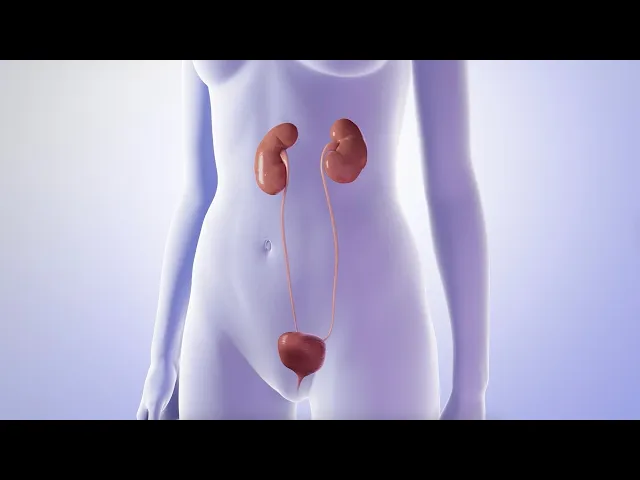
0:17 which is a group of organs that make, store, and remove urine from your body.
0:22 Your urinary tract is made up of upper and lower sections.
0:27 The upper urinary tract includes: two kidneys, and two ureters.
0:34 And the lower urinary tract includes: the bladder, and urethra.
0:41 UTIs may be caused by several types of tiny germs called bacteria,
0:47 But most of the time, it's caused by bacteria called Escherichia coli, or E.
0:52 coli.
0:56 Although men can get a UTI,
0:58 they are more common in women, mainly due to differences in anatomy.
1:03 For example, women have a much shorter urethra than men.
1:07 This means bacteria have a much shorter distance travel
1:10 up through the urethra into the bladder and cause infection.
1:15 And on the outside of the body,
1:16 the end of the female urethra is closer to the rectum.
1:21 Bacteria that commonly cause UTIs are located here.
1:25 This means bacteria have a shorter distance to spread
1:28 from the rectum to the opening of the urethra.
1:30 In your body, the infection begins when
1:33 these bacteria enter and move up into your urethra.
1:37 Some ways bacteria can enter the urethra are during sex,
1:41 or if a woman wipes from back to front after a bowel movement.
1:46 From the urethra, the bacteria can move into and infect your bladder,
1:51 which is the most common location for UTIs.
1:55 There, the bacteria can enter the cells of the tissue lining your bladder,
2:00 called mucosal epithelium.
2:02 The bacteria can multiply inside the cells of this tissue.
2:11 Then they leave the cell, killing it in the process,
2:14 and allowing bacteria to spread to other cells.
2:19 This damage causes your immune cells to attack the bacteria and infected cells,
2:24 which inflames the tissue.
2:26 Unfortunately, some of the bacteria can avoid and hide from your immune cells.
2:31 This allows the bacteria to grow and spread within your body.
2:36 There are two main types of UTI:
2:39 an uncomplicated UTI in the lower urinary tract,
2:43 and a complicated UTI in the upper urinary tract.
2:47 An uncomplicated UTI is called urethritis if the infection is in your urethra.
2:53 If the infection moves up into your bladder, it's called cystitis.
2:58 A complicated UTI is a more serious infection that occurs if
3:03 the bacteria move up through your ureters and into your kidneys.
3:07 This is called pyelonephritis.
3:12 The main risk factor for getting a UTI is being female since
3:16 the female urethra is shorter and its opening is closer to the rectum.
3:22 Other risk factors include: having a previous UTI; being sexually active;
3:28 using certain types of birth control, such as a diaphragm and spermicides;
3:35 pregnancy; having gone through menopause; poor hygiene;
3:42 a weakened immune system from a disease,
3:44 such as diabetes; and having an abnormal urinary tract.
3:50 If you have a urinary tract infection,
3:52 you may have some or all of these symptoms: pain or burning with urination;
3:58 frequent or urgent need to urinate;
4:00 dribbling of urine; incomplete bladder emptying;
4:04 pressure in your lower belly; or cloudy or bloody urine.
4:10 If the infection has reached your kidneys, you may also have these symptoms:
4:16 fever; chills; pain in your back, side, or groin; nausea; or vomiting.
4:24 Left untreated, A UTI may lead to permanent damage to your kidneys,
4:30 and spread of the infection through your blood to other organs.
4:35 And, if you have a UTI while you're pregnant,
4:38 your baby may be born early or have a low birth weight.
4:42 Since bacteria cause UTIs in most people,
4:46 they are usually treated with antibiotics.
4:49 It's important to take your prescribed antibiotics until all pills are gone,
4:53 even if you start to feel better.
4:56 if needed, your healthcare practitioner may also recommend
4:59 another medicine to relieve pain caused by the infection.
5:03 If your pain hasn't improved after finishing the antibiotics,
5:07 talk to your healthcare practitioner.
5:09 You may have bacteria that are resistant to the antibiotics you were given.
5:13 Or, you may have an abnormality in your urinary tract that's causing pain.
5:19 Some of the ways you can help prevent a UTI include:
5:22 urinating as soon as you need to; urinating before and after sex;
5:27 drinking plenty of fluids; taking showers rather than baths;
5:34 cleaning your genital and anal areas every day;
5:38 not using douches or other types of hygiene sprays;
5:42 avoiding tight-fitting pants;
5:44 wearing underwear with a cotton crotch; and, if you're female,
5:49 making sure you wipe front-to-back after using the toilet.
5:53 To find out more about urinary tract infections,
5:56 talk to your healthcare practitioner.