How Music's Weirdest Instrument Went Mainstream
Sound Field
0:00 Here's a riddle for you.
0:01 How do you play an instrument without touching it?
0:03 (theremin music) This eerie sound was made by an instrument called the theremin,
0:12 an electronic instrument that creates other-worldly tones.
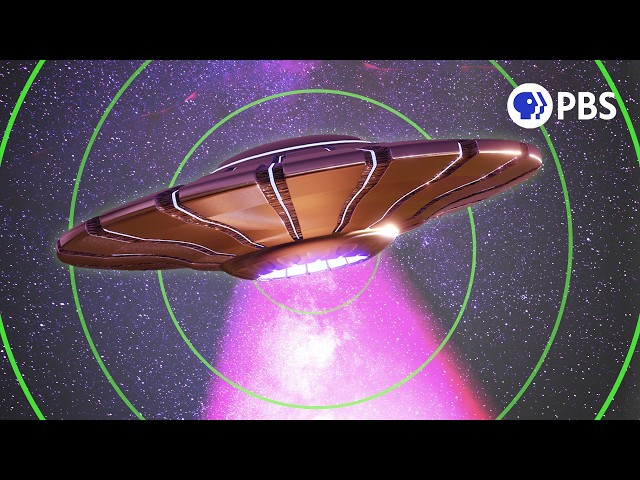
0:15 Its distinct sound was popularized by sci-fi scores during the 1950s.
0:20 But the theremin is unlike any other instrument.
0:22 Because instead of touching it, you manipulate electromagnetic fields around it.
0:27 The theremin has not only shaped the iconic soundscapes of classic
0:31 science fiction films such as 1951's "The Thing from Another
0:35 World!" And 1953's "It Came From Outer Space." It also
0:38 laid the groundwork for electronic music as we know it now.
0:42 But how did this touchless instrument go from a 20th century
0:46 Russian physicist's lab to being
0:48 an integral part of electronic music's evolution?
0:51 (theremin music) Today's music is
1:03 dominated by synths and electronic instruments.
1:05 While many of these songs aren't using a theremin,
1:08 the electronic instruments that they employ are descendants of the theremin.
1:12 (upbeat music) Hot To Go's instrumentation is a prime example
1:18 of how modern music is influenced by the synth wave era.
1:21 But there's more to it than a similar sound.
1:23 Robert Moog, the creator of the first commercial synthesizer,
1:27 got his start building theremins.
1:30 He also continued making theremins in his later years as well,
1:36 and he actually designed more models of theremins than he did synthesizer.
1:41 Most people don't know that.
1:43 So where did the theremin come from?
1:45 And more importantly, how was it made?
1:47 For starters, the theremin didn't start off as an instrument at all.
1:51 In the early 20th century,
1:52 a young Russian physicist named Lev Sergeyevich Termen,
1:56 also known as Leon Theremin, was experimenting with radio frequency oscillators.
2:01 The theremin was initially designed to be
2:03 a measuring implement for determining the density of gases.
2:06 Leon decided to replace a needle and meter with an Audion oscillator,
2:10 which accidentally produced sounds in his laboratory
2:13 as he moved his hands around the device.
2:15 All right, so Linda, this is how the theremin works, just in a nutshell.
2:20 So you see this antenna?
2:22 Mm hmm.
2:22 This is the pitch antenna.
2:24 So we control this with our right hand,
2:25 and these are really like where the notes are.
2:27 (theremin sounds) Okay, so closer to your body are the lower notes.
2:32 And closer to the antenna are the higher notes.
2:36 Left hand antenna down here, this is the volume antenna.
2:40 So we raise our right hand up, or our left hand up and down,
2:44 (theremin sounds) to get volume, or to mute it, right?
2:48 So it's kind of like an action of like rubbing your head
2:51 or rubbing your tummy and patting your head because you're going sideways,
2:55 and up and down at the same time.
2:57 One of the most well-known thereminsts was Clara Rockmore,
3:00 a classically trained violinist from Lithuania who
3:03 became a theremin virtuoso in the 1930s.
3:06 Rockmore's adaptations of classical works showcased the theremin's unique
3:10 ability to mimic the human voice and string instruments.
3:13 Then there was Samuel Hoffman.
3:15 Originally a concert violinist, he helped bring the theremin into popular music
3:19 and Hollywood films during the 1940s and 50s.
3:23 Hoffman's theremin work became synonymous
3:25 with suspense and science fiction films.
3:27 His collaborations with Oscar-winning film composers
3:30 like Miklos Rozsa and Bernard Herrmann,
3:32 added an other-worldly quality to scores.
3:35 The theremin kind of has this spooky reputation,
3:40 and can you talk a little bit about why you think that is?
3:43 Because it's very like ethereal, slash, it sounds kind of alien-like anyway.
3:48 It sounds kind of voice-like, kind of string-like, and yet not.
3:53 You can tell that it's not human.
3:55 Do thereminists welcome that stereotype, I guess?
3:59 Or is it something that they're like, "No,
4:00 the theremin is way more than this."- I like it both ways.
4:04 Like I totally love to embrace the witchy side of it.
4:10 And also I like to bring it to an orchestra and play it very professionally.
4:14 By the end of the 50s,
4:15 the theremin started falling out of favor with musicians because
4:18 there were easier to play electric instruments available on the market.
4:21 But they were still popular with a niche audience,
4:23 including a young Robert Moog.
4:26 Robert Moog was born in 1934.
4:28 And from a young age, he was captivated by electronics and music.
4:32 This fascination led him to the theremin.
4:35 Moog was intrigued by the theremin's
4:37 ability to make music using electromagnetic fields.
4:40 He saw its potential not just as a novelty,
4:42 but as a gateway to new musical possibilities.
4:46 At about 14, 15 years old, Bob stumbled upon an article on how
4:52 to build your own theremin in a hobbyist magazine.
4:56 He just fell in love with, of course,
4:58 the magical interface that everyone falls in love with.
5:02 [Linda] In 1954, while still a student, Moog started his own business, R.A.
5:07 Moog Company, selling theremin kits by mail order.
5:10 These kits allowed enthusiasts to build their own theremins at home,
5:13 making the instrument more accessible to a wider audience.
5:17 In the fall of 1963, so just a couple years later,
5:22 a young gentleman approached him named Herb Deutsch,
5:25 and he approached Bob and said, "Hey, I have one of your theremins,
5:29 but there are sounds in my head
5:31 that I really want to integrate into my compositions,
5:35 and they're just not achievable.
5:37 Inspired by the theremin, Moog strived to create an instrument
5:40 that offered even greater sonic possibilities.
5:43 In 1964, Moog worked with musician Wendy Carlos to create the Moog synthesizer,
5:49 a groundbreaking invention that changed the music industry forever.
5:53 Unlike the theremin, the synthesizer featured a keyboard interface,
5:57 making it more intuitive to musicians.
5:59 It used voltage-controlled oscillators and filters to shape sound,
6:03 allowing for an unprecedented range of tones and textures.
6:07 The Moog synthesizer quickly became a favorite among composers and performers,
6:11 used in everything from avant garde compositions to popular music.
6:15 Iconic albums like Wendy Carlos' "Switched-on Bach," and The Beatles'
6:20 "Abbey Road" showcased the synthesizer's versatility and creativity.
6:24 Moog's innovations laid the groundwork for the modern music landscape,
6:27 inspiring generations of artists to push the boundaries of what music can be.
6:32 Synthesizers and other electronic instruments provided
6:35 musicians with greater control over sound production,
6:38 and a wider array of tonal possibilities.
6:40 These innovations gradually overshadowed the theremin,
6:43 which was often seen as difficult to master and limited in scope.
6:47 To play the theremin, you have to have a good ear.
6:50 You have to be able to keep a key.
6:52 Because you don't have any point of reference.
6:55 Literally, you're conjuring notes out of thin air.
6:58 In the 1960s and 70s, the theremin found a new home in the world of rock music.
7:03 Frank Zappa was known for his avant-garde approach to music.
7:06 And the theremin was a perfect fit for his unconventional style.
7:10 (upbeat music)♪ Ah♪ Another iconic musician who utilized
7:16 the theremin was Jimmy Page of Led Zeppelin.
7:19 He incorporated the theremin into live performances,
7:21 most notably during the song, "Whole Lotta Love." (theremin music) Despite
7:28 the relative obscurity of the theremin,
7:31 there are several musicians like Caroline Scruggs,
7:33 who are finding new ways to incorporate the theremin into their music.
7:37 I really think of it as, and use it as my second voice.
7:40 I like to do all kinds of things.
7:43 I'll hook it up to my loop stations and create loops of these really haunting,
7:49 long melodic lines, and then mix those with my voice,
7:54 and get this really interesting texture,
7:59 combination of all of these different voices,
8:02 and you can't really tell which is human, and which is theremin.
8:06 (haunting music) I also have another project, it's called Playing the Air,
8:16 where I'm taking it with me to really beautiful,
8:19 breathtaking natural landscapes, with the idea that I bring it out,
8:24 I set it up, and then I kind of intuit the landscape around me, like,
8:29 okay, if this space had a voice of its own, what would it sound like?
8:34 (theremin music)- A prominent figure in the current
8:47 age of theremin music is Carolina Eyck.
8:49 Born in Germany, Eyck is considered one
8:51 of the leading theremin virtuosos of our time.
8:54 Her technical skill and artistry have
8:56 redefined what's possible on this unique instrument.
8:59 Eyck guest performed with renowned orchestras worldwide,
9:02 bringing the theremin to new audiences,
9:04 and elevating its status as a serious musical instrument.
9:07 Other artists like Lydia Kavina and Pamelia Stickney
9:10 have also gained recognition for pushing the instrument forward.
9:14 It presents like this really rare opportunity.
9:19 It's almost like a gift.
9:21 It can fit into a lot of different spaces,
9:23 and it can also be the impetus to create new spaces in music.
9:28 While the theremin's distinctive sound is
9:30 still appreciated by enthusiasts and niche musicians,
9:33 it has largely been replaced by instruments
9:34 that offer more flexibility and ease of use.
9:37 But despite its decline in mainstream popularity,
9:40 the theremin remains an iconic symbol of musical innovation.
9:44 Before you go, if you're a fan of history,
9:47 we wanna tell you about two new series over on PBS Origins.
9:50 "In the Margins" explores the kind of lesser
9:53 known stories they don't teach you in school.
9:55 And "Roots of Resistance" shows how history is often made through defiance.
9:59 We'll put a link to the latest episode below.