The Biggest Scandal in Science
Astrum Earth
0:00 Over the past 25 years,
0:02 scientists have presented us with a captivating, almost Disneyesque tale.
0:09 Imagine a diverse and vibrant forest filled
0:13 with trees of different ages and species,
0:16 all thriving in the sunlight that powers their cellular functions.
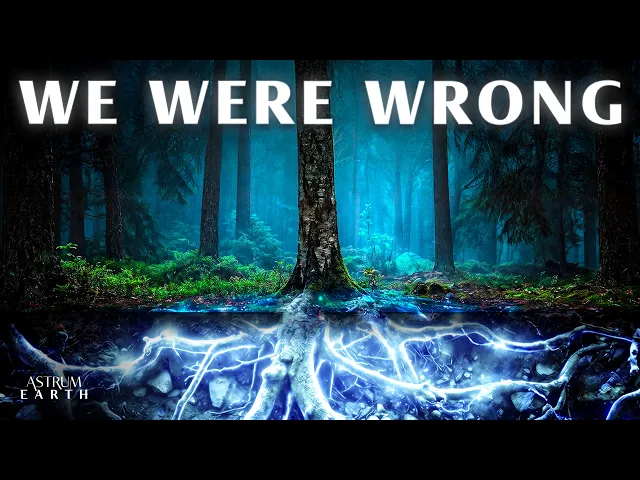
0:21 But hidden beneath the surface, intertwined within their roots,
0:25 are thin hair-like strands of a different kingdom altogether.
0:31 These branching structures serve not only
0:33 to expand the reach of each individual tree,
0:36 but they connect multiple trees together,
0:39 allowing messages to be communicated in a buzzing multi-service system,
0:44 akin to the invention that changed
0:46 the course of human civilization, the internet.
0:51 Welcome to the woodwide web.
0:57 I'm James Stewart and you're watching Astramm Earth.
1:00 Now, buckle up because we're about
1:02 to recount a scientific tale with more twists,
1:05 turns, and knots than an old oak tree.
1:09 The discovery of the woodwide web mesmerized
1:12 the public as much as the internet itself,
1:16 resulting in the publication of countless popular science articles,
1:20 books, documentaries, films, podcasts, and more.
1:25 But is there more to the story?
1:28 A growing number of scientists certainly seem to think so,
1:30 and the result has been a bitter academic war that still continues to this day.
1:37 In this video, join me as we uncover the whole
1:40 story behind the famed woodwide web, where it all began,
1:45 its impact on conservation, and the wealth of research it inspired
1:50 into the secret lives of our wooden friends.
1:53 Our story begins in the temperate forests of British Columbia in Canada.
2:00 Suzanne Simard is about to make a discovery that will help her to achieve
2:04 the near impossible with her PhD thesis making the cover of nature.
2:10 In 1997, her article was published with the title net
2:14 transfer of carbon between ectoicroisal tree species in the field,
2:20 which is fairly unassuming considering the content of this paper.
2:24 In essence, Simard was claiming to have observed
2:27 the transfer of carbon between seedlings of paper
2:31 birch and Douglas fur in the field through
2:35 a shared fungal connection between their root systems.
2:40 Not just any old fungus can form a connection with trees.
2:45 This privilege is mostly reserved for microisal fungi.
2:49 The term microisal fungi refers to a broad group of species
2:53 that have been forming beneficial partnerships
2:56 with plants for over 450 million years.
3:00 Their name comes from the Greek mics meaning fungi
3:04 and riser meaning root which is accurate because these fungi form
3:09 their relationships with the roots of their plant partners extending
3:13 the reach of the plant through a fungal network called the mcelium.
3:18 These networks are so vast, it's estimated that every 1 kg of soil
3:23 can contain up to 200 km of fungal strands.
3:27 And some individual fungi can extend across 100 square m.
3:33 With this impressive reach, the fungus can help its plant friends to absorb more
3:38 nutrients from the soil in exchange for some of their sugars.
3:42 This is an example of symbiosis because both
3:45 parties get something good out of the relationship.
3:48 Now, scientists already knew about this network
3:51 at the time of Simard's research.
3:53 All the way back in 1885,
3:56 the German plant biologist Albert Bernard Frank wrote a paper describing
4:01 the symbiosis between plant roots
4:03 and microisal fungi in Prussian truffle districts.
4:07 And throughout the 20th century,
4:09 scientists had documented the transfer of carbon,
4:12 nitrogen, and phosphorus through fungal connections in lab experiments.
4:17 But what made Sim's discovery so exciting was that she claimed to have
4:22 seen trees using this network to transfer carbon out in the forest,
4:27 which was a big deal.
4:29 In the forest, there are far more variables at play,
4:32 some of which are near impossible to replicate in a lab study.
4:36 Anything that you observe in these natural environments is
4:40 a far more realistic snapshot of what is really going on.
4:44 So, it's often the final piece of evidence needed to prove a theory.
4:49 This was no different for the theory of a woodswide web.
4:53 Scientists knew it existed and had some idea of what it could do,
4:58 but for many, Sim's research provided definitive evidence
5:01 that these ideas hold true for realworld habitats.
5:06 Now, as I'm sure you're wondering, how did she do it?
5:11 Well, the study looked at paper birch and the Douglas fur trees
5:15 because they are known to make the same type of fungal connections.
5:18 Each seedling was given a dose of carbon dioxide gas,
5:22 which was labeled with different isotopes of carbon,
5:24 so the team could track where this carbon ended up.
5:28 On top of this, the Douglas fur was kept in the shade
5:30 so that it would make less of its own sugars by photosynthesis.
5:35 The experiment ran for two growing seasons and the results were astounding.
5:41 Sim found that the labeled carbon dioxide had been
5:44 converted into sugars by photosynthesis in the paper birch,
5:48 then transferred to the Douglas fur through their fungal link.
5:53 Some carbon had traveled in the other direction, too.
5:56 But since the Douglas fur was struggling to make sugars in the shade,
5:59 the paper birch had transferred more carbon to it overall,
6:03 resulting in a net carbon gain in the Douglas fur.
6:07 In other words, these trees weren't just
6:10 going Dutch and splitting their carbon equally.
6:13 The paper birch was giving extra carbon to the Douglas fur.
6:18 The team were shocked by this result and naturally started coming up
6:22 with some ideas as to why the paper birch was being so generous.
6:26 This led them to wonder, could it somehow sense that the Douglas fur
6:31 wasn't making as much carbon on its own?
6:34 This theory was outrageous.
6:36 It seemed to tear apart the widely accepted concept of survival of the fittest.
6:42 Instead of everyone looking out for themselves,
6:44 we're talking about two different species helping each
6:48 other via a shared connection with a third, even more distantly related species.
6:55 Though they are different,
6:56 these tree species are competing for the same resources,
6:59 light, space, water, and nutrients.
7:02 So why don't they just keep everything for themselves?
7:05 Could it be that they share because their generosity
7:07 will eventually be returned by another member of the forest?
7:12 Simod's findings suggested that trees formed
7:14 far closeknit communities than we once thought
7:17 and that resources were shared to boost the overall health of the forest,
7:22 aided by some seriously helpful fungy of course.
7:26 Printed on the cover page of nature with the catchy slogan woodwide web.
7:32 This discovery caused quite the stir and the idea that trees had beaten us
7:37 to the punch with their own internet
7:39 with wooden servers and fungal rooters really caught on.
7:44 There were articles on the hidden language of trees,
7:48 manuals on deciphering tree feelings, documentaries,
7:52 TED talks, and bizarrely even a name drop for Simard in the hit show Ted Lasso.
7:59 If you look at the use of the phrase
8:01 woodwide web in publications between 1997 and 2022,
8:06 you can see an exponential increase in popularity from the early 2000s.
8:11 The woodwide web had even spun its silk over Hollywood with Amy Adams
8:15 set to star as Simard in the feature film adaption of her research career.
8:20 The world, it seemed, had gone tree crazy.
8:24 But Simar took things one step further,
8:27 publishing a book titled Finding the Mother Tree in 2021.
8:32 The book is essentially a memoir telling the story of Simar's
8:35 professional and personal life against the backdrop of the Canadian forest.
8:40 Besides her 1997 research,
8:42 Simar discusses her discovery that fungal networks can
8:45 allow for warning signals to be communicated between trees,
8:49 kin recognized, and preferential treatment applied to closer relatives.
8:54 She even suggests that the fungal network in forests works like a human
8:58 brain with the fungal strands
9:00 as neurons and chemical signals as neurotransmitters.
9:05 This concept transforms the forest into an ecosystem where no tree
9:09 stands alone and familiar bonds can get you through hard times.
9:14 With a picture like that, who wouldn't have the urge
9:17 to run to the nearest forest and hug a mother tree?
9:22 It certainly was a beautiful idea
9:25 that organisms from totally different kingdoms,
9:28 plante and fungi, could come together in symbiosis
9:32 to promote communication across the entire forest.
9:36 It had the potential to revolutionize
9:38 the way we thought about conservation going forward.
9:42 More emphasis could be placed on maintaining mother trees in the forest.
9:47 But perhaps even more revolutionary was the idea
9:50 that trees were more like us than we thought.
9:54 They too could speak, could provide for their kids,
9:58 give preferential treatment to their friends, and maintain a social life.
10:04 Amid these global shifts in perspective, it seems like the golden opportunity
10:09 to seek similarities between us and the plants.
10:13 In fact, these scientists were giving us the green light to do so.
10:19 The world had certainly fallen in love with the woodswide web,
10:23 but like a tree being failed, it was all about to come crashing down.
10:33 Justine cast, Jason Hookimmer, and Melanie Jones.
10:38 These scientists shared something vital in common.
10:41 They had all worked with Suzanne Simard at some point in their careers.
10:45 Melanie Jones even co-authored the famous 1997 paper that started our story off.
10:51 Despite sharing Simard's belief in the woodwide web for years,
10:56 these three tree experts had begun to get
10:58 an uneasy feeling about where it was all heading,
11:01 both in academic circles and the wider media.
11:05 So they did what any good scientist would do and ask the difficult questions,
11:09 forcing themselves to look objectively,
11:11 even if that meant casting doubts on their own research.
11:16 In a later interview,
11:17 Cass explained that they didn't initially set out to debunk
11:20 any of Simard's claims about the woodw white web.
11:24 Yeah, as a scientist,
11:25 we can't pick and choose what are the good stories and the bad stories.
11:30 That's sort of not our job.
11:32 Rereading the literature had forced them to face an uncomfortable truth
11:36 about the fungal networks they had once put so much faith in.
11:41 Unnerved by what they found,
11:43 the authors voiced their concerns in an article published in 2023
11:47 to greater claim by the rest of the science community.
11:52 This article garnered almost as much attention
11:54 as the 1997 study that had inspired it
11:58 and brought the dream of the woodwide web as we knew it to an abrupt end.
12:06 But what did the authors take so much issue with?
12:09 In their paper, Cast and her colleagues reviewed
12:12 all research surrounding what they call common mcelial networks,
12:16 which is just a more technical term for woodwide web,
12:20 where microisal fungi connect the roots
12:22 of the same or different plant species underground.
12:25 We'll call it the network from now on to make things simpler.
12:29 They identify three common claims that have been made about these networks
12:33 and soughts to review each claim in turn to see if the evidence agreed.
12:38 The first one, namely that the networks are widespread in forests,
12:42 was fairly simple to explore.
12:44 Many microisal fungi can and do form
12:47 associations with lots of different host species,
12:50 which would suggest that networks are common in forests.
12:53 However, there is a problem because we can't really observe
12:57 these networks in situ that is in the forest itself,
13:01 as you would damage and fragment it before you
13:03 could tell whether it was one continuous connection or not.
13:07 Each fungal strand is only about the width of a human hair after all.
13:11 There has been research mapping the presence
13:13 of microisal fungi using techniques like machine learning.
13:17 But to actually know whether these fungi link together
13:19 in one big continuous network across a forest, well,
13:23 scientists would need to analyze the DNA of the fungi
13:26 and the plant roots they attach to everywhere in the woods.
13:29 Well, at least in as many different locations
13:31 as possible to see if they match up.
13:34 It's a long, expensive, and slow process and had only been done by five studies
13:40 for two tree species at the time the authors were writing.
13:44 The point is that even though these networks do form,
13:47 we can't be sure that the links are continuous enough through
13:50 time and space to make them a viable tool for communication.
13:55 For all we know, the links might only last a few days
13:58 or could be too fragile to connect trees from opposite ends of the forest.
14:03 The second claim was that seedlings can use
14:06 the network to share resources like the carbon
14:09 we saw earlier in order to help them grow and not just within the same species.
14:15 Now, this one hit especially close to home
14:17 for the authors because they had all worked with Suzanne
14:20 Simard on this and her 1997 study was
14:23 the first to properly test it out in the field.
14:27 But what Cast and her colleagues started to question years later was
14:31 that this behavior doesn't seem to lie within the fungi self-interest at all.
14:36 Think about it.
14:37 If you were a fungus connecting the roots of two tree species,
14:41 why would you only ever funnel resources between
14:44 the two trees rather than taking some for yourself?
14:47 And how is the fungus supposed to know the difference between carbon it can
14:51 use for itself and carbon to be sent for paper birch's friend the Douglas fur?
14:58 The authors reviewed 26 studies that claim
15:01 to prove resource transfer through the network and found
15:04 that for all of them the results could
15:06 be explained without involving the network at all.
15:10 For many, the resources could just have easily have been
15:12 transferred through the soil with no need for fungal connections.
15:16 And that includes the 1997 study.
15:20 Similarly, the authors note that no study
15:22 has actually provided proof that this transferred carbon,
15:25 if it exists, actually benefits the performance of the tree receiving it.
15:30 How could it?
15:31 If you were a tree with a system
15:33 to generate food and find resources on your own,
15:36 why would you depend on help from an unrelated neighbor tree?
15:39 one that could easily die, become disconnected, or simply stop cooperating.
15:44 It doesn't seem like a very good strategy evolution-wise.
15:49 Well, the authors weren't finished there.
15:51 The final claim was that mature trees were more likely
15:54 to communicate and share with their own offspring through the network,
15:59 which largely covers the whole mother tree idea.
16:03 And this one may be shocking because the authors actually found
16:07 no published peer-reviewed evidence from forests at all to support this claim.
16:13 In fact, a master's thesis from Simard's own lab actually
16:17 found the opposite as Douglas furs placed in a shared
16:20 fungal network were less likely to survive if they
16:24 were close to their older genetic relatives in the field.
16:27 Even more uncomfortable is that Simard made a narrative choice to write
16:32 in her book that the grad student had found support for her theory,
16:37 even though she has since denied
16:38 that she was deliberately misleading her readers.
16:42 To top off their review, Cast and her colleagues looked to see whether there
16:46 had been any bias in the literature surrounding the network.
16:49 They identified 18 studies that had been influential in this field
16:54 and looked at how they were used in subsequent research.
16:58 There can be a tendency for more positive
17:00 or more interesting results to be sized more
17:03 than those that are neutral or disagree
17:06 with the hypothesis even if methodically the research was correct.
17:10 It's called positive citation bias and can lead to misconceptions being spread.
17:16 And sadly, that is exactly what the authors found in this case.
17:21 Across nearly 1,700 papers citing the 18 original studies,
17:27 around 25% of them were misinterpreting these studies as support for claims
17:32 about network structure and 50% of them for claims about network function.
17:39 To give just one example of this bias,
17:41 several of the 18 papers had reported evidence that networks could form.
17:46 But many papers published later had cited these studies
17:49 as evidence the networks were present in forests.
17:53 In research, wording is everything.
17:56 And evidence suggesting that networks can form is not the same
17:59 as evidence that they do form in complex real world habitats.
18:05 But you can see how that kind of positive bias is a bit of a runaway train.
18:09 And if even published researchers are doing it,
18:12 then it's bound to happen in the mainstream media, too.
18:17 As you may expect, Simage wasn't too pleased when
18:19 the Woodwide Web began to unravel at her feet,
18:23 calling Cast's review paper an injustice to the whole world, no less.
18:28 She labeled all the critics as reductionist scientists and has
18:32 since published response articles pushing back on some of their arguments.
18:36 Now, although we're often quick to take sides during a drama,
18:39 it's important to note that there are no heroes and villains in this story.
18:43 Some scientists may disagree with Sim's stance, but others don't.
18:47 And if nothing else, Sim has done good work for the forest, too.
18:51 Her 2015 Mother Tree Project is a research initiative
18:55 aimed to protect the biodiversity of British Columbia woodlands,
18:59 drawing on indigenous knowledge and changing forestry
19:02 practices in North America to be more sustainable.
19:05 These are admirable goals, goals which we can agree are
19:08 probably good for conservation regardless of whether
19:10 the person advocating for them believes in the woodwide web or not.
19:16 Like many scientific arguments,
19:17 the situation has become messy with researchers picking at details
19:22 and scrabbling to express where they stand on the matter.
19:26 Unfortunately, by the time the smoke clears on this debate,
19:29 the public may have lost interest in the result,
19:31 and scientists will definitely struggle to garner the same
19:34 kind of enthusiasm that once buzzed around the woodwide web.
19:40 But as K says, our job as scientists is to present
19:44 the truth as close as we can get to it.
19:47 Errors, misinterpretation,
19:49 and even over excitement are all traps that scientists
19:53 and the media reporting their findings can fall into.
19:56 We are all human after all.
19:58 So, we need to always be open to reflect objectively
20:00 and update our presentation of truth as we gain new insights.
20:06 And one thing scientists can all agree on, these revelations about the woodwide
20:11 web should never be used to discount
20:13 trees altogether or neglect their conservation.
20:17 Now, with all that disillusionment behind us,
20:20 it's time to move on to something more concrete because
20:23 we may be unsure about the extent of plant communication,
20:26 but there is no doubt among scientists that plants do communicate.
20:31 Moving from sync to source, plant leaves can be the trigger for vital messages.
20:37 Volatile organic compounds or VOCC's encompass a large group
20:42 of molecules that tend to have a low molecular mass,
20:45 so they can evaporate easily and travel through the soil or air.
20:50 For several decades now,
20:51 scientists have suspected that they play a role in tree communication,
20:56 particularly when trees are exposed to stress.
21:00 Because trees can't just run away from predators,
21:02 they may have adapted to make use of VOCC's
21:05 as a warning signal in the event of an attack, giving them more time to prepare.
21:10 A 2013 study cut the leaves of willow
21:13 trees to mimic the damage caused by nibbling creatures.
21:17 This caused them to release VOCC's, and as a result,
21:20 neighboring trees were then more likely to be munched on instead.
21:25 The same was found in another study, this time on older trees.
21:30 They saw the same effect.
21:32 But funnily enough, trees further from the damaged
21:36 ones showed weaker resistance to herbivores,
21:39 suggesting that if a signal was involved,
21:42 there was a limit to how far it could travel through the forest.
21:48 So, we've discussed some of the evidence for VOCC's being used in communication,
21:53 but how did scientists piece this together
21:55 into a theory of what was really going on?
21:59 These studies were suggesting that when a tree is
22:01 attacked by a herbivore and damaged in some way,
22:04 its neighbors could pick up on this and prepare themselves for an attack.
22:09 This is possible as trees have a host
22:11 of chemicals they can use in herbivore defense like
22:15 bitter tasting tannins or toxic alkaloids which have been
22:19 shown to be effective tools in fending off pests.
22:23 And scientists could be pretty sure that it was VOCC's
22:26 that were inducing these responses since any efforts to block
22:30 airborne signals by putting the tree branches in airtight bags
22:34 meant that neighboring trees took more damage from the herbivores.
22:39 But hang on because there's a danger here of entering
22:42 into the same minefield as the woodwide web drama.
22:46 This behavior seems too selfless to work
22:48 with the principle of survival of the fittest.
22:51 Why would a tree bother to send a warning signal
22:54 to its neighbors whilst it was being attacked by herbivores?
22:58 Wouldn't it be better for that tree if its neighbors did get
23:01 damaged since that might leave more light and other resources for itself?
23:06 But consider this.
23:08 What if the damaged tree wasn't intentionally
23:11 sending out a warning to help its neighbors,
23:14 but the neighbors had evolved to make use
23:16 of a warning that the damaged tree was releasing anyway?
23:21 Scientists call this eavesdropping and it explains these results
23:24 in a way that agrees with widely accepted principles of natural selection.
23:29 Any individual plant produces many VOCC's when
23:33 it's attacked by herbivores to signal to itself,
23:37 coordinating a response between distant branches or leaves.
23:41 It is this signal meant for communication
23:44 within each individual plant that other
23:47 plants can pick up on and use to prime their own responses.
23:53 So trees have adapted to eavesdrop on their fellow trees in the forest.
23:58 But perhaps more impressive is their ability to call
24:01 for help during an attack from the most unlikely allies.
24:07 Tarpen are a specific group within the VOCC's and are responsible
24:12 for that nice tree smell you get when you walk into a forest.
24:15 These molecules are also used in tree communication in response to herbivores,
24:20 environmental stress, and changes to the soil microbiome.
24:25 In 2011, an experiment looked into how the European field elm
24:29 responds to attacks from the elmleaf beetle with the help of tarpen.
24:34 See, the elmleaf beetle likes to lay its eggs on the leaves of the tree,
24:38 ready for the larae to feast on them when they hatch.
24:42 But the elm has some tricks up its sleeve to combat this.
24:46 They release turppines, which seem to attract another insect,
24:50 the euphilid wasp, to eat the eggs.
24:53 Like insect bodyguards,
24:55 they can protect the elm from damage and get a nice egg feast as a reward.
25:01 The 2011 study was designed to prove whether it
25:04 was the turppen that were signaling for wasp backup.
25:07 So the authors allowed the beetles to do their thing and lay eggs on the elm
25:11 whilst treating half of the trees with chemicals
25:14 that stop them from being able to make tarpen.
25:17 They then collected all the odor produced by the trees during
25:21 this ordeal and presented them to the wasps to see what they do.
25:26 As the team suspected,
25:27 the wasps spent significantly more time in the test field when
25:31 the tree odors included turppins than when tarpin production had been cut off.
25:38 With these results, the authors concluded that it is
25:41 the turppins that attract the wasps and that the trees
25:44 are far more skilled at fending off beetle
25:47 attacks than we may give them credit for.
25:54 So, as it turns out,
25:56 trees have some amazing ways of interacting with the world around them.
26:01 Like any living thing on Earth,
26:03 trees can sense changes to their surroundings and have
26:07 employed suites of molecules that help them to respond,
26:10 whether it's seeking out food, preventing attacks, or calling out for help.
26:15 So, yeah, trees are amazing, but just maybe not in the way we thought.
26:20 And if nothing else,
26:21 the push back on the woodwide web should motivate us to understand trees better,
26:27 as there are still so many fascinating answers to be found.
26:32 I'll be honest, I originally expected to tell
26:34 a more traditional story of the woodwide web,
26:37 exploring a forest of trees that are all for one and one for all,
26:41 assisting each other with their intricate network of fungal friends.
26:46 But thanks to this new research, that is definitely not how the story unfolded.
26:51 But I hope you'll agree that this is still a tale worth telling.
26:55 Though they strive to be, scientists are not always right.
26:59 Ideas can and should be questioned, details revised,
27:03 and corrections made as their research unfolds.
27:07 Science is built on debate and continuous pursuit of knowledge and truth.
27:12 no matter how long it takes to find what that truth is.
27:17 Sadly, the woodwide web may be one of those cases
27:20 where our heads would turn before the real truth came out.
27:24 I hope this video can go some of the way towards setting the record straight
27:28 and show that the world of popular science
27:30 isn't always as infallible as it may seem.
27:34 And who knows, maybe next week the world will be
27:36 captivated by a new narrative with an equally catchy name.
27:40 But by then hopefully we'll have learned from the woodwide
27:43 web and we can start looking more closely
27:46 at the results and where they come from before
27:49 we start signing book deals and making calls to Hollywood.
27:53 So let's stay curious, look a little closer,
27:56 and keep giving the trees the attention they've always deserved.
28:00 There is so much they can do,
28:02 and they are a huge part of what makes our planet such a wonderful,
28:06 thriving place to call home.
28:11 Fortunately for us though, the worldwide web is very real,
28:15 but does face similar issues to the woodwide web,
28:18 especially when it comes to people trying to steal
28:20 your resources without you necessarily wanting them to.
28:24 Here's a quick message from today's sponsor, Cyber GhostVPN.
28:27 I'm sure if you spend a lot of time online, you've heard of VPNs by now.
28:30 Uh, but what do they actually do?
28:32 Well, in simple terms,
28:33 a VPN encrypts your internet traffic and hides your IP address,
28:37 helping protect your data and keep your browsing private.
28:41 The truth is that Plenty of Eyes can track your online activity,
28:44 including your internet in provider, workplace, or school networks.
28:47 They can even do it on public Wi-Fi.
28:49 With over 38 million users worldwide and more
28:52 than 20,000 excellent reviews on Trust Pilot,
28:55 Cyber Ghost is one of the most trusted VPN services out there.
28:59 It is brilliant.
29:00 With just one click,
29:01 you can connect to one of their servers in over a 100 countries,
29:04 encrypting your traffic and keeping your online activity private.
29:09 My favorite thing about it is I
29:10 can unlock geor-restricted content in other countries.
29:13 By changing my virtual location,
29:15 I can access games and shows from over 40 different streaming platforms,
29:19 including Netflix, Amazon Prime, and Disney Plus.
29:22 It works across all major devices like Windows, Mac, Android, and iOS.
29:26 And one subscription protects up to seven devices at once.
29:30 So you can have your phone, laptop, tablet, and whatever else you want.
29:33 And here's the good news for you right now.
29:35 You can get Cyber Ghost for just $2.3 per month, plus 4 months free.
29:42 That's a bonkers 84% off.
29:45 And it even comes with a 45day money back guarantee.
29:49 How awesome is that?
29:50 To take advantage of this incredible offer,
29:52 check out the link in the description.
29:53 It helps support the channel and lets us keep making videos just like this one.