A man hiked in the woods. Every brain cell got cooked.
Chubbyemu
0:00 KA is a 49 year old man,
0:02 presenting to the emergency room, with fever, headache, and confusion.
0:06 His speech was garbled.
0:08 His vision was blurry.
0:09 Something was wrong with his brain.
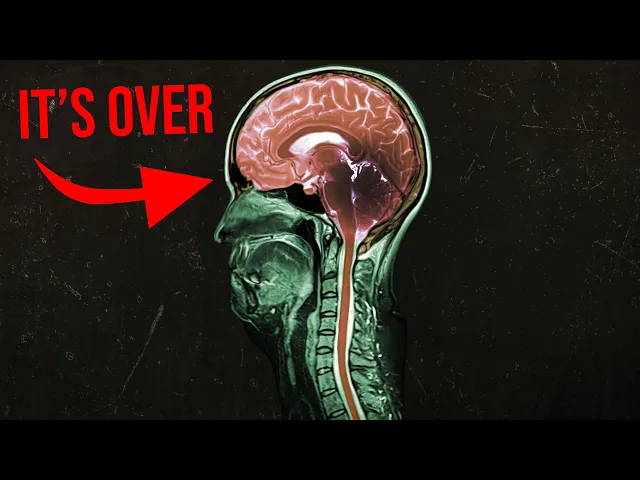
0:11 An MRI of his head showed something was abnormal.
0:14 But it didn’t give any clues as to what was happening.
0:17 The brain and spinal cord are surrounded by a liquid
0:20 that cushions and protects it called the Cerebrospinal Fluid, CSF.
0:22 Doctors stick a needle into KA’s back to draw some
0:26 of that fluid to send to a laboratory to test,
0:29 so that they can get some more information.
0:31 When they looked at it, it was yellow and cloudy.
0:33 It’s not supposed to look like that.
0:35 And the when the lab results return,
0:37 it shows that there’s a huge amount of white blood cells in it.
0:40 These aren’t supposed to be in the CSF.
0:42 And this gives doctors some clues as to what’s happening to him.
0:46 5 years ago, KA wasn’t feeling well.
0:47 He’d wake up everyday and feel bloated.
0:49 At first, his wife thought it was
0:51 funny and she started calling him sausage fingers.
0:53 He noticed that he was gaining weight
0:55 disproportionately to how little he was eating everyday.
0:58 And everytime he’d use the bathroom,
1:00 he’d notice a mass of foamy bubbles in the toilet.
1:03 At a doctor’s visit, his wife realized this wasn’t funny anymore.
1:06 KA had gained 40 pounds.
1:07 But almost all of this was water.
1:10 When the doctor squeezed his leg, it was like squeezing memory foam.
1:13 This isn’t supposed to happen.
1:15 This kind of fluid overload is seen when someone’s organs are failing.
1:19 A blood test reveals 2 things.
1:21 First, KA’s kidneys have shut down.
1:23 They’re not filtering his blood anymore.
1:25 The bubbles in his urine are proteins that are just bypassing the kidneys.
1:29 And his edema, the fluid buildup,
1:31 is because his kidneys aren’t removing wastes from his body anymore.
1:35 The second, is that KA’s immune system is attacking his kidneys.
1:38 That's why they’re shutting down.
1:40 The blood test finds that his white blood cells
1:43 have created antibodies that specifically target his kidneys for destruction.
1:47 If this keeps up, the damage done will be permanent.
1:50 This is called membranous nephropathy.
1:52 Nephro referring to kidney.
1:53 Opathy referring to disease.
1:55 And membranous describing how the kidney looks under a microscope
1:58 when the immune system is attacking it like this.
2:01 Medicines can fix this.
2:02 KA was given 2.
2:03 The first is a steroid.
2:05 This is a general anti-inflammatory.
2:06 It blunts the immune system.
2:07 But it’s not enough by itself.
2:09 The second medicine goes into the white blood cells.
2:12 It tells their genes to stop producing signal chemicals.
2:15 This makes it so that the immune system can’t communicate amongst itself.
2:19 Both these together should stop KA's immune system from attacking his kidneys,
2:24 allowing them to heal, and enabling KA to live his normal life again.
2:28 And things seem to be ok.
2:30 But 3 years later.
2:31 There was more protein in his urine than ever before.
2:34 His fluid overload is so severe now that his blood pressure is always high.
2:38 Now it’s severely impacting his heart.
2:40 His kidney damage was getting worse.
2:42 His immune system was still destroying his kidneys.
2:46 2 more medicines were given.
2:47 One stops white blood cells from growing.
2:49 Stops them from functioning.
2:50 And it forces them to destroy themselves.
2:52 The second medicine, gets into the DNA of white blood cells
2:56 and inserts chemical parts that completely invalidate the entire cell.
3:00 Doctors aren’t shutting down the production of signal chemicals anymore,
3:03 they’re depleting the white blood cells in his body.
3:05 This is the last resort to save what’s left of KA’s kidneys.
3:08 He received a few doses of these medicines over 18 months.
3:12 And his kidney function held steady.
3:14 All of this was working.
3:15 But something was still wrong.
3:17 Hey, have a quick question.
3:19 Have you learned a few things in this video so far?
3:22 If you have, I'd really appreciate it,
3:24 if you aren’t subscribe yet, to subscribe,
3:25 and come back to see the video that I post next month too.
3:29 I make these videos for fun.
3:30 I do them because I genuinely like to, it’s
3:32 always one of the highlights of my day.
3:34 I’ve published on average, one a month every month since 2017.
3:37 And I do these to teach how we think in medicine,
3:40 by telling stories of patient cases.
3:41 I am very thankful to have the opportunity to make these for you.
3:45 Appreciate you.
3:45 20 months after treatment,
3:47 which is 4 months before he’s presenting to the emergency room now,
3:50 KA went on a hiking trip with his wife.
3:53 In the evenings, he’d notice welts all over his arms and legs.
3:57 They were itchy.
3:58 Sometimes painful.
3:58 The trip was like this every day.
4:00 But he was totally fine when he got home.
4:03 A few weeks later, he started seeing flashing lights.
4:05 He thought maybe he hadn’t gotten enough sleep.
4:07 But then a horrible pain emerged on the left side of his forehead.
4:10 At the hospital, doctors did a brain MRI.
4:13 Nothing wrong was found.
4:14 Everything was normal.
4:15 His kidneys were healing.
4:16 But blood tests suggested that he was dehydrated.
4:19 They gave him IV water.
4:20 2 days pass.
4:21 And he got better.
4:22 They sent him on his way.
4:24 But very clearly, dehydration wasn’t his problem.
4:26 A week later, KA was back in the hospital because his speech was nonsensical.
4:31 He was confused.
4:32 He didn’t know where he was.
4:34 One kind of stroke, is when a blood clot gets lodged into a brain blood vessel.
4:39 This chokes off blood flow and starves that part of the brain of oxygen.
4:43 Theres just minutes before permanent damage settles in.
4:46 When doctors did imaging of KA’s brain,
4:47 it kind of looked like he was having a stroke.
4:50 But it wasn’t clear.
4:51 It was borderline.
4:52 But there was no time to wait.
4:54 Medicine that immediately breaks blood clots by thinning the blood were given.
4:58 It seemed to work.
4:59 KA got a little bit better.
5:01 But he appeared to still have problems.
5:03 It was hard for him to find the right words to say, and he was still confused.
5:07 But by that hospital administration’s metrics, he was good enough to go home.
5:12 “No more immediately life-threatening problems.
5:13 So, lets schedule an appointment for you for follow up.” And he was on his way.
5:18 As the weeks pass, KA started seeing floaters, on his left side.
5:21 He had to lay down in bed with an eye mask because
5:24 light would make him feel like a hammer was smashing his skull.
5:27 He had to wear ear plugs because all sound would amplify and echo.
5:31 At the ophthalmology, eye doctor’s office.
5:33 KA was found to have eye inflammation.
5:35 The left was worse than the right.
5:38 The pattern, and where the inflammation was inside the eye, were very specific.
5:42 And this was concerning.
5:44 KA had a history of his immune system attacking his kidneys.
5:47 If his eyes have inflammation, this could mean that it's attacking his eyes now.
5:52 KA was given steroid eye drops.
5:54 A mixed sedative, Tylenol,
5:56 and caffeine combination pill were given for his headache.
5:59 This calms down the brain.
6:00 Reduces inflammation.
6:01 And constricts blood vessels going to the brain
6:04 to limit excess blood flow that could cause headache.
6:07 And over 2 weeks, KA’s pain went away.
6:10 His vision improved.
6:11 He didn’t need to wear the eye mask anymore.
6:13 But a week later, KA suddenly felt weak on the right side of his body.
6:17 The right side of his face was drooping.
6:19 And he could only slur his words.
6:21 At the hospital again.
6:22 Clinically, it looked like he was having a stroke again.
6:26 But brain imaging returned normal.
6:27 No stroke.
6:28 2 days in the hospital pass.
6:30 KA could speak normally again, so he was sent home.
6:33 Nothing wrong was found.
6:34 But over the next week, KA’s wife noticed that he would have staring spells.
6:38 These would last for just a minute.
6:40 But he would stop moving.
6:41 His eyes would be wide open.
6:43 He wouldn’t blink.
6:44 He wouldn’t respond to anything.
6:45 And after a minute, he’d snap out of it and he
6:48 couldn’t remember anything that had happened over the last hour.
6:50 He started having a fever.
6:52 And his episodes of slurred words would return every few hours.
6:56 At the hospital again.
6:58 Brain imaging was normal.
6:59 Blood test results were normal.
7:02 Nothing looked wrong.
7:03 But clearly, something was wrong.
7:05 KA had gone to this same hospital 7 times in the last 4 months.
7:09 The doctor this time remembered him from a previous visit.
7:12 When he looked at the medical record,
7:14 he realized that no one here ever found out
7:16 WHY any of these things were happening to KA.
7:19 This doctor pulled KA’s wife aside and told
7:21 her: “there might be a better hospital,
7:24 maybe you could say, more adequately equipped, to figure out what’s wrong.
7:27 It’s just on the other side of the city.” And she agreed to the transfer,
7:30 and he’s brought to the emergency room where we are now.
7:34 In this emergency room at the second hospital, doctors reevaluated KA.
7:37 All of his vitals were normal.
7:39 He didn’t look well.
7:41 Muscles in his face had wasted away, indicating malnutrition.
7:44 A mental status exam found that he couldn’t name the days of the week backwards.
7:48 He named a month, and then said the days forward.
7:51 When he was asked to remember 3 words,
7:53 he could only remember one after 5 minutes.
7:55 He said that 9 quarters was four dollars, and twenty five cents.
7:59 His vision was blurry, and he had trouble moving his eyes.
8:02 But he knew where he was.
8:04 He could say the word “hospital” sometimes.
8:06 Othertimes, he’d stare off into the void,
8:08 as if he were trying to speak, but couldn’t.
8:10 Blood tests were normal.
8:11 Urine and serum toxicology, negative.
8:13 A brain MRI showed subtle changes.
8:15 But it’s not clear what any of this means.
8:19 Given this information, and KA’s past medical history.
8:21 The overactive immune system attacking his kidneys,
8:24 and the 4 immune-suppressing medicines that he was given.
8:27 There’s a few things doctors want to do immediately.
8:30 A lumbar puncture found lymphocytic pleocytosis.
8:32 Pleo from Greek (pleion) referring to a very large quantity.
8:36 Cyto meaning cell.
8:37 -Osis meaning disorder.
8:38 And lymphocyte being a particular type of white blood cell.
8:42 A large quantity of white blood cells, causing a disorder.
8:45 This means that the immune system is trying to respond to something.
8:49 Regardless of the fact that it was nuked by those 4 medicines,
8:52 it looks it’s still responding, potentially to an infection of his.
8:56 His CSF was yellow and cloudy.
8:58 It’s not supposed to look like that.
9:01 The problem is, there are no tell-tale signs of which infection this is.
9:05 It could be a virus.
9:06 It could be a bacteria.
9:07 It could be both.
9:08 It could be something different.
9:09 Doctors come up with an early plan.
9:12 Give KA an antiviral medicine.
9:13 Give him 3 antibiotics.
9:14 And B vitamins, just in case of neurodegeneration from that malnutrition.
9:19 And then watch him in the hospital.
9:21 Do this now, because the infection can and will get worse in the coming days.
9:25 In the meantime, they draw blood and order many different tests.
9:28 Some of these tests will take days to return.
9:31 An ophthalmologist examines his eyes.
9:33 They saw that fluid was swelling in the optic
9:37 nerves connecting his brain to his eyes.
9:39 The next day, doctors noticed that KA’s speech was slurred.
9:43 None of his words made any sense.
9:44 He would scream and cover his eyes until the lights were turned off
9:47 and the window blinds were closed because he was so sensitive to light.
9:51 On the second night at the hospital,
9:52 KA was finally able to get a good night’s sleep.
9:55 This is where the medical team was totally thrown off.
9:58 The next day.
9:59 Hospital day 3.
10:00 KA opened his eyes.
10:02 He stood up.
10:03 He stretched.
10:03 And then he started walking around like nothing was wrong.
10:06 Like nothing had happened.
10:07 He was calm, and collected.
10:09 Doctors asked him questions.
10:10 He responded in full clarity.
10:12 No problems.
10:13 He could remember the 3 words after 5 minutes.
10:15 He could name the days of the week backwards.
10:18 9 quarters is two dollars and twenty-five cents.
10:20 And when they asked him what was going through his mind the last few days,
10:24 he said he knew he was in the hospital because he wasn’t feeling well.
10:27 But he couldn’t remember that doctors had asked him
10:29 to do any of those things that he just did.
10:32 One thing he wanted doctors to know,
10:33 was that his vision started getting weird after he spent a lot of time outdoors.
10:37 Hiking with his wife.
10:38 Hunting with his colleagues.
10:39 Every time he’d come back from these, he’d
10:41 notice welts all over his arms and legs.
10:44 He thought these may have been bug bites, but he wasnt sure.
10:47 He had asked the other hospital about
10:49 this, but they never found anything definitively.
10:51 But what is definitive, was that KA appeared healthy, suddenly.
10:55 But his vision was still blurry.
10:57 A repeat eye exam the following day found
10:59 that only his left optic nerve was swollen.
11:02 And that the inside of his eyes looked markedly different.
11:05 A big improvement from 2 days prior.
11:07 And around this time, the blood tests and CSF lab tests had returned.
11:12 And this screwed everything up.
11:14 When he presented to the emergency room, he had meningoencephalitis.
11:18 Meningo referring to the meninges,
11:21 the membrane protecting the brain and the spinal cord.
11:24 Encephal referring to the brain.
11:26 Both his brain and the membrane surrounding it were inflamed.
11:30 And words matter.
11:31 Meningitis, the inflammation of the meninges, usually presents with headache.
11:35 Stiff neck.
11:36 Fever.
11:36 But, brain function is totally normal.
11:40 KA’s brain wasn’t normal at presentation.
11:43 Meningoencephalitis is meningitis, with a brain that can’t function.
11:47 Can’t talk.
11:47 Can’t think.
11:48 Can’t respond appropriately.
11:49 And visual changes, with swollen nerves,
11:51 means that the brain and nervous tissue are inflamed.
11:55 And this is what he had at presentation.
11:57 And his condition rapidly improved once he came to this hospital,
12:01 and was started on antiviral medicine.
12:04 3 antibiotics.
12:05 And B vitamins.
12:06 Doctors had written a problem list to match
12:08 his symptoms and they need to rule each one out,
12:10 in order to find out what’s happening.
12:13 The blood and CSF test results give them some direction.
12:17 First, KA had an autoimmune problem.
12:19 This means 2 things.
12:20 The first, is that his immune system
12:22 could be attacking more than just his kidneys.
12:24 It could be attacking the blood vessels in his brain.
12:27 That can cause problems that look like a stroke,
12:29 which he had at the hospital a few weeks earlier.
12:32 A blood test can find this.
12:34 But that test was negative.
12:35 So whatever it was that caused that “stroke,” was something else,
12:39 so this wasnt his problem.
12:41 The second issue from autoimmunity stems from the latter
12:44 2 medicines that he was given for Membranous Nephropathy.
12:47 When these shut down the immune system, it puts him at risk for rare infections.
12:52 So, if KA got better after being given 1 antiviral,
12:55 3 antibiotics, and B vitamins,
12:57 and if he was predisposed to infection because of a prior illness,
13:02 then this means that his meningoencephalitis is because of infection.
13:07 But which infection?
13:08 These medicines have side effects.
13:09 You can’t keep him indefinitely on all 5.
13:12 And if you stop the right medicine too early,
13:14 then you’ll grow a medicine resistant strain of the pathogen,
13:17 without knowing what caused his problem in the first place.
13:21 But here’s a big problem.
13:22 When doctors tried to grow bacteria from his blood and CSF, nothing appeared.
13:27 This could mean his problem isn’t bacteria.
13:29 But it could also mean,
13:30 it’s a secret bacteria that can’t be grown in a Petri dish.
13:34 Meningoencephalitis pathogens are only found, at best, 30-60% of the time.
13:39 There’s an actual chance that they’re not going to be able to find what’s wrong,
13:43 but doctors still need to reason out what KA doesn’t have.
13:46 Bug bites give the clue.
13:48 Viruses.
13:49 West Nile.
13:50 From mosquitoes.
13:50 KA is in the northeastern United States.
13:52 Lots of mosquitoes there.
13:54 This can cause his problems.
13:55 But antibodies in the CSF,
13:57 and viral RNA in the blood were negative, so he doesn’t have this.
14:01 All other mosquito-borne and tick-borne viruses,
14:04 local to the northeast were tested for.
14:07 They can cause similar neuroinvasive viral encephalitis.
14:10 But all of these were negative.
14:12 Shingles and herpes viruses can cause similar looking illness,
14:16 involving eye and brain.
14:17 But his brain MRI didnt have characteristic features of any of these.
14:22 Blood and CSF tests for these sometimes aren’t accurate.
14:25 The inflammation in his eyes don’t look
14:27 like the patterns usually associated with these illnesses.
14:30 And it’s unlikely that the particular antiviral medicine that he got would
14:34 have an improvement this profound in such a short amount of time.
14:38 While a viral illness is not completely off the table,
14:41 doctors look at all the possible bacterial species that could be the problem.
14:46 Hospital labs cant grow every bacteria from blood and CSF samples.
14:50 Some that cause problems arent easy to grow.
14:52 When they did try, they weren’t able to grow any species from his samples.
14:57 Reasoning out which bacteria it wouldn’t be: mycobacteria,
15:00 which can cause tuberculosis, can cause optic-nerve edema and uveitis.
15:05 But they also cause movement disorders and issues moving the eyes.
15:09 AND, the antibiotics that were given to him,
15:12 don’t really destroy this kind of bacteria.
15:14 There’s a spiral shaped bacteria called a spirochete.
15:17 One species is well known that causes syphilis, named Treponema pallidum.
15:22 Syphilis causes uveitis and late-stage disease
15:24 can cause neurologic signs and symptoms.
15:27 But this is easily tested for.
15:29 It was done.
15:30 And it was negative.
15:31 Finally, the last test.
15:33 Borrelia burgdorferi, the spirochete that causes Lyme Disease.
15:36 This is a disease that comes from bacteria transmitted by ticks.
15:40 KA is in the region of the country where Lyme, Connecticut is.
15:44 Where the name of the disease, is from.
15:46 KA’s problems started after he went on hiking trips
15:49 with his wife and hunting trips with his colleagues.
15:53 All activities outdoors, in places where there’s ticks.
15:56 This was KA’s most likely problem.
15:59 It causes uveitis and optic neuropathy.
16:01 Lyme disease can cause lymphocytic pleocytosis.
16:03 It can cause facial nerve problems looking like a stroke.
16:07 It can inflame the meninges.
16:08 All signs and symptoms that he had been suffering for the last several months.
16:12 One of the antibiotics that he was given acts directly on Borrelia,
16:16 and this explains how he suddenly became better after he got it.
16:19 But when they tested him for Lyme Disease,
16:21 they didn’t find any antibodies to Borrelia burgdorferi.
16:24 He also didnt report the kind of rash that you often,
16:28 but not always, see with Lyme disease.
16:30 But maybe that’s ok.
16:32 One of the immunosuppressants he received for his membranous
16:35 nephropathy can delay the body’s
16:37 antibody formation against Borrelia burgdorferi.
16:39 The problem is, when they did imaging of his head and his spine,
16:44 none of the pictures looked like what you would get when one has Lyme disease.
16:48 And over the days, they kept repeating the blood test,
16:51 only for it to keep coming out negative for Lyme Disease.
16:55 Meaning that their entire problem was totally crossed out.
16:59 And this advanced hospital couldn’t figure out what was wrong.
17:03 What could this be?
17:04 If this isn’t Lyme Disease,
17:06 but it has similar features but just slightly different,
17:10 then, is it possible that it’s another species of Borrelia?
17:14 Special research laboratory testing was ordered.
17:16 Specific gene sequences of particular known bacteria
17:19 were done on KA’s blood and CSF.
17:21 These are bacteria that have only been described in a handful of human cases.
17:26 No standard clinical lab tests exist.
17:29 In truth, only a high-powered academic hospital WITH labs
17:33 willing to look deeper would be able to do this.
17:36 But when the results returned, they found out what it was.
17:40 One angle of being healthy is eating well.
17:43 Appropriate portion size and fresh nutritious food.
17:45 And CookUnity is a great option for getting
17:47 started on the right track for food choices.
17:50 They’re the sponsor of this video.
17:51 They dont have anything to do with me saying anything about infectious disease.
17:54 CookUnity is a chef collective that gets you restaurant
17:57 quality meals by award-winning chefs delivered fresh to your door.
18:00 Every week, I choose a couple of meals.
18:02 The system also knows what I have really
18:04 enjoyed and can make informed decisions for me.
18:06 And delivered to my door is a whole week’s worth of lunch for me.
18:10 And this helps me stay on track with what I eat.
18:12 These meals are amazing and there’s a huge variety.
18:14 Let me show you some of my favorites.
18:16 Roasted Chicken with Peruvian Sauce by Chef Nelson Brizuela.
18:19 The chicken is juicy and the sauce with rice is amazing.
18:22 The flavors are incredibly unique.
18:24 It’s nutritionally very good too.
18:26 And take for example this Mexican Philly Cheesesteak
18:29 Bowl With Smoky Baja Sauce also by Chef Nelson.
18:32 It’s such a rich, cheesy flavor, brought together by rice and juice steak.
18:36 CookUnity is offering everyone watching this video
18:38 50% off their first order— click
18:40 the link in the description below and use my code CHUBBY50 to try it out!
18:44 Link in the description with code CHUBBY50.
18:46 I highly recommend it!
18:48 In 1995 Japan.
18:49 A group of researchers were investigating the tick Ixodes persulcatus.
18:54 This is the one that carries Borrelia burgdorferi.
18:57 You can get bit by this one, and you can get Lyme Disease.
19:00 Spirochetes have a body part that helps
19:03 them twist through their environment called an endoflagellum.
19:05 When the scientists looked further at a sample of Ixodes ticks,
19:09 they found there were these remnants of endoflagella that were
19:13 distinctly different than what is found in Borrelia burgdorferi.
19:16 This is like finding the bone of an animal in a human burial site.
19:21 When they looked at genetic samples,
19:22 they found distinct parts of genes that were not
19:24 related to any known Borrelia species at that time.
19:27 However, other parts of the genes show that whatever it
19:31 was that had these endoflagellar remnants was related to Borrelia.
19:35 The study demonstrated that there exists a previously
19:39 unknown Borrelia species inside the Ixodes persulcatus tick.
19:43 But not much more was heard about this.
19:46 Until 2009.
19:46 [Yekaterinburg], Eastern Russia.
19:47 A place well known to have tick-born disease.
19:50 46 patients had come in to a regional hospital with fever,
19:54 headache, chills, fatigue, vomiting, and muscle aches after known tick exposure.
19:58 By this time, doctors and scientists in the area were
20:02 aware that local Ixodes ticks harbored many different bacterial species.
20:06 When the Russian Central Research Institute of Epidemiology conducted the study,
20:11 in conjunction with another tick-familiar academic
20:13 hospital in the Northeastern United States,
20:16 they formally reported the first human cases of this particular bacteria,
20:21 that was discovered first in Japan, 14 years earlier.
20:25 Its name is Borrelia miyamotoi.
20:28 Borrelia miyamotoi illness was first reported in humans in 2009.
20:32 The bacteria was first described in 1995.
20:35 Just because we named it and documented human cases,
20:38 doesn’t mean that it didn’t exist before then.
20:41 It’s just that we hadn’t found it yet, and we didn’t have the awareness,
20:44 the techniques and the technology to describe it, and to find it.
20:48 And just a couple years later in 2012,
20:50 the first described Borrelia miyamotoi case in the United States was published,
20:54 happening in the Northeast, just a few states away from KA.
20:58 And interestingly enough,
20:59 this patient had so many striking similarities with KA.
21:03 They had taken the same immunosuppressant medicine.
21:05 Suffered the same subacute meningoencephalitis and had a lymphocytic pleocytosis
21:10 in the CSF that both suddenly improved when antibiotics were given.
21:15 And the blood test revealed that KA had had this infection for several months.
21:20 And now that doctors found the exact causative agent,
21:23 they have an idea of which antibiotics were doing the work.
21:27 And they know how to proceed with KA’s treatment.
21:30 The reason this case is important is because
21:33 disease-carrying ticks have been migrating both inside the US,
21:36 and across continents.
21:37 Incidence and prevalence of Lyme disease is increasing.
21:40 And if we know that these ticks
21:42 have many different kinds of bacteria inside, then,
21:45 it really is important for you take precautions to prevent tick bites on you,
21:50 if you live in an endemic area.
21:52 Use insect repellant.
21:53 Wear long-sleeved shirts and pants.
21:55 Check your body, clothes, gear and pets for ticks after being outside.
21:59 And It could outside just in your backyard.
22:01 And remove attached ticks as soon as you see them.
22:05 Don’t wait for someone else to do it.
22:07 If we operate under the assumption that you could get
22:09 bacteria that may not be detected when you see your doctor,
22:12 because it’s not something that’s easy
22:14 to test for, which could then go untreated, just like in KA’s case,
22:18 then protecting yourself and preventing this becomes
22:20 the most important thing you can do.
22:22 I’m not here to scare you about this, you
22:24 can still do something about this, for yourself.
22:27 KA’s case brings up a couple different issues
22:29 that people today are likely very familiar with.
22:32 The First is that this was not an easy diagnosis.
22:35 The hospital that happened to figure out Borrelia miyamotoi happened
22:39 to be one of the top research hospitals in the entire world,
22:42 that’s linked to one of the top medical schools in the entire world.
22:46 Meaning they had access to the most advanced labs in the world.
22:50 And most importantly, they had people who were willing to look deeper.
22:53 And even then, there was a window of time where
22:56 it looked like they were going to miss this diagnosis.
22:58 There’s no standard clinical test for Borrelia miyamotoi,
23:01 at least at the time this patient was diagnosed..
23:04 Now, I’ve been alive long enough,
23:05 and doing this long enough to have the hypothesis,
23:08 that if this man went to any hospital in this part of the country,
23:12 there’s a 95 to 100 percent chance,
23:14 that Borrelia miyamotoi would never be found in him.
23:16 There’s still a chance he would have gotten
23:18 the right antibiotics for the right amount of time, fixing all his problems.
23:21 And that’s where that the 5% comes from.
23:23 And so this brings us to the second issue.
23:26 There are people who feel they have something wrong.
23:28 They know that they have something wrong.
23:30 But no one has been able to give them a definitive answer.
23:34 Despite being in medicine, I experienced this myself once.
23:37 And I have talked about this before.
23:39 This video on my second channel.
23:41 But long story short, I had a self-inflicted problem, that I wasn’t thinking of.
23:45 It’s not malicious, it was an accident and I wasn’t paying attention.
23:48 And it led me to having the worst insomnia I’ve ever had.
23:51 For almost 2 years.
23:52 And I was given the run around.
23:53 Even at a major city, academic hospital, specialist center.
23:56 Now I was lucky, I found it and fixed it myself.
24:00 It was a vitamin deficiency.
24:01 But many people aren’t as fortunate and aren't able to do that.
24:05 Now, inside this topic of people having problems
24:08 but not getting the right help, there’s 2 things.
24:11 The first, in context of Lyme disease.
24:13 The diagnosis… isn’t simple.
24:15 And this is where issues come from.
24:17 People need to have both risk of exposure
24:20 to TICKS carrying Lyme Disease AND the clinical symptoms,
24:24 clinical manifestations of Lyme disease.
24:26 Sometimes that bullseye rash doesn’t show up.
24:29 Sometimes you’re bitten by a tick that’s not the species that carries Borrelia.
24:33 And if you are bitten by that tick, if it’s not on you for long enough,
24:37 which is around 24 hours, it’s not known to transmit the bacteria in saliva.
24:41 And sometimes you are bitten by that tick and it doesnt have borrelia in it.
24:46 Now, the added factor is that the blood test for it isn’t always accurate.
24:50 So some people might have gotten a false positive rather than a true positive,
24:54 meaning that they didn’t actually have Lyme disease,
24:56 even though the blood test said they did.
24:59 They received antibiotics.
25:00 But because it wasn’t the problem,
25:02 they got antibiotics they didn’t need and then are still sick,
25:05 so they think they have a chronic Lyme disease.
25:07 There is a Post-treatment Lyme disease syndrome in some people who did
25:11 really have Lyme Disease where Borrelia
25:14 bacteria fragments induce an autoimmune reaction.
25:17 The communication from doctors a lot of times isnt very good about this.
25:21 And I think people might be familiar with the “oh
25:24 but did you REALLY get lyme disease?” question that one might get.
25:28 And the second issue is when someone like KA genuinely has a problem,
25:32 but it’s so rare that it takes an ultra-specialist at an elite institution,
25:36 that’s in a location where the associated disease is endemic to find it.
25:41 An average ixodes tick has many different bacteria inside,
25:45 including multiple species of Borrelia,
25:47 and they will have multiple variants of each species too.
25:51 There’s one thing that we use in medicine,
25:53 and it’s the idea that many of a patient’s
25:56 problems can be explained by a simple, single diagnosis.
26:00 This helps prioritize decision making, especially in the most common setting,
26:03 where, you’re not the only patient that we’re seeing.
26:06 The problem list that the doctors came up with for KA demonstrated this.
26:10 And it is true, patients can have more than one problem,
26:13 but, human bodies are robust.
26:15 Our natural facilities can handle many things to maintain homeostasis.
26:18 I think in the context of chronic diseases, there can be a communication issue,
26:23 and there are some doctors who are absolutely
26:25 the right person for you as a patient,
26:27 and theres definitely some who are definitely not the right person for you.
26:31 I do hope that you are able to find the absolute right person,
26:35 just like how KA was able to in this case.
26:37 The last thing I want you to be aware of, is that there are people who
26:41 will try to sell you false hope
26:43 on the internet through supplements and all of those.
26:46 You have to have your own due diligence to be able to see through all of those.
26:51 The antibiotic doing the work, was one that is used to treat lyme disease.
26:55 KA was sent home with this antibiotic, to be given intravenously.
26:59 But he started getting a rash on his face, so they switched to a different one.
27:03 3 weeks after discharge, at the followup,
27:05 all of his symptoms had resolved except his vision was still blurry.
27:09 But 3 months after that, his vision had slowly begun to improve,
27:12 as he was able to make a full recovery.
27:14 Thanks so much for watching.
27:16 Take care of yourself.
27:17 And be well.