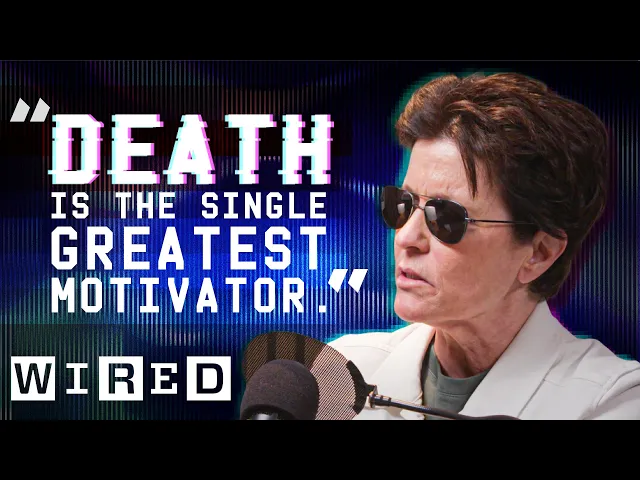
Kara Swisher on AI & The Quest For Immortality | The Big Interview
Uncanny Valley by WIRED
0:00 Cara Swisser wants to live forever is
0:02 a six-part CNN original series that airs on Saturdays.
0:05 The first episode is already out on streaming
0:07 and Cara's here now to tell us more.
0:09 Welcome back, friend of Wired.
0:12 Great to see you, too.
0:13 So, I want to start at the beginning.
0:15 I just watched the first episode.
0:18 Um, and I understand that the series in many ways was
0:21 born out of one of our favorite topics here at Wired,
0:24 and that is of course Silicon Valley and the mogul who run it.
0:26 Mhm.
0:27 You've been covering those moguls for decades and you
0:29 were covering them as they became the billionaires and the
0:33 mogul before I was the before time where you have to deal with them now.
0:36 Well, I'm pretty sure you're still
0:38 I raised them badly and now you have to deal with them.
0:40 But but part of the the raising badly that you did is
0:43 that so many of these guys have now become obsessed with longevity.
0:47 they become obsessed with sort of physical optimization
0:52 or maybe however they see that I don't know
0:56 that I would consider Jeff's physique um my ideal
0:59 physique but he is clearly in some sort of
1:01 Lauren seems to like it so let's see Lauren seems
1:04 to like it just fine and good for her but
1:06 how did you watch that relationship that some
1:09 of them had to health and longevity evolve
1:11 well you know you talk about just body you
1:12 know we're not supposed to talk about people's physical looks
1:14 but wow he's different like he was a skinny
1:17 I I all I'm saying is he's not my type.
1:19 I could have thrown him across the room years
1:20 ago when I first met him and maybe I did.
1:23 Um but one of the um the thing that's
1:25 interesting to me it's not just that it's the investments.
1:28 It's the massive investments whether it's Larry
1:30 Ellison who's created an entire institute for this
1:33 or uh Musk has been involved and of course
1:35 a lot of it was also around psychedelics and ketamine.
1:38 There's you know they were the first
1:40 to sort of make significant investments in that area.
1:43 sometimes good, sometimes bad.
1:44 Like it's interesting.
1:45 Um, and I think it was born out of this idea is like we've we've
1:49 they've always been trying to hack health
1:51 in some way and never were very successful.
1:53 They're always trying to get into the health care space.
1:55 And every now and then the Google guys would say,
1:57 "We're going to make contact lenses
1:58 that will then improve your, you know, something." Yeah.
2:01 Something
2:01 and something with with health.
2:03 And so it always interested them.
2:05 And now that they have time and money,
2:08 they're older and they suddenly realize their little meat
2:11 sacks are going to not last for that long.
2:13 And so how do we how do we get to that spot of, you know,
2:17 the singularity which was, you know, Ray Kurtzwhile,
2:20 that idea that we're going to merge with the machine.
2:22 And and then there's a dollop of science fiction that they all grew up on.
2:25 A lot of them do.
2:26 I know Musk certainly was enamored
2:28 with certain science fiction around that idea.
2:31 Space travel, not just space travel, but space shuttle longevity.
2:34 um etc.
2:36 Uh and so that's sort of what it's part of.
2:38 And then there's a whole aspect of it of what happens to your brain.
2:42 Can you preserve your brain?
2:43 And not cryogenics because I didn't do any
2:45 of that because I think that's such nonsense.
2:46 Why waste my time?
2:49 Yeah.
2:48 Um but one of the things was what happens
2:51 now that they have AI that can become you.
2:55 Could you preserve yourself in some other
2:57 way and put yourself into another being?
3:00 And I want to ask you about your experience with that.
3:02 But but for for these guys, I mean,
3:05 there's the the ego and the power of it, too, right?
3:08 I mean, this sort of like the ultimate
3:11 conquest, the ultimate exercising of power would be able
3:14 to would mean being able to defeat death, right?
3:17 Right.
3:17 Defeat death or at least extend it to the point, you know,
3:20 Musk talks about it like it's just a programming problem,
3:23 but it's not just a brain.
3:25 Of course, it's not.
3:26 They like to reduce the brain to a computer.
3:28 of the brain is would wishes it would like
3:30 the the computer wishes it were like a brain brain is amazing
3:34 um but I think it's the idea that if
3:35 if everything else can be hacked why can't this right
3:38 and to a certain extent there are things you can
3:41 do and like robotics and exoskeletons and AI for cancer
3:45 which I also looked into this was I wanted
3:47 to look at the real stuff GLP1s um mRNA technology
3:53 the uses of AI and drug discovery all manner
3:56 of things can extend life and rid ourselves of certain diseases.
4:00 That's an allottable goal.
4:02 But instead of just saying, "Okay,
4:03 we're going to try to figure out a way to, you know,
4:06 talk about this single cancer." Instead, because they're doing PR for themselves
4:10 while they're stealing all our information, we're going to cure all diseases,
4:14 right?
4:14 All of them.
4:15 All of them.
4:15 I was like, "All like, I'm not so sure that's possible." But I get a goal.
4:20 I get a goal.
4:21 Like, that's a nice goal.
4:22 Yeah.
4:22 But
4:24 what they're really doing is other things, right?
4:26 they're really doing is creating all manner of danger.
4:29 And that's not their main goal is to help humanity.
4:32 They're there to help themselves.
4:33 They're there to get richer and they're there to extend
4:36 their power across the rest of us without any accountability,
4:39 which you and I have talked about a lot.
4:41 We're we're good at talking about that.
4:43 That actually brings me to They are That brings me
4:46 to actually Brian Johnson who is featured in the first episode
4:49 of the series who I also interviewed and and we talked
4:52 very briefly before you went and interviewed him many months back.
4:56 You know, he's he's one of the internet's favorite longevity influencers,
4:59 if not the internet's favorite.
5:00 He's he's very he doesn't like calling himself an influencer, by the way.
5:04 He got very offended by Well, I mean, he he is a YouTuber.
5:07 I mean, he is prolific on he's an influencer.
5:10 He's he's across all these platforms.
5:11 He has millions of followers.
5:13 Um, and he is very very wealthy by way of of tech money.
5:17 And he has devoted himself essentially
5:19 to becoming a one-man longevity optimization experiment, right?
5:24 Which which helps none of us.
5:26 Which helps none of us.
5:26 And I wanted to ask, you know, I interviewed him.
5:29 I have my impressions.
5:31 Tell me about yours.
5:32 Well, it's interesting because he I had forgotten but I
5:35 as I went back he came to code in 2017 my conference
5:39 and the clips from that are I must say are wonderful but he
5:43 looks again sorry to keep commenting
5:45 on people's experience on people's appearances
5:48 vastly different than he does
5:49 he looks normal is what he does normal um he was coming because he
5:53 was talking about and I thought it was really interesting and the reason I
5:55 had him was because he was talking about brain science and what we can
5:59 do around depression because he himself suffered it and some of the uses of AI.
6:03 He was one of the first people to talk about what
6:05 where are we going to go with this and very thoughtful
6:08 and you know he had sold his company for $800 million I can't remember
6:12 and obviously he had also personal issues around
6:14 Mormonism and everything else and so he was
6:16 a really interesting character to me and then it morphed into then this and then
6:21 he's doing all this like like chest th showing off nudity like look at me
6:27 plasma transfers son or father anything and everything and he
6:31 became a circus act and I was like wow
6:33 that was what happened like kind of stuff and so
6:36 I I had somewhat I wouldn't say affection but I
6:39 had empathy for what he was talking about during
6:41 that talk which is why I had him and it
6:44 was also of interest because it really was god
6:46 what can we do with AI and brains and etc
6:50 and and it's an interesting area of of things to discuss and entertain
6:55 and then it was about a narcissistic pursuit of I don't even know
6:59 what because it's not like and I I did put it to him
7:02 in this interview it's Your experiences
7:04 are only the experiences of Brian Johnson.
7:06 If you have all this money, all of you,
7:08 why don't you pay for gold standard testing?
7:11 Well, how many can I pay for?
7:12 I'm like, a[ __] buttload, my friend, right?
7:15 Why don't you help more people than less?
7:18 And that's it's just him.
7:20 It's just him.
7:20 And what is going to become of this information?
7:23 Almost nothing.
7:24 Like maybe one or two small insights that people might maybe take.
7:28 Maybe getting enough sleep is good.
7:31 We know this.
7:32 has helped us establish this.
7:33 Yes, but he has not.
7:34 No, no, I know I'm being sarcastic.
7:35 He has not at all.
7:36 My grandma knew that.
7:37 Yeah, there's a great clip um I think I saw it
7:40 on on CNN's social accounts of of this interview where he says something like,
7:44 you know, getting enough sleep.
7:46 Anyone can get enough sleep.
7:47 And immediately in my head and then you said, "No, they can't.
7:51 There are so many people." If you're poor, you know,
7:54 if you do food and you get enough sleep and maybe if they get enough sleep,
7:56 I go, "Maybe they can't." He didn't even
7:58 occur to him that they might have two jobs.
8:00 They have homeless issues.
8:02 They have, you know, financial issues.
8:04 They've got health issues that they can't pay for.
8:06 It doesn't even occur to these people that if
8:09 you spend $2 million on your health, you'll be good.
8:12 You're good, sir.
8:13 And so that so what is the point of that money
8:16 when he could be doing like and just interestingly,
8:18 ironically, this week um uh McKenzie Scott gave $70 million to Meals on Wheels.
8:24 Guess who's going to help the outcomes of longevity more?
8:28 Her or him?
8:30 her.
8:30 So why do you think he's doing it?
8:31 Because this is in this case.
8:33 This is the question.
8:34 An empty hole.
8:35 You know, I don't know.
8:36 I think there is scientific interest like there,
8:39 you know, look Frankenstein, Dr.
8:40 Frankenstein, you know, everyone who does experiments,
8:43 lots of both nefarious like Hitler and Dr.
8:48 Mangala, they did those experiments.
8:49 And there's all kinds of people.
8:50 The guy who, you know, was trying when they were doing crisper tried to use
8:55 it for or cloning when they decided to go into cloning.
8:58 They he did it.
8:59 you shouldn't have.
8:59 This is something that's always happened.
9:01 I if you're not doing it for the benefit of lots and lots of people,
9:06 what are you doing it for?
9:07 And then I then I said, and he's sort of aware of it.
9:10 He goes, I know people think I'm this like
9:13 narcissistic Patrick Baitman adjacent[ __] And I was like, "Yes, they do."
9:20 And then he's like, "And you're playing no." But I was like,
9:23 "Exactly." And I said, and he's like, "Well,
9:25 you know, I it's easy to mock me." I go, "No,
9:28 no, you put yourself you make you know what you're doing.
9:31 You're you're very aware of, you know,
9:33 when you have a picture of you with a little blood
9:35 thing and you do with your son that everyone's going to look.
9:38 You you have to be a don't don't play innocent with me." At the same time,
9:42 I find to be a rather poignant figure
9:44 like what are you what are you looking for?
9:46 Is this the way you want to spend your life?
9:48 measuring your erections and you know analyzing your poop
9:51 and constantly being why why there was something I found him
9:58 to be I mean all the things that you just said
10:00 I on a surface level as a human a lovely person
10:04 generous with his time kind thoughtful considerate yes very much so
10:08 something sad something sad sad it's narcissism is what
10:11 it is right and and that's what you have
10:13 to look at and one of the things that I think is a real disease of these people
10:16 right now is they can't stop talking like
10:18 we can't stop talking but that's our job right
10:21 but they really have to weigh in on all
10:23 manner of whether it's Mark Andre talking about introspection
10:26 which is abs to me I was like oh
10:28 I see then you're deeply troubled like it's like
10:31 everything they try to say like I don't care
10:33 about anything I'm like oh you care about so much
10:36 so much and so uh so it's really interesting
10:40 like why are we talking to Mark Anderson about
10:42 philosophy precisely like I don't know I I'm happy
10:45 to talk to him about browsers or whatever Um,
10:48 and so that's that's the kind of stuff.
10:50 And so what to me it's out of boredom, out of I can talk about anything.
10:53 I'm an expert in anything.
10:54 And when you come to healthare,
10:57 who are we helping?
10:57 And and and what really kills me is, well,
11:00 obviously there's the misinformation and the grifterness
11:02 around so much of this stuff.
11:04 And that's, you know, it it's the same thing part
11:06 and parcel with the political misinformation that happens.
11:08 It's it's in this down the same alley.
11:11 But one of the things that sort of kills
11:13 me is that there's so much amazing innovation happening.
11:16 Yeah.
11:17 Well, real innovation.
11:18 And that was a question I had for you, which is sort of how much do you think
11:22 all of this noise of the the Silicon Valleys,
11:24 the curing all diseases, the Brian Johnson's,
11:27 the misinformation, like all of this noise.
11:30 You have that over here.
11:32 Over here, you have a very broken American healthare system.
11:35 Very much
11:36 massive inequity in access to cost,
11:39 double the cost of other peer nations.
11:42 And you have you have real science happening.
11:44 So, how much do you think we're all getting distracted
11:47 looking over here and not sort of addressing what's going on?
11:52 There isn't a business in it.
11:53 There isn't a business in doing preventative healthcare.
11:56 There's a little bit of it, but the costs, the cost savings are enormous.
11:59 And what we do is we backload everything.
12:02 The money is spent when you're sick.
12:03 And we're good at sick.
12:05 We're not good at health.
12:06 And so, I went to Korea, which is better at health than they are at sick, right?
12:10 Yeah.
12:10 Tell me tell me about that.
12:11 I've never been.
12:12 You know, it's not a perfect nation.
12:13 Let's be clear.
12:14 I wasn't trying to say they're the best,
12:15 but they do have the longest longevity right now.
12:18 And there's a lot of reasons.
12:19 One is diet.
12:19 I went to a school.
12:20 If you saw what those kids ate, it's really astonishing.
12:23 Very healthy foods, you know,
12:24 fermented foods, vegetables, whole fruits, everything else.
12:28 And they have a nutritionist in every school.
12:30 Why don't we have a nutritionist in every school?
12:33 And then it teach.
12:34 It's not like they don't eat snacks.
12:35 Everyone's seen K-pop demon hunters.
12:36 They love a snack, right?
12:38 But what they what what happens is these kids get
12:41 a base of food knowledge that they get used to and start
12:46 eating and that's really important and it's it and it you
12:50 don't see it today but later in your life it matters.
12:53 Same thing with doing strength training when you're younger.
12:56 It it it's like putting money in the bank.
12:59 All of a sudden you have a million dollars later so you don't fall over
13:02 and or you do interval training to get
13:04 your heart more efficient and your muscles.
13:06 Like that's something that pays off much later and is
13:09 not so flashy like put on a red light.
13:11 That's the thing.
13:12 It all it all just sounds very boring.
13:14 It does.
13:14 And it is boring.
13:16 Brian Johnson having good sex.
13:17 Right.
13:17 Exactly.
13:18 And so although sex is probably good for your health.
13:20 Um but one of the things that's important to keep in mind is what can we do
13:24 as a nation to try to make ourselves healthier rather
13:28 than you know I'll tell you one thing in Korea.
13:30 Universal healthcare.
13:33 Oh universal healthcare is the way you have a healthier society.
13:36 End of story.
13:37 Period.
13:37 End of story.
13:37 Having grown up in Canada.
13:38 Agree.
13:39 And And you know, when the rich were, oh, they don't have as good a system.
13:41 I'm like, you know what?
13:42 Buy more.
13:43 You're rich.
13:44 Buy more.
13:44 Yeah.
13:44 Buy more.
13:45 Buy more.
13:45 Which they do.
13:46 And by the way, the rich have a different medical system than everybody else.
13:50 They have these.
13:50 And I went to a concert
13:52 and it and and you know, some of it is silly like the red light mat.
13:57 Whatever if you want.
13:57 They don't really the science is pretty weak around those things or hyperaric.
14:01 They have something new and flashy.
14:03 every hyper Brian has his own hyperbaric chamber but you
14:06 know it's sort of the idea is if a little
14:08 oxygen is good three times is better which is
14:10 not true um you know and these promises of instant
14:15 and again this isn't new in our history or or the world's
14:18 history that you take a pill and then you're suddenly
14:21 young again I mean even Greek
14:23 mythology is like that vampire stories Frankenstein
14:27 we this is something we we we wish for but honestly it's really
14:31 boring to do the block can tackle stuff that we need to do
14:34 to stay healthy and at the same time to back things like mRNA technology.
14:39 I went and visited the Nobel Prize winner in this in Philadelphia
14:42 at the University of Pennsylvania and these people are fleeing this country.
14:45 We were ahead in all these things because of the Trump administration's
14:49 cuts and the the the terror they're they're terrorists to our scientists.
14:53 Yeah.
14:54 And if they get funding,
14:56 we will be ahead and we'll have these we'll have vaccines for cancer.
14:59 Yeah.
14:59 No, I mean, it's the what is happening to the US
15:02 healthcare system and scientific research under the Trump administration is
15:07 criminal.
15:07 Criminal and a one of many reasons I would
15:09 love for my 8-year-old to be an adult somewhere else.
15:12 That's right.
15:12 And this is a doctor says this.
15:14 This guy won the prize.
15:15 He goes, "This we are setting back our research for generation a generation.
15:21 And the next pandemic will be begging the Chinese for a vaccine,
15:26 which you do not want to be doing.
15:28 begging the Chinese for it.
15:29 And the the thing is we are been so far ahead on this stuff really far ahead
15:34 and it should also be working with allies like
15:36 in Germany that's where some of this technology came from
15:40 to do things GLP1 is a very good thing so much promise here.
15:43 So how do we roll this out among the general population in a safe way?
15:47 How do we do, you know, gold standard testing, figure out what it really works,
15:51 and then start to really understand obesity and what we can do about it,
15:55 both from a medical point of view and from a learn about nutrition,
15:58 learn about sleep, learn about exercise,
16:01 give give the population more knowledge.
16:03 And that's not what they're interested in.
16:05 They're not right.
16:07 They're not.
16:08 And and and you wish they were.
16:09 And the one person who actually is making
16:11 a difference would be Mackenzie Scott among these people
16:13 and doing so very quietly.
16:15 Never heard.
16:15 You never hear from her.
16:16 We don't I don't know what her pecs look like.
16:18 I don't know.
16:19 I don't either.
16:20 I don't know if she has pecs.
16:21 I don't care.
16:22 Neither does she.
16:23 Like she's doing things.
16:24 Or someone like Melinda Gates and actually
16:26 honestly Bill Gates too because they were just
16:29 giving money to do things that would
16:30 cause solve malaria very things that kills people.
16:34 And then in this country now measel seems to be back and that's so offensive.
16:39 What's next?
16:39 Polio?
16:40 Are we going to do chalera next?
16:41 It's possible.
16:41 Yeah.
16:42 And this has been solved.
16:43 This was solved things.
16:45 We should be focused on things we haven't solved.
16:47 And now we're now contending because of misinformation,
16:50 health misinformation with diseases that like honestly I'm like
16:54 waiting for the gout to make a like a return.
16:57 Yeah.
16:57 And and there is sort of a jarring juxtaposition between everything you just
17:01 described and then for the last time bringing it back to Brian Johnson,
17:05 but sort of all of these guys over here
17:08 just Yeah.
17:08 like measuring their[ __] and their erections and and drinking smoothies
17:12 and eating broccoli in their you know concrete mansions and you're huh like
17:18 yeah he doesn't like the sun I guess
17:19 feels more urgent sort of it's also the idea of what's the priority
17:24 here is it for the most people no it's not it really isn't
17:27 and so if it's not what are you doing with this enormous wealth
17:30 and the only thing I can say sometimes when I see some of them is
17:33 you're still going to die
17:35 you do know that and you're not and one thing I did do is I created Keratar,
17:39 which was a 3D thing of an AI version of me.
17:42 I'm curious about this.
17:43 Yeah.
17:43 What was your tell us about it and and what did you walk away
17:48 thinking and feeling about the idea of sort of living on
17:51 it?
17:52 Was complicated.
17:52 I would say that.
17:53 So it was it was from a firm that if
17:55 you remember is is preserving the memories of Holocaust uh survivors.
17:59 And a lot of it used to be they
18:00 taped them and they would have road answers, right?
18:03 Like what was it like in the camp?
18:05 And then they they would tape them and then it would be played back at you.
18:08 Essentially a tape recorder and but physic they would take beautiful
18:11 3D imagery of them and then that was kind of great.
18:14 That's great in of itself.
18:16 It's it's talking history.
18:18 Now they can have you can have
18:20 real conversations with them that you didn't tape.
18:22 So I taped a bunch of stuff like my name is Cara Swisser.
18:24 I was born in Philadelphia.
18:26 My father died when I was five.
18:28 And and then they can glean stuff also from the internet which is incredible.
18:32 And then because of AI now these things can start to have real I would say
18:36 I would call them real conversations except it's
18:39 based on the algorithm and it knew it.
18:41 It said they I said well you know you don't have empathy or to soul
18:46 and and the the being that was me the keratar said well algorithm is my soul.
18:52 Wow.
18:52 And that's and I was like that's a really interesting kind
18:55 you know it's really jarring when they have a good insight.
18:57 And at one point I said well do you think I'm like you?
19:01 And I said, "Well, you're not really good
19:02 at jokes and you don't smile much." So, and and they were like, "I'll take that.
19:06 I'll take that note." And at one point,
19:09 they go, "I'm smiling, just not with my teeth.
19:13 You can't see it." And I was like, "Okay, that was a good joke." Yeah.
19:16 Like, it suddenly it knew I wanted a joke.
19:18 And it it did one that was okay.
19:20 It was on the way for sure.
19:22 Would you want that for your family?
19:24 No, I didn't.
19:25 I thought I'm going to kill you at some point.
19:26 And then I didn't want to say it too loudly cuz
19:28 who knows what would come after me like 2001 of Space Odyssey.
19:31 I'm sorry.
19:32 I'm sorry.
19:32 I won't be able to do that.
19:34 Um, and you know, I'll tell you the the weirdest
19:37 part and I've said this several times was
19:40 I there's a lot of Cara Swisser out there.
19:42 There's probably a lot of there's more and more Katie Drummond out there.
19:44 And so you could pull from 20 years of interviews, articles I've written,
19:49 if you put my I didn't put my emails in there,
19:51 but you could you could get a pretty
19:53 good a relatively good faximile of Cara Swisser.
19:56 And of course, they took a picture of me.
19:58 I look a little shiny and weird, but that's okay.
20:00 It was it was enough.
20:01 It was close enough.
20:03 And um I was leaving and we had this very interesting talk about
20:08 um how do you balance uh innovation with the need to protect humanity?
20:13 And I said, "We don't." And the avatar said,
20:18 "That's really something to think about
20:19 because that's probably you're probably right." Like,
20:21 and you know, it was being solicited,
20:23 but it was it was a real I would say it was a good conversation.
20:26 It got better and better by the minute.
20:28 That was what was really interesting.
20:30 And and it it not in a not in a text setting, it's even more jarring.
20:34 You know, a really pretty good conversation with a computer.
20:38 And um and as I was leaving, there's something I say to my kids.
20:42 I have four kids, which I always say, which is stupid and and cringey,
20:46 where I go, "See you, wouldn't want to be you." I have not said that in public.
20:50 Now I have during these interviews.
20:53 I have not said that in public.
20:56 I as I walked away, it said, "See you.
20:58 Wouldn't want to be you."
21:01 No.
21:00 And I thought, "Where the[ __] did they get that from?
21:03 Where?
21:04 Where?" And I I'm like, "Maybe I said it somewhere, but how did it pull it?
21:09 And how did it know that's what I would say?
21:11 I uh
21:12 but how I was like
21:14 I don't know.
21:14 I don't know.
21:15 I just I sat there and I was like I don't think I've said that in public.
21:20 I I don't recall.
21:23 Spooky.
21:22 I a lot of stuff they said I knew where they got
21:24 I had a sense of where it came from, but it was um
21:28 Did you ask your kids if that's something they would want?
21:30 Like would they want to be able to talk to you in that way after you died?
21:34 It's not really about my kids because they do know me, right?
21:36 Um
21:37 but like would they want to spend time with an with an AI avatar version of you?
21:40 I don't know.
21:41 One of the things was, do I want my great-grandchildren to see it?
21:45 Yeah.
21:44 Would I have liked to have talked to my dad even in Avatar?
21:47 Yes.
21:49 Mhm.
21:48 Yes, I would.
21:49 Yeah.
21:49 If there was if there was little bits of him because memory is so bad.
21:53 At the same time, maybe memor is better.
21:56 Maybe flawed memory is better than the real thing.
21:59 Yeah.
21:59 And sort of this very natural erosion of that memory is Exactly.
22:03 And maybe that's the way it should be.
22:04 And so, look, I think someday we will be able to like you'll be in a cemetery.
22:09 I was thinking of this.
22:10 I always think about like what's the next thing you'll be in a cemetery
22:13 and instead of gravestones there'll be holograms
22:15 of people and you'll talk to them.
22:18 I no question I can picture it.
22:20 Yeah, right.
22:21 No, it's not black mirror.
22:22 It makes sense.
22:23 Why not do that?
22:24 And then you could say I'm visiting mom today and hi honey.
22:27 How you doing?
22:29 But it might be comforting to some people, right?
22:32 And so I'm not one to tell you what not to do.
22:35 No.
22:35 No.
22:35 There's just a lot there.
22:36 There's a lot that comes with that.
22:38 Right.
22:38 And so you start to think about it.
22:39 And so the issue of longevity is, you know,
22:42 I started with the myth myth of Tthonus.
22:44 I think that's the right to pronounce it.
22:45 Do you know that myth?
22:46 The Greek mythology.
22:47 I'm a big mythology person.
22:49 It's a goddess falls in love with this guy Tthonus.
22:52 Um, and she she gets Zeus to make him live forever,
22:56 but she forgets to not let him age to to stop the aging process.
23:00 And so he's in agony because he gets older
23:03 and older and more decrepit, but he never dies.
23:07 And it's it's it's hell.
23:09 It's hell.
23:09 And so what is our purpose of living longer?
23:12 And isn't it better to clear out for the next generation?
23:16 What happens to jobs if people like I interviewed
23:19 one guy and he was a science fiction writer.
23:20 And what if you could take a pill that every
23:25 five years you lived you only aged one year?
23:27 That means you could live a couple hundred years, right?
23:30 You're 40 and you're really whatever 200.
23:32 Um would you take that pill?
23:36 You would only age a year every five years
23:39 and it costs a million dollars each so only some people could take it.
23:43 And what if your kids didn't take it?
23:46 Think about it's like so mind[ __] It's all of
23:49 I think I would rather not have the choice.
23:51 I don't want to have to make that choice.
23:52 Someday you might.
23:53 And that's really interesting.
23:54 And so what if you could replace all your organs?
23:59 You know what about that?
24:01 And so we will be facing those issues.
24:03 But then you never get out of the way.
24:05 What happens to people's jobs?
24:06 What happens to young people if you're not leaving?
24:08 If we could have Chuck, young Chuck Schumer all the time.
24:11 Dare to dream.
24:12 We don't like old Chuck Schumer, right?
24:13 Like, but clearing out is part of life, right?
24:18 Well, how old do you hope you are when you die?
24:21 Would you take that builder?
24:23 No.
24:23 No.
24:23 Okay.
24:24 No.
24:24 Um, again, the lifespan health span thing,
24:28 which I think is one of the good things that's come out of this, is
24:30 the idea that your lifespan and health span
24:32 meet up because right now it's a 15-year delta.
24:35 People start to get really sick at in their 60s.
24:37 They live into their 80s and the last part is not good,
24:41 90s even, and anyone who is an elderly parent knows this.
24:44 It's really painful to watch.
24:46 Um, but I I imagine I want to be relatively healthy till the end.
24:51 That would be the best thing.
24:52 I think most people think that mobile and some of these like
24:55 I was in Korea the the exoskeleton stuff is really cool with AI.
24:59 That's cool.
25:00 If you could walk and get around okay and you're
25:02 not in a wheelchair and you're not sharp and
25:05 sharp and the cognitive stuff that would be great.
25:07 Um I don't know long enough.
25:10 I would like to see I had kids.
25:12 I have older kids and younger kids.
25:14 I'd like to meet I'd like to see at least some married maybe a nice like 95 96.
25:20 Yeah.
25:20 and and pretty, you know, pretty pretty old enough.
25:23 Old enough, but not really debilitated.
25:25 Although, if you have a a a life of the mind, that's okay.
25:30 People that don't have a life of the mind are the ones that suffer.
25:32 If I could sit and read, that would be nice.
25:35 I never slow down.
25:36 It does, right?
25:37 What um what did you walk away from from making this series?
25:44 When you walked away from it, what gives you hope?
25:47 What should people listening to this feel optimistic to know?
25:50 We've tal we talked about a lot of dysfunction, a lot of erections.
25:54 The number one longevity hack is not to be poor.
25:59 Yeah.
25:58 Or be rich, but that's the number one.
26:01 But the one that I really came away
26:03 with, and I think it's absolutely true for cognitive health,
26:06 for physical health, and the cascading effects of things is friends and family.
26:10 the scientific links are so clear in terms of having
26:14 links and not just with people you know it's having challenges
26:18 having that that humanity just really beats all this stuff
26:22 no matter how you slice it creativity beats all this stuff
26:25 and when you have a challenged brain and aside from accidents
26:29 and things that just happen just because life is like
26:32 that um friends and family and a wider range of connect
26:38 social connections are critically important and well over AI bot.
26:44 We could get into that.
26:45 AI bots and synthetic relationships and everything else.
26:49 The number one thing you can do for yourself is
26:51 have and and I talked to the Harvard happiness study people,
26:54 all manner of doctors,
26:56 social connections, real social connections, not social media connections.
27:01 There's nothing social about social media.
27:03 No.
27:03 Um it's angry.
27:05 It's it's become angry and we can't seem to fix it.
27:07 Um social connection.
27:08 I think young people do get that.
27:10 My son, my both my sons took social media off
27:12 their thing and I my older son and I said,
27:14 "Why did you do that?" And he said, "It makes me feel bad." Yeah.
27:18 You don't need a computer to tell you that, right?
27:20 And so that was something really interesting.
27:22 And so I've spent a lot more time with social connections.
27:24 And I really think we lost that during co in a lot of ways.
27:28 And we have to regain that.
27:29 And it's the single best thing we can
27:31 do for health is rebuild all kinds of communities,
27:34 not just church communities or sports communities,
27:36 but really start to have much.
27:38 And I think honestly that's where we're headed right now.
27:40 You can see I do too.
27:41 I think you can People want to be around other people.
27:43 They do.
27:44 It's changing and people are sick of the dunking online.
27:47 They're sick of the angry billionaires
27:49 and and they're sick of the the partisanship.
27:53 And accepting death is part of that.
27:55 And there was a great interview at the very end.
27:57 I talked to a pastor.
27:58 I talked to a range of people.
28:00 And uh this professor at Skidmore is doing a study of death
28:03 acceptance during death versus death fear and the physical manifestations of it.
28:08 And people who fear death are sicker, angrier,
28:12 more partisan, more polarized, more them, you know, they
28:18 the other people who accept death are happier, healthier,
28:24 uh they live longer, they are happier in their life.
28:27 And and that's where I originally took
28:29 my inspiration from Steve Jobs who talked about this.
28:31 Death is the single greatest motivator and invention of life and he's 100,
28:36 you know, he died, but he's 100% right.
28:39 And you learned that very early.
28:41 I did with my dad dying.
28:42 When you think about death, how do you try to think about it?
28:45 A lot.
28:46 I think about it a lot.
28:47 It informs everything.
28:48 And you know, you know, I change a lot.
28:50 Yeah.
28:50 I often say to myself when I'm somewhere, and Steve Jobs said this, he goes,
28:54 "When I'm unhappy four or five days in a row, I say no and look in the mirror.
28:57 I leave.
28:58 I get up and leave.
28:59 I change." And sometimes I I do that.
29:04 I do that a lot.
29:04 And I know that I have limited time on the planet.
29:06 And it's it's actually how I make decisions.
29:09 And I remember leaving one job and they were like,
29:13 it was a it was a pretty wellestablished place.
29:16 And they're like, "Oh, why are you leaving?" And I said,
29:18 "I don't want to talk to you anymore.
29:20 I don't have enough time." And they're like, "What?" And I go,
29:23 "I'm wasting my time talking to you." And oh, I just wasted another minute.
29:29 And that's a very that comment was very existential.
29:31 Like literally,
29:32 I knew how many minutes my dad finished his he he went in the military
29:37 because it paid he wasn't didn't have enough
29:38 money to pay for medical school or college.
29:41 Paid for that.
29:42 He got get has three kids, 34 years old,
29:45 buys his first house, gets his first big job.
29:48 He doesn't move into that house.
29:49 He doesn't do that job.
29:50 He dies.
29:52 What if you knew that?
29:54 I know that, right?
29:56 All of us know that.
29:58 Yeah.
29:57 In in the back of our heads.
29:58 And if if if we have the awareness of that right now, we may go on digitally.
30:03 Maybe it never gets erased, but if you have that, you can it motivates you
30:07 to do great things and to think about other people more.
30:09 I think it does.
30:10 It absolutely does.
30:11 Yeah.
30:12 Or you can be graspy and hold desperately on to your meat sack, Brian.
30:17 And it's a good-look meat sack according to you.
30:20 According to some, right?
30:21 So, that's a way to go, but I think it's a waste of time.
30:26 I love that.
30:28 Yeah.
30:27 Thank you so much for being and keep going, Katie.
30:30 I'm going to keep going.
30:31 I love it.
30:32 They're still mad out there.
30:33 Good.
30:33 You know what?
30:34 Keep them mangry.
30:36 I will.
30:36 Thank you so much again.
30:37 Thank you.