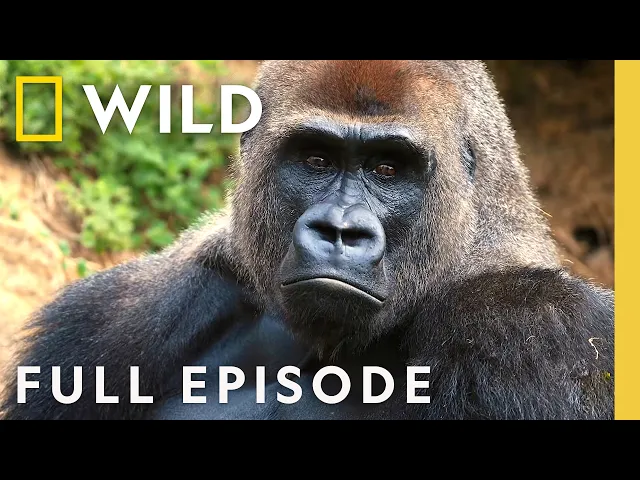
Deadly Encounters (Full Episode) | 10 Animals That Can Kill You | Nat Geo Animals
Nat Geo Animals
0:01 CYCLIST: Hidden enemy territory here.
0:02 Where is he?
0:03 Oh, here we go.
0:05 Ahh!
0:06 Ahh!
0:07 Ahh!
0:07 Dahh!
0:09 He's having a crack!
0:11 NARRATOR: There are a lot of ways to die out there.
0:15 The odds of it being by an animal are very slim.
0:18 But just in case, here are 10 ways you might die, and perhaps how to avoid it.
0:26 With Michelle Oakley, Yukon wildlife biologist and vet.
0:30 MICHELLE: My work can be kind of dangerous, sometimes it's chasing moose around.
0:34 Bear tracks here.
0:35 Sometimes it's avoiding bears that are problem animals,
0:38 and sometimes it's getting bit by a Chihuahua.
0:40 So it really, I get the whole range of the wild kingdom.
0:43 Don't let him out!
0:45 NARRATOR: And Filipe DeAndrade,
0:47 National Geographic Explorer and wildlife filmmaker.
0:50 FILIPE: Basically, if it's an animal, I want to point a camera at it.
0:54 No matter what the conditions, no matter what the environment,
0:56 no matter what the situation, I am fascinated.
1:00 NARRATOR: But some of those animals can getcha.
1:02 MICHELLE: Here are 10 Animals That Will Kill You.
1:05 FILIPE: 10 Animals That Will Kill You.
1:07 MICHELLE: Or actually might kill you.
1:08 FILIPE: Might kill you.
1:09 (laughter) (screech) NARRATOR: Birds.
1:14 Some would happily eat you if you're already dead.
1:17 But can a bird actually kill a human?
1:21 Number 10, the Australian magpie.
1:24 MICHELLE: Mean suckers.
1:25 FILIPE: So there's that famous Hitchcock movie The Birds.
1:27 MAN: Oh, my god, oh, my god, oh, my god, oh, my god!
1:31 FILIPE: And those scenes of swarming
1:33 birds attacking human beings, highly unlikely.
1:37 However...
1:39 MICHELLE: Some birds are gonna swoop and getcha.
1:41 They're just trying to protect their nest and their chicks,
1:43 but they're gonna come down if they think you're a threat,
1:46 and they're gonna hit you with everything they got.
1:49 NARRATOR: Bird attacks on humans are becoming more common.
1:52 It's all about defending turf and offspring.
1:57 MICHELLE: They literally just want to get you away from their nest.
2:01 FILIPE: If you're trying to go after something like its food or its baby,
2:04 I don't blame that bird for coming after you.
2:09 NARRATOR: Of all the deadly creatures in Australia,
2:12 this black and white bird is one of the most feared.
2:17 CYCLIST: Ahh!
2:17 I'm gonna get out of here!
2:19 Oh, (bleep)!
2:21 Bloody hell, mate!
2:26 NARRATOR: The Australian magpie knows who you are and will attack
2:29 you at the same time and in the same place every day.
2:33 MICHELLE: Magpies are not good neighbors.
2:35 They want a lot of personal space where no one's allowed,
2:38 and of course that doesn't always work out in a lot of urban areas.
2:41 So if you're trying to pass through a magpie area,
2:44 be prepared, they're gonna come for you from behind.
2:48 NARRATOR: Australians take magpie swooping very seriously.
2:51 But it's really just some overprotective dads doing it
2:55 for a few weeks during nesting season in the spring.
2:58 MICHELLE: I'm a little nervous about magpies,
2:59 the Australian magpies are a lot more aggressive
3:01 than the ones that we deal with in Alaska,
3:04 and they're certainly a totally different species.
3:06 They're black and white, but that's kind of where the similarity ends.
3:09 The Australian magpies will get you.
3:12 NARRATOR: If they think you're too close to the nest,
3:15 they will dive bomb you until you move away.
3:18 But people are adapting.
3:21 MICHELLE: Some of the Aussies have got smart;
3:23 they know when they're traveling through a magpie
3:24 area they're gonna have to protect themselves.
3:27 So you see bikers wearing helmets that have
3:29 big eyes on 'em to scare the magpie away.
3:31 They'll put spikes or little zip ties sticking off their helmet,
3:34 anything so when that magpie comes in to swoop, it has a second thought.
3:40 FILIPE: I don't think birds are afraid of us at all.
3:44 NARRATOR: It can be dangerous if you're not steady on your bike.
3:46 They've been known to take out an eye or two.
3:49 And in 2019 a man did die trying to avoid a swooping magpie on his bike.
3:56 FILIPE: I have no doubt that a bird could really,
3:58 really mess up your day with some of the damage that they can inflict.
4:02 MICHELLE: They might not kill you,
4:03 but you're going to remember that for the next several hours.
4:06 (yelling) When we start talking about deadly birds,
4:14 we need to talk about the cassowary.
4:16 That sucker can get you.
4:18 NARRATOR: Number 9, the cassowary.
4:24 Native to Australia and Papua New Guinea,
4:26 the cassowary is a big bird to watch out for.
4:31 FILIPE: And according to the book of Guinness World Records,
4:34 the cassowary was named as the world's most dangerous bird,
4:38 most likely because of what it's capable of.
4:41 NARRATOR: This is a creature that reminds us of when
4:43 the planet was full of animals that could really kill you.
4:46 FILIPE: It's kind of like a scene out of Jurassic Park.
4:49 This thing is like a hybrid between a terror bird and a velociraptor.
4:54 MICHELLE: Birds really are dinosaurs,
4:56 and there's none that's more dinosaury than the cassowary.
4:59 It's 6 feet tall, it's got all these bright colors,
5:02 it's got a big dinosaur casque on its head.
5:06 No one would enjoy being attacked by a cassowary.
5:10 NARRATOR: But this massive, flightless bird just wants to eat fruit.
5:16 FILIPE: They're not meat-eaters,
5:17 but if they don't want you in their way, they'll let you know.
5:23 MICHELLE: Cassowaries can be quite aggressive
5:24 if they're defending their own territory.
5:29 They have 5-inch daggers on their inner claws,
5:32 and they will jump up and kick and disembowel you.
5:36 FILIPE: Imagine that; that's like two butcher knives coming at you
5:40 with the force of an animal that can almost outrun a horse.
5:44 You don't want to know that kind of power on a personal level.
5:48 (dog barking) NARRATOR: In Australia,
5:50 there's only been one death from a cassowary,
5:54 but there have been over 150 reported attacks.
5:59 In places like Florida, some people choose to keep this bird as a pet.
6:05 MICHELLE: Yeah, that isn't on my top 50 list of what I want to keep as a pet.
6:10 A cassowary would be 6 foot and I'm 5 1/2,
6:12 so we wouldn't be looking eye to eye, I'd be looking up at the cassowary.
6:16 And they're very quiet.
6:18 It just kind of stares at you, almost like how your chickens will stare at you.
6:23 They'd be across the yard, and the next thing you know,
6:25 they'd be right there and you wouldn't really have time to react.
6:29 Ugh!
6:30 FILIPE: It's not necessarily out to get you.
6:32 But if an animal of that size doesn't want you anywhere around it,
6:37 you should listen to it.
6:39 NARRATOR: Keeping a cassowary as a pet is not recommended.
6:44 FILIPE: So the Florida Wildlife Conservation Commission actually
6:46 put this animal in a Class II listing,
6:50 up there with alligators, in terms of dangerous pets to keep.
6:54 This is a bird!
6:56 MICHELLE: These things can kill you, and unfortunately it recently happened.
7:01 NARRATOR: In April 2019, a man was attacked by his pet cassowary.
7:11 NEWSCASTER: A bird that killed its 75-year-old owner in Florida,
7:14 described by experts as the world's most dangerous bird,
7:17 attacked a man after he fell near their enclosure.
7:20 NEWSCASTER: That bird is deadly.
7:22 Who in the world would want this bird in their home and around them?
7:27 NEWSCASTER: You got to make sure you take the precautions, don't get too close.
7:29 MICHELLE: I have worked on cassowaries as a vet,
7:31 and let me tell you, the cassowary was not awake.
7:34 That's why we have immobilization drugs.
7:36 FILIPE: So, in terms of 10 Animals That Will Kill You,
7:39 the cassowary has been known to take out its owners,
7:43 and that is enough of a reason to not have this animal in your house.
7:49 NARRATOR: Tourism and development have taken us deeper into their world,
7:53 leaving them with no other choice but to fight back.
7:58 MICHELLE: But fortunately, we don't usually bump into cassowaries.
8:01 Even in the wild, they're trying to avoid us.
8:04 It's really these interactions in captivity that can turn deadly.
8:12 NARRATOR: There's another 6-foot-tall Aussie beast that will
8:15 surprise you with its ferocity and fighting prowess.
8:19 Don't underestimate number 8, the kangaroo.
8:23 MAN: Get in the car, get in the car!
8:25 Woo!
8:25 There it is, there it is!
8:28 Oh, (bleep)!
8:28 (shouting) NARRATOR: This bouncy marsupial can be surprisingly hostile.
8:38 MICHELLE: I love how kangaroos have, like, this mousey cute head, they're like,
8:42 "Hi, I'm a cute mouse," but I will kill you with everything else.
8:47 FILIPE: Kangaroos are the ultimate Australian athlete.
8:50 They can reach about 6 feet tall, they have a 9-foot vertical jump,
8:55 and they can even broad leap about 30 feet.
8:59 MICHELLE: They're just so different than
9:01 anything I've worked with in North America.
9:03 They're upside down and backwards.
9:06 They're hopping, they've got, you know,
9:09 size 20s that'll just boot you if you get too close.
9:13 FILIPE: When you look at the images of some of these big male kangaroos,
9:17 they kind of look like a muscle-bound body builder, flexing, showing off.
9:22 Some of these kangaroos are ripped.
9:26 I would not want to get in a boxing ring with a kangaroo.
9:30 (bell rings) NARRATOR:
9:31 The first rule of kangaroo fight club: There are no rules.
9:35 MICHELLE: They'll literally box with you.
9:38 I always thought that was a joke, but no, like,
9:40 every Aussie knows, kangaroos will slap you, they will boot you.
9:45 NARRATOR: Some Australians don't need to get in a boxing ring to feel that boot.
9:53 NARRATOR: Kangaroos in Australia have been known to literally jump you.
9:58 REPORTER: Debbie Urquhart, who's recovering after being mauled by the most
10:02 unlikely of attackers, a wild kangaroo.
10:06 The 54-year-old had just begun running when
10:09 the male roo sprung out from the shrubs.
10:12 DEBBIE: He had me pinned to the ground
10:13 and he was jumping at me and scratching me, yeah.
10:16 REPORTER: She hobbled home and was rushed to hospital for emergency surgery.
10:20 Her injuries needed 35 stitches.
10:24 Wildlife Victoria says in the past year it's had
10:27 more than 90 reports of kangaroo sightings in this area,
10:30 but none of those have actually involved an attack.
10:34 Authorities say this male kangaroo was most likely acting
10:37 defensively when he was startled by Debbie running past.
10:43 NARRATOR: It's often the males that are the problem.
10:47 FILIPE: When these males fight each other,
10:50 they can break ribs, absolutely dismantle their opponents.
10:54 Why?
10:54 Like any reason males are fighting: all over a female.
11:00 MICHELLE: Male kangaroos have to fight to be the guy doing the mating,
11:04 so they're used to that, they fight with the other males, they box them,
11:07 they kick them, and maybe as humans if we approach them, or we're too close,
11:12 we are kind of in this upright
11:13 stance that is definitely aggressive to a kangaroo.
11:16 So, they'll come right at you and fight you
11:18 just the same way they'll fight their buddies for mates.
11:22 NARRATOR: And they use all five of their limbs.
11:27 MICHELLE: They sit back on their tail,
11:29 and that frees up both their hands for fighting and their feet for kicking.
11:33 And all of the sudden, he's back on his tail,
11:35 and everything's coming at you at once.
11:40 NARRATOR: A direct kick has enough force to do some serious damage.
11:45 On top of that, each massive foot hides a long claw,
11:49 sharp enough to tear an opponent's gut wide open.
11:54 The big red and gray kangaroos pose the most danger to humans.
11:58 MICHELLE: And the reds are even bigger,
12:00 they just have huge pec muscles, they're amazing.
12:03 But your eastern grays are no slouches, they will also take you to round 10.
12:08 (bell rings) Oh, look at it hop!
12:12 Working with kangaroos during the Australian bushfires was amazing.
12:16 It was important to help them, for sure, but it was a really big learning curve
12:21 for me to understand how dangerous they can be.
12:25 I've been kicked by 'em, I've been bit by 'em.
12:27 They're basically just trying to get away from us,
12:29 and that's a really good means of defense.
12:35 We had a really big male named Kenny.
12:39 He was built very muscular, but he was very meek during his care.
12:44 All of a sudden, though, he started feeling better,
12:47 and that's when he attacked one of my techs.
12:49 He grabbed her and scratched her and hung on, and then
12:51 he lifted up his feet and started kicking her.
12:54 He jumped all over her and scratched her back,
12:57 and it was time for Kenny to go back to the wild.
13:01 The kick by the kangaroo feels like a punch, I mean,
13:04 if they get you in the gut, it's gonna be a gut punch.
13:06 But most of the time I was getting kicked in the legs,
13:08 and it would leave a mark.
13:10 It really hurt.
13:12 FILIPE: So a crazy thing to think about is that kangaroos
13:14 are actually responsible for more deaths in Australia than snakes,
13:19 crocs and sharks combined.
13:22 Why?
13:22 Because of car strikes.
13:27 MAN: That's a roo strike, that.
13:31 NARRATOR: Kangaroos cause thousands of car accidents a year in Australia.
13:35 Thousands of roos die, and sometimes so do people.
13:43 MICHELLE: So if you want to avoid being injured by a kangaroo,
13:45 don't try to go up and pet them, don't try to get too close.
13:49 They're wild animals and they deserve their space.
13:52 FILIPE: So for 10 Animals That Will Kill You, the kangaroo has the strength,
13:56 has the power to do so, but it's more so a reminder to drive carefully.
14:05 NARRATOR: Adorable animals with the potential to hurt us are underwater, too.
14:12 FILIPE: So we like to think of dolphins as, you know,
14:14 cuddly creatures, because they have that permanent smile.
14:17 But if you're on their dinner menu, you don't see them that way.
14:21 For prey species, for the animals that they hunt,
14:23 they are absolutely formidable predators.
14:29 NARRATOR: Number 7, the dolphin.
14:33 Cunning and intelligent.
14:35 Do they have us fooled?
14:37 MICHELLE: Most people imagine dolphins to be really smart,
14:41 really sweet, they're trying to save us all the time.
14:44 I mean, they look so friendly,
14:45 they almost look like they're kind of smiling at us,
14:47 like "Eeee, eee, eeeee." FILIPE: Eeeeh!
14:51 MICHELLE: Aahhh!
14:53 FILIPE: It's remarkable to be in the water with a dolphin.
14:57 When you look at this animal and it looks back at you,
15:00 you can feel the connection.
15:02 MICHELLE: However, they can be dangerous, too.
15:07 Dolphins have a little bit more of a dark side.
15:10 FILIPE: These animals are highly advanced creatures,
15:14 and so to take an animal like this and put it in captivity,
15:18 that's where a lot of the trouble starts to happen.
15:22 GUIDE: Please, please don't reach out to her head, please.
15:24 That is Nicky, she will bite you.
15:28 Trust me.
15:30 She hasn't bitten anybody since yesterday.
15:34 MICHELLE: When you have a really
15:35 intelligent animal with a complex social structure,
15:38 they also get moods, and so you have to be careful.
15:41 When we get them into captive situations with tourism and swimming with people,
15:46 I mean, that's when all bets are off.
15:54 NARRATOR: Sharks can get a bad rap.
15:58 But perhaps we should watch our backs more around the dolphin.
16:05 MICHELLE: Dolphins can bite and slap you with their tail.
16:11 And they'll ram you.
16:15 In general, they're not trying to do that in the wild.
16:18 NARRATOR: But it has happened there, too.
16:21 FILIPE: I've been in the water when
16:23 people have grabbed bottlenose dolphins in the wild,
16:26 and that dolphin will turn around and bite someone.
16:28 When they don't want to be touched,
16:30 when they don't want to play, they will let you know.
16:34 WOMAN: Oh, my god.
16:36 MICHELLE: Dolphins can be quite big.
16:38 We forget that they're like 1,000 pounds.
16:40 I mean, that's the size almost of a horse.
16:43 NARRATOR: But we can't resist this marine mammal
16:46 that has a brain about the same size as ours.
16:49 We feed them the wrong things, tease them,
16:53 kiss them, and let our children swim with them.
16:58 The real Flipper is not our friend.
17:07 Even the highly trained aquarium stars are just like us: hormonal.
17:14 And when harassed, they take it out on us.
17:20 FILIPE: So, a lot of the aggression
17:22 from dolphins in captivity comes from pent-up testosterone.
17:28 MICHELLE: Dolphins are driven by hormones, so,
17:30 the males are trying to find mates.
17:33 FILIPE: They can be territorial or even the females when they have a calf.
17:37 MICHELLE: Hormones are a powerful motivator,
17:39 and they can definitely have some negative consequences when
17:43 suddenly they're in a small pool with tourists swimming together.
17:47 NARRATOR: We stress them out and they sometimes turn on us.
17:51 But do they want to kill us?
17:54 FILIPE: A dolphin could absolutely kill you, just as the same as a shark could.
17:57 Do they want to?
17:59 Absolutely not.
18:00 We're not on their menu,
18:01 and you got to remember predators don't want to work so hard for their food,
18:05 so dolphins don't see us as prey, or even really as a threat.
18:10 NARRATOR: Bottlenose dolphins are among the very few wild
18:13 creatures that will kill for reasons other than hunger.
18:18 MICHELLE: They've been known to bludgeon porpoises to death by the hundreds.
18:23 They're not eating these animals.
18:24 They just have this instinct that isn't to do with eating.
18:30 NARRATOR: Even some sharks avoid them.
18:33 Should we, too?
18:34 MICHELLE: Dolphins aren't trying to kill us.
18:35 They're serious predators and they can be dangerous,
18:38 but we just need to give them their space.
18:41 There've been no documented cases of dolphins causing the death of a human.
18:46 NARRATOR: But in 10 Animals That Will Kill You...
18:48 MICHELLE: Dolphins are big, but there is one dolphin that's bigger.
18:52 The largest dolphin in the world is the orca, the killer whale.
18:56 NARRATOR: And it can kill you.
19:01 Number 6, the killer whale.
19:05 FILIPE: These marine mammals outpower,
19:09 outsize even the animals that we think of at the top of the food chain.
19:14 They are highly intelligent creatures working together to take down whales,
19:20 even other dolphins, even sharks.
19:23 These things are absolutely capable.
19:25 MICHELLE: These guys are 6 tons,
19:28 25 feet long, and I mean designed for destruction.
19:33 NARRATOR: Killer whales hunt in all the world's
19:36 oceans and have learned to hunt almost anything.
19:40 FILIPE: Orcas can hunt using many different tactics.
19:45 They can strand feed, rushing the banks to hunt a penguin or a seal;
19:50 or they can tail-whip schools of herring,
19:54 completely disassembling them and then picking off the disoriented ones;
19:58 and they can even rush seals on an iceberg,
20:03 creating a wake, knocking that seal off, and then feeding on it.
20:10 They can even drown humpback whale calves just to eat the tongue.
20:17 We used to think of great white sharks as the ultimate predators in the ocean,
20:21 but recently we've discovered that orcas are killing them.
20:25 Putting white sharks on your menu makes you the ultimate predator in the ocean.
20:34 MICHELLE: If we could see an orca out of the water
20:37 and look at 6 tons of muscle and all these teeth,
20:42 I don't think we'd ever think about getting close to them.
20:46 If there was a 6-ton grizzly bear with tons of teeth and that size,
20:50 I think we'd be staying clear.
20:56 NARRATOR: So, are orcas out to get us in the water?
21:00 FILIPE: I personally don't see a situation where
21:03 in the wild an orca would target a human being.
21:06 These animals have been around for millions of years,
21:09 and we have not been on their menu.
21:11 We're bony, we don't have the fat structure that they need to survive.
21:18 We wouldn't even be appetizing to an orca.
21:24 MICHELLE: There is no doubt that an orca has a capability to kill a human being;
21:29 fortunately, there are no recorded cases of that happening in the wild.
21:34 NARRATOR: But it's a different story in captivity.
21:42 NARRATOR: There are no known cases of an orca killing a person in the ocean.
21:48 MICHELLE: Which makes me happy, because I spend a lot of time out kayaking.
21:52 I see orcas quite frequently.
21:55 Whenever I see them, I sit quietly with the kayak,
21:57 and I really hope they're going to approach me, and often they do.
22:01 MAN: That's awesome.
22:03 FILIPE: I've swam with orcas in different parts of the world,
22:06 and when that animal looks at you,
22:09 turns belly side up, and wags its head up and down like a dog,
22:13 it is the ultimate experience as a filmmaker.
22:19 MICHELLE: But just like with a lot of species,
22:21 when you get that same species in captivity, all bets are off.
22:26 Orcas in captivity have killed people.
22:29 They have a different relationship,
22:30 a much closer relationship, and sometimes it goes bad.
22:35 MATT LAUER: Last week a trainer at SeaWorld in San Antonio,
22:38 Texas, had a very scary encounter with a killer whale named Ky.
22:43 NARRATOR: During one of its regular shows in July 2004,
22:47 the male orca repeatedly jumped onto his trainer in front of a stunned audience.
22:53 This is not the first time that this has happened in an aquarium.
22:58 Four people have been killed by captive orcas.
23:02 FILIPE: It's unfortunate that somebody that loves an animal, works with them,
23:05 and then has that animal turn, it looks bad for both people and the animals.
23:12 MICHELLE: Orcas are the top predators of the ocean.
23:14 They're not out to get us, and really, they mostly just want to avoid us.
23:18 So, we just need to respect them and give them their distance.
23:22 WOMAN: Oh, my gosh, Rich, he's right there!
23:29 NARRATOR: As humans, we want to connect with intelligent animals,
23:33 but that's not necessarily what they want.
23:36 Some of our closest animal relatives can appear friendly,
23:41 but if we get on their bad side, beware.
23:45 Number 5, the gorilla.
23:48 MICHELLE: Smarter animals can be more deadly because
23:51 they're thinking one step ahead of you sometimes.
23:55 FILIPE: I think gorillas just kind of see us as a less evolved primate.
24:01 When we're in the jungles, when we're in their territory,
24:04 we don't look like we know what we're doing,
24:06 we clearly shouldn't be there, we're sweating, we're out of shape.
24:10 So they're looking at us like, what the hell are you doing here?
24:12 Why are you taking an interest in me?
24:17 NARRATOR: Meeting an ape in the wild is going
24:19 to be a little different to meeting other animals.
24:25 Think of them as equals but many times stronger.
24:30 FILIPE: The gorilla can stand at about 5 feet,
24:33 6 inches and weigh over 300 pounds of pure muscle.
24:38 That is like the world's greatest rugby player.
24:41 You do not want to be in that animal's path if it's coming at you.
24:45 So for 10 Animals That Will Kill You, the gorilla is absolutely capable.
24:50 MICHELLE: Apparently,
24:50 there have been deaths in the wild where gorillas have killed poachers,
24:54 it just hasn't been well documented.
24:56 NARRATOR: But that's for self-defense.
24:58 We are definitely not on their menu.
25:02 FILIPE: This animal is a vegetarian.
25:04 MICHELLE: They really just want to eat
25:06 their greens and travel with their families.
25:11 NARRATOR: Gorillas still like to strut their stuff.
25:15 Especially the males.
25:18 They're all about social hierarchy.
25:21 So, if you encounter one, be on their level and show respect.
25:28 FILIPE: Gorillas are an absolute mountain of a presence.
25:32 They are so incredibly strong, so incredibly dominant,
25:36 and if you ever come across one in the wild,
25:38 it's best to stay low, to not make eye contact.
25:43 MICHELLE: You don't look them in the face,
25:44 you definitely don't want to smile or show any teeth,
25:47 you really just want to be submissive and quiet.
25:50 MAN: The silverback is just behind you.
25:53 FILIPE: The best-case scenario is that they'll allow you within
25:56 their territory at a safe distance for an hour or two,
25:59 and then they're bored, and they want to move on.
26:10 NARRATOR: But sometimes gorillas will cross the line.
26:14 MICHELLE: To be out on safari and have a gorilla come and push you over,
26:19 yeah, that would be intimidating.
26:21 Even if I knew a gorilla is not likely to kill me,
26:24 I think that would be my number one concern.
26:32 Gorillas in the wild really don't want to bother people.
26:35 They generally just want to go about their business.
26:40 It's gorillas in captivity that you do have to be careful of.
26:44 MAN: Oh, (bleep).
26:46 MICHELLE: They can be overwhelmed.
26:48 They don't have a lot of space to move away,
26:50 there can be a lot of people banging on the glass,
26:52 there can be a lot of activity.
26:55 NARRATOR: In captivity, there have been a few scary examples of aggression.
26:59 NEWSCASTER: The images are jaw-dropping.
27:01 MAN: Oh, my god!
27:02 NEWSCASTER: A 450-pound gorilla dragging around
27:04 a 3-year-old boy like a rag doll.
27:06 NEWSCASTER: One of the gorillas known as Cojito here at the zoo charges
27:10 to the glass and breaks through the first of three layers of protective glass.
27:14 NARRATOR: Despite the terrifying show,
27:17 gorillas in captivity haven't killed anyone.
27:20 Still, the more visitors they see, the more anxious they can get.
27:26 MICHELLE: Certainly people are a much bigger threat to gorillas,
27:28 either from poaching or expansion and loss of their habitat.
27:32 There's been a few pushes and bumps and, you know,
27:35 when people get too close to them,
27:37 but there have been plenty of cases of people killing gorillas.
27:43 Gorillas are big and they can be scary,
27:46 but the other ape that's terrifying is the chimpanzee.
28:00 NARRATOR: In 10 Animals That Will Kill You,
28:01 the closest thing you'll get to a human is number 4, the chimpanzee.
28:08 MICHELLE: Chimps can be dangerous and violent in the wild.
28:11 When you bring them into captivity, they can be really difficult to manage,
28:15 and they can get frustrated, because they're not living a normal life.
28:19 NARRATOR: Rare, violent attacks from pet chimpanzees are a reminder
28:23 that these animals hold one thing over us: brute strength.
28:28 FILIPE: My first experience with a chimpanzee was actually in captivity.
28:32 It was while volunteering at a wildlife sanctuary.
28:34 They're always the animal that you want to be careful with, more than a lion,
28:39 more than a leopard, even more than a tiger,
28:43 because they're so incredibly smart.
28:46 You want to make sure that you're not going to slip up,
28:49 because they're opportunistic animals,
28:51 so if you give them a chance to get an upper hand on you,
28:54 they will absolutely take it.
28:56 MICHELLE: So, you really have to treat them
28:58 with serious respect when you're working closely with them.
29:05 FILIPE: They are stronger than human beings.
29:08 MICHELLE: Their canines are twice as long as ours.
29:10 So, there's a lot of power and a lot of biting force behind a chimpanzee.
29:15 FILIPE: So, it's not like a golden retriever or a like hamster.
29:18 If you have a regular pet and that acts out and it decides to turn on you,
29:22 you can pretty much still hold your own.
29:24 But when a chimpanzee decides that it doesn't want to live under your control,
29:30 there's almost nothing you can do about it.
29:39 NEWSCASTER: A woman's desperate pleas for help
29:42 as a chimpanzee unleashes a savage attack on her friend.
29:58 NEWSCASTER: They do shoot, finally killing Travis.
30:03 Sandra's lifelong companion and pet was dead, and her friend lay lifeless.
30:10 NARRATOR: Stamford, Connecticut, 2009.
30:14 Sandra's 200-pound pet chimpanzee left her friend in a critical condition.
30:19 She survived but lost her face and hands.
30:27 Such aggression replicates that of chimps in the wild.
30:32 MICHELLE: Chimpanzees in the wild have really complex social groups,
30:36 and there's a lot of violence in those groups at different times.
30:41 (shrieking) FILIPE: Whenever you see troops of chimpanzees battling it out,
30:48 the winners will dismantle their fallen victims,
30:52 and they do that by biting off fingers, by biting off body parts.
30:56 And when you think about it, the fingers, the hands of a primate,
30:59 are its greatest tools, so, doing this is the ultimate sign of disrespect.
31:06 MICHELLE: They are so scary.
31:07 They are.
31:09 Oof!
31:09 NARRATOR: Apart from humans, chimpanzees are the only primates known to gang
31:14 up on their neighbors with lethal results.
31:18 Killing competitors improves a male chimp's
31:20 access to resources like food and territory.
31:24 Even competitors like us.
31:26 MICHELLE: There have been cases of wild chimpanzees killing people,
31:29 and just recently there's more instances of chimpanzees coming
31:33 into villages and actually stealing babies and killing them,
31:36 and that all goes back to our encroachment on chimpanzees' habitat.
31:42 FILIPE: Sometimes chimpanzees will steal the offspring of opposing troops,
31:47 and it's believable that they would even do
31:50 that with human beings if they see us as a threat.
31:54 MICHELLE: They're just so scary,
31:57 and maybe it's because they're a little like us.
32:06 FILIPE: From a highly intelligent primate to a six-legged avian ninja.
32:11 NARRATOR: What would be the worst way to die?
32:13 Number 3, the Asian giant hornet.
32:16 Also known as the Japanese hornet, and recently dubbed the murder hornet.
32:21 MICHELLE: Ohh, I mean, of all the death by animal scenarios,
32:25 I think being stung by murder hornets is at the top.
32:30 And they do kill about 50 people a year in Japan on average.
32:34 FILIPE: To be attacked by a swarm of Japanese hornets,
32:38 I couldn't imagine the pain.
32:40 NARRATOR: One Japanese couple didn't have to imagine it.
32:44 On a warm morning in September,
32:46 Teru and Koichi were gardening when they disturbed a giant hornet nest.
32:51 Within seconds, Koichi had a dozen massive insects attacking him,
32:56 each stinging repeatedly.
32:59 Teru was stung, too, as she ran for help.
33:04 TERU (translated): My symptoms came quickly.
33:06 My throat tightened up, and I couldn't speak.
33:11 NARRATOR: Her husband was completely engulfed by the hornets
33:14 and stung all over his face and neck.
33:17 He blacked out, and the venom started to break down the tissues on his face.
33:23 He died within 15 minutes.
33:26 FILIPE: These things can grow to around two inches.
33:28 That's about this big.
33:31 Imagine something like this, an avian ninja flying around
33:34 with a sword on its backside coming after you.
33:38 That is the stuff of nightmares.
33:41 NARRATOR: In one year, 30 to 50 people in Asia die from these hornets.
33:46 In the US, 60 to 80 people die
33:48 from allergic reactions to various wasps and bees.
33:52 But somehow these giant hornets still scare us more.
33:56 MICHELLE: When you get stung by a Japanese hornet,
33:58 that's a heck of a lot of venom that's being injected,
34:00 and your body can go into full anaphylaxis.
34:03 And what happens is your blood pressure drops, your throat can swell,
34:06 it can be hard to breathe, and you can go into a full cardiac arrest.
34:11 NARRATOR: But the hornets aren't after us.
34:14 They want bees for dinner.
34:16 And these insect predators are not staying in Asia.
34:20 NEWSCASTER: So this may sound like something out
34:21 of a Hollywood horror movie, we wish it was,
34:24 but murder hornets are a real thing,
34:26 and for the first time they have been spotted here in the US.
34:30 MICHELLE: Unfortunately, Japanese hornets were recently released
34:32 into Washington state and British Columbia.
34:35 And that is a very high risk,
34:37 not only to the European honeybee that they like to attack,
34:40 but also to people who might happen upon a Japanese hornet's nest.
34:44 FILIPE: So, the hornets will actually decapitate the honeybees
34:47 and fly back to their nest with the bodies.
34:51 Why?
34:52 So that they can feed their babies.
34:56 NEWSCASTER: Beekeepers reporting piles of dead bees,
34:58 I mean, what's happening here?
35:00 MAN: This Asian giant hornet that has a mandible that can just rip
35:04 the head off a honeybee and go through dozens of them in seconds.
35:08 They feed the thorax to their offspring and then can take over that hive.
35:13 Honeybees are our pollinators,
35:15 and to have an invasive species like this come along
35:17 at this time when they're reeling from colony collapse is really troubling.
35:22 They describe the sting like being poked
35:24 with a red-hot thumbtack through your flesh,
35:26 they can sting through a beekeeper's suit.
35:29 MICHELLE: Honeybees have had a tough go for a while with their Braula mites,
35:33 with fungal infections, and now murder hornets are coming to get them?
35:36 These guys can't get a break.
35:38 NARRATOR: And worst-case scenario?
35:40 MICHELLE: If had a swarm of Japanese hornets coming at me,
35:43 I think I'd, like, drop and roll.
35:45 I think I'd really be trying to completely cover myself,
35:48 so that they couldn't get me.
35:50 You know, if there was a lake nearby, I'd be in it.
35:54 Death by swarm of murder hornets, not the way I want to go.
36:02 NARRATOR: On land you can run away,
36:06 but underwater, you're at a distinct disadvantage.
36:11 FILIPE: Any animal that keeps a machete at the end of its tail,
36:14 you should be a little bit wary of.
36:17 NARRATOR: Number 2, the stingray.
36:21 MICHELLE: At first glance, stingrays are just pure beauty.
36:24 They're peaceful, they're just kind of floating along.
36:27 But one wrong step, and you can get the dangerous end of a stingray.
36:33 NARRATOR: In October 2016, an aquarium worker in Singapore died after
36:38 being stung in the chest by a stingray.
36:42 This reminded the world of the freak, tragic death of Steve Irwin.
36:47 CHARLES GIBSON: He was swimming with a stingray off
36:49 Australia when its poison barb apparently pierced his heart.
36:56 NARRATOR: In 2006, the world's most famous
36:59 stingray fatality made headlines around the world.
37:04 GIBSON: The exuberant conservationist known as the Crocodile Hunter,
37:07 Steve Irwin died today,
37:08 killed by one of the dangerous animals that he spent his life protecting.
37:12 He was swimming with a stingray off Australia
37:14 when its poison barb apparently pierced his heart.
37:18 Why would someone like Irwin...
37:20 MICHELLE: I just remember hearing that story and being so sad.
37:22 I learned so much about wildlife from him,
37:25 and to hear that that happened, and from a stingray, was so shocking,
37:29 but it's just another example of how when you get too close to certain wildlife,
37:34 it's very difficult to predict what's going to happen.
37:39 FILIPE: He took the barb in the chest.
37:42 I could not imagine going through that kind of pain.
37:47 I just got a pelagic southern stingray in the foot,
37:50 and it was the worst pain I've ever felt in my life.
37:53 The barb of a stingray is reserved for a would-be predator, like a shark.
37:58 It's not meant for something like us, land mammals.
38:03 NARRATOR: Unless they feel threatened or alarmed.
38:06 Then up goes the barb.
38:10 MICHELLE: And then that can go right through your foot.
38:12 And they do have venom.
38:16 FILIPE: When you feel the puncture and the toxins of a stingray,
38:20 take it from somebody who has, it's not a pain that I would recommend.
38:26 NARRATOR: Stingray encounters have been increasing
38:28 in some areas including in the United States.
38:31 NEWSCASTER: Stung by stingrays,
38:32 more people are having encounters with the sea creatures in Huntington Beach,
38:36 walking away in pain.
38:37 REPORTER: These bright-yellow bags are really becoming a fixture on the beach.
38:41 What happens when someone gets stung, that very sharp,
38:45 painful barb in their foot usually, the lifeguards come to them with this bag,
38:49 they then pour out of a jug of scalding hot water,
38:53 pour it into the bag, the foot goes inside, and that's immediate treatment.
38:59 FILIPE: The pain rushes up your leg.
39:02 It is a venom that takes over,
39:04 and you have to stick your leg inside of something warm,
39:06 and then you can literally feel the venom rushing back down your foot.
39:11 NARRATOR: These are accidental encounters,
39:13 but sometimes swimming with stingrays becomes
39:16 a thing people will even pay to do.
39:19 FILIPE: A lot of times we want to interact with these animals,
39:21 but we don't think about what the animal's experiencing.
39:24 When you see a lot of people around
39:27 a lot of stingrays in a controlled environment,
39:30 it's just a matter of time before something bad happens.
39:36 (woman screams) MAN: The suction!
39:40 WOMAN: Oh, my god!
39:41 NARRATOR: Stingrays have killed around 20 to 30 people worldwide.
39:46 FILIPE: Whenever I get to see one of these animals in the wild,
39:48 I fall in love all over again,
39:50 and then I feel that barb in my foot, and I'm reminded to keep my distance.
39:57 NARRATOR: Same advice goes for this giant animal on land.
40:02 Number 1, the moose.
40:07 MICHELLE: Moose are one of my favorite creatures,
40:10 but they're also one of the animals I'm most afraid of in the north.
40:15 FILIPE: My first moose was almost the last animal encounter I ever had.
40:21 That is not the path of an animal you want
40:25 to be in front of when it doesn't want you there.
40:28 MICHELLE: I would much rather bump into an 800-pound grizzly bear than
40:33 I would bump into a mama moose with a calf at her heel.
40:36 There is no doubt that that mama moose is going to charge you.
40:41 Recently I walked out to film a cow
40:43 and a calf moose that was just outside of our cabin.
40:45 So I just stood there filming her, and as I was watching her walk away,
40:49 I saw in horror that my daughter Willow was coming down
40:52 the hill and didn't realize she was right there on our path.
40:55 (gasps) Oh, my god!
40:58 Mama moose, Willow, just stay there, I'll distract her.
41:01 Mama moose, you need to go!
41:03 So, I said, "Willow, stop," and before I could even hardly get the words out,
41:08 the cow moose turned, and it was ready to charge her.
41:10 Willow, just start backing up.
41:12 So, Willow did the right thing.
41:14 She froze, she didn't move,
41:16 she slowly tried to back up to get herself between a tree and the moose.
41:21 You need to get something between you, because she's gonna come at you,
41:25 and it's going to be really hard to get away.
41:27 Okay.
41:28 Okay.
41:29 You alright?
41:31 NARRATOR: Because if you don't, you're in trouble.
41:34 MICHELLE: The cow moose will come at you.
41:35 Well, first she'll give you about a two second warning where
41:37 her ears drop straight down and she'll look and, like, lick.
41:41 And then she will charge you and she'll be coming at you with her front feet,
41:45 like with all these ninja moves.
41:48 Hoh-hoh-hoh!
41:49 It's super dangerous.
41:51 It's basically like hammers coming at you.
41:55 Moose in rut can also be dangerous.
41:57 And those are the bulls that grow the great,
41:59 big antlers that are then using them in the fall to fight other moose.
42:07 But they'll fight people.
42:09 They'll fight vehicles.
42:12 They can be really aggressive in the fall.
42:16 NARRATOR: Moose can be a big issue in parts of Alaska.
42:21 FILIPE: Most of the deaths from moose are actually from car collisions.
42:26 If you run into an animal going 50, 60 miles an hour with that size rack...
42:32 (crash) ...that is deadly.
42:42 MICHELLE: In one little stretch of road just north of Anchorage,
42:45 there are 350 moose killed every year by vehicle accidents.
42:50 We're talking about 1,200 to 1,600 pounds, the largest deer in North America.
42:56 And that's what you're hitting with your vehicle going 65 miles an hour.
42:59 It's deadly.
43:02 FILIPE: Moose actually outnumber grizzly bears 3 to 1 in Alaska.
43:07 They injure around 10 people in the States annually,
43:11 but when it comes to those injuries on people,
43:14 I bet you that a lot of the times it's people
43:18 stalking moose or trying to hunt them or get too close.
43:22 They shouldn't be anywhere near those moose.
43:24 An animal that size, you should give it the respect that it deserves.
43:29 MICHELLE: In Alaska and the northwest,
43:31 moose are one of the most dangerous wild species out there,
43:34 and they will kill you.
43:37 If you come across a moose in the wild, you're lucky.
43:40 Enjoy the view.
43:44 Just try to keep a few big trees between you and that moose.
43:48 (grunt) NARRATOR: 10 Animals That Will Kill You?
43:52 FILIPE: 10 animals that have the capability of killing you,
43:55 but really no interest in coming into contact with you.
43:59 MICHELLE: I mean, let's face it, these animals aren't out to get us.
44:03 In most cases they're just trying to live their lives and get away from us.
44:07 Captioned by Side Door Media Services