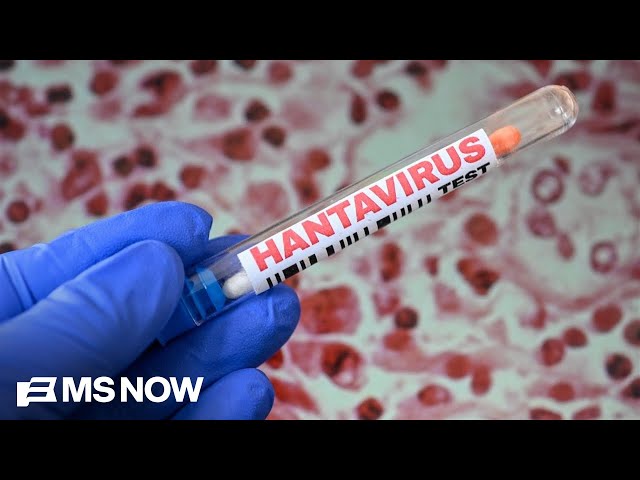
18 passengers from Hantavirus-hit ship back in U.S.
MS NOW
0:00 Right now, 16 of the 18 Americans evacuated
0:03 from the cruise ship at the center of the hantavirus
0:05 outbreak are at the national quarantine unit of THE UNIVERSITY
0:09 OF NEBRASKA MEDICAL CENTER NEARLY FILLING 20 INDIVIDUAL ROOMS,
0:14 INCLUDING ONE AMERICAN WHO TESTED POSITIVE FOR THE VIRUS.
0:17 TWO OTHERS WERE TAKEN TO EMERY UNIVERSITY IN ATLANTA.
0:20 BUT THE MESSAGE TO THE IF YOU WANT
0:21 TO TELL US WHO THE PUBLIC IS, DON'T FREAK OUT.
0:25 NO ONE WHO POSES A RISK TO PUBLIC HEALTH IS WALKING
0:28 OUT THE FRONT DOOR OF THE STREETS OF OMAH OR BEYOND.
0:32 LET ME BE CRYSTAL CLEAR,
0:33 THE RISK OF HANTA VIRUS TO THE GENERAL PUBLIC REMAINS VERY, VERY LOW.
0:39 JOINING ME NOW IS IRAM ADAD,
0:41 INFECTIOUS DISEASE EPIDEMIOLOGIST AT HARVARD'S BELFER
0:44 CENTER FOR SCIENCE AND INTERNATIONAL AFFAIRS.
0:46 MS NOW'S JOSH EINIGER IS HERE AS WELL.
0:49 JOSH, TELL US ABOUT THIS PLACE IN NEBRASKA.
0:52 I'VE BEEN GETTING THE QUESTION A LOT OVER THE WEEKEND.
0:54 AND WHAT THE WEEKS AHEAD might look for these patients.
0:57 Yeah, well, Chris, people who've been paying attention to these issues,
0:59 certainly going back through COVID and before then even
1:03 to Ebola in 2014 are familiar with this place.
1:05 It's called the National Quarantine Unit.
1:07 And we have video, file video of what it looks like inside.
1:09 It's 20 rooms with special air-handling facilities,
1:13 and it allows for people to sit
1:15 in what is described actually doesn't look like here,
1:18 but it would have described as a hotel-like setting.
1:22 That's not what this video looks like,
1:23 but I think they also have settings that appear to be more like a hotel room.
1:27 And it's for people who may not be symptomatic, may not be a specific risk,
1:31 but who have to quarantine just in case they might end up
1:35 converting to be positive with whatever is of concern in this case
1:38 hantavirus we can show you what uh what they said earlier
1:41 today about this facility and how it's treating these people today.
1:47 Our quarantine unit is designed for well individuals who need to be monitored.
1:51 It is not a patient care space,
1:53 it's much more like a hotel than a patient care space.
1:58 We don't have the typical things that you'd see in a hospital room.
2:00 It's a much more comfortable environment, actually,
2:03 with some things to help keep people comfortable,
2:05 like exercise equipment, and it's a larger space, you know,
2:10 TVs and things like NICK SCHIFRIN- So, 18 of these patients,
2:14 these past passengers who are being monitored right now,
2:19 they're currently in quarantine in that facility.
2:22 We don't know, Chris,
2:22 if they're all going to end up staying there for the full six weeks,
2:25 or if they're perhaps going to end up going
2:27 back towards their home states to a similar facility, perhaps closer to home.
2:32 But here's why this is so important.
2:34 There were five people of French nationality who came
2:37 off that boat and were repatriated back to France.
2:41 On the flight, one of them developed symptoms
2:44 and is now said to be in pretty bad shape.
2:47 So, it is still possible for this whole period
2:48 of time for any of those 18 people to develop symptoms.
2:53 And that's why they have to be quarantined for that long,
2:55 according to all these doctors.
2:56 Thank you for that, Josh.
2:57 So doctor, how long and how sure can we
2:59 be as we look at the quarantine for these passengers?
3:05 Yeah, well, the incubation period is anywhere from two to 42 days,
3:08 you know, with the mean of about 18, 18 days.
3:11 And so we are still in that incubation period.
3:14 So it's not surprising that we're still
3:16 seeing cases tied to this exposure event.
3:18 We'll probably see potentially more confirmed cases in the days to weeks ahead,
3:22 because, as I mentioned, we are still in incubation period.
3:25 What's important is that we haven't seen any secondary cases,
3:28 meaning from those initial set of CASES, HAVE THEY EXPOSE ANYONE ELSE?
3:32 AND SO WE HAVEN'T SEEN THAT.
3:33 AND SO THAT'S GOOD NEWS.
3:34 AND SO RIGHT NOW THE STRATEGY VERY MUCH IS
3:36 CONTAINMENT AND MONITORING AND THEN DOING THAT RISK-BASED ASSESSMENT.
3:40 WE HAVE CONTINUOUSLY HEARD DOCTOR, WE SHOULD NOT WE'VE PLAYED THAT SOUND.
3:44 THIS IS NOT ANOTHER COVID.
3:46 AND YET, YOU KNOW, THE IMAGES WE SEE
3:49 ARE THESE AMERICANS COMING OFF PLANES WEARING MASKS,
3:52 PUT INTO QUARANTINE, IN SOME CASES WE SAW PEOPLE BEING SPRAYED DOWN.
3:57 DO THE OPTICS MAKE IT HARD TO REASSURE PEOPLE EVERYTHING IS
4:01 FINE OR SHOULD THE OPTICS HELP THEM UNDERSTAND EVERYTHING is fine.
4:06 I think it's really the latter.
4:07 It should help them understand the seriousness of the situation
4:10 and how these public health entities are taking this seriously.
4:13 And because, as you've mentioned in the video,
4:15 none of these individuals are out and about
4:17 that that have repatriated and now back in the United States.
4:20 And so there is a plan in place to continuously monitor them.
4:23 And a lot of these precautions that are
4:25 being taken is out of abundance of caution.
4:27 We know how this virus is being transmitted.
4:30 We are still learning more.
4:31 So the evolution of this virus and the dynamics are still being understood.
4:35 And so a lot of these are just precautionary measures.
4:39 Yesterday, the acting CDC director said that they are fully
4:42 equipped to handle any IT COMES AFTER THE TRUMP ADMINISTRATION
4:46 LAID OFF THOUSANDS OF CDC SCIENTISTS AND PUBLIC HEALTH PROFESSIONALS
4:52 INCLUDING MEMBERS OF THE AGENCY'S TO BE A PARTICULAR ISSUE,
4:55 IT'S SHIP SANITATION PROGRAM.
4:56 ARE YOU WORRIED?
4:58 ARE DOCTORS WHO YOU TALK TO IN YOUR FIELD CONCERNED ABOUT I
5:06 THINK THERE'S TWO THINGS THAT COULD BE TRUE AT THE SAME TIME.
5:09 FIRST IS THAT THE DISMANTLING OF THE PUBLIC HEALTH
5:12 INFRASTRUCTURE IN THIS COUNTRY IS A huge, huge problem.
5:16 You know, we need to make sure that we are having,
5:18 you know, the full capacity behind this current epidemic.
5:22 You know, we don't want it obviously to get worse.
5:24 It's a bad situation.
5:25 We want to prevent it from getting worse.
5:26 And so making sure that we have, you know, the staffing that we need,
5:30 infrastructure that we need is really, really important.
5:32 And as you've mentioned, the gutting of public health in this country
5:35 in the past few months is very relevant.
5:38 At the same time, I do want to mention
5:39 the current individuals that are working in this multi-state effort,
5:43 these are the clinicians,
5:45 the public health officials, transporters or responders,
5:48 working around the clock to ensure
5:51 the safe and effective repatriation of these passengers,
5:55 the safe monitoring in the current quarantine unit,
5:57 as well as, as we kind of look at it in the next days to weeks,
6:00 if they're going to continue to be
6:02 transported either in their home or their state.
6:04 This is a lot of work and it's heroic work.
6:07 And so I want to thank them for what they're doing.
6:09 This is a lot of coordination happening behind the scenes.
6:12 A lot of folks just kind of see the vehicles and ambulances,
6:15 but they're not seeing the people kind of working to really make
6:19 sure that this is TALK ABOUT WHAT IS HAPPENING SAFELY AND IN COORDINATION.
6:22 DR.
6:23 SIRU MADDAD AND JOSH EININGER, THANK YOU BOTH.