99% Don't Have This: Your Real Superpower
Andrew Bustamante
0:00 when you go down these rabbit holes in the line
0:01 of work that you that you're in, you come to conclusions
0:05 with things and so you you understand all of this stuff
0:08 and you make your own conclusions from those things.
0:11 Uh there's that great quote, the the more I learn, the less I know.
0:15 Do you feel like coming up with conclusions is one thing,
0:18 but you need to be open-minded and you need to have
0:21 the humility enough to change those conclusions when new information comes in?
0:25 Absolutely.
0:26 So, it's a great question because what I want
0:27 to do is I want to take that quote,
0:28 "The more I learn, the less I know." And I want to use different vocabul.
0:33 I want to use more specific vocabulary because like all catchphrases,
0:37 that is too generalized.
0:39 The more I learn, the less I know.
0:40 Well, what does that even mean?
0:42 What is the definition of learn?
0:43 What is the definition of no?
0:45 There's all sorts of ways you can interpret it.
0:47 What I'm saying and what CIA shows us is that you want to understand
0:51 the difference between assumptions and assessments because both
0:57 assumptions and assessments can bring you to conclusions.
1:01 The difference is that an assumption brings you to a permanent conclusion.
1:06 Right?
1:06 I'm going to assume that I'll never get hired by NASA.
1:11 That's a permanent conclusion.
1:12 So with that conclusion, I'm not even going to try.
1:15 Right?
1:16 because I'm assuming they don't want me.
1:18 They're not interested in people who don't have science degrees.
1:20 They're not interested in people who don't have perfect PT records.
1:23 They're not interested in 45y old guys with two kids.
1:25 I'm just going to assume that that's true.
1:28 Parts of it might actually be measurably true today,
1:32 but they could change in 2 years, 10 years, 5 years, who knows, right?
1:36 But an assumption brings you to a permanent
1:38 conclusion in a dynamic information landscape that changes.
1:42 What CIA teaches us to do instead is reach assessments.
1:45 assessments are still taking you to conclusions,
1:48 but they're based off of current objective
1:50 information that you can gather right now.
1:53 So now, when I conclude that NASA doesn't want to hire me,
1:56 it's because I've looked at objective
1:58 research that says they're not currently hiring.
2:02 They are not looking for people with my educational background.
2:05 They don't have upcoming missions that fit any of my skill sets.
2:09 in this moment I can assess and conclude I'm not
2:13 a viable candidate right now but I can check again
2:16 in 6 months and I can check again two months
2:18 after that and I can check again 5 years after that.
2:21 So when I say that my worldview has brought me to different conclusions,
2:24 what I'm saying is it brought me
2:25 to different conclusions that I assess in the moment
2:28 and that serve you right then in that moment.
2:31 But there's subject to changing on those conclusions
2:33 based on new information that comes in
2:35 information that comes in and it's not all information.
2:37 It has to be information that's vetted and corroborated
2:39 because as we've seen in our information landscape,
2:41 there's plenty of fake and false incorrect information that's out there.
2:45 So the more I learn, the less I know.
2:48 What I would say is the more information I receive,
2:53 the more I can assess a conclusion.
2:56 So if there's a lack of information,
2:58 I can't really assess a meaningful conclusion.
3:00 If there's an abundance of information,
3:02 I can assess a meaningful conclusion that is
3:06 temporary because more information will yield a different conclusion.
3:10 Yeah.
3:10 But then I guess it comes down to where you're sourcing the information.
3:13 Is it just one side of it?
3:14 Are you seeing it all holistically?
3:16 The list goes on and on.
3:17 I think ultimately though we we go
3:20 they're all coming we're forming these conclusions
3:23 but perhaps it's still not a truth because maybe we don't know everything.
3:29 Maybe it's all just perception.
3:30 I feel like when we label things as truths and facts,
3:33 they can potentially create imaginary ceilings in our mind
3:36 and they can box us into things that maybe we
3:39 maybe could be able to break out of that if
3:41 we didn't have those perceptions of of those truths.
3:45 Correct.
3:45 It was a truth that humans can't fly.
3:51 Mhm.
3:50 It was a truth for a long time and then it wasn't true anymore, right?
3:55 And even now there's a truth that people can't live on Mars,
4:00 but that's going to change most likely.
4:02 So, we have to understand that truths
4:05 are not necessarily false because they're true.
4:09 Facts aren't necessarily something that are going
4:11 to be proved wrong in the future, but they are temporary.
4:14 Just like you say, a false ceiling, almost like a glass ceiling.
4:18 If you assume people can't fly and you conclude that people
4:21 can't fly because it's a fact right now that people can't fly,
4:24 then of course you're never going to learn how to fly.
4:27 But if you're the person who questions it and pushes it and explores it,
4:30 you might be the one that finds a new
4:32 fact that human biology can't fly on its own,
4:36 but with assistance, an external engine, and lift, humans can fly just fine.
4:42 I guess it comes down to curiosity, right?
4:44 Are are you even curious in the thing?
4:46 Because if you're not,
4:46 you're not even going to go down that rabbit hole in the first place.
4:49 And there's a difference between being curious and being like committed, right?
4:54 Curious means you wonder.
4:56 Committed means you try.
4:58 And there's lots of people who wondered.
4:59 People wonder all the time right now, but there aren't that many people who try.
5:03 If you haven't discovered your natural-born spy skills,
5:05 then somebody else might be using theirs against you.
5:09 CIA teaches us that there are only three types of people in the world.
5:13 Those who motivate, those who manipulate,
5:15 and those who are being controlled by one of the other two.
5:18 I created a threeinut CIA style quiz to help you
5:22 unlock your secret psychological advantage and identify your hidden blind spot.
5:27 This test was developed to help you weaponize your naturalb born gifts
5:31 and use them to get ahead of 99% of people in power, wealth, and purpose.
5:36 It was also designed to make sure that you can
5:37 protect yourself against those who would use their skills against you.
5:41 All you have to do is click on the first link in the description
5:43 below or scan the QR code on your screen to start your spy quiz now.
5:47 I want you to discover your secret spy superpower and use
5:50 it for good before somebody else uses their power against you.
5:55 Curious and committed.
5:57 Yeah, I guess curiosity is probably commit commitment is
6:01 downstream from curiosity because you've got to be curious
6:03 to then embark on the journey and then commit
6:07 and decide that you're going to do the thing.
6:09 Exactly.
6:09 How many people do you know are still writing a book?
6:12 Yeah.
6:12 How many people do you know are going to start a business?
6:14 How many people do you know have these plans for one day, one day?
6:17 One day.
6:18 They're not committed, but they're curious.
6:20 Why do you think people live in that lens?
6:22 And do you feel like the lessons that you're teaching
6:25 that you've learned from CIA allows people to break through those
6:28 people live in that lens because that's how they were conditioned?
6:31 We went we covered this a little bit earlier in our conversation.
6:33 The lens that we were given is a lens.
6:36 The lens that we have to view the world is a lens we were given.
6:39 It's a lens we were conditioned to believe.
6:43 The reason we were conditioned to believe
6:45 that lens is because it suited a larger purpose.
6:48 Essentially, it suited the government's purpose.
6:50 social norms, social predictability, social elevation,
6:54 social uh progress, and social productivity.
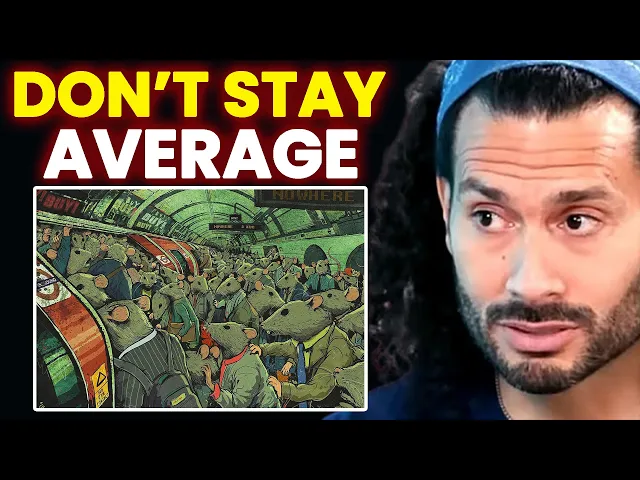
6:59 So, it's much easier to take every third grader
7:02 and tell every third grader that you need
7:05 to be average in math and average in reading
7:08 and uh one day you're going to have
7:09 a really good job working for a good company.
7:12 That's way easier than telling every third grader,
7:14 you need to be entrepreneurial, you need to strike out on your own,
7:18 you need to be innovative, you need to be a risktaker.
7:21 Because if you tell every third grader that, who's going
7:24 to[ __] work for Ford Motor Company when they're 27 years old?
7:27 Nobody.
7:27 Because they're going to have a lens that says, "I can't work for somebody else.
7:31 I have to be innovative and entrepreneurial,
7:33 and I have to be I have to strike out on my own." So,
7:37 so the structure of society brings us all to the lowest common denominator
7:43 because they already know for the masses
7:46 that's going to produce predictable productivity.
7:50 And there will always be the exceptions,
7:52 the outliers who either do incredible things
7:55 or who become[ __] homeless dregs on society.
7:58 There's always the outlier,
7:59 but they're looking to get the bell curve right in the middle.
8:02 So you just have to think through the lens of why does the lens exist at all?
8:09 Yep.
8:09 And I guess if they if every school
8:13 taught entrepreneurship and only that the society wouldn't operate.
8:17 We wouldn't have cleaners for our homes.
8:19 We wouldn't have people making our coffees.
8:24 Exactly.
8:22 And I guess it kind of makes sense.
8:25 And it doesn't kind of make sense.
8:27 It makes total[ __] sense, man.
8:30 And if you were a founding father of any country,
8:34 you would say to yourself day one at the table
8:37 where you're all signing the constitution, you know what?
8:42 We kind of need the vast majority of people
8:45 to not be motivated or inspired to do anything except wake
8:49 up and farm and then take their produce to the market
8:54 where they sell it at a lower than competitive price.
8:58 Yeah.
8:59 So there's a level of ownership then because
9:02 the only reason people embark on this greatness journey
9:04 anyway is probably because they've seen someone do
9:07 something great and go I wouldn't mind to try
9:10 that and then we then inflate it with things like social media of like oh look
9:13 how amazing having these cars are and having
9:15 these homes are and living here and traveling here.
9:18 So then we we develop this desire to want to embark
9:21 on that journey and then it's like because without any of that like what's
9:26 the drive to build another Tesla and build another thing without having
9:31 like I mean we wouldn't have this drive to kind of be entrepreneurial.
9:36 So, if we think about when it all started, it it just makes so much sense.
9:40 And it's funny.
9:41 You're the first person that said it to me around
9:43 like you hear all these other people and they say,
9:45 "Oh, this system's evil.
9:47 It's this.
9:47 It's they're indoctrinating you and all of this." And you go,
9:50 "Well, what's the alternative?" Think about it.
9:54 Do we really want the alternative?
9:55 I don't think we do.
9:57 And don't I want to make sure that nobody mistakes entrepreneur entrepreneurism,
10:03 entrepreneurial drive, um, innovation with something that's a new concept.
10:08 Long before social media, long before printed media,
10:12 long before the 24-hour news cycle,
10:13 long before TV or radio, there were people pursuing entrepreneurial ambitions.
10:18 There were Ben Franklin was trying to find a way
10:20 to make light bulbs work and electricity work, right?
10:22 You had Abraham Lincoln trying to recreate how a country runs.
10:25 You have you have thousands and thousands of entrepreneurs
10:30 who built everything that we take for granted now.
10:33 And they didn't start by Instagram influencers.
10:36 They had this curiosity that others kind of found crazy.
10:41 Like, Ben, how are you going to put food on the table, man?
10:45 Like, I get that you want to make the whole light bulb thing,
10:48 but the candle works just fine.
10:50 And how are you going to make this thing work?
10:53 You're kind of a dumb guy.
10:54 And then, you know, Ben leaves the room and Tyler
10:57 and John walk in and they're all talking[ __] about Ben.
11:00 That's just how it worked for a long time.
11:03 That's still how it works today.
11:05 All that happened with social media is that now the the ethical,
11:11 hardworking entrepreneur becomes a bit of a minority because
11:17 it's so much easier to succeed with unethical practices.
11:21 It's so much easier to rent the sports car,
11:25 take six hours of video of you driving the sports car,
11:28 splice that up, and you know,
11:30 promote it over the course of 6 months and make everybody think,
11:32 "Hey, you got a supercar." when it's actually just rented from enterprise.
11:37 It's so much easier to make fake proclamations
11:41 to show fake progress than it was in the past
11:44 because people believe what they see and they believe
11:47 what they see the more frequently that they see it.
11:50 So when you were a, you know, Bell Telecommunications and nobody ever saw Mr.
11:54 Bell, but he was one of the wealthiest people in the world, right?
11:57 When you're when you're Getty,
11:59 the guy who created the Getty Museum in California,
12:02 he was the wealthiest man in the world in 1956.
12:08 And I'm willing to tell you, I'm willing to bet right now,
12:12 90% of people don't even know who Getty is.
12:16 And he was once the wealthiest person in the world because
12:19 he was an oil tycoon before oil tycoons were a[ __] thing.
12:25 That's an entrepreneur.
12:28 Yeah.
12:28 Something interesting.
12:29 Something made him committed.
12:31 Some curiosity came up.
12:34 For some reason, he became so committed to that curiosity
12:36 that it paid incredible dividends in the end.
12:40 Yeah.
12:40 So perhaps earlier on, back in the day,
12:42 there was less desire for external validation and now
12:47 there's more desire to want to be externally validated
12:50 because maybe what's deemed as successful is so inflated
12:54 and so you're just trying to constantly chase that in.
12:57 Correct.
12:58 One of the things that we find out at CIA about
12:59 people is that external validation has become a currency on its own.
13:04 Right?
13:05 What actually makes you successful is the balance you have in your bank account.
13:12 Well, if you have a balance on your social
13:14 media network that's counted in likes and comments,
13:18 but your bank account is still zero,
13:20 people look at you and think you're a success because of what?
13:24 Social status.
13:25 That's not actual currency.
13:26 It's a replacement currency.
13:28 used to be that you were successful based on how many bars of gold
13:31 you had or or how much the house was that you actually lived in.
13:35 But now what we have is all these secondary indicators
13:37 that people use to show you how successful they are.
13:40 Look at how many subscribers I have on YouTube.
13:42 Look at how many viral videos I have.
13:44 Look at how many times I've been featured on Fox News.
13:46 Look at how many books I have in circulation.
13:48 Those are not actually indicators of success.
13:51 What what it all boils down to is whether or not you are financially successful.
13:57 Are you financially able to support yourself?
13:59 Are you financially able to invest in your own future?
14:00 Are you financially able to guarantee the legacy that you leave your children,
14:04 that you leave your your dependence?
14:06 That's the real definition of success.
14:08 Otherwise, we could all[ __] walk around and be like, I'm successful.
14:12 I am a successful plumber.
14:14 I am a successful dog trainer.
14:16 I am a successful dog walker because I feel like I'm successful.
14:19 And look at my reviews on Google.
14:22 That shows that I'm successful.
14:24 It's like, "Oh, but you can't afford a new pair of tennis shoes." No,
14:27 but I have 500 fivestar reviews.
14:30 That's just a secondary currency.
14:33 I guess the term successful is changing.
14:37 And I mean, there's financial success.
14:39 If we isolate that in itself, because for me personally,
14:43 I look at someone that's financially successful but extremely overweight.
14:47 And I go, well, I don't actually see you as successful.
14:50 I think if we can master health, time,
14:53 and relationships and have a really good balance between all of them,
14:56 and you could deem them all as successful, then overall you would be successful.
15:01 But perhaps there's this desire to be viewed as successful and that will
15:06 serve someone enough as opposed to actually
15:09 doing the work and becoming successful themselves.
15:11 How old are you?
15:12 I'm 23.
15:13 Are you married?
15:14 No.
15:14 Do you have any children?
15:16 No.
15:15 What the[ __] do you know about success?
15:18 I don't disagree that as a 23-year-old unmarried man, you're like,
15:23 "Oh, what I need is time and relationships and wealth." Yeah.
15:26 Once you have two[ __] kids, yeah,
15:28 you're not going to have time whether you like it or not.
15:31 And all of a sudden, you're going to be like,
15:32 "I need a whole[ __] ton more wealth to be able
15:34 to make sure that these kids have what they need in the future."
15:37 So, I don't I don't want you to feel like
15:41 um I disagree with your concept that your perception of success
15:46 is wrong, cuz it's not.
15:47 It's your perception.
15:48 Well, we've been covering this whole conversation.
15:49 That perception doesn't mean dick all, right?
15:51 Your perception is different than somebody else's perception.
15:53 If you want to look at a 55-year-old
15:56 decaillionaire who's got a pot belly and come
15:58 to the conclusion that he's not successful,
16:00 but he's got three kids who adore him and a wife who has a major health problem
16:04 that's fully taken care of by the medical
16:07 insurance that's provided by the company that he built.
16:10 That guy is super[ __] successful.
16:12 And I don't care what you have to say about his beer belly.
16:15 Yeah.
16:15 And I guess I guess again it all comes
16:17 down to perception and it's probably tying into that thing
16:19 we said earlier around what's serving us in the moment
16:22 to help us better our life in a sense.
16:24 And so what's the mental frame and and and having
16:27 the humility to be able to change
16:29 those beliefs but being well aware of the beliefs
16:32 and going okay is this actually serving me right now?
16:35 Because for me, the reason I say time
16:37 is because something that's like to achieve the financial
16:42 success and the and the path that I'm on it it is quite a challenging journey.
16:47 And so in those tough moments, what are we leaning on to keep us going?
16:51 And for me, the time one is something that's serving me a lot
16:54 right now of just going like it's not about having an empty calendar.
16:58 It's about being able to choose the time for me.
17:01 And this is something that I I it's serving me in this moment.
17:04 And again, might get married, might have kids, it might completely change.
17:08 You might find out you have colon cancer tomorrow.
17:11 Exactly.
17:11 It all changes.
17:12 Yeah.
17:12 Right.
17:12 So that's why it's really important to understand
17:13 that whatever you do to define success now,
17:17 are you defining success success objectively or subjectively?
17:21 Subjectively, you can call it any[ __] thing you want.
17:23 I'm a success because I finally have the dreadlocks I've always wanted.
17:26 That's fine if that's what you define as success.
17:29 That is not going to assure a legacy in the long run.
17:33 That is not objectively demonstrable success.
17:36 Where financial success is demonstrabably universally understood success.
17:42 Whether you inherited that money, whether you won it in a lottery,
17:45 whether you built it from the ground up,
17:47 whether you made a couple of smart lucky investments,
17:48 nobody really cares because at the table of other wealthy people
17:54 is the most opportunity for the future that you can find.
17:58 When you don't have financial success, you are looking for opportunities,
18:03 scraping for opportunities, hoping for opportunities.
18:06 When you have financial success,
18:08 you are literally picking opportunities because the other
18:12 people that sit at the table with you, they all want to protect the financial
18:17 success that they've all received, built, developed.
18:21 So as you age, your other definitions of success change,
18:28 but the financial definition of success only gains in terms
18:32 of importance and value as you get older and older and older.
18:36 As you get older, it costs more to just survive.
18:39 As you get older, you have more people that you have to take care of.
18:41 As you get older, you have less energy, less um capability to generate wealth.
18:49 So then the wealth that you generated in the past
18:51 has to be what carries you into the future.
18:54 Nobody tries to become an entrepreneur just because
18:58 they want to help the world feel better.
19:00 That might be where they start,
19:02 but it doesn't take very long before you realize[ __] I have to make some money.
19:07 And then once you start making money, it doesn't take long before you're like,
19:10 I need to find a way to make more money in less time.
19:14 The reason that journey happens is because objectively we
19:17 realize financial success is the real indicator of success.
19:20 If you like that video,
19:22 you're going to love the next one and I'll see you there.
19:24 The powerful billionaire, the high status authority figure,
19:27 the beast who is tamed, the protector,
19:30 and the mysterious, emotionally distant man.
19:32 You're that much closer to understanding how to crack the code
19:35 on the sexual fantasies for any woman you're trying to woo.