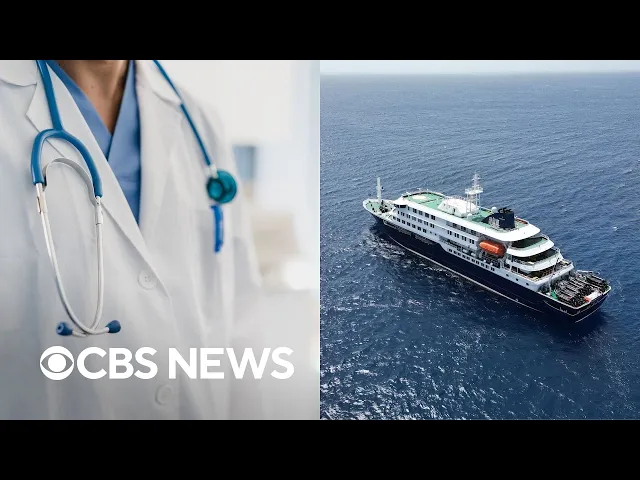
Doctors discuss the cruise hantavirus outbreak
CBS News
0:00 So for more, let's bring in CBS News medical correspondent, Dr.
0:02 Selene Gounder.
0:03 She's also editor at large for public health at KFFF Health News.
0:06 So doctor, remind us what hto virus is and why it can be dangerous.
0:11 So people usually get haunt virus from rodents as we
0:14 heard uh if they're cleaning up maybe rat droppings,
0:17 mouse droppings in the garage or the basement.
0:20 Um by doing so, you might be sweeping, vacuuming,
0:23 you kick that up and aerosolize it into the air
0:25 and that's how you end up breathing it in.
0:27 Uh this is not usually something that is transmitted personto person.
0:32 Although this particular outbreak we are concerned because
0:35 the one situation in which there has been persontoperson transmission
0:39 of haunt virus involves a form of uh haunt virus
0:42 the Andes virus that is transmitted in Argentina and Chile.
0:46 And remember this ship okay
0:48 was coming from Argentina.
0:50 So one theory is that this just was being transmitted by rodents
0:54 and their droppings or or aeros aerosolized
0:57 urine but another possibility is also persontoperson transmission.
1:01 What are the symptoms?
1:02 Um so as Tom was describing so uh people can develop lung failure,
1:06 heart failure, kidney failure.
1:08 Um a very severe viral pneumonia is very often how this manifests.
1:13 So people are watching they might have a cruise coming up
1:16 and we live in a city where there are mice and rats everywhere.
1:19 Are people who want to go on a cruise
1:21 or you and I at risk for exposure to haunt virus?
1:24 Well, I I want to emphasize first of all,
1:26 this is not going to be the next pandemic.
1:28 I know a lot of people are still
1:29 traumatized from the experience we went through with COVID.
1:32 Uh even if it is the airborne uh form
1:35 of this, the form that's transmitted person to person,
1:37 it's not airborne in the way that CO is,
1:40 it it really does require a very uh prolonged close contact with somebody else.
1:45 Um, we we um do recommend that people um if you are going to be
1:51 cleaning up rat droppings or other kinds
1:53 of things like that that you use gloves, that you use a respirator,
1:57 that you use uh watered down bleach so
1:59 that you're not kicking it up into the air.
2:01 But th this is a geographically um localized kind of infection.
2:07 In the United States, we do see haunt virus uh fewer than 900 cases in the past
2:11 30 years and largely uh localized in the four corners area.
2:15 Anything else you think we should take away from this?
2:18 Um just be careful, you know, when you're um dealing with any kind
2:22 of wild animal um bodily fluids, wastes in general.
2:27 I think that's a good piece of advice.
2:28 But do I think we're going to have a haunt
2:30 virus outbreak here in New York City despite all the rats?
2:33 No.
2:33 Okay.
2:34 Good check.
2:34 Dr.
2:35 Sling Goundonder.
2:35 Thank you.
2:37 Well, at least five US states are
2:38 now monitoring passengers who were on that cruise
2:41 ship in the center of the deadly hivirus
2:43 outbreak and those passengers have since returned home,
2:47 but 150 others are still on board
2:49 as the ship makes its way towards Spain's Canary Islands.
2:53 Joining me now is Dr.
2:54 Monica Gandhi, professor of medicine and infectious diseases at UCSF.
2:59 Dr.
2:59 Grandi, great Gandhi, great to be with you.
3:02 The World Health Organization was adamant this is not co but I got to admit
3:07 a lot of us have a little PTSD because it's following a similar story.
3:11 We've seen this movement before.
3:13 It all started with a cruise ship.
3:15 Explain why haunt virus is not co.
3:19 Okay.
3:19 Havirus is definitely not co.
3:21 So um essentially CO is very readily spread by respiratory droplets.
3:26 It's a highly contagious infection.
3:28 Ponttovirus is a what's called RNA virus that cause that is really
3:33 from usually exposure to rodents like rats um that can by the way hide
3:38 out in a cruise ship and there are droppings around no one noticed
3:42 it um urine and that's usually the main risk of exposure is from rats.
3:48 Now what's happened in this particular cruise ship is it's true there were there
3:52 were three passengers unfortunately who got haunt
3:55 virus and have died as a result.
3:57 There are eight with a likely haunt virus and they were from all over.
4:02 One is in Switzerland.
4:03 But importantly, you need very close human
4:07 to human contact to get it from a human.
4:10 Now, usually it's spread from rats, but there is a strain called the Andes
4:14 strain that can be passed with close contact
4:16 from human to human and it does look
4:18 like this particular haunt strain is the Andy strain.
4:22 Is there any concern though Dr.
4:24 Gandhi that this strain could evolve much like
4:27 we saw with other viruses and become even more
4:30 contagious that maybe you don't have to have super
4:32 close contact with an individual to pass it on.
4:35 Is there some concern it could mutate?
4:38 Likely not.
4:39 So the way that we think of respiratory viruses,
4:42 influenza of course that caused the 1918 pandemic,
4:45 corona virus, we've all become super familiar that that's
4:48 what caused the SARS KV2 or COVID outbreak.
4:51 But hont virus is actually a virus that causes
4:55 pulmonary symptoms but it often causes kidney symptoms.
4:59 It gets into the bloodstream and by getting
5:02 into the bloodstream unfortunately causes what's called hemorrhagic fever.
5:06 It has a long incubation period.
5:08 You can get very sick fevers, chills, really severe pulmonary symptoms.
5:12 That's likely what unfortunately led to the deaths
5:15 in these three individuals and shock.
5:17 It's really different than corona virus which is mainly a respiratory infection.
5:22 So we do not never seen an example of this kind of animal spread uh rat
5:28 virus really from rats and rodents um going
5:31 into some sort of epidemic or pandemic potential.
5:35 The main thing is that cruise ships need to clean their ships.
5:38 Okay.
5:39 Well, interesting you say that because passengers have been let off the ship.
5:43 Given that they believe this virus
5:44 is potentially spreading between close contact,
5:47 does that concern you that these passengers were let off to go home?
5:53 Yes,
5:52 that concerns me because I've been thinking about kind of breakdown in public
5:56 health lately um you know with TB outbreaks and with Legionel outbreaks.
6:01 I I don't think we're in the best place with our public health selves.
6:04 And what I mean by that is hto virus is such a serious
6:07 infection that the minute this was understood that there's habirus on the ship,
6:13 you really want to isolate the ship.
6:15 You want to make sure that everyone is tested before they get off.
6:19 You can test by antibodies or you can even do
6:21 a PCR test sequence the blood before they get off the ship.
6:26 Remember the Princess Cruise what you just referred
6:28 to with COVID people did not get off that ship.
6:31 There was massive isolation and quarantine.
6:34 if there was exposure.
6:35 The word quarantine comes from 40 days a ship
6:38 had to be waiting out in the Italy uh
6:41 port before it could come in because you need
6:42 a long period to make sure people don't get sick.
6:45 So, yes, I think there should have been better
6:47 contact tracing and not allowing people to kind of disperse.
6:51 Now, they're trying to track everyone down.
6:53 That's right.
6:53 And the the various health departments have basically said to these individuals,
6:57 you know, keep monitoring us, but call us when you start to have symptoms.
7:01 So you said it's a long incubation period.
7:04 Are you contagious during that whole time or are
7:07 you only contagious once you start having symptoms?
7:11 So that's a very good question.
7:13 So the incubation period can be up to 20
7:15 days and the first 10 days after you've been exposed,
7:18 you can be contagious before you get symptoms and right after you get symptoms.
7:23 So you're right that you may not know.
7:25 Now again though, the difference is it's close humanto human contact.
7:30 As long as someone's isolated from other people in the home,
7:33 which everyone should do if they were on the cruise ship,
7:36 um they're not going to spread it in the air,
7:38 spread it through the air conditioning, you know, have it go all over the house.
7:41 It's really close human to human contact.
7:43 And it's also pretty hard to get from human to human.
7:46 That's why it's not going to be the pandemic potential.
7:49 But we got to track down everyone that was on this cruise ship.
7:52 Absolutely.
7:53 the minute they have symptoms, test them.
7:56 And in an ideal world,
7:57 they wouldn't have been allowed off the cruise
7:59 ship unless we had tested all of them.
8:01 Do we have the capability though to really track individuals?
8:05 Is this what we did when Corona virus first came out?
8:08 I mean, all these different countries and states,
8:11 they have different rules when it comes to access to medical information, right?
8:15 Yes.
8:16 I mean, I think one tragedy that I have to mention now is that the US
8:20 withdrew from the World Health Organization the day
8:23 this administration took office on January 20th, 2025.
8:27 It is a complete tragedy because
8:30 the WHO is very important for epidemic surveillance.
8:34 They are the ones that put together all the data
8:36 from different countries and tell us what's going on.
8:38 WHO is leading this response.
8:40 So, we should be in the WHO.
8:42 I need to make that comment.
8:43 And second is in this particular case,
8:46 everyone who is on that ship knows they were on that ship.
8:49 Everyone has been contacted.
8:50 They are going to be alerted and watched for symptoms.
8:54 And I think we're going to be able to contain this out in the world,
8:58 but it would have been better if we had contained it in the ship.
9:01 And again, um this is probably a breakdown that they
9:04 should have uh not let people off the ship.
9:07 There's a lot of anxiety though now
9:09 and not knowing who to believe, who to trust.
9:12 If somebody is having that anxiety and maybe lives in one of these states,
9:15 maybe knows somebody that was on that ship
9:17 and they want to get the best information,
9:19 are you saying the best way to get that is really from the WHO?
9:23 The WHO actually has a very good um updated information about Hunto,
9:28 but to give credit, so does the CDC,
9:30 and the CDC is also closely involved with the US-based uh people
9:35 who are on the ship because the CDC is our public health response.
9:39 Now the CDC can't follow everything they're supposed
9:41 to be doing because they've also had cuts to them,
9:44 but they are being very aggressive about the haunt virus
9:46 case reporting and watching everyone who is on that ship.
9:50 So I feel pretty comfortable that everyone's
9:52 been alerted and that they are sitting
9:55 not going around anyone and ensuring that they
9:57 don't get sick within the incubation period.
9:59 We know there's been so many cuts statewide,
10:01 nationwide to to health organizations.
10:04 I'm curious though, were there lessons learned during CO that makes
10:08 those departments more equipped to handle
10:11 a potential other epidemic or pandemic?
10:15 Yes.
10:15 I mean, I think actually what we learned during COVID is we
10:18 didn't have the test capability right away with CO and it took
10:22 us a long time to get tests and people couldn't get access
10:24 to tests and we're pretty much saying like everyone stay in their houses.
10:28 This is different.
10:29 We immediately when this haunt virus cruise ship
10:32 because of its international potential the tests are available.
10:36 It's actually a very easy antibbody um and if need be if someone's sick
10:41 we can we can get a test from the CDC to look at PCR.
10:44 So the tests are available.
10:46 They could contact everyone on the ship.
10:48 People are all sitting at home.
10:50 They should be um and not going out until we can ensure that they
10:53 don't have symptoms within the period
10:55 and they're being informed about what to do.
10:57 So, I feel comfortable about this particular public health response,
11:00 but everything that you just said is true.
11:02 The massive cuts to public health in this country
11:05 and worldwide is going to cause the anxiety about new pandemics,
11:10 and we need to not cut public health.
11:13 It's too important.
11:14 Dr.
11:15 Gandhi, great to see you.
11:16 Thanks so much.
11:19 Returning now to our stop top story.
11:21 Five US states are tracking passengers returning from a cruise
11:24 ship hit with a deadly outbreak of haunt virus.
11:28 For more, let's bring in CBS News chief medical correspondent, Dr.
11:31 John Leuk.
11:32 And doctor, another physician actually came up to you today and said,
11:36 "Do we need to be worried about this?" I mean, what did you say?
11:39 Yeah, just this morning.
11:40 And you know, this is somebody with a lot of knowledge.
11:42 And so what it said to me is, you know, people are worried about this.
11:45 And and I think when they hear
11:46 the World Health Organization uh today say, "Well,
11:49 the risk to the general public is low."
11:50 It's it's kind of triggering because they're thinking,
11:52 well, is this going to, you know, is this going to be another pandemic?
11:55 Is this going to be just like COVID?
11:57 And and there's a big difference.
11:59 What I told her was, no, you don't have to be worried in general about flying.
12:03 Remember that with with the pandemic,
12:06 COVID was caused by a virus we had never seen before, right?
12:09 And we didn't know anything about it.
12:10 This is a virus that we've known for 30 years.
12:13 We do know how it's spread.
12:14 when it is spread it's generally you know you get it
12:16 from rodents from droppings of saliva uh from urine and you inhale
12:21 it however occasionally and really not that often it can go
12:24 from person to person and it generally has to be pretty close contact
12:28 okay so um that's that's this strain we're talking about right
12:33 it's one of dozens of strain there are dozens of strains of of haunt
12:35 virus there's only one that has been shown to go from person to person
12:39 how do you define close contact
12:41 you know what the CDC you really asked a good question.
12:44 The CDC is going to be coming out with guidance about that.
12:47 Um because when you think about a a cruise ship um that's generally sort
12:52 of like a a little bit of I don't want to call it a petri dish,
12:55 but it's sort of a lab experiment for close contact, right?
12:58 I know there's a whole business there.
12:59 I'm not trying to like tear that down,
13:01 but it is a place where people are generally interacting with each other.
13:04 We know that the the index case, you know,
13:06 was was a man who then infected probably infected his wife,
13:10 you know, uh sadly they both died.
13:12 you're you know you're in close contact with people.
13:15 The question is in is is what is close
13:18 contact and generally it has to be sexual contact
13:20 or people who are very close with each other
13:22 and not generally sort of people across the room.
13:26 We remember with COVID we found out that if you're in a a room
13:29 we initially said five five feet if you're in a room
13:32 that's not well ventilated uh it can the virus can sort
13:35 of aerosolize and and go across the room like cigarette smoke can.
13:39 So if you know if you're in a room
13:40 with 20 feet away somebody smoky can smell it.
13:43 That is not felt to be the case here.
13:45 But we always have to have an asteris here.
13:47 We're at the beginning of this.
13:48 You have to have humility.
13:49 We can we going to always end by saying this is what we
13:52 know now and um if something changes we're going to let people know.
13:56 Is are there any cases not associated with the cruise ship?
14:00 Not right now.
14:01 No.
14:01 Okay.
14:01 They're all associated with the cruise ship.
14:04 um that uh oh I take well yes associated indirectly so there were people
14:10 who were passengers on a plane where the person who was on the cruise
14:13 who got sick subsequently you know developed
14:15 full-blown disease and now the the question
14:17 is were they close enough on the plane to get infected so yes it's not
14:22 directly from the cruise ship but I I just should say for the general
14:25 public the risk right now is felt to be low you had to have been
14:28 sort of been part of that you know in that bunch of people who
14:32 were sort of either directly or indirectly
14:34 related to what happened on the cruise ship.
14:36 And it's a great example of why you have to have cooperation between,
14:40 you know, the World Health Organization,
14:42 the CDC, our own state departments involved,
14:45 local health departments are involved because
14:46 you're trying to interrupt the the chain
14:49 of transmission and that means like a lot of boots on the ground,
14:52 you know, finding out, you know, who went where, when did they go,
14:54 you have a long incubation period of six weeks around.
14:57 So that means somebody could have gotten infected on the ship
15:00 and then left the ship and now they're somewhere else.
15:03 you don't know where they are, how long within the next day,
15:05 I'm told by a source that knows of things that's
15:08 going on at the CDC that within the next day,
15:10 you're going to see public guidance on when
15:11 somebody has been uh sort of a contact, not not that they that they have it,
15:16 for sure they're a contact, what should they do?
15:18 So stay tuned for that.
15:19 Looking out for that.
15:20 Thank you, Dr.
15:20 John Leoo.
15:21 Appreciate your time.