The Reasoning Test Psychologists Still Can't Explain
The Rest Is Science
0:00 I really really want to talk about a task, a test that basically everyone fails.
0:08 I have a hunch that you won't fail this test, Hannah.
0:12 Um
0:13 Not so sure.
0:13 But we'll see.
0:14 We'll see.
0:15 Let me give you some context first, which I shouldn't normally do because
0:20 in in actual experiments where this task is given,
0:23 people are just there to get their 10 bucks and go.
0:26 And I think that if you hype it up and you tell people,
0:29 "Oh, you got to really think about it.
0:30 Oh, it's so difficult.
0:31 Oh, it's such a tricky one." Then people
0:34 will probably spend more time and get it right.
0:36 Okay?
0:37 We can talk about all of that later, but let's just dive right into it.
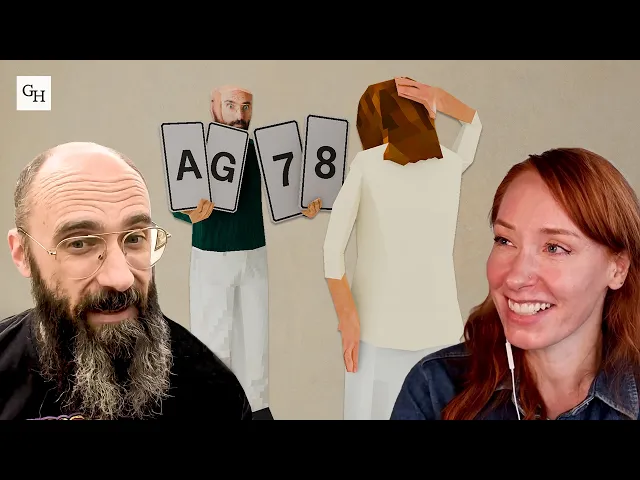
0:40 This is a reasoning test, a very simple single question that involves four cards
0:47 that was devised in 1966 by Peter Cathcart Wason.
0:51 And it is basically the test when it comes to studying the psychology of reason.
0:58 All right?
0:59 If you look into the history of our scientific study of human reasoning,
1:04 you basically only find this test.
1:06 The test is called the Wason selection task,
1:10 and it was developed in 1966 by Peter Cathcart Wason.
1:15 Now, today it has been called the most
1:18 intensely researched single problem in the history of reasoning.
1:23 And my two favorite philosophers, researchers of reason, Mercier and Sperber,
1:29 they call it what they actually don't know what to call it.
1:32 This is what they say.
1:33 Is this selection task to psychology of reasoning
1:36 what the microscope has been to biology?
1:40 Or is it rather as the Rubik's Cube has been to biology?
1:45 Just [snorts] kind of baffling and fun.
1:49 Hm.
1:50 Not adding anything really of of any merit.
1:52 Hm.
1:53 So in Wason's original test, only 10% of people got it right.
2:00 If you look across all the studies that have replicated that since,
2:04 you get a number closer to 4%.
2:07 And that's that's not super surprising.
2:09 There are difficult questions out there.
2:12 But with some slight changes, we can make everyone get it right.
2:16 And that is what is so strange.
2:19 So let's begin with the original.
2:25 [music]
2:27 This episode is brought to you by Cancer Research UK.
2:30 Here's something strange.
2:31 Your DNA contains more ancient viral fragments than genes.
2:38 The genes that build our cells make up only 2% of our DNA.
2:44 And for years, that is what scientists focused on.
2:47 They treated the rest, the ancient viruses and stuff, as junk.
2:50 But now we know that that hidden majority, sometimes called the dark genome,
2:55 influences how our biology works and how diseases like cancer behave.
3:01 It's a reminder that progress rarely comes as a single breakthrough.
3:05 It builds gradually.
3:06 Cancer Research UK plays a central role in that progress,
3:11 supporting decades of research into over 200 types of cancer.
3:15 Work that's helped double survival in the UK over the past 50 years.
3:20 For more information about Cancer Research UK, their research breakthroughs,
3:24 and how you can support them, visit cancerresearchuk.org/wrestlescience.
3:36 [music] This isn't the most I'd say the most famous version of it,
3:39 but this is exactly what Wason gave people back in 1966.
3:43 I'm going to show you four cards.
3:45 Just imagine they're like playing cards.
3:47 Now, on each, there is a letter on one side and a number on the other side.
3:53 Two of the cards have their letter side up, and two have their number side up.
3:59 Now, these are the cards that you see.
4:01 You see a card with the letter A as in alpha, G as in giraffe.
4:09 That famous phonetic dictionary, yeah?
4:11 Oh, it's going to get worse, Hannah.
4:13 The third card has a seven as in 724, and the last card has an eight as in 81.
4:23 A G 7 8.
4:25 Okay.
4:26 Now, what I need you to do is indicate for me which of these cards
4:31 you would need to turn over to judge whether the following rule is true.
4:36 If there is an A on one side, there is a seven on the other.
4:43 To recap for those who are listening, you have four cards in front of you,
4:47 letters on one side, numbers on the other.
4:49 Okay?
4:49 That's true.
4:50 But you can only see one side of a card at a time.
4:53 And what you're seeing is A, G, 7, 8.
4:58 Which ones will you need to turn over to judge whether this rule is true?
5:02 If there's an A on one side, there is a seven on the other side.
5:07 Okay.
5:10 [sighs] That is what this episode is about.
5:11 I mean, I think let's just get into it.
5:13 Let's get into it.
5:14 So So take take some time.
5:17 Also, actually, I want to know how familiar you are with this, Hannah.
5:21 Have you seen this before?
5:23 Okay.
5:23 I have seen a version of this test before.
5:28 And what I should tell you is that initially I think I got it wrong.
5:33 Yeah, me too.
5:34 I also vaguely remember the trap that I fell into, but not completely.
5:39 And I haven't seen this version.
5:41 And so I'm going to have to think it through incredibly carefully.
5:45 Okay, think it through.
5:46 Okay.
5:46 So, right.
5:47 You know that these four cards, a letter on one side, a number on the other.
5:52 Sure.
5:53 Okay.
5:54 Which means that there is a number hiding behind
5:55 the A, there's a number hiding behind the G.
5:57 That's right.
5:58 There's also a letter behind the seven, and there's a letter behind the eight.
6:02 The the rule says, "If there is a" This is what I'm trying to test.
6:05 "If there is an A on one side, there is a seven on the other." Right.
6:10 So, turning over the eight doesn't tell me anything.
6:14 I I mean, I don't really care what's on the other side
6:15 of the eight because even if it it's an A, uh Oh, no way.
6:20 That's not true.
6:21 Mhm.
6:23 Oh, hold on.
6:24 I've got it wrong already.
6:25 Yeah.
6:26 What I was immediately thinking was I want to turn over
6:31 the A to see if there's a seven on the other side, right?
6:35 Okay.
6:35 So Immediately, the first thing you want to do is check
6:38 whether there's a seven on the on the reverse of the A.
6:40 Okay.
6:41 All right.
6:41 So, you're going to turn over the A card.
6:44 Any others?
6:45 To see if there's a seven.
6:46 Turning over the G, I don't think tells me anything because
6:51 I don't really care what's on the reverse of the G.
6:54 The rule doesn't involve G's.
6:57 Okay.
6:58 It says, "If there is an A on one side," which there isn't, so I don't care.
7:01 So I can ignore the G card.
7:04 The seven card, I'd be really tempted to turn over to see if there was
7:08 an A on the other side because then that would be another instance of the rule.
7:13 Right.
7:14 But the way the rule is phrased is that it says, "If there is an A on one side,
7:18 there is a seven on the other." It doesn't
7:20 say you can only have sevens where A's exist.
7:25 Correct.
7:25 So actually, you could have a J on the other side of the seven,
7:29 and it wouldn't violate the rule.
7:30 That'd be fine.
7:31 That would be fine.
7:33 So even though my temptation is to say turn over A and seven,
7:36 actually I think you need to turn over A and eight.
7:39 Because if you turn over eight and it's got an A on the other side,
7:44 that would violate the rule, right?
7:46 Correct.
7:47 You aced it, Hannah.
7:48 I mean, I did, but I almost mucked up at the beginning there.
7:51 Let's be honest.
7:52 Well, it it's amazingly tough like that.
7:55 Now, imagine that you weren't a professor of mathematics at Cambridge
8:00 on a podcast called The Puzzle Almost Everyone Gets Wrong.
8:05 Yeah.
8:06 [laughter and gasps] Yeah, and having seen it before.
8:08 And having seen it before.
8:12 [gasps] Yeah.
8:11 Wow.
8:12 You're right.
8:13 So So I want to immediately jump to a different version.
8:17 Okay.
8:17 This is the exact same problem, except this time instead of letters and numbers,
8:23 the cards are about people in a bar.
8:26 Okay.
8:27 Or a pub for those of you across the Atlantic.
8:29 Thank you.
8:30 You're welcome.
8:31 I'm I'm sure you all were going, "Oh, what's he talking about?" A bar?
8:36 [laughter] A bar?
8:37 All right.
8:38 Look, the deal is that in this case, the cards are about people in a bar.
8:42 And on one side of the card, you have the person's age.
8:46 And on the other side, you have what it is they are currently drinking.
8:51 Okay.
8:52 Once again, you have four cards, and you are a police officer,
8:57 and it's your job to make sure that no one is drinking under age.
9:00 On some of these cards, you can only see their age.
9:02 You're going to have to turn them over to see what they're drinking.
9:04 On others, you only see what they're drinking,
9:06 you'll have to turn them over to get their age.
9:07 This is what you see in front of you, these four cards.
9:10 The age 12, Mhm.
9:12 the age 35, the drink soda, and the drink beer.
9:20 Okay.
9:21 Which ones do you need to turn over to determine whether
9:24 or not the rule is being obeyed that you cannot drink under age?
9:28 Okay.
9:28 Well Well, now is immediately obvious to me that the the person who is 30,
9:33 they can drink whatever they like.
9:34 I don't need I don't care what they're drinking.
9:36 Yeah.
9:37 And And likewise, the person who's drinking soda, I mean,
9:40 someone should speak to their parents about them being in a bar.
9:42 But [laughter]
9:44 I don't care I don't care what they're I don't care what their age is.
9:47 It's not It's not relevant.
9:48 Yes.
9:49 So immediately, it's like, well,
9:51 what's the 12-year-old drinking and who's drinking the beer?
9:53 That's That's
9:54 That's it, right?
9:55 I mean, that's it.
9:56 It's It's the exact same answer as the one before, the first and the last card,
9:59 except it's just so much faster to get to the answer.
10:03 Yeah, what like the the original formulation of that is genuinely confusing,
10:09 extremely difficult to logically work your way through,
10:13 and even when you get there, you're I don't know.
10:16 I'm really like double-checking myself, but that other one is instinctive.
10:21 It's It's automatic.
10:22 Yeah, no one needs an explanation for why you
10:25 need to check the 12-year-old and the beer drinker.
10:28 It's It's almost just evident prima facie.
10:30 Like, I get it.
10:32 Whereas, when we replace the ages and the beverage with numbers and letters,
10:37 it becomes very abstract.
10:40 And, of course, we see this reflect in people's performance.
10:45 When it comes to letters and numbers, like I said,
10:48 four, maybe 10% of people get it right,
10:51 but when it comes to the beer and the ages, everyone gets it right.
10:55 I mean, the people who get it wrong are
10:57 the people who are like just trying to be goof-offs.
11:00 I mean, seriously, it's like It's like this not It's not even really a question.
11:04 So, why is it so much more difficult for us
11:09 to solve the problem when it's abstract like this?
11:11 Is that the key to explaining why this is so difficult?
11:15 Well, as you can imagine, for the last, you know,
11:18 gosh, 50, 60 years, 60 years now, actually, this year.
11:23 Happy birthday, Wason selection task.
11:25 Um You are old enough to drink.
11:27 Congratulations.
11:28 to drink, for sure.
11:29 You're not quite old enough to collect social security in America, though.
11:33 No.
11:33 But, when that day comes, uh we will we will be here for you.
11:38 Researchers have spent decades creating slightly different versions,
11:42 uh including the drinking in a bar version.
11:45 The question is, is this revealing something about an individual's abilities,
11:50 or is it revealing something even deeper just about humans in general?
11:54 Because it doesn't necessarily seem to separate
11:58 the smarty-pants people from the dum-dums.
12:01 Even really smart people tend to perform about as badly.
12:05 You can take, you know, a big Harvard graduating class,
12:08 and they'll struggle with it, too.
12:10 The The things that we know help people solve
12:14 it is making the puzzle be about a social rule,
12:19 or phrasing the question in a way that makes it extremely
12:23 clear that they need to be looking for today's magic word, counterexamples.
12:30 Right.
12:31 So, can I can I ask some questions?
12:32 You can.
12:33 The 4% of people who do get it right, who who are they then?
12:37 In the original formulation of the test, or or some some variant of?
12:42 I haven't actually found a lot of good breakdowns on who those people are.
12:47 Like, literally in the literature, they're often called exceptional people.
12:54 [laughter] Oh, to be an exceptional person.
12:55 I'll I'll show you the papers.
12:56 They're like, if you get it right,
12:58 you're either an exceptional person or uh a lucky guesser.
13:02 There was one paper that said like the best The most
13:05 The most um strong correlation is whether you have taken logic classes.
13:10 Okay.
13:11 So, it's sort of mathematically minded people.
13:13 Exactly.
13:14 It's people who go, "Aha, yes,
13:16 I am familiar with modus tollens and denying the antecedent, and here we go."
13:23 Do you want to give us a quick quick run down on [laughter] modus tollens?
13:26 Oh, yeah, for sure.
13:27 Okay.
13:28 So, I mean, look, the Wason selection task presents
13:31 us with what's called a conditional statement, if then.
13:35 We use these all the time.
13:37 Hey, if you don't call me back, then I'm going to punch you in the nose, right?
13:42 If then.
13:43 All right?
13:43 Now, logicians, people who study the rules of reasoning, people who study logic,
13:49 they have all kinds of fancy terminology
13:51 and symbols for the parts of a conditional statement.
13:55 The if part is called the antecedent.
13:59 It comes before the end, which is called the consequent.
14:02 An example would be, "If it rains tomorrow, I will stay indoors." Mhm.
14:09 "If it rains tomorrow" is the antecedent.
14:11 "I will stay inside" is the consequent.
14:14 So, if this thing happens, the consequence will be this.
14:17 If it rains tomorrow, I will stay indoors.
14:19 Okay.
14:19 So, if you can you can take that single state that that that single sentence,
14:23 "If it rains tomorrow, I'll stay indoors," and sort of chop it in two,
14:27 and then it's almost like there's two logical chunks there, right?
14:30 Raining tomorrow, which it can or or it can be or not.
14:34 It's either raining or it's not.
14:35 And then you've also got you staying inside,
14:37 which you could be or you could not be.
14:39 So, you could sort of imagine like a little grid, right?
14:42 So, it's like whether it's raining or not is on one side,
14:45 and whether you're staying in or not is on the other side,
14:48 and you can kind of go through and go true false,
14:49 true false, true false, true false, right?
14:51 For the different combinations.
14:53 Not six times, though, just four.
14:55 Sorry.
14:56 Which is extremely important, though.
14:58 I'm glad
14:59 back around to the beginning.
15:00 You were so excited.
15:01 Yeah, you you're living on that Pac-Man universe again.
15:04 You went around.
15:06 But, yeah, there's only four combinations here,
15:08 and how many cards are there in the Wason selection task?
15:12 There's four.
15:13 Now, we don't need to make this like a full-on,
15:17 let's get into the weeds with logic thing,
15:19 but let's do it anyway, because our viewers are special.
15:21 And I'll give you another little They're that 4%.
15:23 They're the exceptional people.
15:25 They're They're the 4%.
15:26 So, the antecedent, I think maybe we could also just call it P.
15:30 If you read a lot of logic papers, which I think we should.
15:33 I'll I'll send these to the producers.
15:34 We should put the the best papers about this down in the description.
15:37 P, the letter P, is often used to represent the antecedent.
15:40 The first bit, the if bit.
15:42 The if bit.
15:43 If P, and you use a variable because now it can mean anything.
15:46 If it rains tomorrow, or P could also mean,
15:50 "I eat a ham sandwich." If P, if I eat a ham sandwich, then what?
15:54 I will smile, okay?
15:56 The consequent is often uh symbolized with the letter Q.
16:01 Mhm.
16:01 So, now we can start talking about
16:03 like conditional statements like they're math equations,
16:07 if P then Q, if P then not Q,
16:09 blah blah blah blah blah,
16:10 and we can talk about all the different ways we can work with this statement.
16:15 So, there are two valid ways you can use
16:17 that statement to to to what, draw a conclusion?
16:21 Could you though, these cards,
16:22 could you think of these cards then
16:24 to give your example of "If it rains tomorrow, Michael will stay indoors"?
16:28 Instead of this being A G 7 8, could it be Michael's indoors,
16:33 Michael's outdoors, it's raining, it's not raining?
16:36 Exactly.
16:37 That is exactly what each of the cards in this selection task do.
16:41 They've got P, not P, Q, not Q.
16:45 And so, in order to answer this correctly,
16:48 you need to show that you understand or have an innate ability to use
16:53 a conditional statement in the two valid ways that an argument can be formed,
16:57 and that's where we get to modus tollens and modus ponens.
17:00 I'm probably not pronouncing those right,
17:02 but look, this is about logic, not pronunciation.
17:07 [laughter]
17:06 So, modus ponens is the really easy one, where we say, "Here's a rule.
17:10 If it rains tomorrow, Michael will stay indoors.
17:14 It is now tomorrow, and it is raining.
17:15 Where is Michael?" And they go, "Well,
17:17 he's indoors." That's I can conclude that.
17:19 Yes, that's valid.
17:20 The other example would be you're overage
17:23 and you're drinking an alcoholic drink, right?
17:27 That That would be the other It's true, it's true.
17:29 It depends what the rule is about drinking.
17:31 Okay, the rule is everyone over 21 No, everyone drinking must be over 21.
17:38 I think so, yeah.
17:39 If you're drinking, you must be over 21.
17:41 Right.
17:42 Or or 18 or whatever.
17:44 I didn't I didn't give a year, I just said You smartly did that, but I've
17:48 chose 12 and 35, so that [laughter] Look at that.
17:52 I've anchored us to the wrong side of the Atlantic.
17:55 I know, look at that.
17:56 And I did all the work to use the word pub.
18:01 [laughter] I know.
18:02 I really should have repaid you better.
18:03 I apologize.
18:05 Okay.
18:05 So, so the the modus ponens then is if you're drinking, you're over 21,
18:10 so it's the person with the beer, say, who turns out to be the correct age.
18:16 Yeah.
18:17 Yeah.
18:18 You know what?
18:18 I think the the sentence would be, "If a person is drinking alcohol,
18:21 they must be over like 21 or over." Yeah.
18:24 Yeah.
18:24 Therefore, modus ponens would be, "Hey, they're drinking alcohol.
18:28 Therefore, they must be over 21." I understand.
18:30 Yeah.
18:31 So, so modus ponens is about affirming the antecedent.
18:35 We know that the first the if part is true,
18:38 therefore we conclude the consequent, the the Q part.
18:41 Now, it is invalid It is invalid to have
18:46 the antecedent denied and then conclude something about the consequent.
18:50 Okay, you're going to have to do that one again for me.
18:52 What?
18:53 Okay.
18:53 Modus ponens is when you affirm the antecedent.
18:56 You say, "Hey, the if part is true.
18:58 Therefore, the then part must be true." If, however,
19:02 you are able to deny the antecedent,
19:05 for example, in our raining example, you say, "Well,
19:07 hey, it's not raining." You cannot conclude that I'm not indoors,
19:14 because the rule doesn't say anything about
19:16 other reasons I might stay indoors tomorrow.
19:19 Now, let's talk about the consequent.
19:21 A valid way to operate with what you know about
19:24 the state of the consequent is that if it's denied,
19:28 in our original case, Michael is not indoors,
19:31 then you can conclude that it's not raining.
19:35 All right, let's do this with the drinking example,
19:36 cuz this is the one that I that like
19:38 strangely I find most I can understand most instinctively.
19:42 Okay.
19:42 So, so so to make it to make it really easy, let's say that in this bar,
19:46 it is true, the law is being followed, everyone who's drinking beer is over 21.
19:50 If you're drinking alcohol, you are over 21, and that's true.
19:54 If you're drinking alcohol, you are over the the drinking age.
19:58 So, if you get someone who is not over the drinking age,
20:02 then you can conclude that they can't be drinking alcohol.
20:06 Correct.
20:07 That is modus tollens.
20:08 Right.
20:09 However, Uh-huh.
20:11 if you affirm the consequent, you cannot conclude anything validly.
20:16 Meaning, if you run into a person there
20:18 at the bar and they are over the drinking age,
20:21 then you have no idea what they're drinking.
20:23 It doesn't mean anything.
20:24 You cannot conclude that they are drinking alcohol, because they might not be.
20:27 Got you.
20:29 And that So, then So, then what's that?
20:32 That's not modus tollens or modus ponens?
20:34 No, that's called affirming the consequent, and it is invalid.
20:37 Okay.
20:39 if if all of this sounds really confusing or boring,
20:43 just rewind, listen again over and over again.
20:46 We can get some really cool boosts for the algorithm.
20:51 [laughter]
20:51 Just Just remember that you're here to learn, not to be entertained, okay?
20:54 That's right.
20:55 That's right.
20:56 I'm not going to just do a dance for you.
20:58 I'm going to sit here and mispronounce Latin words for an hour.
21:02 This is a very special episode of the podcast,
21:04 where at the end we give you a test,
21:06 and if you are in the 96% who failed, you're not allowed to listen again.
21:11 You're Oh my goodness, I didn't know that rule.
21:13 Speaking of conditional statements, if you don't understand,
21:16 then you will not listen again.
21:17 The point of all of this is to say that the difficulty of the Wason
21:21 selection task is that the human brain must
21:25 just not have an innate modus tollens ability.
21:29 Like, we have since our evolution into modern
21:34 humans developed and discovered all this stuff about logic,
21:37 but we just aren't born with a logical table in our brain.
21:44 But that can't be true, because the because the bar example is so instinctive.
21:49 It's so instinctive.
21:52 Yeah.
21:51 The words that we're using here,
21:53 the language that we're using to describe this, I mean,
21:56 it does sound super duper complicated.
21:58 It sounds extremely mind-boggling,
22:01 even if the original sentence is quite simple.
22:04 But then, as soon as you put it in the bar example, it's like,
22:06 "Well, I don't even have to think about it." And that is so strange.
22:09 That is weird.
22:10 It's And it's got to be significant, right?
22:12 So, in the late '80s, two researchers,
22:15 Leda Cosmides and John Tooby, famously said, "Guys,
22:19 this whole task and the fact that the social ones are so
22:22 much easier is clearly evidence
22:25 that our reasoning ability evolved for social reasons,
22:31 not for truth-finding reasons.
22:35 So, when it comes to creating different versions of of the Wason selection task,
22:40 the versions that involve really abstract
22:42 stuff and facts are called descriptive.
22:45 Okay?
22:46 It's just the way it is.
22:47 If there's an A on one side, there's a seven on the other.
22:50 Now, if it instead involves a rule, an obligation,
22:55 a duty, something that humans made up, it's called deontic.
23:01 Okay?
23:01 This is I love these words,
23:03 because they're they're both like called rules or laws,
23:06 and yet one you you is about can and the other's about may.
23:10 I don't travel at the speed of light,
23:12 not because I'm not allowed to, but because I can't.
23:16 Okay?
23:17 And so, that that kind of a restriction is called a a descriptive restriction.
23:22 But when it comes to are people breaking the rule,
23:25 we need to make sure people are complying with the rules,
23:28 that's called a deontic rule.
23:31 Where did that word come from?
23:32 I don't know.
23:33 I mean, deon- deontic etymology, cuz where What other words use it?
23:39 Uh it means being needed or necessary from ancient Greek,
23:44 pertaining to necessity, duty, or obligation.
23:47 So, Cosmides and Tooby famously are like, "Guys, this is just human nature.
23:53 We evolved to focus on duties and obligations that we invented ourselves,
23:59 and not on universal, timeless laws of impossibility.
24:05 We care more about may I do this than can I do this." I
24:09 also sort of wonder a little bit about that that that point about truth-finding.
24:13 Because the the example of people in a bar,
24:17 it's partly about social rules and social norms.
24:21 But isn't it also a little bit about truth-finding?
24:24 Isn't it also a little bit about who should you be suspicious of?
24:28 Yes.
24:30 Yes, it is.
24:31 But it's just it's a truth that is human-focused.
24:37 It's a truth in the domain of deontic principles, obligations, duties,
24:41 and rules, and obedience, as opposed to one of an abstract wall.
24:49 If it has an A, it must have a seven.
24:50 Yeah, of course.
24:52 Here's the typical responses people give to the selection task.
24:56 46% of people pick A and seven.
25:02 Okay.
25:03 Okay?
25:04 So, almost half of people do that.
25:06 Uh a third, 33%, choose just A.
25:11 Right.
25:13 7% of people choose A, seven, and eight.
25:20 So, almost everybody is picking A.
25:23 Yes.
25:23 Mhm.
25:24 And then, only 4% of people choose the correct cards, A and eight.
25:30 The other 10% of people choose other combinations.
25:33 Some people choose all of them.
25:35 Some I mean, at that point, um I think it's kind of believed
25:40 that they just either didn't understand or didn't care.
25:42 Or just want to want to finish.
25:44 They They're either the anarchists or [laughter]
25:46 or they're like, "Get me out of here."
25:48 Or maybe they understand something we don't.
25:50 I mean, I'm not going to dismiss them.
25:53 Maybe they're the ones with modus tollens in their own heads.
25:56 Yeah.
25:57 The thing that makes me feel a tiny bit uncomfortable about
25:59 this this idea that humans are not innately good at truth-finding,
26:03 even though I'm sure that these researchers have thought
26:04 about this much more extensively than I ever have,
26:06 is that science really is based on the hunt for truth.
26:11 And okay, admittedly, we have come up with really strict methods,
26:17 like hypothesis testing, in order to do that.
26:20 But does that sort of mean that I don't know.
26:24 Science isn't in innate?
26:27 I'm not sure.
26:28 You That's a really good question.
26:30 And and I'm starting to feel like it's not that innate,
26:35 that we from tests like this, we found that we
26:40 are focused more on our own social lives and ourselves,
26:46 and not on what is the best way to test a hypothesis.
26:50 Now, the Wason selection task makes it pretty clear that we're
26:54 bad at finding counterexamples or even being motivated to find them.
27:00 Like, pretty much everyone chooses the first card A.
27:03 They're like, "I need to see if this is an example
27:05 of a thing that follows the rule." But very few people go,
27:08 "But I should also look for a case where
27:10 the the rule is is not true." Is broken.
27:13 Even though you find a counterexample, you're done.
27:18 If the rule is that there's if there's an A, there's a seven on the back,
27:20 and you can find an A that doesn't have a seven on the back, you're done.
27:23 You can walk away and say the rule's not true.
27:25 I've proved it wrong.
27:27 Now, there's a great study.
27:29 I I I was actually cracking up last night reading about this.
27:32 I don't think it's going to seem that funny today when I tell it.
27:35 But there was a study that was done by Johnson-Laird and Wason in 1970,
27:40 where they had two boxes of shapes.
27:43 In one box, all the shapes were painted black,
27:45 and in the other box, they were all painted white.
27:47 And they told people the people couldn't look in the boxes, okay?
27:50 The researcher sat there with these two
27:52 these two uh masked boxes and was like, "Okay,
27:56 here's this rule, and I want you to test whether it's true,
27:58 whether this hypothesis is true.
28:00 All the triangles are white." Now, tell me what to do and I'll do it for you.
28:06 And people would say, "Oh, the first thing almost everyone says is,
28:09 okay, I'd like to see a white shape." So,
28:12 he reaches in there and he pulls out a shape, and it's a white triangle,
28:15 lo and behold, because literally the only
28:16 thing in the white bin are white triangles.
28:19 He pulls it out.
28:20 And people tend to just keep asking
28:21 for white shapes over and over again, all right?
28:24 And they keep getting a white triangle, and they're like, "I don't know,
28:26 it's feeling like it's pretty proven." And then,
28:29 after a while, they start to go,
28:31 "Maybe I should see a black one." Cuz they start to realize, "Oh, shoot,
28:35 all it takes is one black triangle
28:37 to blow the whole thing to smithereens." But basically,
28:40 no one starts with the black shapes.
28:43 That is so fascinating.
28:44 That is so fascinating.
28:46 I think you've you know, you've seen this in science as well, right?
28:48 I just wrote this um I wrote actually this chapter
28:51 of the book that I'm doing at the moment.
28:54 I wrote this whole thing about Popper, about Karl Popper,
28:57 um and about how he said that the the the key point
29:02 about science is essentially trying to find things that break your own theorem.
29:07 You should be hunting for the counterexamples,
29:10 not for the evidence that supports it.
29:12 There's a The thing is is that it's like it
29:16 it was really really hard for people to do this.
29:19 Uh it's not instinctive at all.
29:21 For almost all of scientific history,
29:23 people were just like, "Let's gather more evidence.
29:25 Let's gather more evidence." And actually, Einstein, you know,
29:28 one of the reasons why Einstein is considered so phenomenal,
29:32 is that when he came up with his theory of general relativity,
29:36 uh as part of his theory, he said, "Here is the way you can prove me wrong.
29:41 This is my idea.
29:42 This is what I think it is.
29:44 There's going to be a solar eclipse in a couple of years,
29:47 and if I am right, the light will bend around the sun in this way.
29:52 You'll be able to see the stars that are normally blinded by the sun's glare.
29:57 Off you go.
29:58 Here is how to find the counterexample.
30:00 And that was a really bold, brave, unusual, crazy thing for him to do.
30:07 It's the same as your black shapes, right?
30:08 People do not go hunting for the black shapes,
30:11 but Einstein was was someone who knew that you had to.
30:15 He did.
30:15 And I think, back to your your original question,
30:18 I think that that meant he was a little bit less human than most of us.
30:23 He was willing to look for counterexamples and was not
30:28 just looking for confirmation of the one kind of thing he
30:31 believed in and wanted to find more of, and finding
30:34 more of them would make him feel more and more confident.
30:36 He was willing to say, "Guys, we got to find a counterexample.
30:39 We've got to find something that shows that I'm wrong.
30:41 Here's one way we could do it.
30:42 Here's another way." The creator of the Wason selection task became
30:46 obsessed with our terrible terrible laziness
30:53 when it came to finding counterexamples.
30:55 Hannah, I want to show you an even earlier game
30:59 that Wason came up with that brings us to, I think,
31:02 the same surprising conclusion about humanity.
31:04 Imagine if he was your dad.
31:05 He'd constantly be tricking you, wouldn't he?
31:07 I know, but like dads are always tricky, but this dad is tricking you
31:11 trickiest trick trick for science.
31:14 I got your nose.
31:15 Why do you think I got your nose?
31:17 Have you not developed body permanence yet?
31:20 Dad, leave me alone.
31:22 Yeah.
31:23 [laughter] Yeah.
31:24 Hey, what's that on your shirt?
31:25 Oh, got you.
31:26 What's wrong with your perceptual apparatus?
31:27 Let's try that again.
31:28 And you're like, "Dad, just prank me to embarrass me,
31:31 not to learn." All right, here we go.
31:33 I'm going to give you some numbers.
31:34 Again, because of who you are, Hannah, you might do really well at this.
31:38 But what I'm going to do is on me.
31:39 That puts more pressure on me.
31:40 Go on.
31:41 Uh good.
31:43 Good.
31:43 I want this to be uncomfortable.
31:45 Look, what I'm going to do is I'm going to name uh triples of numbers.
31:49 I'm going to name three numbers Yeah.
31:51 that uh fit my rule.
31:53 It's a secret rule I have up here.
31:54 And then I I'm going to just give you one example,
31:56 and then I want you to start naming triples,
31:57 and I will tell you yes or no whether it fits the rule.
32:00 Eventually, I want you to be able to tell me what you think the rule is.
32:04 Okay, cool.
32:05 Okay.
32:06 So, here is a triple that fits my rule.
32:09 2 4 6.
32:12 Okay.
32:12 All right.
32:12 Now, I want you to start producing triples,
32:14 and I will tell you if they fit the rule or not until you can guess the rule.
32:18 All right.
32:19 6 8 10.
32:21 Correct.
32:22 That fits.
32:22 Okay.
32:23 7 8 10.
32:26 That fits.
32:28 6 6 6.
32:30 Nope.
32:31 6 7 8.
32:32 Yes.
32:34 I think I've got it.
32:35 What do you think it is?
32:36 I think Hang on, let me try the Let me try one.
32:39 Okay.
32:40 7 6 5.
32:42 No.
32:43 It doesn't fit.
32:44 7 7 8 6.
32:47 No.
32:48 Is it just you going up?
32:49 It's just going up.
32:52 Hannah, you're brilliant.
32:53 That's the first time this game was played on me,
32:57 I never I mean, I'm still playing that game, by the way.
32:59 I just walked away.
33:00 And it wasn't until last night when I read about
33:01 the history of Wason that I was like, "Oh, that's it.
33:04 The answer is that they just have to go up." No.
33:06 I To be fair, though, you primed me because I cuz you said find counterexamples.
33:11 I Yeah, I did.
33:13 Okay, shoot.
33:13 Well, how about this?
33:14 Editors edit this around so it looks like that's the very first thing we did.
33:18 The point is, all right, yeah, I'm still I'm still a bit impressed.
33:21 You did a good job of of at least making
33:23 it look like you didn't know exactly what to do.
33:25 The counterexamples you asked for is what unlocks the whole thing.
33:29 Of course.
33:30 They give you there's so much more information contained within
33:32 a counterexample than there is in something that confirms it.
33:35 That's right.
33:36 Whereas, if you play this If you're listening,
33:38 please go try this with your friends and family today.
33:41 They will thank you.
33:41 It's so fun.
33:42 Um but [laughter] you'll find that what they tend to do
33:45 is they People tend to think of what the rule might be,
33:47 and then they think of other things that might fit that rule,
33:49 and they ask them Yeah.
33:51 again and again and again.
33:52 And they rarely go, "I think the rule is this, so let
33:55 me think of something that wouldn't fit that rule and test it." Now,
34:00 why don't we do this so much?
34:02 Obviously, we don't know, right?
34:04 This is It's all very speculative,
34:06 but I think that Comedies is really onto something with this idea
34:11 that reasoning didn't evolve to help us solve mathematical puzzles.
34:19 It originally evolved to help us work together and explain
34:24 ourselves to each other because humans are just too weak.
34:29 We we need each other.
34:30 We need to cooperate,
34:31 and that's the only way we're going to be able to build and collect and hunt.
34:35 So, we have to be able to communicate what's going on in our heads.
34:39 We don't have to do it well.
34:40 We just have to make sure that people
34:42 trust us and feel like we're playing the game.
34:45 Okay?
34:46 So So, on that topic,
34:49 I would highly recommend Hugo Mercier and Dan Sperber, The Enigma of Reason.
34:54 This goes really deep into their social theory of reasoning,
34:58 which is that, "Look, we we don't use reasons to come to conclusions.
35:03 We use conclusions to come to reasons.
35:05 We just intuitively feel and want to do things,
35:08 and then when we're asked to defend it,
35:10 we confabulate in our own heads all the reasons we had for it,
35:14 and we believe them." I I think I think what I'm
35:17 I like is is calling to mind about this is that actually,
35:20 when there are situations where people do see counterexamples,
35:24 where which puncture their theories,
35:27 it's not like we innately very happily get on board
35:33 and just like go along with it, you know?
35:35 We we look for reasons why the counterexample doesn't exist.
35:40 I mean, I'm thinking here about, I don't know,
35:42 um uh biology in the sort of 17 1800s,
35:46 where they they spent absolutely years like merrily shooting things
35:51 and pinning butterflies to boards and putting birds in sacks and stuff,
35:56 and deciding that um that, you know,
35:58 birds are one branch of the of the tree of life, and mammals are another.
36:03 And they had it all perfectly neatly categorized these rules.
36:07 And then someone comes along with a platypus um platypus body,
36:11 and they have no idea what to do.
36:12 And rather than saying, "Oh, okay, hang on.
36:14 Actually, this is a really clear counterexample of of of the ways
36:17 in which our rule is wrong," they they cut it up looking for stitches.
36:20 They thought it was a fake.
36:22 You know, they spent They spent [laughter] nearly 100 years being like, "Well,
36:25 this is just it can't can't be possible," rather than rather than it
36:28 saying that platypuses are real?
36:30 I thought they were Frankensteined together by some pranksters like jackalope.
36:34 I mean, that's what they thought, too.
36:36 I've never seen one in the wild, have you?
36:38 I've never seen one in the wild.
36:40 Basically, I'm taking someone's word for it.
36:41 So, you know.
36:42 Uh no, that's that's exactly it.
36:44 Um and and when a whole group of people refuse to accept counterexamples,
36:49 that's when things can get pretty dangerous because the the conclusion that I
36:53 think all of this is pointing at, and this is my opinion,
36:55 is that um we we truly reason, that is,
37:00 we give reasons for things and and and we
37:02 extract knowledge from knowledge we already have,
37:04 which is what reasoning is, to get along and be social.
37:08 And I think that that if you really meditate
37:12 on the consequences of that, suddenly a lot of stuff makes sense,
37:16 like confirmation bias, which is what we've been talking about this whole time.
37:20 The the pursuit of finding things that that prove your hypothesis correct
37:24 and and ignoring or avoiding a search for things that might prove it wrong.
37:28 Confirmation bias, I think, works really well when you consider the fact
37:32 that we're supposed to all be working together.
37:35 As a group activity,
37:37 it actually saves time if each of us goes
37:39 off and finds evidence for our own pet theory,
37:42 and then we come and combine them.
37:43 If instead we didn't do that, if we didn't have a confirmation bias,
37:47 and we all went off and we did all the research and found everything and read
37:51 all these different count It'd be too much work for all of us to do.
37:54 Let's each split the task up.
37:57 Many hands make light work.
37:58 All go and find evidence for what I believe,
38:00 you find evidence for what you believe, and then we'll come together.
38:02 And you've already done a bunch of work on topic A, I did topic B,
38:06 and we combine them.
38:07 That seems to explain confirmation bias and so many of our other biases so well.
38:11 It all I also love that it kind of pushes
38:13 us to this conclusion that humans need to work together.
38:17 We need to listen to people even if we really do not agree with them.
38:21 I I'm also um thinking here about, I don't know,
38:24 I have like a few A few years ago,
38:28 I was I was doing quite a lot of work on vaccine skepticism.
38:32 Oh, yeah.
38:32 I'm working with people who were hesitant about the COVID vaccine.
38:37 Now, I have to be a tiny bit careful about what I say
38:39 about this because um what I will say is they are a vocal community.
38:45 [laughter] Mhm.
38:46 They are.
38:47 Not afraid to tell you what what they think.
38:49 Yeah.
38:49 Um [snorts] I'm just going to tread del- delicately and carefully.
38:52 I I also was uh made lots of mistakes
38:55 in the way that that the whole thing was approached.
38:57 But but the thing that I noticed is well, twofold, actually.
39:02 One is that people the only way
39:06 that people make decisions is in an emotional way.
39:11 It may be that you and I, who are scientifically minded,
39:14 believe that we make decisions based on statistics,
39:17 but ultimately, for us, that is still an emotional story.
39:20 We have an emotional relationship to to data
39:23 and mathematics and science in a whole
39:26 story of our lives that kind of builds up to to that moment.
39:29 And it's [snorts] still an emotional decision.
39:31 It's just a slightly different one.
39:33 I think I think people are not persuaded by data and numbers.
39:37 I think it is is always um fundamentally about the social aspect,
39:41 exactly as you described, [snorts] Because if it was about data,
39:44 then you could show somebody the right piece of data.
39:47 You could show somebody the right combination
39:49 of words and it would change their mind.
39:51 And people do not work like that.
39:53 That's not how it works at all.
39:55 works.
39:55 And the second thing that's called to mind here in what you're describing
39:58 is there's something which is called
40:00 the uh deficit model of public communication, Ah, I haven't heard about this.
40:05 Okay, so um when you're working in an academic institution,
40:09 there's a lot of talk about how do you get your how
40:12 do you get the scientific ideas out to the public, right?
40:15 How do you talk to people about this?
40:17 Especially when you look at situations where people are making choices that are
40:22 maybe counter to their health or maybe counter to public health more generally.
40:25 How do we How do we uh get the information
40:29 out there so that that people make better choices,
40:32 make make choices that align more carefully with what's
40:34 right for them and what's what's right you know overall?
40:38 And for a long time, people thought that what you all you needed
40:41 to do was just give them information, you know?
40:43 That if you educated people to the correct level,
40:47 that if you put information out there, then that would be enough.
40:51 But the problem with that idea is
40:52 that it's called the deficit model because it's
40:56 essentially saying that the only problem is
40:58 that the public have a deficit of knowledge, right?
41:02 They just need the facts.
41:03 They just need the facts.
41:04 And it is the most arrogant, insulting way to I think belittle people
41:12 and to basically imagine that the only reason why
41:16 somebody is not making the same decisions as you
41:18 are is nothing to do with their worldview,
41:21 is nothing to do with their own their own version of reasoning,
41:24 the things that are important to them.
41:25 It's just because they don't know as much as you do, right?
41:29 Right.
41:29 And not only is it incredibly insulting, it also demonstratively does not work.
41:36 You cannot argue or maths your way
41:40 into uh changing people's minds or persuading them.
41:44 It just doesn't work.
41:45 And I think that the the way that you've described all of this stuff,
41:49 the way that people's logical brains are not not
41:53 geared for statistics and data and and abstract descriptions,
41:57 and the way that our brains are geared towards
42:00 the social aspect of aligning with other people and collaborating.
42:05 I mean, it just looking at the sort
42:07 of anti-vax movement against that perspective,
42:10 it just really really really resonates with me.
42:13 Yeah.
42:14 You know, it it's it's kind of frustrating,
42:16 but it's almost a relief to realize, "Oh my gosh, you're right.
42:20 It's It's not that with the right facts and reasons,
42:25 we'll all agree on something because that's not what happens.
42:29 My My favorite demonstration of this was something we did on Mind Field where we
42:33 had a magician come in and act like he was doing a study on appearance.
42:38 And he showed people two photographs at a time and said,
42:40 "Which of these two people would you rather work
42:42 with in an office?" And he would put the people
42:45 the the people that were chosen on in one stack
42:48 and the people that were uh not chosen in another stack.
42:50 And he did this over and over again.
42:52 And then he said, "Okay,
42:52 now I want to go through everyone that you chose to work with and I
42:55 want you to tell me why you picked them." But he was a magician.
42:58 So he used slight of hand to actually slip in a bunch of the people
43:02 that they had dismissed as I don't want
43:04 to work with a person who looks like that.
43:06 And he would then show them the cards and they gave reasons.
43:09 And whenever every time, without exception,
43:11 he would show a face that the person had rejected, they'd go, "Oh yeah,
43:15 so I picked this person cuz I really like the way
43:17 their eyes kind of look like they might they might have
43:18 like good inside jokes." Point is that we use reasons
43:21 to explain ourselves and express who we are at a deep level.
43:24 We don't use them because of anything logical and timelessly true.
43:30 It's It It was so awkward to watch people defend
43:34 and explain why they chose a person that did not choose.
43:37 It was embarrassing for them,
43:39 but yet it was it was uh enlightening for our species.
43:43 Yeah.
43:44 Oh, we're all We're just a mess, Michael.
43:46 We're all just a a big sloshy mess with our squirty water computers.
43:51 That is true and the only way to rise above that is for us to stay a big sloshy
43:59 mess because the average of all of us winds
44:03 up being better than one individual's opinion on their own.
44:07 Yeah.
44:08 I mean, this is the wisdom of the crowd stuff, right?
44:10 That's right.
44:11 And this is something that's really important to me.
44:13 I really believe in it.
44:14 I did an episode about lotocracy and how I
44:17 would really love a government run by random people.
44:22 Like rather than electing people, let's literally just be like, "Look,
44:26 there's a lottery every 4 years and uh you'll just get asked
44:30 to come and be a member of Congress or Parliament or whatever,
44:35 the House of Lords, randomly.
44:36 You'll do your term, you'll get paid,
44:38 there's housing for you." And I think that it would
44:43 be amazing what would happen if you like took such
44:47 a variety of views and had them all kind of average
44:50 each other out as opposed to what we have now,
44:53 which is like, "Hey, we're all kind of in this political class.
44:56 Let's be leaders.
44:57 We all kind of already feel the same way.
44:58 Great.
44:59 Great.
44:59 Great.
44:59 Great." Yeah, there's a superiority that comes with that.
45:02 I think I remember reading something about this in Rory Stewart's book.
45:06 Uh Rory Stewart, of course, of Fresh Eyes Politics fame,
45:08 the the lesser known Go Hang a Llama podcast.
45:14 [laughter] But he is extremely keen on the idea of town halls,
45:17 but also of um civilian panels, civilian assemblies.
45:22 Because I mean, Deliberation days.
45:24 Yeah, deliberation Exactly, why not?
45:26 I mean, this is what we do in the judicial system.
45:29 I mean, it's it's not perfect by any stretch of the imagination,
45:32 but I but I but I also think that it's the best that we've got.
45:35 And and it does exactly what you're describing.
45:38 It stops pretending that reason is some mathematically pure
45:45 thing that we can march towards and instead accepts
45:50 the messiness of human nature and that we are
45:53 social creatures and social beings and we are totally,
45:57 perfectly tuned through an astonishing evolution to really prioritize that.
46:03 Right.
46:03 Yeah, we evolved to be a group and work together.
46:07 And so collectively, like all voting together,
46:09 I just It's hard for me to find a solution that's better than that.
46:14 That's It's better than asking any particular person
46:18 or type of people to make all the decisions.
46:20 We've got to all come in.
46:21 And there are people who are have terrible ideas.
46:25 And And sometimes people have terrible ideas that that are
46:28 opposite of each other and they cancel each other out.
46:30 And that's like our only hope is to hope that things cancel
46:33 out and what we're left with is the wisest way to go.
46:37 What does your What does your t-shirt say today, Michael?
46:39 I sort of feel like somehow rather we've been Oh,
46:42 it's very reflective of kind of the mood that we've created here.
46:47 [laughter] Everything is terrible.
46:49 With an atomic bomb going off in the background.
46:52 It's not actually the I'm not saying that I feel everything is terrible.
46:56 This is a a troop of performers who collect found
47:01 media footage and they do shows where they show it off.
47:05 And they call themselves everything is terrible.
47:07 Uh they're kind of like they really love this like terrible, forgotten media.
47:12 They're a great group.
47:13 I don't actually haven't checked in on them in a while,
47:15 but uh Basically, what we solved human nature today, is that right?
47:19 I think we probably did.
47:21 it.
47:21 We finally cracked it.
47:22 When it comes to things that we do that are social,
47:25 there's there's another really funny example that I
47:28 I've been wanting to do a longer video about.
47:30 And it's the classic situation where you are at a restaurant
47:36 and the waiter brings your food out and says,
47:39 "All right, enjoy your meal." And you go, "Oh, you too." I mean, thank you.
47:45 Or, you know, you're at you're you're you're dropping off
47:47 your bag at the airport and the gate attendant says,
47:50 "All right, have a nice flight." And you go,
47:52 "You too." Oh shoot, no, I mean, thanks.
47:55 Why do we do that?
47:56 Well, there's a name for those kinds of exchanges,
47:59 those kinds of words we say to each other.
48:02 Back in the '30s, a researcher named Bronisław
48:04 Malinowski called these kinds of exchanges phatic communion.
48:11 Okay.
48:12 Like you're you're breaking the bread together.
48:15 That's right.
48:15 It's communion.
48:17 It's breaking bread together.
48:18 It's showing that I'm here.
48:20 I acknowledge you.
48:21 We're both humans.
48:22 But it's communion done through phatic means,
48:25 which means pertaining to language.
48:27 So when we say things to each other like, "Oh hey,
48:30 how's it going?" I'm not literally asking,
48:33 "Tell me how things are going." In fact,
48:36 a common response to, "Hey, what's up?" or "Hey,
48:38 how's it going?" is, "Oh hey, man." You're literally not answering at all.
48:42 You're You're literally ignoring their question.
48:44 An alien would find that really weird,
48:45 but we understand that I wasn't actually asking you,
48:49 "What is up?" or "How's it going?"
48:51 I'm just saying I acknowledge that you're here.
48:54 We're two social beings who can communicate and we
48:56 just need to say hi to each other.
48:58 We just need to give each other a bit of a nod.
48:59 That's it.
49:00 A little bit of communion.
49:01 A little bit of communion.
49:03 And that's what the waiter does when they say, "Hey,
49:05 have a great meal." You are you're are you're automatically
49:08 ready to to to exchange these things without conscious thought.
49:12 And that's why we absentmindedly respond with you, too.
49:16 I um I have heard uh [laughter] from an American who moved to London.
49:21 He found it extremely confusing when when
49:24 he first got here and people were like,
49:25 "You all right?" "You all right?" He was like,
49:27 "What do you mean, am I all right?
49:28 Am I all right?" And was it me that told you that?
49:30 Because this was my one of my biggest struggles when I first moved to the UK.
49:34 Every time I entered a room, people would be like,
49:37 "You're all right?" And I'd be like, "What's wrong?
49:39 Why do you think something's wrong with me?
49:41 Am I acting weird?" Maybe it was you.
49:45 All right.
49:48 [laughter] But for them Just phatic communion.
49:49 phatic.
49:49 It was just It was just a like,
49:51 "Beep beep, I am human, too." acknowledged, right?
49:53 That's all they meant by it.
49:55 Absolutely.
49:55 And you see this between generations because what
49:57 what is and is not phatic changes over time.
50:00 And so for for like younger people,
50:04 um saying things like, "Oh, no problem." is very phatic, right?
50:07 If someone says, "Hey, thanks." and I I'll just say,
50:09 "No problem." But to to people in an older generation,
50:12 they don't realize that it's phatic.
50:14 They take it literally.
50:15 They listen to those words and they go,
50:17 "No problem." Well, I didn't say it was a problem.
50:20 Why would it be a problem?
50:21 Do you think I'm acting like this was a problem?" And so
50:24 I I thoroughly believe that by the time I'm an old man,
50:27 I'll be at the grocery store,
50:29 they'll bag up my groceries, I'll say, "Hey, thanks a lot." and they'll go,
50:32 "Well, don't freak out about it." And I'll be like, "I wasn't.
50:35 I'm so I'm why why can't you just say no problem?" And they'll be like,
50:39 "Well, no, dude, I didn't I didn't say you were freaking out.
50:41 I just said, 'Don't freak out.' and you didn't, so right?" There is one.
50:46 There is one, okay, that young Londoners say to each other.
50:49 What do they do?
50:49 They go, "Say less." Say less.
50:52 Yes.
50:52 Say less.
50:53 It's like, "But I [laughter]
50:55 I can't take my words back?" The first couple of times I heard it,
50:58 I was like, "I don't think I was saying a lot, actually." I know.
51:02 That's a great example of how phatic things are changing.
51:05 Mhm.
51:06 I wonder what they were in really old times, though.
51:09 I wonder what the phatic communication of of sort of 1865 was.
51:13 Just a bunch of belching.
51:17 [laughter] I don't know.
51:17 I don't know how Why did I just say something derogatory of 1860s people?
51:21 They didn't deserve it.
51:22 We know that they were belching all over the place.
51:25 They were just like, "Yo, hey, bro." Did you find anything?
51:29 I did.
51:29 I did.
51:30 I've got a couple.
51:31 Okay, tell me.
51:32 I hope I see you well.
51:34 I hope I see you well.
51:35 Yeah.
51:36 What say you on such day as this?
51:38 Mhm.
51:39 On a day such as this, sorry.
51:41 How does all at home?
51:44 [snorts] That one That one I I wouldn't be too tripped up by.
51:46 I'd be like, "Ah, it's fine." I hope I see you well.
51:48 respond?
51:49 Did they say fine?
51:50 Actually, how do you do?
51:51 How do you do?
51:52 That I feel like I've you know,
51:54 I sort of feel like the memory of that one has lingered.
51:57 Yes.
51:57 Yes.
51:58 I would not be confused.
51:59 If someone said, "How do you do?" I wouldn't go,
52:00 "How do I do what?" The 1600s is
52:04 the exact century when the the passing blessing,
52:07 "God be with ye." was said so rapidly and often as a phatic communion
52:13 that it permanently mashed together into "God
52:16 be with ye." and eventually, "Goodbye." Goodbye.
52:22 [gasps] I like that.
52:22 You said the 1600s?
52:24 Apparently.
52:25 Wow, hello.
52:26 Goodbye.
52:27 Speaking of reasons, um I think it's pretty interesting as I was
52:31 flushing out what I wanted to talk about today,
52:33 I was like, "Wow, there's kind of three types
52:35 of things we've talked about." We've talked about difficult questions.
52:38 I think the Wason selection task is is surprisingly difficult.
52:42 But there are also questions that we don't answer.
52:45 Phatic questions.
52:47 "Hey, what's up?" I don't actually look up and tell you.
52:49 I don't really Well, you can't cuz you've got top shelf vertigo.
52:52 I can't.
52:53 Exactly.
52:54 Uh just like everyone, when I'm asked, "What's up?" I go, "Oh,
52:57 not much." or "I'm doing well." But there are also answers we don't question.
53:01 And I think we've kind of like been talking about this already.
53:04 It's a a lot of the conclusions and things we believe,
53:07 we just kind of don't want to question them.
53:09 We don't feel motivated to find counterexamples and falsify them.
53:15 Are you Are you talking about like social norms, like social rules here?
53:19 That's right.
53:20 I'm talking about social rules and taboos.
53:22 And I know that you are familiar with these because we've both read this book,
53:26 Jonathan Haidt's The Righteous Mind.
53:29 It's so good.
53:30 Which way did it there?
53:31 It's so good.
53:33 It's spicy.
53:34 It's spicy.
53:35 It's spicy.
53:36 It's spicy.
53:37 And we're not going to discuss it today,
53:39 but we are going to put a little worm in your brain.
53:42 You've got to be careful now, then, Michael,
53:44 because if this section that you're If you're going to the very first example,
53:48 if you If this gets clipped up and does the rounds on the internet,
53:52 you could uh your reputation could be really in trouble.
53:57 I know.
53:58 Look, I'm picking I'm picking the safest one.
54:00 I'm picking the the least spicy one.
54:03 And I again, I think that Hannah,
54:05 we should just bring this up and then in a later episode,
54:08 we'll talk about moral reasoning.
54:10 Good idea.
54:11 Which is not much different than
54:13 reasoning about obligations or abstract mathematical things.
54:17 It all kind of points in the same direction,
54:19 but this is one where you really you really wind up
54:23 realizing that you had a conclusion before you had any reasons.
54:27 We should We should say actually just in general
54:29 this book um this book really interrogates in an extremely
54:35 careful and logical way a lot of the the the moral
54:40 rules that we fully accept as a society.
54:43 Think things that we find abhorrent, things that we find disgusting,
54:46 it really tries to understand what is it
54:49 about that that we have decided is unacceptable.
54:52 That's exactly right.
54:53 And it really looks into why we don't agree
54:57 on what is acceptable and disgusting and good or bad.
55:01 How complex our reasons are.
55:04 It's the called The Righteous Mind by Jonathan Haidt.
55:07 That's right.
55:07 And I think it's it's it's a very insightful
55:11 book that's perfect for the way the world is today.
55:14 But here's an example of a a question and I
55:19 want you to I'm just going to read from chapter one.
55:22 I'm just going to read from chapter Great idea.
55:24 Great idea.
55:26 I'm going to tell you a brief story.
55:28 Pause after you read it and decide whether
55:30 the people in the story did anything morally wrong.
55:35 A family's dog was killed by a car in front of their house.
55:39 They had heard that dog meat was delicious.
55:43 So, they cut up the dog's body and cooked it and ate it for dinner.
55:48 Nobody saw them do this.
55:53 Okay.
55:53 So, no one saw them do it.
55:55 The father, let's say, was a professional butcher and none of them got sick.
56:01 Yep.
56:01 The dog passed away due to an accident.
56:04 Was already dead?
56:05 Already dead.
56:06 And you know what?
56:07 Afterwards, the family was really glad they did it.
56:09 They felt that it was respectful and it made them feel closer to the dog.
56:13 So, did anyone do anything morally wrong?
56:16 That's our question to you.
56:17 Let us know in the comments below.
56:19 And I don't know when we'll talk about this.
56:22 There's a lot that I want to learn
56:24 and that we both should talk about before we do it.
56:26 We'll look into moral reasoning someday.
56:29 I think that's a really good idea.
56:31 We can read you more examples from that book as long as you promise, audience,
56:34 not to clip it up and share it around
56:37 as though it's things we actually think cuz I mean, yeah, it tests the bounds.
56:41 But that is a really great example.
56:43 A really great example of it definitely feels wrong,
56:47 but it's quite hard to say why.
56:50 Exactly.
56:51 These are Jonathan Haidt's What did What did he call them?
56:54 He called them harmless taboo violations where he
56:58 knows that there's there's a taboo and he believes
57:01 that it's like this almost intuitive thing where we
57:04 believe it and we provide reasons after the fact.
57:07 So, he constructed these questions where all the typical harms
57:12 and reasons people give for the taboo have been canceled.
57:15 They've been clipped.
57:16 That's not not in this case.
57:17 Not in this case.
57:18 What They didn't kill their dog.
57:19 They just ate it after it accidentally died.
57:21 Nope, no one got sick.
57:22 No one saw them do it.
57:23 Blah blah blah blah blah blah blah and you're left going,
57:25 "But I still think it's wrong." But he's taken all the reasons away because
57:29 you never needed the reasons in the first place to believe what you believe.
57:33 You were using the reasons in order to justify your instinctive reaction.
57:38 That's right.
57:38 But we're saying too much.
57:39 We're going to leave it there.
57:41 If you guys have any questions for us, any despicable, disgusting,
57:45 perverted moral quandaries,
57:47 email them right over to us at therestiscience@golhanger.com.
57:52 Absolutely.
57:53 And in the meantime, you can check out our newsletter,
57:56 which I really should have learned by now,
57:58 but I think it's therestis.com/science.
58:02 And we will see you on our episode
58:04 Field Notes that's coming up later in the week.
58:07 And yeah, send us in anything you like.
58:09 Put in the comments also whether you actually
58:11 got the puzzle right at the very beginning.
58:13 And all of those of you say that you didn't, I was joking.
58:16 You can carry on listening.
58:19 [snorts and laughter] All right.
58:19 Take care, everybody.
58:20 Bye-bye.