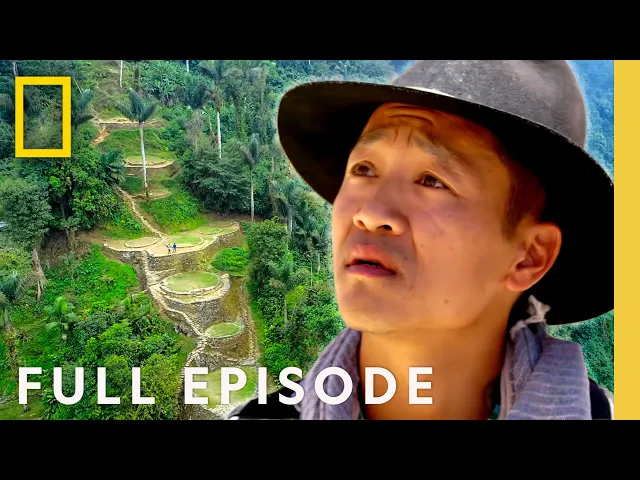
Exploring Mysteries of Ancient Cities (Full Episode) | Lost Cities with Albert Lin | Nat Geo
National Geographic
0:01 ALBERT (over radio): The jungles of Colombia, South America...
0:05 This is where the legend of Eldorado was born.
0:09 Spanish conquistadors,
0:09 they heard these local tales of a king near here who was covered in gold dust.
0:14 And then the story, it just kept growing
0:17 to describe entire cities covered in the stuff,
0:20 deep in the jungle, high in the mountains.
0:23 While the Spanish never found those fabled civilizations,
0:26 they also didn't have the technology that we have today.
0:34 ALBERT: My name is Albert Lin.
0:36 And I look at the world in a unique way.
0:40 I use 21st century technologies to look back into the past.
0:46 Check that out, I can actually fly through the secret ancient world.
0:51 Lasers that scan deserts.
0:53 Strip away dense jungle canopy.
0:57 And scour the oceans to uncover the hidden worlds beneath.
1:04 We're wading into unchartered waters.
1:07 Now I have the military helping me find lost cities.
1:11 New discoveries in the most awe inspiring places on earth.
1:16 SANTIAGO: That's where pixels become reality.
1:18 ALBERT: That fill the gaps in our story.
1:21 Who we are.
1:23 Where we came from.
1:24 And the wonders we can achieve.
1:27 ELIEZER: Here we are in the 13th century.
1:30 ALBERT: Wow.
1:31 This is carved out of the earth huh?
1:34 This is the new golden age of exploration.
1:40 We know their secrets.
1:53 ALBERT (over radio): The mountains ranges are so steep that the whole area is
1:55 almost entirely cut off from the outside, like a lost world.
2:01 Over the past 50 years the whole area was
2:04 mostly dominated by local drug lords and the FARC guerrillas.
2:10 But now that archaeologists are beginning to make their way back
2:13 in, they're finding traces of these unbelievable
2:16 civilizations once thought totally lost.
2:22 Wow...
2:22 It's literally a city in the clouds.
2:28 Maybe those Spanish stories weren't just legends,
2:31 because that's what a real Lost City looks like.
2:33 PILOT (over radio): 9-1-0-1-2 ALBERT (over radio):
2:36 That's Ciudad Perdida, "The Lost City." ALBERT: Ciudad Perdida,
2:42 the "Lost City", is high up in Colombia's
2:45 most isolated mountain range, the Sierra Nevada.
2:53 Archaeologists have spent decades exploring this dense jungle to find
2:57 out about the people who lived here over 500 years ago.
3:03 Digital technology will help them reveal more, and faster.
3:10 Only the world's toughest archaeologists can handle this terrain.
3:14 Santiago Giraldo has been excavating here for 20 years.
3:18 (laughing).
3:19 It's a beautiful place.
3:24 It's amazing this place is still standing.
3:28 Who built all this?
3:29 SANTIAGO: It was a people that we call the Tairona, their predecessors.
3:32 It began to be built around 600 AD.
3:37 ALBERT: It's huge.
3:47 How many people would've lived here?
3:49 SANTIAGO: About 2,000 to 3,000 at its peak,
3:52 and then about 10,000 people living in the upper part of the basin.
3:55 ALBERT: 10,000?
3:56 SANTIAGO: Yeah.
3:56 All that forest that you see would've been all farmland.
4:03 ALBERT: Oh man, you can almost feel their energy here,
4:06 you know, like, all these people running around.
4:10 SANTIAGO: It's taken us over 40 years of work to clear out and survey the site,
4:15 trying to tease out what these people were thinking when they were building it.
4:21 ALBERT: 40 years?
4:23 The reason why, soon becomes clear.
4:32 The Tairona built their homes on the steepest
4:35 ridges of this thick, dense, jungle.
4:40 From here, they could see everything around them.
4:44 Safe in the mountains, they remained hidden for centuries.
4:51 They're one of the most mysterious people in all of South America.
4:55 And finding their ancient cities in this terrain is almost impossible.
5:11 These roots are incredible.
5:13 SANTIAGO: Yeah, it's a fig tree.
5:19 This is what I wanted to show you.
5:22 See that right there?
5:24 ALBERT: The rocks?
5:25 SANTIAGO: See that?
5:26 Yeah.
5:26 ALBERT: Is that a wall?
5:28 SANTIAGO: Yeah, it's a wall.
5:29 It's a wall, it's a Tairona wall.
5:31 ALBERT: Wow.
5:32 It's incredible.
5:34 SANTIAGO: Yeah.
5:35 ALBERT: I mean you barely recognize it.
5:37 SANTIAGO: Well you know,
5:39 we've got like 400 years of growth and leaf litter and soil.
5:45 ALBERT: I think there's a better way to do this.
5:48 We could use aerial LiDAR to do a digital model of the whole place.
5:52 And then we could remove the trees and see the ground.
5:55 We could find the pathways, the rockpiles, the walls.
5:59 SANTIAGO: That would be amazing.
6:00 If it does pick up these terraces, it would be really, really amazing.
6:04 It would be fabulous.
6:05 ALBERT: Maybe we'll even find some new ones.
6:11 LiDAR should be able to strip away the trees
6:13 to expose the ground beneath them across this whole area.
6:17 Including terrain that has yet to be explored.
6:24 The LiDAR scanner shoots about 400,000 laser pulses every second.
6:29 Each pulse creates an accurate distance measurement,
6:32 which we can use to build a 3D model.
6:36 This has never been tried here before, we're in totally uncharted territory.
6:44 We don't know what we'll find.
6:46 it could be more lost cities or it could be nothing.
6:50 But what we do know is that this chance is just too good to miss.
6:54 (whirring).
6:57 We mount an aerial LiDAR scanner with three lenses on a helicopter.
7:01 One lens faces straight down, the other two are at angles.
7:06 This maximizes the chance that some of the laser
7:08 beams will make it through the canopy to the ground.
7:14 The aerial LiDAR team gets to work,
7:16 scanning and processing billions of data points from the valley.
7:33 Using the LiDAR data, we've built a 3D model of Ciudad Perdida.
7:39 Here it is.
7:41 SANTIAGO: LiDAR data's in?
7:42 ALBERT: Yeah, this is the whole scan.
7:44 SANTIAGO: Oh my god, okay.
7:46 ALBERT: And look at this, ready?
7:48 Boom.
7:50 Without the trees, we can see Ciudad Perdida as it was 500 years ago.
7:56 Transported through time, we can move through the city following
7:59 the footsteps of the people that once lived here.
8:05 SANTIAGO: This is amazing.
8:07 You've got like the center part of the town and then all
8:11 these paths that lead out to it and connect to the other neighborhoods.
8:15 Imagine, you've got dogs, you've got kids playing,
8:18 you've got goldsmiths, weavers, you've got merchants...
8:23 Yeah.
8:23 This is Ciudad Perdida.
8:25 Everything you see in white, that's flat.
8:28 That's what we're looking for.
8:31 ALBERT: That's the signature of...
8:32 SANTIAGO: Yeah 'cause white means flat,
8:33 flat means humans and that means terracing.
8:36 So what we're looking for is white.
8:44 Oh look, look, you can see right there the path that leads up river...
8:50 Can you pull out a bit more?
8:52 ALBERT: Okay.
8:53 SANTIAGO: I want to see more.
8:55 I want to see more, see if we can find some new areas.
9:05 Oh, look, this is new, this is absolutely new.
9:08 ALBERT: Wooow!
9:09 SANTIAGO: Right there.
9:10 This is new.
9:12 This area right here.
9:14 Right there, right there, that ridgeline right there, this area right there.
9:20 See that, it's nice and flat,
9:22 it's highly probable that there is terraces right there...
9:26 This is...
9:26 this...
9:27 we've never been there.
9:28 ALBERT: So you're telling me that this area up
9:30 here could be an entirely new city or site?
9:32 SANTIAGO: Yeah, it could be a new site,
9:33 could be a new site, could be a new town.
9:35 This is this is fantastic data.
9:38 ALBERT: A lost city in the mountains, that you've never seen before?
9:41 SANTIAGO: Yep.
9:43 Could be.
9:44 But we need to ground truth 'em, we got to put boots on the ground,
9:52 and head out there and see for ourselves
9:56 whether there's terracing and walls and just manmade structures.
10:03 That's where pixels become reality.
10:10 ALBERT: Somewhere out there, there's a lost city waiting to be found.
10:23 ALBERT: This going to be tough.
10:26 We'll be bushwhacking through some of the world's roughest terrain.
10:30 Santiago and I head off with the camera crew.
10:33 We've got the Colombian military with us,
10:35 because bandits still roam this jungle and we can't take any chances.
10:41 Before we even can start the climb, there's a long trek on the old Tairona path.
10:48 Then it's hours of bushwhacking up the ridge we spotted on the LiDAR scans.
10:55 Our goal is to get to the top
10:57 of the ridge where the LiDAR showed large flat areas,
11:00 that we hope are the signs of a Tairona city.
11:10 It starts so well.
11:15 Wow.
11:16 It's just so beautiful...
11:22 But it's not long before the real challenge begins.
11:26 We're literally following a map made by lasers in the sky through
11:30 the thickest jungle I've ever seen to look for new lost cities.
11:35 SANTIAGO: Good fun.
11:37 Good fun.
11:41 ALBERT: We leave the old Tairona path
11:43 and start to fight our way up the mountain.
11:54 This climb is harder than we could have ever imagined.
12:02 Sorry.
12:03 Oh, oh oh!
12:05 You alright?
12:11 After a brutal climb, we finally have a breakthrough.
12:15 SANTIAGO: Oh, there we go.
12:17 (speaking Spanish).
12:19 We got lots of pottery up here.
12:21 ALBERT: Pottery?
12:22 SANTIAGO: Yeah.
12:23 ALBERT: You serious?
12:23 SANTIAGO: Yeah, yeah.
12:24 Yeah.
12:25 Look at that.
12:27 Bits and pieces of pottery right there.
12:29 ALBERT: Oh yeah.
12:29 Look at that.
12:30 SANTIAGO: See?
12:32 Can you get the trowel out please?
12:35 Here we go.
12:42 ALBERT: Ancient pottery.
12:44 SANTIAGO: See this one right there?
12:46 ALBERT: Where there's pottery...
12:49 SANTIAGO: There's human beings!
12:50 ALBERT: This is Tairona pottery.
12:53 This is so cool.
13:00 We follow the trail of pottery uphill.
13:11 SANTIAGO: Terraza, terraza.
13:11 We've got a terrace up here.
13:13 C'mon.
13:14 ALBERT: You got a terrace?
13:15 SANTIAGO: Yeah, yeah, yeah.
13:16 ALBERT: We found a terrace.
13:22 What!
13:23 SANTIAGO: Yeah yeah yeah.
13:24 ALBERT: Already.
13:25 SANTIAGO: Yeah.
13:25 You can see the wall right here...
13:28 can clear that a bit.
13:32 See right there?
13:33 ALBERT: Let me see.
13:39 SANTIAGO: Yeah, there it is.
13:41 See, wall, wall right here.
13:44 ALBERT: Let me see.
13:48 SANTIAGO: See the big blocks of stone right here.
13:51 ALBERT: Mmhmm.
13:52 SANTIAGO: You can hear the clink of stone, stone, stone, stone right here.
13:58 More stone right here.
14:01 Stone.
14:03 ALBERT: So you've never seen this before?
14:04 SANTIAGO: No, we've never seen this before.
14:07 We've found 3, 4, 5 terraces?
14:11 ALBERT: Yeah!
14:12 SANTIAGO: Alright!
14:15 ALBERT: These terraces are a sign that the Tairona were once here.
14:21 But the site we spotted on the LiDAR scan is still far above us.
14:24 We're not even halfway there.
14:32 This climb is unrelenting, we're all struggling.
14:37 It's merciless and unforgiving.
14:46 If there's a city here, then it will have been built on a huge,
14:49 artificially flat space, the white areas we saw on the LiDAR scans.
15:05 You see anything?
15:06 SANTIAGO: Oh yeah.
15:08 This is flattening out.
15:09 Watch out.
15:10 ALBERT: We're on a terrace?
15:11 SANTIAGO: Yeah.
15:12 It's, we've got a lot of forest over it but, yeah.
15:17 That's all nice and flat.
15:20 ALBERT: The flat area looks like it could be a Tairona terrace.
15:25 But to be sure, we need evidence: pottery,
15:29 cut stones, anything to show the Tairona actually lived here.
15:39 ALBERT: Without cold, hard proof that the Tairona were here,
15:42 we'll have done all this for nothing.
15:57 I see a rock right here.
16:03 This is a piece of cut rock, just like at Ciudad Perdida.
16:09 Following it, let's see if we can see it on the other side of this tree.
16:13 SANTIAGO: Do you see it over there?
16:17 ALBERT: Yeah, it continues over here.
16:24 SANTIAGO: Good.
16:25 Yeah, yeah.
16:25 ALBERT: This?
16:27 SANTIAGO: We got that one right there.
16:29 Yeah.
16:30 ALBERT: Another piece of cut rock.
16:32 You think this is the edge of a terrace?
16:33 SANTIAGO: Yeah, I mean the line goes that way, the line goes that way.
16:37 So that's why we've got that flat area right inside.
16:40 This is what we're looking for.
16:42 The edges of it.
16:43 ALBERT: There's stone after stone after stone.
16:46 SANTIAGO: Yeah, we've got another one over here.
16:48 ALBERT: You've got another one?
16:49 SANTIAGO: Yeah, we got another rock over here, yeah.
16:51 A bit of the wall has tumbled down...
16:53 ALBERT: I think we've found it.
16:56 SANTIAGO: I've got pottery!
16:57 ALBERT: What?
16:58 You serious?
16:59 SANTIAGO: I've got pottery, yeah, yeah.
17:03 Definitely.
17:04 It's a really small piece.
17:06 Can you get some water and clean it up but, yeah.
17:09 It's pottery for sure.
17:10 ALBERT: Wow, look at that.
17:12 The tiniest fragment, but it's enough.
17:17 SANTIAGO: This is going to be fun to excavate.
17:20 Pottery for sure.
17:22 ALBERT: This was once somebody's home!
17:28 This city would have been part of the great
17:31 Tairona civilization from mountaintops to the sea.
17:37 The LiDAR scans uncovered this extraordinary place,
17:40 reclaimed by nature and hidden under the jungle for hundreds of years.
17:45 And this is just the beginning.
17:48 With this technology we can discover dozens
17:50 of new cities and possibly the whole Tairona civilization.
18:10 Ever since I first saw this, the magical city of Petra in Jordan,
18:14 it just hasn't left my mind.
18:18 It's one of the most beautiful, unusual and iconic cities in the world.
18:25 But I've learned something surprising.
18:27 Petra is not the beginning of the story.
18:30 It's the end.
18:32 There's another lost city carved into the rock, somewhere near here.
18:36 I'm hoping to find the hidden origins of one
18:39 of the greatest cities the world's ever seen.
18:45 The people who lived here, in this city, they were originally nomads.
18:50 Traveling, trading across the Arabian desert.
18:53 Living in tents.
18:55 And then in a leap they built this.
18:59 What happened?
19:05 I wanna find out who they were, where they came from.
19:08 And what came before all this.
19:11 New clues about them are being discovered in the desert rocks.
19:32 ALBERT (over radio): We're now flying over the Jordanian desert.
19:35 In a Black Hawk.
19:37 Now I have the military helping me find lost cities.
19:45 ALBERT: Bob Bewley is an aerial archaeologist.
19:48 He traces the ancient water sources
19:50 and trade routes of the Nabateans from above.
19:57 ROBERT (over radio): Can you see the track there, Albert, on the left hand side?
20:00 ALBERT (over radio): Where?
20:01 ROBERT (over radio): Along the ridge there.
20:03 ALBERT (over radio): Right there.
20:04 ROBERT (over radio): Yeah, yeah.
20:09 And although we're looking at a modern road, it's built on the ancient road.
20:14 And now we're gonna follow it.
20:20 ALBERT: Ancient writings suggest that somewhere
20:23 along this highway lies a Nabatean city, hidden in the mountains.
20:28 One that pre-dates Petra by hundreds of years.
20:32 ALBERT (over radio): Oh it's gotta be this.
20:34 I can see the modern highway.
20:36 But you see the ancient highway running right next to it.
20:42 ROBERT (over radio): Level off, level off straight ahead.
20:44 That's it, lovely.
20:47 So that's the track running up the hill there.
20:49 ALBERT (over radio): So that'd be the road?
20:50 ROBERT (over radio): Yeah yeah, yeah yeah.
20:54 ALBERT: We approach a barren mountain top.
20:56 Surrounded by steep valleys.
21:00 ROBERT (over radio): That's lovely.
21:01 ALBERT (over radio): 11:00.
21:02 Right here?
21:02 ROBERT (over radio): Yeah.
21:03 ALBERT (over radio): Okay I see it.
21:05 ALBERT: This rocky plateau doesn't look like
21:07 any lost city I've ever seen before.
21:12 But the ancient Greek writings describe
21:15 the nomadic Nabateans setting up home here.
21:18 Possibly for the first time.
21:22 ROBERT (over radio): Happy to land?
21:25 Yeah, yeah.
21:26 Fantastic.
21:28 ALBERT: The city is called Sela.
21:30 Hebrew for rock.
21:31 ALBERT (over radio): Incredible.
21:33 ROBERT (over radio): That's amazing isn't it?
21:34 Look at that, just...
21:41 ALBERT (over radio): We've just landed on the ancient highway.
21:50 ALBERT: Sela has never been scanned by lasers before.
21:54 I'm launching an expedition to the summit.
21:56 3000 feet above sea level.
21:58 With my LiDAR team.
21:59 To uncover the secrets of this mysterious place.
22:09 ALBERT: The LiDAR team and I are heading
22:10 to one of the last fully unexplored Nabatean sites.
22:18 And Jordan's acclaimed archaeologist, Mohammed Najjar, is leading the ascent.
22:23 (speaking Arabic).
22:25 ALBERT: How are you my friend?
22:26 MOHAMMAD: Hi, good to see you.
22:27 ALBERT: Yeah, it's been too long.
22:33 MAN: I've never carried LiDAR kit on a donkey before.
22:36 Or on a horse.
22:37 ALBERT: This is high tech meets ancient tech.
22:39 MOHAMMAD: Yeah, yeah.
22:43 ALBERT: Are you ready?
22:45 Let's go.
22:45 (speaking native language).
22:51 ALBERT: I don't know what to expect at the top.
22:54 What I do know is we're heading to 3000 feet
22:57 above sea level and it's gonna be a tough climb.
23:01 It's like a maze.
23:02 MOHAMMAD: Yes it is.
23:14 ALBERT: Those steps, are those...
23:15 MOHAMMAD: Yes that's our way up.
23:26 AHMAD: This is the only way to climb to Sela.
23:29 There's no other way.
23:34 ALBERT: The steps are the first hint
23:36 that this bare mountain has been shaped by people.
23:40 Gotta be 90 degrees out here right now.
23:42 MOHAMMAD: Yeah.
23:44 Watch what you do.
23:54 ALBERT: This is like an ancient skyscraper up here.
24:01 The terrain is brutal.
24:03 And the questions keep coming.
24:07 It just seems like an unbelievable amount of effort
24:10 to build your world on top of a mountain, in the middle of an arid desert.
24:17 Shall we take a break and drink some water guys?
24:20 Stay away from the mean donkey.
24:23 You know water is like, it's how you live.
24:27 But this desert is so dry.
24:29 How do you survive on top of a mountain?
24:32 Surrounded by dirt and no rivers nearby?
24:37 Nothing to farm.
24:39 How could you hold out?
24:52 Feels like we're getting close.
24:58 This way huh?
25:05 Finally we reach the top.
25:12 But how did this lifeless crop, with no water source,
25:16 become home to a city of people?
25:21 To hunt for clues we plan to LiDAR scan the whole plateau.
25:29 MAN: The access to so much of it is virtually impossible.
25:32 ALBERT: It also looks like sheer drops everywhere.
25:34 Deadly basically to explore.
25:36 MOHAMMAD: Absolutely.
25:37 ALBERT: So hopefully we can go places that wouldn't be safe to go otherwise.
25:41 MAN: Okay we're good to go.
25:47 ALBERT: This is a very dangerous place to fly.
25:49 MAN: It's a risky location yeah.
25:51 We're gonna have to have all eyes on the drone at all times.
25:53 ALBERT: This is like super advanced drone flying.
25:56 MAN: Yeah.
25:57 ALBERT: This is super, super expert model.
25:59 MAN: This is level ten sure.
26:04 ALBERT: It's hard to believe this barren place was once home to hundreds,
26:07 even thousands of people.
26:14 If they left any evidence I'm banking on my technology to find it.
26:24 So we hiked up here.
26:26 Right?
26:27 MOHAMMAD: Yes.
26:28 Right there.
26:29 ALBERT: It's a lot easier from a computer isn't it?
26:30 MOHAMMAD: Yeah it is actually yeah it is.
26:34 I think this is the way to look at the site
26:36 because if you look at small parts you cannot understand.
26:39 We need to look at the whole site together.
26:43 And then you can understand the dynamics.
26:46 ALBERT: Looks like it's starting to be shaped by human hands.
26:49 MOHAMMAD: That's true.
26:50 That's true.
26:51 I mean look at that.
26:53 Look at this picture.
26:55 ALBERT: The LiDAR data reveals water tanks cut into the rock.
26:58 Almost invisible to the naked eye.
27:01 After three days of scanning we've logged an incredible 51 underground tanks.
27:07 Here at Sela it's the first time anyone
27:09 has uncovered the extent of rain water harvesting.
27:13 MOHAMMAD: We have to channel the water,
27:15 the rain water the run-off from the face of the rock to the systems.
27:21 ALBERT: We can now estimate that these man
27:23 made tanks contained about 200,000 gallons of rain water.
27:27 Plenty to sustain over 1,000 permanent settlers.
27:31 It's an exciting discovery.
27:33 MOHAMMAD: They were nomads at the beginning.
27:35 They were like wind you know, and they...
27:37 And then they, there was a shift in their consciousness.
27:42 I mean they started to be attached to the land.
27:46 ALBERT: They're turning the landscape into a home.
27:49 A permanent home.
27:54 Our LiDAR data transforms what we know of Sela.
28:00 The Nabateans ingenuity and knowledge of water enables them to settle,
28:05 living together in a permanent city here in the dry, rocky desert.
28:13 It's a stepping stone to Petra.
28:17 The journey has begun.
28:29 Machu Picchu, once a, a vast ceremonial city perched high up in the Andes.
28:38 Built in the mid 15th century, it was the crowning glory of a vast Inca empire.
28:46 But its origins, they're shrouded in mystery.
28:52 The genius that led to the creation of this iconic city started somewhere.
28:59 Where there is an end, there is also a beginning.
29:02 And I intend to find it.
29:14 ALBERT: Were those mighty Inca warriors,
29:16 were they standing on the shoulders of giants?
29:18 Of earlier civilizations?
29:22 Armed with 21st century technology, I'm headed deep into the Andes to find out.
29:32 Before the Inca, Peru was inhabited by smaller, competing tribes.
29:38 Maybe finding evidence of these people will point me in the right direction.
29:44 I'm headed to an Inca site that's both
29:45 older and higher in altitude than Machu Picchu.
30:07 Oh, it's my caballo.
30:10 Hello.
30:12 We're headed to that peak at 13,000 feet of elevation, it's gonna be a trek.
30:19 And we've got a lot of gear.
30:22 The Inca buildings at Wat'a are around 100 years older
30:25 and at an altitude 5,000 feet higher than Machu Picchu.
30:31 Tom Hardy and Peruvian archaeologist Adan Choqque Arce are joining me.
30:37 There's horse poop everywhere.
30:44 Low tech transport empowers high tech gear.
30:48 To help us reveal why the Inca built and ruled here.
31:07 Wat'a is more than twice the height of Mount Rushmore.
31:11 The air is thin and the going is tough.
31:16 We're at 11,600 feet of elevation.
31:21 We got a ways to go.
31:30 Steep drop right off here.
31:51 About 1,000 feet from the top, imposing Inca walls loom into view.
31:59 The structure feels familiar.
32:09 Whoa.
32:10 Look at this place.
32:18 (gasping).
32:29 How could they build in such an intense environment?
32:33 You have to be born with super lungs.
32:35 THOMAS: Well, they got 'em.
32:36 When you're, when you're born here and you're raised here.
32:38 It's easier to move around, right?
32:40 ADAN: I think it was easier for me.
32:43 THOMAS: The hardest part for him was waiting for us.
32:46 ALBERT: Oh wow.
32:49 ADAN: Wat'a, it means in the local language, an Island.
32:53 ALBERT: An island?
32:55 ADAN: Yes.
32:56 ALBERT: An island in the sky.
32:58 THOMAS: Really is pretty impressive view from up here, isn't it?
33:02 The Inca came, put this wall up here.
33:05 They transformed the site, made it into an Inca place.
33:10 ALBERT: So this was all here before the Inca even showed up?
33:13 THOMAS: Part of it.
33:15 A lot of this is Inca construction on top of the earlier settlement.
33:23 ALBERT: We know from Machu Picchu
33:25 that the Inca built high to assert their authority.
33:29 And this place is high, more than one and a half times higher than Machu Picchu.
33:36 Look at this.
33:38 This is the top.
33:41 Look at this view.
33:43 THOMAS: This is pretty impressive.
33:52 ALBERT: Why would they build something like this?
33:55 This high up in the mountains?
33:57 THOMAS: Well, we have some ideas based on the relationship of the landscape.
34:02 ADAN: I think people living here thought that they
34:07 came from the mountains and the mountains was their ancestors.
34:11 ALBERT: The mountains being the ancestors?
34:13 The actual mountain being a being that humans
34:16 are born from is that, is that correct?
34:18 ADAN: Like a person it was their, their father,
34:22 their ancestor, their grandfather.
34:24 THOMAS: They become these objects of sacred veneration and respect.
34:28 ALBERT: Not only to the Inca but to the people even before the Inca then?
34:31 THOMAS: Probably.
34:32 Yeah.
34:34 ALBERT: We're standing here on a mountain top,
34:37 just like Machu Picchu was on a mountain top.
34:40 Yet, unlike Machu Picchu,
34:42 there might be evidence of activity here before the Inca.
34:46 THOMAS: Yeah.
34:48 ALBERT: So why don't we take our technology
34:50 and try to scan the entire mountain top?
34:53 Really make every little piece of evidence
34:55 of that existence pop back out to life.
34:57 THOMAS: Mm mm.
34:58 I think we should try.
35:08 ALBERT: The mountain has been surveyed before.
35:10 But this'll be the first time it's ever been scanned using LiDAR.
35:16 We hope to uncover new finds, both Inca and pre-Inca.
35:23 How does this look for our base to set up?
35:25 DUNCAN: Precarious.
35:27 ALBERT: Yeah, let's just be really careful about the edge here.
35:31 DUNCAN: Certainly good for LiDAR, I mean, look at the view off there.
35:33 You're looking straight down onto,
35:36 onto rock outcrops and bits of masonry already.
35:40 ALBERT: Look at those edges, it just falls off into nothingness, huh?
35:45 DUNCAN: It's gonna have to be so careful with the flights and stuff.
35:48 ALBERT: We have never used our drone based
35:50 LiDAR at an altitude of 13,000 feet before.
35:55 And you got thin air up here too, right, so it's trickier flying.
35:57 JOSEPH: Totally.
35:58 Super tricky, I mean, we've got the high altitude props on there, which help.
36:01 But still if you lose a done, it's a sheer drop.
36:07 ALBERT: Hopefully with this survey,
36:09 we can delete all of that grass and see what's really there.
36:13 What's hidden beneath that veil.
36:29 JOSEPH: It's up.
37:25 ALBERT: Our drone survives the extreme
37:26 altitude and data processing gets underway.
37:33 As darkness falls on Wat'a, the results are in.
37:39 JOSEPH: So this is all of the aerial LiDAR combined.
37:42 This is with the vegetation on, so
37:44 this is the point cloud as captured, basically.
37:46 ALBERT: Yeah.
37:46 ADAN: Mm.
37:47 ALBERT: Then let's delete it, ready?
37:50 Wow, look at that.
37:52 JOSEPH: Yeah.
37:53 ADAN: Wow, it's impressive.
37:55 increible.
37:59 ALBERT: It looks like the whole range has been carved.
38:01 JOSEPH: That's really cool.
38:04 ALBERT: The LiDAR reveals signature Inca terracing.
38:08 This area here, you think is mostly augmented by the Inca, is that right?
38:12 THOMAS: Yeah.
38:13 ALBERT: So, in the most simple terms,
38:16 what are we looking for feature-wise that might be from before the Inca?
38:20 THOMAS: The most basic signature that we would be
38:22 looking for would be the foundations of circular structures.
38:25 ALBERT: Mm mm.
38:26 THOMAS: And these, these could appear quite obviously but they also could be
38:29 a little more sort of destroyed or moved
38:32 around by vegetation growing through the stones.
38:35 ALBERT: You think we can actually use the machine
38:37 learning computer vision algorithm to look for circular features?
38:40 JOSEPH: Yeah, definitely we can highlight
38:41 the features based on a few different elements.
38:43 ALBERT: How long will that take?
38:45 JOSEPH: Should be able to spin something up for you right now.
38:47 ALBERT: I knew you would.
38:49 Look at that.
38:51 JOSEPH: There we go.
38:52 ALBERT: What is that?
38:52 THOMAS: It could be one of em.
38:54 Yeah, looks like it's on a bit of a terrace.
38:57 ALBERT: Does that look to you like something pre-Inca?
38:59 ADAN: Yeah, I think so.
39:05 ALBERT: I didn't see any of this today.
39:06 I couldn't have seen any of these features from walking the ground.
39:10 So if you can spot out any details that might look possibly pre-Inca,
39:14 then we should go there tomorrow.
39:18 We'll just geotag them and we'll go there with a GPS and find all of them.
39:22 ADAN: I think it'd help us a lot,
39:24 to archaeologists to find where the structures are.
39:28 ALBERT: Great work.
39:30 Good job guys.
39:46 The first ever LiDAR survey of Wat'a has
39:49 revealed intriguing features and they need ground truthing.
39:53 Is it circular?
39:54 ADAN: Yes.
39:55 ALBERT: Wow.
39:56 Look at this.
39:57 ADAN: It could be pre-Inca.
39:59 But we need to look.
40:01 ALBERT: Well, what we're trying to find,
40:03 is anything that tells us what happened here?
40:05 What would this have been for?
40:07 Is it like a well or something?
40:09 Or storage?
40:11 THOMAS: It could be storage.
40:12 ALBERT: Adan, you're like the ceramics whisperer, you find stuff everywhere.
40:15 Do you think you can find anything?
40:16 ADAN: OK, well, (inaudible).
40:17 ALBERT: Looks like there's bits of ceramic all right back down there.
40:20 THOMAS: Here's some, oh here we go.
40:22 Looking at the fabric and looking how eroded and soft it is,
40:27 I would guess it must be Pre-Inca because
40:29 the Inca stuff is really well fired, it's really hard.
40:31 It endures very well.
40:34 ALBERT: Well, let's see if we can find more.
40:35 If there's more points on the, on the data.
40:38 THOMAS: Yeah, let's do it.
40:42 ALBERT: We zero in on a large terraced area.
40:48 Oh this looks like one of their circular pits.
40:51 THOMAS: Yeah.
40:52 This is probably an opening.
40:55 So this could have been an entry point here.
40:58 And would have built up above it.
40:59 ALBERT: Look at that right there, what's that?
41:01 You got a piece of pottery?
41:03 ADAN: It's of a cooking pot.
41:05 THOMAS: It's like the burned up,
41:06 banged up metal pot you'll find in your mom's house, yeah.
41:09 ALBERT: Wow.
41:10 So food was cooked here.
41:12 You can almost smell it.
41:14 Where do you think it came from?
41:16 ADAN: I think it could be before the Inca.
41:19 ALBERT: This is pre-Inca?
41:20 THOMAS: This is pre-Inca, yeah.
41:22 ADAN: I think it was a house for a family.
41:25 ALBERT: Really?
41:26 ADAN: Mm mm.
41:27 ALBERT: So could this be the residential area for this entire site?
41:31 THOMAS: This certainly suggests that might be the case for the pre-Inca period.
41:37 ALBERT: Just on the other side of what looks like a plaza,
41:40 are some square buildings that appear to have been built later.
41:44 THOMAS: Look at this.
41:46 ALBERT: So this is Inca?
41:49 ADAN: Yes, definitely.
41:51 ALBERT: You could literally set up shop anywhere.
41:54 Why would they build this here?
41:55 Right on top of the prior?
41:58 ADAN: Before the Inca, it was a public place, public space.
42:02 The Inca came and interact with the pre-Inca.
42:06 THOMAS: The Inca would have been hosting here,
42:08 bringing in people to make them feel part
42:10 of the community with food and drink suggesting this area was
42:13 an important place for all sorts of events going all
42:15 the way back to the very beginnings of this site.
42:22 ALBERT: It's as if the Inca, they came, they saw people living here.
42:27 And they incorporated their beliefs but in a much larger scale.
42:31 And they completely modified the top of this mountain.
42:34 So when they were building Machu Picchu, they would have known about this place.
42:38 THOMAS: Yeah, a lot of the things we see here,
42:40 the way that the, the mountain side is completely terraced,
42:45 all of that is very similar to what we see at Machu Picchu.
42:54 ALBERT: There's a belief system that I've
42:56 learned that threads through time here.
42:59 A belief that people come from the mountains, people come from nature.
43:12 Through time, that belief has evolved into the architecture
43:14 that you see today here, at Wat'a.
43:22 It's an island in the sky.
43:32 For the first time, LiDAR data reveals the complete picture of the monumental
43:39 scale of Wat'a and the efforts of human hands that carved this mountain.
43:47 Once a pre-Inca, ancient mountaintop town.
43:52 Imagine this transformed by the Inca.
43:57 Imposing residential areas, ceremonial plazas.
44:01 And grand terracing.
44:03 This is the city of the living I have been searching for.